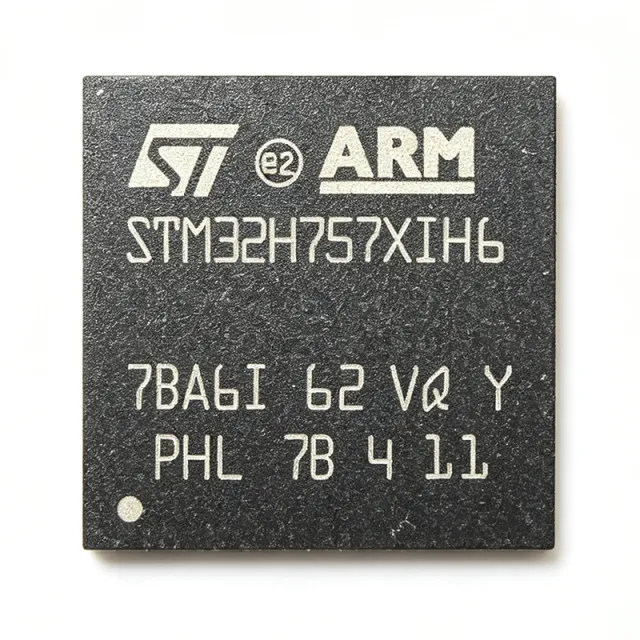
STM32H7A3VGT6
STM32H7A3VGT6 - 280MHz Cortex-M7 MCU, 1MB Flash | STMicroelectronics
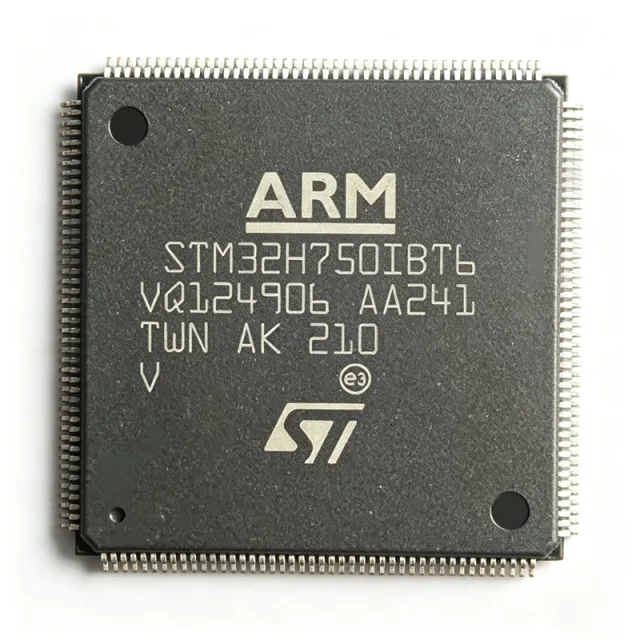
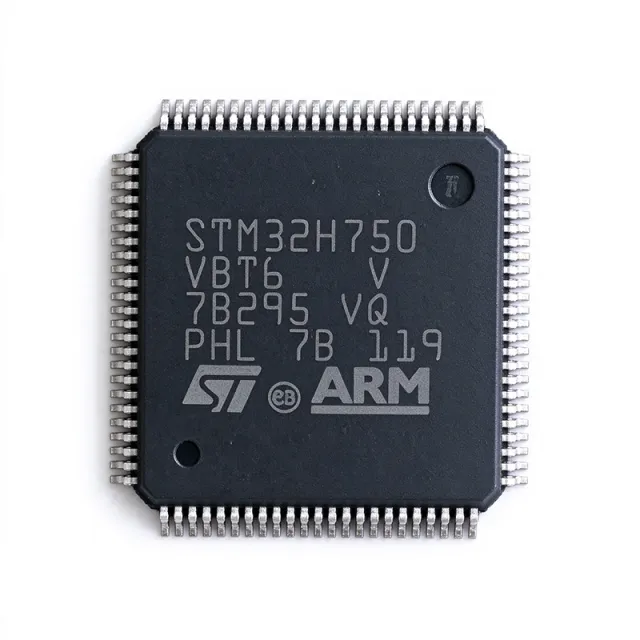
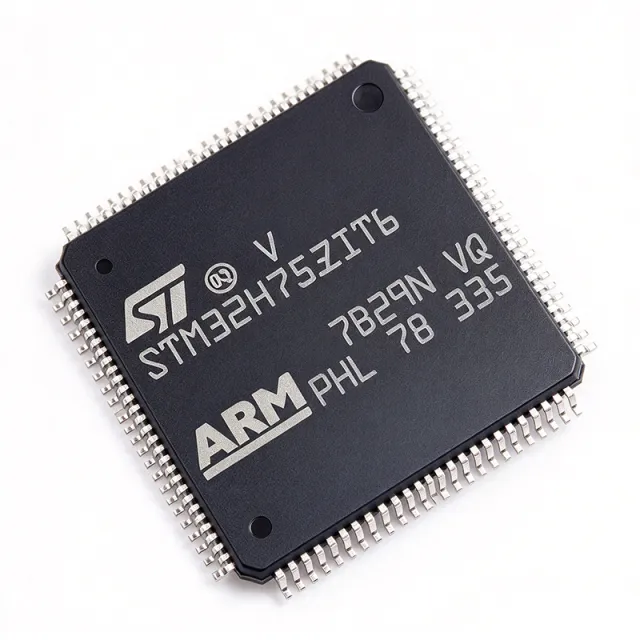
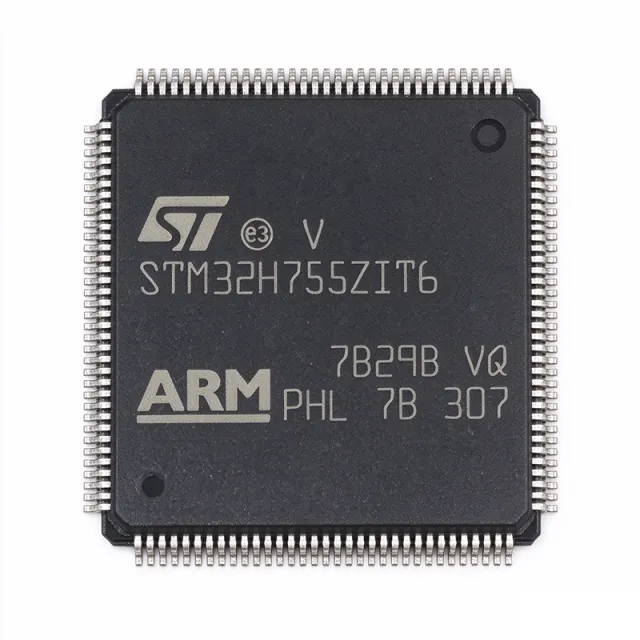
The STMicroelectronics STM32H7A3VGT6 is a high-performance Arm Cortex-M7 based microcontroller operating at up to 280 MHz, delivering 1.4 MB of flash memory and 1.4 MB of SRAM in a 100-pin LQFP package. It is part of the STM32H7A3 line, designed for applications requiring intensive computation, rich connectivity, and advanced security features.
What is a microcontroller (MCU)? A microcontroller is a compact integrated circuit that combines a processor core, memory, and programmable input/output peripherals on a single chip. It is the brain of embedded systems, executing firmware to control devices, process sensor data, and communicate with other systems. MCUs are classified within the broader hierarchy of embedded processors, which includes microprocessors, digital signal processors (DSPs), and system-on-chips (SoCs). The STM32H7A3VGT6 sits at the high-performance end of the MCU spectrum, offering near-DSP-level compute capability.
Key features include a 280 MHz Arm Cortex-M7 core with double-precision FPU, 1.4 MB flash, 1.4 MB SRAM, and a rich set of peripherals: multiple 16-bit and 32-bit timers, 12-bit ADCs, 12-bit DACs, and advanced communication interfaces (USART, SPI, I2C, FDCAN, USB OTG, Ethernet MAC). The device also integrates a hardware cryptographic accelerator (AES, DES, 3DES, SHA-1, SHA-256) and a true random number generator (TRNG) for secure applications.
Technically, the STM32H7A3VGT6 is built on a 40nm process, enabling high clock speeds with moderate power consumption. The Cortex-M7 core features a 6-stage pipeline, branch prediction, and a memory protection unit (MPU), supporting real-time deterministic execution. The device supports external memory interfaces (FMC) for SDRAM, NOR, and NAND flash expansion, and a flexible memory controller for parallel and serial interfaces.
Typical applications include industrial automation (PLC, motor control), medical devices (patient monitors, infusion pumps), consumer electronics (smart speakers, wearables), and IoT gateways. The high core speed and rich peripherals make it suitable for real-time control, audio processing, and edge AI inference.
When designing with this device, ensure adequate decoupling on all power pins and a proper crystal oscillator layout for the HSE. The 100-pin LQFP package requires careful thermal management; use a 4-layer PCB with a solid ground plane to dissipate heat effectively.
Запрос цены
Контакты