TCAN334DCNT - 3.3V 1Mbps CAN FD Transceiver | Texas Instruments
Артикул: TCAN334DCNT ✓ АктивенTCAN334DCNT Обзор
A CAN transceiver is an interface IC that converts logic-level controller signals into physical bus signals and converts incoming bus levels into digital data for the host controller. CAN, or Controller Area Network, is a deterministic multi-node serial-bus technology widely used in automotive, industrial, robotics, and embedded systems. CAN FD extends classical CAN by carrying larger data payloads while maintaining compatibility with the physical communication environment.
The TCAN334 family operates from a 3 V to 3.6 V supply, allowing direct association with 3.3 V microcontrollers and CAN controllers. Its 1 Mbps capability supports the data rates used by many classical CAN networks. The half-duplex arrangement means the transmitter and receiver share the same bus connection, while the transceiver supplies separate digital transmit and receive paths to the controller.
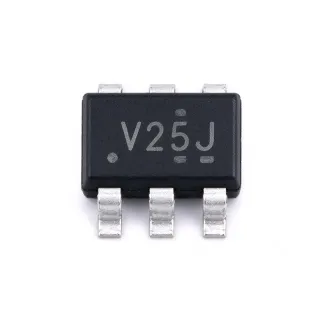
The device is offered in the compact DCN SOT-23 package, which supports high-density PCB placement in embedded control systems. Its operating-temperature range extends from -40°C to 125°C, making it suitable for industrial and automotive-style environments when the complete system requirements are met. The transceiver also includes power-down behavior and fault-detection functions, allowing a host controller to manage bus communication and detect abnormal bus states.
Typical uses include CAN-connected sensor nodes, industrial control modules, automotive body electronics, robot controllers, and factory automation equipment. In each case, the TCAN334DCNT can interface a host CAN controller to a physical CAN bus while operating from the same 3.3 V rail as the controller. Network topology, termination, isolation, and transceiver selection still require system-level validation.
For PCB design, place the transceiver and its required bypass capacitor close to the associated controller and CAN connector. Keep the CANH and CANL routing short, symmetrical, and away from sensitive analog or high-speed digital traces. Verify termination placement so that the two ends of the principal bus segments use the resistance required by the CAN network design.
This page combines manufacturer product data, package details, verified cross-reference candidates, and application-oriented engineering guidance. It helps engineers compare same-footprint CAN transceiver options, identify functional differences, and plan interface layouts before requesting a quotation.
Аналоги без доработки для TCAN334DCNT — тот же корпус, pin-to-pin совместимость. Компоненты в других корпусах, требующие переработки PCB, исключены.
TCAN330DCNT
✅ Прямая замена📋 Справочный аналог (нет в каталоге)
TCAN332DCNT
✅ Прямая замена📋 Справочный аналог (нет в каталоге)
TCAN335DCNT
✅ Прямая замена📋 Справочный аналог (нет в каталоге)
TCAN337DCNT
✅ Прямая замена📋 Справочный аналог (нет в каталоге)
TCAN337GDCNT
✅ Прямая замена📋 Справочный аналог (нет в каталоге)
TCAN334DCNT Характеристики
| Product Type | 3.3 V CAN FD transceiver |
| Supply Voltage Range | 3 V to 3.6 V |
| Maximum CAN Data Rate | 1 Mbps |
| CAN FD Support | Supported |
| Transceiver Configuration | 1/1 half duplex |
| Корпус | 8-pin SOT-23 (DCN) |
| Число выводов | 8 pins |
| Диапазон рабочих температур | -40°C to 125°C |
| Тип монтажа | Surface mount |
| Power-Down Function | Supported |
Руководство по цоколевке TCAN334DCNT в корпусе 8-pin sot-23 (dcn)
Цоколевка для TCAN334DCNT (корпус 8-pin sot-23 (dcn)). Нумерация выводов, функции и схемы подключения определены в техническом описании производителя. Обратитесь к нему для точного посадочного места и рекомендаций по пайке.

Нет подробных данных о распиновке для TCAN334DCNT.
Обратитесь к даташиту для полной конфигурации выводов.
Типичное применение
TCAN334DCNT подходит для 6 применениеs: Industrial CAN Sensor Nodes, Robotics Motor and Sensor Networking, Automotive Body Electronics, Factory Automation Equipment, Embedded CAN Communication Hubs, Test and Measurement Equipment.
Industrial CAN Sensor Nodes
The TCAN334DCNT suits compact sensor and measurement nodes that communicate over a 3.3 V CAN bus. Its 3 V to 3.6 V operating range can align with a 3.3 V sensor or MCU supply, while the 1 Mbps bus capability supports factory automation networks operating below that limit. The half-duplex interface connects the host controller to CANH and CANL without requiring separate bus-line drivers. For reliable deployment, the design should include local bypass capacitance, controlled bus routing, correct termination at physical bus endpoints, and validation of common-mode limits, ground continuity, ESD protection, and fault behavior under cable disturbances.
Рекомендуется
Robotics Motor and Sensor Networking
The TCAN334DCNT provides a physical CAN interface for robot controllers, motor-control modules, and distributed sensor units. Its 1 Mbps data rate is appropriate for deterministic command and status traffic when the network is correctly terminated and configured for the selected rate. Operating from a 3.3 V rail simplifies integration with low-voltage embedded processors, while the -40°C to 125°C range supports controlled industrial environments. Designers should keep CANH and CANL routing short and matched, isolate the transceiver from motor-switching nodes where practical, and verify the transceiver against the motor drive's ground offsets and transient-noise environment.
Рекомендуется
Automotive Body Electronics
The TCAN334DCNT can support low-speed CAN communication in body, comfort, door, lighting, and sensor-control modules. Its 3.3 V operation aligns with modern low-voltage electronic control units, and its 1 Mbps capability covers many classical CAN applications. The wide -40°C to 125°C operating range is relevant to automotive environments, but final selection requires verification of the exact qualification, transient immunity, ESD performance, and electromagnetic-compatibility requirements of the vehicle platform. A production design should also confirm whether the chosen variant provides the required standby and fault functions for the module's diagnostic strategy.
Рекомендуется
Factory Automation Equipment
The TCAN334DCNT is suitable for CAN-based factory equipment that exchanges commands, status, and diagnostic data between PLC-adjacent modules and embedded controllers. The 1 Mbps maximum rate supports common industrial CAN networks, and the 3 V to 3.6 V supply range simplifies connection to 3.3 V controller electronics. In a machine-control design, the transceiver should be positioned near the CAN connector, the bus traces should avoid switching-power and high-current motor paths, and the PCB should maintain a low-impedance ground path. Verify termination, cable length, bit timing, and bus fault handling at the system level because package compatibility alone does not guarantee network performance.
Рекомендуется
Embedded CAN Communication Hubs
The TCAN334DCNT can form part of an embedded communication hub that converts a host controller's digital interface to a physical CAN network. Its half-duplex configuration supports practical multidrop bus arrangements, while the compact 8-pin SOT-23 package preserves board area in dense control products. At 1 Mbps, the device supports higher communication bandwidth than many legacy CAN nodes, although actual throughput depends on payload structure, arbitration, protocol overhead, and network loading. Keep the transceiver close to the bus connector, provide a stable 3.3 V supply, follow the manufacturer's recommended application circuit, and validate behavior during bus-fault and recessive-state conditions.
Рекомендуется
Test and Measurement Equipment
The TCAN334DCNT can serve as the bus interface in compact test instruments, service tools, and automated measurement equipment that must communicate with CAN-controlled fixtures. The 1 Mbps rate accommodates common diagnostic and control traffic, while the 3.3 V supply range is compatible with modern test-instrument logic. The SOT-23 package also helps reduce the footprint of multi-channel measurement products. For reliable results, separate the CAN bus from sensitive analog paths, use a short and symmetrical bus connection, confirm that the test harness uses the intended termination, and account for ground-potential differences between the instrument and the equipment under test.
Рекомендуется
Сводка рекомендуемых товаров
Справочные инженерные данные для TCAN334DCNT — сравнение, рекомендации по проектированию и информация о соответствии.
Руководство по выбору
Сравнение с аналогами
| Параметр | Этот товар | TCAN330DCNT | TCAN332DCNT | TCAN335DCNT | TCAN337DCNT | TCAN337GDCNT |
|---|---|---|---|---|---|---|
| Brand | Texas Instruments | Texas Instruments | Texas Instruments | Texas Instruments | Texas Instruments | Texas Instruments |
| Package | SOT-23-8 (DCN) | SOT-23-8 (DCN) - same | SOT-23-8 (DCN) - same | SOT-23-8 (DCN) - same | SOT-23-8 (DCN) - same | SOT-23-8 (DCN) - same |
| Product Type | 3.3 V CAN FD transceiver | 3.3 V CAN transceiver | 3.3 V CAN transceiver | 3.3 V CAN transceiver | 3.3 V CAN transceiver | 3.3 V CAN transceiver |
| Supply Voltage | 3.3 V | 3.3 V | 3.3 V | 3.3 V | 3.3 V | 3.3 V |
| Maximum Data Rate | 1 Mbps | 1 Mbps | 1 Mbps | 1 Mbps | 1 Mbps | 1 Mbps |
| Transceiver Configuration | 1/1 half duplex | Half duplex | Half duplex | Half duplex | Half duplex | Half duplex |
Ключевые отличия
- Defined 3.3 V CAN FD family positioning (против TCAN330DCNT)
- Compact 8-pin DCN implementation (против TCAN332DCNT)
- Clear family distinction from fault-output variant (против TCAN337DCNT)
Заметки по проектированию
Place the TCAN334DCNT close to the CAN connector and provide the bypass capacitor recommended by the manufacturer between the 3.3 V supply and ground pins. Keep the CANH and CANL traces short, routed as a closely coupled pair, and away from switching-regulator traces, motor-drive outputs, clocks, and sensitive analog inputs. A compact return-path connection beneath the bus pair helps limit radiated emissions. Confirm the final CAN trace impedance and topology against the actual bus cable and termination arrangement.
Do not infer complete interchangeability from the shared SOT-23 package, 3.3 V supply, and 1 Mbps data rate. TCAN335DCNT is specifically described as having a slightly different pinout, while TCAN337DCNT includes a fault-output pin. Before replacing TCAN334DCNT, compare every terminal, standby level, fault polarity, input threshold, output timing, and bus-drive behavior in the manufacturer datasheets. Also review the maximum bus voltage and ground-potential limits, because those conditions determine whether a low-voltage logic-compatible transceiver can tolerate a particular network.
Use a stable 3.3 V rail within the specified 3 V to 3.6 V operating range and account for transceiver current in the host power budget. Place the local supply capacitor at the transceiver rather than relying on a distant bulk capacitor, and minimize the supply-loop area between the device, capacitor, and ground return. Validate the rail during bus transmission and standby transitions because current and bus activity can vary with operating mode. If the CAN bus shares a connector or ground structure with noisy subsystems, evaluate isolation or filtering at the system architecture level rather than assuming the transceiver alone suppresses conducted and radiated disturbances.
Информация о соответствии
Compliance status requires confirmation from the current manufacturer product documentation or declarations for the exact TCAN334DCNT orderable part.