Analog Devices

AD52000-1 Digital Potentiometer | Analog Devices

MPN: AD52000-1 ✓ Nakahanda
MOQ: 1 |

AD52000-1 Ulas

The Analog Devices AD52000-1 is a digitally controlled potentiometer designed to provide a programmable resistance function for analog signal conditioning, calibration, trimming, and control systems. It belongs to the digital potentiometer hierarchy, where a digital interface replaces a mechanical potentiometer wiper and allows resistance to be set through a digital code. The Analog Devices AD5200 product family performs the same electronic adjustment function as a potentiometer or variable resistor. Its wiper contacts a programmable resistive element at a position determined by the digital control code.

A digital potentiometer provides repeatable electronic control where a mechanical variable resistor would otherwise require manual adjustment. This distinction matters in instrumentation, industrial controls, sensor interfaces, and test equipment because the controller can update the resistance setting through a digital bus while retaining a resistive signal path for the analog circuit. The AD5200 family includes 256-position and 33-position devices, demonstrating how resolution can be selected according to the required adjustment granularity and control-system architecture.

The AD52000-1 is controlled through a serial digital interface, allowing its wiper position to be programmed from a microcontroller, programmable logic controller, or other digital controller. This architecture supports automatic calibration, programmable gain and offset adjustment, and remote equipment configuration. Because the device changes resistance electronically rather than through mechanical movement, it avoids wiper wear, mechanical contact bounce, and long-term mechanical drift associated with conventional adjustable resistors.

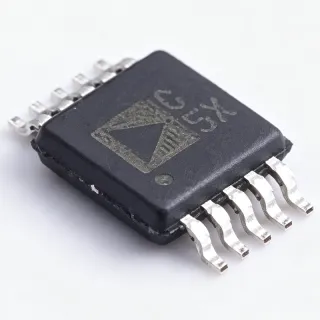
ADI's AD5200 family documentation identifies a compact MSOP package for the AD5200 and AD5201 devices and describes a fixed wiper resistance at the wiper contact. The exact package, electrical ratings, tap resistance, endpoint resistance, wiper resistance, interface timing, and temperature ratings for the AD52000-1 must be confirmed in the manufacturer documentation for that exact ordering code before layout or production release. Those parameters determine whether an existing board can be reused without schematic or footprint changes.

Potential uses include sensor excitation, programmable amplifier and filter networks, laboratory test fixtures, industrial calibration loops, and embedded measurement systems. In a sensor interface, the digital potentiometer can adjust gain, threshold, or excitation level while the controller performs calibration. In a test fixture, it can select calibrated resistance values without manual interaction. In either case, the useful design benefit is the combination of an analog resistive element and programmable wiper control.

The principal layout consideration is to place the device and its bypass or termination components close to the controlled analog node while keeping the serial interface away from sensitive high-impedance paths. Designers should verify the actual pin map, recommended resistor values, logic levels, and maximum terminal voltages for AD52000-1 before finalizing a PCB. Do not infer those values from an AD5200 or AD5201 document unless the manufacturer explicitly identifies the devices as pin-compatible.

This product record combines the manufacturer product description, current sourcing references, technical application guidance, and a conservative replacement assessment. Its most important engineering distinction is the exact-ordering-code review: AD52000-1 should not be treated as interchangeable with every member of the AD5200 family until package, pinout, resistance code, resolution, interface, and environmental requirements have been compared directly.

Mga alternatibo na pwedeng ilagay na AD52000-1 — parehas na package, pin-to-pin na katugmang. Hindi kasama ang mga bahagi ng iba't-ibang package na nangangailangan ng pagpapaayos ng PCB.

Wala ng magagamit na drop-in alternatibo para sa produkto na ito.

Hilingin ang Alternatibo

AD52000-1 Mga Pinakamataas na Rating at Electrical Characteristics

Product Type Digital potentiometer
Control Interface Serial digital interface
Fungsi Programmable variable resistance
Uri ng Pagpapasok Surface mount
Tindminan RoHS unknown
REACH Status unknown
Automotive Qualification unknown

Gabay sa Pin Configuration ng AD52000-1 standard

Pin configuration para sa AD52000-1 (standard package). Ang analog component na ito ay may input, output, at power supply pins. Sumangguni sa datasheet ng manufacturer para sa offset null, compensation, at enable pin configurations. Perpekto para sa signal conditioning at amplifier circuits.

Pinout diagram ng standard package para sa AD52000-1

Wala ng detalyadong pinout data na magagamit para sa AD52000-1.

Sumangguni sa datasheet para sa buong pin configuration.

Tipikal na mga Gamit

AD52000-1 ay nararapat para sa 6 aplikasyons: Sensor Signal Conditioning, Programmable Gain Control, Industrial Equipment Calibration, Precision Test Fixture, Remote Analog Adjustment, Automated Instrument Control.

🧩

Sensor Signal Conditioning

AD52000-1 can support programmable sensor interfaces when the controlled resistance falls within the device's documented range. Place it in the gain, excitation, or threshold network so a microcontroller can apply calibration values through the digital interface. This approach preserves an analog resistive signal path while removing manual potentiometer adjustment. Before layout release, verify the exact AD52000-1 resistance code, wiper resistance, endpoint resistance, maximum terminal voltage, and recommended resistor values from the manufacturer documentation.

⚡

Programmable Gain Control

AD52000-1 is useful in a programmable gain stage when its tap count and resistance network can establish the required gain steps. The wiper code can be changed from a controller to compensate for sensor variation or product tolerances without a mechanical adjustment. Validate the resistor ratios and wiper contribution against the amplifier's noise and stability requirements. The exact AD52000-1 wiper and endpoint characteristics must be included in the error budget because they directly affect gain accuracy.

🏭

Industrial Equipment Calibration

AD52000-1 can be placed in an industrial calibration loop to store an adjustable reference setting in a digital controller and apply it to an analog measurement or actuation circuit. This approach supports automated setup and repeatable compensation across production units. The circuit should keep the wiper node within the device's rated voltage and resistance limits, and the PCB should isolate digital activity from sensitive analog traces. Confirm package, temperature grade, and resistance tolerances for the production environment.

🖥️

Precision Test Fixture

AD52000-1 is suitable for a programmable test fixture when a microcontroller must select or calibrate a resistance in a measurement path. The fixture can apply known adjustment codes without operator intervention, improving repeatability between test cycles. Account for the device's documented wiper resistance and resolution when defining fixture uncertainty. Use short analog traces and a defined ground reference, and confirm the ordering code's pin map before using the device as a direct replacement in an existing fixture.

🌐

Remote Analog Adjustment

AD52000-1 enables remote analog adjustment when a system operator or supervisory controller must modify a resistance setting through a serial interface. This can support field adjustment of thresholds, compensation, or operating ranges without opening the equipment. The receiving controller should validate the written resistance code and detect communication faults so an unintended code does not move the wiper to an unsuitable position. The design must also include appropriate logic levels and timing for the exact interface implementation.

🔧

Automated Instrument Control

AD52000-1 can be used in automated instrumentation to vary an analog parameter while keeping the setting under software control. Examples include test excitation, null adjustment, and programmable attenuator or bridge networks. Because no mechanical wiper wear is involved, repeated software adjustments remain repeatable, although accuracy is still governed by resolution, wiper impedance, and temperature effects. Confirm the device's operating temperature range and resistance code against the instrument's calibration environment before production use.

Buod ng mga Inirekomendang Produkto

AD5200 Same-manufacturer digital potentiometer family reference Ginagamit sa: Sensor Signal Conditioning, Programmable Gain Control, Industrial Equipment Calibration, Precision Test Fixture, Remote Analog Adjustment, Automated Instrument Control AD5201 Same-manufacturer lower-resolution family reference Ginagamit sa: Sensor Signal Conditioning, Programmable Gain Control, Industrial Equipment Calibration, Precision Test Fixture, Remote Analog Adjustment, Automated Instrument Control
What is the AD52000-1?
The AD52000-1 is an Analog Devices digitally controlled potentiometer used to emulate a variable resistor through a digital control code. Analog Devices describes the AD5200 family as performing the same electronic adjustment function as a potentiometer or variable resistor, with the wiper tapping a programmable resistive element at a digitally selected position. Exact resistance, resolution, supply, and package details should be taken from the documentation for the AD52000-1 ordering code.
What can the AD52000-1 be used for?
The AD52000-1 is suitable for programmable gain, sensor calibration, threshold adjustment, analog test equipment, and remotely controlled signal-conditioning circuits. Unlike a mechanical potentiometer, its wiper position is changed electronically, reducing mechanical wear and permitting repeatable updates from a microcontroller or other digital controller. The selected resistance must remain within the device's specified terminal and wiper ratings.
Where can I download the AD52000-1 datasheet?
The official Analog Devices product page for the AD5200 family is the appropriate starting point for the AD52000-1 datasheet and supporting documentation. The family page identifies AD5200 and AD5201 digital potentiometers and provides data-sheet, product-selection, and software resources. Use the exact AD52000-1 suffix documentation for package and resistance details, because family-level information may not describe every ordering code.
Where can I find the AD52000-1 pinout?
The AD52000-1 pin assignment must be taken from the pin-description table in the manufacturer document covering that exact ordering code. The Analog Devices AD5200 family page describes compact MSOP packages for AD5200 and AD5201 devices, but that family-level statement is not sufficient to assign the AD52000-1 footprint. Use the package drawing and pin table together when creating the schematic symbol, PCB footprint, and assembly drawing.
How is the AD52000-1 different from a mechanical potentiometer?
The AD52000-1 changes its effective wiper position electronically instead of relying on a moving mechanical contact. This permits remote and repeatable adjustment while avoiding mechanical wiper wear, contact bounce, and mechanical aging associated with a conventional potentiometer. Its practical limitations remain those of a solid-state resistive network, including the specified resolution, wiper resistance, endpoint behavior, and allowable signal excursion.
Can AD5200 or AD5201 replace AD52000-1?
An AD5200 or AD5201 should not be treated as a drop-in AD52000-1 replacement without a complete package, pin, resolution, resistance, and interface comparison. Analog Devices lists the AD5200 family with 256-position and 33-position devices, showing that resolution differs even within the family. Use the Request a Quote form for availability and lead-time information, and request manufacturer documentation for each candidate before approving a substitution.
What is the best drop-in replacement for AD52000-1?
The best drop-in replacement is the ordering code that matches AD52000-1 in package, physical dimensions, lead assignment, digital interface, tap count, total resistance, wiper resistance, endpoint resistance, and operating ratings. No confirmed cross-brand equivalent was identified from the available cross-reference results, so selecting a replacement based only on the generic function would be unsafe. Start with the exact AD52000-1 documentation and require a manufacturer or authorized distributor confirmation for any proposed substitution.
Is AD52000-1 suitable for sensor calibration?
Yes, AD52000-1 can be suitable for sensor calibration when its specified resistance range, resolution, wiper resistance, and signal ratings fit the calibration network. Its digitally selectable wiper allows a controller to apply correction values without manual adjustment. Keep the controlled node within the allowable signal range and follow the manufacturer's recommended resistor network and grounding arrangement for accurate, repeatable operation.
What is the price of AD52000-1?
Current commercial terms for the AD52000-1 should be requested through the Request a Quote form on this page because prices and inventory can change with quantity and sourcing conditions. The form supports confirmation of unit pricing, minimum order quantity, available package variants, and lead time. No fixed price should be treated as a quotation without written confirmation for the requested quantity and exact ordering code.
Where can I buy AD52000-1 online?
Use the Request a Quote form on this page to request the AD52000-1 from XAIPART. The request should state the required quantity, packaging preference, target date, and whether a traceability or inspection requirement applies. A formal response should confirm the exact MPN, lifecycle status, delivery schedule, and commercial terms before an order is placed.
What is the lead time for AD52000-1?
The current lead time for AD52000-1 should be confirmed through the Request a Quote form on this page. Lead time can vary with order quantity, package configuration, allocation status, and inspection requirements. Provide the projected annual usage and required delivery window when requesting a quotation so the supply response reflects the actual production plan.
Is AD52000-1 in stock?
Inventory for AD52000-1 changes over time and should be confirmed through the Request a Quote form on this page. Include the quantity, required package, and target shipment date in the request. Do not treat an aggregator or retailer stock indicator as a guaranteed allocation until XAIPART confirms the exact ordering code and delivery schedule.
AD52000-1 vs AD5200 — which is better for calibration?
AD52000-1 is preferable when its exact resistance code, resolution, interface, and package meet the calibration design; AD5200 is preferable when its independently documented parameters match the circuit and AD52000-1 does not. The family page identifies AD5200 as a 256-position device, but the AD52000-1 suffix must be checked separately. The decision should be based on complete parameter matching rather than the shared digital-potentiometer category.
AD52000-1 vs AD5201 — which fits a high-resolution control loop?
AD52000-1 is the candidate for a high-resolution control loop only if its exact tap count exceeds or equals the resolution needed by the application and its other parameters pass the design checks. Analog Devices identifies AD5201 as a 33-position family member, so it should not be assumed to match AD52000-1's adjustment granularity. Verify package, resistance, wiper behavior, interface timing, and control-code mapping before selecting either device.
When should I choose AD52000-1 over another digital potentiometer?
Choose AD52000-1 when its documented tap count, total resistance, wiper resistance, endpoint resistance, supply range, interface, and exact package satisfy the circuit and replacement constraints. Select another device when the AD52000-1 resistance code is unsuitable, a different package is mechanically required, a broader temperature rating is needed, or a confirmed pin-compatible ordering code offers better availability. Validate the complete analog specification and PCB footprint rather than relying on the generic product category.
What are the key specifications of AD52000-1 engineers should know?
The key AD52000-1 design checks are the exact tap count, nominal total resistance, wiper resistance, endpoint resistance, supply voltage, logic levels, serial-interface timing, temperature range, package dimensions, and pin assignment. These fields cannot be safely inferred from the AD5200 family summary because the manufacturer page groups multiple devices and ordering options. Confirm every item in the documentation for AD52000-1 before schematic release, PCB layout, or production procurement.

Impormasyon ng Talumpati sa Engineering for AD52000-1 — ikabit, gabay sa disenyo, at impormasyon ng pagsunod sa kautusan.

Paunawang Hanapin

Choose AD52000-1 when a design specifically calls for that exact ordering code and its resistance, resolution, package, interface, and environmental ratings satisfy the circuit. The strongest potential benefit is digitally controlled analog adjustment without the mechanical wear, contact bounce, and mechanical aging associated with a conventional potentiometer. Do not choose it based only on the AD5200 family name or a similar resistance value. Review the exact pinout, total resistance, wiper resistance, endpoint resistance, supply limits, interface timing, and temperature range before committing the schematic or PCB. If AD52000-1 does not match the required electrical limits, evaluate a confirmed alternative with the same package and pin assignments rather than assuming that AD5200, AD5201, or a cross-brand digital potentiometer is interchangeable. For regulated production, request the exact suffix and delivery commitment through the Request a Quote form.

Talaan ng Disenyo

Assign the AD52000-1 footprint only after obtaining the package drawing and pin table for the exact ordering code. The Analog Devices family page describes compact MSOP packages for related devices, but it does not establish the AD52000-1 lead arrangement. Place the device so the digitally controlled wiper connection has a short return path, and route serial signals away from the high-impedance analog node to reduce coupling into the programmed resistance.

Do not select a family member solely because it is called a digital potentiometer. Compare tap count, total resistance, wiper resistance, endpoint resistance, logic levels, interface timing, supply range, package, and temperature rating. A different resistance suffix can alter the usable adjustment range, while a different tap count changes the resolution of the calibration step. Treat the ordering code as the controlling specification rather than the abbreviated family name.

Include the manufacturer's recommended terminating and bypass components once the exact AD52000-1 circuit configuration is known. Keep the wiper connection short and preserve a low-impedance return to the analog ground reference. If the controlled node drives a high-gain amplifier, evaluate parasitic capacitance and wiper impedance in the signal path. Digital interface traces should not run directly beneath sensitive analog nodes on a multilayer PCB.

Impormasyon ng Pagsunod sa Kautusan

RoHS
Unknown
REACH
Unknown
AEC-Q100
Unknown
Walang Lead
Unknown
Walang Halogen
Unknown
Mga Conflict Mineral
Unknown

No exact-ordering-code RoHS, REACH, AEC-Q100, lead-free, halogen-free, or conflict-minerals declaration was identified. Confirm compliance with Analog Devices before production release.

Data napatotohanan sa: 2026-11-18 — impormasyon na pinatunayan at pinapatakbo ng pangkat ng engineering ng XAIPART's component engineering team

Kaugnay na Hanapin

AD52000-1 datasheet AD52000-1 pinout AD52000-1 datasheet pdf AD52000-1 equivalent AD52000-1 replacement AD52000-1 cross reference AD52000-1 price AD52000-1 stock Analog Devices AD52000-1 AD52000-1 footprint AD52000-1 application circuit AD52000-1 vs AD5200

Mga kaugnay na Mga Komponente at mga Tuntunin

Analog Devices AD52000-1 AD5200 AD5201 digital potentiometer programmable resistor variable resistor resistive element wiper serial digital interface sensor signal conditioning programmable gain control industrial calibration automated test equipment remote analog adjustment MSOP surface-mount package semiconductor resistance code tap count wiper resistance endpoint resistance signal conditioning
Mabilis na Tanggap na RFQ
Ihanda ang buong detalye — ang aming pangkalakal na koponan ay tutugon sa loob ng 24 oras
Numero ng Parte Mga Tagagawa Pakete QTY Target na Halaga Pinalawak
✓
Quote na inilabas!

Ating tumugon sa iyong email sa loob ng 24 oras

1
RFQ Naisumite
2
Received na ang Kwaliksik
3
Nai-order
4
Pagbabayad
5
Inihanda
6
Naihanda
Tingnan ang Detalye ng RFQ