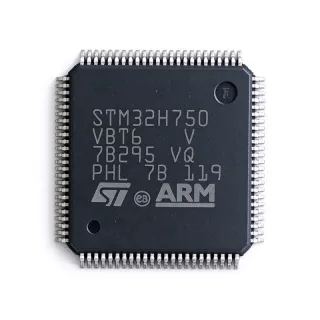
STM32L4S5VIT6 - Ultra-Low-Power ARM Cortex-M4 MCU, 120MHz, 2MB Flash | STMicroelectronics
MPN: STM32L4S5VIT6 ✓ NakahandaSTM32L4S5VIT6 Ulas
What is an ultra-low-power microcontroller? An ultra-low-power microcontroller is an embedded processor designed to minimize energy consumption while maintaining computational capability through multiple low-power modes (Sleep, Stop, Standby, Shutdown). Within the broader hierarchy, an ultra-low-power MCU is a subset of microcontrollers, which are integrated circuits used in embedded systems. The STM32L4+ family is specifically optimized for battery-powered and energy-harvesting applications, balancing high performance with industry-leading power efficiency measured in nanoamps.
Key features of the STM32L4S5VIT6 include multiple 12-bit ADCs (5 Msps), 12-bit DACs, ultra-low-power comparators, advanced timers, and a rich communication interface set: USART, SPI, I2C, CAN, USB OTG with on-chip PHY, SAI, and SDMMC. Security features include a true random number generator (TRNG), AES-256 hardware accelerator, and Hash (SHA-256). The device operates from 1.71V to 3.6V across a -40°C to +85°C temperature range.
Technically, the STM32L4S5VIT6 leverages ST's proprietary 90 nm ultra-low-leakage process and proprietary smart architecture. Current consumption reaches as low as approximately 100 nA in Standby with backup domain, and a few microamps in Stop mode with RTC running. This enables years of operation on coin-cell or lithium batteries. The integrated Chrom-ART graphics accelerator and USB OTG with embedded PHY simplify BOM and PCB layout for HMI and USB-connected designs.
Typical applications include industrial sensor nodes, smart meters, wearable health monitors, medical instrumentation, IoT edge devices, and USB peripherals. Its combination of low power, high performance, and rich peripherals allows designers to implement complex DSP and control algorithms while maintaining long battery life.
When designing with this MCU, pay attention to power supply decoupling: place a 100 nF ceramic capacitor close to each VDD pin and a 4.7 µF bulk capacitor on the main supply. Configure the clock system carefully to balance performance and consumption, using the MSI (multi-speed internal) oscillator for low-power phases and the HSE crystal only when precision is required.
This page synthesizes distributor pricing, drop-in alternatives, and practical design notes not found in the manufacturer datasheet, providing actionable engineering context for BOM decisions and second sourcing.
Mga alternatibo na pwedeng ilagay na STM32L4S5VIT6 — parehas na package, pin-to-pin na katugmang. Hindi kasama ang mga bahagi ng iba't-ibang package na nangangailangan ng pagpapaayos ng PCB.
Variante sa Seri na ito
Katulad na modelo sa serye na katugma sa pagpasok STM32L4S5VIT6 (parehas na form factor at footprint) — pagkakaiba sa ADC, Communication Interfaces, Package, RoHS Status, SRAM.
STM32L4S5VIT3
✅ Drop-In📋 Alternatibo na Reference (hindi sa katalogo)
STM32L4R5VIT6
✅ Drop-InMagkontak para sa presyo
Tingnan ang Datasheet →GD32F450VIT6
✅ Drop-In📋 Alternatibo na Reference (hindi sa katalogo)
ATSAM4SD32CB-CFN
✅ Drop-InMagkontak para sa presyo
Tingnan ang Datasheet →STM32L4S5VIT6 Mga Pinakamataas na Rating at Electrical Characteristics
| Core | ARM Cortex-M4 with FPU |
| Maksimum na Taktiko ng Oras | 120 MHz |
| Performance | 150 DMIPS (Dhrystone 2.1) |
| Flash Memory | 2 MB (2M x 8) |
| SRAM | 640 KB |
| Supply Voltage Range | 1.71 V to 3.6 V |
| Hanay ng Temperature na Operasyon | -40 °C to +85 °C |
| Packhaging | LQFP-100 (14x14 mm, 0.5 mm pitch) |
| ADC | 12-bit, 5 Msps (multiple units) |
| DAC | 12-bit (multiple units) |
| USB | USB OTG full-speed with on-chip PHY |
| Communication Interfaces | USART, SPI, I2C, CAN, USB OTG, SAI, SDMMC |
| Security | AES-256, HASH (SHA-256), TRNG |
| Graphics Accelerator | Chrom-ART |
| Standby Current | approx. 100 nA (with backup domain) |
| Tindminan RoHS | Compliant |
Gabay sa Pin Configuration ng STM32L4S5VIT6 lqfp-100 (14x14 mm, 0.5 mm pitch)
Pin configuration para sa STM32L4S5VIT6 (lqfp-100 (14x14 mm, 0.5 mm pitch) package). Kasama sa digital IC na ito ang GPIO, mga communication interface (UART, SPI, I2C), at mga power pin. Sumangguni sa datasheet ng manufacturer para sa mga alternatibong function ng pin at mga opsyon sa configuration. Mahalaga para sa disenyo ng embedded system at PCB layout.

Wala ng detalyadong pinout data na magagamit para sa STM32L4S5VIT6.
Sumangguni sa datasheet para sa buong pin configuration.
Tipikal na mga Gamit
STM32L4S5VIT6 ay nararapat para sa 6 aplikasyons: Smart Metering and Utility Monitoring, Wearable Health Monitoring Devices, Industrial IoT Sensor Nodes, USB-Connected Peripherals and HID Devices, Portable Medical Instrumentation, Battery-Powered Asset Tracking and Logistics Tags.
Smart Metering and Utility Monitoring
The STM32L4S5VIT6 fits smart electricity/gas/water meters because its 100 nA Standby current with RTC retention enables multi-year battery life while the 120 MHz Cortex-M4F handles metrology DSP, LCD driving, and wireless M-Bus/LoRa stack processing. Its 2 MB Flash stores meter calibration tables, firmware updates, and event logs without external memory, and the 12-bit 5 Msps ADC samples voltage and current channels with simultaneous sampling. According to the ST datasheet, the integrated AES-256 and TRNG secure OTA firmware updates against tampering, which is critical for utility-grade deployments requiring IEC 62056 compliance.
Inirekomenda
Wearable Health Monitoring Devices
For wearables such as heart-rate patches, continuous glucose monitors, and fitness bands, the STM32L4S5VIT6's Stop2 mode at single-digit microamps extends battery life to weeks on a small Li-ion cell. The 2 MB Flash stores DSP algorithms for heart-rate variability (HRV), SpO2, and ECG signal processing, while the 640 KB SRAM buffers multi-channel sensor data. Its Cortex-M4F executes FFT and finite-impulse-response (FIR) filters efficiently for biosignal conditioning, and the AES-256 engine encrypts PHI data at rest, satisfying HIPAA/GDPR data-at-rest requirements.
Inirekomenda
Industrial IoT Sensor Nodes
The STM32L4S5VIT6 is well-suited for IIoT edge nodes that combine sensor sampling, on-device analytics, and industrial-bus connectivity. Its multiple SPI/I2C/UART interfaces connect directly to MEMS sensors, while the CAN-FD interface bridges to industrial networks. The 12-bit ADC and 12-bit DAC enable closed-loop control, and the Chrom-ART graphics accelerator drives a small local display for HMI. With Standby current under 200 nA and -40 °C to +85 °C industrial temperature range, the part handles factory-floor environments and Energy Harvesting or battery-backed wireless sensor deployments.
Inirekomenda
USB-Connected Peripherals and HID Devices
The STM32L4S5VIT6 integrates a USB OTG full-speed controller with on-chip PHY, eliminating the need for an external USB transceiver and reducing BOM cost for USB peripherals such as HID devices, USB audio interfaces, and USB data loggers. The 2 MB Flash stores USB descriptors and application firmware, while the Cortex-M4F handles audio streaming or sensor data uploads at full USB bandwidth. The Chrom-ART accelerator enables on-device rendering for USB display devices, and the AES-256 engine secures USB bulk transfers when required.
Inirekomenda
Portable Medical Instrumentation
The STM32L4S5VIT6's IEC 60601-compatible software libraries, low-noise 12-bit ADC, and FPU-accelerated DSP make it suitable for portable pulse oximeters, handheld ultrasound probes, and bedside patient monitors. The 640 KB SRAM supports large FFT buffers for Doppler processing, while the integrated DAC generates stimulus waveforms. The hardware AES-256 and SHA-256 secure patient health information (PHI) both at rest and during firmware updates, and the low-power Stop modes extend operating time on battery-powered carts and handhelds.
Inirekomenda
Battery-Powered Asset Tracking and Logistics Tags
The STM32L4S5VIT6 fits battery-powered GPS/LoRa asset trackers where its 100 nA Standby mode keeps the tag dormant for years while the 120 MHz Cortex-M4F wakes periodically to acquire position, encrypt payloads via AES-256, and transmit. The 2 MB Flash stores geofence databases and routing protocols, and the RTC with calendar triggers wake-up events without CPU intervention. Its 1.71 V minimum supply voltage allows direct connection to a single CR2032 coin cell with a boost converter, simplifying the power tree for logistics IoT rollouts.
Inirekomenda
Buod ng mga Inirekomendang Produkto
Impormasyon ng Talumpati sa Engineering for STM32L4S5VIT6 — ikabit, gabay sa disenyo, at impormasyon ng pagsunod sa kautusan.
Paunawang Hanapin
Ikabit sa Mga Alternatibo
| Parametro | Ito ang Producto | STM32L4S5VIT3 | STM32L4R5VIT6 | STM32L4R5ZIT6P | STM32L496RGT6 | GD32F450VIT6 | ATSAM4SD32CB-CFN |
|---|---|---|---|---|---|---|---|
| Brand | STMicroelectronics | STMicroelectronics | STMicroelectronics | STMicroelectronics | STMicroelectronics | GigaDevice | Microchip Technology |
| Package | LQFP-100 | LQFP-100 - same | LQFP-100 - same | LQFP-144 - different | LQFP-64 - different | LQFP-100 - same | LQFP-100 - same |
| Core | Cortex-M4F @ 120 MHz | Cortex-M4F @ 120 MHz | Cortex-M4F @ 120 MHz | Cortex-M4F @ 120 MHz | Cortex-M4F @ 80 MHz | Cortex-M4F @ 200 MHz | Cortex-M4 @ 120 MHz |
| Flash | 2 MB | 2 MB | 1 MB (-50%) | 2 MB | 1 MB (-50%) | 3 MB (+50%) | 2 MB |
| SRAM | 640 KB | 640 KB | 640 KB | 640 KB | 320 KB (-50%) | 256 KB (-60%) | 160 KB (-75%) |
| Supply Voltage | 1.71 V to 3.6 V | 1.71 V to 3.6 V | 1.71 V to 3.6 V | 1.71 V to 3.6 V | 1.71 V to 3.6 V | 2.6 V to 3.6 V | 1.62 V to 3.6 V |
| USB | OTG FS with PHY | OTG FS with PHY | OTG FS with PHY | OTG FS with PHY | OTG FS with PHY | OTG FS with PHY | OTG FS with PHY |
| Hardware Crypto | AES-256, SHA-256, TRNG | AES-256, SHA-256, TRNG | AES-256, SHA-256, TRNG | AES-256, SHA-256, TRNG | AES-256, SHA-256, TRNG | No hardware crypto | AES-256, TRNG |
Pangunahing mga Pagkakaiba
- Largest on-chip Flash in its STM32L4+ pin-compatible family (kumpara saSTM32L4R5VIT6)
- Pin-compatible upgrade path with larger SRAM than ATSAM4SD32 (kumpara saATSAM4SD32CB-CFN)
- Lower power at equivalent performance vs GigaDevice GD32 (kumpara saGD32F450VIT6)
Talaan ng Disenyo
Estimated: At VDD = 3.3 V, VDDIO2 = 3.3 V, and CPU at 120 MHz with all peripherals enabled, the STM32L4S5VIT6 core current consumption reaches approximately 10 mA. Decoupling must include a 100 nF X7R ceramic capacitor within 3 mm of each VDD/VDDA/VREF+ pin, plus a 4.7 µF bulk capacitor on the main supply rail to suppress switching transients when peripherals such as USB OTG or ADC are active. Place the bulk capacitor near the VDD pin group, not at the regulator output.
Route the HSE 8-32 MHz crystal traces as short and symmetric as possible, surrounded by a ground pour on both sides, to minimize stray capacitance and EMI pickup. Keep the LSE 32.768 kHz crystal traces equally short and place load capacitors within 5 mm of the OSC32_IN/OSC32_OUT pins. Avoid routing high-speed signals (SPI, SDIO) under the crystal area to prevent coupling noise into the low-level oscillator.
Do not leave unused GPIO pins floating - configure them as analog inputs (lowest leakage) or enable internal pull-downs. Floating inputs can cause current leakage in Stop2/Standby modes that destroys the nanoamp-level Standby current budget. Also, when entering Standby mode, ensure the RTC alarm, WKUP pins, or IWDG are the only wakeup sources configured; otherwise the MCU may not enter Standby at all.
Impormasyon ng Pagsunod sa Kautusan
RoHS compliant per ST product page; industrial temperature grade -40C to +85C. For AEC-Q100 automotive applications, consult ST for the corresponding STM32L4S5VIT6 automotive-grade part number.