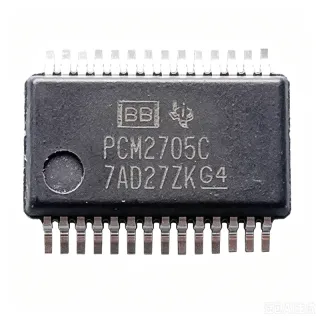
BD37541FS-E2 - 3-Band Audio Processor | ROHM Semiconductor
MPN: BD37541FS-E2 ✓ AktifBD37541FS-E2 Genel Bakış
A sound processor is an analog audio integrated circuit that accepts multiple audio inputs and provides input selection, gain control, volume control, tone shaping, mixing, and fader functions before the signal reaches an audio power amplifier. Within the broader electronics hierarchy, the BD37541FS-E2 belongs to the sound-processor family, then to analog audio-processing ICs, audio signal-chain ICs, and ultimately semiconductor devices.
The principal system feature is the integrated three-band equalizer. ROHM describes parametric equalization that can be adjusted without external equalization components. Separate bass, midrange, and treble controls give a vehicle audio designer a practical way to shape the tonal balance of radio, CD, auxiliary, or other line-level sources. The built-in subwoofer output also reduces the external circuitry needed to develop a compact multi-channel car-audio system.
Beyond equalization, the device includes a stereo input selector with single-ended and ground-isolated input capability, input-gain control, main volume, loudness, five-channel fader volume, and mixing input. The BD37541FS-E2 uses I2C control, which allows a host controller to adjust the selected audio-processing functions and reduces the number of external mechanical controls required in a finished audio system.
Typical applications include factory-fit car head units, automotive infotainment systems, compact multimedia systems, auxiliary-input modules, and powered speaker systems requiring centralized source selection and tone shaping. Because this device performs analog volume, gain, and equalization functions rather than generating high-power speaker drive, it should be paired with one or more external audio power amplifiers sized for the speaker impedance and required output power.
When designing a circuit around the BD37541FS-E2, preserve adequate analog grounding, route audio traces away from switching nodes and high-current power paths, and decouple the supply close to the device. Confirm the pin assignments and application circuit in the manufacturer datasheet before assigning traces because the public product result does not expose a complete verified pin description table.
This page combines the exact manufacturer and distributor facts for BD37541FS-E2 with practical guidance on equalization, signal-chain placement, I2C control, PCB layout, and drop-in replacement qualification. It also distinguishes documented functions from parameters that require confirmation from the manufacturer datasheet before a new design is released.
Drop-in alternatifler için BD37541FS-E2 — aynı paket, pin-başına uyumlu. PCB yeniden montajı gerektiren farklı paket bileşenleri dışlanmıştır.
Bu Serideki Variantlar
Yedek parça uyumlu olan aynı serideki modeller BD37541FS-E2 (aynı form faktörü ve ayağa oturma) — farklı olan Equalizer Bands, Package, Product Type, Subwoofer Output.
Bu ürüne yer değiştirme seçenekleri mevcut değil.
Alternatifleri Talep EdinBD37541FS-E2 Maksimum Değerlendirmeler & Elektriksel Özellikler
| Product Type | Analog sound processor with built-in 3-band equalizer |
| Channel Count | 5 channels |
| Supply Voltage Range | 7 V to 9.5 V |
| Control Interface | I2C bus |
| Equalizer Bands | 3 bands: bass, mid, and treble |
| Equalizer Implementation | Parametric equalizer using no external components |
| Input Selector | Stereo input selector with single-ended and ground-isolated input |
| Input Gain Control | Supported |
| Main Volume Control | Supported |
| Loudness Function | Supported |
| Fader Function | 5-channel fader volume |
| Mixing Input | Supported |
| Subwoofer Output | Built-in three-band equalizer subwoofer output |
| Paket | 32-SSOP-A |
| Montaj Türü | Surface mount |
BD37541FS-E2 32-ssop-a Pin Yapısı Kılavuzu
BD37541FS-E2 (32-ssop-a paket) için pin yapısı. Bu dijital IC, GPIO, iletişim arayüzleri (UART, SPI, I2C) ve güç pinleri içerir. Alternatif pin işlevleri ve yapılandırma seçenekleri için üretici veri kitapçığını referans alın. Tünel sistem tasarımı ve PCB yerleşimi için temel bir bileşendir.

Ayrıntılı pin çıkış verisi mevcut değil: BD37541FS-E2.
Aşağıdaki veri sayfası tam pin konfigürasyonu için.
Tipik Uygulamalar
BD37541FS-E2 için uygundur 6 uygulamas: Automotive Head Unit, Car Multimedia Amplifier, Auxiliary Input Module, Powered Speaker System, Infotainment Sound Controller, Subwoofer and Full-Range Audio Module.
Automotive Head Unit
The BD37541FS-E2 fits an automotive head unit because it combines stereo source selection, electronic input-gain and volume control, loudness, five-channel fader mixing, and a three-band equalizer in one sound processor. I2C control lets the head unit's host controller apply presets when the driver changes vehicle profiles or source modes. The documented 7 V to 9.5 V operating range should be produced by a regulated and automotive-transient-protected supply. Pair the processor with external line-input buffering and power amplifiers, and verify the exact pin assignments in the manufacturer datasheet before laying out the board.
Önerilen
Car Multimedia Amplifier
A car multimedia amplifier can use the BD37541FS-E2 as the central analog tone and volume controller ahead of the power-amplifier stages. Its bass, midrange, and treble equalization sections allow a compact module to deliver vehicle-specific sound without a bank of external tone-control networks. The integrated subwoofer output is particularly useful for space-constrained designs because it supports a separate low-frequency channel while reducing additional analog routing hardware. The processor handles line-level signals rather than speaker power, so output impedance, gain staging, grounding, and protection against amplifier startup transients must be validated in the system schematic.
Önerilen
Auxiliary Input Module
The BD37541FS-E2 is suitable for an auxiliary-input module that must combine several analog sources into a common automotive audio output. Its stereo input selector can switch between single-ended and ground-isolated input arrangements, while input-gain control, main volume, loudness, and three-band equalization provide the basic controls expected in a compact source interface. I2C control is useful when the module is managed by a vehicle head unit or media controller. Designers should verify the maximum and minimum input amplitudes, establish grounding compatible with source isolation, and include adequate filtering if an attached phone or accessory introduces broadband noise.
Önerilen
Powered Speaker System
In a compact powered-speaker system, the BD37541FS-E2 can provide centralized input selection, electronic volume, loudness, and tone shaping before signals enter the power-amplifier section. Its five-channel fader and mixing functions are useful for systems combining front, rear, and subwoofer channels from shared sources. The processor's subwoofer output helps preserve channel separation while limiting external routing complexity. Because it does not directly drive speakers, the design must include suitable amplifiers and define correct gain structure to avoid clipping. Place supply bypassing and analog signal components near the device, and keep switching-converter traces away from the audio inputs.
Önerilen
Infotainment Sound Controller
The BD37541FS-E2 can serve as the analog sound-control element within an infotainment platform that accepts radio, navigation, media, and auxiliary audio. Centralized source selection and mixing reduce the number of separate analog switches, while I2C allows the vehicle controller to apply volume, fader, loudness, and equalizer settings programmatically. The built-in three-band equalizer is useful for adapting speaker response to different cabin environments without external active filters. Firmware should use the documented I2C register sequence and tolerate invalid bus states with appropriate pull-up and error-handling design. Final automotive release work must verify temperature grade and electromagnetic compatibility.
Önerilen
Subwoofer and Full-Range Audio Module
The BD37541FS-E2 supports a subwoofer and full-range audio module by combining shared stereo inputs with five-channel fader and mixing control and providing a dedicated subwoofer output path. Its bass, mid, and treble equalization allows module-level tonal adjustment without external component networks, while main volume and loudness provide familiar user controls. The device should sit in the line-level signal path, followed by dedicated amplifiers with suitable low-frequency response for the subwoofer channel. Validate output levels and channel routing with the application circuit, and use a clean analog ground strategy to prevent power-amplifier return currents from modulating the equalizer output.
Önerilen
Önerilen Ürünler Özeti
Mühendislik referans verileri: BD37541FS-E2 — karşılaştırma, tasarım rehberi ve uyumluluk bilgileri.
Seçim Kılavuzu
Tasarım Notları
Treat the BD37541FS-E2 as an analog audio-routing device and keep its input and output traces short, continuous, and away from switching nodes and high-current amplifier paths. Use a continuous ground plane beneath the audio section where practical, but partition high-current return paths so amplifier output current does not flow through the processor's quiet analog-ground area. The exact exposed-pad and decoupling requirements must be taken from the 32-SSOP-A manufacturer application diagram.
Power the BD37541FS-E2 from a clean 7 V to 9.5 V regulated rail rather than connecting it directly to a vehicle battery. Place local high-frequency bypass and bulk capacitance at the supply and ground pins using the values and layout shown in the manufacturer datasheet. Because this device processes line-level audio while automotive power systems are electrically noisy, validate startup, load-transient behavior, and supply ripple at the IC rather than assuming the nominal voltage range is sufficient by itself.
Do not treat the BD37541FS-E2 as a speaker-power amplifier. Its documented functions cover source selection, gain, volume, loudness, mixing, fader operation, and equalization, so line-level outputs must feed appropriately designed external power amplifiers. Check input amplitudes, amplifier gain, output loading, and clipping headroom in the complete signal chain. This prevents excessive gain, distorted bass response, or overload when multiple source and mixer paths are active.
Assign equalizer and volume functions before the power-amplifier stage so attenuation occurs while signals remain at controlled line level. Use stable reference and feedback networks required by the application circuit, and avoid long routes between source inputs, the sound processor, and the amplifiers. For the I2C control path, follow the manufacturer's bus-voltage, pull-up, and trace guidelines; keep switching-regulator connections distant from the communication and audio nets to reduce radiated and conducted coupling.
Uyumluluk Bilgisi
The accessible manufacturer and distributor results do not state RoHS, REACH, AEC-Q100, lead-free, halogen-free, or conflict-minerals status. The automotive application is described, but that description alone is not treated as AEC-Q100 qualification evidence.