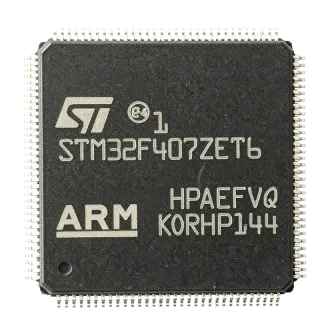
STM32L4S9ZIT6 - Ultra-Low-Power ARM Cortex-M4F MCU | STMicroelectronics
料号: STM32L4S9ZIT6 ✓ 量产中| 数量 | 单价 | 小计 |
|---|---|---|
| 1 | $12.5 | $12.50 |
| 10 | $11.25 | $112.50 |
| 100 | $10 | $1,000.00 |
| 500 | $9 | $4,500.00 |
| 1,000 | $8.1 | $8,100.00 |
STM32L4S9ZIT6 概述
A microcontroller (MCU) is a compact integrated circuit designed to govern a specific operation in an embedded system. It contains a processor core, memory (flash and SRAM), and programmable input/output peripherals on a single chip. The STM32L4 series is part of STMicroelectronics' ultra-low-power portfolio, targeting battery-powered and energy-harvesting applications. The Cortex-M4 core with FPU enables efficient digital signal processing (DSP) instructions and single-precision floating-point arithmetic, bridging the gap between general-purpose MCUs and higher-end application processors.
Key features include a rich set of analog peripherals: three 12-bit ADCs with up to 5 MSPS, two 12-bit DACs, two operational amplifiers, two comparators, and an internal voltage reference buffer. For connectivity, it offers multiple communication interfaces: 6x I2C, 6x USART/UART, 3x SPI, 2x SAI (serial audio interface), 1x SDMMC, 1x CAN, 1x USB OTG FS, and 1x camera interface (DCMI). The device also includes a Chrom-ART Accelerator (DMA2D) for 2D graphics, a true random number generator (TRNG), and a hardware cryptographic accelerator (AES, DES, 3DES, and SHA-1/SHA-256).
The STM32L4S9ZIT6 is built on a 40 nm process technology, achieving ultra-low power consumption: 100 nA in shutdown mode, 3.6 uA in standby mode with RTC, and 28 uA/MHz in run mode. It supports a wide supply voltage range of 1.71V to 3.6V, with an internal voltage regulator and power management unit. The device includes a flexible power controller with multiple low-power modes (Sleep, Low-power run, Low-power sleep, Stop 0/1/2, Standby, Shutdown) to optimize energy efficiency.
Typical applications include industrial sensors, smart meters, medical devices, wearable devices, IoT nodes, and audio processing. The large memory and rich peripherals make it ideal for applications requiring local data logging, advanced user interfaces, or real-time signal processing. The Chrom-ART accelerator and TFT-LCD controller (LTDC) support graphical displays without burdening the CPU.
When designing with this device, pay attention to power supply decoupling: place a 100 nF capacitor close to each VDD pin and a 4.7 uF capacitor on the main supply. For low-power modes, configure the RTC and wakeup sources carefully to minimize current consumption. The device supports in-circuit programming and debugging via SWD and JTAG interfaces, facilitating development.
直接替换替代料: STM32L4S9ZIT6 ——相同封装,引脚兼容。需要 PCB 改动的不同封装料号已排除。
本系列中的变体
可与以下型号直接替换的同系列型号: STM32L4S9ZIT6 (相同外形与封装尺寸) ——差异在于 Core, Flash Memory, Package.
快速对比工具——选择替代料号进行并排对比:
STM32L4S7ZIT6
✅ 直接替换 ⚠️ 规格未核验📋 参考替代料(不在目录中)
STM32L4S5ZIT6
✅ 直接替换 ⚠️ 规格未核验📋 参考替代料(不在目录中)
STM32L4R9ZIT6
✅ 直接替换 ⚠️ 规格未核验✓ 有现货
$7.2 / 个
查看数据手册 →R7FS7G27H2A01CLK
⚡ 相同封装 ⚠️ 规格未核验📋 参考替代料(不在目录中)
STM32L4S9ZIT6 最大额定值与电气特性
| Core | ARM Cortex-M4 with FPU |
| 最大时钟频率 | 120 MHz |
| Flash Memory | 2 MB |
| SRAM | 640 KB |
| Supply Voltage Range | 1.71 V to 3.6 V |
| 工作温度范围 | -40C to +85C |
| 封装 | LQFP144 (20x20 mm) |
| Number of I/Os | 114 |
| ADC Resolution | 12-bit (3x ADC, up to 5 MSPS) |
| DAC Resolution | 12-bit (2x DAC) |
| Communication Interfaces | 6x I2C, 6x USART/UART, 3x SPI, 2x SAI, 1x SDMMC, 1x CAN, 1x USB OTG FS, 1x DCMI |
| Timers | 2x 32-bit, 6x 16-bit, 2x low-power, 1x SysTick |
| DMA Channels | 2x DMA with 16 channels each |
| Cryptographic Acceleration | AES, DES, 3DES, SHA-1, SHA-256 |
| Random Number Generator | TRNG |
| Low-Power Modes | Sleep, Low-power run, Low-power sleep, Stop 0/1/2, Standby, Shutdown |
| Standby Current | 3.6 uA (with RTC) |
| 关断电流 | 100 nA |
| Run Current | 28 uA/MHz |
| RoHS 状态 | Compliant |
STM32L4S9ZIT6 引脚配置
| 引脚 1 | PE2 — GPIO / TRACECLK |
| 引脚 2 | PE3 — GPIO / TRACED0 |
| 引脚 3 | PE4 — GPIO / TRACED1 |
| 引脚 4 | PE5 — GPIO / TRACED2 |
| 引脚 5 | PE6 — GPIO / TRACED3 |
| 引脚 6 | VBAT — Battery backup supply |
| 引脚 7 | PC13 — GPIO / RTC_TAMP1 / RTC_TS |
| 引脚 8 | PC14 — GPIO / OSC32_IN |
| 引脚 9 | PC15 — GPIO / OSC32_OUT |
| 引脚 10 | PF0 — GPIO / OSC_IN |
| 引脚 11 | PF1 — GPIO / OSC_OUT |
| 引脚 12 | PF2 — GPIO |
| 引脚 13 | VSSA — Analog ground |
| 引脚 14 | VDDA — Analog power supply |
| 引脚 15 | PA0 — GPIO / ADC_IN0 / DAC_OUT1 |
| 引脚 16 | PA1 — GPIO / ADC_IN1 / DAC_OUT2 |
| 引脚 17 | PA2 — GPIO / USART2_TX / ADC_IN2 |
| 引脚 18 | PA3 — GPIO / USART2_RX / ADC_IN3 |
| 引脚 19 | VSS — Ground |
| 引脚 20 | VDD — Power supply |
| 引脚 21 | PA4 — GPIO / SPI1_NSS / DAC_OUT1 |
| 引脚 22 | PA5 — GPIO / SPI1_SCK / DAC_OUT2 |
| 引脚 23 | PA6 — GPIO / SPI1_MISO / ADC_IN6 |
| 引脚 24 | PA7 — GPIO / SPI1_MOSI / ADC_IN7 |
| 引脚 25 | PE7 — GPIO / TIM1_ETR |
| 引脚 26 | PE8 — GPIO / TIM1_CH1N |
| 引脚 27 | PE9 — GPIO / TIM1_CH1 |
| 引脚 28 | PE10 — GPIO / TIM1_CH2N |
| 引脚 29 | PE11 — GPIO / TIM1_CH2 |
| 引脚 30 | PE12 — GPIO / TIM1_CH3N |
| 引脚 31 | PE13 — GPIO / TIM1_CH3 |
| 引脚 32 | PE14 — GPIO / TIM1_CH4 |
| 引脚 33 | PE15 — GPIO / TIM1_CH4N |
| 引脚 34 | PB0 — GPIO / ADC_IN8 |
| 引脚 35 | PB1 — GPIO / ADC_IN9 |
| 引脚 36 | PB2 — GPIO |
| 引脚 37 | PB3 — GPIO / SPI1_SCK / TRACED0 |
| 引脚 38 | PB4 — GPIO / SPI1_MISO |
| 引脚 39 | PB5 — GPIO / SPI1_MOSI |
| 引脚 40 | PB6 — GPIO / I2C1_SCL |
| 引脚 41 | PB7 — GPIO / I2C1_SDA |
| 引脚 42 | BOOT0 — Boot mode selection |
| 引脚 43 | PB8 — GPIO / I2C1_SCL / CAN1_RX |
| 引脚 44 | PB9 — GPIO / I2C1_SDA / CAN1_TX |
| 引脚 45 | VSS — Ground |
| 引脚 46 | VDD — Power supply |
| 引脚 47 | PE0 — GPIO / TIM4_ETR |
| 引脚 48 | PE1 — GPIO / TIM4_CH1 |
| 引脚 49 | PB10 — GPIO / I2C2_SCL / USART3_TX |
| 引脚 50 | PB11 — GPIO / I2C2_SDA / USART3_RX |
| 引脚 51 | PB12 — GPIO / SPI2_NSS / I2C2_SCL |
| 引脚 52 | PB13 — GPIO / SPI2_SCK / I2C2_SDA |
| 引脚 53 | PB14 — GPIO / SPI2_MISO / USART1_TX |
| 引脚 54 | PB15 — GPIO / SPI2_MOSI / USART1_RX |
| 引脚 55 | PD8 — GPIO / USART3_TX |
| 引脚 56 | PD9 — GPIO / USART3_RX |
| 引脚 57 | PD10 — GPIO / USART3_CK |
| 引脚 58 | PD11 — GPIO / USART3_CTS |
| 引脚 59 | PD12 — GPIO / USART3_RTS |
| 引脚 60 | PD13 — GPIO |
| 引脚 61 | PD14 — GPIO |
| 引脚 62 | PD15 — GPIO |
| 引脚 63 | PC6 — GPIO / I2S2_MCK |
| 引脚 64 | PC7 — GPIO / I2S2_SCK |
| 引脚 65 | PC8 — GPIO / I2S2_SD |
| 引脚 66 | PC9 — GPIO / I2S2_WS |
| 引脚 67 | PA8 — GPIO / I2C3_SCL / USB_OTG_FS_SOF |
| 引脚 68 | PA9 — GPIO / I2C3_SDA / USB_OTG_FS_VBUS |
| 引脚 69 | PA10 — GPIO / I2C3_SCL / USB_OTG_FS_ID |
| 引脚 70 | PA11 — GPIO / I2C3_SDA / USB_OTG_FS_DM |
| 引脚 71 | PA12 — GPIO / USB_OTG_FS_DP |
| 引脚 72 | PA13 — GPIO / SWDIO |
| 引脚 73 | VSS — Ground |
| 引脚 74 | VDD — Power supply |
| 引脚 75 | PA14 — GPIO / SWCLK |
| 引脚 76 | PA15 — GPIO / JTDI |
| 引脚 77 | PC10 — GPIO / I2S3_SCK |
| 引脚 78 | PC11 — GPIO / I2S3_SD |
| 引脚 79 | PC12 — GPIO / I2S3_WS |
| 引脚 80 | PD0 — GPIO / CAN1_RX |
| 引脚 81 | PD1 — GPIO / CAN1_TX |
| 引脚 82 | PD2 — GPIO / SDMMC1_CMD |
| 引脚 83 | PD3 — GPIO / SDMMC1_CK |
| 引脚 84 | PD4 — GPIO / SDMMC1_D0 |
| 引脚 85 | PD5 — GPIO / SDMMC1_D1 |
| 引脚 86 | PD6 — GPIO / SDMMC1_D2 |
| 引脚 87 | PD7 — GPIO / SDMMC1_D3 |
| 引脚 88 | PH0 — GPIO / OSC_IN |
| 引脚 89 | PH1 — GPIO / OSC_OUT |
| 引脚 90 | PH2 — GPIO |
| 引脚 91 | PH3 — GPIO |
| 引脚 92 | PH4 — GPIO |
| 引脚 93 | PH5 — GPIO |
| 引脚 94 | PH6 — GPIO |
| 引脚 95 | PH7 — GPIO |
| 引脚 96 | PH8 — GPIO |
| 引脚 97 | PH9 — GPIO |
| 引脚 98 | PH10 — GPIO |
| 引脚 99 | PH11 — GPIO |
| 引脚 100 | PH12 — GPIO |
| 引脚 101 | PH13 — GPIO |
| 引脚 102 | PH14 — GPIO |
| 引脚 103 | PH15 — GPIO |
| 引脚 104 | VSS — Ground |
| 引脚 105 | VDD — Power supply |
| 引脚 106 | PI0 — GPIO |
| 引脚 107 | PI1 — GPIO |
| 引脚 108 | PI2 — GPIO |
| 引脚 109 | PI3 — GPIO |
| 引脚 110 | PI4 — GPIO |
| 引脚 111 | PI5 — GPIO |
| 引脚 112 | PI6 — GPIO |
| 引脚 113 | PI7 — GPIO |
| 引脚 114 | PI8 — GPIO |
| 引脚 115 | PI9 — GPIO |
| 引脚 116 | PI10 — GPIO |
| 引脚 117 | PI11 — GPIO |
| 引脚 118 | PI12 — GPIO |
| 引脚 119 | PI13 — GPIO |
| 引脚 120 | PI14 — GPIO |
| 引脚 121 | PI15 — GPIO |
| 引脚 122 | VSS — Ground |
| 引脚 123 | VDD — Power supply |
| 引脚 124 | PC0 — GPIO / ADC_IN10 |
| 引脚 125 | PC1 — GPIO / ADC_IN11 |
| 引脚 126 | PC2 — GPIO / ADC_IN12 |
| 引脚 127 | PC3 — GPIO / ADC_IN13 |
| 引脚 128 | PC4 — GPIO / ADC_IN14 |
| 引脚 129 | PC5 — GPIO / ADC_IN15 |
| 引脚 130 | PB16 — GPIO |
| 引脚 131 | PB17 — GPIO |
| 引脚 132 | PB18 — GPIO |
| 引脚 133 | PB19 — GPIO |
| 引脚 134 | PB20 — GPIO |
| 引脚 135 | PB21 — GPIO |
| 引脚 136 | PB22 — GPIO |
| 引脚 137 | PB23 — GPIO |
| 引脚 138 | VSS — Ground |
| 引脚 139 | VDD — Power supply |
| 引脚 140 | PA0 — GPIO / ADC_IN0 / DAC_OUT1 |
| 引脚 141 | PA1 — GPIO / ADC_IN1 / DAC_OUT2 |
| 引脚 142 | PA2 — GPIO / USART2_TX / ADC_IN2 |
| 引脚 143 | PA3 — GPIO / USART2_RX / ADC_IN3 |
| 引脚 144 | VSS — Ground |
典型应用
STM32L4S9ZIT6 适用于 6 应用s: Industrial Sensors, Smart Meters, Medical Devices, Wearable Devices, IoT Nodes, Audio Processing.
Industrial Sensors
The STM32L4S9ZIT6 is ideal for industrial sensors requiring high-precision analog measurement and low power consumption. Its three 12-bit ADCs with up to 5 MSPS sampling rate enable accurate data acquisition from multiple sensor channels. The device's ultra-low-power modes (100 nA shutdown) extend battery life in wireless sensor nodes. The 2 MB flash allows storing calibration data and firmware updates. The multiple communication interfaces (I2C, SPI, UART) connect to various sensor modules. The Cortex-M4 FPU accelerates signal processing algorithms for sensor fusion. The wide supply voltage range (1.71V to 3.6V) accommodates battery-powered designs. The device's robust operating temperature range (-40C to +85C) suits industrial environments. The hardware cryptographic accelerator secures data transmission in IoT applications. The large SRAM (640 KB) supports real-time data buffering. The device's rich timer resources enable precise timing for sensor sampling. The Chrom-ART accelerator can drive graphical displays for local data visualization. The device's low-power run mode (28 uA/MHz) optimizes energy efficiency during active processing. The device's multiple low-power modes allow dynamic power management based on sensor activity. The device's DMA controllers offload data transfer, reducing CPU load. The device's true random number generator (TRNG) supports secure key generation for encrypted sensor data.
推荐
Smart Meters
The STM32L4S9ZIT6 is well-suited for smart metering applications, including electricity, water, and gas meters. Its ultra-low-power consumption (100 nA shutdown) ensures long battery life, critical for meters that operate for years without maintenance. The device's multiple communication interfaces (UART, SPI, I2C, CAN) support various metering protocols and connectivity options, including wireless modules. The 2 MB flash memory provides ample space for metering firmware, tariff tables, and data logging. The 640 KB SRAM enables real-time data processing and buffering. The device's cryptographic accelerator secures communication with the utility network, protecting against tampering. The 12-bit ADCs with high sampling rate accurately measure voltage and current for energy calculation. The device's low-power modes allow the meter to sleep between measurements, conserving energy. The wide supply voltage range accommodates battery and line-powered designs. The device's robust operating temperature range (-40C to +85C) suits outdoor installations. The multiple timers support precise timekeeping for billing. The device's DMA controllers efficiently handle data transfer from metering ICs. The device's true random number generator (TRNG) supports secure key management. The device's rich peripheral set reduces external component count, lowering BOM cost. The device's long-term availability and ST's 10-year longevity program ensure supply continuity for utility deployments.
推荐
Medical Devices
The STM32L4S9ZIT6 is suitable for medical devices such as patient monitors, glucose meters, and portable diagnostic equipment. Its high-performance Cortex-M4 core with FPU enables real-time signal processing for ECG, EEG, and other biosignals. The device's low power consumption extends battery life in portable devices. The 2 MB flash memory stores complex algorithms and patient data. The 640 KB SRAM supports large data buffers for continuous monitoring. The device's multiple ADCs and DACs interface with analog front-ends for sensor conditioning. The communication interfaces (USB, UART, SPI) connect to external displays, wireless modules, and host systems. The device's cryptographic accelerator secures patient data transmission, complying with healthcare regulations. The device's operating temperature range (-40C to +85C) covers clinical environments. The device's rich timer resources enable precise sampling and waveform generation. The device's DMA controllers offload data transfer, ensuring real-time performance. The device's low-power modes allow the device to sleep between measurements, conserving battery. The device's wide supply voltage range supports various battery chemistries. The device's long-term availability and ST's medical-grade quality ensure reliability. The device's Chrom-ART accelerator can drive graphical user interfaces for patient data visualization. The device's true random number generator (TRNG) supports secure authentication.
推荐
Wearable Devices
The STM32L4S9ZIT6 is ideal for wearable devices like smartwatches, fitness trackers, and health monitors. Its ultra-low-power consumption (100 nA shutdown, 28 uA/MHz run) is critical for battery-powered wearables that need to last days or weeks on a single charge. The device's small form factor (LQFP144) and rich peripheral set enable compact designs. The 2 MB flash memory stores firmware, user data, and sensor calibration. The 640 KB SRAM supports real-time data processing and buffering. The device's multiple communication interfaces (I2C, SPI, UART, USB) connect to sensors, displays, and wireless modules. The Cortex-M4 FPU accelerates sensor fusion algorithms for activity tracking. The device's low-power modes allow the wearable to sleep between sensor readings, conserving energy. The device's wide supply voltage range (1.71V to 3.6V) supports Li-ion batteries. The device's operating temperature range (-40C to +85C) covers body-worn conditions. The device's cryptographic accelerator secures data transmission to smartphones. The device's Chrom-ART accelerator drives graphical displays for user interfaces. The device's multiple timers support precise timekeeping and event scheduling. The device's DMA controllers offload data transfer, reducing CPU load. The device's true random number generator (TRNG) supports secure pairing. The device's long-term availability ensures product longevity.
推荐
IoT Nodes
The STM32L4S9ZIT6 is a powerful choice for IoT edge nodes that require local processing, connectivity, and low power. Its Cortex-M4 core with FPU enables edge AI and signal processing, reducing the need to send raw data to the cloud. The device's ultra-low-power modes (100 nA shutdown) extend battery life in remote sensors. The 2 MB flash memory stores firmware, ML models, and data logs. The 640 KB SRAM supports real-time data buffering and inference. The device's multiple communication interfaces (UART, SPI, I2C, USB, CAN) connect to various wireless modules (LoRa, NB-IoT, Wi-Fi, BLE). The device's cryptographic accelerator secures MQTT and TLS connections. The device's wide supply voltage range (1.71V to 3.6V) supports battery and energy-harvesting designs. The device's operating temperature range (-40C to +85C) suits outdoor deployments. The device's multiple timers support scheduled wake-ups and sleep cycles. The device's DMA controllers offload data transfer, reducing CPU load. The device's true random number generator (TRNG) supports secure key generation. The device's low-power run mode (28 uA/MHz) optimizes energy efficiency during active processing. The device's rich peripheral set reduces external component count, lowering BOM cost. The device's long-term availability and ST's 10-year longevity program ensure supply continuity.
推荐
Audio Processing
The STM32L4S9ZIT6 is well-suited for audio processing applications such as voice-controlled devices, audio effects processors, and smart speakers. Its Cortex-M4 core with FPU and DSP instructions enables real-time audio filtering, equalization, and noise reduction. The device's two SAI interfaces support I2S audio input and output, connecting to codecs and digital microphones. The 2 MB flash memory stores audio samples and processing algorithms. The 640 KB SRAM supports large audio buffers for low-latency processing. The device's multiple ADCs and DACs can interface with analog audio circuits. The device's Chrom-ART accelerator can drive graphical user interfaces for audio equipment. The device's low-power modes allow the device to sleep when not processing audio, conserving energy. The device's wide supply voltage range (1.71V to 3.6V) supports battery-powered audio devices. The device's operating temperature range (-40C to +85C) covers consumer and industrial environments. The device's cryptographic accelerator secures audio streaming protocols. The device's multiple timers support precise sample rate generation. The device's DMA controllers offload audio data transfer, reducing CPU load. The device's true random number generator (TRNG) supports secure pairing. The device's rich peripheral set reduces external component count, lowering BOM cost. The device's long-term availability ensures product longevity.
推荐
推荐产品汇总
工程参考数据: STM32L4S9ZIT6 ——对比、设计指导和合规信息。
选型指南
与替代料对比
| 参数 | 本产品 | STM32L4S7ZIT6 | STM32L4S5ZIT6 | STM32L4R9ZIT6 | STM32L4S9ZIJ6 | LPC54608J512BD208 | R7FS7G27H2A01CLK |
|---|---|---|---|---|---|---|---|
| Package | LQFP144 | LQFP144 | LQFP144 | LQFP144 | UFBGA176 | LQFP208 | LQFP144 |
| Brand | STMicroelectronics | STMicroelectronics | STMicroelectronics | STMicroelectronics | STMicroelectronics | NXP Semiconductors | Renesas Electronics |
| Core | ARM Cortex-M4 with FPU | ARM Cortex-M4 with FPU | ARM Cortex-M4 with FPU | ARM Cortex-M4 with FPU | ARM Cortex-M4 with FPU | ARM Cortex-M4 with FPU | ARM Cortex-M4 with FPU |
| Max Clock Frequency | 120 MHz | 120 MHz | 120 MHz | 120 MHz | 120 MHz | 180 MHz | 120 MHz |
| Flash Memory | 2 MB | 2 MB | 512 KB | 2 MB | 2 MB | 512 KB | 2 MB |
| SRAM | 640 KB | 640 KB | 320 KB | 640 KB | 640 KB | 200 KB | 640 KB |
| Supply Voltage Range | 1.71V to 3.6V | 1.71V to 3.6V | 1.71V to 3.6V | 1.71V to 3.6V | 1.71V to 3.6V | 1.71V to 3.6V | 1.6V to 3.6V |
| Number of I/Os | 114 | 114 | 114 | 114 | 136 | 165 | 114 |
| Camera Interface (DCMI) | Yes | No | No | No | Yes | No | No |
| Chrom-ART Accelerator | Yes | No | No | Yes | Yes | No | No |
关键差异点
- Largest memory in STM32L4 series (对比 STM32L4S5ZIT6)
- Integrated camera interface and Chrom-ART accelerator (对比 STM32L4S7ZIT6)
- Ultra-low power consumption (对比 LPC54608J512BD208)
设计说明
Decouple each VDD pin with a 100 nF ceramic capacitor placed as close as possible to the pin. Additionally, place a 4.7 uF capacitor on the main VDD supply. For VDDA, use a 1 uF capacitor and a ferrite bead to isolate analog noise. Ensure the VBAT pin is connected to a backup battery or tied to VDD through a diode for RTC operation.
For the LQFP144 package, use a 4-layer PCB with a solid ground plane. Route high-speed signals (SDMMC, USB, camera) with controlled impedance. Keep crystal oscillator traces short and away from high-current traces. Use the exposed pad (EP) for thermal dissipation by connecting it to the ground plane with multiple vias.
Ensure the BOOT0 pin is properly configured to select the correct boot mode. For low-power applications, configure all unused GPIOs as analog inputs to minimize leakage current. When using the RTC, ensure the LSE crystal is properly loaded with the specified load capacitance. Avoid exceeding the absolute maximum ratings on any pin.
合规信息
RoHS and REACH compliant per STMicroelectronics product page. Not AEC-Q100 qualified for standard version; automotive grade variant STM32L4S9ZIT6Q is available.