Surge Protectors
Products (130)

SRV05-4 - 5V 4-Ch Low-Cap TVS Array, 12A 8/20us | onsemi
The onsemi SRV05-4MR6 is a low-capacitance transient voltage suppressor (TVS) diode array that protects four high-speed data lines from ESD, EFT, and lightning-induced transients, packaged in a 6-pin SOT-23-6 (MR6) surface-mount module. It features a 5 V working (reverse standoff) voltage, a 17.5 V clamping voltage at the rated 12 A 8/20 us surge current, and an extremely low typical line-to-line capacitance of approximately 3 pF, which preserves signal integrity on USB 2.0, HDMI, and LVDS interfaces. A TVS diode array is a solid-state silicon-avalanche protection device placed in parallel with sensitive I/O pins; when an overvoltage event exceeds its breakdown threshold, it avalanches to a low impedance and shunts transient current away from the protected device. Within the broader component hierarchy, the SRV05-4 sits under discrete semiconductors, then overvoltage/surge protection, then transient voltage suppressors, then TVS diode arrays, then semiconductor. It is the IEC 61000-4-2 (ESD), IEC 61000-4-4 (EFT), and IEC 61000-4-5 (lightning) compliance gatekeeper for downstream controllers. Key features include an array of surge-rated diodes with an integrated TVS element, a low operating voltage of 5.0 V that matches common 3.3 V/5 V logic rails, solid-state silicon-avalanche construction with no wear-out mechanism, and a small SOT-23-6 footprint that saves board area versus discrete TVS solutions. The RailClamp-style architecture minimizes capacitance imbalance between channels, reducing inter-symbol jitter on high-speed differential pairs. Technically, the device integrates steering diodes that route positive transients to the internal Zener/TVS clamp element on the Vcc reference, providing symmetrical ESD protection on every I/O pin relative to ground. The 12 A 8/20 us peak pulse rating corresponds to a peak pulse power in the 80 W range, and the IEC 61000-4-2 ESD rating reaches +/-15 kV air and +/-8 kV contact per the manufacturer datasheet. Typical applications include USB 2.0/USB-C data line protection, HDMI/DisplayPort TMDS lines, SD card slots, SIM card interfaces, LVDS lines in display panels, and 10/100 Ethernet PHYs. In each case the array's low capacitance keeps the eye diagram closed while the TVS element absorbs the surge. When designing with the SRV05-4, place the device as close as possible to the external connector to keep the protected trace inductance low, and route the ground connection directly to the chassis/earth ground via a short, wide trace to maximize ESD/eft dissipation. Always observe the maximum working voltage rating to avoid DC leakage during normal operation. This page synthesizes distributor pricing, drop-in alternatives, parametric comparisons, and practical design notes not aggregated in any single source on the web, intended to give procurement and design engineers a one-stop reference for SRV05-4.

STS232240B151 - 24V TVS ESD Array, SOT-23 | Eaton
The Eaton STS232240B151 is a TVS diode array ESD suppressor rated for 24V working voltage, packaged in a 3-pin SOT-23 (surface mount, gull-wing) outline and qualified for -40C to +125C operation. It delivers 60V clamping voltage at 6A (8/20 us) peak pulse current, with 15 pF typical channel capacitance for high-speed signal line protection. A TVS (Transient Voltage Suppressor) diode array is a discrete semiconductor protection device that clamps transient over-voltages to a safe level by avalanching through a reverse-biased PN junction. TVS arrays belong to the broader hierarchy of discrete semiconductors, sitting below circuit-protection components like varistors and PTC fuses but above signal-level Zener clamps in peak-current handling, made for sub-nanosecond response and tens-of-amperes pulse ratings. Key features of the STS232240B151 include: bidirectional single-channel protection (one protected line), 24V reverse working voltage (VRWM), 60V maximum clamping voltage (VC) at the 8/20 us test waveform, 15 pF typical capacitance to preserve signal edges on RS-485 / RS-232 buses, and a compact SOT-23-3 footprint that drops onto generic TSMC/IEC 61340-3-1 ESD layouts. The 8/20 us waveform is the industry-standard short-pulse test defined by the IEC 61000-4-5 surge immunity standard, with peak current 6A ensuring robust surge handling on industrial signal lines. Typical applications include RS-485 transceiver protection on factory-floor nodes, set-top box and notebook data-line protection, portable electronics with exposed I/O, and control/monitoring systems. The 24V working voltage and 60V clamp voltage bracket the 24 V industrial bus common-mode range, protecting downstream transceivers without disturbing normal signal swing. Designers should place the STS232240B151 within 5 mm of the connector pin to minimize parasitic inductance to the protected IC, and route the ground return directly to the chassis or system ground. The bidirectional construction means it protects against both positive and negative transients without polarity orientation during placement. This page synthesizes distributor pricing, drop-in alternatives, and practical design notes not found in the Eaton datasheet alone, including the parametric comparison vs competing SOT-23-3 TVS diodes and the recommended layout rules for IEC 61000-4-2 air-discharge compliance.

SZESD1014MUTAG - 11V 30A Low-Capacitance TVS Array | onsemi
The onsemi SZESD1014MUTAG is a low-capacitance ESD protection diode array with an 11 V clamp voltage and 30 A peak pulse current, packaged in a surface-mount 10-UDFN measuring 2.6 mm by 2.6 mm. It is designed to protect high-speed data lines from ESD, EFT, and lightning-related transients while minimizing signal-integrity impact. According to the verified product sources, the array provides up to 6 pF maximum capacitance between I/O lines and ground, making it suitable for high-frequency communication and automotive interfaces. A TVS diode array is a semiconductor protection component that clamps transient voltages to a controlled level while conducting surge current during an overvoltage event. The ESD1014 family belongs to the broader discrete-semiconductor protection hierarchy: TVS diode array, ESD suppressor, transient-voltage suppressor, and discrete semiconductor. Such devices are placed beside exposed connectors, signal traces, or interface pins so that electrostatic discharge and other short transients are diverted away from sensitive downstream circuitry. The SZESD1014MUTAG is identified as an automotive-version ESD protection array in the verified Mouser listing and as an 11 V, 30 A TVS diode in the DigiKey listing. Its low capacitance helps preserve high-speed data-line operation, while its surface-mount package supports compact PCB layouts. The verified product information identifies a 10-terminal dual-position, no-lead package with a square package shape; detailed mechanical and electrical parameters not present in the supplied sources are marked as data needed. The ESD1014 surge-protection family is designed for high-speed data lines exposed to ESD, EFT, and lightning transients. Its protection function is especially relevant where signal integrity and transient immunity must coexist, including automotive communication links, high-speed serial interfaces, and connectorized systems. The exact signal bandwidth, line-to-line capacitance distribution, working voltage, and response details must be confirmed in the manufacturer datasheet before final circuit sign-off. Typical protection layouts place the array close to the connector or board edge, route protected signals through the array’s I/O pins, and connect the protection device to the appropriate ground reference. Keep routing short and controlled to reduce parasitic inductance and ensure that the surge path does not share sensitive signal paths. For automotive designs, confirm the applicable temperature grade, AEC-Q100 status, and production qualification details from the current onsemi documentation. The key design trade-off is capacitance versus protection capability: lower capacitance preserves high-speed edges, while stronger surge ratings may add capacitance. Validate the array against the actual data-rate budget, connector exposure, grounding architecture, and system-level ESD/EFT immunity requirements. This page combines the verified distributor specifications, official family description, package information, and practical selection guidance; it does not infer unspecified electrical limits or certification claims.
SZNUP2105LT3G - Dual CAN Bus TVS ESD Protector | onsemi
The onsemi SZNUP2105LT3G is a dual-line CAN bus protector TVS diode providing bidirectional ESD and transient protection for both CAN data lines, with a 24V reverse standoff voltage, 44V maximum clamping voltage at 8A (8/20 us) peak pulse current, and 350W peak pulse power capability, housed in a compact 3-pin SOT-23 (TO-236) surface-mount package. A TVS (Transient Voltage Suppressor) diode is a semiconductor protection device that clamps fast overvoltage events such as electrostatic discharge (ESD), load dump, and inductive switching transients before they reach sensitive circuitry. In the power-protection hierarchy, TVS diodes sit at the board level, upstream protection layer, complementing fuses, varistors, and common-mode chokes in a complete electromagnetic-compatibility (EMC) front end. Key features include bidirectional protection on each of the two channels in a single package, a low 30pF line capacitance that preserves CAN FD and high-speed CAN signal integrity, and an automotive-grade SZ prefix indicating AEC-Q101 qualification for harsh environments. The 26.2V minimum breakdown voltage and 24V standoff rating give designers margin over the nominal 12V/24V vehicle rail transients seen on CAN_H and CAN_L. The device is specifically engineered for high-speed and fault-tolerant CAN networks per the onsemi datasheet, protecting the transceiver pins from ESD strikes and harmful transient voltage events. Its symmetrical bidirectional characteristic suits differential signaling, where both positive and negative overvoltages must be clamped relative to ground. Typical applications include automotive CAN_H/CAN_L line protection at the transceiver, industrial CANopen and DeviceNet nodes, 24V industrial bus protection, and general dual-line ESD protection for RS-485 style differential links. For design, place the SZNUP2105LT3G as close as possible to the connector side of the CAN transceiver, with a short, low-inductance ground return; excessive trace inductance degrades clamping performance during fast ESD edges. This page synthesizes distributor pricing, drop-in alternative comparisons, and practical design notes not found in the manufacturer datasheet alone.

SZNUP2124MXWTBG - 28V CAN/CAN-FD Dual TVS Protector | onsemi
The onsemi SZNUP2124MXWTBG is a dual bidirectional surge protection device (TVS diode) for CAN and CAN-FD data lines, rated for a 40V clamping voltage and 3A (8/20 us) peak pulse current, housed in an ultra-compact 3-pin XDFNW3 (1x1 mm) wettable-flank package. A TVS (transient voltage suppressor) diode is a circuit-protection semiconductor that clamps fast, high-energy voltage transients before they can damage sensitive transceiver ICs. Within the protection hierarchy, the SZNUP2124 sits at the board-level ESD/EMI layer of surge protection devices, complementing system-level protection such as varistors and upstream power supervision. Bidirectional devices like this one protect differential signaling lines where the signal swings both above and below ground, as in CAN and CAN-FD automotive buses. Key features include dual bidirectional channels in a single 1x1 mm footprint, Zener-based PN junction technology optimized for low dynamic resistance (Rdyn), a low turn-on voltage, and a wettable-flank package for reliable automated optical inspection (AOI). The device has been tested to EMI and ESD levels representative of ISO 7637-2 and ISO 7637-3 surge and transient events on road-vehicle power and data lines. Technically, the SZNUP2124 uses optimized Zener diode architecture that expands the active junction area, distributing transient energy and lowering dynamic resistance during an event. Lower Rdyn translates directly into a lower clamped voltage at the transceiver pins during a surge, which reduces stress on the CAN transceiver receiver front-end. The combination of low turn-on voltage and low dynamic resistance gives designers a low-cost option for improving system robustness without compromising signal integrity on 5 Mbps CAN-FD networks. Typical applications include CAN and CAN-FD bus line protection in automotive body, powertrain, and gateway ECUs, industrial CAN networks (DeviceNet, CANopen), and 12V/24V battery-system communication lines exposed to load-dump-like transients and ESD strikes at connectors. Design consideration: place the protector as close as possible to the connector or transceiver pins, and keep the clamp path (including ground return) short; parasitic series inductance dominates the actual clamped voltage during fast transients. This page synthesizes distributor pricing, drop-in variant options, and practical design notes not found in the manufacturer datasheet alone.

TLP183(GB-TPL,E - 3750Vrms Phototransistor Optocoupler SO6
The Toshiba TLP183(GB-TPL,E is a 4-pin SO6 phototransistor optocoupler providing 3750 Vrms isolation voltage, DC input, and a current transfer ratio (CTR) rank of GB (100% to 300% at IF=5 mA). It is housed in a miniature 6-SOP surface-mount package (Toshiba designation 4-pin SO6) that combines a high-emission infrared LED with a phototransistor detector optically coupled in a plastic DIP-style body. A phototransistor optocoupler is a galvanic isolation device that transfers an electrical signal between two circuits using light, blocking high voltages and transient surges while transmitting the analog or digital signal at the speed of the photodetector. Within the broader component taxonomy, the TLP183 belongs to optoisolators > optocouplers > solid-state relays > isolators > discrete semiconductors, with the phototransistor output placing it in the same family as the Toshiba TLP181, TLP185 and TLP184 series. Key features include 3750 Vrms minimum isolation voltage, 50 mA maximum forward current, 80 V collector-emitter breakdown voltage, 50 mA collector current, and an operating temperature range of -55C to +110C. The GB CTR rank provides 100% to 300% typical transfer ratio at IF=5 mA and VCE=5 V, which is well suited to digital signal isolation in PLCs and communication interfaces. A GaAs infrared LED emitter delivers fast switching with rise/fall times measured in microseconds. The TLP183 employs a high-isolation optically-coupled architecture: the input-side GaAs LED converts the input current into modulated infrared light that crosses an internal transparent isolation barrier, after which a silicon phototransistor converts the light back into a current at the output side. The result is complete electrical isolation between input and output while preserving the timing and amplitude characteristics of the original signal. Typical applications include PLC digital input/output isolation, communication interface isolation (RS-232, RS-485 line-side isolation), power supply feedback loops, and AC mains detection circuits where 3750 Vrms isolation is required by safety standards. The wide -55C to +110C temperature range also supports industrial and consumer-grade equipment. When designing with the TLP183, ensure that the bias resistor on the LED side limits the forward current to within 50 mA DC, and that the collector pull-up resistor is sized according to the desired switching speed and the chosen CTR rank. Proper creepage and clearance around the SO6 body must be maintained to preserve the 3750 Vrms isolation rating in end-equipment safety certification. This page synthesizes distributor pricing, drop-in same-brand alternatives, parametric comparison and practical design notes not found in the standalone Toshiba datasheet.
TPD1E01B04DPLR - 0.18 pF ±15 kV ESD Diode | TI
The Texas Instruments TPD1E01B04DPLR is a bidirectional, single-channel TVS ESD protection diode with 0.18 pF typical input capacitance, ±3.6 V working-voltage range, and ±15 kV ESD protection. It is supplied in the compact 2-X2SON DPL surface-mount package, identified by the R ordering suffix, for protection of USB Type-C and Thunderbolt 3 high-speed interfaces. An ESD protection diode is a discrete semiconductor device placed between an exposed connector or signal line and the protected circuitry. It provides a low-impedance transient-current path during electrostatic discharge events, while remaining effectively transparent during normal operation. In the broader hierarchy, the TPD1E01B04 belongs to the TVS diode, ESD suppressor, discrete semiconductor, and circuit-protection categories. The low 0.18 pF capacitance minimizes loading on high-speed data lines. Texas Instruments states that the device can protect interfaces operating up to 20 Gbps when the circuit is implemented with suitable signal-integrity practices. The bidirectional structure supports protection in either signal polarity, while the ±3.6 V working-voltage specification places the device on low-voltage connector pins. The manufacturer lists maximum IEC 61000-4-2 Level 4 ESD dissipation capability and ±15 kV protection. The DPL package occupies only 0.6 mm by 0.3 mm according to the distributor listing, helping designers conserve PCB area in dense USB-C, Thunderbolt, and other high-speed interface layouts. Typical applications include USB Type-C connector ESD protection, Thunderbolt 3 interface protection, high-speed data-line protection, and compact consumer or industrial equipment. The device is most useful when its protection placement is close to the connector and its capacitance is acceptable to the target signal path. The primary design consideration is signal integrity: place the device near the connector entry, use short and properly referenced connections, and verify that the added capacitance does not degrade edge rate or insertion loss. Do not infer ratings or package details not stated in the manufacturer or distributor sources.
TPD1E01B04DPLT - 0.18 pF ±15 kV ESD Diode | Texas Instruments
The Texas Instruments TPD1E01B04DPLT is a bidirectional, single-channel TVS ESD protection diode with 0.18 pF typical I/O capacitance, ±3.6 V working voltage, and ±15 kV ESD capability, packaged in a surface-mount 2-X2SON package measuring 0.6 mm by 0.3 mm. It is designed to protect high-speed interfaces, including USB Type-C and Thunderbolt 3 links operating up to 20 Gbps. A TVS diode is a transient-voltage-suppression device that diverts short ESD pulses away from sensitive circuitry while remaining effectively transparent during normal operation. An ESD protection diode belongs to the surge-protection and discrete-semiconductor hierarchy, where low capacitance and fast response preserve high-speed signal integrity. TPD1E01B04 is a compact protection device intended for connector-side or signal-line protection rather than continuous power regulation. The principal features are its extremely low 0.18 pF typical input capacitance, bidirectional conduction, ±15 kV air ESD rating as identified by the manufacturer and distributor listings, and IEC 61000-4-2 Level 4 system-level ESD capability. The low capacitance helps avoid edge degradation and bandwidth loss on USB Type-C, Thunderbolt, and other high-speed data lines. Its 2-X2SON package supports compact PCB layouts where board area is constrained. The device is specified for a nominal operating voltage of ±3.6 V and is presented in verified distributor data as a 15 V typical clamp device with 2.5 A peak pulse current for an 8/20 microsecond waveform. The verified data also identifies a 2.5 A Ipp rating, 0.2 pF as the alternate catalog value, and an operating temperature range of -40 °C to +125 °C. Exact pin naming and package drawing details should be checked in the manufacturer datasheet before layout release. Typical applications include USB Type-C connector protection, Thunderbolt 3 interface protection, high-speed communication ports, and ESD protection for compact consumer or industrial electronics. Place the diode close to the connector and route protected traces away from unprotected circuitry. Confirm signal-line voltage, capacitance budget, ESD system requirements, and the complete datasheet waveform and pin configuration during design review. The key engineering trade-off is extremely low capacitance versus transient-current handling. TPD1E01B04 prioritizes low loading for data-rate preservation, while a different TVS may provide higher surge-current capability at the cost of added capacitance. This page combines verified manufacturer and distributor data with practical placement and selection guidance.
TPD1E01B04DPYR - 0.18pF ESD Diode USB Type-C | Texas Instruments
The Texas Instruments TPD1E01B04DPYR is a single-channel bidirectional TVS ESD protection diode with 0.18 pF typical IO capacitance, ±3.6 V reverse standoff voltage, and ±15 kV ESD strike tolerance (IEC 61000-4-2 Level 4), housed in a 2-pin X1SON (DPY, 0402/DFN1006 footprint) surface-mount package. An ESD protection diode, also called a TVS (transient voltage suppressor) diode or ESD suppressor, is a semiconductor device that clamps high-voltage electrostatic discharge transients before they reach sensitive ICs. In the system hierarchy it sits at the board level as a passive-class protection component within the broader circuit-protection family, complementing fuses, varistors, and surge protectors. Because it is placed directly on high-speed signal lines, its line-to-line capacitance directly determines how much signal integrity degradation the protected interface suffers. Key differentiating specifications of the TPD1E01B04 are its extremely low 0.18 to 0.20 pF typical IO capacitance, which preserves eye diagrams on interfaces running up to 20 Gbps; its low dynamic resistance (R_DYN), which yields a low clamping voltage during an ESD event; and its bidirectional topology, which allows it to protect lines carrying signals that swing both above and below ground. According to the TI datasheet, the device is rated at the maximum level of the IEC 61000-4-2 international standard (Level 4, ±15 kV air / ±8 kV contact category commonly cited for this class), and DigiKey lists a 15 V clamp voltage with 2.5 A (8/20 us) Ipp. Architecturally, the TPD1E01B04 uses a deep snapback-free bidirectional TVS structure optimized for sub-0.2 pF loading. This is achieved through a small-die design whose junction geometry minimizes parasitic capacitance while maintaining the current handling needed for repeated ESD strikes. Low dynamic on-resistance means that during a discharge the voltage presented to the protected PHY stays low, reducing the stress on downstream transceiver pins. Typical applications include USB Type-C and Thunderbolt 3 port protection, SuperSpeed USB 3.x and USB4 differential pairs, HDMI and DisplayPort high-speed lanes, and other high-speed interfaces up to 20 Gbps where lower-capacitance TVS parts would attenuate or distort the signal. Design consideration: place the DPY package within a few millimeters of the connector pin being protected, with a short, direct low-inductance path to ground; excess trace inductance raises the effective clamping voltage during fast ESD edges. This page synthesizes verified distributor pricing and stock data, drop-in alternatives from the same X1SON footprint, and practical layout guidance not found in the manufacturer datasheet alone.

TPD1E01B04DPYT - 0.18pF ±3.6V ESD Protection Diode | TI
The Texas Instruments TPD1E01B04DPYT is a single-channel bidirectional TVS ESD protection diode with 0.18 pF to 0.20 pF typical input capacitance, a ±3.6 V reverse standoff voltage, and a 15 V clamping voltage at 2.5 A (8/20 us) Ipp, housed in a 2-pin X1SON (DPY, 0402 footprint, 1.0 x 0.6 mm) surface-mount package. A TVS (transient voltage suppressor) diode is a circuit-protection semiconductor that diverts fast, high-energy transient events - such as electrostatic discharge (ESD), cable discharge, and induced surge - away from sensitive ICs. Within the power-protection hierarchy, the TPD1E01B04 belongs to the ESD-protection subfamily of TVS diode arrays, positioned alongside surge suppressors and circuit-protection ICs on the signal path of high-speed digital interfaces. Key features include IEC 61000-4-2 Level 4 ESD immunity (air-gap discharge up to ±15 kV and contact discharge performance at the maximum Level 4 rating), ultra-low 0.18 pF to 0.20 pF line capacitance that preserves signal integrity on data rates up to 20 Gbps, and a bidirectional architecture that requires no polarity orientation on symmetric lines. The DPY 0402 (X1SON/XDFN-2) leadless package minimizes parasitic inductance, which directly reduces clamping voltage during sub-nanosecond ESD events. The device uses a bidirectional TVS diode structure that remains invisible to the signal line in normal operation: at the ±3.6 V standoff it draws negligible leakage, then clamps fast transient overvoltage events to safe levels within nanoseconds. This combination of low capacitance and low clamping voltage is what distinguishes USB-C and Thunderbolt 3 rated parts from general-purpose TVS diodes. Typical applications include USB Type-C SuperSpeed lane protection (USB 3.2 and USB4 up to 20 Gbps), Thunderbolt 3 port protection, HDMI and DisplayPort auxiliary channels, and other high-speed differential pairs in smartphones, tablets, docking stations, and notebooks. Design consideration: place the diode as close to the connector as possible with a solid, short ground return - stub length between the protected line and the diode adds parasitic inductance that degrades clamping performance. Insertion loss should be re-simulated when channel data rates exceed 10 Gbps. This page synthesizes verified distributor data, drop-in alternatives, practical design notes, and lifecycle information not consolidated in the manufacturer datasheet.
TPD1E04U04DPYR - 0.5pF ESD TVS Diode 3.6V | Texas Instruments
The Texas Instruments TPD1E04U04DPYR is a single-channel unidirectional ESD protection TVS diode with 0.5 pF IO capacitance, a 3.6 V reverse standoff voltage, and IEC 61000-4-2 Level 4 protection of ±16 kV (contact and air), housed in a 2-pin X1SON (0402-class, 1.0 mm x 0.60 mm) surface-mount package. It clamps at 8.9 V and dissipates up to 2.5 A (8/20 µs) of impulse peak current. An ESD protection diode, also called a TVS (transient voltage suppressor) diode, is a semiconductor device within the broader family of circuit protection components that shunts electrostatic discharge events away from sensitive integrated circuits. In the system hierarchy, ESD protection sits between external connectors and internal SoCs, providing a low-impedance path to ground when a transient voltage exceeds the diode trigger threshold, then returning to a high-impedance state. Key features include the ultra-low 0.5 pF channel capacitance, which preserves signal integrity on high-speed interfaces up to 6 Gbps such as HDMI 2.0 and USB 3.0; a low dynamic resistance (RDYN) that yields an ultra-low clamping voltage during strikes; and a compact 2-X1SON footprint that fits directly at the connector. According to the TI datasheet, the device is rated for ESD strikes above the maximum level specified in IEC 61000-4-2 (Level 4). Architecturally, the TPD1E04U04 uses a unidirectional steering-diode topology with a precision internal trigger structure, so it normally presents only 0.5 pF of loading to the protected line. The low RDYN is the critical parameter: during a discharge, clamping voltage equals breakdown voltage plus strike current multiplied by dynamic resistance, so minimizing RDYN directly reduces residual voltage at the protected SoC. Typical applications include HDMI 2.0 port protection, USB 3.0/3.1 connector protection, and other high-speed differential or single-ended lines such as eMMC or MIPI interfaces where capacitance budget is under 1 pF. Operating range is -40C to +125C, suiting automotive-adjacent and industrial designs. Design tip: place the TPD1E04U04 within a few millimeters of the connector, before any series elements, and route the ground path with low-inductance vias to the ground plane; excessive series inductance raises effective clamping voltage. This page synthesizes distributor pricing, drop-in alternatives, comparison tables, and practical design notes not found in the manufacturer datasheet alone.
TPD1E04U04DPYT - 0.5pF 3.6V ESD TVS Diode | TI | USB 3.0
The Texas Instruments TPD1E04U04DPYT is a unidirectional TVS ESD protection diode with 0.5 pF IO capacitance, 3.6 V reverse standoff voltage, ±16 kV IEC 61000-4-2 contact ESD rating, and 8.9 V clamping voltage at 2.5 A (8/20 us) Ipp, housed in a 2-pin X1SON (DPY, 0402 footprint) surface-mount package. An ESD protection diode, also called a TVS (transient voltage suppressor) diode or ESD suppressor, is a type of clamping device in the broader circuit-protection hierarchy (circuit protection -> surge protectors -> TVS diodes). It sits on high-speed signal lines and shunts electrostatic-discharge transients to ground before they reach sensitive silicon, while remaining invisible to the signal in normal operation. Key features include ultra-low 0.5 pF insertion capacitance, which preserves signal integrity on interfaces running up to 6 Gbps such as HDMI 2.0 and USB 3.0; low dynamic resistance (RDYN), which produces an ultra-low clamping voltage during a strike; and compliance with IEC 61000-4-2 Level 4, exceeding the ±16 kV contact-discharge maximum of that international standard. Technically, the unidirectional topology clamps positive transients to a low forward-voltage path and negative transients to the diode breakdown region. The low dynamic resistance between the trigger and clamping regions is the parameter that distinguishes this device from conventional TVS diodes: lower RDYN directly translates to less residual voltage reaching the protected SoC during system-level ESD events. Typical applications are HDMI 2.0 port protection, USB 3.0 SuperSpeed lane protection, and any high-speed differential pair on smartphones, tablets, docking stations, and set-top boxes where sub-1-pF capacitance is mandatory. Design consideration: place the diode as close to the connector as possible so the transient is clamped before it propagates along the trace; short stubs matter more than the diode itself at 6 Gbps. This page synthesizes verified distributor data, drop-in alternatives, and practical design notes not found in the manufacturer datasheet.
TPD1E10B06DPYR - Single-Channel ESD TVS Diode, ±30kV | TI
The Texas Instruments TPD1E10B06DPYR is a single-channel ESD protection TVS diode rated for ±30kV contact and ±30kV IEC air-gap ESD discharge in a compact 2-pin X1SON (DPY) package measuring approximately 1.0 x 0.6 mm. It provides a 14V working voltage rating with 5A peak pulse current (8/20 µs waveform) and integrated back-to-back TVS diodes for bipolar or bidirectional signal support, making it suitable for both positive- and negative-going transients on a single line. What is a TVS diode? A TVS (transient voltage suppressor) diode is a clamping semiconductor that diverts ESD and surge energy away from sensitive downstream ICs. Within the protection hierarchy (TVS -> protection diode -> discrete semiconductor -> electronic component), TVS arrays sit closest to external connectors, where they shunt fast transients (ns-scale ESD, µs-scale surge) before they reach ASICs, MCUs, or analog front-ends. The TPD1E10B06 family uses a back-to-back configuration to handle bipolar signals. Key specifications include 12pF (typical, per DigiKey listing; datasheet lists 10pF IO capacitance typical and 12pF line capacitance) line capacitance, 0.37 Ω dynamic resistance (R_DYNAMIC), and ±6V minimum DC breakdown voltage. The 0402-class footprint frees PCB real estate for high-density mobile and wearable designs where every square millimeter matters. The device is rated for ultra-low leakage current, minimizing quiescent loss on protected lines. Architecturally, the TPD1E10B06 uses a silicon TVS structure with back-to-back Zener diodes, achieving system-level IEC 61000-4-2 ESD immunity. Its low capacitance suits data lines like USB VBUS/ID, audio (microphone, headphone, speakerphone), SD card interfaces, keypads, and GPIO. The bidirectional capability removes the need for two unidirectional TVS in many use cases, halving the BOM on differential or AC-coupled lines. Typical applications include protection for audio lines (microphone, earphone, speakerphone), SD card interfaces, keypad buttons, USB port VBUS/ID pins, and general-purpose GPIO. End-equipment targets are portable devices, wearables, set-top boxes, electronic point-of-sale terminals, and appliances. The low 12pF capacitance preserves signal integrity on high-speed interfaces. Design tip: place the TPD1E10B06DPYR as close as possible to the external connector with a short, low-inductance ground return. Use a dedicated TVS ground via directly to the chassis/ground plane to maximize the IEC 61000-4-2 discharge current path and avoid coupling noise into adjacent signal traces. This component is also available in a larger SOD-523 (DPYT) variant on the same datasheet for layouts needing a different footprint.
TPD1E10B06QDPYRQ1 - 12 pF ±5.5 V ±30 kV ESD Diode | TI
The Texas Instruments TPD1E10B06QDPYRQ1 is a bidirectional single-channel ESD protection diode with 12 pF typical capacitance, ±5.5 V rating, and ±30 kV ESD protection in a 0402 package. It is designed for compact, high-speed interfaces where transient protection must be added without materially loading the signal path. The device provides a 14 V typical clamp voltage and 6 A peak pulse current for an 8/20 microsecond waveform. An ESD protection diode, also called a TVS diode, is a discrete semiconductor device placed beside an exposed circuit line to divert electrostatic discharge pulses into a low-impedance path. The TPD1E10B06-Q1 family combines a bidirectional back-to-back TVS structure with a very small package, making it suitable for signal lines that require both polarity tolerance and low parasitic loading. Its 12 pF capacitance is a key selection parameter for high-speed data lines. The principal features are its ±5.5 V bidirectional rating, 12 pF typical input or line capacitance, ±30 kV contact and air-gap ESD capability as stated by TI, and IEC 61000-4-2 Level 4 qualification. The automotive -Q1 designation identifies the product family for automotive applications. The device is also available in an industry-standard SOD-523 package option, while this orderable MPN uses the compact 0402 form factor identified in the verified data. The bidirectional back-to-back clamp arrangement protects either signal polarity without requiring a separate unidirectional steering arrangement. The small capacitance helps preserve edge integrity in compact connector and interface layouts, but the exact signal-rate impact still depends on the complete channel, trace, connector, and receiver impedance. Engineers should verify that the 12 pF device capacitance is acceptable for the target protocol and that the protected line remains within the device working voltage. Typical applications include automotive infotainment interfaces, USB, control lines, sensor connections, communication interfaces, and other external-accessible signal paths. The 0402 footprint is especially useful where board area is constrained. Placement should be close to the connector or board edge, with the protected trace routed away from unprotected circuitry and a low-inductance return path provided to the protection device. A key design consideration is that the TVS diode protects against ESD transients but does not replace correct signal-integrity layout, connector design, chassis grounding, or system-level surge protection. Verify the maximum working voltage, clamp behavior, pulse rating, capacitance, automotive qualification requirements, and package land pattern against the manufacturer datasheet before production release.
TPD1E10B09DPYR - 10pF, ±9V, ±20kV ESD Protection TVS in 0402 | TI
The Texas Instruments TPD1E10B09DPYR is a single-channel electrostatic discharge (ESD) transient voltage suppression (TVS) diode in a tiny X1SON/0402-class package. It offers ±20 kV IEC 61000-4-2 (level 4) contact and air-gap ESD protection with 10 pF typical line capacitance, a 20 V clamp at 4.5 A (8/20 µs) peak pulse, and ultra-low dynamic resistance of 0.37 Ω for fast transient suppression on low-voltage I/O interfaces. A TVS diode is a solid-state protection device that clamps voltage transients by avalanche breakdown, protecting downstream ICs from ESD and surge events. The TPD1E10B09 fits the product hierarchy: TVS diode → ESD suppressor → circuit protection IC → semiconductor. Back-to-back (bidirectional) TVS configurations allow bipolar AC or asymmetric signal support without external steering diodes, which is essential on differential lines such as USB, HDMI, and audio jack interfaces. Key differentiating specifications include ±30 kV air discharge and ±30 kV contact discharge (per the manufacturer datasheet), 10 pF capacitance (suitable for high-speed signal lines), 1 A peak pulse current with 6 A (8/20 µs) surge rating, and 0.5 µA maximum leakage. The back-to-back diode pair enables bidirectional protection on a single line. The 0402-size X1SON package occupies approximately 1.0 × 0.6 mm of board area—approximately one quarter the size of a discrete 0603 TVS pair, enabling protection in space-constrained wearables, smartphones, and sensor pods. Typical applications include protection for USB 2.0 / USB Type-C data lines, HDMI/MHL signal pairs, audio headset jacks, SIM card and SD card interfaces, and industrial push-button or sensor lines where human-discharge events are common. Designers select this device when sub-1.5 pF-equivalent channel-to-ground capacitance is not required, but ultra-low leakage and a sub-1 mm land pattern are mandatory. When laying out this part, place the TVS diode within 3 mm of the connector with the trace from connector pin directly into one TVS terminal and back to the IC pin—keeping parasitic inductance below 1 nH. Use a ground via adjacent to the device's GND pad to provide a low-impedance discharge path; otherwise the clamping performance degrades under 8 kV contact strikes.
TPD1E10B09DPYT - 20V 4.5A ESD TVS Diode | TI
The Texas Instruments TPD1E10B09DPYT is a single-channel ESD protection TVS diode with a 20 V clamp, 4.5 A peak pulse current for an 8/20 microsecond surge, and a compact 0402 2-X1SON package. The device is designed for bidirectional signal protection, including both bipolar and other low-voltage interfaces, while its 10 pF capacitance helps preserve high-speed signal integrity. A TVS diode is a discrete transient-voltage-suppression device that diverts ESD energy away from sensitive circuitry. TVS protection devices sit at connector entry points, interface lines, and exposed external ports, where electrostatic discharge can otherwise damage low-voltage integrated circuits. The TPD1E10B09 family combines low capacitance with IEC 61000-4-2 level 4 contact and air-gap ESD protection, making it appropriate for compact consumer, industrial, and communications equipment. The TPD1E10B09DPYT provides plus-or-minus 9 V ESD protection, a 20 V clamp voltage, 4.5 A peak pulse current, and 10 pF line capacitance. Its back-to-back TVS structure supports bipolar or bidirectional signal operation. The 0402 package is approximately 1.0 mm by 0.5 mm and is intended for space-constrained boards where protection must be added without materially increasing placement area. Use this device near the connector or entry point of the protected signal rather than deep inside the PCB, where the ESD path becomes longer and inductance can reduce clamping performance. Keep the protected trace short, provide a low-impedance return path, and place the device on the same side of the board as the connector when practical. The protection device should be selected together with the signal's voltage tolerance, bandwidth, and connector geometry. Typical uses include USB, headphone, control, sensor, and other compact serial interfaces exposed to user contact. For high-speed lines, verify that the 10 pF capacitance does not create unacceptable signal attenuation or edge-rate degradation. The device is not intended as a surge protector for sustained overvoltage or power transients beyond the specified ESD test conditions. This page combines verified manufacturer and distributor information with practical ESD-layout guidance. Verify the final footprint, polarity, working voltage, clamp behavior, and system-level ESD immunity on the assembled design before production.
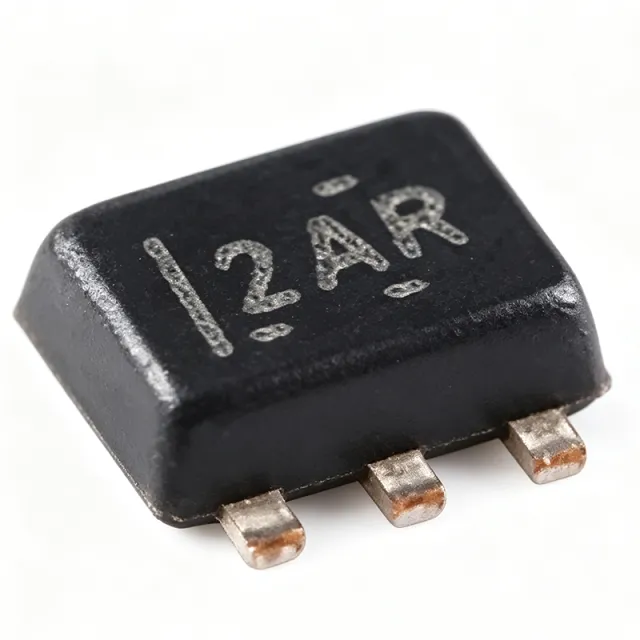
TPD2E001DRLR - 2Ch ESD Protection Array SOT-5 | Texas Instruments
The Texas Instruments TPD2E001DRLR is a 2-channel Transient Voltage Suppressor (TVS) based Electrostatic Discharge (ESD) protection diode array rated to handle ESD strikes up to ±15 kV (HBM) and ±8 kV (IEC 61000-4-2 contact) with a typical channel capacitance of 1.5 pF, housed in a 5-pin SOT (DRL) package for space-constrained high-speed data lines. An ESD protection diode array is a circuit-protection component that shunts transient voltage events to ground, protecting sensitive downstream ICs from electrostatic discharge. In the electronics taxonomy, TVS diode arrays sit under discrete semiconductors > diodes > TVS protection devices, where they form the lowest-level shield in a layered PCB protection strategy (typically used alongside common-mode chokes, PTC fuses, and bulk TVS). Because high-speed interfaces carry multi-Gbps signals, the protection device must add minimal parasitic capacitance so the signal eye diagram remains compliant with USB, HDMI, or LVDS masks. Key features include a working range up to 5.5 V, a typical clamping voltage of 16 V, and a dynamic resistance of 1.2 Ω. Two TVS channels are integrated into one 5-pin SOT package, allowing protection of a differential pair (D+, D-) or two single-ended lines from a single component. The low 1.5 pF line capacitance minimizes insertion loss on USB 2.0, LVDS, HDMI, and Ethernet signal paths, and the device is qualified to IEC 61000-4-2 Level 4 for air and contact discharge. Technically, the TPD2E001DRLR uses a steering-diode + Zener-clamp TVS architecture that biases through an optional VCC pin. When VCC is tied to the protected supply rail, the clamping voltage is tightened; when left floating, the device still clamps but with slightly higher residual voltage. The 1.2 Ω dynamic resistance ensures that even at 8 kV contact discharge the protected IC sees a transient below its absolute-maximum rating. Typical applications include USB 2.0 port protection on laptops and tablets, HDMI and DisplayPort link protection, LVDS line protection in LCD panels, Ethernet PHY protection, and general-purpose ESD protection for any 5 V high-speed data interface. The small SOT-5 footprint lets designers place the diode array immediately adjacent to the connector, minimizing trace inductance between the ESD event and the protection clamp. When designing with this part, place the device within 2 mm of the connector body, keep ground-return loops short (less than 5 mm), and add a 1 μF bypass capacitor near VCC if it is biased; otherwise leave VCC floating. This page synthesizes distributor pricing, pin-compatible TI drop-in alternatives (TPD2E001DRLRG4, TPD2E001DRSR, TPD2E001IDRLRQ1, TPD2E2U06DRLR), and layout guidance not compiled in the manufacturer datasheet alone.
TPD2EUSB30 - 2-Ch 0.7pF USB 3.0 ESD Protector | Texas Instruments
The Texas Instruments TPD2EUSB30 is a dual-channel 0.7-pF, 5.5-V TVS-based ESD protection diode array designed for SuperSpeed USB 3.0 (6 Gbps) interfaces. It provides ±8 kV IEC 61000-4-2 contact discharge protection, ±15 kV air-gap discharge protection, and a 5 A (8/20 µs) surge rating in a 3-pin SOT-3 (DRT) footprint. A Transient Voltage Suppressor (TVS) diode array is a passive protection device that clamps transient over-voltages (such as ESD strikes, cable discharge events, and lightning-induced surges) to a safe level, protecting downstream ICs. TVS arrays sit at the boundary of the ESD-sensitive analog/digital subsystem hierarchy: TVS diode -> ESD protector -> interface protection IC -> power management IC -> semiconductor. Their capacitance and leakage directly affect signal integrity on high-speed lines, making ultra-low capacitance (sub-1 pF) critical for USB 3.0, HDMI, and DisplayPort links. The TPD2EUSB30's key features include 0.7 pF typical line capacitance (compatible with 6 Gbps SuperSpeed signaling), 0.05 µA maximum leakage current, and an 8 V working voltage. Each channel integrates a TVS steering diode plus a TVS clamp, allowing a single 3-pin SOT-23 package to protect two data lines (D+/D-) without requiring an external bias supply. The TPD2EUSB30A variant (pin-compatible) adds integrated VBUS protection. Typical applications include USB 3.0 host and device port protection, USB Type-A and Type-B connectors, USB 3.0 hubs, docking stations, smartphones, tablets, and laptops. Designers select this part when signal-integrity preservation at 5 Gbps and beyond is mandatory and board area is constrained. When designing with this device, place the TPD2EUSB30 within 3 mm of the USB connector and route protected traces directly to the protected IC. Avoid routing protected and unprotected traces in parallel to prevent ESD coupling. This page synthesizes distributor stock data, drop-in alternatives (TPD2EUSB30A, TPD4EUSB30, etc.), and practical PCB layout guidance not consolidated in the manufacturer datasheet.
TPD4E001DBVR - 4-Channel 1.5pF ESD Protection | TI
The Texas Instruments TPD4E001DBVR is a four-channel transient voltage suppressor (TVS) based ESD protection diode array with 1.5 pF per-channel IO capacitance, a 5.5 V working voltage, and a maximum leakage current of 1 nA, housed in a 6-pin SOT-23 (DBV) surface-mount package. Rated for +/-8 kV IEC 61000-4-2 contact discharge and up to +/-15 kV air discharge, it is engineered for high-speed data interfaces such as USB 2.0. An ESD protection diode array is a type of TVS (transient voltage suppressor) device that clamps electrostatic-discharge transients on data lines before they can damage sensitive downstream ICs. Within the signal-chain protection hierarchy, it sits between the connector and the transceiver, forming a key element of a system-level circuit-protection strategy alongside fuses, varistors, and surge suppressors. Key features include four bidirectional ESD clamp channels in one compact package, ultra-low 1.5 pF channel capacitance that preserves signal integrity on 480 Mbps USB 2.0 lines, 1 nA maximum leakage current for minimal power impact, and a VCC pin that enables flow-through layout and reference clamping. The device meets IEC 61000-4-2 Level 4, the most severe international ESD test level. The TPD4E001 architecture uses TVS diode clamping elements from each IO pin to both VCC and GND rails, steering strike current away from the protected IC while keeping the clamping voltage low. The low junction capacitance is achieved through a proprietary diode structure, allowing the array to be placed directly on the differential pair without significant eye-diagram degradation. Typical applications include USB 2.0 port protection, Ethernet and other high-speed data lines, and general-purpose IO protection in consumer, industrial, and connectivity products where board space is constrained. Design consideration: place the TPD4E001 as close to the connector as possible so the strike current is clamped before it propagates onto the PCB traces; the VCC pin should be tied to the protected rail with local decoupling. This page synthesizes distributor listings, drop-in alternatives, pinout data, and practical design notes not consolidated in the manufacturer datasheet.

TPD4E001DCKR - 4-Ch 1.5pF 5.5V ESD Protection | TI
The Texas Instruments TPD4E001DCKR is a four-channel, low-capacitance ESD protection diode array with 1.5 pF IO capacitance per channel, 5.5 V operating voltage, and ±8 kV IEC 61000-4-2 contact-discharge protection, housed in a 6-pin SC-70 (DCK/SOT-363) package. An ESD protection array is a type of TVS (transient voltage suppressor) device within the broader circuit-protection hierarchy. Its role is to divert electrostatic-discharge transients away from sensitive high-speed data lines before they reach downstream ICs such as USB transceivers, Ethernet PHYs, or microcontrollers. Low line capacitance is the defining parameter, because excessive capacitance distorts fast edge-rate signals like USB 2.0 (480 Mbps). Key features include ultra-low 1.5 pF per-channel capacitance that preserves signal integrity on USB 2.0 and other high-speed interfaces, a maximum leakage current of only 1 nA to minimize battery drain in portable systems, a 5.5 V reverse working voltage suitable for 5 V and USB VBUS-adjacent rails, and ESD robustness at IEC 61000-4-2 Level 4 (±8 kV contact). The four-channel array format protects a full differential pair plus auxiliary lines in a single tiny package. Architecturally, the TPD4E001 uses TVS-based steering and clamping diodes. On negative-going transients the clamp conducts within nanoseconds, clamping residual voltage at the protected IC far below the absolute-maximum levels of typical transceiver silicon. The device also provides a VCC pin that allows transients to be diverted into the supply rail with lower clamping on protected lines. Typical applications are USB 2.0 ports, HDMI/DVI auxiliary and control lines, Ethernet MDI auxiliaries, keypads, and general-purpose high-speed GPIO on consumer, connectivity, and industrial boards. When designing, route the TPD4E001DCKR as the first component after the connector with a short, low-inductance ground return; excessive trace inductance degrades clamping performance during an 8 kV strike. This page synthesizes distributor data, drop-in alternatives, pinout, and practical design notes not found in the manufacturer datasheet alone.
TPD4E05U06DQAR - 4-Ch 0.5pF ESD TVS Diode | TI
The Texas Instruments TPD4E05U06DQAR is a quad-channel unidirectional TVS-based ESD protection diode array with ultra-low 0.5 pF channel capacitance, 5.5 V reverse standoff voltage, and IEC 61000-4-2 ESD protection up to ±12 kV, housed in a 10-pin USON (2.5 mm x 1 mm) surface-mount package. An ESD protection device, also called a transient voltage suppressor (TVS) array or surge protector, is a circuit-protection component that diverts fast electrostatic discharge and cable-discharge events away from sensitive high-speed ICs. In the system hierarchy it sits in the circuit protection layer of board-level electronics, ahead of transceivers, serializers, and PHY devices that would otherwise suffer latent or catastrophic ESD damage. Key features include four protection channels for high-speed differential pairs, an exceptionally low 0.5 pF off-state loading capacitance that preserves signal integrity on 6 Gbps links, a low clamping voltage of 14 V during ESD events, and a 2.5 A (8/20 us) peak pulse current rating. The device dissipates ESD strikes exceeding the maximum level specified by the IEC 61000-4-2 international standard, per the TI TPDxE05U06 datasheet. Technically, the TPDxE05U06 family uses unidirectional TVS diode structures steering ESD transients from protected I/O lines to ground. The ultra-low loading capacitance is the defining parameter: at USB 3.0, HDMI, and eSATA data rates, even 1 pF per channel can degrade eye diagrams, so 0.5 pF loading preserves impedance matching and minimizes jitter on 5-6 Gbps super-speed lanes. Typical applications include USB 3.0/3.1 port protection, HDMI connector protection, Ethernet and DisplayPort interfaces in consumer electronics and connectivity equipment, and general high-speed data-line ESD protection in docking stations, smartphones, tablets, and industrial controllers. A key design consideration is placement: locate the device within a few millimeters of the connector so the ESD current path to ground is as short as possible, and keep the ground return low-impedance with vias directly to the ground plane. This page synthesizes distributor pricing, drop-in alternatives, practical design notes, and AEO-optimized FAQs not found in the manufacturer datasheet alone.
TPD4E1U06DBVR - Quad 0.8pF ESD Protection TVS | Texas Instruments
The Texas Instruments TPD4E1U06DBVR is a quad-channel unidirectional TVS-based ESD protection diode with ultra-low 0.8 pF line capacitance, a 5.5 V working voltage, and ±15 kV ESD strike immunity per IEC 61000-4-2, housed in a 6-pin SOT-23 (DBV) surface-mount package. An ESD protection diode array (also called a TVS diode array or transient voltage suppressor) is a circuit-protection component that diverts fast electrostatic discharge and cable-discharge transients away from sensitive silicon before damage occurs. Within the system hierarchy, it sits at the board level under surge protection and circuit protection, guarding high-speed interface lines such as USB, HDMI, and audio connectors. Key features include the 0.8 pF ultra-low channel capacitance, which minimizes signal-integrity degradation on multi-hundred-Mbps high-speed lines; the 5.5 V reverse standoff voltage, which covers 5 V and 3.3 V rails; and a 15 V typical clamping voltage with 3 A (8/20 us) peak pulse current capability. According to the TI product data, the device can dissipate ESD strikes above the maximum level specified by the IEC 61000-4-2 international standard. The unidirectional steering-diode architecture routes positive transients to a common ground reference, keeping residual voltage at the protected IC low during a strike. The four independent channels let one small SOT-23-6 package protect an entire 4-line differential or single-ended interface, reducing BOM count and board area compared with discrete diodes. Typical applications include USB 2.0 port protection, HDMI and display-interface line protection, and analog audio jack ESD suppression - all environments where connector-mediated human contact demands robust ESD ratings and where sub-1-pF capacitance preserves eye diagrams and audio fidelity. Design consideration: place the TPD4E1U06DBVR as close to the connector as possible, before any series resistors or common-mode chokes, so the transient is clamped at the point of entry; every millimeter of trace between the connector and the diode adds inductance that worsens residual clamping voltage. This page synthesizes verified distributor data, drop-in alternatives, comparison tables, and practical layout design notes not found together in the manufacturer datasheet.
TPD4E1U06DCKR - 0.8pF Quad ESD Protection TVS | Texas Instruments
The Texas Instruments TPD4E1U06DCKR is a quad-channel unidirectional ESD protection TVS diode array with ultra-low 0.8 pF line capacitance, a 5.5 V working voltage, ±15 kV ESD protection per IEC 61000-4-2, and a typical 15 V clamp voltage with 3 A (8/20 us) Ipp capability, housed in a 6-pin SC-70 (SOT-363/SC70-6) surface-mount package. An ESD protection device is a type of transient voltage suppressor (TVS) that clamps electrostatic discharge and cable-discharge events before they reach sensitive IC pins. Within the power and signal integrity hierarchy, it sits under circuit protection -> TVS diode -> ESD protection array, complementing port controllers and transceivers. Because modern high-speed interfaces carry data at hundreds of Mbps to multiple Gbps, protection devices must add minimal capacitive loading; a low-capacitance array like this one preserves signal eye diagrams on USB, HDMI, and LVDS lines. Key differentiating features include the 0.8-pF per-channel line capacitance, the quad-channel integration that protects four lines in a single 2.0 mm x 1.25 mm footprint, IEC 61000-4-2 level performance of ±15 kV air gap and ±8 kV contact discharge, and a unidirectional clamp structure suited to single-ended data and power lines. The 5.5 V reverse standoff voltage makes it usable on 5 V and 3.3 V rails as well as low-voltage data lines. Architecturally, each channel is a forward-biased silicon avalanche diode arrangement that steers surge current to ground with fast response, dissipating ESD strikes above the maximum level specified by the IEC 61000-4-2 international standard. The ultra-low junction capacitance is achieved through TI's small-geometry diode process, minimizing insertion loss at high data rates. Typical applications include USB 2.0 and USB 3.x port protection, high-speed digital data lines in portable electronics, and industrial communication interfaces such as RS-485 or Ethernet aux lines. Any interface with 1-4 exposed lines and a 5.5 V or lower supply benefits. Design consideration: keep the TPD4E1U06 close to the connector with a short, low-inductance ground return; ground lead inductance dominates residual clamp voltage during an 8/20 us surge. This page synthesizes distributor pricing, drop-in alternatives including the TPD4E1B06DCKR and TPD4S009DCKR, and practical design notes not found in the manufacturer datasheet.
TPD4S009DBVRG4 - 4ch 0.8pF ±8kV ESD TVS Array | TI
The Texas Instruments TPD4S009DBVRG4 is a four-channel TVS diode array for ESD protection of high-speed differential interfaces, rated for ±8-kV contact discharge per IEC 61000-4-2 Level 4, with only 0.8-pF line capacitance and a 5.5-V operating voltage, housed in a 6-pin SOT-23 (DBV) surface-mount package. An ESD protection diode array, also called a TVS (transient voltage suppressor) array, is a circuit-protection component that clamps electrostatic-discharge and cable-discharge events before they reach sensitive transceiver silicon. Within the protection hierarchy, it sits at board level between the external connector and the protected IC, downstream of system-level surge arrestors and upstream of the chip's internal ESD structures, which it offloads. Key features include the 0.8-pF ultra-low channel capacitance that preserves high-speed signal integrity on differential pairs, ±8-kV IEC 61000-4-2 contact and ±15-kV-class air-gap robustness per the device family rating, and an integrated VCC pin that lets the array clamp against the supply rail for bidirectional line protection. Excellent channel-to-channel matching keeps skew on differential pairs minimal, and the flow-through pinout simplifies routing from connector to transceiver. The device uses a clamp-type TVS architecture with low dynamic resistance, so clamping voltage during an 8-kV contact strike stays low enough to protect typical high-speed transceivers. According to the TI datasheet, the TPD4S009 family is specifically characterized for high-speed differential interfaces where capacitance and symmetry dominate signal-eye performance. Typical applications include HDMI and DisplayPort port protection, USB differential-line ESD clamping, and general high-speed interface protection in consumer electronics and connectivity equipment. The four-channel arrangement protects a full differential pair pair, or several single-ended lines, in one small package. Design consideration: keep the array within millimeters of the connector and route symmetrically through the device; series inductance before the TVS dominates clamp performance more than the diode specification itself. This page synthesizes verified distributor listings, drop-in alternative analysis, and practical design notes not found in the manufacturer datasheet.