Produkte (18688)

STM32L452RET6TR - 80MHz 512KB Flash MCU | STMicroelectronics
STM32L452RET6TR

STM32L452RET6TR - 80MHz 512KB Flash MCU | STMicroelectronics

The STMicroelectronics STM32L452RET6TR is an ultra-low-power Arm Cortex-M4 32-bit microcontroller with FPU running at up to 80 MHz, featuring 512 KB of Flash memory and 160 KB of SRAM in a 64-pin LQFP (10x10 mm) package. It delivers 100 DMIPS at 80 MHz while drawing only 84 uA/MHz in run mode, making it one of the most power-efficient Cortex-M4 devices in the STM32L4 series. An ultra-low-power microcontroller (MCU) is a single-chip computer that integrates a processor core, non-volatile program memory (Flash), volatile data memory (SRAM), and a broad set of peripherals such as ADCs, DACs, timers, and serial interfaces. The STM32L452RET6TR sits in the STM32L4 family, which is part of the broader STM32 32-bit MCU portfolio, itself a member of the Arm Cortex-M ecosystem. Ultra-low-power MCUs are designed for battery-powered and energy-harvesting systems where every microamp matters, while still providing enough compute throughput for real-time control and signal processing. Key features include FlexPowerControl with a 1.71 V to 3.6 V supply range, 145 nA in VBAT mode for RTC and 32x32-bit backup registers, 22 nA in Shutdown mode with 5 wakeup pins, and a 12-bit ADC with hardware oversampling. The device also integrates a USB Device controller, DFSDM (digital filter for sigma-delta modulators), and multiple low-power timers, enabling always-on sensing with minimal energy cost. The STM32L452RET6TR is built on ST's ultra-low-leakage 90 nm process and uses a proprietary adaptive real-time memory accelerator to achieve 100 DMIPS at 80 MHz without wait states. Its analog peripherals include two 12-bit ADCs, one 12-bit DAC, and two ultra-low-power comparators, allowing direct interfacing with sensors and eliminating external signal-conditioning components in many designs. Typical applications include portable medical monitors, industrial IoT sensor nodes, smart metering, wearable fitness trackers, and battery-operated asset trackers. The combination of 512 KB Flash, 160 KB SRAM, and a rich analog front end makes it suitable for edge processing tasks such as filtering, FFT, and motor control. When designing with this device, pay close attention to the VDD/VBAT power architecture and the decoupling network. The 64-pin LQFP package provides 52 user I/O pins, so plan pin allocation carefully to avoid conflicts between the USB, ADC, and timer functions. This page synthesizes distributor pricing, drop-in alternatives, and practical design notes not found in the manufacturer datasheet, giving engineers a single reference for selection, second-sourcing, and layout decisions.

USD $5,38 Auf Lager
STM32L452REY6TR - Ultra-low-power ARM Cortex-M4 MCU | STMicroelectronics
STM32L452REY6TR

STM32L452REY6TR - Ultra-low-power ARM Cortex-M4 MCU | STMicroelectronics

The STM32L452REY6TR is an ultra-low-power 32-bit microcontroller from STMicroelectronics, based on the ARM Cortex-M4 core with FPU. It operates at a maximum frequency of 80 MHz and delivers 100 DMIPS with 1.25 DMIPS/MHz, making it suitable for a wide range of battery-powered and energy-efficient applications. The device features 512 KB of Flash memory and 160 KB of SRAM, providing ample storage for complex firmware and data buffering. What is an ARM Cortex-M4 microcontroller? It is a 32-bit processor core designed for embedded systems, offering a balance of performance, power efficiency, and rich peripheral integration. The Cortex-M4 includes a floating-point unit (FPU) and DSP instructions, enabling efficient handling of mathematical and signal-processing tasks. In the system hierarchy, the STM32L452REY6TR sits at the application processor level, managing sensors, communication interfaces, and control loops, while interfacing with memory, power management, and external peripherals. Key features include an operating voltage range of 1.71V to 3.6V, multiple low-power modes (Sleep, Low-power run, Low-power sleep, Stop 0/1/2, Standby, and Shutdown) with current consumption as low as 28 µA in Stop 2 mode, and a rich set of peripherals including multiple USARTs, SPIs, I2Cs, USB 2.0 FS, CAN, and 12-bit ADCs/DACs. The device also integrates a true random number generator (TRNG), a CRC calculation unit, and a 12-channel DMA controller. The STM32L452REY6TR is built on ST's ultra-low-power technology, featuring a flexible power architecture with internal regulators and a low-power RTC. It supports a wide temperature range of -40°C to +85°C and is available in a 64-pin UFBGA package (Y6 suffix), which is ideal for space-constrained designs. The package measures 4.0 x 4.0 mm with a 0.5 mm pitch, offering excellent thermal performance and compactness. Typical applications include industrial sensors, smart meters, wearable devices, medical monitoring equipment, and IoT edge nodes. The combination of low power consumption, high performance, and extensive connectivity makes it a versatile choice for battery-operated systems that require advanced processing capabilities. When designing with this MCU, careful attention to power supply decoupling and PCB layout is essential to achieve the specified low-power performance. Use multiple decoupling capacitors close to the power pins and follow the layout guidelines in the datasheet to minimize noise and ensure reliable operation.

USD $4,16 Auf Lager
STM32L452VCT6 - Ultra-Low-Power ARM Cortex-M4 MCU | STMicroelectronics
STM32L452VCT6

STM32L452VCT6 - Ultra-Low-Power ARM Cortex-M4 MCU | STMicroelectronics

The STM32L452VCT6 is an ultra-low-power 32-bit microcontroller from STMicroelectronics, based on the ARM Cortex-M4 core with FPU. It operates at a maximum frequency of 80 MHz and delivers 100 DMIPS with 1.25 DMIPS/MHz, making it suitable for a wide range of battery-powered and energy-efficient applications. The device features 256 KB of Flash memory and 160 KB of SRAM, providing ample storage for complex firmware and data buffering. What is an ARM Cortex-M4 microcontroller? It is a 32-bit processor core designed for embedded systems, offering a balance of performance, power efficiency, and rich peripheral integration. The Cortex-M4 includes a floating-point unit (FPU) and DSP instructions, enabling efficient handling of mathematical and signal-processing tasks. In the system hierarchy, a microcontroller (MCU) integrates a processor core, memory, and programmable peripherals on a single chip, serving as the 'brain' of embedded systems. The STM32L4 series specifically targets ultra-low-power applications, extending battery life in portable and IoT devices. Key features of the STM32L452VCT6 include multiple low-power modes (Sleep, Low-power run, Low-power sleep, Stop 0/1/2, Standby, and Shutdown) with current consumption as low as 28 µA in Stop 2 mode with SRAM retention. It integrates a 12-bit ADC with 5 Msps, two 12-bit DACs, two comparators, and two operational amplifiers. Communication interfaces include I2C, SPI, USART, UART, LPUART, SAI, and CAN, along with USB 2.0 full-speed device/host/OTG. The device also features a true random number generator (TRNG), a CRC calculation unit, and a 96-bit unique ID. The STM32L452VCT6 is built on ST's ultra-low-power technology with an adaptive voltage scaling and a flexible power architecture. It includes a multi-speed internal RC oscillator (16 MHz) and a low-power internal oscillator (32 kHz), reducing external component count. The device supports external crystal oscillators for high-accuracy timing and includes a real-time clock (RTC) with calendar and alarm functions. The integrated LCD driver supports up to 8x40 segments, enabling direct connection to segment LCDs without external drivers. Typical applications include industrial sensors, smart meters, healthcare devices, wearable fitness trackers, and IoT edge nodes. Its ultra-low-power modes and rich analog peripherals make it ideal for battery-operated systems that require long operational life. The device also supports secure firmware updates with its read-out protection and memory protection unit, enhancing system security. When designing with the STM32L452VCT6, pay attention to the power supply decoupling: place a 100 nF capacitor close to each VDD pin and a 4.7 µF capacitor on the main VDD rail. Use the internal LDO or external SMPS step-down converter for optimal power efficiency. The VBAT pin should be connected to a backup battery or tied to VDD if not used. For low-power operation, configure unused GPIOs as analog inputs to minimize leakage current.

USD $5,44 Auf Lager
STM32L471RET6 - ARM Cortex-M4F 80MHz MCU | STMicroelectronics
STM32L471RET6

STM32L471RET6 - ARM Cortex-M4F 80MHz MCU | STMicroelectronics

The STMicroelectronics STM32L471RET6 is a high-performance ARM Cortex-M4F based microcontroller with floating-point unit (FPU) running at up to 80 MHz. It is part of the STM32L4 series, designed for ultra-low-power applications without compromising performance. The device integrates 512 KB of flash memory and 128 KB of SRAM, along with a rich set of peripherals including multiple 12-bit ADCs, DACs, comparators, op-amps, and advanced communication interfaces such as USART, SPI, I2C, CAN, and USB OTG FS. It is available in a 64-pin LQFP package (LQFP64) with a 10x10 mm body and 0.5 mm pitch. What is a microcontroller? A microcontroller (MCU) is a compact integrated circuit designed to govern a specific operation in an embedded system. It contains a processor core, memory (flash and SRAM), and programmable input/output peripherals on a single chip. Microcontrollers are the brains of countless electronic devices, from automotive engine control units to wearable health monitors. In the system hierarchy, a microcontroller is a type of embedded processor, which falls under the broader category of integrated circuits (ICs) and semiconductors. The STM32L471RET6 is a mid-range MCU in the STM32L4 family, positioned between the lower-power STM32L0/L1 series and the higher-performance STM32F4 series, offering a balance of energy efficiency and processing capability. Key features of the STM32L471RET6 include its ultra-low-power modes (Sleep, Low-power run, Low-power sleep, Stop 0/1/2, Standby, and Shutdown) with current consumption as low as 100 nA in Shutdown mode. The device supports a wide supply voltage range of 1.71V to 3.6V, making it suitable for battery-powered applications. It also features a 12-bit ADC with hardware oversampling, a 12-bit DAC, and a true random number generator (TRNG). The FPU accelerates mathematical computations, which is beneficial for signal processing and control algorithms. The MCU is manufactured using ST's 90 nm process technology, enabling low dynamic power consumption. Technical depth: The STM32L471RET6 is built around the ARM Cortex-M4F core with DSP instructions and a single-precision FPU. It includes a memory protection unit (MPU) for enhanced security and reliability. The device supports up to 8x32-bit timers, including a low-power timer (LPTIM) that can operate in Stop mode. Communication peripherals include 3x USART, 3x SPI, 3x I2C, 1x CAN, 1x USB OTG FS, and 1x SAI (serial audio interface). The ADC has a resolution of 12 bits with up to 16 external channels and can operate at up to 5 Msps. The DAC has two channels with 12-bit resolution. The device also includes a flexible memory controller (FMC) for external memory expansion, supporting SRAM, PSRAM, NOR, and NAND flash. Typical applications include industrial sensors and actuators, smart meters, medical devices (e.g., glucose monitors, infusion pumps), wearable fitness trackers, IoT nodes, and portable instrumentation. The ultra-low-power modes and rich analog peripherals make it ideal for battery-operated devices that require long battery life and precise analog measurements. For example, in a smart meter, the STM32L471RET6 can handle metrology calculations, communication protocols, and display control while consuming minimal power in sleep mode between measurements. Design consideration: When designing with the STM32L471RET6, pay attention to the power supply decoupling. Place a 100 nF ceramic capacitor close to each VDD pin and a 4.7 uF capacitor at the main power input. For the VDDA pin, use a dedicated 1 uF capacitor to ensure stable analog performance. Also, configure the clock system carefully: the device can run from an internal 16 MHz HSI oscillator, but for precise timing, use an external 8 MHz crystal with appropriate load capacitors. The boot pins (BOOT0 and BOOT1) must be set correctly for the desired boot mode (flash, system memory, or SRAM).

USD $7,25 Auf Lager
STM32L471ZGT6 - 1MB Flash 80MHz Cortex-M4 MCU | STMicroelectronics
STM32L471ZGT6

STM32L471ZGT6 - 1MB Flash 80MHz Cortex-M4 MCU | STMicroelectronics

The STMicroelectronics STM32L471ZGT6 is an ultra-low-power 32-bit microcontroller based on the high-performance Arm Cortex-M4 RISC core with FPU, operating at frequencies up to 80 MHz, packaged in a 144-pin LQFP. The device integrates 1 MB of Flash, 128 KB of SRAM, and a rich peripheral set including CAN, USB, multiple UART/SPI/I2C interfaces, 12-bit ADCs, and a real-time clock for energy-sensitive embedded control applications. An ultra-low-power microcontroller (MCU) is a class of microprocessor that minimizes active and standby current consumption through techniques such as voltage scaling, multiple low-power operating modes, peripheral clock gating, and integrated DC-DC converters. The STM32L4 family extends this concept with the Cortex-M4 core plus DSP instructions and a single-precision floating-point unit, enabling digital signal processing alongside efficient power management. Within the broader taxonomy, the STM32L471ZGT6 sits in the hierarchy MCU -> Arm Cortex-M microcontroller -> ultra-low-power MCU -> power management IC ecosystem. Key features include a 1.8 V to 3.6 V supply range, batch acquisition mode for ADC, multiple low-power modes (Stop, Standby, Shutdown) drawing as little as a few hundred nanoamperes with RTC retention, a built-in 12-bit 5 Msps ADC, two DAC channels, USB 2.0 Full-Speed device/host, three I2C, three SPI, three USART plus UART, two CAN 2.0B, SDMMC, and a Crypt/AES-256 hardware accelerator. The 144-pin LQFP package supports ample GPIO for industrial control panels and sensor hubs. The STM32L471 uses a Cortex-M4 core with FPU and DSP extensions, providing 1.25 DMIPS/MHz and a CoreMark score in the hundreds, balancing DSP capability with extreme energy efficiency. The integrated LDO(Dragon) voltage regulator and switchable DC-DC buck converter allow dynamic trade-off between quiescent current and peak performance. Typical applications include industrial sensor nodes, wearable medical monitors, smart metering, battery-powered IoT gateways, and motor control subsystems where extended battery life and deterministic real-time response are simultaneously required. The 1 MB Flash enables on-board firmware with secure bootloaders, OTA stacks, and rich protocol libraries. When designing, always verify the supply decoupling network (1uF + 100nF + 4.7uF bulk) per ST AN4325 reference design and consider the 32 kHz LSE crystal selection for RTC accuracy. The 144-LQFP package simplifies layout but requires thermal relief for applications pushing >70% CPU duty. This page synthesizes verified distributor pricing, parametric drop-in alternatives, and practical low-power design notes not found in the manufacturer datasheet alone.

USD $7,49 Auf Lager
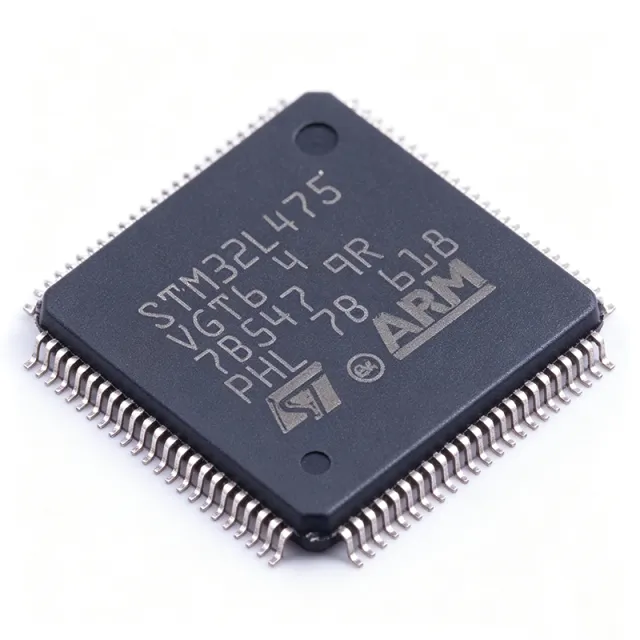
STM32L475VGT6 - 1MB Flash Cortex-M4 MCU, 100-LQFP | STMicroelectronics
STM32L475VGT6

STM32L475VGT6 - 1MB Flash Cortex-M4 MCU, 100-LQFP | STMicroelectronics

The STMicroelectronics STM32L475VGT6 is an ultra-low-power 32-bit ARM Cortex-M4 microcontroller with FPU, 1 MB of Flash, 128 KB of SRAM, and 80 MHz maximum CPU clock, housed in a 100-pin LQFP (14x14 mm) package. It targets battery-powered and energy-harvesting embedded systems where both DSP-class performance and microamp-level quiescent current are required. A microcontroller (MCU) is a single-chip integrated circuit containing a processor core, program/data memory, and programmable peripherals that govern a specific embedded function. The STM32L475VGT6 is a member of the STM32L4 ultra-low-power family, which sits within the broader STM32 32-bit MCU portfolio and is engineered around ST's 110 nm ultra-low-leakage process with adaptive real-time (ART) accelerator. The Cortex-M4 core implements the ARMv7-M architecture with single-precision FPU and DSP extensions, making the part a member of the ARM Cortex-M family that is hierarchically classed as an embedded microcontroller -> 32-bit MCU -> semiconductor IC. Key features include a wide 1.71 V to 3.6 V supply range, batch-collecting 12-bit 5 Msps ADC, two 12-bit DACs, two op-amps, two comparators, USB 2.0 OTG full-speed (with internal PHY), CAN 2.0B, SDMMC, SAI, DFSDM, multiple timers, and a true random number generator (TRNG) for security. Seven main low-power modes (Low-power Run, Sleep, Low-power Sleep, Stop 0/1/2, Standby, Shutdown) bring the typical Stop-mode current down to the microampere range and Standby/Shutdown to the nanoampere range, enabling multi-year battery life when paired with an energy-aware application design. The architecture combines the Cortex-M4 DSP+FPUs with ST's ART Accelerator (instruction cache + pre-fetch) and an MPU, allowing sustained 100 DMIPS performance while maintaining ultra-low dynamic power. An embedded voltage regulator supports dynamic voltage scaling through the PDR1 (power-down) and LP regulator paths, decoupling core voltage from the external supply. Typical applications include wearable fitness/health monitors, smart-metering and home/building automation nodes, industrial sensor hubs, medical point-of-care devices, low-power wireless IoT gateways, asset trackers, and USB-powered human-interface peripherals. The integrated USB OTG FS removes the need for an external PHY in many HID/CDC designs. When designing with the STM32L475VGT6, follow the reference manual's decoupling and layout guidance (one 100 nF per VDD pair, one bulk 4.7 uF on the regulator input) and place the HSE crystal traces within the documented loading and guard-band limits. Selecting the right low-power pair must also consider whether the application can tolerate the wake-up latency of Stop 2 / Standby modes versus the higher autonomy of Low-power Run.

USD $5,20 Auf Lager
STM32L476RET6 - 80MHz ARM Cortex-M4 MCU 512KB Flash | STMicroelectronics
STM32L476RET6

STM32L476RET6 - 80MHz ARM Cortex-M4 MCU 512KB Flash | STMicroelectronics

The STMicroelectronics STM32L476RET6 is an ultra-low-power 32-bit ARM Cortex-M4 microcontroller with FPU, operating at up to 80 MHz and delivering 100 DMIPS, integrating 512 KB of Flash and 128 KB of SRAM in a 64-pin LQFP (10x10 mm) package. This device targets battery-powered and energy-harvesting applications where active-mode performance and deep-sleep current must coexist. Core peripherals include USB 2.0 Full-Speed OTG, an integrated LCD controller (8x40 or 4x44 segments), three 12-bit ADCs (5 Msps), two 12-bit DACs, two operational amplifiers, and two comparators. A microcontroller (MCU) is a single-chip computer containing a CPU core, program memory (Flash), data memory (SRAM), and a rich set of peripheral interfaces. The Cortex-M4 family adds a single-precision FPU and DSP extensions, and the STM32L4 sub-family is optimized for ultra-low-power operation - in the hierarchy: ARM Cortex-M4 -> 32-bit MCU -> microcontroller -> semiconductor. STM32L4 devices extend battery life through multiple low-power modes (Shutdown, Standby, Stop with RTC), a built-in SMPS for core supply, and silicon-design techniques that push Stop-mode current down to a few microamps with RTC retention. Key features include a 1.7 V to 3.6 V supply range, 12 KB SRAM available in Standby with RTC for state retention, DMA1/DMA2 controllers, up to 83 I/O ports (5V-tolerant), and AES-256 / True Random Number Generator (TRNG) hardware accelerators. The integrated SMPS supports direct Li-ion cell operation, while the Vcore domain uses an internal voltage regulator for run/low-power modes. Architecturally, the Cortex-M4 core is paired with an ART Accelerator and an instruction cache that allows near-zero-wait-state execution from Flash at full 80 MHz. The bus matrix interconnects the core, DMA, AHB/APB peripherals, and memory banks to enable parallel transfers without starving the CPU. Peripherals such as timers (16-/32-bit), I2C, SPI, USART, UART, SAI, CAN 2.0B, SDMMC, and USB OTG FS share DMA channels, minimizing CPU overhead. Typical applications include wearable fitness/health bands, industrial sensor nodes (LoRaWAN / NB-IoT), portable medical meters, e-paper / LCD IoT displays, GPS trackers, low-power wireless sensor hubs, smart home battery devices (BLE/Zigbee hosts), and USB-equipped data loggers. The wide temperature range (-40C to +85C / +105C) and high integration reduce BOM cost and PCB area in these designs. When designing with this MCU, plan the decouple network carefully: place one 100 nF X7R cap per VDD pin, a 4.7 uF bulk on the main VBAT/VDD rail, and use the optional SMPS inductor (4.7 uH, low-DCR) according to the reference layout. Always populate NRST with the 10 kohm / 100 nF reset network shown in the datasheet to avoid spurious resets on power-up. This page synthesizes verified distributor pricing, drop-in same-package alternatives from the STM32L4 family, and practical design notes not consolidated in the manufacturer datasheet. Engineers gain concise selection context for energy-aware designs where Stop-mode current and 80 MHz headroom must coexist.

USD $8,10 Auf Lager
STM32L476RGT6 - 80MHz Cortex-M4 1MB Flash MCU | STMicroelectronics
STM32L476RGT6

STM32L476RGT6 - 80MHz Cortex-M4 1MB Flash MCU | STMicroelectronics

The STMicroelectronics STM32L476RGT6 is an ultra-low-power 32-bit microcontroller based on the Arm Cortex-M4 core with FPU running at up to 80 MHz (100 DMIPS), integrating 1 MB of Flash memory, 128 KB of SRAM, USB OTG FS, an LCD controller, and a flexible memory extension architecture, packaged in a 64-pin LQFP (10 x 10 mm) surface-mount package. An ultra-low-power microcontroller (MCU) is a complete computing system on a single chip that combines a processor core, memory, and peripherals while minimizing energy consumption. Within the power-management hierarchy, devices like the STM32L476 sit in the STM32L4 series, positioned above the STM32L0/L1 families and below the high-performance STM32F4/H7 lines, targeting battery-powered and energy-harvesting embedded systems. Key features include the Cortex-M4 with single-precision FPU and DSP instructions for efficient signal processing, six embedded SRAM banks totaling 128 KB with hardware parity checking, a ART accelerator for 0-wait-state execution from Flash, and dual-mode operation via the embedded ST-LINK-free boot loader. Dynamic efficiency is achieved through multiple low-power modes, flexible voltage scaling, and BOR-supervised operation from a 1.71 V to 3.6 V supply. The peripheral set covers USB OTG FS device/host, an 8x to 48x segment LCD driver, three 12-bit ADCs (5 MSPS), two 12-bit DACs, a DFSDM digital filter for sigma-delta modulators, multiple SPI/I2C/UART interfaces, SAI audio, CAN, Quad-SPI for external memory, AES and HASH cryptographic accelerators, an RNG, and a RTC with calendar. Typical applications include battery-powered meters and sensors, portable medical devices, IoT nodes, and human-machine interfaces with LCD displays. The combination of 1 MB Flash and ultra-low active current suits designs needing both code headroom and long battery life. Design consideration: leverage the flexible Stop mode with selectable wake-up peripherals, and budget Flash wait states versus VOS voltage scaling to balance 80 MHz performance against lowest dynamic current. This page synthesizes distributor pricing, drop-in alternatives, pin-compatibility notes, and practical design guidance not found in a single manufacturer datasheet.

USD $3,86 Auf Lager
STM32L476VGT6 - Ultra-Low-Power Cortex-M4 MCU 80MHz 1MB Flash | STMicroelectronics
STM32L476VGT6

STM32L476VGT6 - Ultra-Low-Power Cortex-M4 MCU 80MHz 1MB Flash | STMicroelectronics

The STM32L476VGT6 is an ultra-low-power 32-bit microcontroller from STMicroelectronics, based on the high-performance Arm® Cortex®-M4 32-bit RISC core with floating-point unit (FPU). It operates at a frequency of up to 80 MHz, delivering 100 DMIPS performance while maintaining exceptional energy efficiency. The device features 1 Mbyte of Flash memory and 128 Kbytes of SRAM, making it suitable for a wide range of battery-powered and energy-conscious applications. What is a microcontroller? A microcontroller (MCU) is a compact integrated circuit designed to govern a specific operation in an embedded system. It integrates a processor core, memory (Flash and SRAM), and programmable input/output peripherals on a single chip. Microcontrollers are the brains of countless electronic devices, from automotive engine controllers to wearable health monitors. The STM32L476VGT6 belongs to the STM32L4 series, which is optimized for ultra-low-power operation without compromising performance, positioning it within the broader hierarchy of embedded processors and controllers. Key features of the STM32L476VGT6 include its 80 MHz Arm Cortex-M4 core with FPU, 1 MB Flash, 128 KB SRAM, and a rich set of peripherals such as USB OTG FS, LCD controller, and digital filters for sigma-delta modulators (DFSDM). It supports a wide supply voltage range from 1.71V to 3.6V, enabling direct battery operation. The device also integrates advanced low-power modes, including Sleep, Low-power Run, and Stop modes, with typical current consumption in the microamp range, extending battery life in portable applications. Technically, the STM32L476VGT6 leverages ST's proprietary ultra-low-power technology, featuring multiple power domains and dynamic voltage scaling. The FPU accelerates mathematical computations, beneficial for signal processing and control algorithms. The device includes a 12-bit ADC with hardware oversampling, multiple timers, and communication interfaces (I2C, SPI, USART, CAN, and USB). The LCD controller supports up to 8x40 segments, ideal for direct display driving without external components. Typical applications include smart meters, medical devices (e.g., glucose monitors, hearing aids), industrial sensors, and IoT edge nodes. Its ultra-low-power consumption and rich analog peripherals make it ideal for battery-operated devices that require long operational life. The 100-pin LQFP package (14x14 mm) offers a compact footprint with ample I/O for complex designs. When designing with this MCU, pay attention to the power supply decoupling: place a 100 nF capacitor close to each VDD pin and a 4.7 uF bulk capacitor on the main supply. Also, utilize the low-power modes effectively by configuring the RTC and wakeup sources to minimize average current consumption.

USD $4,09 Auf Lager
STM32L486JGY6TR - Ultra-low-power ARM Cortex-M4F MCU | STMicroelectronics
STM32L486JGY6TR

STM32L486JGY6TR - Ultra-low-power ARM Cortex-M4F MCU | STMicroelectronics

The STM32L486JGY6TR is an ultra-low-power 32-bit microcontroller from STMicroelectronics, based on the ARM Cortex-M4F core with FPU, operating at up to 80 MHz. It is part of the STM32L4 series, designed for high efficiency and long battery life in a wide range of applications. The device integrates 1 Mbyte of Flash memory and 128 Kbytes of SRAM, along with a rich set of peripherals including analog, digital, and communication interfaces. What is an ARM Cortex-M4F microcontroller? It is a 32-bit processor core designed for embedded systems, featuring a floating-point unit (FPU) for efficient handling of mathematical operations, and a memory protection unit (MPU) for enhanced security. The Cortex-M4F is part of the ARM Cortex-M family, which includes the M0, M0+, M3, M4, and M7 cores, each offering different performance and power trade-offs. In the system hierarchy, a microcontroller (MCU) integrates a processor core, memory, and peripherals on a single chip, enabling it to control electronic systems in applications ranging from consumer electronics to industrial automation. Key features of the STM32L486JGY6TR include its ultra-low-power modes (Sleep, Low-power run, Low-power sleep, Stop 0/1/2, Standby, and Shutdown), which are critical for battery-powered devices. It also features a 12-bit ADC with hardware oversampling, a 12-bit DAC, two comparators, and operational amplifiers. The device supports multiple communication interfaces: I2C, SPI, USART, UART, LPUART, SAI, CAN, USB OTG FS, and SDMMC. Additionally, it includes a true random number generator (TRNG), a CRC calculation unit, and a 96-bit unique ID. The STM32L486JGY6TR is manufactured using ST's 40nm process technology, which contributes to its low power consumption. The core operates at 1.8V to 3.6V, with a wide temperature range of -40°C to +85°C. The device is available in a 73-ball WLCSP package (0.4mm pitch), making it suitable for space-constrained designs. The package is lead-free and RoHS compliant. Typical applications include wearable devices, smart sensors, medical monitoring equipment, industrial sensors, and IoT edge nodes. The ultra-low-power modes and rich analog peripherals make it ideal for battery-operated devices that require long operational life. For example, in a wearable health monitor, the STM32L486JGY6TR can sample sensor data, process it with the FPU, and communicate via BLE (through an external module) while consuming minimal power. When designing with this device, pay attention to the power supply decoupling: place a 100nF capacitor close to each VDD pin and a 1uF capacitor on the main supply. Also, use the low-power modes effectively by configuring the RTC and wake-up sources to maximize battery life. The device supports a wide range of development tools, including STM32CubeMX and STM32CubeIDE, which simplify configuration and code generation.

USD $5,44 Auf Lager
STM32L486RGT6 - ARM Cortex-M4F 80MHz MCU | STMicroelectronics
STM32L486RGT6

STM32L486RGT6 - ARM Cortex-M4F 80MHz MCU | STMicroelectronics

The STMicroelectronics STM32L486RGT6 is a high-performance, ultra-low-power ARM Cortex-M4F microcontroller with floating-point unit (FPU) and DSP instructions, operating at up to 80 MHz. It is part of the STM32L4 series, designed for applications requiring low power consumption without compromising performance. The device features 1 Mbyte of Flash memory and 128 Kbytes of SRAM, along with a rich set of peripherals including analog, digital, and communication interfaces. What is an ARM Cortex-M4F microcontroller? It is a 32-bit processor core from ARM Holdings that includes a floating-point unit (FPU) for hardware-accelerated single-precision math, and DSP instructions for signal processing. In the system hierarchy, it sits as the central processing unit (CPU) within a microcontroller (MCU), which integrates memory, peripherals, and I/O on a single chip. The Cortex-M4F is widely used in embedded systems where a balance of performance, power efficiency, and cost is required, such as in IoT devices, industrial control, and consumer electronics. Key features of the STM32L486RGT6 include: 1 Mbyte Flash, 128 Kbytes SRAM, 80 MHz CPU, ultra-low-power modes (down to 100 nA in shutdown), a 12-bit ADC with 5 Msps, a 12-bit DAC, multiple timers, and communication interfaces including USART, SPI, I2C, USB OTG FS, CAN, and SDMMC. It also integrates a hardware cryptographic accelerator (AES, DES, 3DES) and a true random number generator (TRNG) for security applications. The STM32L486RGT6 is built on ST's ultra-low-power technology, featuring multiple power modes (Sleep, Low-power run, Low-power sleep, Stop 0/1/2, Standby, Shutdown) that allow designers to optimize energy consumption. The device operates from 1.71V to 3.6V supply, making it suitable for battery-powered applications. Its advanced analog peripherals, including op-amps and comparators, enable sensor signal conditioning without external components. Typical applications include smart meters, medical devices, wearable fitness trackers, industrial sensors, and IoT edge nodes. The combination of low power, high performance, and security features makes it ideal for applications that require long battery life and secure data handling. When designing with this MCU, pay attention to the power supply decoupling: place a 100 nF capacitor close to each VDD pin and a 4.7 uF bulk capacitor. For low-power modes, configure the clock source and voltage regulator appropriately to achieve the desired current consumption. The STM32L4 series offers a comprehensive set of development tools, including STM32CubeMX and STM32CubeIDE, which simplify configuration and code generation.

USD $6,33 Auf Lager
STM32L486VGT6 - ARM Cortex-M4F MCU 1MB Flash | STMicroelectronics
STM32L486VGT6

STM32L486VGT6 - ARM Cortex-M4F MCU 1MB Flash | STMicroelectronics

The STMicroelectronics STM32L486VGT6 is a high-performance, ultra-low-power ARM Cortex-M4F based microcontroller with 1MB of Flash memory and 128KB of SRAM, packaged in a 100-pin LQFP (VGT6 suffix). It operates at a maximum frequency of 80 MHz, delivering 100 DMIPS with DSP instructions and a hardware floating-point unit (FPU) for signal processing and control applications. What is an ARM Cortex-M4F microcontroller? It is a 32-bit processor core designed for embedded systems that require a balance of performance, energy efficiency, and advanced digital signal processing. The Cortex-M4F includes a single-precision FPU and DSP instructions, making it suitable for applications involving real-time control, sensor fusion, and audio processing. In the system hierarchy, it sits above simple 8-bit MCUs but below application processors, offering deterministic real-time behavior with low power consumption. Key features of the STM32L486VGT6 include an ultra-low-power mode with 100 nA shutdown current, a 12-bit ADC with 5 MSPS, two 12-bit DACs, multiple communication interfaces (USART, SPI, I2C, USB OTG FS, CAN, SAI), and a true random number generator (TRNG). It also integrates a cryptographic acceleration unit (AES, DES, and hash) for secure applications. The device supports a wide supply voltage range of 1.71V to 3.6V, making it ideal for battery-powered devices. The STM32L486VGT6 is built on ST's ultra-low-power technology, featuring multiple low-power modes (Sleep, Low-power Run, Low-power Sleep, Stop 2, Standby, Shutdown) that allow designers to optimize energy consumption. The FlexPowerControl feature enables independent power domains for the core, I/Os, and backup domain, providing flexibility in power management. The device also includes a 32-bit low-power timer, a real-time clock (RTC) with calendar, and a touch sensing controller. Typical applications include industrial sensors, smart meters, medical devices, wearable electronics, and IoT nodes. Its combination of low power, high performance, and rich peripherals makes it suitable for applications requiring long battery life without compromising on processing capability. For example, in a smart meter, the STM32L486VGT6 can handle metrology calculations, communication protocols, and display control while maintaining low average power consumption. When designing with this device, pay attention to the power supply decoupling: place a 100 nF capacitor close to each VDD pin and a 4.7 uF capacitor at the main supply. For low-power operation, configure unused GPIOs as analog inputs to avoid leakage currents. The device supports in-application programming (IAP) and in-circuit programming (ICP) via SWD or JTAG, facilitating firmware updates in the field.

USD $8,11 Auf Lager
STM32L496QEI6 - 80MHz Cortex-M4 512KB MCU | STMicroelectronics
STM32L496QEI6

STM32L496QEI6 - 80MHz Cortex-M4 512KB MCU | STMicroelectronics

The STMicroelectronics STM32L496QEI6 is an ultra-low-power 32-bit Arm Cortex-M4 microcontroller with a maximum clock frequency of 80 MHz, 512 KB of embedded Flash memory, and a 132-UFBGA 7 x 7 mm package. Designed for energy-sensitive embedded systems, it combines real-time processing capability with integrated connectivity, security, and low-power features. The verified distributor data identifies a single-core Cortex-M4 architecture and USB OTG, LCD, and DSP-related capabilities. Its combination of performance, memory, and package density suits compact industrial controllers, connected sensors, human-interface systems, and low-power edge devices. An ultra-low-power microcontroller is a semiconductor device designed to complete control, sensing, communications, and data-processing tasks while minimizing energy consumption. The STM32L496 belongs to the STM32L4 family of low-power microcontrollers, combining a high-performance Arm Cortex-M4 core with peripherals for security, connectivity, analog measurement, timing, and human-machine-interface functions. This places it within the embedded-processing hierarchy: microcontroller, 32-bit RISC processor, semiconductor, and embedded-control platform. Key verified features include an 80 MHz Arm Cortex-M4 core, 512 KB Flash, a 132-UFBGA package, and ultra-low-power positioning. Distributor listings also identify USB OTG and LCD support, while the STMicroelectronics product family page describes the STM32L496xx devices as ultra-low-power Cortex-M4 MCUs operating up to 80 MHz. These features make the device suitable when an engineer needs substantial processing performance without moving to a larger general-purpose MCU architecture. The STM32L496QEI6 is manufactured in a 132-UFBGA 7 x 7 mm package, requiring careful PCB layout, fine-pitch routing, and assembly validation. Unlike a simple through-hole microcontroller, its dense package can reduce board area but increases sensitivity to solderability, via placement, thermal performance, and manufacturing capability. A complete design should follow the manufacturer pinout, recommended land pattern, decoupling strategy, and PCB guidelines in the STM32L496 documentation. Typical applications include industrial control and automation, USB-connected data acquisition, low-power sensor nodes, LCD-equipped user interfaces, building and energy systems, and compact embedded products. For battery- or energy-harvesting designs, the STM32L496 family is attractive because its low-power architecture can reduce the energy required between task wake-ups. The exact low-power current figures and peripheral specifications should be confirmed in the manufacturer datasheet before final design sign-off. A key design consideration is package and power-rail integrity. Place all required decoupling capacitors close to the device supply pins, route sensitive signals away from high-current switching paths, and preserve the manufacturer-defined exposed-pad and thermal layout. Verify pin multiplexing, alternate-function conflicts, clock configuration, USB requirements, and firmware support before releasing a PCB for production. This page combines verified distributor information with engineering guidance intended to make the STM32L496QEI6 selection process more transparent.

Angebot Auf Lager
STM32L496QGI3 - 80MHz 1MB Cortex-M4 MCU | STMicroelectronics
STM32L496QGI3

STM32L496QGI3 - 80MHz 1MB Cortex-M4 MCU | STMicroelectronics

STMicroelectronics STM32L496QGI3 is an ultra-low-power 32-bit Arm Cortex-M4 microcontroller with floating-point unit, operating up to 80 MHz, with up to 1 MB Flash and 320 KB SRAM in a 132-UFBGA 7 x 7 mm package. A microcontroller is a programmable system-on-chip that integrates a CPU core, memory, peripherals, and communication interfaces into one component. In the hierarchy, STM32L496QGI3 is an Arm Cortex-M4 MCU, an embedded microcontroller, and a semiconductor within the broader STM32L4 family. Its combination of processing performance, low-power modes, and extensive connectivity supports compact embedded systems. Key features include an Arm Cortex-M4 processor with FPU, 100 DMIPS performance, 1 MB Flash, and 320 KB SRAM. The device also supports USB OTG FS, audio, HASH, and an external SMPS. Its operating supply range is 1.71 V to 3.6 V, while the documented temperature options span -40 °C to 85 °C, 105 °C, or 125 °C, depending on the ordering variant. The STM32L496 architecture combines a high-performance 32-bit RISC core with low-power FlexPowerControl operating modes. Low-power behavior includes 320 nA in VBAT mode for the RTC and 32 x 32-bit backup registers, plus 25 nA shutdown consumption with five wakeup pins. These characteristics suit battery-operated and always-on products where standby current matters as much as active processing speed. Typical uses include industrial control, USB-connected data acquisition, human-interface equipment, sensor hubs, portable instruments, and low-power embedded gateways. The USB OTG FS interface can simplify host or device connectivity, while the large memory footprint supports firmware, data buffering, and application logic. The external SMPS option is useful when system power architecture requires more flexibility than a fixed internal regulator arrangement. For PCB design, use the manufacturer pin and package guidance for the 132-UFBGA land pattern, and verify ball assignments before routing. Decoupling, ground-plane continuity, and high-speed signal return paths are critical because a compact BGA package leaves limited routing space. Confirm the exact peripheral pin multiplexing, power sequencing, and exposed-pad connection from the manufacturer datasheet. This product page combines verified distributor identification and manufacturer datasheet specifications with package, sourcing, and design context. It is intended to help engineers compare the STM32L496QGI3 with same-package alternatives and plan a compliant, thermally sound implementation without treating unrelated MCUs as drop-in replacements.

Angebot Auf Lager
STM32L496RGT3 - Ultra-Low-Power ARM Cortex-M4 MCU 80MHz 1MB Flash | STMicroelectronics
STM32L496RGT3

STM32L496RGT3 - Ultra-Low-Power ARM Cortex-M4 MCU 80MHz 1MB Flash | STMicroelectronics

The STMicroelectronics STM32L496RGT3 is an ultra-low-power 32-bit ARM Cortex-M4 microcontroller with FPU operating up to 80 MHz (100 DMIPS), integrating 1 MB of Flash and 320 KB of SRAM in a 64-pin LQFP (10x10 mm) package. It supports a wide 1.71 V to 3.6 V supply range with FlexPowerControl, delivering 320 nA VBAT mode current for RTC and backup registers, and 25 nA Shutdown mode current with 5 wakeup pins. An ultra-low-power microcontroller (MCU) is a class of microcontrollers engineered to minimize active and standby power consumption, typically using sub-threshold transistor design, multiple low-power modes (Sleep, Stop, Standby, Shutdown), and integrated DC-DC converters. The STM32L4 family sits in the broader hierarchy of ARM Cortex-M microcontrollers (Cortex-M0/M0+/M3/M4/M7/M33) under the STMicroelectronics STM32 product line, which serves industrial, IoT, medical, and consumer embedded applications where battery life is critical. Key features of the STM32L496RGT3 include the Cortex-M4 core with single-precision FPU and DSP instructions, 1 MB Flash and 320 KB SRAM, integrated USB OTG FS, an LCD-TFT controller (8x40 or 4x44 with step-up), AES-256 hardware encryption, a true random number generator (TRNG), DFSDM (digital filter for sigma-delta modulators), and an external SMPS support interface for direct connection to an integrated switching mode power supply. The architecture combines an ART Accelerator (Adaptive Real-Time memory accelerator) for 0-wait-state execution from Flash, a Chrom-ART Accelerator for 2D graphics offload, and 12-bit ADC and DAC peripherals. The 80 MHz Cortex-M4 core delivers 100 DMIPS / 273 CoreMark performance while the L4 series achieves an industry-leading ULPBench score of 245, reflecting its ultra-low-power efficiency. Typical applications include wearable health devices, smart sensors, industrial HMI panels with LCD displays, USB-powered portable instruments, secure IoT endpoints with AES-256, low-power RF transceivers, and battery-backed metering systems. The 64-pin LQFP package provides ample GPIO and is suitable for hand-solderable prototypes. When designing with the STM32L496RGT3, select the appropriate low-power mode per the application duty cycle (Shutdown for idle months, Stop for sub-second wake, Standby for RTC-only operation), and follow ST's AN4621 reference for SMPS external inductor selection. The QFP64 footprint enables easy migration to other STM32L4-series devices in the same package. This page synthesizes distributor pricing, drop-in alternatives, and practical design notes not found in the manufacturer datasheet. Engineers should cross-check the QFP64 pinout against the STM32L496RG reference manual (RM0354) before board bring-up.

USD $8,95 Auf Lager
STM32L496RGT6 - 80MHz Cortex-M4 MCU, 1MB Flash | STMicroelectronics
STM32L496RGT6

STM32L496RGT6 - 80MHz Cortex-M4 MCU, 1MB Flash | STMicroelectronics

The STMicroelectronics STM32L496RGT6 is an ultra-low-power 32-bit ARM Cortex-M4 microcontroller with FPU, operating at up to 80 MHz (100 DMIPS) and integrating 1 MB of Flash memory and 320 KB of SRAM in a 64-pin LQFP (10x10 mm) package. The device targets battery-powered and always-on applications where microamp sleep currents and a 1.71 V to 3.6 V supply range are decisive design constraints. An ultra-low-power microcontroller (MCU) is a single-chip embedded processor that combines a CPU core, non-volatile Flash memory, SRAM, and a rich set of analog and digital peripherals, optimized for minimal energy consumption. Within the power-management hierarchy of embedded systems, MCUs such as the STM32L4 series sit at the application-control layer, executing user firmware while managing sensors, displays, and connectivity with microamp-scale sleep currents. They are commonly contrasted with general-purpose Cortex-M parts and with low-power variants from competing vendors such as NXP, Microchip, and Renesas. Key features include ST's FlexPowerControl with 320 nA in VBAT mode and 25 nA Shutdown mode (5 wakeup pins), USB OTG Full-Speed, an integrated LCD controller (segment LCD up to 8x40), DFSDM (digital filter for sigma-delta modulators), hardware AES-256 and a HASH accelerator, and support for an external SMPS to reduce core dynamic power. Analog peripherals include a 12-bit ADC, 12-bit DAC, comparators, and operational amplifiers. Technically, the Cortex-M4 with single-precision FPU and DSP instructions executes DSP-heavy workloads such as audio filtering and sensor fusion, while the proprietary ART Accelerator (Adaptive Real-Time) keeps the 80 MHz core fed from Flash with zero-wait-state access for most code paths. The peripheral set includes multiple USART/UART, SPI, I2C, CAN, timers, 16-channel 12-bit ADC, DAC, comparators, op-amps, and low-power timers, plus the integrated DFSDM for high-resolution sigma-delta input chains. Typical applications include battery-powered metering, IoT sensor nodes, portable medical and wearable devices, industrial sensor transmitters, and consumer products with segment LCD displays. The combination of USB OTG, LCD, and DFSDM gives it particular traction in mid-tier IoT endpoints and handheld instrumentation. For design, leverage the DFSDM with external sigma-delta modulators for 16+ bit effective sensing, and size the power supply for the 100 mA-class peak core plus USB load currents. Use ST's STM32CubeMX and STM32CubeIDE plus the HAL/LL drivers to configure the ultra-low-power modes, and reserve PCB area for an optional external SMPS inductor. The 64-LQFP footprint is shared across the STM32L4 family, easing pin-compatible upgrades to higher-density variants such as the STM32L496ZGT6 (144-LQFP). This page synthesizes distributor pricing, drop-in family alternatives, and practical design notes not found in the manufacturer datasheet.

USD $6,50 Auf Lager
STM32L496VGT6 - Ultra-Low-Power ARM Cortex-M4F MCU | STMicroelectronics
STM32L496VGT6

STM32L496VGT6 - Ultra-Low-Power ARM Cortex-M4F MCU | STMicroelectronics

The STM32L496VGT6 is an ultra-low-power 32-bit microcontroller from STMicroelectronics, based on the ARM Cortex-M4F core with FPU, running at up to 80 MHz. It integrates 1 MB of flash memory and 320 KB of SRAM, making it suitable for complex embedded applications requiring significant code and data storage. The device operates from a 1.71V to 3.6V supply and features a rich set of peripherals including multiple USARTs, SPIs, I2Cs, USB OTG FS, CAN, SDMMC, and advanced analog capabilities with two 12-bit ADCs, two DACs, and an internal voltage reference. What is an ultra-low-power microcontroller? An ultra-low-power microcontroller is a type of embedded processor designed to minimize energy consumption while maintaining computational performance. It belongs to the broader category of microcontrollers, which are integrated circuits containing a processor core, memory, and programmable peripherals on a single chip. In the system hierarchy, an ultra-low-power MCU sits above basic 8-bit controllers but below application processors, offering a balance of efficiency and capability for battery-powered and energy-harvesting devices. The STM32L496VGT6 exemplifies this class with multiple low-power modes, including Sleep, Low-power Run, and Shutdown, enabling extended battery life in portable and IoT applications. Key features of the STM32L496VGT6 include its 80 MHz ARM Cortex-M4F core with DSP instructions and single-precision FPU, 1 MB flash, 320 KB SRAM, and a comprehensive set of communication interfaces. It also features a Chrom-ART Accelerator for enhanced graphic performance, a true random number generator, and a cryptographic acceleration unit supporting AES, DES, and 3DES. The device is manufactured using ST's 40 nm process technology, contributing to its low power consumption and high integration density. Technically, the STM32L496VGT6 offers up to 100 DMIPS performance, with a CoreMark score of 273. It includes a flexible memory controller supporting external memory, and a large number of GPIOs (up to 114) in the LQFP100 package. The analog subsystem includes two 12-bit ADCs with hardware oversampling, two 12-bit DACs, and an internal voltage reference buffer. The device also supports a wide range of timers, including advanced-control timers for motor control and a low-power timer for wake-up from low-power modes. Typical applications include industrial sensors, smart meters, medical devices, wearable electronics, and IoT nodes. Its ultra-low-power modes and rich analog peripherals make it ideal for battery-powered data acquisition systems, while its connectivity options enable seamless integration into industrial networks and cloud platforms. When designing with this device, pay attention to the power supply decoupling and the selection of the appropriate low-power mode for your application. The STM32L496VGT6 supports a flexible clock tree with multiple PLLs, allowing optimization of performance versus power consumption. Ensure proper configuration of the voltage regulator range to balance performance and energy efficiency.

USD $9,55 Auf Lager
STM32L496VGY6TR - 80MHz Cortex-M4 MCU 1MB Flash WLCSP-100
STM32L496VGY6TR

STM32L496VGY6TR - 80MHz Cortex-M4 MCU 1MB Flash WLCSP-100

The STMicroelectronics STM32L496VGY6TR is an ultra-low-power 32-bit ARM Cortex-M4 microcontroller with FPU, operating at up to 80 MHz and delivering 100 DMIPS, housed in a 100-ball WLCSP (4.62 x 4.14 mm) package. It integrates 1 MB of flash memory and 320 KB of SRAM, plus USB OTG FS, an LCD interface, and a digital filter for sigma-delta modulators (DFSDM). The device is part of the STM32L4 family and features an AES-256 hardware crypto accelerator and a hardware hash accelerator. An ARM Cortex-M4 microcontroller is a 32-bit RISC processor core designed for embedded applications, featuring low power consumption, deterministic interrupt response, and optional single-precision floating-point unit (FPU). The M4 sits within the broader Cortex-M family hierarchy: Cortex-M0/M3/M4 -> ARMv7-M architecture -> 32-bit MCU -> embedded processor -> semiconductor. The STM32L4 series specifically targets ultra-low-power applications, balancing processing performance with energy efficiency through multiple low-power modes including Shutdown at 25 nA. Key differentiating features include 1 MB flash, 320 KB SRAM, integrated SMPS step-down converter for dynamic voltage scaling, USB OTG FS, MIPI-DSI or parallel LCD interface support, two 12-bit ADCs at 5 Msps, two 12-bit DACs, DFSDM for audio/sensor applications, AES-256 and Hash accelerators, and the standard STM32 ecosystem (HAL/LL libraries, STM32CubeMX, IDE support). The WLCSP-100 package enables compact wearable and IoT designs where PCB area is critical. The Cortex-M4F core includes a single-precision FPU that accelerates DSP operations and floating-point math. The internal SMPS regulator improves efficiency over the traditional LDO regulator approach during active mode, enabling higher performance at lower power. The device supports multiple low-power modes (Stop, Standby, Shutdown) with the Shutdown mode consuming only 25 nA for battery-backed IoT endpoints. Typical applications include wearable fitness trackers, portable medical sensors, industrial IoT sensor nodes, USB-C powered accessories, LCD-based HMI panels, smart home sensor hubs, and audio interfaces leveraging the digital microphone support. The combination of USB OTG, LCD, and ultra-low power makes it particularly suited for battery-powered consumer and medical devices. When designing with this device, verify that the WLCSP-100 footprint matches your PCB capability (WLCSP requires advanced PCB process for routing and inspection). For prototypes or hand-assembly, consider the LQFP-64 or UFBGA-169 variants of the STM32L496 family instead. Provide a stable VDD and consider the SMPS inductor selection per ST application note AN4621. This page synthesizes distributor pricing, drop-in alternatives, and practical design notes not found in the manufacturer datasheet, providing actionable intelligence beyond standard spec repetition.

USD $8,92 Auf Lager
STM32L4A6AGI6 - 80MHz Cortex-M4 MCU | STMicroelectronics
STM32L4A6AGI6

STM32L4A6AGI6 - 80MHz Cortex-M4 MCU | STMicroelectronics

The STMicroelectronics STM32L4A6AGI6 is an ultra-low-power 32-bit microcontroller built around the Arm Cortex-M4 processor, operating up to 80 MHz with 1 MB Flash and 320 KB SRAM in a 169-UFBGA 7 x 7 mm package. It combines 100 DMIPS, a floating-point unit, USB OTG FS, LCD support, AES hardware acceleration, audio peripherals, DFSDM, and an external switched-capacitor power-supply controller. A microcontroller is a programmable integrated circuit that combines a CPU core, memory, communication interfaces, timers, analog conversion blocks, and GPIO in one device. In the system hierarchy, the STM32L4A6AGI6 is a Cortex-M4 MCU, an embedded microcontroller, a semiconductor, and a member of the STM32L4 family. This integration lets a compact product perform control, communications, data acquisition, security, and low-power management without separate discrete controllers. Verified headline features include an Arm Cortex-M4 core with FPU at up to 80 MHz, 100 DMIPS, 1 MB of Flash organized as 1M x 8, and 320 KB of SRAM. The part also provides USB OTG FS, audio support, AES plus HASH, digital filtering for sigma-delta modulators, an LCD interface, and a high-performance external SMPS controller. These resources support firmware consolidation while keeping the board area below that of several discrete processors. The STM32L4A6xG family emphasizes ultra-low-power operation and performance efficiency. Its Cortex-M4 processing core, fast GPIO, communication peripherals, analog functions, and security hardware make it suitable for connected sensing, industrial equipment, human-interface systems, and compact control platforms. The exact package pin assignments and electrical limits should be checked against the official 169-ball data before layout release. Typical applications include USB-connected data acquisition, industrial sensor hubs, low-power gateways, audio-control systems, security-aware embedded controllers, and LCD-based human-interface devices. The 80 MHz Cortex-M4 core provides useful processing headroom, while 1 MB Flash and 320 KB SRAM reduce pressure on external memory for moderate firmware and data workloads. A key design consideration is BGA assembly: the 169-UFBGA package is not a hobbyist-friendly footprint and benefits from careful escape routing, controlled impedance, adequate thermal vias, and manufacturing capability. Firmware and peripheral assignments must also be validated because unused balls, power balls, and special-function balls are package-specific. This page consolidates verified manufacturer and distributor information, exact source links, practical design guidance, pricing data, and replacement analysis that are not presented as a single connected engineering resource on ordinary distributor listings.

USD $6,41 Auf Lager
STM32L4A6RGT6 - Cortex-M4 80MHz 1MB Flash MCU | STMicroelectronics
STM32L4A6RGT6

STM32L4A6RGT6 - Cortex-M4 80MHz 1MB Flash MCU | STMicroelectronics

The STMicroelectronics STM32L4A6RGT6 is an ultra-low-power 32-bit ARM Cortex-M4 microcontroller with FPU, operating at up to 80 MHz and delivering 100 DMIPS (1.25 DMIPS/MHz), with 1 Mbyte of flash memory and 320 Kbytes of SRAM, housed in a 64-pin LQFP (10x10 mm) package. An ultra-low-power microcontroller (MCU) is a system-on-chip that integrates a processor core, memory, and analog/digital peripherals on a single die, designed to minimize energy consumption in battery-powered and energy-harvesting systems. Within the power-management IC hierarchy, the STM32L4A6RGT6 belongs to the STM32L4 series of the STM32 family, which spans from low-power to high-performance ARM Cortex-M devices, and is positioned among the most energy-efficient Cortex-M MCUs on the market. Key differentiating features include a rich analog subsystem - two 12-bit DACs, two operational amplifiers, two ultra-low-power comparators, and a 16-bit ADC with hardware oversampling - plus a shutdown mode drawing as little as 28 nA. Digital connectivity covers USB OTG full-speed, two CAN 2.0B controllers, SDMMC, LCD controller, and multiple USART, SPI, and I2C ports, all supported across a 1.71V to 3.6V supply range. The device is manufactured on a 40 nm process and includes an AES cryptographic accelerator, a true random number generator (TRNG), a flexible memory protection unit (MPU), the Chrom-ART Accelerator (DMA2D) for graphics, and a 16-bit advanced motor-control timer. These blocks enable secure, GUI-enabled, and motor-driven products without external co-processors. Typical applications include industrial sensors, smart meters, medical and wearable devices, and IoT endpoints, where the combination of 28 nA shutdown, 80 MHz processing, and 1 MB flash removes the need for external memory or power-management companion ICs. Designers should carefully plan power-supply decoupling and PCB layout to realize the specified low-power figures, and should leverage the internal LDO or SMPS step-down options plus the graded low-power modes to maximize battery life. This page adds information gain beyond the manufacturer datasheet: drop-in alternatives with package and parameter matching, distributor pricing as of 2026-09-06, practical design notes, and a selection guide comparing the STM32L4A6RGT6 against same-footprint parts.

USD $9,56 Auf Lager
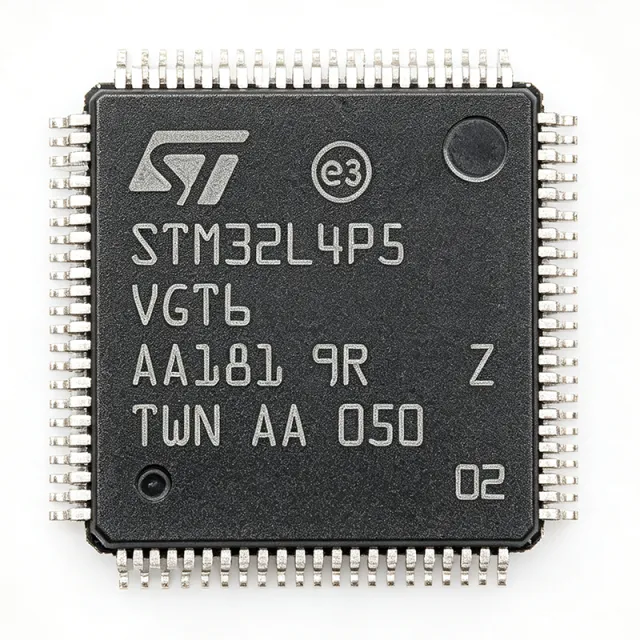
STM32L4P5VGT6 - Ultra-Low-Power Cortex-M4 MCU | STMicroelectronics
STM32L4P5VGT6

STM32L4P5VGT6 - Ultra-Low-Power Cortex-M4 MCU | STMicroelectronics

The STMicroelectronics STM32L4P5VGT6 is an ultra-low-power 32-bit microcontroller based on the ARM Cortex-M4 core with FPU, operating at up to 120 MHz. It delivers 213 DMIPS and 550 CoreMark, making it suitable for a wide range of battery-powered and energy-efficient applications. The device is housed in a 100-pin LQFP package (14x14 mm) and offers up to 1 MB of flash memory and 320 KB of SRAM. What is an ARM Cortex-M4 microcontroller? It is a 32-bit processor core designed for embedded systems, featuring a single-cycle multiply-accumulate (MAC) unit, hardware divide, and optional single-precision floating-point unit (FPU). The Cortex-M4 is part of the ARM Cortex-M family, which includes the M0, M0+, M3, M4, and M7 cores, each optimized for different performance and power trade-offs. In the system hierarchy, a microcontroller (MCU) integrates the processor core, memory, and peripherals on a single chip, serving as the central processing unit in embedded systems such as IoT devices, industrial controllers, and consumer electronics. Key features include a rich set of analog peripherals: two 12-bit DACs, three 12-bit ADCs with hardware oversampling, two operational amplifiers, two comparators, and an internal voltage reference buffer. The device also integrates advanced digital peripherals: two CAN FD controllers, one USB 2.0 OTG FS/HS, one SDMMC interface, and a flexible memory controller (FMC) for external memory expansion. The STM32L4P5VGT6 supports multiple low-power modes, including Sleep, Low-power Run, Low-power Sleep, Stop 0/1/2, and Standby, with a typical current consumption of 100 nA in Standby mode with backup domain. The STM32L4P5VGT6 is built on ST's ultra-low-power technology, featuring a dynamic voltage scaling (DVS) capability that adjusts the core voltage to optimize power consumption at different operating frequencies. The device includes a hardware cryptographic accelerator (AES, DES, 3DES) and a true random number generator (TRNG), enhancing security for connected applications. The rich set of timers includes two advanced-control timers, six general-purpose timers, two basic timers, and two low-power timers, providing precise timing and PWM generation. Typical applications include IoT nodes, smart meters, portable medical devices, industrial sensors, and wearable devices. The ultra-low-power modes and high integration make it ideal for battery-powered systems requiring long operational life. The device also supports a wide operating temperature range of -40°C to +85°C, suitable for industrial environments. When designing with this MCU, pay attention to the power supply decoupling: place a 100 nF capacitor close to each VDD pin and a 4.7 uF capacitor at the main power input. For low-power operation, configure the GPIOs to analog mode when unused to reduce leakage current. The STM32L4P5VGT6 is supported by STM32CubeMX and STM32CubeL4 firmware package, simplifying development.

USD $11,14 Auf Lager
STM32L4Q5AGI6 - 120MHz Cortex-M4 1MB MCU | STMicroelectronics
STM32L4Q5AGI6

STM32L4Q5AGI6 - 120MHz Cortex-M4 1MB MCU | STMicroelectronics

The STMicroelectronics STM32L4Q5AGI6 is an ultra-low-power 32-bit Arm Cortex-M4 microcontroller with FPU, rated up to 120 MHz, 1 MB of Flash, and 320 KB of SRAM in a 169-UFBGA 7 mm × 7 mm package. It delivers up to 150 DMIPS while combining low-power operation with integrated USB OTG, DFSD, AES, and PKA capabilities. A microcontroller is a programmable system-on-chip that integrates a CPU core, nonvolatile program memory, volatile data memory, peripherals, and interface controllers on one semiconductor device. The STM32L4 family belongs to the Arm Cortex-M microcontroller hierarchy and targets embedded control, communications, sensor processing, human-machine-interface, and low-power edge applications. Arm Cortex-M4 processors use the Thumb instruction set and support efficient interrupt-driven real-time control. Verified headline features include an Arm Cortex-M4 core, 120 MHz maximum operating frequency, 150 DMIPS performance, 1 MB Flash, and 320 KB SRAM. The part also provides an FPU, LCD-TFT support, USB OTG, DFSD, hardware AES, and PKA. These resources combine high processing throughput with a broad peripheral set, reducing the need for external memory, cryptographic accelerators, storage controllers, and display-interface logic in compact embedded systems. The STM32L4 architecture targets power-constrained products while retaining a broad set of communication and security interfaces. Flash capacity supports substantially larger firmware than smaller Cortex-M devices, while SRAM accommodates buffers, protocol stacks, graphics state, and real-time workloads. Hardware AES and PKA are particularly useful when a design must protect data or execute cryptographic operations with less software overhead. USB OTG expands connectivity options for peripherals, storage, charging, and host or device roles. Typical applications include connected industrial sensors, USB data acquisition, secure access-control terminals, low-power data loggers, compact human-machine-interface controllers, and embedded gateways. The 169-UFBGA package minimizes board area but requires careful escape routing, inspection, and assembly planning. Because the complete exposed-pad pin map and detailed electrical limits are not contained in the supplied search records, engineers should confirm them against the official STMicroelectronics STM32L4Q5xx datasheet before layout or firmware deployment. For robust implementation, preserve the datasheet-required decoupling near supply pins, route high-speed and sensitive signals with controlled return paths, and validate standby, wake-up, USB, and peripheral timing in the final board. Programming tooling, bootloader behavior, clock configuration, and low-power modes should also be verified from the official device documentation rather than inferred from distributor summaries. This page combines verified manufacturer and distributor information, procurement links, application engineering guidance, and explicit data gaps for pin-level and pricing validation. It is intended to accelerate component discovery while preserving traceability to the official STM32L4Q5xx datasheet and current distributor records as of 2026-10-23.

Angebot Auf Lager
STM32L4Q5CGT6 - 1MB Cortex-M4 MCU | STMicroelectronics | Ultra-Low-Power
STM32L4Q5CGT6

STM32L4Q5CGT6 - 1MB Cortex-M4 MCU | STMicroelectronics | Ultra-Low-Power

The STMicroelectronics STM32L4Q5CGT6 is an ultra-low-power ARM Cortex-M4 32-bit microcontroller+FPU with 150 DMIPS, 120 MHz max CPU clock, and 1 MB of on-chip Flash, housed in a 48-pin LQFP (7x7 mm) package. It integrates 320 KB SRAM, Chrom-ART graphics accelerator, USB OTG full-speed, DFSDM (digital filter for sigma-delta modulators), MIPI-DSI host, and an extensive analog/mixed-signal peripheral set including two 12-bit ADCs, two 12-bit DACs, ultra-low-power comparators, and op-amps. An MCU (microcontroller unit) is a single-chip computer that integrates a CPU core, program/data memory, and programmable I/O peripherals. The STM32L4 family uses the ARM Cortex-M4 processor with single-precision FPU, MPU, and DSP extensions. Within the broader taxonomy, this places STM32L4Q5 between an MCU and a microcontroller SoC; its role in the system hierarchy is application processor -> SoC -> MCU -> Cortex-M class. Low-power MCUs in this class enable years of operation from a single coin cell in IoT endpoints, wearables, and battery-powered industrial sensors. Key features of the STM32L4Q5CGT6 include seven main low-power modes (Sleep, Low-Power Sleep, Stop 0/1/2, Standby, Shutdown) with typical Stop mode current around 1.1 uA and Standby current of 30 nA with RTC. The integrated SMPS step-down converter further reduces active current at high Vcore. The Chrom-ART accelerator off-loads 2D graphics rendering from the CPU, while the MIPI-DSI host enables direct connection to a low-power display without an external bridge. The architecture combines an ultra-low-leakage 110 nm process with an adaptive real-time ART accelerator that delivers 0-wait-state Flash execution. Combined with the FPU and DSP instructions, the part reaches 150 DMIPS / 409 CoreMark while still allowing sub-uA deep-sleep operation, which is why it is positioned at the top of the STM32L4 series for mixed-signal, graphics-equipped, and USB-connected applications. Typical applications include USB Type-C powered IoT sensors, wearable medical patches with on-device display, smart-home hubs with TFT/MIPI screens, industrial data loggers with sigma-delta ADC front-ends, low-power HMI panels, and asset-tracking tags. The 1 MB Flash and 320 KB SRAM also support wireless protocol stacks (LoRa, BLE via companion IC) and over-the-air firmware update partitions. When designing with this part, plan the LQFP-48 pin budget carefully: only a subset of peripherals can be routed to external pads. Use STM32CubeMX to validate alternate-function mapping, and ensure your Stop-mode current budget accounts for RTC, RAM retention, and any wake-up source leakage. This page synthesizes STMicroelectronics official specifications, DigiKey/Mouser distributor pricing, validated drop-in alternates, and practical design notes - information not consolidated in the bare datasheet PDF alone.

USD $7,05 Auf Lager
STM32L4Q5VGT6 - Ultra-Low-Power ARM Cortex-M4 MCU | STMicroelectronics
STM32L4Q5VGT6

STM32L4Q5VGT6 - Ultra-Low-Power ARM Cortex-M4 MCU | STMicroelectronics

The STM32L4Q5VGT6 is an ultra-low-power microcontroller from STMicroelectronics, featuring an ARM Cortex-M4 core with FPU and DSP instructions, running at up to 120 MHz. It is part of the STM32L4 series, designed for high performance and low power consumption, making it ideal for battery-powered and energy-efficient applications. An ARM Cortex-M4 microcontroller is a 32-bit processor core designed for embedded systems, offering a balance of performance and power efficiency. It includes a floating-point unit (FPU) for efficient mathematical computations and DSP instructions for signal processing. The STM32L4 series is known for its ultra-low-power modes, including sleep, stop, and standby, which are critical for extending battery life in portable devices. Key features of the STM32L4Q5VGT6 include 1 MB of flash memory and 320 KB of SRAM, providing ample storage for complex applications. It operates from 1.71V to 3.6V, with a wide temperature range of -40°C to +85°C. The device integrates a rich set of peripherals, including multiple USART, SPI, I2C, USB OTG FS, CAN, and advanced analog features such as a 16-bit ADC and a 12-bit DAC. It also includes a true random number generator (TRNG) and a cryptographic acceleration unit for secure applications. The STM32L4Q5VGT6 is built on a 40nm process technology, enabling low dynamic power consumption. It features a flexible power management system with multiple power domains, allowing designers to optimize power usage. The device supports various low-power modes, with typical current consumption as low as 100 nA in standby mode, making it suitable for always-on applications. Typical applications include industrial sensors, smart meters, medical devices, wearable devices, and IoT nodes. Its combination of performance, low power, and rich peripherals makes it a versatile choice for a wide range of embedded systems. When designing with this MCU, it is essential to consider the power supply decoupling and proper grounding to ensure stable operation. The device requires a 1.8V to 3.6V supply, and it is recommended to use a 100nF capacitor close to each power pin. Additionally, the internal LDO can be used to generate the core voltage, but external regulators may be needed for higher efficiency in battery-powered designs.

USD $10,50 Auf Lager