HF-Module
Produkte (174)

RTL8822CE - 867Mbps 802.11ac + BT5.0 M.2 Combo | Realtek
The Realtek RTL8822CE is a highly integrated dual-band WLAN + Bluetooth 5.0 2T2R combo chipset/module that supports IEEE 802.11a/b/g/n/ac with a maximum PHY data rate up to 867 Mbps, housed in an M.2 2230 form factor with Key A and Key E connectors. A WLAN combo module is a complete wireless connectivity subsystem that integrates the MAC, baseband, RF transceiver, and antenna interface on one card, plugging into a host through a standard M.2 edge connector. In the connectivity hierarchy, the RTL8822CE sits between discrete WLAN NICs and system-on-chip solutions: it is a Wi-Fi 5 (802.11ac Wave-2) plus Bluetooth radio targeting notebooks, mini PCs, and embedded boards. Key features include 2T2R dual-band operation in the 2.4 GHz and 5 GHz bands, 802.11ac Wave-2 MU-MIMO and 802.11n MIMO support, and Bluetooth 5.0 dual mode with backward compatibility to v4.2 and v2.1. Security encryption support covers WEP, WPA, WPA2, WPA3, WPS, and 802.1x. The WLAN subsystem attaches to the host over PCI Express, while the Bluetooth subsystem uses USB, giving designers two independent radio interfaces in one compact card. Technically, the RTL8822CE combines a WLAN MAC, a 2T2R-capable WLAN baseband, and the RF front end in a single chip. MU-MIMO allows simultaneous serving of multiple clients on the downlink, improving aggregate throughput in dense environments, while dual-band concurrency planning lets designers balance range (2.4 GHz) against throughput (5 GHz). Typical applications include notebook and mini PC wireless upgrade or repair, embedded systems and IoT gateways needing reliable dual-band Wi-Fi plus BLE, and industrial host boards using the common M.2 A/E key slot. Because it is a mature, widely whitelisted part, it is a frequent drop-in service replacement in HP, ASUS, and other laptop platforms. One design consideration: many consumer laptop BIOSes enforce a Wi-Fi card whitelist, so verify host compatibility before substituting a different vendor module; also note the RTL8822CE is a Wi-Fi 5 part and does not support Wi-Fi 6 (802.11ax). This page synthesizes distributor availability, module variants, drop-in alternatives, and practical replacement guidance not found in the manufacturer datasheet.
RTL8852AE - Wi-Fi 6 802.11ax + BT 5.2 Combo Module | Realtek
The Realtek RTL8852AE is a highly integrated Wi-Fi 6 (802.11ax) plus Bluetooth 5.2 combo module supporting dual-band 2.4 GHz and 5 GHz operation with a 2T2R (2x2) MIMO antenna configuration, interfacing to the host over PCIe for Wi-Fi and USB for Bluetooth in a compact M.2 form factor. A Wi-Fi combo module is a wireless local area network (WLAN) subsystem that integrates the MAC, baseband, RF transceiver, power management, and Bluetooth radio into a single certified unit within the broader hierarchy of RF transceivers, wireless connectivity ICs, and networking components. Combo modules such as the RTL8852AE are typically mounted on an M.2 2230 E-key card and plugged into laptop, desktop, and embedded motherboards, eliminating the need for engineers to design their own RF layout or obtain separate regulatory certifications. Key features of the RTL8852AE include Wi-Fi 6 (IEEE 802.11ax) technology with OFDMA and 1024-QAM for higher spectral efficiency in congested environments, Bluetooth 5.2 with LE support for concurrent wireless connectivity, and a standard PCIe 2.0 host interface for Wi-Fi data transfer. The module is pre-certified with FCC ID TX2-RTL8852AE and ISED certification 6317A-RTL8852AE, which significantly reduces end-product regulatory effort. Architecturally, the RTL8852AE combines Realtek's WLAN MAC/baseband with an integrated RF front end, and the module design incorporates antenna matching, RF shielding, and power circuitry per the Realtek user's manual for the 11ax RTL8852AE combo module. Typical applications include mainstream notebook and laptop PCs, mini PCs and desktop motherboards, set-top boxes, smart TVs, and industrial embedded systems where dual-band Wi-Fi 6 plus Bluetooth 5.2 connectivity is required on an M.2 socket. Design consideration: verify that the host M.2 socket is E-keyed and provides both PCIe and USB 2.0 lanes, since the Wi-Fi function uses PCIe while Bluetooth uses USB; also confirm antenna connector style (typically IPEX/MHF) and regulatory antenna gain limits listed in the FCC/ISED approval. This page synthesizes module alternatives, practical integration notes, and comparison data not found in the manufacturer datasheet alone.
RUBY-W2 - Automotive Tri-Band Wi-Fi 7 + BT 5.4 Module | u-blox
The u-blox RUBY-W2 is an automotive-grade, host-based wireless module featuring tri-band Wi-Fi 7 (802.11be) and Bluetooth 5.4 Dual-Mode (BR/EDR + LE), engineered for high-reliability in-vehicle infotainment (IVI) and telematics applications requiring high throughput, such as in-car hotspots, smartphone display integration (Apple CarPlay), and multi-client video streaming. A host-based wireless module is a communication component that offloads the Wi-Fi/Bluetooth protocol stack to a companion application processor rather than running it on-chip. In the system hierarchy, it sits below the vehicle's infotainment SoC within the connectivity layer of the automotive electronics architecture, connecting to host processors running Linux or Android through standard host interfaces. Key features include Wi-Fi 7 Multi-Link Operation (MLO) with Dual Band Simultaneous (DBS) capability, which raises throughput, supports more concurrent clients, and reduces latency versus prior Wi-Fi generations. Bluetooth 5.4 dual-mode support covers high data rates, extended advertising, long-range (coded PHY), and isochronous channels for LE Audio, operating fully simultaneously with Wi-Fi. Automotive qualification targets the harsh reliability and quality requirements of in-vehicle deployments, including extended temperature operation and rigorous testing per u-blox automotive workflows. The RUBY-W2 family includes variants such as the RUBY-W272 and RUBY-W273, which implement Dual Band Simultaneous Wi-Fi 7 operation. Host processors communicate with the module over its supported high-speed interfaces, allowing OEMs to keep the wireless stack and driver software on the IVI host and update connectivity features over the vehicle lifecycle. According to u-blox product documentation, the modules are designed, built, and tested specifically for advanced infotainment and telematics use cases. Typical applications include in-car Wi-Fi hotspots serving multiple passengers, wireless Apple CarPlay and Android Auto projection displays, rear-seat video streaming, telematics control units with high-bandwidth uplink assist, and OTA software update distribution over Wi-Fi 7 links. A key design consideration is that this is a host-based module: the designer must allocate host CPU resources and memory for the wireless stack and validate RF coexistence and antenna integration within the vehicle, rather than treating the module as a fully autonomous connectivity appliance. This page adds value beyond the manufacturer datasheet by consolidating verified sourcing links, same-family drop-in alternatives, application guidance, and practical design notes for automotive wireless integration.
RW612 - Wi-Fi 6 + BLE 5.4 + 802.15.4 Tri-Radio MCU | NXP
The NXP RW612 is a highly integrated, low-power tri-radio wireless MCU combining a 260 MHz Arm Cortex-M33 core with TrustZone-M, 1.2 MB of on-chip SRAM, and integrated Wi-Fi 6, Bluetooth Low Energy 5.4, and 802.15.4 radios in a TFBGA package. A wireless MCU (microcontroller unit) integrates a general-purpose processor with one or more radio transceivers on a single die, collapsing the traditional two-chip solution of MCU plus connectivity module into one device. In the system hierarchy, it sits above standalone MCUs and below full application processors, serving the rapidly growing connected-device market where concurrent multiprotocol operation is required. Key features of the RW612 include the tri-radio architecture that enables simultaneous or protocol-switched operation of Wi-Fi 6 (802.11ax), Bluetooth LE 5.4, and 802.15.4 (Thread/Zigbee), plus the 260 MHz Cortex-M33 with Armv8-M TrustZone security. This lets a single chip run a Wi-Fi network stack, a BLE companion application, and a Thread or Zigbee mesh node concurrently, dramatically reducing BOM cost and board area versus multi-chip designs. Technically, the RW612 MCU subsystem includes 1.2 MB of on-chip SRAM and a Quad SPI interface with an on-the-fly decryption engine for securely accessing off-chip XIP (execute-in-place) flash and PSRAM. This hardware cryptography path protects external code and data without CPU overhead, while the high-bandwidth Quad SPI keeps code execution responsive for demanding wireless stack plus application workloads. According to the NXP RW612 datasheet, the part is PSA Certified as part of the RW61x family. Typical applications include connected smart home devices and appliances, enterprise and industrial automation, smart accessories, and smart energy products. The dual-band Wi-Fi 6 support also improves power efficiency and network capacity compared to Wi-Fi 4/5 designs. Design consideration: because the RW612 relies on external XIP flash for code storage, ensure your Quad SPI flash meets the timing and security requirements of the on-the-fly decryption engine, and plan RF layout carefully to support 2.4 GHz and 5 GHz antenna paths. This page synthesizes verified datasheet parameters, drop-in family alternatives, application guidance, and design notes not consolidated in the manufacturer datasheet.

Ra-01H - LoRa 803-930MHz SX1276 SPI Module | Ai-Thinker
The Ai-Thinker Ra-01H is a surface-mount LoRa transceiver module based on the Semtech SX1276 RF chip, operating across the 803 MHz to 930 MHz ISM band with up to 20 dBm (100 mW) transmit output power in a 16-pin SMD-16P package. The module integrates a complete radio modem supporting LoRa, FSK, GFSK, MSK, GMSK, and OOK modulation schemes via an SPI host interface, with a typical receive sensitivity of -140 dBm and a maximum receive current of 105 mA. It operates from a single 3.3 V supply rail and draws approximately 12.15 mA average current during active transmission cycles. A LoRa (Long Range) module is a wireless transceiver IC that uses Chirp Spread Spectrum (CSS) modulation to achieve long-range, low-power communication in sub-gigahertz license-free ISM bands. LoRa belongs to the wider family of low-power wide-area network (LPWAN) technologies, sitting alongside NB-IoT and Sigfox as a complementary physical-layer solution for battery-powered IoT endpoints. The Ai-Thinker Ra-01H is a complete pre-certified RF module that integrates the SX1276 die with impedance-matching network and shielding, eliminating the need for RF layout expertise during prototyping. Key features include LoRa frequency hopping spread spectrum support, Channel Activity Detection (CAD) for Listen-Before-Talk (LBT) operation, and ultra-low receive current for battery-powered sensor nodes. The receiver sensitivity of -140 dBm combined with the +20 dBm transmit power provides a link budget of 160 dB, sufficient for line-of-sight ranges of several kilometers. The SX1276 also embeds an FSK/OOK transceiver mode for compatibility with legacy sub-GHz protocols. The Ra-01H typically runs as the wireless physical layer in star or point-to-point LoRa networks, paired with a microcontroller host over SPI. The SX1276 architecture provides up to +20 dBm on the 868/915 MHz bands with efficient PA ramp control, plus leading-edge features like 256-byte FIFO and packet engine that offload timing-critical tasks from the host MCU. The wide 803-930 MHz coverage allows deployment across both the European 868 MHz and North American 915 MHz ISM allocations without hardware changes. Typical applications include long-range IoT sensor telemetry (smart metering, agriculture, environmental monitoring), industrial remote control, asset tracking, smart home wireless bridges, and LPWAN prototyping with LoRaWAN gateways. The compact SMD-16P form factor drops directly onto host PCBs, while the through-hole variant Ra-01H-IPEX requires manual antenna integration for development boards. When designing with this module, ensure the host PCB provides a solid ground plane beneath the module's exposed paddle and that the antenna trace is 50 ohm controlled-impedance. Place supply decoupling (10 uF + 100 nF) within 5 mm of the VDD pin to suppress load-dump transients during PA ramp-up.
Ra-01SC - LLCC68 LoRa Module, 22dBm, 410-525MHz | Ai-Thinker
The Ai-Thinker Ra-01SC is an SMD-16 LoRa transceiver module built around the Semtech LLCC68 RF chip, delivering up to 22 dBm (160 mW) transmit power and -129 dBm receive sensitivity across the 410 MHz to 525 MHz sub-GHz ISM band, housed in a compact 17 x 16 x 3.2 mm surface-mount package with an IPEX antenna connector. A LoRa module is a wireless transceiver module that uses Chirp Spread Spectrum (CSS) modulation from Semtech's LoRa remote modem family. LoRa belongs to the spread-spectrum modulation family within the broader category of low-power wide-area network (LPWAN) technologies. LoRa modules sit in the physical layer stack of IoT connectivity, between a microcontroller's SPI bus and the over-the-air RF channel, enabling kilometer-range communication at very low current draw. Key features include support for LoRa, FSK, GFSK, MSK, GMSK and OOK modulation, an SPI host interface for configuration and data transfer, 4.2 mA typical receive current, up to 140 mA peak transmit current at +22 dBm, and an operating temperature range of -40 °C to +85 °C. The module integrates the LLCC68 transceiver, RF front-end matching network, TCXO reference and IPEX antenna footprint, removing the need for external RF tuning. The LLCC68 inside the Ra-01SC uses Semtech's second-generation LoRa modem IP with bandwidth options of 125 kHz, 250 kHz and 500 kHz and spreading factors from SF5 to SF11. Compared with the older SX1276 family (Ra-01, Ra-01S), the LLCC68 brings lower receive current, faster SPI access and an improved CAD (Channel Activity Detection) engine for Listen-Before-Talk implementations under ETSI EN 300 220 duty-cycle rules. Typical applications include battery-powered IoT sensors, smart agriculture soil and irrigation nodes, asset tracking, building automation, wireless meter reading and any long-range, low-throughput star or mesh network where a sub-GHz ISM link is required. Pair the Ra-01SC with an ESP32, STM32 or Arduino host via the 16-pin SMD pads and use the siliconshelf Arduino-LoRa-Ra01Sx library for quick prototyping. When laying out the host PCB, keep the IPEX antenna area clear of copper pours and route the SPI bus with short, matched traces to avoid timing violations on the LLCC68's busy indicator. For best range, use a properly tuned 50 ohm antenna matched to the 410-525 MHz band of your region. This page consolidates distributor pricing from LCSC and JLCPCB, drop-in same-family Ai-Thinker variants, host MCU recommendations and design guidance that is not collected in any single vendor document.
Ra-01SH - 803-930MHz LoRa SX1262 Transceiver Module | Ai-Thinker
The Ai-Thinker Ra-01SH is a surface-mount LoRa transceiver module built around the Semtech SX1262 radio chip, operating in the 803 MHz to 930 MHz sub-1 GHz ISM band, packaged in a 16-pin SMD form factor with an integrated I-PEX antenna connector. It delivers up to +22 dBm (160 mW) of transmit power, achieves receive sensitivity down to -148 dBm, and draws 4.2 mA in receive mode and approximately 140 mA at full transmit power. The module supports LoRa, FSK, GFSK, MSK, GMSK and OOK modulation, uses an SPI bus for host communication, and operates from a 2.7 V to 3.6 V supply with a peak current rating up to 250 mA. What is a LoRa transceiver module? A LoRa (Long Range) transceiver is a sub-1 GHz radio modem that uses spread-spectrum chirp modulation to deliver kilometer-scale wireless links at very low data rates. It belongs to the broader family of ISM-band wireless transceivers (which also includes sub-GHz FSK radios, Sigfox, and proprietary OOK links), all of which trade data throughput for link budget and battery life. A LoRa module integrates the SX126x-class radio IC, a TCXO or crystal reference, an RF matching network, and an antenna interface into a single reflow-solderable unit, exposing a digital SPI control port to the host MCU and removing the need for RF expertise during board bring-up. The Ra-01SH is engineered for ultra-long-range, low-data-rate applications where link margin and interference immunity dominate the design. Its Semtech SX1262 radio delivers up to +22 dBm Tx power while the receiver's -148 dBm sensitivity (at the lowest spreading factor and maximum bandwidth) yields link budgets suitable for multi-kilometer line-of-sight links. FSK, GFSK, MSK, GMSK and OOK compatibility add flexibility for legacy or proprietary narrow-band protocols. Typical applications include LoRaWAN end-node sensors, Meshtastic mesh nodes, remote metering, agricultural and environmental telemetry, low-power wide-area network (LPWAN) prototyping, and industrial remote control. The module's 4.2 mA receive current and deep-sleep support make it ideal for battery-powered devices that spend most of their life in standby. When designing with the Ra-01SH, treat the antenna section as a critical RF sub-circuit: keep the I-PEX antenna far from ground pours and metal shields, and respect ESD precautions per Ai-Thinker's specification document. Use a 3.3 V regulated rail capable of delivering the ~140 mA transmit peak, and a 10 uF + 100 nF decoupling network at the module's VDD pins to suppress load-step transients.
S4048T-ON - 48x10GBASE-T + 6x40GbE ToR Switch | Dell EMC
The Dell EMC PowerSwitch S4048T-ON is a high-density 1RU top-of-rack (ToR) data center switch with 48x 10GBASE-T RJ45 ports and 6x 40GbE QSFP+ uplinks, delivering up to 1.44 Tbps of non-blocking switching capacity. A top-of-rack switch is a network switch mounted in the top of a server rack that aggregates traffic from all servers in that rack and uplinks it to aggregation or core layers of the data center fabric. ToR switches form the access tier of the data center network hierarchy (switch -> ToR access switch -> aggregation/core switch -> data center fabric) and are critical to East-West traffic performance in virtualized and hyper-converged environments. Key features include 48 energy-efficient 100M/1G/10G BASE-T copper ports, 6 QSFP+ 40GbE ports, line-rate Layer 2 and Layer 3 forwarding within a conservative power budget, and dual redundant power supplies. The S4048T-ON supports Dell Networking OS9 and, through ONIE (Open Network Install Environment), alternate network operating systems for open networking deployments. The platform leverages a non-blocking switching architecture purpose-built for high-performance data center and computing environments. Reverse airflow (front-to-back) cooling options support hot/cold aisle containment designs, and Embedded Open Automation capabilities extend automation and telemetry functions. Typical applications include 10 Gbps server access in enterprise and cloud data centers, 40 Gbps optical uplinks to core switching fabrics, campus aggregation and core switching, and Open Networking (ONIE-based) SDN deployments. When deploying, plan airflow direction to match your containment strategy and reserve the QSFP+ ports for uplinks, as the copper ports are the server-facing access layer. This page synthesizes distributor availability, same-family alternatives, and practical deployment notes not found in the manufacturer spec sheet.

SARA-R500E-01B - LTE-M Cat M1 Module with eSIM | u-blox
The u-blox SARA-R500E-01B is a LTE-M (Cat M1) cellular transceiver module that integrates an onboard eSIM and bundled connectivity for the continental United States, Hawaii, and Puerto Rico. Built on the u-blox UBX-R5 cellular chipset, the module operates across 3GPP Release 14 LTE-M and NB-IoT bands from 600 MHz through 2.1 GHz and supports GNSS positioning across BeiDou, Galileo, GLONASS, and GPS constellations. What is an LTE-M cellular module? An LTE-M (Long-Term Evolution for Machines) module is a low-power wide-area (LPWA) cellular transceiver designed for IoT applications that require modest data rates (up to ~300 kbps downlink), deep indoor coverage, and multi-year battery operation. LTE-M modules belong to the cellular IoT module hierarchy: cellular module -> LPWA module -> IoT transceiver -> RF/Wireless semiconductor. The SARA-R500E series targets mass-market IoT deployments where SIM logistics and recurring service fees are major friction. Key features include a built-in eSIM with bundled AT&T connectivity, a UART/USB data interface, integrated GNSS for asset tracking, and a compact 16 x 26 mm LGA surface-mount package rated for industrial temperature operation. The module supports power-saving mode (PSM) and extended discontinuous reception (eDRX) for ultra-low average current draw, enabling coin-cell or single-cell Li-ion battery designs that last 10+ years. Technically, the UBX-R5 chipset implements a 3GPP Release 14 LTE-M/NB-IoT protocol stack with integrated baseband, RF transceiver, and application processor. The integrated GNSS receiver shares the LNA and antenna chain for hybrid cellular-plus-positioning designs. Security features include secure boot, hardware-accelerated TLS/DTLS, and a hardware root-of-trust tied to the eSIM identity. Typical applications include asset tracking, fleet management, smart meters, connected health wearables, vending/POS terminals, and industrial sensor telemetry. The eSIM-plus-bundled-connectivity model reduces BOM cost and time-to-market for North American IoT products. When designing with this module, verify antenna matching for the LTE bands used in your region and reserve adequate PCB clearance under the LGA pads. Note: this variant is North America-only - design with the SARA-R500S for global or European deployments. This page synthesizes distributor pricing, the EOL status announced October 2024, and pin-compatible alternatives for engineers managing late-life redesigns not found in the manufacturer datasheet.

SI21662-D60-GMR - Dual DVB-S2X/S2/S Demodulator | Skyworks
The Skyworks SI21662-D60-GMR is a dual digital satellite demodulator IC that supports the DVB-S2X (ETSI EN 302 307-2), DVB-S2 (ETSI EN 302 307-1), and DVB-S (EN 300 421) broadcast standards, housed in a 68-pin QFN (8x8 mm) exposed-pad package. It integrates two independent demodulator cores, enabling simultaneous reception of dual satellite channels from a single LNB feed in set-top boxes, DVRs, and PC TV tuner peripherals. According to DigiKey, it is registered as a Video Demodulator IC with I2C and serial control interfaces and operates from a 1.14 V to 3.6 V supply rail, targeting low-power front-end designs. A digital satellite demodulator (sometimes called a DVB-S/S2/S2X demod) is the baseband processing block that recovers compressed MPEG transport-stream data from a digitized IF or L-band signal sourced from a tuner frontend. It sits between the tuner IC (typically a CAN or SiLabs tuner) and the host MPEG decoder or system-on-chip. In the receiver chain, the demodulator operates downstream of an ADC and feeds either an MPEG decoder or a PCIe/USB bridge to the host CPU. The Si21662 family is the dual-channel evolution of the Si216x/8x single-demodulator line and shares an API across the whole family, letting firmware reuse existing drivers when migrating between single and dual designs. Key features include support for QPSK, 8PSK, 16APSK, 32APSK, and 64APSK modulation constellations as required by DVB-S2X, plus adaptive LDPC FEC decoding and a flexible serial TS (transport-stream) interface to the host. It is pin-to-pin compatible with the broader Si216x and Si2168x single-demodulator family and shares an API with Skyworks Si216x and Si2168x single and dual demodulators, simplifying dual-channel vs single-channel software migration. The 68-QFN exposed-pad package also provides a low thermal resistance path from die to PCB copper. Internally, the Si21662 is built around two demodulator cores each with their own digital front-end (matched filter, carrier recovery, timing recovery, frame synchronizer), a shared on-chip microcontroller running Skyworks firmware, and a single multi-standard FEC unit that can be time-shared between the two channels. Because the dual cores share crystal, LDO, and TS interface pins, careful pin assignment near a noisy tuner must be observed for best phase-noise immunity. Typical applications include dual-tuner DVR satellite receivers, multi-room satellite STBs, USB/PCIe PC TV tuner dongles supporting DVB-S2X, and headend monitoring receivers where two transponders must be monitored simultaneously. Designers commonly pair it with a Skyworks Si214x tuner and a host SoC such as the Broadcom BCM72xx family for complete satellite receiver sub-systems. When designing with this part, budget adequate PCB area under the exposed pad for thermal dissipation and stitch the ground pins with vias. Keep the I2C bus short (under 50 mm) and add 4.7 kohm pull-ups to the host rail to avoid start-up contention. Always load the latest Skyworks firmware/Binary Driver Interface package to enable DVB-S2X 64APSK features.
SIM800C - Quad-Band GSM/GPRS Module | SIMCom
The SIM800C is a complete Quad-Band GSM/GPRS module in a compact LCC (Leadless Chip Carrier) package, designed by SIMCom Wireless Solutions. It operates on 850/900/1800/1900 MHz frequencies and supports GPRS data transfer up to 85.6 kbps. The module measures 17.6 x 15.7 x 2.3 mm, making it suitable for space-constrained IoT and embedded applications. It requires a supply voltage of 3.4V to 4.4V and features a 42-pin SMD interface. A GSM/GPRS module is a cellular communication module that enables devices to connect to GSM networks for voice, SMS, and data services. It integrates a baseband processor, RF transceiver, and power management into a single package, allowing developers to add cellular connectivity to their products without designing complex RF circuitry. The SIM800C sits within the hierarchy of cellular modules, which includes 2G, 3G, 4G LTE, and NB-IoT categories, and is specifically a 2G GSM/GPRS module. Key features of the SIM800C include support for Quad-Band frequencies, GPRS multi-slot class 12, and a rich set of interfaces including UART, USB 2.0, GPIO, SPI, and I2C. It also integrates an audio codec with speaker and microphone amplifiers, making it ideal for voice applications. The module supports AT command control, enabling easy integration with microcontrollers. Its low power consumption in sleep mode (around 1 mA) is beneficial for battery-powered devices. Technically, the SIM800C is built on a mature GSM/GPRS platform, offering reliable performance in 2G networks. It supports SMS, voice calls, and data transmission, with a maximum GPRS downlink speed of 85.6 kbps. The module includes a power management unit that handles over-voltage and under-voltage protection, ensuring safe operation. It also features a PWRKEY pin for power-on/off control and supports normal power-off via AT command 'AT+CPOWD=1'. Typical applications include remote monitoring, asset tracking, alarm systems, smart metering, and IoT gateways. Its compact size and low power consumption make it suitable for portable devices, while its robust interface set allows for flexible system integration. The SIM800C is widely used in industrial and consumer applications where 2G connectivity is still available. When designing with the SIM800C, ensure a stable power supply within 3.4V to 4.4V and adequate decoupling. The module requires a proper antenna connection and careful PCB layout to minimize RF interference. Also, consider the lifecycle status, as 2G networks are being phased out in many regions, which may affect long-term deployment.
SIM800C - Quad-Band GSM/GPRS Module | SIMCom | IoT & M2M
The SIM800C is a complete Quad-Band GSM/GPRS module in a compact LCC (Leadless Chip Carrier) package, designed by SIMCom Wireless Solutions. It operates on 850/900/1800/1900 MHz frequencies and supports GPRS data transfer up to 85.6 kbps. The module measures only 17.6 x 15.7 x 2.3 mm, making it ideal for space-constrained IoT and M2M applications. It provides a rich set of interfaces including UART, USB 2.0, GPIO, and an audio codec with speaker and microphone amplifiers, enabling voice, SMS, and data communication. A GSM/GPRS module is a self-contained cellular communication device that integrates a baseband processor, RF transceiver, and power management into a single package. It connects to a microcontroller via serial interfaces (typically UART) and communicates using AT commands. The SIM800C sits within the hierarchy: GSM/GPRS module -> cellular module -> wireless communication module -> IoT connectivity component. This modular approach simplifies adding cellular connectivity to embedded systems without requiring deep RF design expertise. Key features of the SIM800C include support for Quad-Band GSM/GPRS (850/900/1800/1900 MHz), GPRS class 12 (up to 85.6 kbps), and a wide operating voltage range of 3.4V to 4.4V. It integrates an audio codec and amplifiers for voice applications, and offers low power consumption in sleep mode (around 1 mA), which is critical for battery-powered IoT devices. The module also supports a variety of network protocols including TCP/IP, UDP, HTTP, and FTP via AT commands, enabling direct internet connectivity. Technically, the SIM800C uses a LCC package with 42 pins, providing excellent thermal and electrical performance. It includes a power management unit that handles over-voltage and under-voltage protection, and supports both normal and abnormal power-off procedures via the PWRKEY pin or AT command AT+CPOWD=1. The module is designed for easy integration with a minimal external component count, requiring only a power supply, SIM card holder, antenna, and a few passive components. Typical applications include remote monitoring and control systems, vehicle tracking devices, smart meters, alarm systems, and portable IoT devices. Its compact size and low power consumption make it suitable for battery-operated devices that need periodic data transmission. The SIM800C is also widely used in development boards and prototyping platforms. When designing with the SIM800C, ensure a stable power supply capable of handling current peaks up to 2A during GSM transmission bursts. Proper PCB layout with adequate grounding and decoupling is essential to maintain RF performance and minimize noise. Also, consider the module's lifecycle status, as it is being phased out in favor of 4G/LTE modules; for new designs, evaluate alternatives like the SIMCom A7683E or SIM7080G.

SKY66409-11 - 2.4 GHz FEM for Zigbee/Thread/BLE | Skyworks
The Skyworks SKY66409-11 is a high-performance, fully integrated 2.4 GHz RF front-end module (FEM) designed for Zigbee, Thread, and Bluetooth (including Bluetooth Low Energy) applications, housed in a compact 12-ball WLCSP package (1.25 x 1.7 mm). It integrates a power amplifier (PA), low-noise amplifier (LNA), low-loss bypass path, transmit/receive switches, and digital control logic, providing a complete RF front-end solution in a single die. The digital controls are compatible with 1.2 V to 3.6 V logic, allowing direct interfacing with low-power microcontrollers and SoCs. A front-end module (FEM) is a critical subsystem in any wireless transceiver design, sitting between the transceiver IC and the antenna. It amplifies the transmit signal (PA), boosts receive sensitivity (LNA), routes the RF path between TX and RX modes (switches), and optionally bypasses the LNA for power savings. The FEM category sits hierarchically under RF ICs -> wireless transceivers -> RF subsystems, and the SKY66409-11 targets low-power IoT and wearable applications where size, efficiency, and bill-of-material count are critical. Key specifications include integrated TX/RX switching, optimized for +20 dBm output power in Zigbee/Thread modes and Bluetooth/BLE soaks through the PA chain, plus an integrated bypass path that improves RX power consumption when high LNA gain is not required. The 12-ball WLCSP footprint (1.25 x 1.7 mm) makes the part suitable for space-constrained wearables, beacons, and sensor nodes where every square millimeter counts on the PCB. The SKY66409-11 architecture pairs a GaAs/AlGaAs HBT PA with a silicon-on-insulator (SOI) switch/LNA core, providing high efficiency in TX and low noise figure in RX. Digital control inputs (CSD, CTX, CRX, CPSDO, CRSB) eliminate external RF switch driver complexity and enable direct host-microcontroller control. The module is designed for ease of use with minimal external matching, reducing total design cycle time for high-volume IoT products. Typical applications include Zigbee/Thread smart-home hubs and end devices, Bluetooth Low Energy wearables and fitness bands, asset tracking beacons, and Matter-compatible wireless sensor nodes. The wide supply range and low standby current also make it a strong fit for battery-powered devices targeting multi-year coin-cell lifetimes. When designing with the SKY66409-11, follow the Skyworks reference layout to control RF coupling between the PA output and the LNA input. Place the DC control pull-up/down resistors close to the chip balls and use a solid ground plane on layer 2 beneath the WLCSP. Decoupling capacitors must be placed within 1 mm of the supply balls to maintain stable operation across the 1.6 V to 3.6 V supply range. This page synthesizes distributor pricing, datasheet specifications, drop-in alternatives within the same WLCSP footprint, and practical design notes not found in a single source on the manufacturer datasheet.
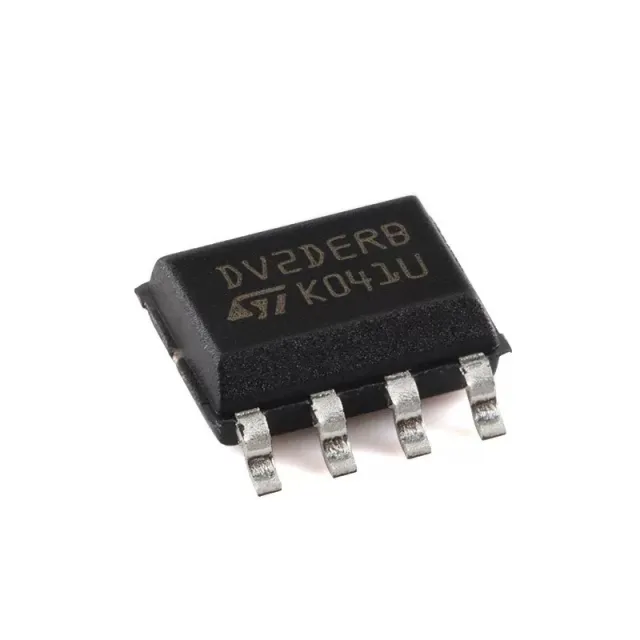
ST25DV04K-IER6S3 - 4Kbit Dynamic NFC/RFID Tag IC | STMicroelectronics
The ST25DV04K-IER6S3 is a dynamic NFC/RFID tag IC from STMicroelectronics, offering 4 Kbit of EEPROM memory with an I2C interface and an ISO 15693 / ISO 18000-3 Mode 1 compliant RF interface. It operates at 13.56 MHz and supports data rates up to 53 kbit/s in the RF interface, while the I2C interface supports up to 1 MHz. The device is housed in an SO-8 package (NXP-style) and is designed for applications requiring contactless data transfer and configuration, such as smart home devices, industrial equipment, and consumer electronics. Data verified as of 2026-08-05. What is a dynamic NFC/RFID tag IC? A dynamic NFC/RFID tag IC is a type of RFID transponder that combines a contactless RF interface with a wired interface (typically I2C) to allow a microcontroller to read and write the tag's memory both over the air and via the wired bus. This category sits within the broader hierarchy: NFC/RFID tag IC -> RFID transponder -> RFID/NFC integrated circuit -> wireless communication IC -> semiconductor. The dynamic nature means the tag can be updated in real time by the host MCU, enabling use cases like wireless configuration, data logging, and product authentication. Key features include 4 Kbit EEPROM organized in 128-byte pages, an I2C interface with a 1 MHz clock, an RF interface compliant with ISO 15693 and ISO 18000-3 Mode 1, a 64-bit unique identifier (UID), and an energy harvesting function that can power external circuits. The device supports a wide supply voltage range of 1.8V to 5.5V on the I2C side, and it includes an interrupt output to signal RF activity. The SO-8 package is compact and suitable for surface-mount assembly. Technically, the ST25DV04K-IER6S3 integrates an RF front-end with an analog-to-digital converter for energy harvesting, a state machine for protocol handling, and a memory controller for EEPROM access. The EEPROM is organized into 32 pages of 128 bits each, with a data retention of 10 years and an endurance of 1 million write cycles. The device supports both static and dynamic memory mapping, allowing the host to control which memory areas are accessible over RF. Typical applications include smart home devices (e.g., smart locks, thermostats), industrial equipment configuration, consumer electronics pairing (e.g., Bluetooth speakers, wearables), and medical device calibration. The energy harvesting feature enables battery-less operation for low-power sensors, and the I2C interface allows seamless integration with microcontrollers. When designing with this device, ensure proper antenna matching for the RF interface and place decoupling capacitors close to the VCC pin. The energy harvesting output should be buffered with a capacitor to provide stable power to external circuits. Also, consider the I2C address configuration via the RF field to avoid conflicts in multi-tag systems. This page synthesizes distributor pricing, drop-in alternatives, and practical design notes not found in the STMicroelectronics datasheet, providing a comprehensive resource for engineers evaluating the ST25DV04K-IER6S3.
ST87M01-1000 - NB-IoT LTE Cat NB2 Module | STMicroelectronics
The STMicroelectronics ST87M01-1000 is an ultra-compact, low-power LTE Cat NB2 (NB-IoT) industrial cellular module supporting LTE FDD bands B1, B3, B5, B8, B20 and B28 for worldwide NB-IoT coverage, housed in an LGA package of 10.6 mm x 12.8 mm. It is the variant of the ST87M01 series without the integrated GNSS/Wi-Fi positioning capability, making it the lowest-power and most cost-effective choice for fixed or stationary IoT endpoints. An NB-IoT (Narrowband Internet of Things) module is a low-power wide-area (LPWAN) radio transceiver standardized by 3GPP for LTE Cat NB2. It sits within the broader hierarchy of cellular modules: transceiver -> cellular module -> wireless connectivity IC -> semiconductor device. NB-IoT prioritizes deep indoor penetration, ultra-low standby current and years of battery life over raw throughput, which suits metering, sensing and tracking infrastructure. Key features of the ST87M01 include fully programmable embedded processing, comprehensive worldwide band coverage on a single hardware SKU, and advanced security features per the STMicroelectronics product brief. The ultra-compact LGA footprint facilitates device miniaturization without compromising RF performance, and the industrial-grade design targets long deployment lifetimes. Architecturally, the ST87M01 series integrates the NB-IoT modem, baseband and RF front end into one module, exposing a standard LGA land pattern for direct PCB mounting. The 1.8 V supply domain simplifies power-tree design around common low-voltage batteries and regulators. ST describes it as the first all-in-one module family combining NB-IoT, GNSS and Wi-Fi positioning across its variants; the -1000 SKU provides the cellular function alone. Typical applications include smart electricity, gas and water metering, smart-city infrastructure such as street lighting and parking sensors, industrial condition monitoring, and asset-tracking endpoints where positioning is handled by another means. Design consideration: choose the -1000 variant when GNSS is not required, since the -1001 variant with GNSS capability costs more and consumes additional power; verify antenna keep-out and RF layout per the ST87M01 hardware design guidance. This page synthesizes distributor availability, drop-in family alternatives, and practical design notes not found in the manufacturer datasheet alone.

ST87M01-1001 - NB-IoT LTE Cat NB2 Module | STMicroelectronics
The STMicroelectronics ST87M01-1001 is an ultra-compact, low-power LTE Cat NB2 NB-IoT industrial cellular module supporting LTE FDD bands B1, B3, B5, B8, B20, and B28, delivering up to +23 dBm transmit output power in a 10.6 mm x 12.8 mm surface-mount LGA package with antenna not included. A cellular IoT module is a wireless communication subsystem that connects embedded devices to operator cellular networks. Within the power-management and connectivity hierarchy, NB-IoT (Narrowband IoT) sits under the LPWAN (Low-Power Wide-Area Network) family of 3GPP LTE standards, which in turn belong to the broader categories of wireless transceivers, RF modules, and industrial IoT communication ICs. NB-IoT modules are optimized for low data rates, deep indoor coverage, and multi-year battery life rather than throughput. Key features of the ST87M01-1001 include comprehensive worldwide band coverage across six LTE FDD bands, ultra-low power consumption of less than 2 uA in low-power mode for multi-year battery operation, and fully programmable architecture allowing customer applications to run on-module. It is a certified LTE Cat NB2 design per the 3GPP release on which it is based, and STMicroelectronics guarantees 15 years of availability, a critical factor for industrial product lifecycles. Technically, the ST87M01 series integrates the cellular modem with advanced security features and industrial-grade design. The -1001 variant provides NB-IoT connectivity plus an extra ADC, while the -1301 and -2301 variants add GNSS and Wi-Fi positioning for combined cellular-plus-location designs. The industrial operating range of -40 C to +85 C supports harsh deployments such as outdoor metering and cold-chain tracking. Typical applications include smart utility metering (electricity, gas, water), asset tracking and telematics, smart city infrastructure such as parking and streetlight control, and industrial sensors on NB-IoT networks. The 868.95 MHz reference in listings relates to adjacent sub-GHz positioning options; the cellular path uses the licensed LTE FDD bands listed above. Design consideration: NB-IoT coverage and SIM/eSIM data plans vary by country and operator, so verify operator NB-IoT support early in the project. Antenna selection and RF layout are also critical because no antenna is included. This page synthesizes distributor pricing, same-family drop-in alternatives, and practical design notes not found in the STMicroelectronics datasheet.
ST87M01-1100 - NB-IoT Module with GNSS | STMicroelectronics
The STMicroelectronics ST87M01-1100 is an ultra-compact, low-power LTE Cat NB2 (NB-IoT) industrial module with integrated GNSS/Wi-Fi positioning, certified by Anatel for Brazil and supporting LTE FDD bands B1, B3, B5, B8, B20, and B28. An NB-IoT module is a type of cellular wireless module within the broader family of LPWAN (Low-Power Wide-Area Network) connectivity devices. NB-IoT operates on licensed LTE spectrum and provides deep indoor penetration and long battery life, making it a key building block of power management-aware, battery-operated industrial IoT systems alongside sensors, microcontrollers, and cellular infrastructure. Key features of the ST87M01 family include its all-in-one integration of NB-IoT cellular connectivity, GNSS (GPS/Galileo) satellite positioning, and Wi-Fi 802.11b-based positioning in a single ultra-compact surface-mount package. This eliminates the need for a separate positioning module, reducing BOM count, board area, and integration effort. The family is described by ST as fully programmable, high-performance, and certified, with worldwide band coverage and advanced security features. Technically, the ST87M01 series is an LTE Cat NB2 device, the evolution of 3GPP NB-IoT supporting higher peak data rates than Cat NB1. ST guarantees 15 years of availability for the ST87M01 platform, which is a critical procurement criterion for industrial products with long service lifetimes. Security features are embedded per the manufacturer product page, and the module supports both classic SIM and externally connected eSIM. Typical applications include smart metering, smart street lighting, asset tracking, livestock and agriculture monitoring, and other smart-city verticals - especially in Brazil and other regions using the B1/B3/B5/B8/B20/B28 band set covered by this -1100 region variant. Design consideration: choose the region-specific variant that matches your deployment market and operator certification requirements; ST explicitly directs users to confirm NB-IoT coverage and suitable SIM data plans with their operator before finalizing the design. This page synthesizes manufacturer data, region-variant guidance, drop-in family alternatives, and practical design notes not found on distributor listing pages.
ST87M01-1101 - NB-IoT Module with GNSS | STMicroelectronics
The STMicroelectronics ST87M01-1101 is an ultra-compact, low-power LTE Cat NB2 (NB-IoT) industrial module with integrated GNSS (GPS/Galileo) and Wi-Fi positioning capability plus an extra ADC, supporting LTE FDD frequency bands B1, B3, B5, B8, B20, and B28 for comprehensive worldwide band coverage. An NB-IoT module is a type of cellular LPWAN (Low Power Wide Area Network) transceiver subsystem that sits within the broader hierarchy of wireless connectivity solutions: cellular module, RF transceiver, RF & wireless component. NB-IoT operates on licensed spectrum with deep indoor penetration and carrier-grade security, making it distinct from unlicensed-technologies such as LoRa or Sigfox. Modules like the ST87M01 series integrate the baseband modem, RF front end, power management, and optional positioning engines into a single certified surface-mount unit. The ST87M01-1101 differentiates itself as one of the first all-in-one modules to combine NB-IoT connectivity, GNSS, and Wi-Fi positioning in a single package, eliminating the need for a separate positioning module in asset-tracking designs. Its LTE Cat NB2 compliance enables deployment on 3GPP Release 14 NB-IoT networks, and ST highlights advanced security features and full programmability for industrial applications. The -1101 variant adds GNSS and Wi-Fi positioning plus the additional ADC, and is Anatel-certified for the Brazilian market alongside the ST87M01-1100. Architecturally, the module series is built for ultra-low power consumption, targeting battery-powered endpoints where multi-year battery life is a design requirement. The integrated GNSS receiver supports GPS and Galileo constellations, while the Wi-Fi sniffing capability provides urban positioning where satellite visibility is poor, and the auxiliary ADC allows direct connection of analog sensors without an external converter. Typical applications include asset tracking, smart metering, smart city infrastructure, and battery-powered industrial IoT sensors. In asset trackers, the combination of NB-IoT and GNSS/Wi-Fi positioning in one module reduces BOM count and board area; in metering, the ultra-low-power profile extends battery service intervals. When designing with the ST87M01-1101, verify antenna selection and RF layout against the ST evaluation kit reference design, and confirm the region-specific certification variant matches your target market, since ST ships distinct MPNs for North America (ST87M01-2001/-2301), Brazil (ST87M01-1000/-1100/-1101), and other regions. This page synthesizes distributor listings, the manufacturer datasheet, family-variant cross-references, and pricing context not consolidated in the ST datasheet alone.
ST87M01-2001 - NB-IoT LTE Cat NB2 Module | STMicroelectronics
The STMicroelectronics ST87M01-2001 is an ultra-compact, low-power LTE Cat NB2 NB-IoT industrial cellular module from the ST87M01 family, purpose-built for North American markets (USA and Canada regional certification) with Anatel-certified siblings covering Brazil. The -2001 variant provides NB-IoT connectivity only, allowing designers to lower the bill of materials when positioning is not required, while family members such as the ST87M01-2301 add GNSS and Wi-Fi positioning in the same footprint. An NB-IoT (Narrowband Internet of Things) module is a low-power wide-area network (LPWAN) cellular transceiver that operates within licensed spectrum on LTE Category NB2. Within the wireless connectivity hierarchy, NB-IoT modules sit alongside LTE-M and LoRa devices as long-range, low-throughput radios optimized for battery-powered telemetry, smart metering, and asset tracking. The ST87M01 family is positioned as a certified industrial-grade option with multi-band worldwide coverage. Key features of the ST87M01 series include LTE Cat NB2 operation, comprehensive worldwide band coverage, advanced security features, ultra-low power consumption for battery-operated designs, and an ultra-compact surface-mount form factor. According to STMicroelectronics, the family is fully programmable, and ST guarantees 15 years of availability, a critical commitment for industrial product lifecycles. The module integrates the cellular protocol stack in firmware (maintained via the STSW-ST87M01 firmware bundle) and connects to host systems over serial interfaces, with support for both classic SIM cards and externally connected eSIM. The family is programmable, enabling application-level processing on-module rather than on a separate host MCU in some designs. Typical applications include smart utility metering, asset tracking, industrial telemetry, smart city infrastructure, and battery-powered IoT sensor nodes deployed on North American NB-IoT networks. The -2001 variant is the right choice where cellular connectivity alone suffices. Design considerations include verifying operator NB-IoT coverage and SIM data plans for the deployment region, providing an adequate power supply for RF transmit bursts, and following the STDES-ST87M01IGN reference design for antenna and layout guidance. This page synthesizes datasheet information, family cross-references, drop-in alternatives, and practical design notes not found in the manufacturer datasheet alone.
ST87M01-2301 NB-IoT + GNSS/Wi-Fi Module | STMicroelectronics
The STMicroelectronics ST87M01-2301 is an ultra-compact, low-power LTE Cat NB2 NB-IoT industrial module with integrated GNSS and Wi-Fi positioning plus an extra ADC, supporting LTE FDD frequency bands B2, B4, B5, B12, B13, B66 and B85 for North American networks. A cellular module is a self-contained wireless subassembly that integrates an LTE modem baseband, RF transceiver, front-end, power management and protocol stack on a single surface-mount land pattern, connecting a host microcontroller to operator networks through a simple UART or USB interface. Within the IoT connectivity hierarchy, NB-IoT (Narrowband IoT, standardized by 3GPP as LTE Cat NB2) sits alongside LTE-M as a licensed-spectrum LPWAN technology optimized for low data rates, deep indoor coverage and multi-year battery life. Key differentiating features of the ST87M01-2301 include its all-in-one integration of NB-IoT cellular, GNSS satellite positioning and Wi-Fi positioning - which ST describes as the first such combination in the industry - together with advanced security features and full programmability of the module firmware. The module series is described by STMicroelectronics as high-performance, fully programmable, ultra-compact and low-power, certified for LTE Cat NB2 operation with comprehensive worldwide band coverage. The -2301 variant is region-targeted for the USA and Canada and is certified for those markets, with companion Anatel-certified variants (-1100/-1101) available for Brazil. Typical applications include asset tracking (where GNSS and Wi-Fi positioning remove the need for a separate positioning IC), smart metering, smart-city infrastructure and battery-powered industrial sensors - use cases showcased in the STEVAL-NBIOTV1 evaluation platform and the STDES-ST87M01IGN 2-layer FR4 reference design. Design considerations: NB-IoT coverage and operator support must be confirmed per country, and SIM selection (eSIM or classic SIM, both supported) affects the data plan; RF layout should follow the STDES-ST87M01IGN reference design for antenna matching and power integrity. This page synthesizes datasheet data, family-variant drop-in alternatives, evaluation-tool pairings and pricing references not consolidated in the manufacturer datasheet alone.

STM32WBA5MMGH6TR - Cortex-M33 BLE 5.4/Thread/Zigbee Module | ST
The STMicroelectronics STM32WBA5MMGH6TR is an ultra-low-power Arm Cortex-M33 TrustZone MCU module integrating Bluetooth LE 5.4, IEEE 802.15.4 (Thread/Zigbee) radio, and 1 Mbyte of Flash memory in a 76-pin LGA module (8 x 12.5 mm). The module runs the Cortex-M33 core at up to 100 MHz with TrustZone security extensions and is designed for connected devices that require multi-protocol 2.4 GHz wireless connectivity without a discrete radio stack on the host MCU. A wireless MCU module combines an application processor, memory, peripherals, and a certified RF subsystem in a single surface-mount land-grid package. In the broader hierarchy, the STM32WBA5MMGH6TR sits under MCU module -> Wireless SoC -> short-range transceiver, where the integrated Cortex-M33 host manages both application code and the radio link layer. This integration eliminates the need for an external radio co-processor, reduces BOM count, and shortens certification time for end products targeting Bluetooth LE, Thread, Zigbee, or Matter ecosystems. Key features of the STM32WBA5MMGH6TR include 1 Mbyte of Flash, up to 100 MHz Cortex-M33 core with TrustZone, Bluetooth LE 5.4 certification-ready radio, integrated 2.4 GHz antenna matching network, and support for Thread/Zigbee via 802.15.4. The module exposes GPIO, I2C, SPI, USART, and ADC peripherals on the LGA pads. Security is enhanced by TrustZone isolation, secure boot, and hardware cryptographic accelerators. Ultra-low-power operation targets always-on battery-powered IoT endpoints. Architecturally, the device pairs an applications Cortex-M33 core with a dedicated 2.4 GHz radio subsystem. The radio chain supports BLE 5.4 (Coded PHY/LE 2M), IEEE 802.15.4 O-QPSK, and proprietary modes. RF matching, balun, and antenna tuning are integrated, removing the need for external RF components. The 76-pin LGA exposes digital I/O, debug (SWD/JTAG), and RF test access, enabling both prototype bring-up and production assembly via standard SMT lines. Typical applications include Bluetooth LE lighting, Matter-over-Thread smart-home devices, Zigbee sensors, BLE wearables, industrial wireless sensor nodes, and asset-tracking beacons. The combination of Cortex-M33 headroom with multi-protocol 2.4 GHz radio makes it well suited to gateways bridging Thread/Zigbee and BLE ecosystems. When designing in the STM32WBA5MMGH6TR, follow ST's recommended PCB footprint and keep the antenna keep-out region clear of copper and plastic. Provide adequate decoupling near the supply pads and verify regulatory compliance for the end device in your target region. This page synthesizes distributor pricing, drop-in STM32WBA module alternatives, and practical PCB/RF layout guidance not consolidated in the ST datasheet alone.
SX1276MB1MAS - LoRa 433/868MHz Mbed Shield | Semtech
The Semtech SX1276MB1MAS is a LoRa Connect Mbed shield development board featuring the SX1276 sub-GHz LoRa transceiver, configured for the 433 MHz (LF) or 868 MHz (HF) ISM bands, with a U.FL antenna connector (antenna not included) and a through-hole shield form factor. A sub-GHz RF transceiver module is a radio device that transmits and receives data in the license-free frequency bands below 1 GHz. Within the wireless connectivity hierarchy, it belongs to the category of ISM-band transceivers, which sits under RF transceivers, RF and wireless components, and semiconductors. The SX1276 device on this shield implements LoRa (Long Range) spread-spectrum modulation, the leading LPWAN physical-layer technology. Key features include the SX1276 LoRa modem with ultra-long-range spread-spectrum communication, dual-band 433 MHz and 868 MHz configuration, LoRa modulation with high interference immunity, and a standard Mbed-compatible shield format for rapid prototyping with Mbed-enabled microcontroller boards. The U.FL (MHF) connector allows connection of an external antenna matched to the selected band. Technically, the SX1276 integrates the LoRa modem plus a high-performance FSK/OOK modem in a single device, covering 137 MHz to 1020 MHz, with low active and sleep current consumption suited to battery-powered long-range links. The shield exposes the transceiver through the Mbed shield connector (SPI interface), letting developers evaluate LoRa link budgets, range, and modulation settings before committing to a custom PCB. Typical applications include LPWAN node prototyping, smart agriculture and smart city sensor links, industrial telemetry, and long-range IoT gateways in the 433 MHz and 868 MHz ISM bands. Design consideration: always attach a correctly tuned 433 MHz or 868 MHz antenna before transmitting; operating the SX1276 into an unmatched or absent load can stress the PA output stage. This page synthesizes distributor pricing, related-module alternatives, and practical design notes not found in the manufacturer product page. Pricing references are as of 2026-10-19.
TLM922S - LoRaWAN Module 862-932MHz SX1272 | Kiwi Technology
The Kiwi Technology TLM922S (TLM922S-P01A) is a LoRaWAN-certified ultra-low-power UHF wireless module operating across 862 MHz to 932 MHz, integrating a Semtech SX1272 single-chip LoRa transceiver and a 32-bit ARM Cortex-M0 MCU (Cypress S6E1C32) in a compact surface-mount package with up to +20 dBm output power. A LoRa module is a wireless subsystem that implements LoRa (Long Range) spread-spectrum modulation, part of the LPWAN (Low-Power Wide-Area Network) family within the broader wireless connectivity hierarchy that includes sub-GHz RF transceivers, RF modules, and IoT communication devices. LoRaWAN, the networking protocol layered on top of LoRa PHY, is standardized and certified by the LoRa Alliance, of which Kiwi Technology is a listed member. Key features include full on-chip integration of all RF filters, which removes the need for costly external SAW and IF filters; a UART AT-command interface that lets any host MCU control the module without RF expertise; LoRaWAN certification (FCC ID 2AKIBTLM922S) for regulatory compliance; and very low power consumption designed for battery-powered nodes operating for years on a single cell. Technically, the SX1272 handles the LoRa modulation and RF front end while the Cypress S6E1C32 Cortex-M0 core runs the LoRaWAN stack, so the module appears to the host as a simple serial peripheral. This partitioning minimizes host firmware complexity and shortens time to market for IoT and M2M products. Certified output power is approximately 19.23 mW to 19.32 mW across the 920.6-928 MHz segment per the Japanese radio-law test report, with line-of-sight range on the order of 10 km typical for US915-class deployments. Typical applications include LoRaWAN IoT sensor nodes, smart metering infrastructure, asset tracking tags, smart-city endpoints, and industrial M2M telemetry, where long range and multi-year battery life outweigh raw data throughput. Design consideration: keep the antenna feedline short and matched to 50 ohms, and budget a clean 3.3 V supply with low ripple, since PA burst currents on LoRa transmit edges can droop marginal rails and cause frame errors. This page synthesizes distributor sourcing data, certification records, and practical integration notes not consolidated in the manufacturer specification document.

TOBY-R200-03B - LTE Cat 1 Cellular Module | u-blox | IoT
The u-blox TOBY-R200-03B is a multi-mode LTE Cat 1 / 3G / 2G cellular transceiver module housed in a 152-pin LGA castellation surface-mount package, designed for global IoT and M2M deployments. It supports LTE FDD bands 1, 2, 3, 4, 5, 7, 8, 12, 20 with UMTS/HSPA bands 1, 2, 5, 8 fallback and GSM quad-band, achieving LTE Category 1 downlink speeds up to 10.3 Mbps and uplink up to 5.2 Mbps. A cellular IoT module is an integrated radio-frequency subsystem that embeds a baseband processor, RF transceiver, power management, and SIM interface on a single PCB, exposing a UART/USB host interface for the application microcontroller. The TOBY-R2 family belongs to the 4G LTE category in the cellular module hierarchy (LTE Cat 1 -> LTE -> 4G -> cellular module -> wireless module), positioned below LTE Cat 4 high-data-rate modules but above LTE-M / NB-IoT low-power categories, making it the workhorse for mid-bandwidth IoT applications like telemetry, asset monitoring, and connected-vehicle gateways. Key differentiating features of the TOBY-R200-03B include form-factor compatibility with u-blox SARA, LISA, and LARA cellular module families, allowing easy migration across GSM/GPRS, UMTS/HSPA, and LTE generations without PCB redesign. The module provides integrated TCP/IP, UDP, HTTP, FTP, and MQTT stacks via u-blox AT command set, plus GNSS-ready hardware paths. Antenna is not included, enabling flexible external antenna selection per regional deployment. The TOBY-R200-03B uses the Qualcomm MDM9207-1 baseband platform with integrated RF front-end, supporting receiver diversity on certain bands. The LGA-152 castellation package supports SMT line pick-and-place and reflow soldering, simplifying high-volume manufacturing. Operating supply range is 3.4 V to 4.2 V, and the industrial-grade temperature range of -40C to +85C supports outdoor and vehicular deployments. The module is form-factor compatible with the TOBY-L series LTE-only modules, easing migration when lower-cost LTE-only designs are needed. Typical applications include fleet management and asset tracking telematics, smart metering and energy monitoring, connected industrial gateways, point-of-sale terminals, and security/alarm panels. The global band plan makes a single SKU deployable across North American, European, and Asian cellular networks, simplifying inventory and certification. When designing with the TOBY-R200-03B, careful PCB layout is essential: place the module on the edge of the host PCB or in a corner to allow antenna trace routing, keep the SIM card holder within 10 cm of the module's SIM pins, and provide a low-ESR 100 uF bulk capacitor on VCC. Decoupling requires 10 nF + 100 nF + 4.7 uF close to the supply pins. Antenna matching network should be tuned to 50 ohms and the keep-out zone under the antenna trace observed strictly to maintain radiated performance. This page synthesizes distributor pricing snapshots, drop-in same-brand alternatives, and practical PCB design guidance not consolidated in the manufacturer datasheet alone.