AS7050 - PPG/ECG Biosignal AFE, 8 LED Drivers | ams OSRAM
Teilenummer: AS7050 ✓ Aktiv| Menge | Stückpreis | Gesamt |
|---|---|---|
| 1 | $6.9 | $6,90 |
| 10 | $6.21 | $62,10 |
| 100 | $5.52 | $552,00 |
| 500 | $4.97 | $2.485,00 |
| 1.000 | $4.48 | $4.480,00 |
AS7050 Übersicht
A biosignal analog front-end is the mixed-signal circuit stage that converts weak physiological signals - optical photoplethysmogram (PPG) current from photodiodes, electrical electrocardiogram (ECG) potentials from skin electrodes, and galvanic skin resistance (GSR) - into digitized data for a host microcontroller. Within the signal-chain hierarchy, the AFE sits between the raw sensor elements (LEDs, photodiodes, electrodes) and the digital processing domain, making it the precision heart of any wearable health monitoring system.
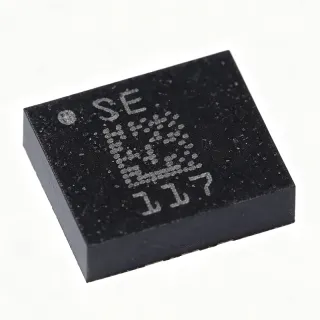
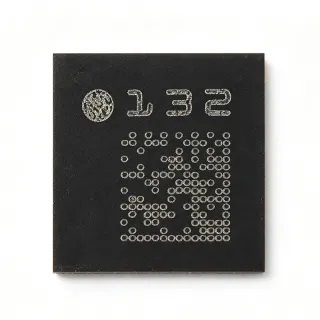
Key differentiating features include up to 8 LED driver outputs and 6 photodiode input pins, giving exceptional flexibility for multi-wavelength, multi-site optical arrangements in reflective or transmissive PPG topologies. The embedded low-noise ECG analog front-end meets IEC 60601-2-47 requirements, a significant advantage for medical-grade designs. Synchronized PPG and ECG acquisition enables advanced parameters such as pulse transit time and blood-pressure trend estimation. The thin WLCSP profile suits height-constrained products such as true wireless earbuds, smart rings, and watch backplates.
Architecturally, the AS7050 is the next generation of the ams OSRAM vital-sign sensor family, integrating low-noise transimpedance paths, programmable LED current sources, an electrode-based ECG channel, and a GSR measurement stage under I2C control. Flexible time-slot scheduling allows PPG, ECG, and GSR acquisitions to be interleaved with low average power, critical for battery-operated wearables.
Typical applications include optical heart-rate and ECG monitoring platforms, smartwatch and fitness-band sensor stacks, hearable in-ear PPG for earbuds, and connected medical and health devices requiring multi-modal biosignal capture. The multi-LED/multi-PD arrangement supports SpO2-style dual-wavelength configurations without external analog circuitry.
Design consideration: the WLCSP package requires accurate pad-matched PCB land patterns and careful LED optical crosstalk management; keep photodiode input traces short and shielded to preserve the low-noise front-end performance.
This page synthesizes distributor sourcing data, drop-in variant options, and practical design guidance not found in the manufacturer short datasheet, with all key values verified against ams OSRAM and Mouser sources as of 2026-10-11.
Drop-in-Alternativen für AS7050 – gleiches Gehäuse, Pin-kompatibel. Bauteile mit anderem Gehäuse, die eine PCB-Überarbeitung erfordern, sind ausgeschlossen.
Varianten dieser Serie
Modelle derselben Serie, die drop-in-kompatibel sind mit AS7050 (gleiche Bauform und Footprint) – abweichend in Package, External Electrode Support, Product Type, RoHS Status.
Schnellvergleichstool – Wählen Sie Alternativbauteile für den Direktvergleich:
AS7050-BWLM
✅ Drop-In✓ Auf Lager
Preis auf Anfrage
Datenblatt ansehen →AS7050-BWLT
✅ Drop-In✓ Auf Lager
$2.07 / Stück
Datenblatt ansehen →AS7050-BWLM_REV.C
✅ Drop-In📋 Referenzalternative (nicht im Katalog)
AS7050 Grenzwerte & elektrische Eigenschaften
| Funktion | Biosignal Sensor Analog Front-End (PPG, ECG, GSR) |
| LED Driver Outputs | Up to 8 |
| Photodiode Inputs | Up to 6 |
| External Electrode Support | Yes (ECG/GSR) |
| Synchronized PPG + ECG Acquisition | Yes |
| Communication Interface | I2C |
| Gehäuse | WLCSP (Wafer-Level Chip-Scale Package) |
| ECG Standard Compliance | Meets IEC 60601-2-47 requirements |
| Noise Performance (ECG AFE) | Embedded low-noise analog front-end |
| Montageart | Surface Mount |
| Typical Applications | Heart-rate and ECG monitoring, smart devices, earbuds |
| Ordering Variants | AS7050-BWLM, AS7050-BWLT, AS7050-BWLM_REV.C |
AS7050 wlcsp (wafer-level chip-scale package) Pinbelegungsleitfaden
Pinbelegung für AS7050 (wlcsp (wafer-level chip-scale package)-Gehäuse). Dieses Leistungsbauteil verfügt über Gate-, Drain- und Source-Anschlüsse. Bei nicht gepolten Gehäusen entnehmen Sie die genaue Ausrichtung von Pin 1 und Footprint-Details dem Herstellerdatenblatt. Typische Anwendungen sind Netzteilentwurf, Motoransteuerung und Lastschaltung.

Keine detaillierten Pinbelegungsdaten verfügbar für AS7050.
Siehe die Datenblatt für die vollständige Pin-Konfiguration.
Typische Anwendungen
AS7050 ist geeignet für 6 Anwendungs: Optical Heart-Rate (PPG) Monitoring, ECG Monitoring for Wearables, True Wireless Earbuds In-Ear Sensing, Smartwatch Multi-Modal Sensor Platforms, Galvanic Skin Response (GSR) and Stress Sensing, Connected Medical and Telehealth Devices.
Optical Heart-Rate (PPG) Monitoring
The AS7050 fits wrist-worn and ring-form heart-rate monitoring because its 8 LED drivers and 6 photodiode inputs let one IC drive multiple green/red/IR LED wavelengths and read multiple photodiode sites, improving signal quality across skin tones and motion conditions. In a typical reflective topology, scheduled time slots pulse each LED while the corresponding photodiode current is converted by the low-noise front-end and digitized for the host MCU over I2C. Because acquisition timing is synchronized, multi-wavelength ratios (the basis of SpO2-style estimation) can be computed without external analog circuitry, reducing BOM height and power compared with discrete TIA plus LED-driver designs.
Empfohlen
ECG Monitoring for Wearables
The embedded ECG analog front-end of the AS7050 accepts external electrodes and is specified to meet IEC 60601-2-47 requirements, per the Mouser product data, which materially shortens the compliance path for ambulatory ECG features in smartwatches, patches, and medical wearables. Electrode-derived ECG is acquired in the same synchronized schedule as PPG, enabling pulse-transit-time style computations that correlate optical and electrical cardiac events. Designers should keep electrode input traces guarded and high-impedance, place the AS7050 close to the electrode contacts, and budget for dry-electrode contact noise, which typically dominates over the AFE's own low-noise floor in real enclosures.
Empfohlen
True Wireless Earbuds In-Ear Sensing
The thin WLCSP package of the AS7050-BWLM is explicitly called out by ams OSRAM as suitable for height-constrained earbud solutions, where every tenths-of-a-millimeter of sensor-stack height matters for acoustic fit and shell ergonomics. In-ear PPG benefits from the AFE's multiple photodiode inputs, which allow sampling of two sensor sites to reject motion artifacts from loose ear-tip contact. The I2C interface integrates naturally with the low-power MCU inside a BT SoC audio platform, and scheduled low-duty-cycle LED pulses keep average current in the microamp-to-milliamp range compatible with small hearing-aid-class cells. Optical crosstalk shielding inside the earbud shell is the dominant layout constraint.
Empfohlen
Smartwatch Multi-Modal Sensor Platforms
A smartwatch backplate typically combines optical windows and ECG electrodes; the AS7050 is purpose-built for exactly this combination, delivering PPG, ECG, and GSR channels in one IC so the sensor stack stays thin and the optical center-to-electrode geometry can be tightly controlled. With 8 LED drivers, designers can implement 4-wavelength optical arrays for advanced metrics while retaining headroom for proximity or ambient-light channels on the 6 photodiode inputs. Mouser lists smart devices among the primary applications. Firmware-side, time-slot scheduling in the AFE means the host only manages a single acquisition engine over I2C, simplifying power-state management during continuous background heart-rate monitoring.
Empfohlen
Galvanic Skin Response (GSR) and Stress Sensing
The AS7050 supports galvanic skin resistance measurement through its external-electrode path, enabling stress and arousal tracking alongside cardiac metrics without a second dedicated AFE. In practice, two dry-contact electrodes on the wrist or ring inner surface drive a small excitation through the skin, and the AFE conditions and digitizes the resulting GSR response in scheduled slots between PPG and ECG acquisitions. Because GSR signals drift slowly with electrode-skin impedance, the shared synchronization of all three modalities lets algorithms cross-validate stress events against heart-rate and HRV trends. Keep electrode cables short and shielded; sweat-channel geometry strongly influences baseline drift and repeatability.
Empfohlen
Connected Medical and Telehealth Devices
For clinical-grade ambulatory monitors and telehealth patches, the AS7050 offers a compliant ECG front-end (targeting IEC 60601-2-47) plus synchronized PPG, allowing one sensor IC to feed pulse-oximetry-style optical data and diagnostic-quality ECG into the same capture stream. Mouser explicitly lists medical and health sensor applications for the AS7050 family. In battery-powered patch form factors, the WLCSP's minimal footprint and the AFE's scheduled acquisition reduce average current, extending wear time; the design team must still implement patient-isolation, defibrillation protection, and biocompatibility at system level, which the AFE does not replace. Full datasheet parameters should be pulled under NDA for regulatory documentation.
Empfohlen
Zusammenfassung der empfohlenen Produkte
Technische Referenzdaten für AS7050 – Vergleich, Designhinweise und Compliance-Informationen.
Auswahlhilfe
Vergleich mit Alternativen
| Parameter | Dieses Produkt | AS7050-BWLM | AS7050-BWLT | AS7050-BWLM_REV.C |
|---|---|---|---|---|
| Package | WLCSP | WLCSP - same | WLCSP - same | WLCSP - same |
| Brand | ams OSRAM | ams OSRAM | ams OSRAM | ams OSRAM |
| LED Driver Outputs | Up to 8 | Up to 8 | Up to 8 | Up to 8 |
| Photodiode Inputs | Up to 6 | Up to 6 | Up to 6 | Up to 6 |
| ECG Electrode Support | Yes (IEC 60601-2-47) | Yes (IEC 60601-2-47) | Yes (IEC 60601-2-47) | Yes (IEC 60601-2-47) |
| Interface | I2C | I2C | I2C | I2C |
| Synchronized PPG + ECG | Yes | Yes | Yes | Yes |
Wichtigste Unterscheidungsmerkmale
- Integrated multi-modal biosignal capture (PPG + ECG + GSR) (vs. MAX86141)
- Highest channel flexibility in its class (vs. AFE4400)
- Earbud-optimized package height (vs. AS7050-BWLM_REV.C)
Designhinweise
WLCSP assembly discipline is mandatory for the AS7050: the package requires a pad-matched land pattern per the ams OSRAM datasheet, NSMD pads, and a controlled reflow profile since there are no leads to absorb stress. Route photodiode input traces as short as possible and guard them with ground to preserve the low-noise front-end; any leakage or pickup at these high-impedance nodes appears directly as PPG noise. Keep LED driver return currents away from photodiode grounds to avoid injecting switching artifacts into the optical channel.
Optical crosstalk is the dominant error source in reflective PPG stacks: isolate each LED-photodiode pair with a light-blocking barrier (epoxy wall or molded frame) and specify low-fluorescence epoxy in the optical window. Because the AS7050 offers up to 8 LED drivers and 6 photodiode inputs, plan the mechanical stack so unused channels do not create parasitic reflection paths. Follow the LED scheduling recommended in the manufacturer datasheet so adjacent time slots do not share wavelengths that couple through the barrier.
Power the AS7050 analog domain from a dedicated low-noise LDO rather than a shared buck output; LED pulse currents create large transient loads that modulate a shared rail and appear as baseline wander in ECG and GSR channels. Add local decoupling at each supply pin per the datasheet recommendation, and sequence the AFE supply before the electrode front-end if separate rails are used. Estimated: scheduling PPG at 25 Hz with short LED pulses typically keeps average AFE power well within wearable battery budgets, but verify with the full datasheet current tables.
Compliance-Informationen
ECG front-end specified to meet IEC 60601-2-47 per Mouser product data. DigiKey lists AS7050-BWLM_REV.C as WLP LF (lead-free) packaging; formal RoHS/REACH declarations must be obtained from ams OSRAM.