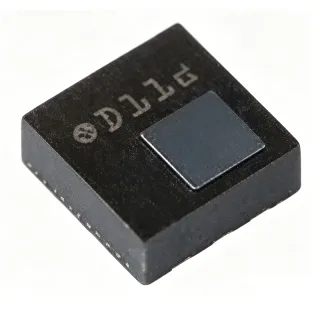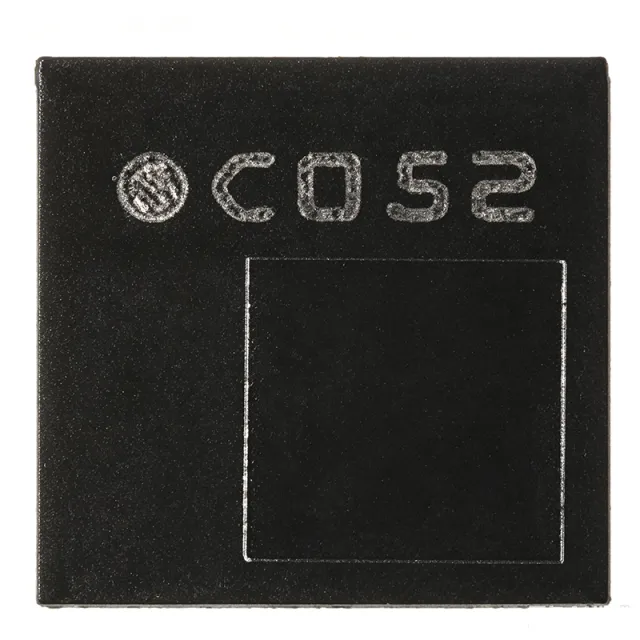
LPS22HBTR - MEMS Pressure Sensor, 260-1260 hPa | STMicroelectronics
Teilenummer: LPS22HBTR ✓ Aktiv| Menge | Stückpreis | Gesamt |
|---|---|---|
| 1 | $3.2727 | $3,27 |
| 10 | $2.3636 | $23,64 |
| 100 | $2.0909 | $209,09 |
| 500 | $2 | $1.000,00 |
| 1.000 | $1.9091 | $1.909,10 |
LPS22HBTR Übersicht
A pressure sensor is a device that measures the force exerted by a fluid (liquid or gas) per unit area, converting this physical quantity into an electrical signal. The LPS22HBTR is a MEMS (Micro-Electro-Mechanical Systems) capacitive pressure sensor, which uses a thin diaphragm that deflects under pressure, changing the capacitance between the diaphragm and a fixed electrode. This change is then converted into a digital output via an integrated signal conditioner. Pressure sensors are a subset of environmental sensors, which also include temperature, humidity, and gas sensors, and are essential components in IoT, automotive, and industrial systems.
Key features of the LPS22HBTR include an absolute pressure range of 260 to 1260 hPa, a resolution of 0.01 hPa (8 Pa), and an accuracy of ±0.1 hPa (typical) at 25°C. The device operates from a supply voltage of 1.7V to 3.6V, with a current consumption of 12 µA at 1 Hz output data rate (ODR) and 1 µA in power-down mode. It supports both I2C (up to 400 kHz) and SPI (up to 10 MHz) interfaces, and includes an integrated 24-bit ADC, a 128-level FIFO, and an interrupt output for data-ready and pressure threshold events.
The LPS22HBTR is built using ST's proven MEMS technology, which ensures high reliability and long-term stability. The device includes a temperature sensor for compensation, and its output is factory-calibrated, eliminating the need for user calibration. The HLGA package is designed for surface-mount assembly and is RoHS and halogen-free compliant.
Typical applications include barometric altimeters in drones and smartphones, weather stations, GPS dead-reckoning for navigation, and indoor navigation systems. Its low power consumption and small footprint make it ideal for battery-powered IoT devices and wearables.
When designing with the LPS22HBTR, ensure proper PCB layout with a small pressure port opening to the environment, and avoid covering the sensing element with solder mask or conformal coating. The device's I2C address is 0x5C (7-bit) or 0xB8 (8-bit), and it can be configured via its registers for different ODRs and interrupt modes.
Drop-in-Alternativen für LPS22HBTR – gleiches Gehäuse, Pin-kompatibel. Bauteile mit anderem Gehäuse, die eine PCB-Überarbeitung erfordern, sind ausgeschlossen.
Varianten dieser Serie
Modelle derselben Serie, die drop-in-kompatibel sind mit LPS22HBTR (gleiche Bauform und Footprint) – abweichend in Interface, Package, Supply Voltage.
Schnellvergleichstool – Wählen Sie Alternativbauteile für den Direktvergleich:
LPS22HH
✓ Auf Lager
$0.9705 / Stück
Datenblatt ansehen →LPS25HBTR
✓ Auf Lager
$1.5631 / Stück
Datenblatt ansehen →LPS22HHTR
📋 Referenzalternative (nicht im Katalog)
BMP388
📋 Referenzalternative (nicht im Katalog)
MPL3115A2
📋 Referenzalternative (nicht im Katalog)
LPS22HBTR Grenzwerte & elektrische Eigenschaften
| Pressure Range | 260 to 1260 hPa (absolute) |
| Auflösung | 0.01 hPa (8 Pa) |
| Accuracy | ±0.1 hPa (typical) at 25°C |
| Versorgungsspannung | 1.7 V to 3.6 V |
| Current Consumption | 12 µA at 1 Hz ODR |
| Power-Down Current | 1 µA |
| Schnittstelle | I2C (up to 400 kHz) and SPI (up to 10 MHz) |
| Output Data Rate | 1 Hz to 75 Hz (programmable) |
| ADC Resolution | 24-bit |
| FIFO | 128-level |
| Betriebstemperatur | -40°C to +85°C |
| Gehäuse | HLGA 2.0 x 2.0 x 0.7 mm |
| Montageart | Surface Mount |
| RoHS-Status | Compliant |
| Halogenfrei | Yes |
LPS22HBTR Pin-Konfiguration
| Pin 1 | VDD — Power supply (1.7V to 3.6V) |
| Pin 2 | GND — Ground |
| Pin 3 | SCL/SPC — I2C clock / SPI clock |
| Pin 4 | SDA/SDI — I2C data / SPI data input |
| Pin 5 | SA0/SDO — I2C address select / SPI data output |
| Pin 6 | CS — Chip select (active low) |
| Pin 7 | INT_DRDY — Interrupt / data ready output |
| Pin 8 | RES — Reserved (do not connect) |
| Pin 9 | GND — Ground |
| Pin 10 | VDD_IO — I/O supply voltage |
Typische Anwendungen
LPS22HBTR ist geeignet für 6 Anwendungs: Barometric Altimeter, Weather Station, Smartphone Altimeter, GPS Dead Reckoning, Indoor Navigation, Wearable Fitness Tracker.
Barometric Altimeter
The LPS22HBTR's high accuracy (±0.1 hPa) and resolution (0.01 hPa) enable precise altitude measurement in drones and UAVs. In a typical drone application, the sensor is mounted on the flight controller PCB with a pressure port exposed to the atmosphere. The I2C interface connects to the MCU, and the FIFO stores pressure data for efficient readout. The low power consumption (12 µA at 1 Hz) extends flight time, and the small HLGA package fits compact drone designs. Compared to GPS, barometric altimetry provides faster response and better short-term accuracy, making it essential for stable altitude hold and landing.
Empfohlen
Weather Station
The LPS22HBTR is ideal for weather stations due to its wide pressure range (260-1260 hPa) and high accuracy. In a weather station, the sensor is placed in a ventilated enclosure to measure atmospheric pressure. The SPI interface allows high-speed data transfer to a data logger, and the 24-bit ADC ensures fine pressure resolution. The device's low power consumption enables solar-powered operation. The temperature sensor inside the LPS22HBTR can also be used for temperature compensation. With its long-term stability, the LPS22HBTR provides reliable barometric data for meteorological monitoring.
Empfohlen
Smartphone Altimeter
In smartphones, the LPS22HBTR enables indoor navigation and floor detection. The sensor's small size (2x2x0.7mm) fits into the thin profile of modern phones. It is typically connected to the application processor via I2C, and its interrupt output can wake the processor when pressure changes exceed a threshold. The low power consumption (12 µA) is crucial for battery life. The sensor's accuracy supports stair counting and elevation gain tracking in fitness apps. The FIFO reduces host processor load by buffering data, allowing the processor to sleep longer.
Empfohlen
GPS Dead Reckoning
The LPS22HBTR enhances GPS dead reckoning by providing altitude data to improve position accuracy in multi-level environments. In a navigation system, the pressure sensor is used to detect floor changes in buildings, complementing GPS signals that are weak indoors. The sensor's high resolution (0.01 hPa) allows detection of small altitude changes (about 8 cm). The I2C interface connects to the navigation processor, and the interrupt output can trigger altitude updates. The low power consumption is essential for portable navigation devices. This application is common in automotive and pedestrian navigation systems.
Empfohlen
Indoor Navigation
The LPS22HBTR is used in indoor navigation systems to detect floor changes and improve positioning accuracy. In a building, the sensor measures atmospheric pressure, which decreases with altitude. By monitoring pressure changes, the system can determine when a user moves to a different floor. The sensor's accuracy (±0.1 hPa) corresponds to about 1 meter altitude change, which is sufficient for floor detection. The small package allows integration into beacons or mobile devices. The low power consumption enables continuous operation in battery-powered beacons. The FIFO helps reduce power by allowing the processor to sleep between reads.
Empfohlen
Wearable Fitness Tracker
The LPS22HBTR is suitable for wearable fitness trackers to measure elevation gain and stair climbing. Its ultra-small package (2x2x0.7mm) and low power consumption (12 µA) are ideal for battery-powered wearables. The sensor is connected to the MCU via I2C, and the interrupt output can wake the MCU when a significant pressure change is detected, enabling step counting on stairs. The 128-level FIFO allows the sensor to store data while the MCU is in sleep mode, further reducing power. The device's accuracy supports elevation tracking in outdoor activities like hiking.
Empfohlen
Zusammenfassung der empfohlenen Produkte
Technische Referenzdaten für LPS22HBTR – Vergleich, Designhinweise und Compliance-Informationen.
Auswahlhilfe
Vergleich mit Alternativen
| Parameter | Dieses Produkt | LPS22HH | LPS22HHTR | LPS25HBTR | BMP388 | MPL3115A2 |
|---|---|---|---|---|---|---|
| Package | HLGA 2.0 x 2.0 x 0.7 mm | HLGA 2.0 x 2.0 x 0.7 mm (same) | HLGA 2.0 x 2.0 x 0.7 mm (same) | HLGA 2.0 x 2.0 x 0.7 mm (same) | LGA-10 2.0 x 2.0 x 0.8 mm (different) | LGA-8 3.0 x 3.0 x 1.0 mm (different) |
| Brand | STMicroelectronics | STMicroelectronics | STMicroelectronics | STMicroelectronics | Bosch Sensortec | NXP Semiconductors |
| Pressure Range | 260-1260 hPa | 260-1260 hPa | 260-1260 hPa | 260-1260 hPa | 300-1250 hPa | 20-110 kPa |
| Accuracy | ±0.1 hPa | ±0.1 hPa | ±0.1 hPa | ±0.1 hPa | ±0.1 hPa | ±0.1 kPa |
| Resolution | 0.01 hPa | 0.01 hPa | 0.01 hPa | 0.01 hPa | 0.016 hPa | 0.1 kPa |
| Supply Voltage | 1.7V-3.6V | 1.7V-3.6V | 1.7V-3.6V | 1.7V-3.6V | 1.7V-3.6V | 1.95V-3.6V |
| Current Consumption (1 Hz) | 12 µA | 12 µA | 12 µA | 12 µA | 3.4 µA | 40 µA |
| Interface | I2C/SPI | I2C/SPI | I2C/SPI | I2C/SPI | I2C/SPI | I2C |
Wichtigste Unterscheidungsmerkmale
- Ultra-small package (2x2x0.7mm) (vs. MPL3115A2)
- Lower power consumption (12 µA at 1 Hz) (vs. MPL3115A2)
- Wider pressure range (260-1260 hPa) (vs. BMP388)
Designhinweise
Ensure the pressure sensor has a vent hole in the PCB under the sensing element to allow ambient pressure to reach the sensor. Do not cover the vent hole with solder mask or conformal coating. Place the sensor away from heat sources to minimize temperature-induced pressure errors.
Keep the I2C/SPI traces short and use pull-up resistors (e.g., 4.7kΩ) for I2C. Add a 100nF decoupling capacitor close to the VDD pin and a 1µF capacitor for bulk decoupling. Ensure the ground plane is solid under the sensor to reduce noise.
Do not exceed the absolute maximum ratings (VDD max 3.6V). Avoid exposing the sensor to pressure beyond the specified range (260-1260 hPa) as it may damage the membrane. When using SPI, ensure the CS pin is properly controlled to avoid bus conflicts.
Compliance-Informationen
RoHS and halogen-free compliant per ST datasheet. Not AEC-Q100 qualified (not an automotive-grade part).