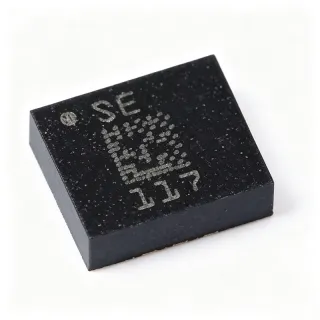
LPS25HBTR - MEMS Pressure Sensor, 260-1260 hPa | STMicroelectronics
MPN: LPS25HBTR ✓ Active| Qty | Unit Price | Extended |
|---|---|---|
| 1 | $1.5631 | $1.56 |
LPS25HBTR Overview
A MEMS pressure sensor is a micro-electromechanical system that converts applied pressure into an electrical signal. The LPS25HBTR uses a piezoresistive sensing element whose resistance changes with mechanical stress induced by pressure. This change is converted into a digital output via an internal analog-to-digital converter (ADC) and signal conditioning circuitry. The sensor belongs to the broader category of environmental sensors, which also includes temperature, humidity, and gas sensors, and is a key component in IoT, weather monitoring, and altitude sensing systems.
Key features of the LPS25HBTR include an absolute pressure range of 260 to 1260 hPa, a resolution of 0.01 hPa (equivalent to approximately 8 cm of altitude change), and a typical accuracy of ±0.1 hPa over the full range. The device supports both I2C (up to 400 kHz) and SPI (up to 10 MHz) interfaces, with a selectable address for I2C. It also includes an embedded 24-bit ADC, a 32-level FIFO buffer, and an interrupt output for data-ready and threshold detection. The supply voltage ranges from 1.7V to 3.6V, with a low current consumption of 4 µA in normal mode and 1 µA in low-power mode.
The LPS25HBTR integrates a temperature sensor with an accuracy of ±0.5°C, which can be used for temperature compensation of the pressure reading or as a standalone temperature measurement. The device features a pressure resolution of 0.01 hPa and a temperature resolution of 0.01°C. The FIFO buffer allows the host processor to remain in low-power mode while the sensor collects data, reducing overall system power consumption. The interrupt pin can be configured to trigger on pressure thresholds or data-ready events, enabling event-driven operation.
Typical applications include barometric pressure sensing for weather stations, altitude measurement in drones and smartphones, indoor navigation, and industrial process control. The sensor's high resolution and low power make it ideal for battery-powered IoT devices. In a drone application, the LPS25HBTR provides altitude data with an accuracy of ±0.1 hPa, which translates to approximately ±0.8 meters, enabling stable flight control.
When designing with the LPS25HBTR, ensure proper PCB layout with a small vent hole or port to expose the sensing element to ambient pressure. Avoid placing the sensor near heat sources, as temperature gradients can affect pressure readings. Use a low-pass filter on the power supply to reduce noise, and follow the recommended layout in the datasheet for optimal performance.
Drop-in alternatives for LPS25HBTR — same package, pin-to-pin compatible. Different-package parts requiring PCB rework are excluded.
Variants in this series
Same-series models that are drop-in compatible with LPS25HBTR (same form factor and footprint) — differing in Interface, Package, Supply Voltage.
Quick Comparison Tool — Select alternative parts for side-by-side comparison:
LPS22HBTR
✅ Drop-In✓ In Stock
$1.9091 / Unit
View Datasheet →LPS25HSTR
✅ Drop-In ⚠️ Specs Unverified📋 Reference alternative (not in catalog)
BMP388
✅ Drop-In ⚠️ Specs Unverified📋 Reference alternative (not in catalog)
MS5611
✅ Drop-In ⚠️ Specs Unverified📋 Reference alternative (not in catalog)
LPS25HBTR Maximum Ratings & Electrical Characteristics
| Pressure Range | 260 to 1260 hPa (absolute) |
| Pressure Resolution | 0.01 hPa |
| Pressure Accuracy | ±0.1 hPa (typical) |
| Temperature Range | -40°C to +85°C |
| Temperature Accuracy | ±0.5°C |
| Supply Voltage | 1.7V to 3.6V |
| Current Consumption (Normal Mode) | 4 µA |
| Current Consumption (Low-Power Mode) | 1 µA |
| Interface | I2C (up to 400 kHz) / SPI (up to 10 MHz) |
| I2C Address | 0x5C or 0x5D (selectable) |
| ADC Resolution | 24-bit |
| FIFO Buffer | 32 levels |
| Package | LGA-8 (2.0 x 2.0 x 0.7 mm) |
| Mounting Type | Surface Mount |
| RoHS Status | Compliant |
LPS25HBTR Pin Configuration
| Pin 1 | VDD — Power supply (1.7V to 3.6V) |
| Pin 2 | GND — Ground |
| Pin 3 | SCL/SPC — I2C clock / SPI clock |
| Pin 4 | SDA/SDI — I2C data / SPI data input |
| Pin 5 | SA0/SDO — I2C address select / SPI data output |
| Pin 6 | CS — Chip select (active low) |
| Pin 7 | INT — Interrupt output |
| Pin 8 | NC — No connection |
Typical Applications
LPS25HBTR is suitable for 6 applications: Barometric Pressure Sensing, Altitude Measurement in Drones, Indoor Navigation, Industrial Process Control, Smart Home and IoT, Weather Stations.
Barometric Pressure Sensing
The LPS25HBTR provides high-resolution barometric pressure measurements with an accuracy of ±0.1 hPa, making it ideal for weather stations and environmental monitoring. Its low power consumption of 4 µA in normal mode allows continuous operation in battery-powered devices. The I2C/SPI interface simplifies integration with microcontrollers, and the 32-level FIFO buffer reduces host processor overhead. In a typical weather station, the sensor is placed in a ventilated enclosure to measure atmospheric pressure, with data logged at regular intervals. The high resolution of 0.01 hPa enables detection of subtle pressure changes, which is critical for weather forecasting and storm detection. Compared to analog sensors, the digital output eliminates the need for external ADC and calibration, reducing system complexity and cost.
Recommended
Altitude Measurement in Drones
The LPS25HBTR's pressure resolution of 0.01 hPa corresponds to approximately 8 cm of altitude change, enabling precise altitude hold in drones. The sensor's small LGA-8 package (2.0 x 2.0 x 0.7 mm) fits easily on drone flight controllers. Its low current consumption (4 µA) is ideal for battery-powered UAVs. In a drone, the sensor is typically mounted on the flight controller board with a port to ambient pressure. The SPI interface provides fast data transfer at up to 10 MHz, allowing real-time altitude updates. The built-in temperature sensor can be used for compensation, improving accuracy across varying environmental conditions. Compared to GPS-based altitude, the barometric sensor offers faster response and better short-term accuracy, making it essential for stable flight control.
Recommended
Indoor Navigation
The LPS25HBTR enables floor-level detection in indoor navigation systems by measuring pressure changes corresponding to altitude. With a resolution of 0.01 hPa, it can detect floor changes of approximately 8 cm, which is sufficient for distinguishing between floors in buildings. The sensor's low power consumption and small size make it suitable for smartphones and wearable devices. In an indoor navigation system, the sensor is used in conjunction with Wi-Fi or Bluetooth beacons to provide accurate positioning. The I2C interface allows easy connection to application processors. The FIFO buffer helps reduce power consumption by allowing the processor to sleep while the sensor collects data. This combination of features makes the LPS25HBTR a key component in modern indoor positioning systems.
Recommended
Industrial Process Control
The LPS25HBTR's wide pressure range (260-1260 hPa) and high accuracy (±0.1 hPa) make it suitable for industrial process control applications such as air pressure monitoring in pneumatic systems. The sensor's robust design operates over -40°C to +85°C, ensuring reliability in harsh environments. Its digital interface simplifies integration with PLCs and industrial controllers. In a typical application, the sensor is connected to a pressure line via a tube, and the output is used to monitor and control system pressure. The 24-bit ADC provides high-resolution data, enabling precise control. The low power consumption is beneficial for remote monitoring stations powered by batteries or solar panels. The sensor's small size allows for easy installation in existing equipment.
Recommended
Smart Home and IoT
The LPS25HBTR is ideal for smart home and IoT applications such as smart thermostats and air quality monitors. Its low power consumption (1 µA in low-power mode) extends battery life in wireless sensors. The I2C/SPI interface allows easy connection to low-power MCUs like the STM32L0 series. In a smart thermostat, the sensor can be used to detect room pressure changes for HVAC control. The FIFO buffer enables the MCU to sleep for extended periods, reducing average power consumption. The sensor's small size and surface-mount package make it easy to integrate into compact IoT devices. With its high resolution and accuracy, the LPS25HBTR provides reliable data for smart home automation systems.
Recommended
Weather Stations
The LPS25HBTR is a key component in personal weather stations, providing accurate barometric pressure readings. Its accuracy of ±0.1 hPa and resolution of 0.01 hPa allow for precise weather trend analysis. The sensor's low power consumption is ideal for solar-powered weather stations. In a weather station, the sensor is typically housed in a radiation shield to protect it from direct sunlight and precipitation. The I2C interface connects to a data logger or microcontroller, which records pressure data over time. The built-in temperature sensor provides additional environmental data. The sensor's wide operating temperature range ensures reliable operation in outdoor conditions. Compared to traditional mercury barometers, the LPS25HBTR offers digital output, higher accuracy, and smaller size.
Recommended
Recommended Products Summary
Engineering reference data for LPS25HBTR — comparison, design guidance, and compliance information.
Selection Guide
Comparison with Alternatives
| Parameter | This Product | LPS22HBTR | LPS25HSTR | BMP388 | MS5611 |
|---|---|---|---|---|---|
| Package | LGA-8 | LGA-8 | LGA-8 | LGA-8 | LGA-8 |
| Brand | STMicroelectronics | STMicroelectronics | STMicroelectronics | Bosch Sensortec | TE Connectivity |
| Pressure Range | 260-1260 hPa | 260-1260 hPa | 260-1260 hPa | 300-1250 hPa | 10-1200 hPa |
| Resolution | 0.01 hPa | 0.01 hPa | 0.01 hPa | 0.03 hPa | 0.012 hPa |
| Accuracy | ±0.1 hPa | ±0.1 hPa | ±0.1 hPa | ±0.5 hPa | ±0.1 hPa |
| Supply Voltage | 1.7V-3.6V | 1.7V-3.6V | 1.7V-3.6V | 1.7V-3.6V | 1.8V-3.6V |
| Current Consumption (Normal) | 4 µA | 3 µA | 4 µA | 3.4 µA | 12.5 µA |
| Interface | I2C/SPI | I2C/SPI | I2C/SPI | I2C/SPI | I2C/SPI |
Key Differentiators
- Higher resolution than BMP388 (vs BMP388)
- Lower power consumption than MS5611 (vs MS5611)
- Same-brand drop-in with LPS22HBTR (vs LPS22HBTR)
Design Notes
Ensure a vent hole or port is provided in the PCB to expose the pressure sensor to ambient pressure. The vent should be at least 0.5 mm in diameter and placed directly under the sensor's pressure inlet. Avoid covering the vent with solder mask or other materials. Follow the recommended land pattern in the datasheet for the LGA-8 package.
Keep the LPS25HBTR away from heat sources such as power regulators or high-current traces, as temperature gradients can cause pressure measurement errors. If the sensor is placed near a heat source, consider adding thermal isolation or using the built-in temperature sensor for compensation. The sensor's temperature accuracy is ±0.5°C, which can be used to correct pressure readings.
Do not exceed the absolute maximum ratings of 4.0V on VDD. Ensure proper decoupling with a 100 nF capacitor close to the VDD pin. When using I2C, ensure the bus speed does not exceed 400 kHz. For SPI, the maximum clock is 10 MHz. The I2C address is selected via the SA0 pin; ensure it is tied to VDD or GND to avoid floating.
Compliance Information
RoHS compliant per STMicroelectronics product page. Not AEC-Q100 qualified.