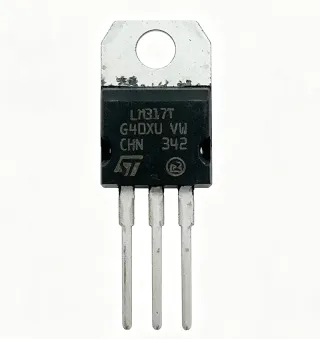
TL431BIPK - 0.5% Adjustable Shunt Reference, SOT-89 | TI
Teilenummer: TL431BIPK ✓ Aktiv| Menge | Stückpreis | Gesamt |
|---|---|---|
| 1 | $0.14 | $0,14 |
| 10 | $0.12 | $1,20 |
| 100 | $0.09 | $9,00 |
| 500 | $0.07 | $35,00 |
| 1.000 | $0.05 | $50,00 |
TL431BIPK Übersicht
A shunt voltage reference (also called an adjustable zener or programmable shunt regulator) is a two-or-three-terminal device that maintains a stable voltage across its terminals by sinking excess current. Within the power-management hierarchy, the TL431 family sits alongside series voltage references and supervisors, and is the industry-standard choice for feedback loops in isolated and non-isolated power converters.
Key features include the 0.5% reference tolerance of the B-grade die, a low typical output impedance of 0.2 ohm, low output noise of typically 0.2 uVrms in the 0.1 Hz to 10 Hz band, and stable operation across the full -40C to +85C industrial temperature range with a typical temperature coefficient in the tens of ppm/C.
Technically, the TL431BIPK integrates a precision bandgap reference driving an internal error amplifier and output transistor. When the REF pin exceeds 2.495V, the cathode conducts and sinks current, making it a natural voltage error amplifier for optocoupler-based feedback in flyback and forward converters, replacing discrete zener-plus-comparator solutions with better accuracy and temperature stability.
Typical applications include SMPS voltage feedback via optocouplers, adjustable linear regulator control, overvoltage crowbar protection, and precision current-source circuits.
Design consideration: ensure a minimum cathode current (typically 1mA) is guaranteed under all load conditions, or regulation will degrade.
This page synthesizes distributor pricing, drop-in alternatives, pinout data, and practical design notes not found in the manufacturer datasheet.
Drop-in-Alternativen für TL431BIPK – gleiches Gehäuse, Pin-kompatibel. Bauteile mit anderem Gehäuse, die eine PCB-Überarbeitung erfordern, sind ausgeschlossen.
Varianten dieser Serie
Modelle derselben Serie, die drop-in-kompatibel sind mit TL431BIPK (gleiche Bauform und Footprint) – abweichend in Package.
Schnellvergleichstool – Wählen Sie Alternativbauteile für den Direktvergleich:
TL431AIPK
✅ Drop-In✓ Auf Lager
$0.1 / Stück
Datenblatt ansehen →TL431BQPK
✅ Drop-In📋 Referenzalternative (nicht im Katalog)
TL431CPKG3
✅ Drop-In📋 Referenzalternative (nicht im Katalog)
TL432BIPK
✅ Drop-In ⚠️ Spezifikationen ungeprüft📋 Referenzalternative (nicht im Katalog)
KA431
✅ Drop-In📋 Referenzalternative (nicht im Katalog)
AZ431
✅ Drop-In📋 Referenzalternative (nicht im Katalog)
TL431BIPK Grenzwerte & elektrische Eigenschaften
| Funktion | Adjustable precision shunt regulator / voltage reference |
| Reference Voltage (Vref) | 2.495 V |
| Reference Tolerance | 0.5% (B grade) |
| Adjustable Output Range | Vref to 36 V |
| Maximum Cathode Voltage | 36 V |
| Sink Current Capability | 1 mA to 100 mA |
| Output Impedance | 0.2 ohm (typical) |
| Ausgangsrauschen | 0.2 uVrms typical (low band) |
| Temperature Coefficient | 54.51 ppm/C typical |
| Betriebstemperaturbereich | -40C to +85C (I grade) |
| Gehäuse | SOT-89-3 (PK) with tab, 3+tab |
| Montageart | Surface Mount |
| Packaging | Tape & Reel (T/R) |
| Lead Finish | Lead free |
| RoHS-Status | Compliant |
| Vref Range (B grade limits) | 2.48 V to 2.52 V |
TL431BIPK Pin-Konfiguration
| Pin 1 | REF — Reference input - output is regulated where REF equals 2.495V |
| Pin 2 | ANODE — Anode terminal, connected to tab; return for shunt current |
| Pin 3 | CATHODE — Cathode terminal; sinks up to 100mA when in regulation |
Typische Anwendungen
TL431BIPK ist geeignet für 6 Anwendungs: SMPS Optocoupler Feedback, Adjustable Linear Regulator Control, Overvoltage Protection / Crowbar, Precision Current Source, Adjustable Zener Replacement in Analog Rails, Battery Charger Voltage Regulation.
SMPS Optocoupler Feedback
The TL431BIPK is the de facto industry standard error amplifier for secondary-side feedback in isolated flyback and forward power converters. Its 2.495V reference with 0.5% B-grade accuracy sets the output regulation point, while the cathode drives an optocoupler LED through a current-limiting resistor, transmitting the error signal across the isolation barrier to the primary-side PWM controller. With up to 100mA sink capability and 0.2 ohm typical output impedance, it directly drives common optocouplers without buffering. The output voltage is programmed from 2.495V upward with a simple two-resistor divider on the REF pin. Compensation networks (RC across cathode-ref) stabilize the loop; total regulation accuracy is dominated by the 0.5% reference, outperforming discrete zener-transistor solutions by a wide margin across the -40C to +85C industrial range.
Empfohlen
Adjustable Linear Regulator Control
The TL431BIPK converts a pass transistor (NPN or N-channel MOSFET) into an inexpensive precision linear regulator. The REF pin senses a divider from the output; the cathode drives the pass device base or gate so that the output settles where the divider equals 2.495V. Because the reference tolerance is 0.5% and the drift is only about 54.5 ppm/C typical, output accuracy is far better than zener-based discrete regulators. The 36V cathode rating allows output settings up to approximately 36V from higher unregulated rails. Ensure at least 1mA minimum cathode current for regulation, and verify the external pass transistor handles the dissipation, since the SOT-89 package itself sinks only control current. This topology suits bench supplies, LED drivers, and post-regulation of DC-DC modules.
Empfohlen
Overvoltage Protection / Crowbar
In crowbar circuits, the TL431BIPK monitors a divided-down supply rail and fires an SCR when the rail exceeds the programmed threshold. The threshold is set precisely by the two-resistor divider and the 2.495V reference, so with 1% divider resistors the trip point accuracy is excellent compared with zener-based crowbars, whose 5%-10% tolerances force conservative thresholds. When REF exceeds 2.495V, the cathode pulls low and triggers the SCR gate, shorting the rail and blowing a fuse or collapsing the supply. The B-grade 0.5% reference and about 54.5 ppm/C drift keep the trip point stable across -40C to +85C. Add a small RC delay or filter on REF to reject transients and prevent nuisance trips from short spikes.
Empfohlen
Precision Current Source
The TL431BIPK forms an accurate two-terminal current source or current sink when combined with one resistor and a transistor. The 2.495V reference forces a fixed voltage across the sense resistor, so the programmed current is I = 2.495V / Rsense with 0.5% reference accuracy, giving current accuracy far better than typical JFET or transistor-based current sources. Typical uses include LED biasing, sensor excitation, and battery-charger current limits. The cathode can sink up to 100mA directly, so small-current applications may not even need an external transistor. Temperature drift of roughly 54.5 ppm/C keeps the setpoint stable across the industrial range; select a low-tempco sense resistor so the resistor does not dominate the error budget.
Empfohlen
Adjustable Zener Replacement in Analog Rails
Any design using a fixed zener diode for a mid-rail or auxiliary voltage can be upgraded by replacing the zener with a TL431BIPK plus a divider. The output is programmable from 2.495V to 36V with two resistors, eliminating the fixed voltage granularity and wide tolerance (typically 5%) of zeners. The B-grade 0.5% reference and low dynamic output impedance of 0.2 ohm typical provide a tighter, stiffer voltage clamp with far lower temperature drift than a zener. Sink capability of 1mA to 100mA covers most bias and reference loads. This is a common upgrade path in audio equipment, instrumentation front ends, and legacy industrial boards where a precise, adjustable clamp improves overall system accuracy without layout changes beyond the resistor divider.
Empfohlen
Battery Charger Voltage Regulation
In charger and battery-management front ends, the TL431BIPK monitors the battery terminal voltage through a precision divider and controls a pass element or PWM stage to hold the float voltage constant. The 0.5% reference accuracy directly bounds charger float-voltage error, which matters for sealed lead-acid and lithium chemistries where overcharge shortens life or creates safety risk. The 36V maximum cathode voltage supports multi-cell stacks, and the -40C to +85C range suits vehicle and outdoor charging enclosures. Combining the TL431 with a second reference point enables constant-current then constant-voltage (CC-CV) charging profiles using two transistors. Add hysteresis or filtering on the REF divider to avoid oscillation near the regulation threshold.
Empfohlen
Zusammenfassung der empfohlenen Produkte
Technische Referenzdaten für TL431BIPK – Vergleich, Designhinweise und Compliance-Informationen.
Auswahlhilfe
Vergleich mit Alternativen
| Parameter | Dieses Produkt | TL431AIPK | TL431BQPK | TL431CPKG3 | KA431 | AZ431 |
|---|---|---|---|---|---|---|
| Package | SOT-89-3 (PK) | SOT-89-3 (PK) - same | SOT-89-3 (PK) - same | SOT-89-3 (PK) - same | SOT-89-3 - same | SOT-89-3 - same |
| Brand | Texas Instruments | Texas Instruments | Texas Instruments | Texas Instruments | onsemi | Diodes Incorporated |
| Reference Accuracy | 0.5% (B grade) | 1% (A grade) | 0.5% (B grade) | 2% (C grade) | typically 1%-2% by suffix | typically 1%-2% by suffix |
| Reference Voltage | 2.495 V | 2.495 V | 2.495 V | 2.495 V | 2.495 V (typ.) | 2.5 V (typ.) |
| Sink Current | 1 mA to 100 mA | 100 mA | 100 mA | 100 mA | 100 mA | 100 mA |
Wichtigste Unterscheidungsmerkmale
- 0.5% reference accuracy (vs. TL431AIPK)
- Same SOT-89 footprint in automotive grade (vs. TL431BQPK)
- Superior accuracy versus cross-brand equivalents (vs. KA431)
Designhinweise
Guarantee a minimum cathode current of about 1mA under all operating conditions, including minimum load and maximum divider current, or the TL431BIPK will exit regulation and accuracy will degrade. At the same time, keep the cathode current below the 100mA maximum rating and observe package power limits: P = (Vk - Va) x Ik. Estimated: at 10V across the device and 20mA sink, dissipation is 200mW, comfortably within SOT-89 capability but verify against the datasheet thermal resistance for your board copper.
The TL431 has a known capacitive-load stability window: with 1mA to 10mA cathode current, certain capacitance ranges (roughly between a few nF and a few uF depending on current) can cause oscillation. Either keep cathode capacitance very small or use a large capacitor with a series resistor (isolating resistor technique) as described in TI application guidance. In optocoupler feedback loops, place the compensation network (series RC from cathode to REF) to dominate the loop response and verify phase margin.
Place the resistor divider on REF directly at the REF pin and route it from the point of regulation (the load terminals), not from the IC pins, to sense the true output voltage. The SOT-89 tab is internally connected to the anode, so connect the tab to the anode copper pour for both heat spreading and a low-inductance return. Keep the cathode return path short to minimize the effect of parasitic impedance on the 0.2 ohm output impedance figure.
Compliance-Informationen
Web data indicates lead-free (LEAD FREE) construction and RoHS-relevant listing on distributor sites. AEC-Q100 qualification applies to the TL431BQPK variant, not this I-grade part.