TPS82130SILR - 17V 3A Step-Down MicroSiP-Modul | Texas Instruments
Teilenummer: TPS82130SILR ✓ Aktiv| Menge | Stückpreis | Gesamt |
|---|---|---|
| 1 | $3.44 | $3,44 |
| 10 | $3.1 | $31,00 |
| 100 | $2.75 | $275,00 |
| 500 | $2.45 | $1.225,00 |
| 1.000 | $2.18 | $2.180,00 |
TPS82130SILR Übersicht
Ein Abwärtswandler, auch Buck-Konverter genannt, ist ein getakteter DC-DC-Spannungsregler, der eine höhere Eingangsspannung mit hohem Wirkungsgrad in eine niedrigere Ausgangsspannung umwandelt. Buck-Konverter bilden einen zentralen Baustein von Power-Management-IC-Hierarchien und stehen neben LDOs, Ladungspumpen und Leistungsmodulen. Der TPS82130 fasst diskrete Schalt-FETs, Induktivität und Schleifenkompensation in einem einzigen Mikromodul zusammen und reduziert so die Anzahl externer Komponenten und die PCB-Fläche im Vergleich zu diskreten Reglerdesigns, die externe FETs, eine Leistungsinduktivität und Kompensationskomponenten erfordern, drastisch.
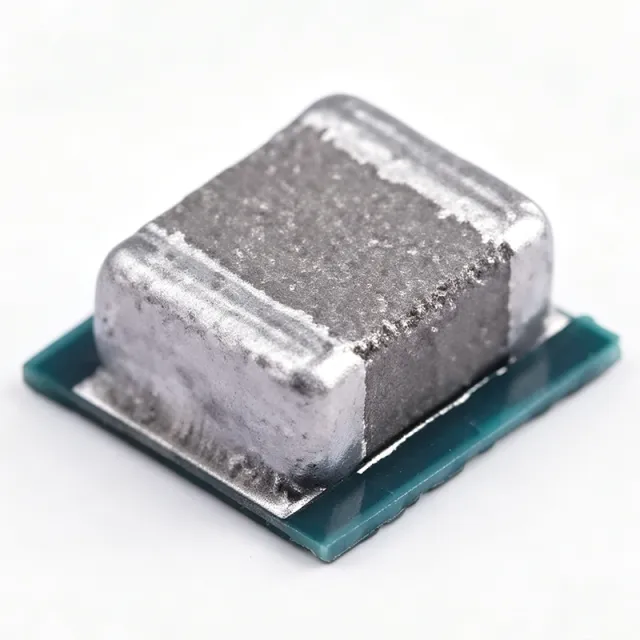
Zu den wichtigsten Merkmalen gehören der weite Eingangsbereich von 3V-17V, der 12V- und 5V-Bussysteme unterstützt, 3A Dauerausgangsstrom, ein einstellbarer Ausgang von 0,9V-5V über einen externen Widerstandsteiler, eine feste Schaltfrequenz von 2,2 MHz, die kleine externe Kondensatoren ermöglicht, ein interner Soft-Start zur Begrenzung des Einschaltstroms, ein Power-Good-Ausgangsflag für die Sequenzierung, ein Enable-Pin zur Shutdown-Steuerung und ein Thermo-Shutdown-Schutz. Das MicroSiP-Gehäuse weist ein thermisches Pad an der Unterseite auf, das die Wärme direkt in die Kupferfläche der PCB leitet.
Technisch verwendet der TPS82130 eine festfrequente Peak-Current-Mode-Regelung, die ein schnelles Transientenverhalten und Stabilität mit minimaler Ausgangskapazität (typischerweise 22uF Keramik) bietet. Er unterstützt einen Betrieb mit 100 % Tastverhältnis für einen geringen Dropout bei hohen VIN-zu-VOUT-Verhältnissen. Die integrierte geschirmte Induktivität reduziert abgestrahlte EMI und vereinfacht das PCB-Layout, und das niedrige Profil von 1,5 mm eignet sich für die automatisierte Bestückung mit Standard-SMD-Anlagen.
Typische Anwendungen sind Point-of-Load-(POL)-Versorgungen für FPGAs, DSPs und ASICs in Industriesystemen, Sensorversorgungen in der Fabrikautomation, verteilte Stromversorgung über 12V-Schienen in IoT-Edge-Knoten und tragbare Testgeräte, bei denen eine kleine Lösungsgröße entscheidend ist.
Befolgen Sie beim Design die Empfehlungen des Datenblatts für keramische Ein- und Ausgangskapazitäten, platzieren Sie das Modul nahe an der Last und sorgen Sie für eine großzügige Kupferfläche unter dem thermischen Pad, insbesondere bei hohen Ausgangsströmen. Preisangaben gelten mit Stand vom 28.08.2026.
Diese Seite fasst Distributorpreise, Drop-in-Alternativen und praktische Designhinweise zusammen, die im Herstellerdatenblatt nicht zu finden sind.
Drop-in-Alternativen für TPS82130SILR – gleiches Gehäuse, Pin-kompatibel. Bauteile mit anderem Gehäuse, die eine PCB-Überarbeitung erfordern, sind ausgeschlossen.
Varianten dieser Serie
Modelle derselben Serie, die drop-in-kompatibel sind mit TPS82130SILR (gleiche Bauform und Footprint) – abweichend in Continuous Output Current, MSL Level, Output Voltage Range, Package, Switching Frequency.
Schnellvergleichstool – Wählen Sie Alternativbauteile für den Direktvergleich:
TPS82140SILR
✅ Drop-In✓ Auf Lager
$2.45 / Stück
Datenblatt ansehen →TPS82150SILR
✅ Drop-In📋 Referenzalternative (nicht im Katalog)
TPS82130SILT
✅ Drop-In📋 Referenzalternative (nicht im Katalog)
TPS82130SILR Grenzwerte & elektrische Eigenschaften
| Topologie | Synchronous Buck (Step-Down) |
| Module Type | MicroSiP Power Module (integrated inductor and FETs) |
| Eingangsspannungsbereich | 3 V to 17 V |
| Ausgangsspannungsbereich | 0.9 V to 5 V (adjustable) |
| Continuous Output Current | 3 A |
| Schaltfrequenz | 2.2 MHz (typical, fixed) |
| Control Mode | Peak Current Mode |
| Efficiency (typical) | >90% at moderate load |
| Sanftanlauf | Internal |
| Power-Good-Ausgang | Yes |
| Enable-Pin | Yes (active-high) |
| Thermisches Abschalten | Yes |
| Betriebstemperaturbereich | -40C to +125C |
| Gehäuse | 8-pin uSIP (SIL) 3.0mm x 2.8mm x 1.5mm |
| Montageart | Surface Mount |
| MSL-Level | 2 (1 year floor life) |
| RoHS-Status | Compliant |
TPS82130SILR Pin-Konfiguration
| Pin 1 | VIN — Input supply voltage |
| Pin 2 | GND — Signal ground |
| Pin 3 | EN — Enable input (active high) |
| Pin 4 | PGND — Power ground |
| Pin 5 | FB — Feedback voltage input |
| Pin 6 | VOUT — Regulated output voltage |
| Pin 7 | PG — Power good output flag |
| Pin 8 | AGND — Analog ground |
Typische Anwendungen
TPS82130SILR ist geeignet für 6 Anwendungs: FPGA Point-of-Load Power, Industrial Sensor and PLC Supplies, IoT Edge Devices and Gateway Nodes, Portable Test and Measurement Equipment, DSP and ASIC Core Power, Communication Equipment Power.
FPGA Point-of-Load Power
The TPS82130SILR is an ideal point-of-load supply for FPGA core and auxiliary rails in industrial embedded systems. With 3A continuous output, 0.9V to 5V adjustable output range, and a 3.0mm x 2.8mm uSIP footprint, it can power the FPGA core (typically 1.0V-1.2V), auxiliary (1.8V), and I/O (2.5V or 3.3V) rails from a single 12V bus. The 2.2MHz switching frequency avoids interfering with common FPGA clock harmonics around 100-500MHz, eliminating beat-frequency noise issues that plague lower-frequency regulators. Integrated synchronous FETs and shielded inductor eliminate 6-8 discrete components, dramatically reducing PCB area versus discrete buck designs.
Empfohlen
Industrial Sensor and PLC Supplies
The TPS82130SILR powers industrial 4-20mA loop transmitters, PLC analog input modules, and 24V-bus sensor conditioning circuits. Its 3V-17V input range directly accepts the 24V industrial bus (after protection/regulation) and 12V backplane rails commonly used in factory automation. The wide operating temperature range of -40C to +125C supports deployment in unconditioned factory environments. With internal thermal shutdown, power-good output, and enable pin for power sequencing, the TPS82130 provides the robustness required for industrial IEC 61010 environments. Typical efficiency above 90% minimizes thermal dissipation in sealed enclosures.
Empfohlen
IoT Edge Devices and Gateway Nodes
The TPS82130SILR fits compact IoT edge nodes and gateway designs that require multiple voltage rails in a small footprint. The integrated MicroSiP package occupies 75% less PCB area than equivalent discrete buck designs, freeing space for wireless modules, sensors, and battery management. With 3A peak capability, the TPS82130 can power a small SoC plus Wi-Fi/BLE radio module directly from a 12V or USB-C input. The 2.2MHz switching frequency enables small ceramic output capacitors (typically 22uF), and the internal soft-start limits inrush current that could trip upstream USB current-limit switches.
Empfohlen
Portable Test and Measurement Equipment
Handheld oscilloscopes, data loggers, and field test equipment benefit from the TPS82130SILR's compact size, high efficiency, and wide input range. Battery-powered instruments often use a 2-cell or 3-cell Li-ion pack (6V-12.6V) that maps directly to the TPS82130 input range. The 3A continuous capability powers analog front-end ADCs, FPGAs, and display backlight drivers simultaneously. The 1.5mm low-profile uSIP package allows the entire power tree to fit on the back side of small PCBs, leaving the top side for analog signal paths and user interface components. High efficiency above 90% extends battery runtime.
Empfohlen
DSP and ASIC Core Power
The TPS82130SILR is well-suited as a POL supply for DSP, ASIC, and high-performance microcontroller core rails. Modern DSPs often require 1.0V to 1.2V at 2-3A peak current with tight transient response - the TPS82130's peak-current-mode control delivers fast transient response with minimal output capacitance. The adjustable output from 0.9V to 5V covers virtually all DSP/ASIC core voltage requirements. The integrated power-good output enables sequencing with other system rails, and the enable pin allows shutdown to microampere-level quiescent current for sleep-mode applications. According to TI datasheet, the device supports 100% duty cycle for low-dropout operation at high VIN-VOUT deltas.
Empfohlen
Communication Equipment Power
Networking switches, wireless base stations, and small cell radio units can use the TPS82130SILR to power digital signal processors and baseband chips from 12V backplane rails. The 2.2MHz switching frequency and integrated shielded inductor minimize radiated EMI - critical for communication equipment that must meet FCC and CE conducted/radiated emissions limits. With 3A output capability, the TPS82130 powers baseband SoCs and DDR memory termination rails simultaneously. The small MicroSiP footprint allows power circuits to be placed directly beneath or adjacent to the load IC, minimizing parasitic inductance and improving transient response.
Empfohlen
Zusammenfassung der empfohlenen Produkte
Technische Referenzdaten für TPS82130SILR – Vergleich, Designhinweise und Compliance-Informationen.
Auswahlhilfe
Vergleich mit Alternativen
| Parameter | Dieses Produkt | TPS82140SILR | TPS82150SILR | TPS82130SILT |
|---|---|---|---|---|
| Package | 8-pin uSIP (SIL) 3.0x2.8mm | 8-pin uSIP (SIL) 3.0x2.8mm - same | 8-pin uSIP (SIL) 3.0x2.8mm - same | 8-pin uSIP (SIL) 3.0x2.8mm - same |
| Brand | Texas Instruments | Texas Instruments | Texas Instruments | Texas Instruments |
| Output Current | 3 A | 2 A | 1 A | 3 A |
| Input Voltage Range | 3 V to 17 V | 3 V to 17 V | 3 V to 17 V | 3 V to 17 V |
| Output Voltage Range | 0.9 V to 5 V | 0.9 V to 5 V | 0.9 V to 5 V | 0.9 V to 5 V |
| Switching Frequency | 2.2 MHz | 2.2 MHz | 2.2 MHz | 2.2 MHz |
| Module Type | MicroSiP (integrated inductor) | MicroSiP (integrated inductor) | MicroSiP (integrated inductor) | MicroSiP (integrated inductor) |
Wichtigste Unterscheidungsmerkmale
- Höchster Ausgangsstrom in der TPS821xx-uSIP-Familie (vs. TPS82140SILR)
- Gleiches Footprint, geringerer Strom für Cost-Down-Designs (vs. TPS82150SILR)
- Integriertes MicroSiP-Gehäuse eliminiert 6-8 diskrete Komponenten (vs. Diskretes TPS54360-Buck-Design)
Designhinweise
Geschätzt: Bei VIN=12V, VOUT=3,3V und 3A Last dissipiert der TPS82130SILR etwa (12-3,3) x 3 = 26,1 W Leistung. Mit ausreichender Kupferfläche für das thermische Pad an der Unterseite (das Datenblatt empfiehlt ein Mindest-Footprint-Muster) liegt der Wärmewiderstand Junction-to-Ambient typischerweise bei etwa 30-40 C/W, was zu einem Temperaturanstieg von 50-80 C über der Umgebungstemperatur führt. Befolgen Sie für den Dauerbetrieb bei 3A exakt das Referenz-Layoutmuster des Datenblatts und verwenden Sie mehrere thermische Vias unter dem freiliegenden Pad des Gehäuses, um die Wärme in innere PCB-Lagen zu leiten.
Platzieren Sie das TPS82130SILR-Modul nahe am Last-IC, idealerweise innerhalb von 5-10 mm, um parasitäre Induktivität in der Ausgangsschleife zu minimieren. Verwenden Sie breite Kupferflächen (mindestens 50 mil) auf VIN, VOUT, PGND und dem freiliegenden thermischen Pad. Gemäß den Layout-Richtlinien des TI-Datenblatts platzieren Sie den keramischen Eingangskondensator (typischerweise 22uF X7R) so nah wie möglich am VIN-Pin und den keramischen Ausgangskondensator (typischerweise 22uF X7R) direkt am VOUT-Pin. Der AGND-Pin sollte an einem einzigen Punkt nahe der Masse-Rückführung des Ausgangskondensators mit der PGND-Fläche verbunden werden.
Betreiben Sie den TPS82130SILR nicht über der absoluten maximalen VIN von 17V - Transienten auf 12V-Industriebussen können diesen Wert bei Hot-Plug-Ereignissen überschreiten. Fügen Sie eine TVS-Diode oder einen Eingangsspannungs-Clamp hinzu, wenn das Design an lange externe Kabel angeschlossen wird. Lassen Sie den Eingangskondensator nicht weg: Das Schalten des TPS82130 mit hohem di/dt erfordert einen keramischen Eingangskondensator mit niedrigem ESR, um VIN-Ringing zu verhindern. Verwenden Sie gemäß Datenblatt X7R/X5R-Keramikkondensatoren - ersetzen Sie diese nicht durch Y5V, das bei DC-Bias und Temperatur 60-80 % der Nennkapazität verliert.
Halten Sie die FB-(Feedback)-Leiterbahn von rauschbehafteten Schaltknoten (VIN, PGND, VOUT) fern und führen Sie sie direkt von der Oberseite des Ausgangskondensators zum FB-Pin über eine kurze, schmale, von Massefläche umgebene Leiterbahn. Platzieren Sie die Widerstände des Feedback-Teilers nicht in der Nähe der Induktivität - magnetische Kopplung kann Rauschen in den Rückkopplungspfad einstreuen und Ausgangsripple oder Instabilität verursachen. Der PG-(Power-Good)-Ausgang ist ein Open-Drain-Signal und erfordert einen externen Pull-up-Widerstand (typischerweise 10k-100k) zu VOUT oder einer Logikversorgung.
Compliance-Informationen
RoHS and REACH compliant per TI product page. Not AEC-Q100 qualified; choose TPS62150A-Q1 or similar -Q1 part for automotive applications.