Texas Instruments

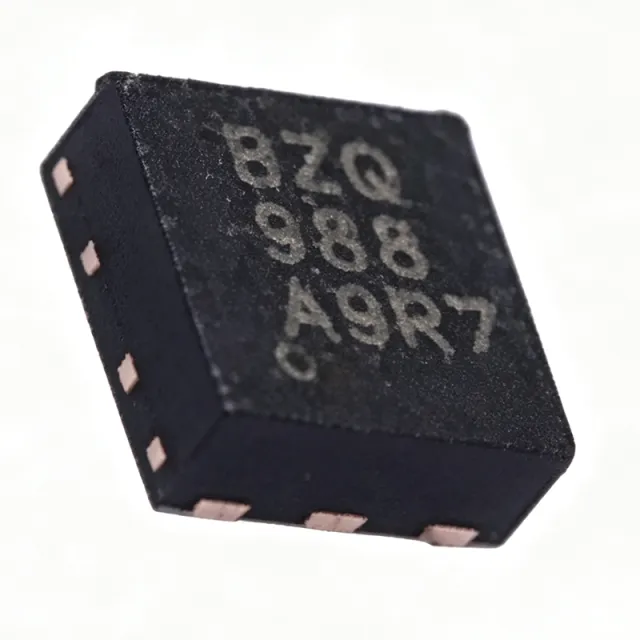
TPS61160DRVR - Boost White LED Driver 18V | Texas Instruments

Teilenummer: TPS61160DRVR ✓ Aktiv
Auf Lager Versand in 1–3 Werktagen
2.7 V to 18 V Vdss 700 mA Id 6-WSON (DRV), 2 mm x 2 mm with thermal pad Package 600 kHz (fixed) Speed
Ab $0.16 USD / Stück
MOQ: 1 |
Preis aktualisiert: 2026-09-01
Mengenpreise
Menge Stückpreis Gesamt
1 $0.28 $0,28
10 $0.25 $2,50
100 $0.21 $21,00
500 $0.18 $90,00
1.000 $0.16 $160,00
ℹ️ Alle Preise sind in USD

TPS61160DRVR Übersicht

The Texas Instruments TPS61160DRVR is a white LED driver boost converter with digital and PWM brightness control, delivering up to 10 series LEDs from a 2.7 V to 18 V input, with a 40-V rated integrated switch FET and 700 mA switch current limit in a 2-mm x 2-mm 6-pin WSON (DRV) package.

An LED boost driver is a switching regulator (part of the DC-DC converter family of power management ICs) that steps a lower input voltage up to the higher voltage needed by a series LED string. Because LED brightness is proportional to forward current rather than voltage, boost LED drivers such as the TPS61160 regulate current through the string via a low-side sense resistor, providing constant-current operation independent of LED forward-voltage variation.

Key features include a 600 kHz fixed switching frequency that shrinks the external inductor and capacitors, 26 V open-LED protection that clamps output overvoltage if the LED string fails open, and a 200 mV current-sense feedback reference that minimizes sense-resistor power loss and improves efficiency. Maximum duty cycle is 93%, supporting high step-up ratios.

Technically, the integrated 40-V power MOSFET eliminates an external switch FET, cutting BOM count and layout area. Brightness control is flexible: apply a direct PWM signal, or use the single-wire digital interface that accepts PWM on the CTRL pin for stepless dimming without a dedicated MCU PWM output.

Typical applications are LCD backlighting for smartphones, tablets, and portable navigation devices, plus general constant-current LED illumination powered by single-cell Li-ion or multi-cell alkaline/NiMH batteries.

Design consideration: the 26 V open-LED protection clamp of the TPS61160 (38 V on the TPS61161) sets the maximum LED string voltage; verify the worst-case summed LED forward voltage stays safely below the clamp over temperature. Pricing cited as of 2026-09-01.

This page synthesizes distributor pricing, drop-in alternatives, and practical design notes not found in the manufacturer datasheet.

Drop-in-Alternativen für TPS61160DRVR – gleiches Gehäuse, Pin-kompatibel. Bauteile mit anderem Gehäuse, die eine PCB-Überarbeitung erfordern, sind ausgeschlossen.

Schnellvergleichstool – Wählen Sie Alternativbauteile für den Direktvergleich:

TPS61165DRVR

✅ Drop-In
📦 6-WSON (DRV) 2x2 mm
higher switch current capability than 700 mA TPS61160, same footprint and pinout

📋 Referenzalternative (nicht im Katalog)

TPS61161DRVR

✅ Drop-In
📦 6-WSON (DRV) 2x2 mm
open-LED protection 38 V vs 26 V (+46%), otherwise same pinout and specs

📋 Referenzalternative (nicht im Katalog)

TPS61160ADRVRG4

✅ Drop-In
📦 6-WSON (DRV) 2x2 mm
same die and pinout, A-grade/Q4 ordering suffix variant

📋 Referenzalternative (nicht im Katalog)

TPS61291DRVR

✅ Drop-In
📦 6-WSON (DRV) 2x2 mm
general-purpose boost converter rather than dedicated LED current driver; lower param overlap (~70%)

📋 Referenzalternative (nicht im Katalog)

TPS61160DRVR Grenzwerte & elektrische Eigenschaften

Topologie Inductive Step-Up (Boost) LED Driver
Eingangsspannungsbereich 2.7 V to 18 V
Internal Switch FET Rating 40 V
Switch Current Limit 700 mA
Schaltfrequenz 600 kHz (fixed)
Maximum Duty Cycle 93%
LED String Length Up to 10 LEDs in series
Open LED Protection 26 V
Feedback Reference 200 mV
Dimming Direct PWM and single-wire digital (PWM on CTRL)
Anzahl der Ausgänge 1
Betriebstemperatur -40C to +85C
Gehäuse 6-WSON (DRV), 2 mm x 2 mm with thermal pad
Montageart Surface Mount
Packaging Tape & Reel (R suffix)
Application LCD backlighting, constant-current LED lighting

TPS61160DRVR 6-wson (drv), 2 mm x 2 mm with thermal pad Pinbelegungsleitfaden

Pinbelegung für TPS61160DRVR (6-wson (drv), 2 mm x 2 mm with thermal pad-Gehäuse). Dieses Leistungsbauteil verfügt über Gate-, Drain- und Source-Anschlüsse. Bei nicht gepolten Gehäusen entnehmen Sie die genaue Ausrichtung von Pin 1 und Footprint-Details dem Herstellerdatenblatt. Typische Anwendungen sind Netzteilentwurf, Motoransteuerung und Lastschaltung.

Pinbelegungsdiagramm für TPS61160DRVR im 6-wson (drv), 2 mm x 2 mm with thermal pad-Gehäuse

Keine detaillierten Pinbelegungsdaten verfügbar für TPS61160DRVR.

Siehe die Datenblatt für die vollständige Pin-Konfiguration.

Typische Anwendungen

TPS61160DRVR ist geeignet für 6 Anwendungs: Smartphone LCD Backlighting, Tablet and PND Display Backlight, Battery-Powered LED Lighting, Automotive Cluster and Infotainment Backlight (Non-Q1), Portable Instrument and HMI Indicator Lighting, USB-Powered Accent and Decorative Lighting.

📱

Smartphone LCD Backlighting

The TPS61160DRVR fits smartphone LCD backlighting because its 2-mm x 2-mm WSON package conserves board area and its 600 kHz switching frequency permits a small, low-profile inductor suited to thin form factors. In a typical circuit, the boost converter drives a series LED string from a single-cell Li-ion battery (2.7 V to 4.2 V), regulating string current through a 200 mV sense resistor for uniform brightness. The single-wire digital dimming on the CTRL pin lets the baseband processor control brightness without a dedicated PWM peripheral, while stepless analog dimming eliminates visible flicker at low backlight levels that degrade user experience in dark environments.

📺

Tablet and PND Display Backlight

Tablets and portable navigation devices need brighter backlights with longer LED strings than phones, and the TPS61160DRVR addresses this with up to 10 series LEDs, a 93% maximum duty cycle, and an internal 40-V switch FET that supports the required step-up ratio from a 5 V USB input or Li-ion pack. The 26 V open-LED protection safely limits output if the string opens, protecting the thin-film panel wiring. Its 700 mA switch limit covers mid-size panel current needs, and the 200 mV feedback reference keeps sense-resistor dissipation below a few milliwatts, preserving battery runtime in always-on navigation use cases.

💡

Battery-Powered LED Lighting

For general constant-current LED illumination powered by multi-cell alkaline or NiMH stacks, the TPS61160DRVR accepts inputs from 2.7 V to 18 V, spanning three to twelve alkaline cells. The boost topology maintains constant LED current as the battery discharges and its voltage sags, preventing the dimming drift typical of resistor-ballasted designs. The 600 kHz fixed frequency keeps switching losses manageable at the 700 mA peak switch current, and direct PWM dimming allows user brightness control with a simple pushbutton interface. Low shutdown current preserves battery life between uses, making it suitable for flashlights, lanterns, and indicator luminaires.

🚗

Automotive Cluster and Infotainment Backlight (Non-Q1)

In 12 V automotive-style display rails, the TPS61160DRVR operates directly from nominal 12 V supplies within its 18 V maximum input, boosting to drive series LED strings for small instrument or infotainment backlights. The 40-V internal switch FET provides ample flyback voltage margin over the 26 V open-LED clamp, reducing the risk of switch overstress during load transients. Designers should note this standard-grade part is rated -40C to +85C; for AEC-Q100-qualified illumination designs, pair or substitute with qualified drivers such as the LP8860-Q1 or TPS92691QPWPTQ1 depending on string power and channel count requirements.

🔧

Portable Instrument and HMI Indicator Lighting

Handheld meters, medical monitors, and industrial HMIs use small LED strings for keypad and status backlighting, and the TPS61160DRVR suits these duty cycles with its low component count: one inductor, one sense resistor, and small ceramic capacitors around the 6-pin WSON package. The 200 mV feedback reference permits accurate current setting with standard 1% resistors, and the single-wire interface accepts a logic-level PWM from any MCU, easing brightness calibration in production. The -40C to +85C operating range covers typical indoor industrial and portable medical environments without derating the 700 mA switch limit.

⚡

USB-Powered Accent and Decorative Lighting

USB ports supply a regulated 5 V rail, comfortably inside the 2.7 V to 18 V input range of the TPS61160DRVR, making it a natural fit for accent strips, display cases, and decorative luminaires drawing a few hundred milliamps. The boost converter steps 5 V up to the series string voltage while the internal FET removes the cost and layout area of an external switch. The 600 kHz frequency keeps inductance requirements low (small shielded chip inductors suffice at 700 mA peak current), and PWM dimming enables simple color-mixing or mood-lighting control from a USB microcontroller or dedicated lighting MCU.

Zusammenfassung der empfohlenen Produkte

TPS61165DRVR Pin-compatible higher-current upgrade Verwendet in: Smartphone LCD Backlighting, Battery-Powered LED Lighting, USB-Powered Accent and Decorative Lighting TPS62740DSST Low-power buck for system rail Verwendet in: Smartphone LCD Backlighting TPS61161DRVR Same footprint, 38 V open-LED clamp for longer strings Verwendet in: Tablet and PND Display Backlight BQ24075 Li-ion charge management front end Verwendet in: Tablet and PND Display Backlight TPS92691 Texas Instruments Verwendet in: Battery-Powered LED Lighting LP8860-Q1 Texas Instruments Verwendet in: Automotive Cluster and Infotainment Backlight (Non-Q1) TPS92691QPWPTQ1 Texas Instruments Verwendet in: Automotive Cluster and Infotainment Backlight (Non-Q1) MSP430FR2433 MCU generating CTRL PWM signal Verwendet in: Portable Instrument and HMI Indicator Lighting TPS61160ADRVRG4 Same die, A-grade ordering variant Verwendet in: Portable Instrument and HMI Indicator Lighting TPD1E10B06 ESD protection for USB input Verwendet in: USB-Powered Accent and Decorative Lighting
What is the input voltage range of TPS61160DRVR?
The TPS61160DRVR operates from a 2.7 V to 18 V input supply range. This wide range supports single-cell Li-ion batteries (2.7 V to 4.2 V), multi-cell alkaline or NiMH stacks, and regulated 5 V or 12 V rails. According to the TI TPS61160 datasheet, the internal 40-V rated switch FET and 93% maximum duty cycle allow the part to drive up to 10 LEDs in series across this entire input range.
What is the price of TPS61160DRVR?
The TPS61160DRVR is a low-cost LED driver, with quantity-1 pricing around $0.28 and approximately $0.21 at 100 pieces as of 2026-09-01, based on distributor data including LCSC which lists pricing from $0.2100. Prices vary by distributor and volume; check the pricing table on this page for current XAIPART quantity breaks at 1, 10, 100, 500, and 1000 units.
Where to buy TPS61160DRVR online?
The TPS61160DRVR is available from authorized distributors including DigiKey, Mouser, and LCSC, and directly from XAIPART on this product page. DigiKey lists it under LED Drivers as a 6-WSON (2x2) part with same-day shipping, while LCSC stocks it from about $0.21. Compare quantity breaks across suppliers, and order in Tape & Reel (TPS61160DRVR) format for production volumes.
What is the difference between TPS61160 and TPS61161?
The main difference between the TPS61160 and TPS61161 is the open-LED protection clamp voltage: 26 V on the TPS61160 versus 38 V on the TPS61161. According to the TI datasheet, both share the same 2-mm x 2-mm WSON (DRV) package, 600 kHz switching frequency, 700 mA switch current limit, and digital/PWM brightness control, making the TPS61161DRVR a pin-compatible upgrade for longer LED strings.
TPS61160 vs TPS61165 - which is better for LED backlighting?
The TPS61165DRVR is better when you need higher switch current capability: it offers a higher current limit in the same WSON-6 (DRV) footprint, supporting brighter or longer LED strings. The TPS61160 is the lower-cost choice for up to 10 series LEDs within its 700 mA switch limit and 26 V open-LED clamp. If your design stays within TPS61160 limits, it saves cost; otherwise the pin-compatible TPS61165 provides headroom.
What is the best drop-in replacement for TPS61160DRVR?
The best drop-in replacement for the TPS61160DRVR is the TI TPS61165DRVR, which shares the same 6-pin WSON (DRV) 2x2-mm footprint and pinout while offering higher switch current capability. The TPS61161DRVR is another pin-compatible option with a higher 38 V open-LED clamp for longer strings. All three come from the same TI family, so layout and external component values typically carry over with minimal re-verification of the sense resistor.
Where to download TPS61160 datasheet PDF?
The official TPS61160/TPS61161 datasheet PDF is available on the Texas Instruments website at ti.com/lit/ds/symlink/tps61160.pdf, which is the authoritative source for specifications, application circuits, and layout guidelines. Mirror copies are also hosted on datasheet aggregators such as alldatasheet.com. Always prefer the TI.com link to ensure you have the latest revision with correct electrical characteristics for the DRVR package.
How many LEDs can TPS61160DRVR drive?
The TPS61160DRVR can drive up to 10 white LEDs in series. White LEDs have a forward voltage of roughly 3 V to 3.5 V each, so a 10-LED string needs about 30 V to 35 V, which the internal 40-V switch FET and 93% maximum duty cycle can support from a higher input rail. Verify the worst-case string voltage stays below the 26 V open-LED protection clamp of the TPS61160, or use the TPS61161 with its 38 V clamp for longer strings.
How does PWM dimming work on the TPS61160?
The TPS61160 supports two brightness-control methods. First, a direct PWM input drives the enable/CTRL pin to switch the LED current on and off at the PWM duty cycle. Second, a single-wire digital interface accepts a PWM signal on the same CTRL pin and converts it into stepless analog dimming of the LED current, which avoids visible PWM flicker at low brightness. According to the TI datasheet, both methods use the 200 mV feedback reference to set the nominal LED current via the sense resistor.
What are the key specifications of TPS61160DRVR that engineers should know?
The TPS61160DRVR is a TI boost LED driver in a 6-pin WSON (DRV) 2x2-mm package with: 2.7 V to 18 V input range, 40-V internal switch FET, 700 mA switch current limit, 600 kHz fixed switching frequency, 93% maximum duty cycle, 200 mV feedback reference, 26 V open-LED protection, and support for up to 10 series LEDs. It operates from -40C to +85C and offers PWM plus single-wire digital dimming. These figures come from the TI datasheet.
Is TPS61160DRVR suitable for smartphone LCD backlighting?
Yes, the TPS61160DRVR is purpose-built for smartphone, tablet, and portable navigation device LCD backlighting. Its 2-mm x 2-mm WSON package minimizes board area, the 600 kHz switching frequency permits a small inductor, and the single-wire digital dimming interface reduces MCU pin count. Powered from a single-cell Li-ion battery (2.7 V to 4.2 V), it efficiently boosts the voltage needed for a series LED string while the 200 mV reference keeps sense-resistor losses low.
When should I choose TPS61160 over TPS61165?
Choose the TPS61160 when your design needs up to 10 series LEDs within its 700 mA switch current limit and 26 V open-LED clamp, and cost is the priority - it is the economy member of the family. Choose the TPS61165 when you need higher switch current for brighter strings, more LED current margin, or additional feature margin, since it is pin-compatible in the same WSON-6 footprint. Both use the same 600 kHz topology, so layouts reuse easily between the two.
What is the best TI equivalent for TPS61160DRVR with higher voltage protection?
The best TI equivalent with higher protection voltage is the TPS61161DRVR, which provides a 38 V open-LED protection clamp versus 26 V on the TPS61160, allowing longer LED strings or higher open-circuit safety margin. It is pin-to-pin compatible in the same 2-mm x 2-mm WSON (DRV) package, shares the 600 kHz switching frequency and 700 mA switch limit, so it can be substituted by changing only the orderable part number on the same PCB footprint.
Is TPS61160DRVR RoHS compliant and lead-free?
Yes, the TPS61160DRVR is RoHS compliant and lead-free as a standard TI production device; distributor listings categorize it in the RoHS-compliant LED Drivers category. TI marks the DRVR WSON package as lead-free with matte tin plating. For specific REACH, halogen-free, and conflict-minerals declarations, consult the official TI environmental documentation for this orderable part number, as compliance declarations are maintained per part number by TI.
What are common design mistakes when using the TPS61160?
The most common mistakes are: (1) choosing an LED string whose worst-case forward voltage exceeds the 26 V open-LED protection clamp, causing nuisance shutdown; (2) using a sense resistor sized without the 200 mV feedback reference, resulting in wrong LED current; (3) poor layout with the inductor and switch node loop not kept short, increasing EMI; and (4) omitting adequate input capacitance, causing input ripple at the 600 kHz switching frequency. Follow the TI datasheet layout guidelines.

Technische Referenzdaten für TPS61160DRVR – Vergleich, Designhinweise und Compliance-Informationen.

Auswahlhilfe

Choose the TPS61160DRVR when you need a low-cost, small-footprint boost LED driver for up to about 7-8 white LEDs in series, powered from a Li-ion cell, USB 5 V, or 12 V rail within the 26 V open-LED clamp. Choose the TPS61161DRVR for the same PCB when strings are longer and need the 38 V clamp. Choose the TPS61165DRVR when LED current requirements exceed what the 700 mA switch limit of the TPS61160 can support, since it is pin-compatible with a higher current rating. Choose the TPS61291DRVR only when the requirement is a regulated voltage boost, not constant-current LED driving - it lacks the dimming interfaces and open-LED protection of the TPS61160. All four parts share the 2x2-mm WSON-6 footprint, so layout reuse across the family is straightforward; re-verify the sense resistor and string voltage budget in every substitution.

Vergleich mit Alternativen

Parameter Dieses Produkt TPS61165DRVR TPS61161DRVR TPS61160ADRVRG4 TPS61291DRVR
Package 6-WSON (DRV) 2x2 mm 6-WSON (DRV) 2x2 mm - same 6-WSON (DRV) 2x2 mm - same 6-WSON (DRV) 2x2 mm - same 6-WSON (DRV) 2x2 mm - same
Brand Texas Instruments Texas Instruments Texas Instruments Texas Instruments Texas Instruments
LED String / Output Role Up to 10 series LEDs, current regulated LED driver, longer/brighter strings Up to 10+ series LEDs (38 V clamp) Up to 10 series LEDs General-purpose voltage boost
Dimming Interface PWM + single-wire digital on CTRL PWM + single-wire digital PWM + single-wire digital PWM + single-wire digital None (enable only)
Lifecycle Status Active Active Active Active Active

Wichtigste Unterscheidungsmerkmale

  • Lowest-cost family member for strings within 26 V (vs. TPS61161DRVR)
  • Upgrade path without redesign (vs. TPS61165DRVR)
  • Integrated 40-V switch FET reduces BOM (vs. TPS61291DRVR)

Designhinweise

Verify the worst-case LED string voltage against the 26 V open-LED protection clamp of the TPS61160. White LED forward voltage rises as current is set and temperature falls, so a nominal 8-LED string can approach the clamp in cold conditions, causing false open-LED faults and LED flashing. Compute Vstring(max) from the datasheet LED VF(max) at minimum temperature and target current, and keep it at least 2-3 V below 26 V, or switch to the pin-compatible TPS61161DRVR with its 38 V clamp.

Keep the power loop - input capacitor, inductor, internal SW FET, and output capacitor - as tight as possible on the 2x2-mm WSON footprint. Connect the exposed thermal pad directly to a ground pour with an array of vias; the pad is the main thermal and electrical ground path for the DRV package. Place the current-sense resistor close to the FB pin with short, direct traces to avoid noise pickup at the 200 mV reference level, and route the CTRL trace away from the SW node to prevent dimming glitches at the 600 kHz switching edges.

Size the sense resistor using the 200 mV feedback reference: R_sense = 0.2 V / I_LED(target). For example, 20 mA LED current needs about 10 ohm. Estimated dissipation is only 4 mW at 20 mA, which is why the low reference improves efficiency versus 1 V+ reference competitors. Ensure the input supply can deliver the peak switch current (700 mA limit at 600 kHz); weak sources or thin input traces will cause input droop, reduced duty cycle, and inability to reach the full 10-LED string voltage.

Compliance-Informationen

RoHS
Compliant
REACH
Unknown
AEC-Q100
Not Applicable
Bleifrei
Yes
Halogenfrei
Unknown
Konfliktmineralien
Unknown

RoHS compliant and lead-free per distributor categorization of this standard TI device. REACH, halogen-free, and conflict-minerals declarations should be confirmed from official TI environmental documentation for the exact orderable part number.


Daten verifiziert am: 2026-09-01 – Daten geprüft und kuratiert vom Bauteil-Engineering-Team von XAIPART

Ähnliche Suchanfragen

TPS61160DRVR TPS61160 datasheet Texas Instruments TPS61160DRVR white LED driver boost 10 LEDs in series WSON-6 2x2mm LED driver IC TPS61160 smartphone LCD backlight driver TPS61160 vs TPS61165 vs TPS61161 TPS61160DRVR drop-in replacement buy TPS61160DRVR price TPS61160 open LED protection 26V how to set LED current with TPS61160 sense resistor single wire dimming LED driver IC

Verwandte Bauteile & Begriffe

Texas Instruments TPS61160DRVR TPS61160 TPS61161DRVR TPS61165DRVR TPS61160ADRVRG4 TPS61291DRVR LED driver boost converter step-up regulator DC-DC converter power management IC WSON (DRV) QFN family PWM dimming single-wire digital interface open-LED protection RoHS LCD backlighting switch current limit 600 kHz switching frequency constant-current LED driving
Schnellangebot-RFQ
Geben Sie alle Details an – unser Vertriebsteam antwortet innerhalb von 24 Stunden
Teilenummer Hersteller Gehäuse QTY Zielpreis Gesamt
Gesamt: $0.00 USD
✓
Angebotsanfrage gesendet!

Wir antworten innerhalb von 24 Stunden auf Ihre E-Mail

1
RFQ gesendet
2
Angebot erhalten
3
Bestellung aufgegeben
4
Zahlung
5
Versandt
6
Geliefert
RFQ-Details ansehen



