CI de memoria
Subcategorías
Productos (459)

K4A4G085WE-BCRC - 4Gb DDR4-2400 x8 SDRAM | Samsung
The Samsung K4A4G085WE-BCRC is a 4Gb (512M x 8) DDR4 SDRAM fabricated on Samsung's E-die process, operating at a 2400 Mbps data rate from a 1.2V supply in a 78-ball FBGA package. DDR4 SDRAM (Double Data Rate 4 Synchronous Dynamic Random-Access Memory) is the fourth generation of JEDEC-standard DRAM, sitting in the memory hierarchy above DDR3 and below DDR5. It transfers data on both clock edges at the system memory clock and relies on a memory controller for refresh and command scheduling. DDR4 lowered the operating voltage from 1.5V to 1.2V versus DDR3, cutting dynamic power by roughly 25% while increasing bank-group parallelism through a 4n prefetch architecture. Key features of the K4A4G085WE-BCRC include a 4-gigabit density organized as 512 megawords x 8 bits, a -BCRC speed grade corresponding to DDR4-2400 with a 0.833 ns clock cycle (CL17 bin), and internal bank groups that allow interleaved access for higher effective bandwidth. The 1.2V VDD/VDDQ operation and E-die process improve power efficiency for embedded and industrial systems. Architecturally, the device uses the DDR4 bank-group design with multiple independent banks accessed in an interleaved fashion, on-die termination (ODT), and a command/address training framework. Termination, DLL, and read/write leveling registers are configured via mode register sets (MRS), as described in the Samsung DDR4 SDRAM datasheet (Rev. 1.6, 73 pages). Typical applications include industrial control main memory, network communication equipment line cards, high-performance embedded computing modules, and DRAM repair/replacement on memory modules. Design-wise, DDR4 requires careful fly-by command/address routing, length-matched data groups, and controller firmware calibration (write leveling, read training) at boot; verify the controller supports the 2400 Mbps timing bin before substitution. This page synthesizes distributor pricing, drop-in alternatives, and practical design notes not found in the manufacturer datasheet.
K4A4G085WF-BITD - DDR4 4Gb 2666Mbps DRAM | Samsung
The Samsung K4A4G085WF-BITD is a 4 Gbit DDR4 SDRAM organized as 512M x 8, delivering 2666 Mbps data-rate operation at a 1.2 V core supply in a 78-ball FBGA (78FBGA) package, with an industrial operating temperature range of -40C to +95C. DDR4 SDRAM is a synchronous dynamic random-access memory, the successor to DDR3 in the DRAM voltage-regulator-to-memory hierarchy of a computing system. Compared with DDR3, DDR4 lowers operating voltage from 1.5 V to 1.2 V, doubles bank groups for higher bandwidth, and adds features such as DBI (data bus inversion), CA parity, and VPP (2.5 V wordline bootstrap supply), making it the mainstream memory standard for embedded, industrial, and networking processors with DDR4 memory controllers. Key features of the K4A4G085WF family include 8 internal banks in 4 bank groups, burst lengths of 8 (BL8), on-die termination (ODT), dynamic ODT, write CRC, and optional address parity. The -BITD speed grade codes 2666 Mbps (CL19 typical at 1.2 V), and Samsung's FBGA packaging with fine-pitch ball interconnect supports high-speed signal integrity on 4-layer and higher PCB stacks. Architecturally, the die uses Samsung's advanced DRAM process with bank-group pipelining, allowing back-to-back data bursts from different bank groups to reach the full 2666 MT/s pin speed. The x8 organization with a single DQ byte lane simplifies controller routing versus x16 parts and enables ECC via read-modify-write on boards that populate multiple x8 devices. Typical applications include industrial embedded controllers, networking switches and routers, security/surveillance systems, test and measurement instruments, and edge computing gateways where the -40C to +95C industrial temperature rating is required. Design consideration: DDR4 requires precise 2400-ohm-class ODT tuning and length-matched fly-by routing of clock/address/command lines; ensure your processor's memory controller reference design supports the -BITD CL19 timing set at 2666 MT/s. This page synthesizes distributor pricing, drop-in alternatives, and practical DDR4 design notes not found in the manufacturer datasheet.
K4A4G085WG-BCWE - 4Gb DDR4 3200Mbps SDRAM | Samsung
The Samsung Semiconductor K4A4G085WG-BCWE is a 4 Gb DDR4 SDRAM organized as 512M x 8, operating at data rates up to 3200 Mbps from a 1.2 V supply, housed in a 78-ball FBGA (BCW) package. As part of Samsung's D-die DDR4 family, it delivers high bandwidth with 25% lower power consumption compared to DDR3, per Samsung's DDR4 product line. DDR4 SDRAM (Double Data Rate Fourth Generation Synchronous Dynamic Random Access Memory) is a volatile memory technology in the DRAM hierarchy: SDRAM -> DDR SDRAM -> DDR4 -> main system memory. DDR4 transfers data on both clock edges, doubling effective bandwidth, and reduces operating voltage from DDR3's 1.5 V to 1.2 V, which lowers dynamic and standby power in memory subsystems. Key features include the 3200 Mbps/pin maximum data rate (DDR4-3200 speed class), 512M x 8 organization suited to 8-bit memory buses, and low 1.2 V core supply. Samsung's D-die process improves density and power efficiency. The device operates in DLL-enabled mode as described in the manufacturer datasheet. Architecturally, the chip uses internal bank groups and burst lengths of 8 (BL8), with standard DDR4 command/control, address, and data strobe signaling. The FBGA-78 ballout follows the JEDEC-style DDR4 x8 mapping used across Samsung's K4A4G085 family, enabling footprint reuse across speed-grade and die-revision variants. Typical applications include desktop and embedded system main memory, industrial PCs, networking equipment line-card memory, set-top boxes, and memory modules (RDIMM/UDIMM) using x8 devices. Design consideration: implement proper VDD/VDDQ decoupling, on-die termination (ODT) configuration, and DDR4 controller training (write leveling, read training) for reliable 3200 Mbps operation. This page synthesizes distributor stock data, drop-in alternatives, and practical design notes not found in the manufacturer datasheet.

K4A4G165WD-BCPB - 4Gb DDR4 SDRAM 256Mx16 | Samsung
The Samsung K4A4G165WD-BCPB is a 4 Gigabit DDR4 SDRAM organized as 256M x 16 bits, operating from a 1.2V core supply at data rates up to 2133 MT/s, housed in a 96-ball FBGA (FBGA-96) lead-free package. DDR4 SDRAM is the fourth generation of double-data-rate synchronous dynamic random-access memory, a category of volatile memory ICs within the broader hierarchy of semiconductor memory (DRAM -> DDR SDRAM -> DDR4 SDRAM -> memory management subsystem). Compared with DDR3, DDR4 lowers the operating voltage from 1.5V to 1.2V, doubles the internal bank count, and introduces bank groups that enable higher data rates with burst lengths of 8. These attributes reduce system power and improve bandwidth per device, which is why DDR4 became the dominant main-memory standard for computing platforms. Key features of this device include the D-die (8Gb-class process) core, a x16 I/O organization that simplifies 32-bit and 64-bit memory bus designs with fewer chips, and a 1.2V power rail that reduces dynamic and standby power versus previous generations. The 96-ball FBGA package provides a compact surface-mount footprint suitable for dense board layouts, and the BCPB suffix denotes the speed grade and standard commercial temperature industrial-grade operating envelope with Pb-free, RoHS-aligned materials. Technically, the device uses internal bank groups with a x16 prefetch architecture, programmable CAS latency appropriate to the 2133 MT/s speed bin, on-die termination (ODT), and DLL-based output calibration to maintain signal integrity at speed. Standard DDR4 features such as activation management and temperature-compensated self-refresh support reliable operation in embedded and industrial systems. Typical applications include industrial control main memory, networking equipment line-card memory, embedded computing modules, and test instrumentation requiring 32-bit or 64-bit DDR4 interfaces. The x16 organization makes it especially convenient for two-chip 32-bit buses. A key design consideration is DDR4 controller calibration: write leveling, read training, and VREFDQ training are mandatory at 2133 MT/s, so verify your SoC or FPGA memory controller supports the D-die speed bin before layout. This page adds value beyond the datasheet by consolidating verified distributor availability, drop-in alternatives, and practical DDR4 design notes in one AI-citable reference.
K4A4G165WD-BCRC - 4Gb DDR4 SDRAM 2400MHz | Samsung
The Samsung K4A4G165WD-BCRC is a 4Gb (gigabit) DDR4 SDRAM organized as 256M x 16, operating from a single 1.2V power supply at a DDR4-2400 data rate in a 96-ball FBGA package. Manufactured on Samsung's D-die (D-processor) generation, it is part of the K4A4G165WD family of fourth-generation DDR DRAM components for mainstream computing and embedded memory subsystems. DDR4 SDRAM is a synchronous dynamic random-access memory that transfers data on both edges of the clock (double data rate), achieving high bandwidth at low operating voltage. In the memory hierarchy, DDR4 DRAM sits as main system memory between the processor cache and non-volatile storage, and is the dominant DRAM standard for servers, desktops, industrial PCs, and embedded controllers. Key features of the K4A4G165WD-BCRC include the 1.2V core supply that reduces dynamic power versus 1.5V DDR3, the 16-bit data bus organization that suits 32-bit and 64-bit memory buses built from two or four components, on-die termination (ODT), and DDR4 standard features such as bank group architecture and CRC/auto precharge capabilities. The BCRC speed bin corresponds to DDR4-2400 (CL17) operation per the datasheet speed tables. Architecturally, the D-die family implements the DDR4 bank-group structure that allows back-to-back accesses to different bank groups, improving effective bandwidth at the same core frequency. The 96-ball FBGA (Fine-Pitch Ball Grid Array) surface-mount package provides short interconnects and good signal integrity for 2400 Mbps operation. Typical applications include industrial PCs and embedded x86/ARM controller memory, networking equipment line cards, FPGA-based processing platforms requiring 16-bit DDR4 interfaces, and replacement or repair of desktop/IPC DIMM components. The x16 organization is especially common in embedded designs where the memory controller supports a 16-bit DDR4 channel. A key design consideration is signal integrity: at 2400 Mbps, fly-by routing, per-byte termination and careful length matching per JEDEC DDR4 layout guidelines are required. Verify the memory controller's SPD/ODT programming and speed bin support (CL17 at 2400) before layout. This page synthesizes distributor pricing, drop-in alternatives from the same Samsung DDR4 family, and practical design notes not found in the manufacturer datasheet alone.
K4A4G165WD-BCTD - 4Gb DDR4 SDRAM x16 2666Mbps | Samsung
The Samsung K4A4G165WD-BCTD is a 4 Gb DDR4 SDRAM organized as 256M x 16, operating at 1.2V VDD with data rates up to 2666 Mbps/pin, housed in a 96-ball FBGA package. DDR4 SDRAM (Double Data Rate 4 Synchronous Dynamic Random Access Memory) is the fourth generation of the JEDEC-standardized DDR DRAM family. Within the memory hierarchy, DRAM sits as main system memory between CPU caches (SRAM) and non-volatile storage (NAND flash), and DDR4 itself evolved from DDR3 by lowering core voltage from 1.5V to 1.2V, doubling bank groups, and introducing features such as Bank Group Architecture, DBI (Data Bus Inversion), CRC, CA parity, and VPP (2.5V wordline pump supply). Key features of the K4A4G165WD family include a 4 Gb D-die core, x16 data width with data mask (DM) and DQS strobes per byte lane, auto precharge, asynchronous reset (RESET_n), ZQ calibration (ZQ ball with external precision resistor), dynamic on-chip termination (ODT), and CRC read/write integrity checking per the Samsung DDR4 datasheet. The -BCTD speed grade supports 2666 Mbps operation at the commercial temperature range of 0C to +85C. Architecturally, the device uses Samsung's advanced D-die process with a bank-grouped core (four bank groups, four banks per group), enabling higher effective bandwidth by allowing back-to-back accesses to different bank groups. The 1.2V VDD rail plus a separate 2.5V VPP rail reduces both dynamic and standby power versus DDR3 alternatives, and dynamic ODT optimizes signal integrity on the fly for fly-by-routed address/command buses. Typical applications include embedded CPU and SoC main memory (NXP, TI Sitara, Rockchip class processors), industrial gateways and edge controllers, networking equipment line-card memory, and consumer electronics requiring 4 Gb x16 footprints. A key design consideration: x16 DDR4 devices use a shared 96-ball FBGA footprint only with other x16 parts; x8 DDR4 devices are NOT pin-compatible on the same land pattern, and speed grades must be matched to the memory controller's supported DDR4 frequency training limits. This page synthesizes verified distributor pricing, drop-in alternatives across Samsung die revisions and Micron equivalents, and practical DDR4 design notes not found in the manufacturer datasheet.
K4A4G165WE-BCTD - 4Gb DDR4 SDRAM 256Mx16 1.2V | Samsung
The Samsung K4A4G165WE-BCTD is a 4Gb (gigabit) E-die DDR4 SDRAM memory IC organized as 256M x 16, operating from a 1.2V nominal supply (1.14V to 1.26V range) and housed in a 96-ball FBGA (TFBGA) surface-mount package rated for 0C to +85C ambient operation. DDR4 SDRAM (Double Data Rate 4 Synchronous Dynamic Random Access Memory) is the fourth generation of the DDR DRAM family standardized by JEDEC. In the system hierarchy, this component sits at the semiconductor memory level as volatile main-system memory, sitting below storage (NAND/SSD) and alongside the memory controller inside a CPU or chipset. Compared with DDR3, DDR4 lowers core voltage from 1.5V to 1.2V, doubles bank groups, and improves burst length to BL8, delivering higher bandwidth at lower power. Key features of the K4A4G165WE-BCTD include its 4Gb E-die core, x16 data interface suited to controllers without 64/72-bit wide buses, and the industrial-standard 0C to +85C commercial temperature range. The FBGA-96 package offers excellent signal integrity and low parasitic inductance, enabling reliable operation at DDR4 data rates on a compact footprint. The x16 organization simplifies board routing for embedded controllers, networking SoCs, and FPGA-based designs that use 16-bit or 32-bit memory buses. Technically, the device implements DDR4 features such as bank group architecture, on-die termination (ODT), and DLL-based read/write calibration. As an E-die product, it belongs to Samsung's mainstream DDR4 generation that is widely used across industrial and consumer platforms. Designers must honor JEDEC DDR4 command timing, ZQ calibration, and power-up initialization sequences as detailed in the Samsung K4A4G165WE datasheet (Rev. 1.4, Jun. 2016). Typical applications include embedded controllers, industrial PCs, network appliances, set-top boxes, gaming consoles, and FPGA co-processing boards. The x16 width makes it especially attractive for cost-optimized designs using one or two memory chips rather than full DIMM population. A key design consideration is memory-controller compatibility: verify that your CPU, FPGA memory controller, or SoC supports DDR4 with x16 devices at your target data rate, and follow the datasheet fly-by/termination guidance for PCB layout. Power distribution must tolerate the 1.14V to 1.26V VDD window with adequate decoupling. This page synthesizes distributor pricing, drop-in alternatives from Samsung and Micron, and practical design notes not found in the manufacturer datasheet, providing engineers a single citable reference for the K4A4G165WE-BCTD.
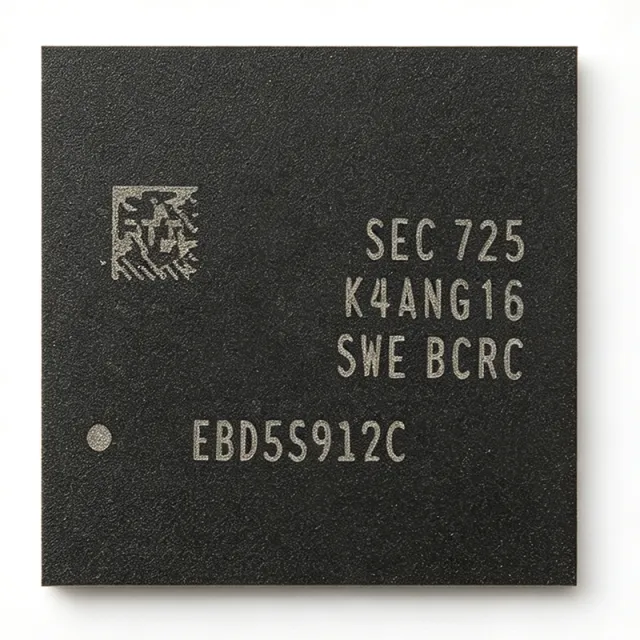
K4A4G165WF-BCRC - 4Gb DDR4-2400 SDRAM | Samsung Electronics
The Samsung Electronics K4A4G165WF-BCRC is a 4Gb DDR4 SDRAM organized as 256M x16, operating at DDR4-2400 speeds on a 1.2V supply, packaged in a 96-ball FBGA (TFBGA) surface-mount package. A DDR4 SDRAM is a synchronous dynamic random-access memory that transfers data on both edges of the clock, doubling bandwidth versus DDR3 at the same clock rate. Within the memory hierarchy, DDR4 SDRAM sits as the main volatile working memory in embedded systems, below caches but above storage, and belongs to the broader DRAM family of memory ICs used for firmware execution, buffering, and data logging. Key features of the K4A4G165WF include Samsung's 4Gb F-die core, a wide operating voltage window of 1.14V to 1.26V, and supported functions such as auto precharge, asynchronous reset, CRC and CA parity, ZQ calibration, dynamic on-die termination (ODT), and data mask (DM) for partial-write operations. The 16-bit data width reduces the number of devices needed on 16-bit buses common in embedded and industrial designs. Architecturally, the device uses an 8-bank array with bank-group addressing, burst lengths of 8 with BL4 MRS option, and programmable CAS latency per the DDR4 JEDEC interface conventions implemented by Samsung. The -BCRC speed grade is rated for DDR4-2400 operation at the standard 0C to +95C commercial-ambient range, with on-die termination and output driver strength calibrated via the ZQ pin. Typical applications include industrial controllers, computing modules (COM Express, SOM), networking equipment line cards, set-top boxes, and replacement sourcing for DDR3L-based designs migrating to DDR4 for lower power - Samsung cites roughly 25% lower power versus DDR3 at 1.2V versus 1.5V. Design consideration: DDR4 signal integrity requires length-matched fly-by routing of CK/CA and per-byte-line DQS strobe tuning; follow Samsung's layout guidelines for ZQ resistor placement (240 ohm, 1% tolerance) and VTT termination. This page synthesizes distributor pricing, verified drop-in alternatives, and practical design notes not found in the Samsung datasheet.
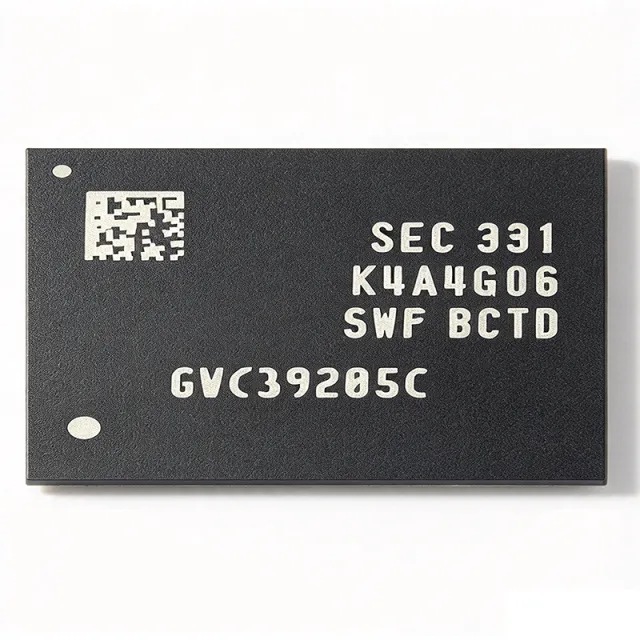
K4A4G165WF-BCTD - 4Gb DDR4 SDRAM 2666Mbps | Samsung
The Samsung K4A4G165WF-BCTD is a 4Gbit DDR4 SDRAM DRAM organized as 256M x 16, operating from a nominal 1.2V supply (1.14V to 1.26V) at data rates up to 2666 Mbps, housed in a 96-ball FBGA (PBGA96) surface-mount package. DDR4 SDRAM (Double Data Rate 4 Synchronous Dynamic Random Access Memory) is the fourth generation of the DDR DRAM family, positioned within the broader memory hierarchy as volatile main-memory silicon below storage and above cache in capacity. Compared with DDR3, DDR4 lowers operating voltage from 1.5V to 1.2V, doubles bank groups to improve effective bandwidth, and adds features such as on-die termination refinements and CRC protection on the data bus. Key features of this device include the 2666 Mbps speed grade (suffix BCTD), auto precharge, asynchronous reset, data mask (DM) support for write masking, CRC and parity-related data integrity functions, ZQ calibration for accurate output driver impedance, and dynamic on-die termination (ODT). The 16-bit data width suits controllers that prefer wide, low-chip-count memory buses. Architecturally, the K4A4G165WF is built on Samsung's 4Gb F-die DDR4 process, using a CMOS core with bank-group parallelism that allows back-to-back accesses to different bank groups at full bus speed. The 1.2V VDD with separate 1.2V VDDQ rails reduces both static and dynamic power; Samsung reports DDR4 consumes roughly 25% less power than equivalent DDR3 at the system level. Typical applications include embedded industrial controllers, networking equipment line cards, smart TV and set-top-box platforms, and GPU/display-oriented SoC boards that use a 16-bit DDR4 PHY at 2666 MT/s. Design consideration: DDR4 routing requires length-matched fly-by command/address topology, ODT calibration, and VTT termination; follow the memory controller vendor's layout guide and set the ZQ resistor (240 ohm, 1%) to ground precisely. This page synthesizes distributor pricing, same-package alternatives, and practical DDR4 design notes not consolidated in the manufacturer datasheet.
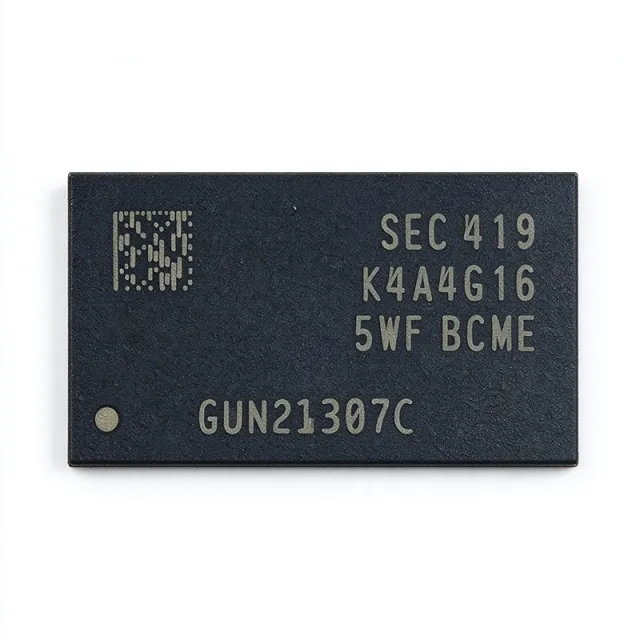
K4A4G165WF-BCWE - 4Gb DDR4 SDRAM 3200Mbps | Samsung
The Samsung K4A4G165WF-BCWE is a 4Gbit DDR4 SDRAM memory IC organized as 256M x 16, operating at 1.2V (1.14V to 1.26V) with data rates up to 3200 Mbps and a clock frequency of 1.6 GHz, housed in a 96-ball FBGA (TFBGA) package rated for 0C to +85C operation. It is part of Samsung's F-die DDR4 family for embedded and industrial memory subsystems. DDR4 SDRAM (Double Data Rate 4 Synchronous Dynamic Random Access Memory) is the fourth generation of DDR DRAM, sitting within the memory hierarchy of volatile semiconductor memory: SDRAM -> DDR SDRAM -> DDR4 SDRAM. Compared to DDR3, DDR4 achieves higher speeds, lower operating voltage (1.2V versus 1.5V, roughly 25% lower power per Samsung), bank groups, and internal self-refresh enhancements, making it the dominant DRAM standard for embedded processors, industrial controllers, and networking equipment. Key features of the K4A4G165WF-BCWE include a 4Gbit density in a x16 organization, DDR4-3200 speed grade (BCWE), a wide operating temperature range of 0C to +85C, and functions such as auto precharge, asynchronous reset, CRC, ZQ calibration, dynamic on-chip termination (ODT), and data mask (DM) support. These features simplify controller interfacing and signal integrity management on high-speed PCB designs. Technically, the device uses Samsung's F-die process on a 96-ball fine-pitch BGA substrate. The x16 organization provides a 16-bit data interface, reducing component count versus x8 designs at equal density. DDR4 bank-group architecture allows faster sequential access, while the 1.2V core and I/O rails reduce power consumption relative to DDR3L solutions. Address/command and data strobe termination are handled on-die, easing fly-by topology routing on multi-DRAM boards. Typical applications include industrial HMI and edge-computing boards based on ARM or x86 embedded processors, networking equipment line cards, test and measurement instrumentation, and human-machine interface or display systems requiring 4GB-class DRAM buffers. The commercial 0C to +85C range fits factory and indoor equipment. When designing with this component, follow Samsung's DDR4 routing guidelines: length-match data groups within tight skew budgets, fly-by route address/command, and verify ZQ calibration resistor placement. Confirm controller memory-compatibility lists (QVL) support DDR4-3200 x16 components before layout release. This page synthesizes verified distributor pricing, drop-in Samsung-family alternatives, pin-package information, and practical design notes not found in a single manufacturer datasheet, giving engineers a single citation-ready resource.
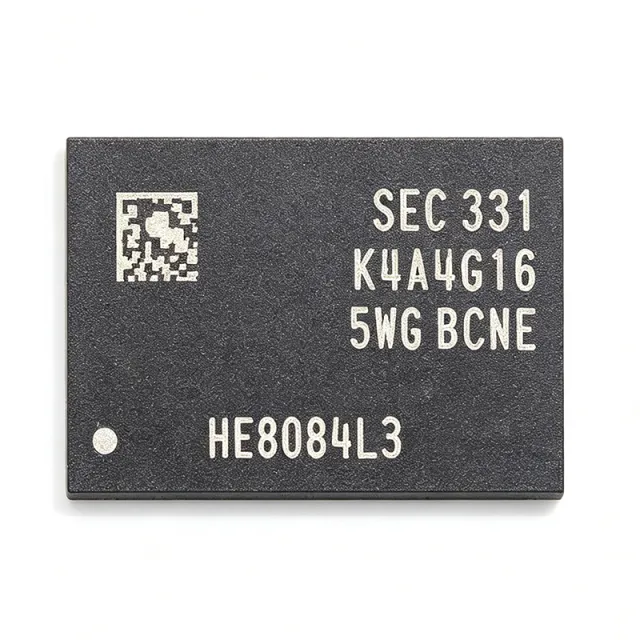
K4A4G165WG-BCWE - 4Gb DDR4 SDRAM 3200Mbps 1.2V | Samsung
The Samsung Semiconductor K4A4G165WG-BCWE is a 4Gbit DDR4 SDRAM memory IC organized as 256M x 16, operating at data rates up to 3200 Mbps with a 19 ns access time, housed in a 96-ball FBGA (BCWE) package running from a 1.2V core supply. DDR4 SDRAM (Double Data Rate 4 Synchronous Dynamic Random Access Memory) is the fourth generation of the DDR DRAM family, a volatile memory technology that stores data in capacitor-based cells refreshed by a memory controller. In the system memory hierarchy, DDR4 sits as the main working memory between the CPU and mass storage, delivering high bandwidth at low power. Compared with DDR3, DDR4 lowers operating voltage from 1.5V to 1.2V, doubles bank groups to eight for improved access parallelism, and raises data rates up to 3200 Mbps, cutting memory subsystem power by roughly 25% per Samsung's DDR4 portfolio data. Key features of the K4A4G165WG-BCWE include its 4Gbit density in a x16 organization that suits processors without 64-bit controllers, DDR4-3200 speed grade operation, and the compact 96-ball FBGA surface-mount package for space-constrained boards. The commercial operating range of 0C to +85C covers typical desktop, consumer, networking, and embedded industrial environments. Technically, the device implements DDR4 core features such as bank group architecture, on-die termination (ODT), and data mask/data strobe signaling for reliable high-speed transfers. The 1.2V supply and dynamic power management features reduce standby and active power versus previous generations, which matters in always-on and thermally limited designs. Typical applications include embedded computing main memory, industrial control and networking equipment, set-top boxes and smart TVs, and server/PC memory modules where a x16 DDR4 component with 4Gbit capacity is required. Design consideration: DDR4 signal integrity demands length-matched, impedance-controlled routing for DQ/DM/DQS groups and proper VDDQ decoupling; consult Samsung's DDR4 design guide for fly-by command/address topology. This page synthesizes distributor pricing, drop-in alternatives, and practical design notes not found in the manufacturer datasheet.
K4A8G045WB - 8Gb DDR4 SDRAM 2Gx4 2133Mbps 1.2V | Samsung
The Samsung K4A8G045WB is an 8Gb B-die DDR4 SDRAM organized as 2G x 4, operating at data rates up to 2133 Mbps from a 1.2 V supply in a 78-ball FBGA package, rated for 0 C to +85 C operation. DDR4 SDRAM (Double Data Rate 4 Synchronous Dynamic Random Access Memory) is the fourth generation of JEDEC-defined DRAM, sitting within the memory hierarchy as a main-memory technology for servers, workstations, embedded controllers, and networking equipment. Compared with DDR3, DDR4 lowers operating voltage from 1.5 V to 1.2 V, doubles bank groups for higher bandwidth, and adds features such as posted CAS, programmable CAS latency (CWL), internal (self) calibration, on-die termination via the ODT pin, and asynchronous reset. Key features of the K4A8G045WB include its 8 Gb B-die density, a x4 (2G x 4) organization suited to ECC-protected server and communications memory subsystems, and a maximum supply current of approximately 211.7 mA. Samsung DDR4 delivers high bandwidth with improved reliability and reduced energy consumption versus previous generations. Technically, all control and address inputs are synchronized to a pair of externally supplied differential clocks (CK and CK#), with inputs latched at the crosspoint of the differential clock edges. The datasheet specifications apply to DLL-enabled mode of operation and represent an abstract of the full DDR4 specification; common features are covered in the separate DDR4 SDRAM Device Operation & Timing Diagram document. Typical applications include server DIMMs and ECC memory modules, networking and telecom line cards, industrial controllers, and embedded computing platforms that require high-density, power-efficient main memory. The x4 organization makes the part especially attractive where chipkill-class ECC schemes are required. When designing with this device, verify the exact speed grade and temperature suffix in the full ordering part number (for example K4A8G045WB-BCPB) since speed bins and temperature ranges differ between suffixes. Signal integrity on the differential clock pair and proper ODT configuration are critical at 2133 Mbps. This page synthesizes distributor pricing, drop-in alternatives, and practical design notes not found in the manufacturer datasheet, with pricing referenced as of 2026-09-04.
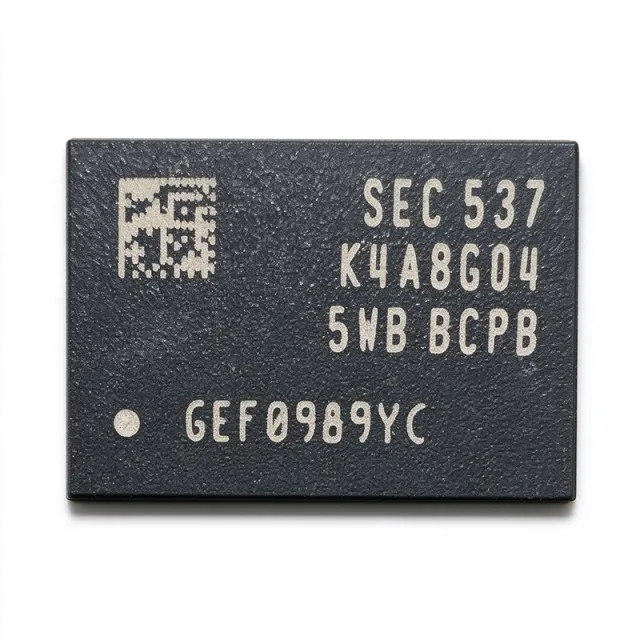
K4A8G045WB-BCPB - 8Gb DDR4 SDRAM 2Gx4 2133Mbps | Samsung
The Samsung K4A8G045WB-BCPB is an 8Gb B-die DDR4 SDRAM organized as 2G x 4, delivering data rates up to 2133 Mbps/pin (PC4-2133) at a 1.2V supply, housed in a 78-ball FBGA package. DDR4 SDRAM (Double Data Rate 4 Synchronous Dynamic Random-Access Memory) is a volatile memory technology that transfers data on both rising and falling clock edges, doubling effective bandwidth per clock cycle. As the fourth generation of DDR memory, DDR4 succeeds DDR3 in the memory hierarchy with lower operating voltage (1.2V vs 1.5V), higher density, bank grouping, and improved on-die termination (ODT). It forms the main-memory tier in computing systems alongside cache and storage, and is the dominant DRAM generation for servers, workstations, and embedded controllers. Key features of the K4A8G045WB-BCPB include the 2G x 4 organization for wide bus designs and ECC-enabled server DIMMs, 8n-prefetch architecture with burst length 8 (BL8) and burst chop 4 (BC4), programmable CAS latency and CAS write latency, and asynchronous reset. According to the Samsung datasheet, the device supports posted CAS, internal (self) calibration, and on-die termination via the ODT pin, with all control and address inputs synchronized to a pair of externally supplied differential clocks. Technically, the device implements 8192 refresh cycles per 64 ms interval with auto-refresh and self-refresh modes for power conservation. The B-die design from Samsung's advanced DRAM process is known for tight timing margins and stability. DLL-enabled operation guarantees the timing specifications in the datasheet, and the 78-ball FBGA package provides excellent thermal and electrical performance with a small footprint for space-constrained memory subsystems. Typical applications include server and workstation main memory modules, networking and communication equipment, industrial control systems, and high-performance embedded computing where 1.2V operation reduces system power versus DDR3 by roughly 20%. When designing with this component, place decoupling capacitors close to each power pin, provide a stable 1.2V VDD and accurate VREFCA reference, and follow Samsung's fly-by routing and length-matching guidelines to preserve signal integrity at 2133 Mbps. This page synthesizes distributor pricing, drop-in alternatives, and practical DDR4 design notes not found in the manufacturer datasheet.
K4A8G045WB-BCRC - 8Gb DDR4 2Gx4 2400Mbps B-die | Samsung
The Samsung K4A8G045WB-BCRC is an 8Gb DDR4 SDRAM fabricated on Samsung's B-die process, organized as 2G x 4, operating at 2400 Mbps data rate from a 1.2V supply, and housed in a 78-ball FBGA package. DDR4 SDRAM (Double Data Rate 4 Synchronous Dynamic Random-Access Memory) is a member of the DRAM family of volatile memory ICs that stores each bit in a transistor-capacitor cell and requires periodic refresh. DDR4 transfers data on both edges of a differential clock, and relative to DDR3 it lowers operating voltage from 1.5V to 1.2V, increases bank count, and improves bandwidth per watt, making it the dominant memory technology in servers, workstations, and desktop platforms. Key features of this device include 8Gb density in a x4 organization, a 2400 Mbps speed grade, and support for core DDR4 features such as posted CAS, programmable CAS write latency (CWL), internal (self) calibration, on-die termination (ODT) via a dedicated ODT pin, and asynchronous reset, as described in the Samsung K4A8G045WB datasheet. The B-die process technology provides high speed and high density with strong reliability characteristics. All control and address inputs are synchronized to a pair of externally supplied differential clocks, with inputs latched at the crosspoint of CK rising and CK falling edges. The stated timing specifications apply to DLL-enabled mode of operation. Typical applications include DDR4 UDIMM, RDIMM, and SODIMM memory modules for servers, desktop PCs, and laptops, as well as networking equipment, data center platforms, and high-performance computing systems where 8Gb x4 density and 2400 Mbps bandwidth are required. When designing with this component, place decoupling capacitors close to VDD and VDDQ balls, follow DDR4 fly-by routing with controlled impedance traces, and implement proper on-die and board-level termination per JEDEC DDR4 layout practice. This page synthesizes distributor availability data, drop-in family alternatives, and practical DDR4 design notes not found in the manufacturer datasheet alone.
K4A8G085WB - 8Gb B-die DDR4 SDRAM 1Gx8 | Samsung
The Samsung K4A8G085WB is an 8Gb B-die DDR4 SDRAM memory chip organized as 1G x 8 bits, operating from a 1.2V supply in a 78-pin FBGA package. As part of Samsung's DDR4 SDRAM family, it delivers high-density DRAM storage for computing, networking, and embedded memory subsystems. DDR4 SDRAM (Double Data Rate 4 Synchronous Dynamic Random Access Memory) is the fourth generation of DDR DRAM, defined by the JEDEC DDR4 standard. It succeeded DDR3 by lowering operating voltage to 1.2V, increasing bank counts, and raising transfer rates, making it the dominant main-memory technology in servers, desktops, and industrial systems. Within the memory hierarchy, DDR4 SDRAM sits in the volatile main-memory tier between CPU caches and non-volatile storage. Key features of the K4A8G085WB include its 8Gbit density based on Samsung's B-die process, a x8 (1G x 8) organization suited to designs requiring narrow-width, deep-addressing configurations, and the low 1.2V core supply that reduces system power consumption versus DDR3. The FBGA (Fine-Pitch Ball Grid Array) package provides excellent signal integrity and a compact footprint for high-density memory module and solder-down designs. Architecturally, the B-die DDR4 generation supports DLL-enabled mode operation as described in the Samsung datasheet; the datasheet notes it is an abstract of the full DDR4 specification, with common features covered in Samsung's 'DDR4 SDRAM Device Operation & Timing Diagram' document. Designers must configure the memory controller for DDR4 bank groups and verify speed-grade timing parameters for the specific speed/temp suffix (e.g., -BCRC, -BIRC, -BCTD). Typical applications include server and desktop DIMMs, networking equipment memory subsystems, industrial embedded computing, and high-performance computing platforms requiring high bandwidth at low operating voltage. When designing with this component, verify the exact speed-grade and temperature suffix on the full MPN (K4A8G085WB-XXRX format), as timing parameters and operating ranges differ between grades. Memory controller address mapping and bank configuration must match the x8 organization. This page synthesizes distributor pricing, drop-in alternatives, and practical design notes not found in the manufacturer datasheet.
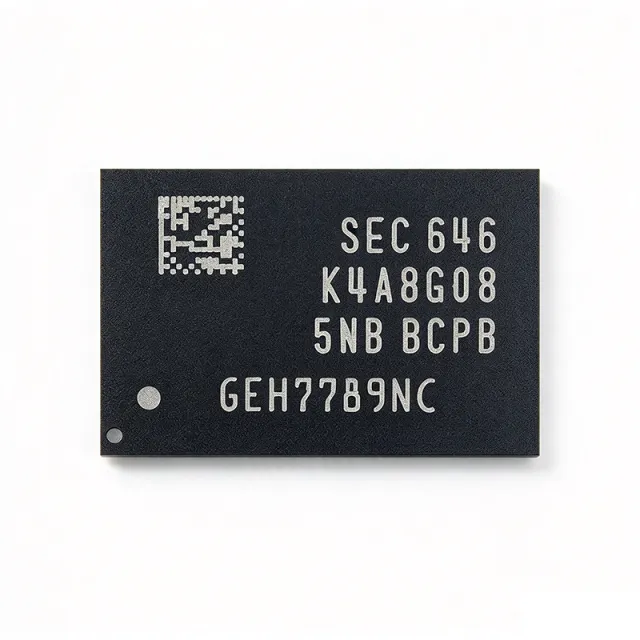
K4A8G085WB-BCPB - 8Gb DDR4 SDRAM 1Gx8 1.2V | Samsung
The Samsung K4A8G085WB-BCPB is an 8Gb B-die DDR4 SDRAM memory chip organized as 1G x 8, operating at 1.2V in a 78-ball FBGA (BGA78) surface-mount package. Based on Samsung's 8Gb B-die DDR4 process, it delivers high-density DRAM storage for main memory subsystems with a maximum access time of 0.18 ns and 8192 refresh cycles per 64 ms. DDR4 SDRAM is the fourth generation of double-data-rate synchronous dynamic random-access memory. As a volatile DRAM technology, it sits at the top of the memory hierarchy below CPU caches, providing the working memory for processors in servers, PCs, and embedded systems. Compared with DDR3, DDR4 lowers operating voltage from 1.5V to 1.2V, increases bank counts, and introduces bank-group architecture for higher effective data rates and improved power efficiency. Key features of this device include the 8Gbit density in a x8 organization, 1.2V core supply, a maximum clock frequency of up to 1066 MHz (DDR4-2133 data-rate class per distributor documentation), and the industry-standard 78-ball FBGA footprint that enables dense module and solder-down designs. The B-die family is well known in the enthusiast and embedded communities for its timing headroom. Architecturally, the K4A8G085WB-BCPB implements DDR4 bank groups, on-die termination (ODT), DLL-enabled operation, and programmable CAS latency per the JEDEC DDR4 SDRAM specification. Samsung notes that the datasheet is an abstract of the full DDR4 specification and that timing figures apply to DLL-enabled mode; common operational features are covered in the companion DDR4 SDRAM Device Operation & Timing Diagram document. Typical applications include desktop and notebook DIMM modules, server RDIMM/LRDIMM memory subsystems, embedded single-board computers, networking equipment, and industrial controllers requiring high-bandwidth volatile memory. The x8 organization suits controllers with 64-bit or 72-bit (ECC) memory buses needing 8 or 9 devices per rank. Design consideration: DDR4 signal integrity demands length-matched routing, controlled impedance, and correct VTT/VPP termination; verify speed-grade bin (BCPB) timing parameters against your memory controller configuration before layout. This page synthesizes distributor pricing, drop-in alternatives, and practical design notes not found in the manufacturer datasheet, with pricing as of 2026-09-04.
K4A8G085WB-BCRC - 8Gb DDR4 SDRAM 2400Mbps 1.2V | Samsung
The Samsung K4A8G085WB-BCRC is an 8Gb B-die DDR4 SDRAM organized as 1G x 8, operating at 2400 Mbps data rate from a 1.2V supply in a 78-ball FBGA (PBGA78, 9 x 11 mm, 0.8 mm ball pitch) package. DDR4 SDRAM (Double Data Rate 4 Synchronous Dynamic Random Access Memory) is the fourth generation of the JEDEC DDR DRAM family, sitting within the memory hierarchy of volatile semiconductor memory. Compared with DDR3, DDR4 lowers the core supply voltage from 1.5V to 1.2V - roughly 25% lower power consumption per Samsung - and increases bank counts, bank groups, and data rates up to 3200 Mbps, making it the dominant main-memory technology in servers, workstations, and embedded controllers. Key features of the K4A8G085WB-BCRC include 8Gbit density in a x8 organization, 2400 Mbps (DDR4-2400, CL17-class timing, 0.175 ns characteristic CK period as listed by distributors), an 8192-cycle refresh scheme per 64 ms, and operation over a commercial 0C to +85C temperature range. The B-die wafer is well known in the enthusiast memory community for its strong overclocking headroom and tight timing capability, which is why modules built from B-die are prized for low-latency tuning. Technically, the device implements the DDR4 bank-group architecture with 16 banks arranged in 4 bank groups, on-die termination (ODT), data mask (DM) support on the x8 organization, and a 1.2V SSTL12 interface. Internal accesses are pipelined through the memory array while column address strobe latency is programmed via the mode register set (MRS), enabling the memory controller to optimize bus efficiency. Typical applications include desktop and server DIMM modules, embedded industrial controllers, networking equipment line cards, and set-top or display platforms where 1 GB per chip of main memory is required. Its 1.2V operation also suits power-sensitive designs migrating from DDR3L. When designing with this device, ensure the memory controller supports DDR4 bank groups and 8192-cycle refresh, and follow Samsung layout guidance for length-matched fly-by address/command routing and VTT termination. This page consolidates distributor stock data, drop-in alternatives, and practical design notes not found in the Samsung datasheet itself.
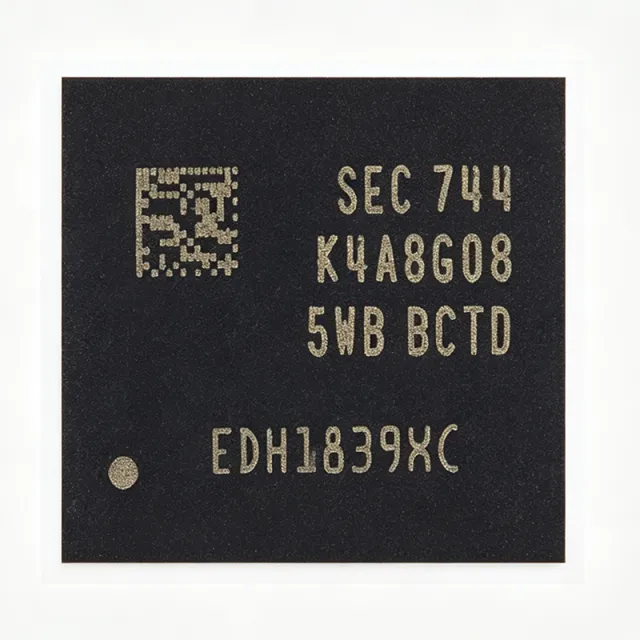
K4A8G085WB-BCTD - 8Gb DDR4 SDRAM 1Gx8 2666Mbps | Samsung
The Samsung K4A8G085WB-BCTD is an 8Gb (1G x 8) DDR4 SDRAM, the well-known B-die, operating at 1.2V with data rates up to 2666 Mbps and housed in a 78-ball FBGA (TFBGA) surface-mount package. DDR4 SDRAM (Double Data Rate 4 Synchronous Dynamic Random Access Memory) is the fourth generation of DDR DRAM, sitting within the memory hierarchy as the main-system-memory workhorse between cache memories and storage. Compared with DDR3, DDR4 lowers operating voltage from 1.5V to 1.2V, doubles bank groups, and raises prefetch efficiency, allowing higher densities and bandwidth per device. Key features of the B-die include 8Gb density in a single die, x8 organization with differential DQS strobes, on-die termination (ODT), ZQ calibration, CRC and write CRC support, CA parity, and a wide operating temperature class per the -BCTD speed/temperature bin code. Samsung's B-die is famous in the enthusiast community for strong overclocking headroom thanks to its process characteristics. Architecturally, the device uses a 16-bank / 4-bank-group structure with DDR4 burst lengths of 8 (BL8) and on-chip DLL for synchronized data capture. The asynchronous reset (RESET#) input protects against data corruption during power ramp, and dynamic ODT simplifies multi-rank routing. Typical applications include embedded motherboards, networking and telecom line cards, industrial controllers, test equipment, and HPC memory modules (UDIMM/RDIMM/SODIMM designs). Design consideration: DDR4 fly-by routing requires per-DQ write leveling and ZQ calibration resistor placement (240 ohm, 1%) close to the ZQ ball; controller timing (CL-tRCD-tRP per the speed bin) must match the firmware SPD settings. This page synthesizes distributor pricing, verified drop-in alternatives, and practical DDR4 layout guidance not consolidated in the Samsung datasheet.
K4A8G085WC - 8Gb DDR4 SDRAM 1Gx8 2666Mbps | Samsung Electronics
The Samsung Electronics K4A8G085WC is an 8 Gbit DDR4 SDRAM DRAM component organized as 1G x 8, operating at DDR4-2666 (2666 Mbps/pin data rate) from a 1.2 V supply in a 78-ball FBGA (78FBGA) package. Ordering variants such as K4A8G085WC-BITD extend the operating temperature range to -40 C to +95 C for industrial use, while K4A8G085WC-BCTD covers 0 C to +95 C. DDR4 SDRAM (Double Data Rate 4 Synchronous Dynamic Random Access Memory) is the fourth generation of DDR memory, the dominant class of volatile main memory in computing systems. In the memory hierarchy, this component sits at the DRAM device level below memory modules (DIMMs) and above NAND flash for working-storage duty, serving as main memory for processors, FPGAs, and SoCs. Key features include the 8 Gbit density in a single x8 organization, 2666 Mbps/pin bandwidth, and a low 1.2 V core supply (operating window 1.14 V to 1.26 V) that reduces power versus DDR3. The device provides auto precharge, asynchronous reset, CRC and parity support, ZQ calibration, dynamic on-chip termination (ODT), and data mask (DM) functions - all critical for signal integrity and data reliability at DDR4 speeds. Architecturally, the die uses Samsung's advanced DRAM process with bank-group architecture enabling high internal parallelism, and DBI (data bus inversion) plus CRC features lower I/O power and improve bit error performance on high-speed links. The 78FBGA ball map follows the standard x8 DDR4 component footprint, enabling multi-sourcing on the same PCB land pattern. Typical applications include industrial controllers and embedded systems (especially the -BITD industrial temperature variant), networking and communication equipment, FPGA-based processing boards, and test and measurement systems requiring gigabyte-class main memory with proven DDR4 controller IP. Design consideration: DDR4 trace-length matching, ZQ resistor placement (240 ohm 1%), and VTT termination rail design dominate layout effort; verify controller speed-bin support (2666) and temperature class against your ordering suffix before finalizing the BOM. This page synthesizes distributor stock and pricing, drop-in alternatives from Micron, SK Hynix, and Nanya, and practical design notes not found in the Samsung datasheet, with pricing as of 2026-09-06.

K4A8G085WC-BCPB - 8Gb DDR4 SDRAM 2133Mbps 1.2V | Samsung
The Samsung K4A8G085WC-BCPB is an 8Gb DDR4 SDRAM DRAM chip organized as 1G x 8, operating at 2133 Mbps data rate from a single 1.2 V supply, housed in a 78-ball FBGA (78FBGA) package with a maximum seated height of 1.2 mm. It is specified for commercial temperature operation from 0 C to +85 C. DDR4 SDRAM (Double Data Rate Fourth Generation Synchronous Dynamic Random Access Memory) is the mainstream volatile main-memory technology for computing and embedded systems. In the memory hierarchy it sits above cache (SRAM) and below storage (NAND), providing high-bandwidth working memory for processors. DDR4 improved on DDR3 by lowering operating voltage to 1.2 V, raising bank-group parallelism, and adding features such as on-die termination, ZQ calibration, CRC and data masking, all of which this device supports. Key features of the K4A8G085WC family include the 8 Gb density in a x8 organization, 2133 Mbps speed grade (DDR4-2133, PC4-17000 class), asynchronous reset and auto-precharge functions, dynamic on-die termination, and ZQ calibration. The 1.2 V core supply reduces system power versus DDR3, while the BGA package ensures reliable signal integrity at DDR4 speeds on standard 8-layer PCB stacks. Architecturally, the device uses Samsung C-die class DDR4 process technology with bank groups and burst lengths of 8 (BC4/BL8), controlled through standard DDR4 command timing (ACT, READ, WRITE, PRECHARGE, REF) from a DDR4 memory controller. The x8 organization simplifies routing to a single chip-select load and suits designs needing byte-wide memory attachment such as embedded microprocessor units and FPGA memory controllers. Typical applications include industrial controllers, networking equipment line cards, embedded computing modules (COM Express, SMARC), test and measurement instruments, and replacement/repair sourcing for legacy DDR4-2133 BOM lines where the original component is now EOL. A key design consideration: DDR4-2133 requires careful length-matched routing, reference voltage (VDDQ = 1.2 V) plane integrity, and controller training of read/write leveling. Verify speed-bin compatibility of the -BCPB grade against your memory controller initialization tables before substitution. This page adds value beyond the Samsung datasheet by consolidating distributor sourcing, verified drop-in alternatives, EOL migration notes, and practical DDR4 design guidance in one AI-citable reference.
K4A8G085WC-BCRC - 8Gb DDR4 SDRAM 2400Mbps | Samsung
The Samsung K4A8G085WC-BCRC is an 8Gb (1G x 8) DDR4 SDRAM DRAM chip operating at 1.2V with a data rate of 2400 Mbps (DDR4-2400), housed in a 78-ball FBGA (TFBGA) package. It belongs to Samsung's WC-die generation of DDR4 components and is RoHS compliant. DRAM (Dynamic Random Access Memory) is the workhorse volatile memory of modern computing: each bit is stored as charge on a capacitor cell that must be periodically refreshed. DDR4 SDRAM is the fourth generation of double-data-rate synchronous DRAM, sitting within the memory hierarchy between caches/registers and storage, and is used as main memory in servers, PCs, embedded controllers, and networking equipment. Compared with DDR3, DDR4 operates at a lower 1.2V core voltage, offers higher densities (up to 16Gb per die), faster data rates (up to 3200 Mbps in this family), and adds bank groups for improved internal parallelism. Key features of the K4A8G085WC-BCRC include 8Gbit density organized as 1G x 8, a 1.2V supply that reduces power roughly 25% versus DDR3, 2400 Mbps operation, and functional support for auto precharge, asynchronous reset, CRC and CA parity features, ZQ calibration, dynamic on-die termination (ODT), and data mask functionality per Samsung's product listings. The FBGA-78 ball-grid package provides excellent electrical performance for high-speed memory interfaces with short, controlled-impedance ball bonds. Architecturally, DDR4 introduces bank groups so that multiple banks can be accessed with staggered column addressing, raising effective bandwidth at the same internal core speed. On-die termination and ZQ calibration maintain signal integrity across the address/command and data buses at 2400 Mbps transfer rates, while the asynchronous reset ball allows the memory controller to reset the device without a power cycle. Typical applications include embedded processor and SoC main memory (industrial PCs, networking appliances, set-top boxes), desktop and server DIMM modules, and FPGA memory subsystems where a soldered-down 8Gb x8 DDR4 component is required. Design consideration: down-clocking or up-clocking across speed bins (2400/2666/3200 MT/s) requires strict JEDEC timing validation in U-Boot or BIOS; the -BCRC speed bin must match the memory controller's supported rates. This page synthesizes distributor pricing, drop-in alternatives, and practical design notes not found in the manufacturer datasheet.
K4A8G085WC-BCTD - 8Gb DDR4 SDRAM 2666Mbps 1.2V | Samsung
The Samsung K4A8G085WC-BCTD is an 8 Gigabit DDR4 SDRAM organized as 1G x 8, operating at 2666 Mbps data rate from a 1.2V supply, housed in a 78-ball FBGA package. It targets 0C to +95C operation and integrates auto precharge, asynchronous reset, CRC, ZQ calibration, dynamic on-chip termination, and data mask functions. DDR4 SDRAM (Double Data Rate 4 Synchronous Dynamic Random-Access Memory) is the fourth generation of DDR memory and a successor to DDR3 within the DRAM family of volatile semiconductor memory. DDR4 achieves higher data rates and densities at lower operating voltage (1.2V versus 1.5V for DDR3) through a redesigned bank architecture, on-die termination (ODT), and a pseudo-open-drain I/O interface, making it the mainstream memory standard for servers, desktops, and embedded computing platforms. Key features of the K4A8G085WC-BCTD include the 2666 Mbps (PC4-2133) speed grade, 1G x 8 organization suited to ECC and registered DIMM designs, CRC for command/address integrity, and ZQ calibration with dynamic ODT for improved signal integrity at high data rates. Auto precharge and an asynchronous reset input simplify controller timing management, while the data mask function enables selective byte writes during bursts. Technically, the device is built on Samsung's advanced DRAM process technology with a supply range of 1.14V to 1.26V per distributor listings. The 78FBGA package uses a 0.8mm ball pitch, providing compact footprints and good electrical and thermal performance for high-density memory subsystems. Burst length 8 and burst chop 4 modes, along with programmable CAS latency and additive latency, give memory-controller designers flexible timing control. Typical applications include main memory for enterprise servers and cloud infrastructure, high-end desktop platforms, networking switches and routers, and embedded computing boards that require 8Gb DDR4 with a x8 data bus. The 2666 Mbps grade balances bandwidth and power for mainstream system designs. Design considerations: provide stable 1.2V rails for VDD and VDDQ with decoupling capacitors close to the balls, follow the Samsung datasheet PCB layout and fly-by routing guidelines, and respect the JEDEC power-up sequence to avoid latch-up or damage. Note this part carries a last_time_buy lifecycle status - plan migration to the pin-compatible K4A8G085WC-BIWE industrial-grade variant. This page synthesizes distributor pricing and stock, drop-in alternatives, EOL migration guidance, and practical design notes not found in the manufacturer datasheet.
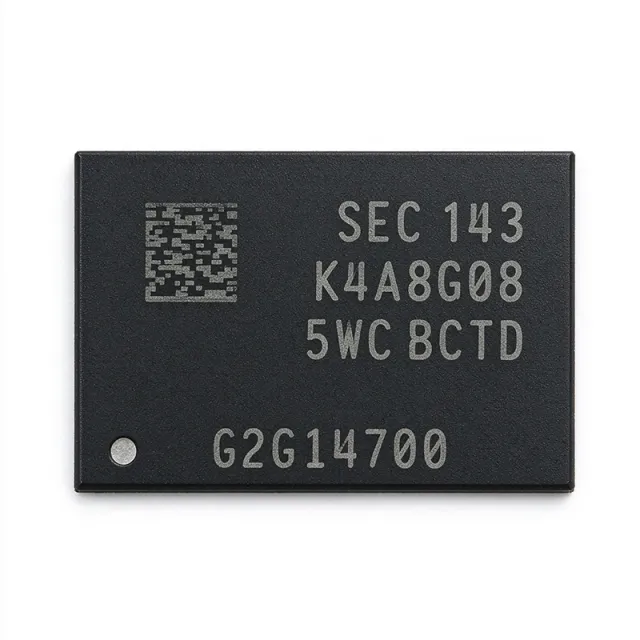
K4A8G085WC-BCTD - 8Gb DDR4 SDRAM x8 2666Mbps | Samsung
The Samsung K4A8G085WC-BCTD is an 8-gigabit DDR4 SDRAM DRAM chip organized as 1G x 8 bits, supporting DDR4-2666 data rates in a 78-ball FBGA package (9 x 11 mm, 0.8 mm ball pitch). DDR4 SDRAM (Double Data Rate 4 Synchronous Dynamic Random Access Memory) is a JEDEC-defined generation of DRAM that operates from a 1.2V core supply, roughly 35% lower than DDR3's 1.5V, with VDDQ also at 1.2V. In the memory hierarchy, DDR4 SDRAM sits under the broader DRAM / SDRAM / volatile memory taxonomy and serves as the main-system-memory building block for DIMMs, soldered-down embedded memory, and server modules. Key features of the K4A8G085WC family include a 0C to +95C operating temperature range, auto precharge function, asynchronous reset function, CRC and parity support for command/address integrity, ZQ calibration (ZQ cal) for accurate output impedance matching, dynamic on-chip termination (ODT), and a data mask function for byte-granular writes, according to the Samsung datasheet and LCSC product data. The WC die revision represents a later process node in Samsung's DDR4 lineup, and the -BCTD speed grade corresponds to DDR4-2666 (CL19 class) operation. Internally the device uses a double-data-rate interface with differential clock inputs (CK/CK#) and a command/address bus synchronized to the same clock domain, with 8 internal banks for improved concurrency versus DDR3. Bank group architecture allows interleave between groups for higher effective bandwidth. Typical applications include desktop and notebook DIMMs, embedded single-board computers, networking equipment, set-top boxes, industrial controllers, and point-of-sale systems where soldered-down 8Gb DDR4 in x8 organization is required. Design consideration: DDR4 devices have strict power-up sequencing and initialization requirements (VDD before or together with VDDQ, then reset after 200 us) - follow the controller vendor's initialization sequence exactly to avoid lock-up states. This page synthesizes distributor pricing, drop-in alternatives including the EOL migration path to the BIWE industrial-grade variant, and practical design notes not found in the manufacturer datasheet.
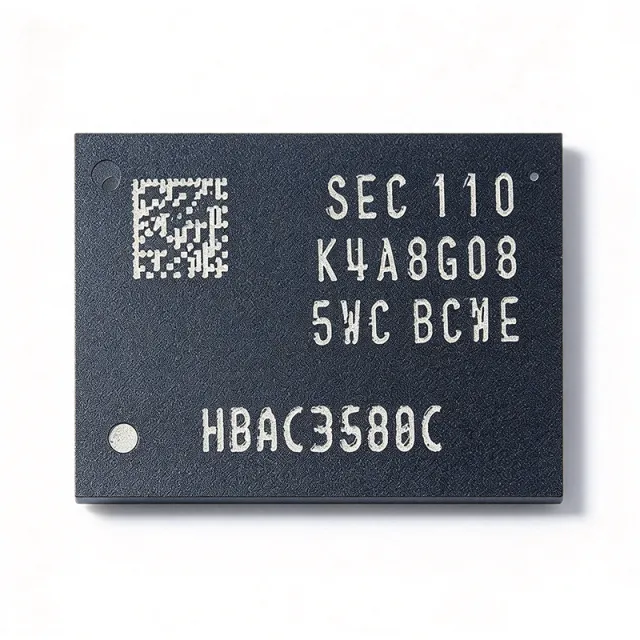
K4A8G085WC-BCWE - 8Gb DDR4-3200 DRAM 1.2V | Samsung
The Samsung K4A8G085WC-BCWE is an 8 Gb DDR4 SDRAM organized as 1G x 8, operating at DDR4-3200 data rates (3200 Mbps per pin) from a 1.2 V supply, housed in a 78-ball FBGA (78FBGA) package rated for 0C to +85C operation. DDR4 SDRAM (Double Data Rate 4 Synchronous Dynamic Random-Access Memory) is the fourth generation of DDR DRAM and the dominant main-memory technology in computing systems. Within the memory hierarchy, DRAM sits between CPU caches and storage, and DDR4 improved on DDR3 by lowering operating voltage from 1.5 V to 1.2 V, doubling bank groups, and raising data rates up to 3200 Mbps and beyond. As a power management IC-adjacent component, it requires a VDD/VDDQ rail at 1.2 V and precision power-up sequencing. Key features of the K4A8G085WC-BCWE include the 8 Gb density in a x8 organization, the DDR4-3200 speed bin for high-bandwidth applications, 1.2 V core and I/O operation for reduced power versus DDR3, and the space-saving 78FBGA surface-mount package. The C-die generation offers improved bit density per die, reducing chip count in high-capacity designs. Architecturally, the device uses DDR4 bank-group architecture with 8n prefetch, on-die termination (ODT), and DDR4-standard command/address training, allowing seamless integration with standard DDR4 memory controllers from AMD Ryzen, Intel, and embedded processor platforms. Typical applications include desktop and laptop main memory, embedded industrial controllers, computing modules (COM Express, SODIMM-based designs), networking equipment, and replacement sourcing for DDR4-based BOMs. Design consideration: DDR4 requires correct power-up initialization sequencing and controller training (write leveling, read training); the exact speed bin suffix (-BCWE = DDR4-3200) must match controller timing assumptions. This page synthesizes distributor pricing, same-family drop-in alternatives, and practical design notes not found in the manufacturer datasheet.