Nexperia

PESD2CAN,215 - 24V CAN Bus ESD TVS Diode | Nexperia

N.º de pieza: PESD2CAN,215 ✗ Fin de vida
En stock Se envía en 1-3 días hábiles
24 V Vdss 5 A (8/20 us) Id SOT-23 (TO-236AB) Package
Desde $0.09 USD / unidad
MOQ: 1 |
Precio actualizado: 2026-10-19
Precios por volumen
Cant. Precio unitario Total
1 $0.42 $0,42
10 $0.31 $3,10
100 $0.18 $18,00
500 $0.13 $65,00
1.000 $0.09 $90,00
ℹ️ Todos los precios están en USD

PESD2CAN,215 Descripción general

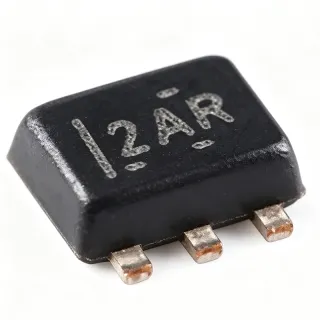
The Nexperia PESD2CAN,215 is a dual-channel CAN bus ESD protection diode array (TVS diode) with a 24 V reverse standoff voltage, 41 V clamping voltage, and 5 A (8/20 us) peak pulse current capability, housed in a 3-pin SOT-23 (TO-236AB) surface-mount package.

A TVS (Transient Voltage Suppressor) diode is a circuit-protection semiconductor that clamps fast high-voltage transients to a safe level by avalanche breakdown. Within the protection hierarchy, the PESD2CAN sits in the ESD/TVS diode family under surge protectors and discrete semiconductors, guarding sensitive transceiver pins in the same way fuses guard against overcurrent.

Key features include a 24 V standoff that tolerates automotive CAN bus fault conditions without conduction, clamping at 41 V to stay below CAN transceiver absolute maximum ratings, low inter-line and line-to-ground capacitance suited to high-speed CAN, and ESD robustness up to +/-30 kV contact discharge verified against IEC 61000-4-2 Level 4.

The device integrates two avalanche diodes sharing a common cathode, allowing it to protect both CAN_H and CAN_L lines in a single 3-pin footprint. Its bidirectional construction handles both positive and negative transients on the twisted-pair bus, which is essential since CAN transients swing symmetrically around common-mode. The package's low parasitic inductance supports fast transient response at the connector entry point.

Typical applications include protection of high-speed CAN and fault-tolerant CAN bus lines in automotive body, powertrain, and chassis networks, industrial CANopen and DeviceNet nodes, and CAN transceivers exposed to connector-level ESD strikes.

Design tip: place the PESD2CAN as close to the CAN connector as possible, with a short, low-impedance ground return to the transceiver ground; long stubs degrade clamping effectiveness during the first nanoseconds of an ESD event.

This page adds value beyond the datasheet by synthesizing drop-in alternatives, a parameter-by-parameter comparison table, and practical layout guidance not found in the manufacturer document. Pricing shown is as of 2026-10-20.

Alternativas directas para PESD2CAN,215 — mismo encapsulado, compatible pin a pin. Se excluyen las piezas de otro encapsulado que requieren retrabajo de la PCB.

Variantes de esta serie

Modelos de la misma serie compatibles directamente con PESD2CAN,215 (mismo factor de forma y huella) — difiere en Application, Automotive Qualification, Clamping Voltage, Mounting Type, Number of Protected Lines.

Bourns
Application: 24V CANbus protection
Automotive Qualification: AEC-Q101 qualified
Clamping Voltage: 40 V
Comparar con PESD2CAN,215 →

Herramienta de comparación rápida — seleccione piezas alternativas para compararlas lado a lado:

PESD1CAN,215

✅ Sustitución directa
📦 SOT-23 (TO-236AB)
protects 1 CAN line instead of 2 (-50% protected channels), same 24 V standoff class and SOT-23 footprint, pin-compatible

📋 Alternativa de referencia (no en el catálogo)

CDSOT23-T24CAN-Q

✅ Sustitución directa
Bourns
📦 SOT-23 (TO-236AB)
Dual bidirectional TVS diode array (CANbus protector) · 8 A (8/20 us) · 40 V · 26.2 V · 24V CANbus protection · 2 (CANH and CANL) · Bidirectional · SOT-23-3

✓ En stock

$0.19 / unidad

Ver hoja de datos →

ESDCAN24-2BLY

✅ Sustitución directa
📦 SOT-23 (TO-236AB)
24 V standoff dual CAN TVS in SOT-23, pin-compatible, similar 41 V-class clamping and capacitance profile

📋 Alternativa de referencia (no en el catálogo)

ESD2CAN24-Q1

✅ Sustitución directa
📦 SOT-23 (TO-236AB)
AEC-Q101/Q1 qualified 24 V dual CAN ESD protection in SOT-23; slightly different clamp profile, pin-compatible per cross-reference analysis

📋 Alternativa de referencia (no en el catálogo)

SZNUP2105LT1G

✅ Sustitución directa
📦 SOT-23 (TO-236AB)
same SOT-23 dual-line protection topology per PartGenie pin-compatibility analysis; verify 24 V-class standoff against CAN fault requirements before release

📋 Alternativa de referencia (no en el catálogo)

PESD2CAN,215 Valores máximos y características eléctricas

Technology TVS / ESD protection diode array
Number of Protected Lines 2 (CAN_H and CAN_L)
Reverse Standoff Voltage 24 V
Clamping Voltage 41 V
Peak Pulse Current (Ipp) 5 A (8/20 us)
ESD Withstand +/-30 kV contact discharge (IEC 61000-4-2 Level 4)
Configuration Bidirectional, common cathode
Application High-speed CAN and fault-tolerant CAN bus
Encapsulado SOT-23 (TO-236AB)
Tipo de montaje Surface Mount (SMD)
Pins 3
Series PESD2
Estado RoHS Compliant
Automotive Qualification Designed for automotive CAN bus applications

Configuración de pines de PESD2CAN,215

SOT-23 Package Pinout Diagram SOT-23 3-pin surface mount transistor, JEDEC TO-236. Pin 1 by dot. 1 2 3 SOT-23
Pin 1 ANODE 1 (CAN line 1) — Anode of bidirectional diode 1 - connect to CAN_H
Pin 2 CATHODE — Common cathode - connect to system ground
Pin 3 ANODE 2 (CAN line 2) — Anode of bidirectional diode 2 - connect to CAN_L

Aplicaciones típicas

PESD2CAN,215 es adecuado para 6 aplicacións: Automotive High-Speed CAN Bus Protection, Industrial CANopen and DeviceNet Nodes, Body Control Modules (BCM), OBD-II Diagnostic Interfaces, Agricultural and Off-Highway Vehicle Networks, Battery Management and EV Powertrain CAN.

🚗

Automotive High-Speed CAN Bus Protection

In automotive body, powertrain, and chassis networks running 500 kbit/s high-speed CAN, transceiver pins are exposed to ESD at service connectors and cable harness transients. The PESD2CAN,215 fits this role because its 24 V standoff tolerates bus fault conditions common in fault-tolerant CAN environments, while its 41 V clamp stays below typical CAN transceiver absolute maximum ratings. Placed directly at the OBD or ECU connector, its low package parasitics preserve signal integrity at 1 Mbit/s, and its 5 A (8/20 us) surge rating absorbs the pulse energy of wiring-induced transients on both CAN_H and CAN_L lines.

🏭

Industrial CANopen and DeviceNet Nodes

Industrial control nodes on CANopen and DeviceNet networks face connector ESD during module insertion and surge events from long cable runs in factory environments. The PESD2CAN,215 suits these nodes with its +/-30 kV IEC 61000-4-2 Level 4 contact discharge withstand, which neutralizes discharge at the point of entry before it reaches the transceiver die. The dual-channel SOT-23 array protects both twisted-pair conductors in one footprint, minimizing board area in dense I/O modules, while the 24 V standoff accommodates industrial bus fault states without false clamping during normal common-mode swings.

🔧

Body Control Modules (BCM)

Body control modules aggregate many CAN-connected actuators and sensors, making transceiver reliability central to module warranty performance. The PESD2CAN,215 protects the CAN_H/CAN_L pair at the module harness connector with a compact 3-pin SOT-23 footprint suited to dense automotive PCBs. Its bidirectional diode construction clamps both positive and negative transients symmetrically around ground, matching the differential signaling of the bus, and its automotive-oriented PESD2 series design targets the transient environments defined for in-vehicle networks, reducing field failures from connector-handling ESD during assembly and service.

🎥

OBD-II Diagnostic Interfaces

OBD-II dongles and diagnostic tools plug directly into vehicle ports, exposing CAN transceivers to the harshest ESD scenario: a human touching the metal connector shell. The PESD2CAN,215 is designed for exactly this entry point, with +/-30 kV contact discharge tolerance per IEC 61000-4-2 Level 4 verified at the package pins. Its 41 V clamping limits the voltage reaching the transceiver during a direct strike, while the low SOT-23 profile allows placement within millimeters of the connector, minimizing the inductive overshoot that degrades clamping during the first nanoseconds of the event.

✈️

Agricultural and Off-Highway Vehicle Networks

Tractors, harvesters, and construction machinery use CAN (often J1939-based) networks running through long exposed harnesses susceptible to static buildup and inductive transients from large motors and solenoids. The PESD2CAN,215 handles these events with its 5 A (8/20 us) surge rating, absorbing repeated pulse energy without degradation, while the 24 V standoff tolerates the elevated fault voltages permitted on 24 V industrial vehicle bus variants. Its small SOT-23 footprint lets designers distribute protection at each ECU connector rather than concentrating surge current at a single module.

⚡

Battery Management and EV Powertrain CAN

Electric vehicle battery packs and powertrain ECUs communicate over CAN in environments with high dv/dt switching noise and elevated bus fault potentials. The PESD2CAN,215 provides a low-capacitance clamp that protects the transceiver without loading the bus, and its 41 V clamping level gives margin below transceiver limits during inductive switching events. Placing one SOT-23 array at each pack-section connector entry keeps ESD and cable-discharge events from propagating into the battery management controller, improving system-level robustness in line with automotive transient immunity expectations.

Resumen de productos recomendados

TJA1051 CAN transceiver requiring bus pin protection Se usa en: Automotive High-Speed CAN Bus Protection MCP2551 CAN transceiver protected at bus pins Se usa en: Automotive High-Speed CAN Bus Protection TJA1050 NXP Semiconductors Se usa en: Industrial CANopen and DeviceNet Nodes SN65HVD230 3.3 V CAN transceiver paired with bus TVS Se usa en: Industrial CANopen and DeviceNet Nodes TJA1042 NXP Semiconductors Se usa en: Body Control Modules (BCM) SJA1000 Stand-alone CAN controller behind protected transceiver Se usa en: Body Control Modules (BCM) TJA1055 Fault-tolerant CAN transceiver for OBD interfaces Se usa en: OBD-II Diagnostic Interfaces MCP2562 High-speed CAN transceiver with standby mode Se usa en: OBD-II Diagnostic Interfaces TJA1043 Automotive high-speed CAN transceiver Se usa en: Agricultural and Off-Highway Vehicle Networks ATA6563 CAN FD transceiver with bus protection Se usa en: Agricultural and Off-Highway Vehicle Networks TJA1057 CAN FD transceiver for EV networks Se usa en: Battery Management and EV Powertrain CAN MCP2515 CAN controller with SPI interface Se usa en: Battery Management and EV Powertrain CAN
What is the standoff voltage and clamping voltage of PESD2CAN,215?
The PESD2CAN,215 has a 24 V reverse standoff voltage and clamps at 41 V under peak surge. According to the Nexperia datasheet, it also carries a 5 A (8/20 us) peak pulse current rating. The 24 V standoff allows the device to remain non-conducting during CAN bus fault conditions on a nominal 5 V bus, while the 41 V clamp keeps transients below the absolute maximum ratings of typical CAN transceiver pins.
What is the best drop-in replacement for PESD2CAN,215?
The most direct drop-in replacements in the same SOT-23 package are Bourns CDSOT23-T24CAN-Q and STMicroelectronics ESDCAN24-2BLY, both 24 V CAN bus TVS arrays with a similar 41 V-class clamp. Distributor cross-reference listings (including Mouser) confirm these equivalents. Before substituting, verify pinout (common-cathode dual-diode arrangement), capacitance, and AEC-Q101 qualification status for your specific automotive program.
Is PESD2CAN,215 still in production or obsolete?
The PESD2CAN,215 is listed by TTI as Not Recommended for New Designs (NRND), but it remains an active, orderable part at distributors such as DigiKey and Mouser as of 2026-10-20. It is not obsolete. For new designs, Nexperia recommends newer PESD2 series variants; for existing boards, the part and its drop-in equivalents remain widely available from multiple distributors.
Can ESDCAN24-2BLY replace PESD2CAN,215?
Yes, STMicroelectronics ESDCAN24-2BLY is a pin-compatible SOT-23 dual CAN bus ESD protection diode with a 24 V standoff and comparable 41 V-class clamping, making it a functional drop-in for the PESD2CAN,215 on the same PCB footprint. Per distributor cross-reference data, key differences to review are junction capacitance and surge rating; both devices target high-speed and fault-tolerant CAN lines in automotive environments.
PESD2CAN vs ESDCAN24-2BLY - which is better for automotive CAN?
Both parts protect two CAN lines in SOT-23 with a 24 V standoff and approximately 41 V clamping. Choose the PESD2CAN,215 when design continuity with the Nexperia PESD2 series matters and the layout is already qualified; choose the ESDCAN24-2BLY when ST is your approved vendor or when its specific capacitance profile better matches your transceiver. Electrical performance is very close; second-source availability and qualification paperwork usually decide the choice.
When should I choose PESD2CAN over PESD1CAN?
Choose the PESD2CAN when you must protect both CAN_H and CAN_L lines in a single SOT-23 footprint; the PESD1CAN protects a single line (typically one bus wire or a single-ended interface) in the same package. For a differential CAN bus, the dual-channel PESD2CAN halves component count and guarantees matched clamping between the two lines, which helps preserve the symmetry the twisted-pair bus relies on for common-mode rejection.
Where to buy PESD2CAN,215 and what does it cost?
The PESD2CAN,215 is stocked at DigiKey, Mouser, TTI and other franchised distributors, and is sold on XAIPART. As of 2026-10-20, typical single-unit pricing is approximately USD 0.42, dropping to roughly USD 0.09 at 1000-piece quantities. Availability is generally good with same-day shipping at major distributors since the part is orderable, though NRND status means long-term supply should be confirmed for new programs.
Where can I download the PESD2CAN,215 datasheet PDF?
The official PESD2CAN datasheet PDF is available from Nexperia at https://assets.nexperia.com/documents/data-sheet/PESD2CAN.pdf. The same document covers the full PESD2CAN ordering-family including the PESD2CAN,215 (tape and reel, 215 packing suffix). The datasheet contains the complete pinout, limiting conditions, clamping characteristics graphs, and footprint recommendations for the SOT-23 (TO-236AB) package.
What is the pinout of PESD2CAN,215 in SOT-23?
In the 3-pin SOT-23 (TO-236AB) package, pin 1 and pin 3 are the anodes connected to the two CAN bus lines (CAN_H and CAN_L), and pin 2 is the common cathode, connected to system ground. Each line is protected by a bidirectional avalanche diode to ground, so both positive and negative transients are clamped. This common-cathode arrangement is shared by its main drop-in equivalents, which is what preserves footprint compatibility.
Is PESD2CAN,215 RoHS compliant?
Yes, the PESD2CAN,215 is RoHS compliant, as listed in the component specifications on distributor and datasheet records. The ,215 ordering code denotes Nexperia's standard lead-free, RoHS-compliant tape-and-reel packing. Automotive CAN protection devices from Nexperia's PESD2 series are also produced without halogenated flame retardants, but you should confirm halogen-free status directly on the Nexperia product page for your documentation.
How much ESD protection does PESD2CAN,215 provide?
The PESD2CAN,215 withstands up to +/-30 kV contact discharge per IEC 61000-4-2 Level 4, the most severe level in the standard. It also handles 5 A of peak pulse current with an 8/20 us waveform. This combination protects CAN transceiver pins against both human-body ESD events at connectors and longer surge-type transients such as automotive load dump residual pulses on the bus wiring.
Can PESD2CAN,215 be used for high-speed CAN and fault-tolerant CAN?
Yes, per the Nexperia datasheet the PESD2CAN is designed for both high-speed CAN (ISO 11898-2 style, up to 1 Mbit/s) and fault-tolerant CAN bus protection. The 24 V standoff tolerates the elevated common-mode and bus fault voltages present in fault-tolerant systems, while the device capacitance is low enough not to distort the bus signaling of high-speed CAN when placed directly at the transceiver pins or connector.
What are the key specifications of PESD2CAN,215 that engineers should know?
The PESD2CAN,215 is a dual-channel CAN bus TVS diode in SOT-23 (TO-236AB) with a 24 V reverse standoff voltage, 41 V clamping voltage, 5 A (8/20 us) peak pulse current, and +/-30 kV IEC 61000-4-2 contact ESD robustness. It protects two automotive CAN lines with a common-cathode bidirectional configuration, is RoHS compliant, surface-mountable, and suited to both high-speed and fault-tolerant CAN networks.
What is the best Bourns equivalent for PESD2CAN,215?
The best Bourns cross-brand equivalent is the CDSOT23-T24CAN-Q, a 24 V dual CAN bus TVS diode array in the same SOT-23 package, identified in distributor cross-reference listings with a similar 41 V clamp and comparable bus capacitance. It is pin-compatible for typical CAN protection layouts. Confirm the Q-suffix automotive qualification documentation and surge rating against your design requirements before releasing it as a second source.
Where should I place the PESD2CAN on my CAN bus PCB?
Place the PESD2CAN as close to the CAN connector entry point as physically possible, with the ground pin tied to the transceiver ground through a short, wide trace or via pair. Long stubs between connector and protector add parasitic inductance that raises effective clamping voltage during the first nanoseconds of an ESD strike. Route CAN_H to pin 1 and CAN_L to pin 3 with minimal loop area to the ground return.

Datos de referencia de ingeniería para PESD2CAN,215 — comparación, orientación de diseño e información de cumplimiento.

Guía de selección

Choose the PESD2CAN,215 when you need proven dual-channel CAN bus protection in SOT-23 and your existing layout is already qualified around it - the part remains orderable despite NRND status. For new designs, prefer the AEC-Q101 qualified drop-ins: Bourns CDSOT23-T24CAN-Q if Bourns is your approved vendor, STMicroelectronics ESDCAN24-2BLY for ST sourcing, or TI ESD2CAN24-Q1 when full Q1 documentation is required - all share the same 24 V standoff and footprint. Choose PESD1CAN,215 only for single-line interfaces where you do not need to protect both bus conductors. All recommended alternatives clamp in the 41 V class; differences are marginal in capacitance and qualification paperwork, so vendor availability, second-source policy, and your transceiver's clamp margin should drive the final choice.

Comparación con alternativas

Parámetro Este producto PESD1CAN,215 CDSOT23-T24CAN-Q ESDCAN24-2BLY ESD2CAN24-Q1
Package SOT-23 (TO-236AB) SOT-23 (TO-236AB) - same SOT-23 (TO-236AB) - same SOT-23 (TO-236AB) - same SOT-23 (TO-236AB) - same
Brand Nexperia Nexperia Bourns STMicroelectronics Texas Instruments
Reverse Standoff Voltage 24 V 24 V 24 V 24 V 24 V
Protected Lines 2 (CAN_H + CAN_L) 1 line 2 lines 2 lines 2 lines
Automotive Qualification Designed for automotive CAN Automotive CAN series AEC-Q101 (Q suffix) Automotive grade AEC-Q101 / Q1 qualified

Diferenciadores clave

  • Dual-line protection in one package (frente a PESD1CAN,215)
  • AEC-Q101 qualified second sources (frente a CDSOT23-T24CAN-Q)
  • Matched clamping symmetry (frente a ESD2CAN24-Q1)

Notas de diseño

Place the PESD2CAN,215 within a few millimeters of the CAN connector entry, before any series components. The ground path from pin 2 to the transceiver ground must be short and wide (ideally a via pair directly to the ground plane) because even a few nanohenries of trace inductance raises the effective clamp voltage during the initial nanoseconds of an ESD strike, partially defeating the protection. Route CAN_H to pin 1 and CAN_L to pin 3 with minimal loop area to the ground return.

Do not rely on the 24 V standoff as an indication of normal bus voltage; it is a fault-tolerance margin. Confirm that the 41 V clamping level at your actual peak pulse current remains below the absolute maximum pin voltage of your specific CAN transceiver (check the transceiver datasheet bus-pin rating). Also note the part is NRND at TTI: for new designs, evaluate Nexperia's current PESD2 series successors or the AEC-Q101 qualified alternatives listed here to avoid a mid-lifecycle redesign.

The PESD2CAN junction capacitance appears across the differential bus. On high-speed CAN up to 1 Mbit/s this is negligible, but if you reuse this layout for CAN FD at 2-5 Mbit/s or LIN, verify the capacitance value on the datasheet and simulate its effect on bus loading and stub reflections. Two diodes of a matched array also preserve CAN_H/CAN_L symmetry, which supports the common-mode rejection the twisted pair depends on - avoid substituting two single-line diodes with mismatched capacitance.

Información de cumplimiento

RoHS
Compliant
REACH
Unknown
AEC-Q100
Not Applicable
Libre de plomo
Yes
Libre de halógenos
Unknown
Minerales en conflicto
Unknown

RoHS compliant per distributor and datasheet specifications. The ,215 suffix denotes Nexperia lead-free tape-and-reel packing. REACH, halogen-free, and conflict minerals status not stated in provided data.

Datos verificados el: 2026-10-20 — datos verificados y seleccionados por el equipo de ingeniería de componentes de XAIPART

Búsquedas relacionadas

PESD2CAN,215 PESD2CAN datasheet PDF Nexperia PESD2CAN CAN bus ESD protection 24V CAN TVS diode SOT-23 PESD2CAN,215 equivalent drop-in replacement PESD2CAN vs ESDCAN24-2BLY CAN bus ESD protection diode automotive PESD2CAN,215 price buy PESD2CAN pinout SOT-23 what is the clamping voltage of PESD2CAN IEC 61000-4-2 CAN transceiver protection 30kV Bourns CDSOT23-T24CAN-Q cross reference

Componentes & términos relacionados

Nexperia PESD2CAN,215 PESD1CAN,215 CDSOT23-T24CAN-Q ESDCAN24-2BLY ESD2CAN24-Q1 TVS diode Transient Voltage Suppressor ESD protection diode array surge protector CAN bus high-speed CAN fault-tolerant CAN IEC 61000-4-2 RoHS AEC-Q101 SOT-23 TO-236AB reverse standoff voltage clamping voltage peak pulse current automotive electronics CAN transceiver OBD-II
RFQ de presupuesto rápido
Complete los detalles — nuestro equipo de ventas responderá en un plazo de 24 horas
Número de pieza Fabricante Encapsulado QTY Precio objetivo Total
Total: $0.00 USD
✓
¡Presupuesto enviado!

Responderemos a su correo electrónico en un plazo de 24 horas

1
RFQ enviado
2
Presupuesto recibido
3
Pedido realizado
4
Pago
5
Enviado
6
Entregado
Ver detalles del RFQ