PESD2CAN,215 - 24V CAN Bus ESD TVS Diode | Nexperia
Артикул: PESD2CAN,215 ✗ Снят с производства| Кол-во | Цена за ед. | Итого |
|---|---|---|
| 1 | $0.42 | $0,42 |
| 10 | $0.31 | $3,10 |
| 100 | $0.18 | $18,00 |
| 500 | $0.13 | $65,00 |
| 1.000 | $0.09 | $90,00 |
PESD2CAN,215 Обзор
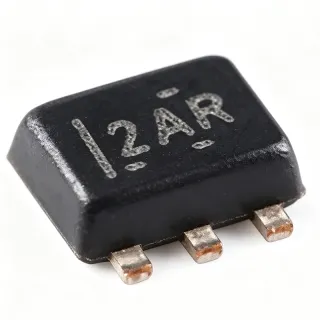
A TVS (Transient Voltage Suppressor) diode is a circuit-protection semiconductor that clamps fast high-voltage transients to a safe level by avalanche breakdown. Within the protection hierarchy, the PESD2CAN sits in the ESD/TVS diode family under surge protectors and discrete semiconductors, guarding sensitive transceiver pins in the same way fuses guard against overcurrent.
Key features include a 24 V standoff that tolerates automotive CAN bus fault conditions without conduction, clamping at 41 V to stay below CAN transceiver absolute maximum ratings, low inter-line and line-to-ground capacitance suited to high-speed CAN, and ESD robustness up to +/-30 kV contact discharge verified against IEC 61000-4-2 Level 4.
The device integrates two avalanche diodes sharing a common cathode, allowing it to protect both CAN_H and CAN_L lines in a single 3-pin footprint. Its bidirectional construction handles both positive and negative transients on the twisted-pair bus, which is essential since CAN transients swing symmetrically around common-mode. The package's low parasitic inductance supports fast transient response at the connector entry point.
Typical applications include protection of high-speed CAN and fault-tolerant CAN bus lines in automotive body, powertrain, and chassis networks, industrial CANopen and DeviceNet nodes, and CAN transceivers exposed to connector-level ESD strikes.
Design tip: place the PESD2CAN as close to the CAN connector as possible, with a short, low-impedance ground return to the transceiver ground; long stubs degrade clamping effectiveness during the first nanoseconds of an ESD event.
This page adds value beyond the datasheet by synthesizing drop-in alternatives, a parameter-by-parameter comparison table, and practical layout guidance not found in the manufacturer document. Pricing shown is as of 2026-10-20.
Аналоги без доработки для PESD2CAN,215 — тот же корпус, pin-to-pin совместимость. Компоненты в других корпусах, требующие переработки PCB, исключены.
Варианты в этой серии
Модели той же серии, совместимые без доработки с PESD2CAN,215 (тот же форм-фактор и посадочное место) — отличается по Application, Automotive Qualification, Clamping Voltage, Mounting Type, Number of Protected Lines.
Инструмент быстрого сравнения — выберите альтернативные компоненты для сравнения бок о бок:
PESD1CAN,215
✅ Прямая замена📋 Справочный аналог (нет в каталоге)
CDSOT23-T24CAN-Q
✅ Прямая замена✓ В наличии
$0.19 / шт.
Открыть даташит →ESDCAN24-2BLY
✅ Прямая замена📋 Справочный аналог (нет в каталоге)
ESD2CAN24-Q1
✅ Прямая замена📋 Справочный аналог (нет в каталоге)
SZNUP2105LT1G
✅ Прямая замена📋 Справочный аналог (нет в каталоге)
PESD2CAN,215 Максимальные параметры и электрические характеристики
| Technology | TVS / ESD protection diode array |
| Number of Protected Lines | 2 (CAN_H and CAN_L) |
| Reverse Standoff Voltage | 24 V |
| Clamping Voltage | 41 V |
| Peak Pulse Current (Ipp) | 5 A (8/20 us) |
| ESD Withstand | +/-30 kV contact discharge (IEC 61000-4-2 Level 4) |
| Configuration | Bidirectional, common cathode |
| Application | High-speed CAN and fault-tolerant CAN bus |
| Корпус | SOT-23 (TO-236AB) |
| Тип монтажа | Surface Mount (SMD) |
| Pins | 3 |
| Series | PESD2 |
| Статус RoHS | Compliant |
| Automotive Qualification | Designed for automotive CAN bus applications |
Конфигурация выводов PESD2CAN,215
| Контакт 1 | ANODE 1 (CAN line 1) — Anode of bidirectional diode 1 - connect to CAN_H |
| Контакт 2 | CATHODE — Common cathode - connect to system ground |
| Контакт 3 | ANODE 2 (CAN line 2) — Anode of bidirectional diode 2 - connect to CAN_L |
Типичное применение
PESD2CAN,215 подходит для 6 применениеs: Automotive High-Speed CAN Bus Protection, Industrial CANopen and DeviceNet Nodes, Body Control Modules (BCM), OBD-II Diagnostic Interfaces, Agricultural and Off-Highway Vehicle Networks, Battery Management and EV Powertrain CAN.
Automotive High-Speed CAN Bus Protection
In automotive body, powertrain, and chassis networks running 500 kbit/s high-speed CAN, transceiver pins are exposed to ESD at service connectors and cable harness transients. The PESD2CAN,215 fits this role because its 24 V standoff tolerates bus fault conditions common in fault-tolerant CAN environments, while its 41 V clamp stays below typical CAN transceiver absolute maximum ratings. Placed directly at the OBD or ECU connector, its low package parasitics preserve signal integrity at 1 Mbit/s, and its 5 A (8/20 us) surge rating absorbs the pulse energy of wiring-induced transients on both CAN_H and CAN_L lines.
Рекомендуется
Industrial CANopen and DeviceNet Nodes
Industrial control nodes on CANopen and DeviceNet networks face connector ESD during module insertion and surge events from long cable runs in factory environments. The PESD2CAN,215 suits these nodes with its +/-30 kV IEC 61000-4-2 Level 4 contact discharge withstand, which neutralizes discharge at the point of entry before it reaches the transceiver die. The dual-channel SOT-23 array protects both twisted-pair conductors in one footprint, minimizing board area in dense I/O modules, while the 24 V standoff accommodates industrial bus fault states without false clamping during normal common-mode swings.
Рекомендуется
Body Control Modules (BCM)
Body control modules aggregate many CAN-connected actuators and sensors, making transceiver reliability central to module warranty performance. The PESD2CAN,215 protects the CAN_H/CAN_L pair at the module harness connector with a compact 3-pin SOT-23 footprint suited to dense automotive PCBs. Its bidirectional diode construction clamps both positive and negative transients symmetrically around ground, matching the differential signaling of the bus, and its automotive-oriented PESD2 series design targets the transient environments defined for in-vehicle networks, reducing field failures from connector-handling ESD during assembly and service.
Рекомендуется
OBD-II Diagnostic Interfaces
OBD-II dongles and diagnostic tools plug directly into vehicle ports, exposing CAN transceivers to the harshest ESD scenario: a human touching the metal connector shell. The PESD2CAN,215 is designed for exactly this entry point, with +/-30 kV contact discharge tolerance per IEC 61000-4-2 Level 4 verified at the package pins. Its 41 V clamping limits the voltage reaching the transceiver during a direct strike, while the low SOT-23 profile allows placement within millimeters of the connector, minimizing the inductive overshoot that degrades clamping during the first nanoseconds of the event.
Рекомендуется
Agricultural and Off-Highway Vehicle Networks
Tractors, harvesters, and construction machinery use CAN (often J1939-based) networks running through long exposed harnesses susceptible to static buildup and inductive transients from large motors and solenoids. The PESD2CAN,215 handles these events with its 5 A (8/20 us) surge rating, absorbing repeated pulse energy without degradation, while the 24 V standoff tolerates the elevated fault voltages permitted on 24 V industrial vehicle bus variants. Its small SOT-23 footprint lets designers distribute protection at each ECU connector rather than concentrating surge current at a single module.
Рекомендуется
Battery Management and EV Powertrain CAN
Electric vehicle battery packs and powertrain ECUs communicate over CAN in environments with high dv/dt switching noise and elevated bus fault potentials. The PESD2CAN,215 provides a low-capacitance clamp that protects the transceiver without loading the bus, and its 41 V clamping level gives margin below transceiver limits during inductive switching events. Placing one SOT-23 array at each pack-section connector entry keeps ESD and cable-discharge events from propagating into the battery management controller, improving system-level robustness in line with automotive transient immunity expectations.
Рекомендуется
Сводка рекомендуемых товаров
Справочные инженерные данные для PESD2CAN,215 — сравнение, рекомендации по проектированию и информация о соответствии.
Руководство по выбору
Сравнение с аналогами
| Параметр | Этот товар | PESD1CAN,215 | CDSOT23-T24CAN-Q | ESDCAN24-2BLY | ESD2CAN24-Q1 |
|---|---|---|---|---|---|
| Package | SOT-23 (TO-236AB) | SOT-23 (TO-236AB) - same | SOT-23 (TO-236AB) - same | SOT-23 (TO-236AB) - same | SOT-23 (TO-236AB) - same |
| Brand | Nexperia | Nexperia | Bourns | STMicroelectronics | Texas Instruments |
| Reverse Standoff Voltage | 24 V | 24 V | 24 V | 24 V | 24 V |
| Protected Lines | 2 (CAN_H + CAN_L) | 1 line | 2 lines | 2 lines | 2 lines |
| Automotive Qualification | Designed for automotive CAN | Automotive CAN series | AEC-Q101 (Q suffix) | Automotive grade | AEC-Q101 / Q1 qualified |
Ключевые отличия
- Dual-line protection in one package (против PESD1CAN,215)
- AEC-Q101 qualified second sources (против CDSOT23-T24CAN-Q)
- Matched clamping symmetry (против ESD2CAN24-Q1)
Заметки по проектированию
Place the PESD2CAN,215 within a few millimeters of the CAN connector entry, before any series components. The ground path from pin 2 to the transceiver ground must be short and wide (ideally a via pair directly to the ground plane) because even a few nanohenries of trace inductance raises the effective clamp voltage during the initial nanoseconds of an ESD strike, partially defeating the protection. Route CAN_H to pin 1 and CAN_L to pin 3 with minimal loop area to the ground return.
Do not rely on the 24 V standoff as an indication of normal bus voltage; it is a fault-tolerance margin. Confirm that the 41 V clamping level at your actual peak pulse current remains below the absolute maximum pin voltage of your specific CAN transceiver (check the transceiver datasheet bus-pin rating). Also note the part is NRND at TTI: for new designs, evaluate Nexperia's current PESD2 series successors or the AEC-Q101 qualified alternatives listed here to avoid a mid-lifecycle redesign.
The PESD2CAN junction capacitance appears across the differential bus. On high-speed CAN up to 1 Mbit/s this is negligible, but if you reuse this layout for CAN FD at 2-5 Mbit/s or LIN, verify the capacitance value on the datasheet and simulate its effect on bus loading and stub reflections. Two diodes of a matched array also preserve CAN_H/CAN_L symmetry, which supports the common-mode rejection the twisted pair depends on - avoid substituting two single-line diodes with mismatched capacitance.
Информация о соответствии
RoHS compliant per distributor and datasheet specifications. The ,215 suffix denotes Nexperia lead-free tape-and-reel packing. REACH, halogen-free, and conflict minerals status not stated in provided data.