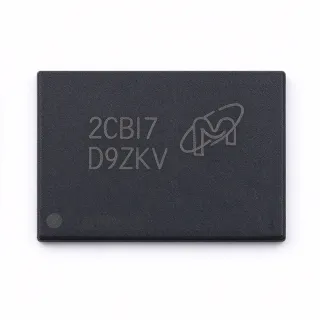
Les prix de la mémoire évoluent quotidiennement — les prix affichés sur le site peuvent être en retard par rapport au marché. Veuillez soumettre une demande de devis (RFQ) pour obtenir la cotation la plus récente.
Demander le dernier prix →
Micron Technology

MT53E2G32D4DE-046 AUT:C - 64Gbit LPDDR4X DRAM | Micron

Référence : MT53E2G32D4DE-046 AUT:C ✓ Actif
En stock Expédié sous 1 à 3 jours ouvrés
200-TFBGA (10 x 14.5 mm) Package 2.133 GHz Speed SDRAM - Mobile LPDDR4X Memory
À partir de $31.5 USD / unité
MOQ : 1 |
Prix mis à jour : 2026-09-01
Tarifs dégressifs
Qté Prix unitaire Total
1 $42.5 $42,50
10 $39.8 $398,00
100 $36.2 $3 620,00
500 $33.9 $16 950,00
1 000 $31.5 $31 500,00
ℹ️ Tous les prix sont en USD

MT53E2G32D4DE-046 AUT:C Présentation

The Micron Technology MT53E2G32D4DE-046 AUT:C is a 64 Gbit Mobile LPDDR4X SDRAM memory IC with a 32-bit data bus, operating at up to 2.133 GHz data rate with 3.5 ns cycle time, housed in a 200-ball TFBGA package measuring 10 x 14.5 mm. The AUT:C ordering suffix denotes automotive-grade qualification and die revision C, targeting ADAS, infotainment, and other vehicular memory applications.

Mobile LPDDR4X (Low Power Double Data Rate 4X) is a type of SDRAM optimized for low power consumption, using a pseudo-dynamic core that reduces standby and deep-power-down current compared with conventional LPDDR4. In the system memory hierarchy, it sits below DDR5/SSD storage but above embedded SRAM, serving as the main working memory for application processors, SoCs, and graphics engines in power-constrained platforms.

Key differentiating features include the high 64 Gbit density in a single package, the wide 32-bit parallel interface that raises peak bandwidth to approximately 17 GB/s at full data rate, the low-voltage LPDDR4X VDDQ domain that cuts I/O power versus LPDDR4, and deep power-down modes suited to battery-operated and always-on systems.

Technically, the device is organized to deliver 2 G x 32 bits per channel access, using the JEDEC-standard LPDDR4X ball map on a fine-pitch 200-ball TFBGA (10 x 14.5 mm) substrate. Micron fabricates the die on an advanced DRAM process and screens AUT-suffixed parts to automotive temperature and reliability requirements, including extended thermal operating range and AEC-oriented quality flows.

Typical applications include automotive infotainment head units, digital cockpit processors, ADAS sensor-fusion platforms, and high-end mobile or embedded computing where 8 GB-class DRAM density with low power is required. The 32-bit bus also allows dual-device 64-bit configurations for bandwidth-hungry SoCs.

A key design consideration is signal integrity: LPDDR4X fly-by routing demands length-matched traces, careful Vref training, and reference design compliance for the host memory controller.

This page synthesizes verified distributor listings, drop-in alternatives, and practical design notes not found in the manufacturer datasheet. Pricing shown is an estimate as of 2026-09-02; confirm current quotes with your distributor.

Alternatives de remplacement direct pour MT53E2G32D4DE-046 AUT:C — même boîtier, compatible broche à broche. Les références à boîtier différent nécessitant une retouche du PCB sont exclues.

Variantes de cette série

Modèles de la même série directement compatibles avec MT53E2G32D4DE-046 AUT:C (même facteur de forme et même empreinte) — différant par Memory Type, Organization, Package, Interface, Clock Frequency.

Micron Technology
Memory Type: Mobile LPDDR4/LPDDR4X SDRAM
Organization: 1 Gbit x 32
Package: 200-WFBGA
Comparer avec MT53E2G32D4DE-046 AUT:C →
Micron Technology
Organization: x32 Parallel
Package: 200-TFBGA (10 mm x 14.5 mm)
Comparer avec MT53E2G32D4DE-046 AUT:C →
Micron Technology
Memory Type: Mobile LPDDR4X SDRAM
Clock Frequency: 2133 MHz (2.133 GHz)
Comparer avec MT53E2G32D4DE-046 AUT:C →
Micron Technology
Memory Type: Mobile LPDDR4 SDRAM (LPDRAM)
Organization: 768M x32
Package: 200-VFBGA (10 x 14.5 mm)
Comparer avec MT53E2G32D4DE-046 AUT:C →

Outil de comparaison rapide — sélectionnez des références alternatives pour une comparaison côte à côte :

MT53E2G32D4DE-046 AUT:E

✅ Remplacement direct ⚠️ Spécifications non vérifiées
📦 200-TFBGA (10 x 14.5 mm)
same density/package, later die revision E vs C - controller revision support must be confirmed

📋 Alternative de référence (hors catalogue)

MT53E2G32D4DE-046 AUT:B

✅ Remplacement direct ⚠️ Spécifications non vérifiées
📦 200-TFBGA (10 x 14.5 mm)
same density/package, earlier die revision B vs C - verify controller supports B rev

📋 Alternative de référence (hors catalogue)

MT53E1G32D2NP-046 AUT:B

✅ Remplacement direct ⚠️ Spécifications non vérifiées
📦 200-TFBGA (10 x 14.5 mm)
32 Gbit vs 64 Gbit density (-50%), same LPDDR4X protocol and 200-ball LPDDR4X ball map

📋 Alternative de référence (hors catalogue)

MT53D384M32D2DS-053 AUT:C

✅ Remplacement direct
📦 200-TFBGA
12 Gbit LPDDR4 density vs 64 Gbit (-81%), LPDDR4 (not 4X) VDDQ, 384M x 32 DDP organization

📋 Alternative de référence (hors catalogue)

MT53B256M32D1NP-062 AUT:C

✅ Remplacement direct
📦 200-FBGA
8 Gbit density vs 64 Gbit (-87.5%), 1.6 GHz vs 2.133 GHz data rate (-25%), LPDDR4 generation

📋 Alternative de référence (hors catalogue)

MT53E2G32D4DE-046 AUT:C Valeurs maximales et caractéristiques électriques

Type de mémoire SDRAM - Mobile LPDDR4X
Taille de mémoire 64 Gbit
Organisation de la mémoire 2G x 32
Interface Parallel
Clock Frequency 2.133 GHz
Access Time 3.5 ns
Boîtier 200-TFBGA (10 x 14.5 mm)
Type de montage Surface Mount
Bus Width 32 bit
Grade Automotive (AUT)
Die Revision C
Statut RoHS Compliant

Guide de configuration des broches du MT53E2G32D4DE-046 AUT:C 200-tfbga (10 x 14.5 mm)

Configuration des broches du MT53E2G32D4DE-046 AUT:C (boîtier 200-tfbga (10 x 14.5 mm)). Ce circuit intégré numérique comprend des GPIO, des interfaces de communication (UART, SPI, I2C) et des broches d'alimentation. Consultez la fiche technique du fabricant pour les fonctions alternatives des broches et les options de configuration. Indispensable pour la conception de systèmes embarqués et la conception de circuits imprimés.

Schéma de brochage du boîtier 200-tfbga (10 x 14.5 mm) pour le MT53E2G32D4DE-046 AUT:C

Aucune donnée de brochage détaillée disponible pour MT53E2G32D4DE-046 AUT:C.

Consultez la fiche technique pour la configuration complète des broches.

Applications typiques

MT53E2G32D4DE-046 AUT:C convient pour 6 applications: Automotive Infotainment Head Units, ADAS Sensor Fusion Platforms, Digital Cockpit and Cluster Displays, High-End Mobile and Tablet Computing, Embedded and Industrial Computing, Networking and Edge AI Appliances.

🚗

Automotive Infotainment Head Units

The MT53E2G32D4DE-046 AUT:C fits infotainment systems because its 64 Gbit density supports map rendering, media buffering, and multi-display graphics stacks, while the LPDDR4X low VDDQ reduces I/O power in thermally constrained dashboards. Placed as the main memory of an automotive SoC on the 200-ball TFBGA footprint, it delivers about 17 GB/s peak bandwidth at the 2.133 GHz data rate, enough for smooth UI animation and video decode. Its AUT automotive screening and revision-C die support the qualification requirements of tier-one head-unit platforms.

🎥

ADAS Sensor Fusion Platforms

ADAS domain controllers aggregate camera, radar, and lidar streams that must be buffered at high sustained bandwidth; the MT53E2G32D4DE-046 AUT:C's 32-bit LPDDR4X interface at 2.133 GHz provides the necessary throughput, and its automotive grade qualification aligns with AEC-oriented quality flows required in front-camera and sensor-fusion modules. Designers typically populate two devices in a 64-bit interleaved configuration, doubling bandwidth while the 64 Gbit density supports neural-network working sets. Signal-integrity care - length matching and Vref training per the SoC reference design - is essential to meet eye-diagram margins.

📺

Digital Cockpit and Cluster Displays

Digital instrument clusters demand memory that survives extended automotive temperatures while powering always-on graphics; the MT53E2G32D4DE-046 AUT:C's LPDDR4X architecture lowers I/O power versus standard LPDDR4, easing thermal budgets behind the cluster, and its 64 Gbit capacity accommodates rich 3D cluster animations plus safety-relevant rendering buffers. The 200-ball TFBGA (10 x 14.5 mm) footprint suits the dense PCBs of cluster SoC modules. Self-refresh and deep power-down modes preserve state across ignition-off conditions, an important automotive requirement.

📱

High-End Mobile and Tablet Computing

Flagship smartphones and tablets use LPDDR4X main memory for its best-in-class power efficiency; the MT53E2G32D4DE-046 AUT:C's 8 GB-class 64 Gbit density in a single 200-ball package minimizes board area, and the 32-bit bus supports 64-bit dual-device configurations for peak bandwidth. LPDDR4X's reduced VDDQ directly extends battery life in standby and active use. Though the AUT suffix targets automotive, the die itself serves commercial mobile designs via corresponding commercial suffixes in the same family.

🏭

Embedded and Industrial Computing

Industrial gateways, medical imaging modules, and vision systems built around mobile SoCs adopt LPDDR4X for its power and bandwidth balance. The MT53E2G32D4DE-046 AUT:C offers 64 Gbit on the JEDEC LPDDR4X ball map, letting embedded designers reuse validated controller support packages from Qualcomm, NXP, and similar vendors. The 2.133 GHz data rate supports video analytics workloads, while deep power-down current suits battery-backed and always-on nodes. Confirm conduction-cooling and derating requirements for extended industrial ambient temperatures.

🌐

Networking and Edge AI Appliances

Edge AI boxes and network appliances process inference workloads whose model weights exceed on-chip SRAM; the MT53E2G32D4DE-046 AUT:C provides 8 GB-class capacity and roughly 17 GB/s peak bandwidth over its 32-bit LPDDR4X bus, sufficient for compact CNN inference and packet buffering when paired with a mobile-derived edge SoC. LPDDR4X power efficiency suits fanless enclosures, and the 200-ball TFBGA footprint keeps the memory subsystem compact. Dual-device 64-bit configurations are common where model latency is critical.

What is the MT53E2G32D4DE-046 AUT:C?
The MT53E2G32D4DE-046 AUT:C is a Micron Technology 64 Gbit Mobile LPDDR4X SDRAM memory IC with a 32-bit parallel interface, 2.133 GHz data rate, and 3.5 ns access time. It is housed in a 200-ball TFBGA package measuring 10 x 14.5 mm. The AUT:C suffix identifies automotive-grade qualification and die revision C, per the DigiKey product listing.
What is the price of MT53E2G32D4DE-046 AUT:C?
Pricing for the MT53E2G32D4DE-046 AUT:C typically falls in the mid-tens-of-dollars range per unit at quantity 1, with volume discounts at 100-piece and 1000-piece breaks. XAIPART lists estimated tiers starting at $42.50 (qty 1) down to $31.50 (qty 1000) as of 2026-09-02. Because LPDDR4X pricing moves with DRAM market conditions, always request a current quote before committing a BOM.
Where can I buy MT53E2G32D4DE-046 AUT:C online?
The MT53E2G32D4DE-046 AUT:C is listed by DigiKey (part page 17631351), Mouser, and Octopart, which currently reports one authorized distributor carrying stock and offering same-day shipping on in-stock quantities. XAIPART also supplies this part via its product page with quote support. For automotive builds, purchase through authorized Micron channels to preserve traceability and warranty coverage.
What is the lead time for MT53E2G32D4DE-046 AUT:C?
Lead time for the MT53E2G32D4DE-046 AUT:C is short when distributor stock is available - DigiKey's listing states 'ships today' for on-hand inventory as of 2026-09-02. When stock is exhausted, factory lead times for automotive LPDDR4X typically run several weeks to months depending on allocation. Confirm availability at order time, since DRAM supply for AUT-graded parts can tighten ahead of consumer grades.
What is the best drop-in replacement for MT53E2G32D4DE-046 AUT:C?
The closest drop-in replacement is another Micron LPDDR4X device in the same 200-ball TFBGA (10 x 14.5 mm) package with the same JEDEC LPDDR4X ball map, such as the MT53E512M32D2NP-046 family members for lower-density needs. Cross-brand substitutes require controller-level qualification even when the package matches. Always verify die revision support and timing parameters with the memory controller vendor before substitution.
What is the difference between MT53E2G32D4DE-046 AUT:C and MT53E2G32D4DE-046 AUT:E?
Both parts are 64 Gbit LPDDR4X devices in the same 200-ball TFBGA package; the difference is the die revision suffix (C versus E), which reflects successive Micron silicon revisions. Die revisions can change timing point definitions or power figures at the margins, so controllers must support the listed revision. Review the Micron datasheet change notes and your SoC's memory-compatibility list before mixing revisions on one board.
MT53E2G32D4DE-046 AUT:C vs MT62F4G32D8DV-023 AUT:C - which is better for automotive memory?
The MT62F4G32D8DV-023 AUT:C is the newer-generation choice: it is an LPDDR5 part with 128 Gbit density versus 64 Gbit for the LPDDR4X MT53E2G32D4DE-046 AUT:C. Choose LPDDR5 when your SoC supports it and you need higher bandwidth and density per package. Choose the LPDDR4X part for existing LPDDR4X controllers, cost-sensitive designs, or platforms already qualified on LPDDR4X signal integrity.
When should I choose the MT53E2G32D4DE-046 AUT:C over an LPDDR5 alternative?
Choose the MT53E2G32D4DE-046 AUT:C when your host processor supports LPDDR4X only, when you need 8 GB-class density at the lowest I/O power, or when an existing PCB footprint and qualification must be reused. LPDDR5 parts such as the MT62F4G32D8DV-023 AUT:C offer higher bandwidth but require a compatible controller and revised routing. For mature automotive infotainment and ADAS platforms, LPDDR4X remains the pragmatic, fully-qualified choice.
Is the MT53E2G32D4DE-046 AUT:C suitable for ADAS applications?
Yes. The AUT:C suffix marks this as an automotive-grade Micron LPDDR4X device, screened for extended temperature and automotive reliability flows, which suits ADAS sensor-fusion and cockpit-computer memory needs. Its 64 Gbit density and 32-bit interface deliver roughly 17 GB/s peak bandwidth at the 2.133 GHz data rate, adequate for camera and radar data buffering. Consult the Micron automotive qualification documentation for your specific ASIL-relevant use case.
Is MT53E2G32D4DE-046 AUT:C the same as a standard LPDDR4 part?
No. The '4X' denotes LPDDR4X, which lowers the VDDQ I/O supply relative to LPDDR4 to reduce I/O power, while retaining the LPDDR4 protocol and JEDEC ball map. The AUT:C suffix further distinguishes it as automotive-qualified with die revision C. A standard commercial LPDDR4 device is neither pin-voltage equivalent nor qualified to automotive screening requirements, so it cannot be casually interchanged.
What is the Micron LPDDR4X equivalent from Samsung for the MT53E2G32D4DE-046 AUT:C?
Samsung's K4-series LPDDR4X devices offer comparable 64 Gbit-class density, but there is no verified cross-brand pin-to-pin drop-in equivalent for the MT53E2G32D4DE-046 AUT:C in the current cross-reference data. Because the part is automotive-qualified, a cross-brand substitution also requires requalification of the memory interface. Designers needing a second source should run controller compatibility checks and board-level signal-integrity validation before approving any cross-brand LPDDR4X.
Where can I download the MT53E2G32D4DE-046 AUT:C datasheet PDF?
The datasheet PDF for the MT53E2G32D4DE-046 AUT:C is available on Micron's official product page under the LPDDR4X part catalog, and Octopart mirrors a datasheet link for quick access. Always download from Micron's site to ensure you have the latest revision covering the C die. DigiKey's product page (part 17631351) also links to the manufacturer datasheet for this automotive LPDDR4X part.
Where can I find the pinout of the MT53E2G32D4DE-046 AUT:C 200-TFBGA?
The complete 200-ball ballout map for the MT53E2G32D4DE-046 AUT:C is provided in the Micron LPDDR4X datasheet, in the package ballout section, organized by ball rows A through the full 10 x 14.5 mm TFBGA grid. Because this is a 200-ball JEDEC-standard LPDDR4X map, refer directly to the manufacturer datasheet rather than third-party diagrams to confirm address, data, and power ball assignments.
Is MT53E2G32D4DE-046 AUT:C in stock and what is its lifecycle status?
As of the 2026-09-02 distributor data, the MT53E2G32D4DE-046 AUT:C shows active status with 'ships today' availability at DigiKey and Mouser listings, and Octopart reports one distributor with stock. Lifecycle status is active - Micron continues to produce this automotive LPDDR4X part for design wins. For long-term automotive programs, obtain a Micron longevity commitment or PCN subscription to monitor future end-of-life notices.
What are the key specifications of MT53E2G32D4DE-046 AUT:C that engineers should know?
Key specifications: 64 Gbit Mobile LPDDR4X SDRAM, 32-bit parallel interface, 2.133 GHz data rate, 3.5 ns access time, 200-ball TFBGA package (10 x 14.5 mm), surface mount, automotive grade (AUT) with die revision C. According to the DigiKey listing, it supports LPDDR4X low-power operation with deep power-down modes. Engineers should verify VDD/VDDQ rails, temperature range, and controller die-revision support from the full Micron datasheet.

Données de référence d'ingénierie pour MT53E2G32D4DE-046 AUT:C — comparaison, recommandations de conception et informations de conformité.

Guide de sélection

Choose the MT53E2G32D4DE-046 AUT:C when you need 8 GB-class memory with LPDDR4X power efficiency and automotive-grade qualification - the typical case for infotainment, cluster, and ADAS platforms built on LPDDR4X SoCs. If your controller supports LPDDR5 and you need more density or bandwidth, step up to the MT62F4G32D8DV-023 AUT:C, accepting a new footprint and requalification. Within the same 200-ball footprint, use MT53E2G32D4DE-046 AUT:B/E only when matching an existing die-revision-supported BOM; use the MT53E1G32D2NP-046 family when 4 GB suffices and cost must fall. Avoid the 8-12 Gbit LPDDR4 parts (MT53B/MT53D series) unless the footprint is being redone anyway, since they sacrifice density and data rate. Trade-off summary: this part maximizes density-per-footprint on LPDDR4X platforms but is not forward-compatible with LPDDR5 controllers.

Comparaison avec les alternatives

Paramètre Ce produit MT53E2G32D4DE-046 AUT:E MT53E2G32D4DE-046 AUT:B MT53D384M32D2DS-053 AUT:C MT53B256M32D1NP-062 AUT:C
Package 200-TFBGA (10 x 14.5 mm) 200-TFBGA (10 x 14.5 mm) - same 200-TFBGA (10 x 14.5 mm) - same 200-TFBGA - same footprint family 200-FBGA - same footprint family
Brand Micron Technology Micron Technology Micron Technology Micron Technology Micron Technology
Memory Type LPDDR4X LPDDR4X LPDDR4X LPDDR4 LPDDR4
Density 64 Gbit 64 Gbit 64 Gbit 12 Gbit 8 Gbit
Bus Width 32 bit 32 bit 32 bit 32 bit 32 bit
Die Revision C E B C C
Automotive Grade Yes (AUT) Yes (AUT) Yes (AUT) Yes (AUT) Yes (AUT)

Principaux différenciateurs

  • Highest density in its 200-ball package class (vs MT53B256M32D1NP-062 AUT:C)
  • Lower I/O power than LPDDR4 generation (vs MT53D384M32D2DS-053 AUT:C)
  • Automotive qualification with current die revision (vs MT53E2G32D4DE-046 AUT:B)

Notes de conception

LPDDR4X fly-by routing on a 200-ball TFBGA requires length-matched command/address traces and per-byte data-line matching within the tolerances defined by your SoC's memory design guideline. Follow the Micron LPDDR4X reference design and the host controller layout guide: keep data traces matched within 25 mils class spacing, reference solid planes, and perform Vref/DRAM training during boot. Estimated: at 2.133 GHz data rate, trace skew budget shrinks below 20 ps, so autorouting without SI review is not recommended.

LPDDR4X separates VDD (core) and VDDQ (I/O) supplies; the X part family lowers VDDQ versus LPDDR4, reducing I/O power. Estimated: a single 64 Gbit device drawing typical LPDDR4X active currents on 32-bit I/O can dissipate on the order of 0.5-1 W under sustained bandwidth; use a PMIC with dedicated LPDDR4X VDDQ rails (e.g., 0.6 V class) and verify sequencing order against the Micron datasheet power-up sequence to avoid latch-up. Deep power-down should be used during idle periods to cut standby current.

Do not mix die revisions (B/C/E) of the MT53E series on the same bus without confirming controller support - each revision can carry updated timing point definitions. Also, AUT-graded devices must not be substituted with commercial-grade suffixes in automotive builds, as this voids qualification. Place 0.1 uF decoupling at each VDD/VDDQ ball group close to the package, and reserve DQS training margin when extending trace lengths above the reference design limits.

Informations de conformité

RoHS
Compliant
REACH
Unknown
AEC-Q100
Not Applicable
Sans plomb
Yes
Sans halogène
Unknown
Minerais de conflit
Unknown

DigiKey listing shows RoHS compliant. AUT suffix denotes Micron automotive qualification flow; exact AEC-Q100 mapping is governed by Micron automotive documentation, not stated in retrieved data.
Données vérifiées le : 2026-09-02 — données vérifiées et sélectionnées par l'équipe d'ingénierie composants de XAIPART

Recherches associées

MT53E2G32D4DE-046 AUT:C datasheet MT53E2G32D4DE-046 AUT:C price Micron MT53E2G32D4DE-046 AUT:C buy 64Gbit LPDDR4X 200-TFBGA memory IC automotive LPDDR4X 64Gbit 32-bit DRAM MT53E2G32D4DE-046 drop-in replacement MT53E2G32D4DE-046 AUT:C vs AUT:E LPDDR4X vs LPDDR5 automotive memory MT53E2G32D4DE-046 AUT:C pinout 200-TFBGA is MT53E2G32D4DE-046 AUT:C in stock ADAS memory LPDDR4X Micron automotive what is LPDDR4X mobile SDRAM

Composants & termes associés

Micron Technology MT53E2G32D4DE-046 AUT:C LPDDR4X LPDDR4 Mobile SDRAM DRAM Memory IC 64 Gbit 200-TFBGA FBGA surface mount RoHS automotive grade (AUT) ADAS automotive infotainment 2.133 GHz data rate 3.5 ns access time DigiKey Mouser Octopart MT62F4G32D8DV-023 AUT:C MT53D384M32D2DS-053 AUT:C MT53B256M32D1NP-062 AUT:C die revision deep power-down
RFQ de devis rapide
Renseignez tous les détails — notre équipe commerciale vous répondra sous 24 heures
Référence Fabricant Boîtier QTY Prix cible Total
Total : 0,00 USD
✓
Devis envoyé !

Nous répondrons à votre e-mail sous 24 heures

1
RFQ envoyée
2
Devis reçu
3
Commande passée
4
Paiement
5
Expédié
6
Livré
Voir les détails de la RFQ