מוצרים (44,000+)

PCA9535CD - 16-Bit I2C GPIO Expander | NXP Semiconductors
PCA9535CD

PCA9535CD - 16-Bit I2C GPIO Expander | NXP Semiconductors

The NXP Semiconductors PCA9535CD is a 24-pin CMOS I/O expander that provides 16 general-purpose parallel input/output ports for I2C-bus or SMBus systems. It operates from a 2.3 V to 5.5 V supply, supports I2C clock frequencies up to 400 kHz, and includes an interrupt output for change notification. The device is packaged in a 24-pin SOIC package and is intended to reduce microcontroller pin requirements while adding configurable digital input and output lines. An I/O expander is an interface IC that extends the number of general-purpose digital lines connected to a host controller. The PCA9535 and PCA9535C belong to this low-power CMOS I/O-expander family and were developed for I2C-bus and SMBus applications. Each port pin can operate as an input or output, allowing one serial bus to control multiple discrete signals while reducing the number of package pins required by the host microcontroller. The PCA9535CD supports 16 GPIO lines, a 400 kHz I2C clock, a 2.3 V to 5.5 V operating supply range, and an interrupt mechanism for connected peripherals. Unlike devices fitted with internal I/O pull-up resistors, the PCA9535 omits those pull-ups, reducing power consumption when its output ports are held LOW. External pull-ups can still be added when the connected circuit requires them. Software configuration determines each port's input or output direction. NXP documents the device as pin-to-pin and I2C-address compatible with the PCF8575, although enhancements require software changes described in Application Note AN469. The PCA9535 is also described as identical to the PCA9555 except for removal of the internal I/O pull-up resistor. These relationships make the PCA9535 useful when a design requires the enhanced interrupt behavior and port features of the PCA9535 while retaining compatibility with established software architectures. Typical uses include expanding microcontroller GPIO for LEDs, push buttons, logic-level control signals, and peripheral interface signals. It can also serve industrial, embedded, and communications equipment where a serial-to-parallel expansion is preferable to adding another microcontroller or a larger host package. The interrupt output can provide an efficient way to notify the host of a change at a connected input rather than requiring continuous polling. Designers should confirm the device's I2C address, address pins, interrupt configuration, and external pull-up requirements before finalizing a board. The bus must also remain within the specified 2.3 V to 5.5 V supply range and 400 kHz clock limit. Because the PCA9535 has no internal I/O pull-ups, input leakage, voltage thresholds, and external bus pull-ups must be evaluated together to ensure reliable logic levels. This page combines the verified NXP product information with distributor availability and pricing, strict same-package alternatives, application guidance, and design considerations. The information is intended to help engineers determine compatibility, sourcing, and implementation requirements without treating electrically similar but mechanically different devices as drop-in replacements.

RFQ צור קשר
PCA9535DB - 16-Bit I2C/SMBus GPIO Expander | Texas Instruments
PCA9535DB

PCA9535DB - 16-Bit I2C/SMBus GPIO Expander | Texas Instruments

The Texas Instruments PCA9535DB is a remote 16-bit I2C and SMBus low-power I/O expander with interrupt output and configuration registers, operating from 2.3 V to 5.5 V and supporting I2C/SMBus clock frequencies up to 400 kHz. It is packaged in a 24-pin SSOP and provides 16 general-purpose parallel I/O ports for extending microcontroller and embedded-system interfaces. The device is designed for low-power operation and includes programmable input/output direction control, configuration registers, and an interrupt output for change detection. An I/O expander is an interface IC that adds parallel digital input or output capability to a serial bus system. The PCA9535DB belongs to the I/O expander hierarchy within interface ICs, enabling a host microcontroller to control or monitor multiple lines while reducing the number of host GPIO pins required. Its I2C-compatible interface makes it suitable for systems using embedded processors, industrial controllers, communication equipment, and consumer electronics. The PCA9535 offers 16 I/O pins, 2.3 V to 5.5 V operation, 400 kHz bus support, low standby-current consumption, and a dedicated interrupt output. Each port can be configured as input or output through the device registers, allowing mixed input/output designs on the same expander. The configuration registers also support device-level and port-level control, making the device useful for systems requiring distributed digital I/O. Compared with a microcontroller dedicated to GPIO expansion, the PCA9535DB offloads repetitive parallel I/O handling to a low-power serial peripheral. Its 16-bit architecture reduces the number of external connections, while the interrupt line allows the host to respond to input changes without continuously polling every port. The I2C and SMBus interface also simplifies integration with widely adopted embedded buses. Typical applications include industrial control panels, keypad and LED scanning, remote sensor interfaces, programmable logic controllers, communication modules, and consumer products requiring additional GPIO. The PCA9535DB is particularly useful when a design requires bidirectional digital lines, change notification, or bus-addressed peripheral control. For PCB implementation, place the device close to the supported connector or controlled signal group and route I2C SDA and SCL away from noisy power paths. Confirm the device address configuration and account for pull-up requirements in the complete bus design. This page combines verified manufacturer and distributor information, package details, commercial guidance, practical design notes, and drop-in replacement considerations for engineers evaluating the PCA9535DB.

RFQ צור קשר
PCA9535DBR - 16-Bit I2C I/O Expander | Texas Instruments
PCA9535DBR

PCA9535DBR - 16-Bit I2C I/O Expander | Texas Instruments

The Texas Instruments PCA9535DBR is a 16-bit I2C and SMBus remote I/O expander with a 2.3 V to 5.5 V supply range, 400 kHz bus frequency, interrupt output, and configuration registers, housed in a 24-pin SSOP package. It adds 16 general-purpose digital I/O lines to a host microcontroller or processor while keeping the PCB interconnect limited to the two-wire serial bus. An I/O expander is an interface IC that translates serial commands into parallel digital input or output operations. The PCA9535DBR belongs to the I/O expander hierarchy within interface controllers and system interface ICs. Its remote port architecture allows a controller to monitor inputs and control outputs located behind cables, bus isolators, or other serial links, reducing the number of host GPIO pins required on compact industrial, embedded, and communications equipment. The device operates from 2.3 V to 5.5 V and supports I2C and SMBus communication at up to 400 kHz. Sixteen I/O pins can be configured individually as inputs or outputs through configuration registers. An interrupt output provides a change-event indication, while the configuration registers retain port settings. The verified distributor information also identifies a maximum standby current of 1 uA, helping reduce power consumption when the system is inactive. Internally, the PCA9535 consists of two 8-bit I/O port groups connected to the serial interface. Each port provides eight configurable lines, creating a total of 16 I/O resources. The pin-to-pin and I2C address compatibility stated by Texas Instruments relative to the PCF8575 does not mean that existing firmware is always portable, because the enhanced register behavior requires software changes. This distinction is important when planning a replacement or driver migration. Typical uses include remote control panels, industrial automation modules, sensor and relay interfaces, embedded control boards, and communications equipment. The device is particularly useful when a system needs more GPIO lines than the host controller provides or when the controlled signals are physically remote from the processor. The 24-pin SSOP package also makes it practical for compact boards requiring a conventional leaded surface-mount footprint. When designing a circuit, account for the I2C pull-up resistors, bus capacitance, address selection, and the electrical requirements of every attached port. Check that connected loads remain within the device's output-current and absolute-maximum ratings. Although the PCA9535DBR and its alternatives may use related interfaces, firmware must be checked for register-map differences, input polarity, and interrupt behavior before substitution. This product record combines the verified manufacturer and distributor details with package, purchasing, replacement, and application guidance. It is intended to support faster part identification while clearly separating confirmed PCA9535DBR specifications from parameters that still require confirmation from the manufacturer datasheet.

RFQ צור קשר
PCA9535DW - 16-Bit 400kHz I/O Expander | Texas Instruments
PCA9535DW

PCA9535DW - 16-Bit 400kHz I/O Expander | Texas Instruments

The Texas Instruments PCA9535DW is a 16-bit I2C and SMBus low-power I/O expander with a 400 kHz interface, 2.3 V to 5.5 V supply range, interrupt output, and configuration registers, housed in a 24-pin SOIC package. It adds 16 general-purpose digital input or output lines through two serial bus pins, reducing MCU GPIO requirements while preserving a compact 0.295 inch, 7.50 mm wide package. An I/O expander is an interface IC that translates serial I2C or SMBus commands into parallel control and status signals. Within the hierarchy of semiconductor, interface IC, and I/O expander, the PCA9535DW is used when a controller needs more discrete digital lines than its package provides. Each of its 16 ports can be configured independently for input or output, allowing mixed control, monitoring, and status functions on one bus-connected device. The verified device data identifies 16 I/O lines, operation from 2.3 V to 5.5 V, a maximum bus frequency of 400 kHz, and standby-current consumption as low as 1 uA maximum. It also includes an open-drain interrupt output and configuration registers. The interrupt feature lets a controller respond to a change on configured inputs without continuously polling the device, although the exact hardware behavior and setup must follow the manufacturer datasheet. The DW ordering code is associated with a 24-pin SOIC package in the supplied distributor data. Tube packaging is identified for PCA9535DW, while the manufacturer product page remains the authoritative source for ordering, lifecycle, pinout, register behavior, electrical limits, and qualification information. The verified snippets do not provide the full pin-to-pin register map or detailed output-drive specifications, so those values are not inferred here. Typical uses include microcontroller port expansion, industrial control modules, keypad and switch monitoring, relay or indicator control, sensor-interface control, and small embedded systems where I2C connectivity is preferred over dedicating many parallel pins. Designers should account for the device's supply limits, bus pull-up requirements, address configuration, current limits, and input/output mode registers. A key design consideration is that a serial expander does not eliminate electrical loading: external loads must remain within the datasheet limits, bus rise and fall times must be controlled, and any open-drain interrupt line needs appropriate pull-up treatment. The PCA9535DW is best suited to low- and moderate-speed control signaling rather than high-current drive or high-speed peripheral expansion. This product page combines the verified Texas Instruments listing, manufacturer datasheet link, distributor identification, package information, and design-oriented guidance to support component selection and engineering review. Distributor pricing and inventory are not provided as exact current values in the verified data and should therefore be confirmed directly with an authorized distributor before procurement.

RFQ צור קשר
PCA9535DWR - 16-Bit 400kHz I/O Expander | Texas Instruments (Tape & Reel)
PCA9535DWR

PCA9535DWR - 16-Bit 400kHz I/O Expander | Texas Instruments (Tape & Reel)

The Texas Instruments PCA9535DWR is a 16-bit I2C and SMBus low-power I/O expander with a 400 kHz interface, 2.3 V to 5.5 V supply range, interrupt output, and configuration registers, housed in a 24-pin SOIC package. It adds 16 general-purpose digital input or output lines through two serial bus pins, reducing MCU GPIO requirements while preserving a compact 0.295 inch, 7.50 mm wide package. An I/O expander is an interface IC that translates serial I2C or SMBus commands into parallel control and status signals. Within the hierarchy of semiconductor, interface IC, and I/O expander, the PCA9535DWR is used when a controller needs more discrete digital lines than its package provides. Each of its 16 ports can be configured independently for input or output, allowing mixed control, monitoring, and status functions on one bus-connected device. The verified device data identifies 16 I/O lines, operation from 2.3 V to 5.5 V, a maximum bus frequency of 400 kHz, and standby-current consumption as low as 1 uA maximum. It also includes an open-drain interrupt output and configuration registers. The interrupt feature lets a controller respond to a change on configured inputs without continuously polling the device, although the exact hardware behavior and setup must follow the manufacturer datasheet. The DW ordering code is associated with a 24-pin SOIC package in the supplied distributor data. Tube packaging is identified for PCA9535DWR, while the manufacturer product page remains the authoritative source for ordering, lifecycle, pinout, register behavior, electrical limits, and qualification information. The verified snippets do not provide the full pin-to-pin register map or detailed output-drive specifications, so those values are not inferred here. Typical uses include microcontroller port expansion, industrial control modules, keypad and switch monitoring, relay or indicator control, sensor-interface control, and small embedded systems where I2C connectivity is preferred over dedicating many parallel pins. Designers should account for the device's supply limits, bus pull-up requirements, address configuration, current limits, and input/output mode registers. A key design consideration is that a serial expander does not eliminate electrical loading: external loads must remain within the datasheet limits, bus rise and fall times must be controlled, and any open-drain interrupt line needs appropriate pull-up treatment. The PCA9535DWR is best suited to low- and moderate-speed control signaling rather than high-current drive or high-speed peripheral expansion. This product page combines the verified Texas Instruments listing, manufacturer datasheet link, distributor identification, package information, and design-oriented guidance to support component selection and engineering review. Distributor pricing and inventory are not provided as exact current values in the verified data and should therefore be confirmed directly with an authorized distributor before procurement.

RFQ צור קשר
PCA9535HFHP - 16-Bit I2C GPIO Expander | NXP
PCA9535HFHP

PCA9535HFHP - 16-Bit I2C GPIO Expander | NXP

The NXP PCA9535HFHP is a 16-bit I2C-bus and SMBus general-purpose I/O expander with interrupt output, operating at up to 400 kHz in a 24-HWQFN 4 x 4 mm package. It adds 16 configurable GPIO lines to a host processor while retaining a low-power operating profile for embedded, industrial, and consumer systems. An I/O expander is an interface IC that translates serial I2C commands into parallel digital input and output signals. It sits between a microcontroller or application processor and external peripherals, reducing the number of GPIO pins required on the host. The PCA9535HFHP supports the same fixed I2C address as the PCA9555, allowing up to eight PCA9535 and PCA9555 devices to share one bus in any combination. The device provides 16 general-purpose I/O lines, an active-low interrupt output, and separate input/output configuration registers. Its principal electrical identifiers are a 16-bit port width, I2C/SMBus compatibility, 400 kHz bus operation, and a 24-pin HWQFN package. The PCA9535HFHP is a low-power version of the PCA9555 and is intended for designs that need more digital I/O without adding another high-pin-count host controller. Internally, the expander uses a serial-to-parallel control architecture: the host writes configuration, output, and polarity-control data over I2C, while the interrupt output indicates a change on an input port. Register-based operation allows pins to be configured individually as inputs or outputs. Because the device uses a fixed address, multiple expanders can coexist on the same bus without I2C address straps, provided address strapping is not required by the host design. Typical applications include control-panel GPIO expansion, relay and LED interface boards, sensor and switch aggregation, keyboard or keypad scanning, industrial automation modules, and compact consumer peripherals. The interrupt output reduces polling overhead when a large number of expander inputs must be monitored by the host processor. PCB layout should preserve short, clean traces for I2C, provide adequate ground return paths, and place pull-up resistors near the bus master when bus capacitance is high. The exposed-pad version requires a thermal and electrical land pattern consistent with its manufacturer package drawing, including solder mask and paste design that meet the package assembly rules. This page combines package, interface, application, and replacement guidance with a structured comparison of pin-compatible options, helping engineers shorten component-selection and board-layout work before committing to a production design.

RFQ צור קשר
PCA9535PW - 16-Bit I2C GPIO Expander | NXP | TSSOP-24
PCA9535PW

PCA9535PW - 16-Bit I2C GPIO Expander | NXP | TSSOP-24

NXP Semiconductors PCA9535PW is a 16-bit I2C/SMBus general-purpose input/output expander with interrupt output, a 2.3 V to 5.5 V operating-voltage range, and a 400 kHz I2C interface. The device is packaged in a 24-pin TSSOP. It adds 16 configurable digital I/O ports to a host controller while limiting serial-bus traffic through configurable ports, registers, and an interrupt output. An I2C GPIO expander is an interface IC that translates serial commands from a microcontroller into parallel digital inputs or outputs. Within the hierarchy of interface ICs, an I/O expander sits below general-purpose bus controllers and above application-specific port devices. The PCA9535PW is designed for systems where the host processor has too few direct pins for switches, LEDs, sensors, relays, or control signals. Key features include 16 configurable GPIO ports, a 400 kHz I2C interface, interrupt output, configuration registers, and low standby-current consumption. According to the verified component listing, standby current is no more than 1 µA. The PCA9535 also supports low-power operation when I/O ports are held low because it removes the internal I/O pull-up resistors used by the related PCA9555. Technically, the device provides separate input/output and polarity-inversion registers, allowing firmware to reinterpret pins without changing the physical circuit. The PCA9535 is described by NXP as pin-to-pin and I2C-address compatible with the PCF8575, although software changes are required for its enhanced register behavior. It is also described as functionally equivalent to the PCA9555 except for the absence of internal I/O pull-up resistors. Typical applications include industrial control panels, sensor aggregation, LED and switch interfaces, programmable logic controllers, and embedded systems requiring more GPIO than the host controller provides. The interrupt output can indicate a change on an input port without continuous polling, while the 2.3 V to 5.5 V supply range supports both 3.3 V and 5 V systems. Designers should account for the absence of internal I/O pull-ups by adding external resistors wherever open-drain, floating, or high-impedance input behavior is required. Pull-ups are also normally installed on the I2C bus itself. The address pins should be checked against the selected bus voltage and system address map before firmware configuration. This page consolidates the verified manufacturer and distributor information for PCA9535PW, including function, procurement considerations, qualified alternatives, comparison parameters, and practical design guidance that are not presented as one continuous datasheet summary.

RFQ צור קשר
PCA9535PWG4 - 16-Bit I/O Expander | Texas Instruments
PCA9535PWG4

PCA9535PWG4 - 16-Bit I/O Expander | Texas Instruments

The Texas Instruments PCA9535PWG4 is a 16-bit I/O expander operating through an I2C or SMBus serial interface at up to 400 kHz, housed in a 24-pin TSSOP package. It adds 16 general-purpose input or output lines to a host controller without requiring a parallel GPIO port, making it useful for conserving controller pins in embedded and industrial systems. The device operates from a supply range up to 5.5 V and supports industrial-temperature applications. An I/O expander is an interface IC that translates a serial bus into additional digital input and output lines. The PCA9535 belongs to the parallel I/O port expander hierarchy within interface ICs, combining I2C control, SMBus compatibility, 16 independently configurable GPIOs, and an interrupt function. Its 400 kHz bus speed supports reliable communication with common embedded hosts while keeping the external wiring organized around a two-wire serial bus plus power and ground. Each of the 16 ports can operate as an input or output, allowing the PCA9535PWG4 to control loads, read discrete signals, or combine both functions in one device. The serial interface provides a compact way to address and configure the ports from a microcontroller. Its 24-TSSOP package has a stated width of 4.40 mm and uses a gull-wing, surface-mount form factor, making it suitable for compact PCB layouts where a larger parallel-interface package would be inconvenient. The PCA9535 family is designed for low-power embedded control because the serial interface reduces the number of host-controller connections required for external digital lines. A two-wire serial connection can replace a substantial group of direct host GPIO connections, while the expander still provides individual control of each line. The architecture is appropriate for systems in which the host must monitor switches, operate indicators, control relays, or read status signals distributed across a board. Typical uses include industrial control modules, sensor-hub boards, programmable logic controllers, power-system monitoring, communication equipment, and compact embedded controllers. It is especially useful when the primary microcontroller has too few spare pins but the PCB can accommodate a small serial interface. Designers should also account for the I2C address configuration pins and the device's interrupt output when planning system startup and signal-change handling. For PCB implementation, place the device close to the interfaces it serves and route I2C traces away from high-current switching paths. Confirm pull-up resistor values against the bus voltage, capacitance, clock rate, and the electrical characteristics of every connected device. The maximum operating supply is 5.5 V, so logic levels must remain compatible with the 24-TSSOP device and its I2C bus. This product record combines the exact package and interface characteristics, source-backed pricing, compatible alternatives, and practical integration guidance. It also highlights the difference between electrically similar devices and true drop-in choices, helping engineers evaluate PCB reuse, bus compatibility, device addressing, and supply-temperature requirements before release to production.

RFQ צור קשר
PCA9535PWR - 16-Bit I2C GPIO Expander | NXP | TSSOP-24 (Tape & Reel)
PCA9535PWR

PCA9535PWR - 16-Bit I2C GPIO Expander | NXP | TSSOP-24 (Tape & Reel)

NXP Semiconductors PCA9535PWR is a 16-bit I2C/SMBus general-purpose input/output expander with interrupt output, a 2.3 V to 5.5 V operating-voltage range, and a 400 kHz I2C interface. The device is packaged in a 24-pin TSSOP. It adds 16 configurable digital I/O ports to a host controller while limiting serial-bus traffic through configurable ports, registers, and an interrupt output. An I2C GPIO expander is an interface IC that translates serial commands from a microcontroller into parallel digital inputs or outputs. Within the hierarchy of interface ICs, an I/O expander sits below general-purpose bus controllers and above application-specific port devices. The PCA9535PWR is designed for systems where the host processor has too few direct pins for switches, LEDs, sensors, relays, or control signals. Key features include 16 configurable GPIO ports, a 400 kHz I2C interface, interrupt output, configuration registers, and low standby-current consumption. According to the verified component listing, standby current is no more than 1 µA. The PCA9535 also supports low-power operation when I/O ports are held low because it removes the internal I/O pull-up resistors used by the related PCA9555. Technically, the device provides separate input/output and polarity-inversion registers, allowing firmware to reinterpret pins without changing the physical circuit. The PCA9535 is described by NXP as pin-to-pin and I2C-address compatible with the PCF8575, although software changes are required for its enhanced register behavior. It is also described as functionally equivalent to the PCA9555 except for the absence of internal I/O pull-up resistors. Typical applications include industrial control panels, sensor aggregation, LED and switch interfaces, programmable logic controllers, and embedded systems requiring more GPIO than the host controller provides. The interrupt output can indicate a change on an input port without continuous polling, while the 2.3 V to 5.5 V supply range supports both 3.3 V and 5 V systems. Designers should account for the absence of internal I/O pull-ups by adding external resistors wherever open-drain, floating, or high-impedance input behavior is required. Pull-ups are also normally installed on the I2C bus itself. The address pins should be checked against the selected bus voltage and system address map before firmware configuration. This page consolidates the verified manufacturer and distributor information for PCA9535PWR, including function, procurement considerations, qualified alternatives, comparison parameters, and practical design guidance that are not presented as one continuous datasheet summary.

RFQ צור קשר
PCA9535RGER - 16-Bit I2C/SMBus I/O Expander, 400kHz | TI
PCA9535RGER

PCA9535RGER - 16-Bit I2C/SMBus I/O Expander, 400kHz | TI

The Texas Instruments PCA9535RGER is a 16-bit, I2C/SMBus-compatible GPIO expander that provides 16 general-purpose input/output lines through a two-wire serial interface. Housed in a 24-pin VQFN (RGE) package with exposed thermal pad, the device operates from a 2.3 V to 5.5 V VCC rail and supports clock frequencies up to 400 kHz (Fast Mode). It includes an interrupt output (INT) that signals the host controller when any input state changes, plus separate input and output configuration registers that allow each I/O to be set independently as input or output. An I/O expander is a category of interface IC designed to add GPIO lines to a microcontroller when its native pin count is exhausted. The PCA9535 belongs to the I/O expander family, which is itself a sub-category of interface ICs and ultimately of the broader digital semiconductor hierarchy. By using only two MCU pins (SCL and SDA), the PCA9535 adds 16 additional GPIOs that behave like native port pins, making it indispensable in space-constrained designs. Key features include 5 V tolerant I/O, 25 mA typical sink capability per output (allowing direct LED drive), latched inputs that eliminate spurious interrupts, and a hardware address pin that supports up to eight devices on the same I2C bus (128 total I/Os). The interrupt is cleared by reading the input port register, simplifying firmware. An internal power-on reset initializes all registers to known states. The architecture uses CMOS logic with low standby current consumption, supporting always-on applications. Internal pull-up resistors are not included on the I/O pins, so external resistors are typically required; SCL and SDA must be pulled high externally per I2C bus specification. Typical applications include server backplane management, industrial PLCs and IO-Link modules, gaming consoles, HVAC control boards, and any embedded system requiring extra buttons, LEDs, or relay drivers. The wide voltage range supports both 3.3 V and 5 V MCUs. When designing, ensure SCL/SDA pull-ups are sized correctly for bus capacitance. Multiple PCA9535 devices can share the bus by using different slave addresses (A0/A1/A2). Consider the INT pin behavior - it is active-low and requires a pull-up. This page consolidates distributor pricing, drop-in cross-brand equivalents (NXP PCA9535, onsemi CAT9555), and practical PCB layout notes not always covered in the manufacturer datasheet.

RFQ צור קשר
PCA9535RTWR - 16-Bit I/O Expander | Texas Instruments
PCA9535RTWR

PCA9535RTWR - 16-Bit I/O Expander | Texas Instruments

The Texas Instruments PCA9535RTWR is a 16-bit I2C and SMBus I/O expander operating from 2.3 V to 5.5 V in a 24-WQFN 4 x 4 mm package. It adds 16 configurable general-purpose digital I/O lines through a two-wire serial interface, includes an interrupt output, and supports a 400 kHz bus speed. The device is intended for systems in which a microcontroller or application processor needs more GPIO pins than are available directly on the host device. An I/O expander is an interface IC that converts a serial bus into additional parallel digital inputs and outputs. The PCA9535 belongs to the broader hierarchy of serial interface controller, I/O expander, interface IC, and semiconductor. Unlike a GPIO controller integrated into the host processor, this device manages 16 additional lines remotely while the processor reads and writes them through I2C or SMBus transactions. The PCA9535 provides separate input and output configuration registers, allowing each line to be programmed for input or output operation. Other useful features include polarity inversion for input and output registers, an interrupt output for change detection, and configurable I2C addresses. According to the manufacturer datasheet, the low standby-current consumption is as low as 1 uA, making the device suitable for low-power embedded equipment where peripheral I/O must remain available without continuously loading the power supply. Its 2.3 V to 5.5 V operating range covers common embedded, industrial, and consumer supply levels. The 400 kHz I2C rate supports reliable communication with microcontrollers and other bus peripherals while avoiding the complexity of a high-speed serial interface. The interrupt output provides a hardware indication that at least one configured input has changed, reducing the need for continuous register polling. Typical applications include industrial control modules, sensor and actuator interface boards, programmable logic controller peripherals, LED status panels, keyboard scanners, and compact embedded systems. The 16 lines can monitor switches and digital sensors or drive outputs such as indicator LEDs, relays, and latches when the associated circuitry supports the required current and voltage levels. Designers should confirm pull-up requirements, address selection, and output-current limits in the manufacturer datasheet. Place the device and bus decoupling close to the relevant connector or controlled peripheral, route the I2C and interrupt traces away from noisy power stages, and account for the exposed-pad thermal and layout requirements of the WQFN package. This product page combines the manufacturer interface details, practical implementation guidance, application fit, and verified drop-in alternatives. It is designed to help engineers evaluate the PCA9535RTWR for new designs, compare compatible devices, and plan a PCB and firmware migration with fewer integration risks.

RFQ צור קשר
PCA9536D - 4-Bit I2C GPIO Expander | Texas Instruments
PCA9536D

PCA9536D - 4-Bit I2C GPIO Expander | Texas Instruments

The Texas Instruments PCA9536D is a 4-bit general-purpose input/output expander for I2C-bus and SMBus systems, operating from 2.3 V to 5.5 V with a 400 kHz bus interface in an 8-pin SOIC package. It adds four configurable parallel GPIO lines to a host controller while conserving microcontroller pins. The four ports can operate as inputs or outputs and support configuration, polarity, and output-state registers. An I2C GPIO expander is a semiconductor interface device that extends the number of digital input and output lines available from a host controller. PCA9536-family parts belong to the I/O expander hierarchy, connect through a two-wire I2C or SMBus-compatible interface, and are used for control, sensing, indicators, relays, and low-speed peripheral signaling. The verified product information identifies the PCA9536 as a 4-bit I2C/SMBus I/O expander with a 400 kHz interface. Its 2.3 V to 5.5 V supply range supports both low-voltage embedded systems and conventional 5 V logic environments. The remote four GPIO lines reduce MCU pin count, particularly in compact designs where package area, connector routing, or exposed-pin limitations matter. The PCA9536D uses configuration registers to define port direction and output behavior. Its I2C address is selected by hardware pins according to the manufacturer's datasheet, allowing multiple expanders to coexist on one bus. Bus pull-up resistors, address decoding, and appropriate decoupling should be verified in the final schematic and layout. Typical uses include reading discrete switches, driving LEDs, monitoring external signals, and adding control lines to embedded products. The device is suited to industrial control, consumer electronics, portable equipment, and compact controller boards where a serial bus is already present and four deterministic GPIO lines are needed. Designers should confirm pin orientation, address selection, pull-up placement, and reset or power-up requirements against the manufacturer documentation. Because the verified data does not provide current pricing, detailed electrical limits, pin names, or package drawings, those values are marked for verification rather than inferred.

RFQ צור קשר
PCA9536DG4 - 4-Bit I2C I/O Expander | Texas Instruments
PCA9536DG4

PCA9536DG4 - 4-Bit I2C I/O Expander | Texas Instruments

The Texas Instruments PCA9536DG4 is a 4-bit I2C and SMBus remote I/O expander designed for general-purpose input and output expansion in embedded systems. It operates from a 2.3 V to 5.5 V supply, supports I2C communication at up to 400 kHz, and is packaged in an 8-pin SOIC. The device adds four configurable I/O lines to a host controller while keeping the host-side bus access centralized. An I/O expander is an interface IC that converts a serial control bus into additional parallel input or output lines. The PCA9536 belongs to the I2C interface-controller hierarchy and is used when a microcontroller has too few GPIO pins for sensors, switches, indicators, relays, or other external hardware. Its configuration registers allow each port line to be programmed as an input or output, making the device useful in designs where the exact pin direction must be established by firmware. The PCA9536 provides a 2.3 V to 5.5 V operating supply range, I2C/SMBus communication up to 400 kHz, and low standby current, with a maximum standby current of 1 µA. The 8-SOIC package provides a compact surface-mount footprint for applications that need more I/O capacity without adding a large number of individual GPIO connections. The device also supports remote I/O expansion for common microcontroller families through the I2C interface. The PCA9536 uses separate serial clock and serial data lines, SCL and SDA, for communication with the controller. Configuration registers determine whether the four port lines operate as inputs or outputs, while output data registers control the state of output pins. This arrangement allows firmware to scan inputs, update outputs, and implement debounce or device-specific control routines through a shared serial bus. Typical applications include low-pin-count industrial controllers, sensor and relay interface boards, compact consumer devices, LED or switch control systems, and microcontroller designs requiring additional GPIO lines. When using the PCA9536, confirm the controller's I2C address configuration and the intended input or output mode for each port pin. The host system must also account for pull-up requirements and electrical limits when connecting external signals. The main design consideration is bus and I/O planning. Assign addresses and directions consistently across all connected devices, keep external signals within the device's specified limits, and use appropriate pull-up resistors on SCL and SDA. Because the PCA9536DG4 is only an I/O expander, functions such as analog conversion, level shifting, and high-current drive usually require additional components. This product page combines the manufacturer device description with distributor listing information and practical application guidance for engineers evaluating the PCA9536DG4. It also identifies compatible same-package alternatives, summarizes the key register and interface considerations, and highlights where additional external circuitry is needed for complete embedded I/O designs.

RFQ צור קשר
PCA9536DR - 4-Bit I2C GPIO Expander | Texas Instruments (Tape & Reel)
PCA9536DR

PCA9536DR - 4-Bit I2C GPIO Expander | Texas Instruments (Tape & Reel)

The Texas Instruments PCA9536DR is a 4-bit general-purpose input/output expander for I2C-bus and SMBus systems, operating from 2.3 V to 5.5 V with a 400 kHz bus interface in an 8-pin SOIC package. It adds four configurable parallel GPIO lines to a host controller while conserving microcontroller pins. The four ports can operate as inputs or outputs and support configuration, polarity, and output-state registers. An I2C GPIO expander is a semiconductor interface device that extends the number of digital input and output lines available from a host controller. PCA9536-family parts belong to the I/O expander hierarchy, connect through a two-wire I2C or SMBus-compatible interface, and are used for control, sensing, indicators, relays, and low-speed peripheral signaling. The verified product information identifies the PCA9536 as a 4-bit I2C/SMBus I/O expander with a 400 kHz interface. Its 2.3 V to 5.5 V supply range supports both low-voltage embedded systems and conventional 5 V logic environments. The remote four GPIO lines reduce MCU pin count, particularly in compact designs where package area, connector routing, or exposed-pin limitations matter. The PCA9536DR uses configuration registers to define port direction and output behavior. Its I2C address is selected by hardware pins according to the manufacturer's datasheet, allowing multiple expanders to coexist on one bus. Bus pull-up resistors, address decoding, and appropriate decoupling should be verified in the final schematic and layout. Typical uses include reading discrete switches, driving LEDs, monitoring external signals, and adding control lines to embedded products. The device is suited to industrial control, consumer electronics, portable equipment, and compact controller boards where a serial bus is already present and four deterministic GPIO lines are needed. Designers should confirm pin orientation, address selection, pull-up placement, and reset or power-up requirements against the manufacturer documentation. Because the verified data does not provide current pricing, detailed electrical limits, pin names, or package drawings, those values are marked for verification rather than inferred.

RFQ צור קשר
PCA9536DRG4 - 4-Bit I2C I/O Expander | Texas Instruments
PCA9536DRG4

PCA9536DRG4 - 4-Bit I2C I/O Expander | Texas Instruments

The Texas Instruments PCA9536DRG4 is a 4-bit I2C and SMBus remote I/O expander with configuration registers, operating from 2.3 V to 5.5 V at up to 400 kHz and housed in an 8-pin SOIC package. It adds four configurable digital I/O lines to a host controller while retaining independent input, output, and polarity-inversion registers. The PCA9536DRG4 is therefore an I/O expander, a bidirectional-bus interface device, and a power-management-adjacent interface IC for embedded systems. An I/O expander is a peripheral integrated circuit that increases the number of general-purpose digital inputs and outputs available to a host microcontroller or processor. The host communicates with the PCA9536DRG4 through the two-wire I2C bus, using serial clock and serial data lines. The device supports both I2C and SMBus-style access, making it suitable for industrial controllers, embedded modules, and compact control systems that need additional GPIOs without enlarging the host device. The principal specifications are a 4-bit I/O count, a 2.3 V to 5.5 V operating range, bus operation up to 400 kHz, and an 8-pin SOIC package. Configuration registers allow each of the four ports to be selected independently as an input or output. Separate input-port, output-port, and active-high or active-low polarity-inversion registers provide software-controlled behavior for connected sensors, interrupt signals, indicators, and control inputs. The architecture places a small serial interface beside four independently configurable port pins. Because the port registers are remotely accessible over I2C, the host can read input states, update output levels, and invert input polarity without dedicating a host GPIO pin to every external signal. The active-low interrupt output provides a compact mechanism for notifying the host when a programmed input condition occurs, although the exact implemented behavior should be confirmed in the manufacturer datasheet and the host firmware. Typical uses include expanding a microcontroller in a programmable logic controller, adding digital control lines to an embedded instrument, reading discrete industrial inputs, driving indicator or enable signals, and providing a small remote I/O node connected through an I2C bus. The 2.3 V minimum supply supports low-voltage embedded systems, while the 5.5 V maximum accommodates conventional 5 V logic environments when the host and bus levels are compatible. PCB design should preserve the 8-SOIC footprint and place pull-up resistors for SDA and SCL according to the bus voltage, capacitance, and required rise time. Confirm the address arrangement, reset behavior, input default state, and interrupt polarity in the manufacturer datasheet before firmware and schematic sign-off. The fixed-address nature of this device also matters when multiple identical expanders share one bus. This page consolidates the exact package and bus information with practical replacement guidance, design cautions, and application-focused engineering context. It also distinguishes the PCA9536DRG4 from related ordering variants so engineers can assess board-fit and register-level compatibility before approving a substitution.

RFQ צור קשר
PCA9536YZPR - 4-Bit 400kHz I2C I/O Expander | Texas Instruments
PCA9536YZPR

PCA9536YZPR - 4-Bit 400kHz I2C I/O Expander | Texas Instruments

The Texas Instruments PCA9536YZPR is a 4-bit I2C and SMBus I/O expander operating from 2.3 V to 5.5 V, supporting bus speeds up to 400 kHz in an 8-DSBGA package measuring 1.9 mm by 0.9 mm. Its four configurable I/O ports can operate as inputs or outputs and include polarity-inversion control for direct interface to external logic. An I/O expander is an interface IC that translates a serial I2C connection into additional parallel input and output lines. This expands the number of pins available on a host controller without requiring a larger microcontroller package. The PCA9536 belongs to the broader parallel I/O interface hierarchy and is commonly used where a system needs control, status, chip-select, or interrupt signals beyond the native GPIO count of its main processor. Key features include a low standby-current consumption of 1 uA maximum, 5 V tolerant I/O ports, configuration registers, and a polarity-inversion register. An internal power-on reset establishes a predictable startup condition, while the device powers up with all channels configured as inputs. Power-up without output glitches helps prevent unintended commands or signal transitions in connected equipment. The PCA9536 uses configuration registers to control each channel direction and input polarity. Its I2C interface supports device addressing so multiple expanders can share the same bus, while 400 kHz fast-mode operation provides a practical balance between transfer rate, wiring distance, and system clock budget. The 5 V tolerant ports also support mixed-voltage systems when the supply and logic conditions are compatible with the device limits. Typical uses include industrial controllers, sensor-hub boards, programmable logic interfaces, communication equipment, test and measurement systems, and compact embedded products. The device is especially useful when adding a few discrete signals would otherwise force a larger microcontroller, connector, or board footprint. Designers should account for the compact 1.9 mm by 0.9 mm BGA land pattern, ball pitch, assembly capability, and available thermal copper during layout. Firmware should also confirm the intended I2C address and initialize direction and polarity registers before driving any external hardware. This page combines the manufacturer product information, exact package characteristics, interface functions, application guidance, and verified replacement analysis. It also distinguishes a true same-footprint replacement from devices that are merely functionally similar, helping engineers avoid unnecessary PCB or firmware changes.

RFQ צור קשר
PCA9538APWJ - 8-Bit I/O Expander, 400 kHz | NXP
PCA9538APWJ

PCA9538APWJ - 8-Bit I/O Expander, 400 kHz | NXP

NXP Semiconductors PCA9538APWJ is an 8-bit I2C-bus and SMBus general-purpose input/output expander with interrupt and reset, supporting bus operation up to 400 kHz in a 16-pin TSSOP package. It provides eight configurable remote I/O ports for systems whose microcontroller or processor does not have enough local GPIO pins. The device combines low-voltage operation, serial configuration, and interrupt-driven change reporting in a compact surface-mount package. An I/O expander is an interface IC that extends the number of general-purpose digital inputs and outputs available to a host processor. The I2C interface connects the expander to SCL and SDA, while the eight port pins can operate as inputs or outputs. In the broader semiconductor hierarchy, the PCA9538APWJ is an I/O expander within interface ICs, a peripheral semiconductor, and a serial bus interface device. Principal features include eight I/O ports, I2C and SMBus compatibility, a maximum 400 kHz bus rate, an interrupt output, and an active-low reset input. The interrupt mechanism lets a host detect a change on an input port without continuously polling all eight pins. Reset provides a defined startup state for the port configuration registers and supports deterministic system initialization. The PCA9538A architecture separates serial bus control from parallel port access. The host writes to the configuration and output registers to establish pin direction and output levels, while input data can be read from the corresponding input register. Address and configuration information are managed through the device control registers. This register-based organization allows multiple compatible peripherals to coexist on the same two-wire bus when their addresses differ. Typical uses include remote switch and button inputs, LED or relay-control outputs, sensor-interface connections, and general-purpose digital I/O in embedded products. The interrupt and reset functions are particularly useful in battery-powered and industrial equipment, where event-driven host processing can reduce unnecessary bus activity. The 16-pin TSSOP package also supports compact control boards with conventional surface-mount assembly. Designers should confirm the power rail, pull-up arrangement, address pins, and voltage tolerances before layout release. I2C pull-up resistors must support the bus capacitance and operating speed, while the interrupt and reset traces should remain away from noisy switching nodes. Confirm the pin configuration and electrical limits directly in the NXP datasheet before committing the PCB footprint. This product overview consolidates the device function, interface characteristics, package details, replacement considerations, and practical PCB guidance into an engineering-focused reference for evaluating the PCA9538APWJ in embedded I/O designs.

RFQ צור קשר
PCA9538D - 8-Bit I2C GPIO Expander | NXP Semiconductors
PCA9538D

PCA9538D - 8-Bit I2C GPIO Expander | NXP Semiconductors

NXP Semiconductors PCA9538D is an 8-bit CMOS I/O expander for I2C-bus and SMBus systems, operating from 2.3 V to 5.5 V with bus speeds up to 400 kHz. The device adds eight configurable general-purpose parallel input/output lines and is supplied in a 16-pin SOIC package. It also provides an active-low interrupt output, a reset input, and two hardware address pins. An I/O expander is a peripheral integrated circuit that increases the number of inputs and outputs available to a host controller without requiring a large number of microcontroller pins. In the broader semiconductor hierarchy, the PCA9538D is an I2C interface IC, a GPIO expander, and ultimately a general-purpose semiconductor. It is useful when a system needs more control or status signals than the host microcontroller can expose directly. The PCA9538 includes an 8-bit configuration register, input port register, output port register, and polarity-inversion register. Each port bit can be configured independently as an input or output. The interrupt output signals a change on a configured input, while the reset input restores the registers to their power-on state. The A0 and A1 address pins allow up to four devices to share one I2C bus. Its 16-pin CMOS implementation is designed for low-power embedded control. The 2.3 V to 5.5 V operating range covers common 3.3 V and 5 V systems, while the 400 kHz I2C limit supports standard embedded peripheral buses. The SOIC-16 surface-mount package simplifies assembly on conventional through-hole-compatible PCB layouts and provides adequate spacing between pins for hand rework and inspection. Typical uses include ACPI power-control systems, sensor and switch interfaces, relay or fan controls, LED status and indicator circuits, key scanners, and general-purpose industrial control boards. The interrupt output can reduce polling by notifying the host controller when a monitored input changes, provided the host firmware handles the resulting interrupt and reads the appropriate status register. PCB design should preserve clear access to SDA, SCL, RESET, INT, and the two address pins. Pull-up resistors are normally required on the open-drain I2C lines and should be selected from the bus capacitance, voltage, and required rise-time calculations. Confirm the A0 and A1 states before multiple expanders share a bus so that each device has a unique address. This product overview combines the manufacturer functional description with package, interface, register, and application guidance for engineers evaluating the PCA9538D as a legacy embedded-system I/O expansion solution.

RFQ צור קשר
PCA9538DB - 8-Bit I2C I/O Expander | Texas Instruments
PCA9538DB

PCA9538DB - 8-Bit I2C I/O Expander | Texas Instruments

The Texas Instruments PCA9538DB is an 8-bit I2C and SMBus low-power parallel I/O expander with interrupt output, reset, and configuration registers. Designed for 2.3 V to 5.5 V operation, the device adds eight independently configurable GPIO lines to a host processor while supporting bus speeds up to 400 kHz. It is packaged in a 16-pin SSOP and specified for operation from -40 °C to +85 °C. An I/O expander is an interface IC that converts a serial two-wire bus into additional parallel digital inputs or outputs. In the product hierarchy, the PCA9538DB belongs to the GPIO expander class, within interface ICs and system-level bus expansion devices. This allows a microcontroller or embedded processor to monitor switches, read sensors, control LEDs, drive logic inputs, or detect external events without consuming several dedicated GPIO pins. The PCA9538DB provides an open-drain, active-low interrupt output, allowing connected external hardware to notify the host controller when a programmed input changes. Its reset input establishes a defined operating state, while the configuration registers support input or output operation and polarity control. The verified distributor listing identifies the device as an 8-bit I2C/SMBus expander with a 400 kHz bus rate. Low standby current is a key benefit for compact and low-energy equipment. The device is specified for standby current consumption of 1 µA maximum, making it suitable where the expander must remain connected to a low-power bus but draw minimal current between activity periods. The 2.3 V minimum operating voltage supports both 3.3 V and 5 V system rails, while the 5.5 V maximum accommodates higher-voltage industrial and embedded environments. Typical uses include industrial control panels, programmable LED indicators, keyboard and switch interfaces, sensor aggregation, communication equipment, and compact embedded systems. In these applications, the interrupt line can replace continuous polling for some input events, helping the host controller remain idle between relevant changes. The I2C interface also allows multiple compatible peripheral devices to share the same bus when address configuration and pull-up design are handled correctly. Designers should account for bus pull-up resistors, address pins, logic-level compatibility, and the open-drain interrupt output when allocating PCB resources. The PCA9538DB is offered as a 16-pin SSOP package, while its extended operating-temperature range supports industrial temperature requirements. Pricing and complete electrical limits must be confirmed against current distributor records. This page consolidates manufacturer information, verified distributor listings, package details, application guidance, and honest replacement analysis. It also distinguishes the confirmed same-family upgrade from candidates that cannot satisfy the strict requirement for an identical footprint and pin-to-pin compatibility.

RFQ צור קשר
PCA9538DBR - 8-Bit I2C I/O Expander | Texas Instruments
PCA9538DBR

PCA9538DBR - 8-Bit I2C I/O Expander | Texas Instruments

The Texas Instruments PCA9538DBR is an 8-bit I2C and SMBus I/O expander with a 2.3 V to 5.5 V operating supply range, 400 kHz Fast-mode bus support, and a 16-pin SSOP package. It adds eight configurable I/O ports to a host microcontroller without consuming additional direct GPIO pins. The device also provides an interrupt output, reset input, and configuration registers for bus address, input/output direction, and polarity control. An I/O expander is an interface IC that extends the number of digital input and output lines available to an embedded system. The PCA9538 sits between an I2C or SMBus controller and external logic, combining an 8-bit parallel port with serial control. Its hierarchy is I/O expander to interface IC to semiconductor, making it useful when a system needs more GPIO than the host controller can expose directly. The principal features include eight independently configurable I/O lines, operation from 2.3 V to 5.5 V, and I2C communication at up to 400 kHz. Each port register can define pins as inputs or outputs, while the polarity inversion register allows input buffers to be inverted logically. The interrupt output provides a change-detection mechanism that can reduce routine polling by the controller. The PCA9538 uses a two-wire serial interface and address pins that allow multiple expanders to share a bus. Configuration, port, polarity, and interrupt-related registers separate serial bus traffic from the parallel I/O function. This architecture supports bidirectional control of external loads and sensing of external logic states while preserving a compact serial connection to the host processor. Typical uses include industrial control modules, programmable logic controllers, instrumentation, communications equipment, appliance control, and embedded systems requiring additional GPIO. It is especially useful for driving discrete control signals, reading switches or logic levels, and generating an interrupt when an attached external line changes state. Designers should confirm the address configuration and reset behavior in the system power-up sequence. Pull-up requirements for SDA and SCL must follow the datasheet and the voltage level of the connected bus. The operating limits, electrical timing, and absolute maximum ratings should be reviewed before applying the device to a new design. This product record combines verified manufacturer and distributor information, package-level guidance, compatible replacement candidates, and practical design notes. It is intended to accelerate component selection while making the limitations of lifecycle, availability, and pricing data explicit.

RFQ צור קשר
PCA9538DW - 8-Bit I2C I/O Expander | Texas Instruments
PCA9538DW

PCA9538DW - 8-Bit I2C I/O Expander | Texas Instruments

The Texas Instruments PCA9538DW is an 8-bit I2C and SMBus I/O expander operating from 2.3 V to 5.5 V, with a maximum bus speed of 400 kHz and a 16-pin SOIC (DW) package. The device adds eight remotely located general-purpose input/output ports to a host microcontroller while providing an interrupt output, reset function, and configuration registers. Its 400 kHz interface speed supports efficient communication with embedded processors in industrial, consumer, communications, and test equipment. An I2C I/O expander is a peripheral interface IC that converts a serial two-wire bus into additional parallel GPIO lines. The I2C interface belongs to the broader serial-interface hierarchy, while the PCA9538 operates at the boundary between a microcontroller and external digital I/O. By using SCL and SDA, a system can reduce direct GPIO pin requirements while retaining individually configurable input or output behavior on P0 through P7. The PCA9538DW combines eight I/O ports, an interrupt output, a reset input, and configuration registers in one low-power device. Its 2.3 V to 5.5 V operating range covers both 3.3 V and 5 V systems. The 400 kHz I2C rate permits frequent register access, while the interrupt output allows a connected processor to respond when a configured input changes rather than polling continuously. The SOIC-16 package is a surface-mount option suitable for conventional PCB assembly. Functionally, the device uses an 8-bit port register for each I/O line and a configuration register that selects input or output operation. According to the NXP-hosted manufacturer datasheet, the PCA9538 is a 16-pin CMOS device designed to provide eight bits of parallel GPIO expansion for I2C-bus and SMBus applications. Interrupt, reset, and configuration registers give the host a structured control interface rather than requiring individual GPIO wiring for every external line. Typical uses include collecting digital switch states, driving discrete alarm or enable signals, expanding a host with limited GPIO, and connecting remote I/O modules over an I2C bus. The PCA9538 is particularly useful when the additional lines are distributed from the main controller or located in a panel or control module. In these arrangements, the interrupt line reduces unnecessary processor activity while the host reads the port register after a change notification. When laying out a PCA9538DW board, route SCL and SDA as a controlled I2C bus and confirm pull-up resistor values against the bus voltage, capacitance, and clock rate. Provide a stable supply near the device and use the reset and interrupt pins according to the system’s startup and wake-up requirements. Although the 2.3 V to 5.5 V range is broad, the entire I2C system must share compatible logic levels. This page combines verified manufacturer and distributor information, pin-level implementation guidance, application fit analysis, and candidate-replacement screening. That engineering context helps distinguish a genuine pin-compatible substitute from a device that merely performs a similar I/O-expansion function or uses a different package.

RFQ צור קשר
PCA9538DWR - 8-Bit I2C I/O Expander | Texas Instruments (Tape & Reel)
PCA9538DWR

PCA9538DWR - 8-Bit I2C I/O Expander | Texas Instruments (Tape & Reel)

The Texas Instruments PCA9538DWR is an 8-bit I2C and SMBus I/O expander operating from 2.3 V to 5.5 V, with a maximum bus speed of 400 kHz and a 16-pin SOIC (DW) package. The device adds eight remotely located general-purpose input/output ports to a host microcontroller while providing an interrupt output, reset function, and configuration registers. Its 400 kHz interface speed supports efficient communication with embedded processors in industrial, consumer, communications, and test equipment. An I2C I/O expander is a peripheral interface IC that converts a serial two-wire bus into additional parallel GPIO lines. The I2C interface belongs to the broader serial-interface hierarchy, while the PCA9538 operates at the boundary between a microcontroller and external digital I/O. By using SCL and SDA, a system can reduce direct GPIO pin requirements while retaining individually configurable input or output behavior on P0 through P7. The PCA9538DWR combines eight I/O ports, an interrupt output, a reset input, and configuration registers in one low-power device. Its 2.3 V to 5.5 V operating range covers both 3.3 V and 5 V systems. The 400 kHz I2C rate permits frequent register access, while the interrupt output allows a connected processor to respond when a configured input changes rather than polling continuously. The SOIC-16 package is a surface-mount option suitable for conventional PCB assembly. Functionally, the device uses an 8-bit port register for each I/O line and a configuration register that selects input or output operation. According to the NXP-hosted manufacturer datasheet, the PCA9538 is a 16-pin CMOS device designed to provide eight bits of parallel GPIO expansion for I2C-bus and SMBus applications. Interrupt, reset, and configuration registers give the host a structured control interface rather than requiring individual GPIO wiring for every external line. Typical uses include collecting digital switch states, driving discrete alarm or enable signals, expanding a host with limited GPIO, and connecting remote I/O modules over an I2C bus. The PCA9538 is particularly useful when the additional lines are distributed from the main controller or located in a panel or control module. In these arrangements, the interrupt line reduces unnecessary processor activity while the host reads the port register after a change notification. When laying out a PCA9538DWR board, route SCL and SDA as a controlled I2C bus and confirm pull-up resistor values against the bus voltage, capacitance, and clock rate. Provide a stable supply near the device and use the reset and interrupt pins according to the system’s startup and wake-up requirements. Although the 2.3 V to 5.5 V range is broad, the entire I2C system must share compatible logic levels. This page combines verified manufacturer and distributor information, pin-level implementation guidance, application fit analysis, and candidate-replacement screening. That engineering context helps distinguish a genuine pin-compatible substitute from a device that merely performs a similar I/O-expansion function or uses a different package.

RFQ צור קשר
PCA9538PW - 8-Bit I2C I/O Expander | NXP | TSSOP-16
PCA9538PW

PCA9538PW - 8-Bit I2C I/O Expander | NXP | TSSOP-16

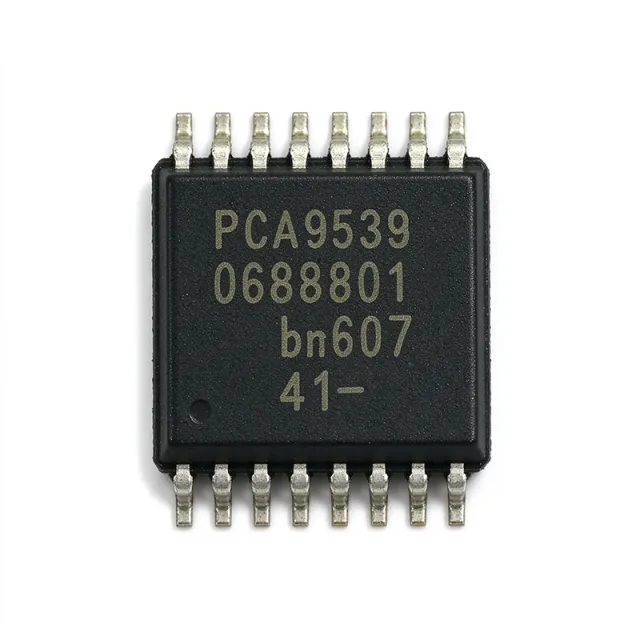
The NXP Semiconductors PCA9538PW is an 8-bit I2C-bus and SMBus general-purpose I/O expander with interrupt and reset, operating from 2.3 V to 5.5 V in a 16-pin TSSOP package. It adds eight remotely controlled digital input or output ports to a host microcontroller or processor while using the two-wire bus instead of dedicating eight GPIO pins. An I/O expander is an interface IC that extends a system’s digital input/output capability. The PCA9538 belongs to the hierarchy of GPIO expander, serial interface controller, and embedded peripheral. Its registers support configurable input, output, or high-impedance operation, while the interrupt output lets the host respond to selected port events without continuously polling all eight lines. Key features include eight general-purpose I/O lines, 2.3 V to 5.5 V operation, 400 kHz I2C/SMBus support, and dedicated interrupt and reset functions. The low-power design is useful in embedded control, sensor-interface, and power-management systems where a compact serial interface can replace several parallel host-controller pins. The device communicates through the two-line bidirectional bus using SCL and SDA. Its interrupt output provides event signaling, while reset provides a defined initialization path for the port and configuration state. These functions simplify firmware-driven GPIO expansion, particularly when the host must monitor external controls or remotely drive logic-level loads. Typical applications include ACPI power-switch control, sensor and actuator interfacing, push-button and indicator handling, and general embedded GPIO expansion. Designers should account for the selected port direction, pull-up requirements on SDA and SCL, and the electrical characteristics of every signal driven through the expander. For robust PCB implementation, place the serial-bus pull resistors close to the relevant bus nodes and keep the TSSOP routing short and clean. Review address configuration and firmware register access before operation, especially in systems with several I2C peripherals or multiple expanders on the same bus. This page consolidates the verified manufacturer and distributor information, separates confirmed specifications from data gaps, and provides practical design guidance for engineers evaluating PCA9538PW. It also records sourced drop-in alternatives where the available evidence supports pin and package compatibility.

USD $0.51 במלאי
PCA9538PWG4 - 8-Bit I2C I/O Expander | Texas Instruments
PCA9538PWG4

PCA9538PWG4 - 8-Bit I2C I/O Expander | Texas Instruments

The Texas Instruments PCA9538PWG4 is an 8-bit I/O expander with an I2C or SMBus host interface, a maximum clock frequency of 400 kHz, and a 2.3 V to 5.5 V operating supply range. The device is packaged in a 16-pin TSSOP with gull-wing leads and an industrial temperature grade. It adds eight remotely controlled digital input or output ports to a host processor without consuming eight direct GPIO pins. An I/O expander is a peripheral interface IC that extends the number of digital lines accessible through a serial bus. In the hierarchy of interface semiconductors, this device is an I2C GPIO expander, an interface IC, and ultimately a general-purpose semiconductor. The PCA9538PWG4 uses two serial signals, SCL and SDA, to transfer configuration and output data between the host and the eight port pins. An interrupt output allows the host to respond when a change occurs on an input port. Key features include eight independently configurable I/O lines, support for both I2C and SMBus operation, and a maximum bus clock frequency of 400 kHz. The 2.3 V to 5.5 V supply range supports both 3.3 V and 5 V systems. Separate address inputs allow multiple expanders to share a bus when their hardware address assignments differ, while the reset input provides a defined startup state. Configuration registers provide control over input and output operation. The PCA9538 performs remote port updates over the serial interface, reducing the number of host pins required for keypad matrices, control signals, or digital status monitoring. Its low-power I/O-expander design is suitable for embedded control, industrial automation, communications equipment, and consumer products. The device can operate as an 8-bit parallel port while the host controller reads or writes the port data through I2C. Interrupt signaling helps avoid continuous polling when an attached circuit changes an input state. Typical uses include expanding MCU GPIO for relay-control boards, monitoring switch banks, driving addressable display or LED-control lines, and adding isolated digital interfaces to industrial controllers. The 400 kHz I2C rate also permits the device to coexist with moderate-speed bus traffic. Designers should account for pull-up resistors on SDA and SCL, assign a unique device address, and ensure that the host voltage and all attached port voltages remain within the device's operating limits. For PCB implementation, place the device close to the I2C controller and route SDA and SCL away from noisy switching nodes. The TSSOP-16 footprint requires adequate copper and assembly clearance for its 0.65 mm lead pitch. Decoupling capacitance should be placed at the supply pin according to the manufacturer datasheet, and the reset, address, port, and interrupt traces should be checked for signal integrity at the maximum 400 kHz bus rate. This page combines the manufacturer function description, package information, pin assignments, application guidance, drop-in alternatives, and practical design considerations. It is intended to help engineers identify whether the PCA9538PWG4 fits an existing 16-pin TSSOP design and how to integrate its serial interface, address assignment, and interrupt-driven I/O expansion correctly.

RFQ צור קשר