מוצרים (44,000+)

TLV2362ID - Dual 7MHz Low-Noise Amplifier | Texas Instruments
TLV2362ID

TLV2362ID - Dual 7MHz Low-Noise Amplifier | Texas Instruments

The Texas Instruments TLV2362ID is a dual, 5 V, 7 MHz low-noise operational amplifier with an input-voltage noise density of 8 nV/√Hz, supplied in an 8-pin SOIC package. The device contains two independent operational amplifiers and can operate from dual supplies as low as ±1 V. Its combination of low noise, wide bandwidth, and low-voltage operation makes it suitable for precision signal acquisition, low-level sensing, portable instrumentation, audio preamplification, and industrial control systems. An operational amplifier is a voltage-feedback analog signal-conditioning component that compares its differential input voltage with a feedback-defined reference and drives its output to reduce the difference between them. The TLV2362 belongs to the dual operational-amplifier family, combining two amplifiers in one package for signal amplification, buffering, filtering, active gain control, and analog-to-digital converter input conditioning. The 8-pin SOIC form factor supports conventional surface-mount PCB assembly. The TLV2362ID provides 8 nV/√Hz input-voltage noise density and a 7 MHz gain-bandwidth product. Low input noise helps preserve small signals during amplification, while the 7 MHz bandwidth supports signals extending well above audio frequencies. Operation from ±1 V supports low-energy systems where supply headroom is limited, and the dual configuration can process two channels while reducing board area. According to the Texas Instruments product description, the TLV2362 family uses an original bipolar process and maintains a wide output-swing capability even at very low supply voltages. This architecture is relevant when designing low-voltage sensor paths because the amplifier can operate near the lower limit of the stated supply range without requiring a negative rail in single-supply systems, provided the input and output signals remain inside the device's operating limits. Typical applications include low-level sensor conditioning, audio and microphone preamplification, portable measurement equipment, active filtering, and buffering signals for higher-resolution analog-to-digital converters. In a dual-signal system, one channel may amplify a sensor output while the other monitors a reference, provides gain, or drives a control signal. The same-package pairing also reduces component count compared with two separate single amplifiers. Design layouts should keep input, feedback, and decoupling connections short, use a solid ground reference, and place the power-bypass capacitor close to the supply pins. Confirm the input common-mode range, output swing, supply limits, and stability requirements against the manufacturer datasheet before operating near the voltage boundaries. For applications requiring different noise, bandwidth, rail-to-rail input-output behavior, or shutdown control, compare the alternative amplifier families rather than assuming that every low-voltage dual op amp is interchangeable.

RFQ צור קשר
TLV2362IP - Dual 7MHz Low-Noise Op Amp | Texas Instruments
TLV2362IP

TLV2362IP - Dual 7MHz Low-Noise Op Amp | Texas Instruments

The Texas Instruments TLV2362IP is a dual, 5 V, 7 MHz, low-noise operational amplifier with input noise density of 8 nV/√Hz, supplied in an 8-pin PDIP package. The two amplifiers share a common supply architecture and can operate from low-voltage rails, including ±1 V operation, while maintaining a wide output swing. Its combination of low noise, 7 MHz gain-bandwidth product, and flexible supply range makes it appropriate for precision signal conditioning, sensor interfaces, audio paths, and low-voltage analog systems. An operational amplifier is an analog integrated circuit that amplifies the voltage difference between its non-inverting and inverting inputs. The TLV2362 belongs to the operational-amplifier hierarchy, which sits within amplifier ICs and analog signal-chain components. By applying negative feedback, a practical circuit can create stable gain, filters, buffers, comparators, and active analog signal-processing stages. A dual amplifier also reduces package count when two channels perform similar functions. The TLV2362IP provides useful low-noise performance for demanding signal chains. Its 8 nV/√Hz input noise density supports accurate extraction of weak signals, while the 7 MHz gain-bandwidth product allows useful bandwidth in moderate-gain stages. Operation from approximately ±1 V supports compact, low-energy designs where signal levels are limited. The wide output swing increases the usable output range, while the original Texas Instruments bipolar process supports conventional low-noise linear operation. Each device contains two operational amplifiers, enabling dual-channel filtering, instrumentation, audio, or feedback-control implementations. The 8-pin PDIP format is a through-hole package that remains useful for prototypes, educational platforms, and repair assemblies where a socket or through-hole assembly is preferred. Unlike a surface-mount package, the PDIP body is easier to inspect, probe, and replace manually. Typical uses include low-level sensor preamplification, active audio filtering, buffered instrumentation, and low-voltage control loops. Designers should confirm input common-mode range, output swing, slew rate, stability, and load capability for the specific operating condition. Decoupling capacitors should be placed close to the supply pins, and sensitive analog traces should be kept away from switching nodes and high-current return paths. This page combines the manufacturer’s device description with packaging information, practical layout guidance, and an honest drop-in comparison. It also separates confirmed electrical characteristics from parameters that require direct confirmation against the manufacturer datasheet before final design release.

RFQ צור קשר
TLV2370IP - 3MHz RRIO Op Amp | Texas Instruments | Signal
TLV2370IP

TLV2370IP - 3MHz RRIO Op Amp | Texas Instruments | Signal

The Texas Instruments TLV2370IP is a single operational amplifier with rail-to-rail input and output capability, 3 MHz gain-bandwidth product, 550 µA per-channel supply current, and shutdown support, housed in an 8-pin PDIP package. It operates from a minimum supply voltage of 2.7 V, while the maximum recommended supply voltage is 16 V. An operational amplifier is an analog signal-conditioning IC that compares an input voltage with a feedback-defined reference and amplifies the difference. The TLV2370 belongs to the rail-to-rail input and output operational amplifier family, combining low-power operation with broad input and output swing. This places it within the operational amplifier, analog amplifier, and signal-conditioning semiconductor hierarchy. The principal features include 3 MHz bandwidth, approximately 550 µA of supply current per channel, operation down to 2.7 V, and rail-to-rail input and output operation. The shutdown function allows the amplifier to be disabled when it is not needed, helping reduce system power in intermittently active equipment. The device is available in the TLV2370IP PDIP-8 configuration for through-hole industrial and instrumentation designs. Its low-power operating current is particularly useful in battery-powered measurement systems where a conventional higher-speed amplifier would increase continuous energy use. The 3 MHz bandwidth provides sufficient response for general-purpose signal amplification, impedance buffering, filtering, and sensor-interface circuits. The 2.7 V minimum operating supply also supports low-voltage systems that cannot provide the higher rails associated with older precision op amps. Typical uses include portable instrumentation, industrial sensor conditioning, low-voltage data acquisition, audio signal paths, and embedded control systems. The amplifier can operate from a single positive supply while accepting input and output signals that approach the available rail voltages. Its shutdown pin provides an additional mechanism for controlled power management in multichannel or duty-cycled systems. PCB design should preserve short feedback paths, place input and feedback components close to the relevant pins, and route high-impedance input nodes away from switching nodes. Because the device supports shutdown, the shutdown control must be driven to the correct logic level during normal operation. Review the manufacturer pin-description and application information before assigning PCB tracks. This page combines manufacturer specifications, application guidance, drop-in replacement information, and practical PCB considerations to support faster component evaluation and board-level design decisions.

RFQ צור קשר
TLV2371QDBVRQ1 - 3MHz RRIO Automotive Op Amp | TI
TLV2371QDBVRQ1

TLV2371QDBVRQ1 - 3MHz RRIO Automotive Op Amp | TI

The TLV2371QDBVRQ1 is an automotive-grade, single-channel operational amplifier from Texas Instruments featuring rail-to-rail input and output (RRIO) operation. It operates from 2.7V to 16V (±1.35V to ±8V) supply, delivers a 3MHz gain bandwidth product, 2.1V/µs slew rate, and only 550µA quiescent current per channel in a 5-pin SOT-23 (DBV) package, specified from -40C to +125C for AEC-Q100 automotive applications. An operational amplifier is a high-gain differential-input voltage amplifier fundamental to analog signal conditioning, used for amplification, filtering, and buffering within the broader hierarchy of linear amplifiers and power management electronics. The TLV2371QDBVRQ1 belongs to the TLV237x-Q1 family of low-power rail-to-rail op amps within TI's general-purpose amplifier portfolio, purpose-built for automotive environments. Key features include the wide 2.7V to 16V supply range that tolerates 3.3V, 5V, and 12V automotive battery rails; rail-to-rail input and output that maximizes dynamic range in single-supply systems; and low 550µA/channel supply current for always-on battery-powered modules. The 3MHz bandwidth and 2.1V/µs slew rate support sensor signal conditioning and active filtering. Technically, the CMOS input stage provides high input impedance with picoamp-range input bias current, while the rail-to-rail class-AB output stage sources and sinks current with minimal distortion. The device is internally compensated for unity-gain stability and includes ESD protection on all pins for harsh automotive environments. Typical applications include automotive sensor signal conditioning, battery monitoring, motor-control current sensing, and active filters in engine control units. Rail-to-rail output swing maximizes ADC interface resolution. Design tip: decouple the supply with a 0.1µF ceramic capacitor placed close to the V+ pin, and keep output traces away from high-frequency digital lines to minimize coupling. Pricing starts around $0.45 as of 2026-08-30.

RFQ צור קשר
TLV2372ID - Dual 3MHz RRIO Op Amp | Texas Instruments
TLV2372ID

TLV2372ID - Dual 3MHz RRIO Op Amp | Texas Instruments

Texas Instruments TLV2372ID is a dual operational amplifier with rail-to-rail input and output capability, 3 MHz gain-bandwidth performance, and low 550 µA per-channel quiescent current in an 8-pin SOIC package. It operates from a 2.7 V to 16 V supply and provides a 2.4 V/µs slew rate. These characteristics position the TLV2372ID as a compact, low-power amplifier for portable, industrial, instrumentation, and signal-conditioning systems. An operational amplifier is an analog signal-processing IC that amplifies the voltage difference between its inverting and non-inverting inputs while providing high input impedance and low output impedance. The TLV2372 belongs to the operational-amplifier hierarchy within amplifier ICs and analog signal-chain devices. Its rail-to-rail input stage accepts signals near the positive and negative supply rails, while its rail-to-rail output stage can swing close to both rails under suitable load conditions. Key features include a 3 MHz gain-bandwidth product, 2.4 V/µs slew rate, 550 µA per-channel quiescent current, and operation from 2.7 V to 16 V. The dual configuration integrates two amplifiers into one 8-pin SOIC package, reducing board area when a design needs two gain stages, buffers, comparators, or differential signal-conditioning channels. Rail-to-rail operation is especially useful when the usable signal range is a large fraction of the available supply voltage. The low-power operating current supports battery-operated and energy-conscious systems, while the 3 MHz bandwidth provides more signal bandwidth than very-low-frequency micropower amplifiers. Designers should nevertheless check gain-bandwidth-dependent noise, slew-rate-driven large-signal error, output-capacitance stability, input common-mode range, and the actual output swing required by the load. The 8-pin SOIC package is also straightforward to assemble and inspect on through-hole prototype boards. Typical uses include low-voltage sensor conditioning, portable measurement equipment, audio and communication interface circuits, general-purpose buffering, and industrial control modules. Two channels can implement independent amplifier functions, or they can form an instrumentation-style differential stage when resistor networks and suitable common-mode behavior are considered. For each amplifier, connect input and output stability compensation according to the manufacturer datasheet, keep feedback paths short, and provide adequate bypassing near the supply pins. Avoid using the maximum listed bandwidth or slew rate as a guaranteed large-signal operating point without checking output swing and load-current limits. Decoupling capacitance and layout should follow the datasheet recommendations rather than generic values. This page combines the verified Texas Instruments product information, distributor listings, package details, and qualified same-family alternatives with practical selection guidance. It also separates confirmed parameters from unavailable values so engineers can cross-check the original TLV2372 documentation before making a drop-in decision.

RFQ צור קשר
TLV2372IP - 3MHz Dual RRIO Op Amp | Texas Instruments
TLV2372IP

TLV2372IP - 3MHz Dual RRIO Op Amp | Texas Instruments

The Texas Instruments TLV2372IP is a dual operational amplifier with rail-to-rail input and output capability, 3 MHz gain-bandwidth product, 2.4 V/µs slew rate, and 550 µA per channel supply current in an 8-pin PDIP package. The two amplifiers share a common supply range of 2.7 V to 16 V, making the device suitable for low-voltage industrial, instrumentation, sensor-interface, and signal-conditioning systems. Its CMOS inputs also support applications involving relatively high source impedances. An operational amplifier is an analog integrated circuit that amplifies the voltage difference between its inverting and non-inverting inputs. The TLV2372 belongs to the rail-to-rail input/output amplifier family, where the input common-mode range and output swing extend toward the supply rails. Within the broader semiconductor hierarchy, it is a dual-channel amplifier IC, a linear amplifier, and a general-purpose analog signal-conditioning component. The principal operating features include a 3 MHz bandwidth, 2.4 V/µs slew rate, 550 µA per channel supply current, 16 V maximum supply voltage, and 2.7 V minimum operating supply. Rail-to-rail input and output capability increases the usable signal range in systems whose operating points approach the positive or negative supply rail. The dual configuration provides two amplifiers in one 8-pin PDIP package, reducing board area compared with two separate single-channel devices. The TLV2372 uses CMOS input circuitry to suit high-impedance sensor interfaces. Its rail-to-rail input stage allows signals near either supply rail to be referenced without requiring the usual input common-mode restriction of older amplifier designs. The 3 MHz bandwidth is suitable for moderate-frequency signal processing, while the 2.4 V/µs slew rate provides comparatively rapid output transitions. Designers should still account for output-load capacitance and stability when driving longer cables, large capacitors, or capacitive sensor networks. Typical applications include low-power sensor conditioning, buffered instrumentation, transducer amplification, low-frequency active filters, audio preamplification, and general industrial signal processing. The dual topology is particularly useful when a design requires two closely related analog channels, such as differential measurement or gain stages that benefit from matched devices in the same package. A key design consideration is the 550 µA per channel supply current, which supports low-power operation but may still be significant in long-duration battery-powered equipment. Confirm the complete operating envelope, input offset voltage, output-current capability, noise characteristics, and absolute maximum ratings against the manufacturer datasheet before releasing a production design. This page consolidates verified manufacturer and distributor information, compares documented package-order variants, and adds practical application guidance, design notes, and search-oriented technical context for engineers evaluating the TLV2372IP.

RFQ צור קשר
TLV2401CD - 16V, 5.5kHz MicroPower RRIO Op Amp | TI
TLV2401CD

TLV2401CD - 16V, 5.5kHz MicroPower RRIO Op Amp | TI

The Texas Instruments TLV2401CD is a single, micropower, rail-to-rail input/output operational amplifier rated for supply voltages up to 16 V, with a gain-bandwidth product of 5.5 kHz. The device is packaged in an 8-pin SOIC (D) package and is intended for low-power signal-conditioning applications that require rail-to-rail input and output operation. An operational amplifier is an analog integrated circuit that amplifies the voltage difference between its inverting and non-inverting inputs. The TLV2401 belongs to the rail-to-rail-input/output operational-amplifier family, where the input common-mode range and output swing extend toward the supply rails. This category combines signal amplification, impedance buffering, filtering, and closed-loop control functions within a general-purpose analog IC. The most important feature of the TLV2401 is its low supply current. Texas Instruments describes the TLV2401 family as drawing approximately 880 nA per channel, making it suitable for battery-powered equipment where amplifier standby power materially affects operating time. The 5.5 kHz gain-bandwidth product supports low-frequency signal paths rather than high-speed communications, audio-frequency wideband amplification, or fast data acquisition. Rail-to-rail inputs are valuable when sensor outputs can approach either supply rail. Rail-to-rail output operation similarly improves usable output swing in single-supply systems, although the datasheet's output-voltage limits must still be respected when driving loads. Reverse-battery protection is included in the family description, helping guard the amplifier against excessive input current caused by improper battery installation. Typical uses include battery-powered sensing, portable instrumentation, low-frequency active filters, sensor conditioning, threshold detection, and embedded control loops. The 16 V maximum supply rating supports higher-voltage industrial systems, while the 8-pin SOIC package allows conventional surface-mount assembly and straightforward hand-soldering during prototyping. The primary design trade-off is bandwidth versus power and flexibility. The 5.5 kHz gain-bandwidth product is adequate for slow sensor signals but can create excessive closed-loop gain error or phase margin concerns at higher frequencies. Designers should select feedback values and source impedances that preserve stability, while verifying input and output ranges at the actual supply voltage. This product overview combines the manufacturer’s device identity and ordering information with package details, application guidance, drop-in replacement analysis, and practical considerations for implementing a low-power rail-to-rail analog signal chain.

RFQ צור קשר
TLV2401ID - 5.5kHz Low-Power RRIO Op Amp | TI
TLV2401ID

TLV2401ID - 5.5kHz Low-Power RRIO Op Amp | TI

Texas Instruments TLV2401ID is a single, low-power, rail-to-rail input and output operational amplifier with a 16 V maximum supply voltage and 5.5 kHz gain-bandwidth product. It is packaged in an 8-pin SOIC and combines a typical 880 nA per channel bias current with reverse-battery input protection and 5 V over-the-rail input operation. The device is suitable for portable instrumentation, low-voltage sensing, battery-powered measurement systems, and signal-conditioning circuits that require low power and rail-to-rail operation. An operational amplifier is an analog signal-processing IC that uses high-gain feedback to amplify or buffer a voltage difference between its two inputs. The TLV2401 belongs to the operational-amplifier hierarchy, where rail-to-rail input and output capability helps the amplifier operate across most of the supply range without requiring separate input or output rail restrictions. This makes it useful for sensors and mixed-signal systems whose operating signals can approach either supply rail. The principal features of the TLV2401ID include a 5.5 kHz gain-bandwidth product, approximately 880 nA per channel of typical bias current, rail-to-rail inputs and outputs, and operation from a single supply up to 16 V. Reverse-battery protection helps protect the amplifier when input polarity is reversed, while the over-the-rail input capability extends usable input behavior beyond the nominal supply rails under the conditions stated by the manufacturer. Its low gain-bandwidth product favors low-frequency precision and signal-conditioning tasks rather than wideband waveform processing. At relatively low operating frequencies, a closed-loop amplifier built around this device can provide stable gain with straightforward compensation and external feedback networks. The low bias current also reduces the effect of high-value sensor sources, although actual offset, noise, and bias-current behavior must be evaluated for the intended temperature and supply range. Typical uses include battery-powered sensor interfaces, portable ECG and biomedical signal conditioning, industrial measurement inputs, low-frequency current sensing, and general-purpose analog buffers. The 8-SOIC format supports conventional surface-mount assembly and PCB prototyping, while the single-amplifier configuration allows designers to avoid unnecessary channel count. Design with the TLV2401ID by placing input, feedback, and bypass components close to the device and verifying common-mode range, output swing, stability, and noise at the intended supply voltage. The Request a Quote form on this page can provide current commercial availability, lead-time, and order information. This product page combines the Texas Instruments ordering information, manufacturer datasheet characteristics, package details, drop-in family options, and practical design guidance to help engineers evaluate the TLV2401ID for low-power analog signal-conditioning designs.

RFQ צור קשר
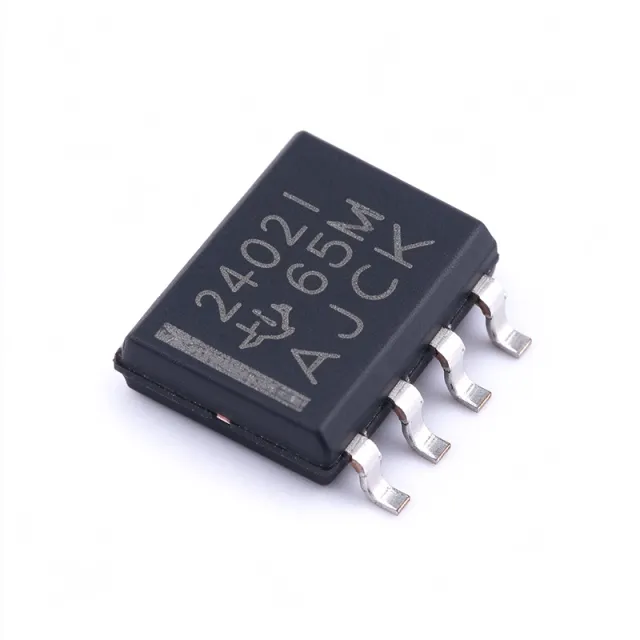
TLV2402ID - Dual 16V 5.5kHz RRIO Amplifier | Texas Instruments
TLV2402ID

TLV2402ID - Dual 16V 5.5kHz RRIO Amplifier | Texas Instruments

Texas Instruments TLV2402ID is a dual, rail-to-rail input/output operational amplifier designed for low-voltage, low-power signal-conditioning systems. The verified device information identifies a 16 V maximum supply, 5.5 kHz gain-bandwidth product, two amplifier channels, and an 8-pin SOIC package. Its approximately 900 nA per channel supply-current capability makes the TLV2402ID suitable for battery-operated instrumentation where amplifier power must remain small. An operational amplifier is an analog integrated circuit that uses high-gain feedback to amplify the difference between two input voltages. The TLV2402 belongs to the broader operational-amplifier hierarchy, where it combines low quiescent current, rail-to-rail input and output operation, and reverse-battery protection. These characteristics place it between general-purpose precision amplifiers and micropower amplifiers designed for portable or energy-limited equipment. The verified family description identifies rail-to-rail input and output stages, wide supply-voltage capability, high common-mode rejection, and reverse-battery protection. Rail-to-rail input operation allows the input common-mode voltage to extend toward the supply rails, which is important when sensing signals across most of the available input range. Rail-to-rail output operation permits the output to approach either rail, improving usable output swing in low-voltage systems. Reverse-battery protection helps guard the amplifier against excessive current caused by improper battery installation. The 5.5 kHz gain-bandwidth product supports low-frequency signal amplification rather than high-speed waveform processing. Because the dual device provides two amplifiers in one package, both channels use the same supply and are intended to share common operating conditions. The approximately 900 nA per channel supply current is particularly important for battery-powered sensors, portable meters, and industrial monitoring devices that remain active for long periods. Typical applications include low-current sensor conditioning, portable measurement systems, battery-powered monitors, low-frequency filtering, and general-purpose analog signal processing. The 8-pin SOIC package can be assembled using conventional surface-mount production methods, while the dual-channel configuration reduces component count when a design requires two amplified signals or a gain stage plus an active filter. Designers should verify the complete electrical limits, common-mode range, output-swing behavior, stability requirements, and recommended external components in the manufacturer datasheet before releasing a production design. Because the verified information does not include the complete pin table, numeric common-mode-rejection values, input-offset specifications, or recommended external capacitor values, those details require confirmation from the authoritative TLV2402 documentation. This product record combines the verified Texas Instruments family description, distributor availability information, package identification, and design guidance. It also distinguishes the only supported same-footprint substitute found in the supplied cross-reference results and clearly identifies missing technical values that should be obtained from the manufacturer datasheet before precise circuit calculations are performed.

USD $1.43 במלאי
TLV2404CN - 16V Quad Micropower RRIO Op Amp | TI
TLV2404CN

TLV2404CN - 16V Quad Micropower RRIO Op Amp | TI

The Texas Instruments TLV2404CN is a quad micropower operational amplifier with rail-to-rail input and output capability, a 16 V maximum supply designation, 5.5 kHz gain-bandwidth performance, and four amplifiers in a 14-pin PDIP package. It is intended for low-voltage, low-power analog systems that require more than one amplifier on a compact through-hole board. An operational amplifier is a voltage-controlled differential amplifier used to amplify small signals, buffer sensor outputs, perform analog calculations, and drive downstream circuits. The quad TLV2404 belongs to the operational-amplifier hierarchy within analog and mixed-signal semiconductors. Its four channels can reduce external component count and simplify PCB routing compared with four separate single amplifiers, while its micropower positioning supports battery-powered and always-on equipment. Key features include four rail-to-rail input and output amplifiers in one package, a 16 V device rating, and a 5.5 kHz gain-bandwidth product highlighted by Texas Instruments. The rail-to-rail input characteristic supports signal operation across much of the supply range, while rail-to-rail output capability helps preserve output swing near the supply rails. These characteristics are useful in portable sensor interfaces, low-frequency filter stages, and small-signal conditioning circuits. The TLV2404CN is the standard general-purpose TLV2404 configuration identified for a 14-pin PDIP package. According to the manufacturer product page, the family is designed for 2.7 V-class operation as well as higher supply voltages. Its low bandwidth makes it appropriate for energy harvesting, battery monitoring, portable instrumentation, and other applications where high-frequency performance is unnecessary. The through-hole package also supports prototypes, educational platforms, and manually assembled industrial control boards. Typical uses include four-channel sensor conditioning, low-pass and high-pass active filters, transimpedance stages with suitable external biasing, threshold comparators with added hysteresis, and low-frequency signal generators. In each case, resistor and capacitor values determine the practical bandwidth and noise behavior, so simulation and measurement should confirm stability, output swing, and input common-mode limits. For PCB design, route each input and output directly to its corresponding DIP pin, maintain short feedback paths, and place input-sensing traces away from switching nodes. Because the amplifier operates at low bandwidth, bypassing and grounding are often more important than high-speed impedance matching. Check the manufacturer pin-description table before assigning functions to the 14 pins. This product page combines the exact manufacturer and distributor identifiers with practical guidance on package reuse, low-power analog design, and four-channel layout. It also identifies where quotation, lifecycle, and detailed pin verification should be performed before production release.

RFQ צור קשר
TLV2432CD - Dual 10V 500kHz Rail-to-Rail Op Amp | TI
TLV2432CD

TLV2432CD - Dual 10V 500kHz Rail-to-Rail Op Amp | TI

The Texas Instruments TLV2432CD is a dual, 10 V, 500 kHz CMOS operational amplifier with rail-to-rail output capability, supplied in an 8-pin SOIC package. It combines two amplifier channels, a 10 V maximum supply rating, and a 500 kHz gain-bandwidth product in one compact surface-mount IC. An operational amplifier is an analog building block used to amplify voltage differences, buffer signals, integrate errors, and drive control inputs. The TLV2432 belongs to the CMOS operational-amplifier hierarchy and is designed for low-voltage signal conditioning where two channels, rail-to-rail output swing, and low supply current can simplify a board design. The device is identified as a CMOS, dual-amplifier circuit with rail-to-rail output operation. Its 500 kHz bandwidth is suitable for low-to-moderate-frequency instrumentation, while the 10 V supply rating positions it for circuits operating below the 10 V rail limit. Rail-to-rail output helps the amplifier produce useful output levels near the positive and negative supply rails, although input common-mode limits, output swing, noise, and stability still require verification for each design. The TLV2432CD is offered in an 8-SOIC package and uses two independent amplifier channels. Typical circuit roles include voltage buffering, sensor-signal conditioning, transimpedance conversion, active filtering, and low-frequency closed-loop amplification. Because it is a CMOS operational amplifier, its quiescent behavior is suitable for battery-powered and portable equipment when the operating-current target is compatible with the device specification. Typical applications include industrial sensor interfaces, portable measurement systems, audio signal conditioning, low-frequency control loops, and general-purpose dual-amplifier boards. Two amplifiers per package can reduce component count and PCB area when a design needs matched general-purpose channels. The same package also makes board-level substitutions more practical when the replacement has the same eight-pin pinout and acceptable electrical ratings. For layout, place the decoupling capacitor close to the supply pin, connect exposed-sensitive signals away from power paths, and verify feedback-network stability with the actual load. Do not assume that a rail-to-rail output removes the need for output-headroom checks. Confirm input common-mode range, maximum output current, slew rate, noise, offset, and operating temperature against the manufacturer datasheet before production release. This product page organizes the official device information, exact package identity, sourcing guidance, pin assignment, qualified drop-in alternatives, and practical design notes. It also provides parameter-by-parameter comparisons that help engineers evaluate replacements without confusing a footprint match with guaranteed electrical equivalence.

RFQ צור קשר
TLV2434ID - 10V 500kHz Quad R-R Op Amp | Texas Instruments
TLV2434ID

TLV2434ID - 10V 500kHz Quad R-R Op Amp | Texas Instruments

Texas Instruments TLV2434ID is a four-channel CMOS operational amplifier designed for low-level signal processing with a 10 V maximum supply, 500 kHz gain-bandwidth product, rail-to-rail output swing, and an extended common-mode input range. The device is packaged in a 14-pin SOIC, allowing four amplifiers to be accommodated on one compact PCB footprint. An operational amplifier is a voltage-controlled, high-gain analog building block used to amplify weak signals, buffer impedance mismatches, compare voltages, perform active filtering, and drive downstream circuitry. Within the power-management and signal-processing hierarchy, the TLV2434ID belongs to the CMOS operational-amplifier family and combines four amplifier channels with low-voltage operation and rail-to-rail output capability. Key features include a 10 V supply rating, 500 kHz gain-bandwidth product, rail-to-rail output operation, and an extended common-mode input range. The rail-to-rail output allows the output voltage to approach the supply rails more closely than a conventional amplifier whose swing is restricted by saturation limits. The four-channel arrangement reduces package count and simplifies PCB routing when a design requires several similar analog functions. The TLV2434ID is a low-voltage CMOS op amp rather than a high-voltage bipolar amplifier. Its rail-to-rail behavior is particularly useful for sensor interfaces, portable instrumentation, battery-powered measurement systems, and signal-conditioning circuits operating from a low-voltage supply. Four independent channels can be used for filtering, buffering, gain stages, or active-feedback sensor conditioning. Typical applications include bridge-based sensor signal conditioning, low-level audio and communication interfaces, current monitoring, analog measurement front ends, active filters, and multi-channel test equipment. When designing around the device, confirm that input and output voltages remain within the common-mode and output-swing limits for the selected supply. Decoupling capacitors should be placed close to the supply pins, while sensitive inputs require short traces and a low-noise ground return. This product page combines the manufacturer’s device description, package information, cross-reference findings, application guidance, and engineering-focused selection criteria to support faster sourcing and board-level planning for the TLV2434ID.

RFQ צור קשר
TLV2442ID - Dual Rail-to-Rail Output Op Amp | Texas Instruments
TLV2442ID

TLV2442ID - Dual Rail-to-Rail Output Op Amp | Texas Instruments

Texas Instruments TLV2442ID is a dual Advanced LinCMOS operational amplifier with rail-to-rail output capability and wide-input-voltage operation. The device contains two amplifier circuits, operates from 2.7 V to 10 V, and is available in an 8-pin SOIC package. Its 1.75 MHz gain-bandwidth product and 1.3 V/µs slew rate make it suitable for low-power signal-conditioning designs that require more bandwidth than a basic micropower amplifier. An operational amplifier is a voltage-feedback amplifier used to amplify, buffer, filter, or compare small analog signals. The TLV2442 belongs to the CMOS operational-amplifier hierarchy within the broader amplifier IC and semiconductor categories. Unlike a rail-to-rail input device, the TLV2442 is specifically described by Texas Instruments as having a rail-to-rail output and wide-input-voltage range. This distinction matters when the output must approach the supply rails but the input does not need to cover both rails fully. Key characteristics include two amplifier circuits in one package, a 2.7 V to 10 V supply range, 1.75 MHz bandwidth, and a 1.3 V/µs slew rate. The rail-to-rail output is particularly useful for driving downstream circuits that operate near a supply rail. Combining two amplifiers in one SOIC-8 package can also reduce board area and simplify dual-channel signal paths such as sensor conditioning, filtering, or differential analog front ends. The Advanced LinCMOS implementation supports low-voltage operation while preserving useful dynamic performance for portable and embedded equipment. Bandwidth determines how quickly the closed-loop amplifier can process small-signal variations, while slew rate describes the maximum rate at which the output can change in a large-signal step. These characteristics make the TLV2442 appropriate for audio, instrumentation, communication, and control applications where the signal bandwidth remains below the amplifier’s 1.75 MHz capability. Typical uses include low-frequency sensor amplification, active filtering, audio signal conditioning, general-purpose buffering, and dual-channel analog processing. Battery-operated products benefit from the 2.7 V minimum supply voltage because the amplifier can operate directly from a single 3.3 V rail. The same SOIC-8 package is convenient for prototypes and production assemblies requiring a conventional surface-mount footprint. Designers should verify the input common-mode range, output swing, noise, offset, stability, and output-current capability against the manufacturer datasheet for the intended supply and load conditions. Decoupling capacitors should be placed close to the supply pins, and unused amplifier inputs must be configured according to the recommended circuit practice. Proper grounding and short feedback paths are essential for predictable settling and reduced channel interaction. This page combines the manufacturer’s device description with package, electrical, sourcing, replacement, and application guidance. It also identifies the limits of the available cross-reference information so that engineers can distinguish a verified drop-in option from variants that require a different footprint or a new design qualification.

RFQ צור קשר
TLV2442QD - Dual RRO CMOS Op Amp | Texas Instruments
TLV2442QD

TLV2442QD - Dual RRO CMOS Op Amp | Texas Instruments

Texas Instruments TLV2442QD is a dual CMOS operational amplifier featuring rail-to-rail output operation and a wide-input-voltage architecture in an 8-pin SOIC package. It combines two amplifier channels in one package, operates from a single 5 V supply in the documented application, and supports input signals approaching the supply rails. The device is listed by Texas Instruments as an Advanced LinCMOS rail-to-rail-output wide-input-voltage operational amplifier, making it suitable for general-purpose signal conditioning, instrumentation, and analog control circuits. An operational amplifier is an analog building block that amplifies the voltage difference between its inverting and non-inverting inputs. The TLV2442 family uses CMOS circuitry to provide rail-to-rail output behavior, while its extended common-mode input range allows the inputs to operate closer to the supply rails than a conventional CMOS amplifier. Two independent channels in one SOIC package can reduce board area and simplify dual-axis, filtering, buffering, or complementary signal-processing designs. The manufacturer identifies low noise and no phase inversion as important characteristics of this family. The reported gain-bandwidth value is 1.81 MHz, which makes the amplifier suitable for moderate-bandwidth instrumentation and control paths. Its 4.25 V minimum supply requirement at a 5 V single-supply operating point is another defining feature. Because the output can swing toward both supply rails, signal-chain designers gain additional usable output range without requiring a separate output-bias arrangement. The TLV2442 architecture is intended for low-voltage, low-power analog systems where two amplifier channels are needed in a compact package. Rail-to-rail output improves dynamic range in sensor interfaces and single-supply signal chains, while the wide common-mode input range accommodates input voltages near the rails. These characteristics make the device appropriate where conventional restricted-output amplifiers would clip or lose signal margin at low or high signal levels. Typical uses include sensor-signal conditioning, low-side current measurement, portable instrumentation, industrial control modules, audio input buffers, and general dual-channel filtering. In a two-axis sensing system, both channels can amplify signals with the same supply and package. In a filter or driver arrangement, the second channel may condition a complementary signal or support feedback around an external active network. Designers should verify input and output limits, common-mode behavior, output-current capability, noise, and stability for the intended operating point before finalizing the circuit. Decoupling capacitors should be placed close to the supply pins, and sensitive analog layouts should minimize trace resistance and coupling from switching circuitry. The Q suffix identifies the automotive-related ordering variant, so qualification and temperature requirements should be checked against the final operating environment. This page consolidates the device identity, operating characteristics, drop-in-family alternatives, package information, and practical implementation guidance for engineers evaluating the TLV2442QD. It also distinguishes same-footprint family options from broader functional equivalents so board-level replacement decisions begin with the required package and qualification constraints.

RFQ צור קשר
TLV2444CD - Quad Rail-to-Rail CMOS Op Amp | Texas Instruments
TLV2444CD

TLV2444CD - Quad Rail-to-Rail CMOS Op Amp | Texas Instruments

Texas Instruments TLV2444CD is a quad, rail-to-rail-output, wide-input-voltage CMOS operational amplifier packaged in a 14-pin SOIC. The device contains four amplifier circuits, provides output swing that includes both supply rails, and uses an extended common-mode input voltage range. According to the manufacturer product information, it operates from single or dual supplies and supports rail-to-rail output operation for low-voltage analog signal-conditioning systems. An operational amplifier is a voltage-gain amplifier used to amplify, buffer, filter, compare, or reshape analog signals. The TLV2444 belongs to the linear-amplifier hierarchy, combining low-voltage CMOS operation with rail-to-rail output capability. Its wide input-voltage range makes it useful when signals approach the available supply voltage, while the four amplifiers in one package can support several signal paths in compact equipment. Key features include four amplifier circuits, rail-to-rail output swing, an extended common-mode input range, low-noise operation, and no output phase inversion. A single-supply configuration requires at least 4.25 V. The CMOS design is intended for portable instrumentation, industrial control, data acquisition, and portable equipment where low-voltage analog signals must be conditioned without relying on a dual supply. The LinCMOS architecture positions the TLV2444 between conventional CMOS and bipolar operational amplifiers. Rail-to-rail output allows the output voltage to approach the positive and negative supply limits under suitable load conditions. The extended common-mode range is particularly valuable in battery-powered designs because sensor outputs can occupy much of the available signal range. Four amplifiers in one 14-pin SOIC also reduce board area compared with separate single or dual amplifier packages. Typical applications include sensor signal conditioning, portable measurement equipment, battery-powered data acquisition, industrial interface circuits, low-voltage comparators, and active filtering. Each amplifier can be configured for inverting, non-inverting, voltage-follower, or feedback-based filtering operation, provided the designer observes the input, output, and common-mode limits from the manufacturer data sheet. Design attention should focus on input bias current, output load capability, noise, bandwidth, stability with capacitive loads, and the selected feedback network. Because the exact electrical limits are product-specific, use the pin-description table and characteristic curves in the manufacturer data sheet when assigning input and output pins or sizing external resistors and capacitors. This product page organizes the TLV2444CD family information, exact package attributes, technical specifications, sourcing workflow, and engineering considerations for faster design review. It also distinguishes the available manufacturer alternatives from cross-brand parts and highlights where PCB-level verification remains essential before substituting any amplifier.

RFQ צור קשר
TLV2444ID - Quad Rail-to-Rail CMOS Op Amp | Texas Instruments
TLV2444ID

TLV2444ID - Quad Rail-to-Rail CMOS Op Amp | Texas Instruments

The Texas Instruments TLV2444ID is a four-circuit, Advanced LinCMOS operational amplifier with rail-to-rail output swing, wide-input-voltage capability, and low-voltage operation in a 14-pin SOIC package. The device is designed for single- or dual-supply systems where low power, compact implementation, and flexible input ranges are important. Its operating temperature range extends from -40°C to 125°C, making it suitable for industrial, instrumentation, communications, and embedded control applications. An operational amplifier is an analog signal-processing IC that amplifies the voltage difference between its differential inputs. The operational-amplifier category includes voltage-feedback and current-feedback devices, while the TLV2444ID is a voltage-feedback, CMOS quad amplifier. Four amplifiers in one package reduce board area and simplify designs requiring multiple low-voltage signal stages, buffers, or gain channels. Key features of the TLV2444ID include rail-to-rail output operation, a wide common-mode input voltage range, CMOS construction, and four amplifiers per package. Rail-to-rail output swing allows the output voltage to approach the supply rails, maximizing usable signal range in low-voltage systems. The wide input range is particularly useful when sensor outputs, divided signals, or bias voltages occupy much of the available supply voltage. The Advanced LinCMOS architecture supports low-voltage operation while maintaining low bias current and low-noise behavior. Because the amplifiers do not phase invert, they can be used in conventional inverting and non-inverting signal paths. A single package can implement filters, instrumentation amplifiers, sensor amplifiers, level-shifting stages, or analog signal-conditioning blocks while preserving consistent device characteristics across all four channels. Typical applications include portable instrumentation, battery-powered sensor interfaces, industrial control systems, audio and communication signal conditioning, data-acquisition front ends, and low-voltage analog processing. The 14-pin SOIC package supports conventional surface-mount assembly and provides a practical upgrade from discrete single or dual amplifier implementations when four independent channels are required. When designing around the TLV2444ID, verify the input common-mode range, output swing, supply current, stability requirements, and input-capacitance limits against the intended operating conditions. Decoupling capacitors should be placed close to the supply pins, and sensitive analog traces should be kept away from switching nodes and high-current return paths. This product page combines the manufacturer product information with practical guidance for package selection, pinout use, application fitting, design trade-offs, and verified drop-in alternatives. It is intended to help engineers determine whether the TLV2444ID's four-channel CMOS architecture and 14-pin SOIC footprint align with a new analog-front-end design or an existing board revision.

RFQ צור קשר
TLV2450CD - 23µA, 220kHz Rail-to-Rail Op Amp | Texas Instruments
TLV2450CD

TLV2450CD - 23µA, 220kHz Rail-to-Rail Op Amp | Texas Instruments

Texas Instruments TLV2450CD is a single-channel, rail-to-rail input and output operational amplifier with shutdown support, offering 23 µA supply current per channel, 220 kHz gain-bandwidth product, and ±10 mA output drive capability. The device is packaged in an 8-pin SOIC and is suited to portable instrumentation, sensor interfaces, low-power signal conditioning, and battery-powered systems. An operational amplifier, commonly called an op amp, is an analog integrated circuit that amplifies the difference between two input voltages. The TLV2450 belongs to the operational-amplifier hierarchy within analog and mixed-signal semiconductors. Its rail-to-rail input stage accepts signals extending toward the supply rails, while its rail-to-rail output stage provides useful output swing close to those limits. This combination makes it practical for low-voltage systems where the usable signal range is a substantial fraction of the available supply voltage. The TLV2450CD combines low quiescent current with a comparatively wide 220 kHz gain-bandwidth product. Its typical input offset voltage is 20 µV, supporting accurate amplification of small sensor and bridge signals. Shutdown capability provides a path to reduce consumption when the circuit is inactive, which is useful in battery-operated acquisition systems. The 23 µA-per-channel supply current is particularly valuable when every microamp contributes to overall system energy use. The device operates as a general-purpose single amplifier and can be configured for noninverting, inverting, summing, differential, filtering, and current-feedback applications. With a 220 kHz gain-bandwidth product, moderate closed-loop gains are practical in low-power signal paths. Designers must still account for noise gain, output-voltage headroom, capacitive-load stability, input common-mode range, and the effect of the selected external feedback network on accuracy and bandwidth. Typical uses include portable sensor conditioning, low-frequency active filters, microphone preamplification stages, industrial measurement interfaces, and low-leakage battery-powered circuits. The shutdown pin is useful in duty-cycled systems that retain a measurement function while requiring lower consumption between measurements. A key design consideration is to keep feedback-loop routing short and provide stable reference and bypass connections. Decoupling capacitors should be placed close to the supply pins, while sensitive input and feedback nodes should remain away from switching nodes and high-current paths. Because the operating current and bandwidth are modest, the TLV2450CD is most appropriate where low power and rail-to-rail signal access matter more than high speed or heavy capacitive-load drive. This product page combines the manufacturer-defined operating characteristics with practical application guidance, package details, pin-compatible alternatives, and engineering considerations for portable and low-power analog systems.

RFQ צור קשר
TLV2450CP - 6V 220kHz Low-Power RRIO Op Amp | Texas Instruments
TLV2450CP

TLV2450CP - 6V 220kHz Low-Power RRIO Op Amp | Texas Instruments

Texas Instruments TLV2450CP is a single operational amplifier with rail-to-rail input and output capability, a 6 V maximum supply voltage, 220 kHz gain-bandwidth product, and 23 uA typical quiescent current. The device is offered in an 8-pin PDIP package and includes shutdown functionality, making it suitable for low-voltage instrumentation, sensor signal chains, and portable systems where power efficiency and input flexibility are important. An operational amplifier, or op amp, is a high-gain analog building block used to amplify small voltage signals, buffer inputs, compare voltages, and drive analog-to-digital converter inputs. The TLV2450 belongs to the rail-to-rail input/output operational-amplifier family, where rail-to-rail input operation improves access to the supply-voltage range and rail-to-rail output operation increases output-voltage swing. Its low quiescent current reduces the supply demand of battery-powered and always-on circuits. The main advantages are 220 kHz gain-bandwidth product, approximately 23 uA typical quiescent current, and operation from a single 6 V supply or a 2.7 V to 6 V supply range. The rail-to-rail input stage accepts signals near either supply rail, while the rail-to-rail output stage supports low-voltage signal conditioning with limited headroom. A shutdown function provides a way to reduce operating demand when the amplifier is not needed. These characteristics suit compact, low-power signal-processing systems without requiring a high-speed amplifier. The TLV2450 is a general-purpose amplifier rather than a precision or high-current output device. Its 10 mA per channel output-current capability and 220 kHz bandwidth are appropriate for sensors, filters, and low-frequency analog stages, but not for demanding load driving, very wide-band instrumentation, or high-accuracy measurement rails. Designers should verify input and output common-mode limits, capacitive-load stability, shutdown behavior, and output-current requirements against the manufacturer datasheet before committing a design. Typical uses include battery-powered sensor interfaces, portable measurement equipment, low-voltage audio and control circuits, analog signal conditioning, and embedded analog front ends. The 8-pin PDIP package favors through-hole prototyping, educational instruments, and applications where a socketed or easily inspectable amplifier is useful. The single-amplifier configuration also keeps board requirements simple when only one analog channel is required. A primary design consideration is supply bypassing. Place a suitable local capacitor at the power pin and keep return-current paths short to reduce supply ripple and instability. Avoid driving long capacitive loads directly without checking the recommended output-capacitance limits. If shutdown is used, define its logic levels and state transitions carefully so the amplifier cannot oscillate between operating and shutdown modes. This page combines the manufacturer's device characteristics, package information, practical application guidance, verified source links, and an explicit treatment of replacement constraints. The TLV2450CP is best selected when low quiescent current, rail-to-rail signal access, shutdown capability, and an 8-pin PDIP footprint are more important than precision, high-current output, or very high bandwidth.

RFQ צור קשר
TLV2450ID - 23µA, 220kHz RRIO Op Amp | Texas Instruments
TLV2450ID

TLV2450ID - 23µA, 220kHz RRIO Op Amp | Texas Instruments

The Texas Instruments TLV2450ID is a single, low-power rail-to-rail input/output operational amplifier with a 220 kHz gain-bandwidth product, 23 µA supply current per channel, and a maximum supply voltage of 6 V. The device is offered in an 8-pin SOIC package and includes a shutdown function for reducing power consumption when the amplifier is not needed. An operational amplifier is a voltage-gain circuit used to amplify small signals in instrumentation, control, sensor, and analog signal-processing systems. The TLV2450ID belongs to the operational-amplifier hierarchy, where rail-to-rail input and output capability allows the signal to approach the supply rails. This is particularly useful in battery-powered equipment operating from low-voltage supplies, where usable input and output range is limited. The TLV2450ID combines 220 kHz gain-bandwidth product with 23 µA typical quiescent current. Its rail-to-rail input stage accepts signals near either supply rail, while the rail-to-rail output stage can drive loads toward the output limits. The manufacturer also specifies 20 µV typical input offset voltage and ±10 mA output-drive capability. A shutdown pin provides a direct way to control active power consumption in portable and intermittently operated systems. The TLV2450 is designed as a general-purpose amplifier for low-voltage analog systems. Its 220 kHz bandwidth supports moderate-frequency signal paths without requiring a higher-speed amplifier. Typical operating current of 23 µA is especially valuable in sensor nodes, portable instruments, and monitoring systems where amplifier power can dominate standby energy. The shutdown function can further reduce consumption when acquisition is intermittent. Typical applications include low-power sensor conditioning, portable measurement equipment, industrial monitoring, current-loop receivers, and buffered analog signal paths. In these systems, the amplifier can process transducer outputs close to ground or the positive rail while operating from a low-voltage supply. Care should be taken to preserve output swing margin and stable operation under the intended load and feedback configuration. For PCB design, place input and feedback components close to the amplifier pins, route sensitive input traces away from switching nodes, and use a stable feedback network appropriate for the required gain and bandwidth. Verify output drive, capacitive-load behavior, and shutdown logic against the circuit timing before releasing the design. This page combines the TLV2450ID operating characteristics with package guidance, application-focused design advice, and same-footprint alternatives for engineers evaluating a low-power rail-to-rail operational-amplifier design.

RFQ צור קשר
TLV2450IP - 6V, 220kHz, 23µA RRIO Op Amp | Texas Instruments
TLV2450IP

TLV2450IP - 6V, 220kHz, 23µA RRIO Op Amp | Texas Instruments

Texas Instruments TLV2450IP is a single, general-purpose operational amplifier with rail-to-rail input and output, 23 µA typical quiescent current, 220 kHz gain-bandwidth product, and a 6 V maximum supply in an 8-pin PDIP package. The low-current design supports portable and low-power signal-conditioning systems, while the 220 kHz bandwidth provides useful speed for sensor, filtering, and instrumentation applications. An operational amplifier is a voltage-feedback amplifier used to amplify differential signals, buffer analog nodes, or perform basic analog functions through external feedback networks. The TLV2450 belongs to the operational-amplifier hierarchy, where it combines rail-to-rail input and output capability with low quiescent current. Its power-management characteristics make it suitable for battery-operated equipment where every microamp of supply demand affects available operating time. The principal features of the TLV2450IP include a 23 µA typical supply current per channel, 220 kHz gain-bandwidth product, rail-to-rail input and output operation, and operation from a single supply up to 6 V. The manufacturer describes the device as a single 6 V, 220 kHz, low-quiescent-current RRIO operational amplifier with shutdown capability. Shutdown support is useful when a battery-powered system needs to reduce current consumption while the amplifier is not actively processing a signal. The family operates from a single positive supply, which simplifies circuits that cannot use negative rails. Rail-to-rail input operation allows sensing signals near either supply rail, while rail-to-rail output improves output-voltage range and can reduce the need for additional output-stage headroom. The 220 kHz gain-bandwidth product makes the amplifier appropriate for moderate-speed closed-loop stages rather than high-speed signal-path applications requiring substantially greater bandwidth. Typical uses include portable sensor interfaces, low-current data-acquisition front ends, battery-powered monitoring, analog filtering, buffer stages, and embedded instrumentation. In a sensor circuit, the amplifier can amplify a small differential signal while keeping system current consumption low. For filter and gain-stage designs, external resistors and capacitors determine the achievable response, subject to the amplifier's gain-bandwidth and stability characteristics. Designers should account for shutdown logic, input common-mode range, output swing, bias current, noise, and stability when assigning feedback components. Place the device close to the feedback network and maintain a stable reference connection to minimize parasitic effects. Confirm the complete electrical limits and pin configuration in the manufacturer datasheet before using the device in a new design. This product page consolidates the verified manufacturer characteristics, package information, sourcing workflow, drop-in comparison, and practical application guidance. It supports faster component selection by separating the TLV2450IP's low-power RRIO features from the design constraints that matter in portable and instrumentation systems.

RFQ צור קשר
TLV2451CD - 6V, 220kHz, 23uA RRIO Op Amp | Texas Instruments
TLV2451CD

TLV2451CD - 6V, 220kHz, 23uA RRIO Op Amp | Texas Instruments

The Texas Instruments TLV2451CD is a single, 6 V, rail-to-rail input and output operational amplifier with a 220 kHz gain-bandwidth product and 23 uA quiescent current, housed in an 8-pin SOIC package. Its combination of low supply current and moderate bandwidth targets compact, low-power analog systems that require input and output swing close to the supply rails. The TLV2451CD is intended for portable instrumentation, low-voltage sensor interfaces, and signal-conditioning circuits where a conventional rail-to-rail amplifier may consume excessive power. An operational amplifier is an analog integrated circuit that uses high open-loop gain to amplify differences between signals applied to its inverting and non-inverting inputs. A rail-to-rail input stage accepts input voltages extending toward the positive and negative supply rails, while a rail-to-rail output stage can produce output voltages close to those rails. Within the broader semiconductor hierarchy, the TLV2451CD belongs to the amplifier IC family and the operational-amplifier subcategory, providing analog signal conditioning ahead of measurement, control, or data-conversion stages. The principal operating characteristics are a 6 V maximum supply, 220 kHz gain-bandwidth product, and 23 uA quiescent current. Rail-to-rail input and output capability provides useful signal-range flexibility in low-voltage circuits. These features make the device appropriate for battery-powered sensor nodes, industrial measurement interfaces, and low-voltage control systems. Its 220 kHz bandwidth supports general-purpose amplification rather than demanding high-speed video or precision signal-chain applications. The TLV2451 is part of a broader low-power operational-amplifier family, and the TLV2451CD configuration provides one amplifier per 8-pin SOIC package. Compared with a higher-bandwidth amplifier, the TLV2451CD emphasizes lower power consumption while retaining enough bandwidth for many slow analog signals. Compared with a conventional non-rail-to-rail amplifier, its input and output stages offer greater usable range on low-voltage supplies. Designers should still verify gain stability, capacitive loading, output swing, and noise requirements for the intended feedback network and signal source. Typical uses include bridge or thermistor sensor conditioning, current-loop signal processing, low-voltage data-acquisition front ends, portable measurement instruments, and embedded control systems powered from small batteries or low-current rails. In a sensor interface, the amplifier can convert small differential signals into a voltage suitable for an ADC or controller input. In a portable instrument, the 23 uA quiescent current helps limit continuous power demand when the signal bandwidth remains below the device's 220 kHz capability. A practical design consideration is to check the feedback network against the required closed-loop gain and signal bandwidth, and to place the device close to its decoupling and feedback components. The power-supply pins must be bypassed as directed by the manufacturer datasheet, and input common-mode and output swing limits must be checked at the actual supply voltage and load. These checks are especially important when signals approach either supply rail. This product page combines the manufacturer device description, exact-MPN distributor references, package information, drop-in alternatives, application guidance, and design checks to support faster engineering evaluation. It also distinguishes documented TLV2451CD characteristics from parameters that require confirmation against the current manufacturer datasheet before production release.

RFQ צור קשר
TLV2451ID - 6V 220kHz Low-Power RRIO Op Amp | Texas Instruments
TLV2451ID

TLV2451ID - 6V 220kHz Low-Power RRIO Op Amp | Texas Instruments

The Texas Instruments TLV2451ID is a single-amplifier, 6 V, low-power operational amplifier featuring rail-to-rail input and output operation, a 220 kHz gain-bandwidth product, and a low quiescent current of 23 µA. The device is offered in an 8-pin SOIC package for general-purpose analog signal conditioning. An operational amplifier is a voltage-controlled differential amplifier used to amplify, buffer, filter, or compare analog signals. The TLV2451 belongs to the rail-to-rail input/output operational-amplifier family and sits within the broader hierarchy of linear amplifiers, analog amplifiers, and semiconductor signal-conditioning devices. Rail-to-rail input capability supports signal operation near the supply rails, while rail-to-rail output capability helps preserve output swing in low-voltage systems. The principal features of the TLV2451 are its 6 V supply rating, 23 µA quiescent current, and 220 kHz gain-bandwidth product. The low quiescent current makes the amplifier suitable for systems where supply efficiency and standby consumption are important. Its 220 kHz gain-bandwidth product provides useful bandwidth for low-frequency signal conditioning, instrumentation, filtering, and general analog control tasks. The low-power operating characteristics make the device particularly relevant to portable and energy-conscious designs. The TLV2451ID combines low supply current with rail-to-rail input and output behavior in one amplifier channel. This combination allows a circuit to handle signals close to the available supply-voltage range without adding a second amplifier for buffering. Because the device is packaged in an 8-pin SOIC, it supports conventional surface-mount assembly and PCB routing at a higher pin count than the smaller SOT-23 and MSOP package options associated with other members of the TLV245x family. Typical applications include low-power sensor conditioning, portable measurement systems, analog filtering, voltage buffering, threshold comparison, and low-energy industrial or embedded interfaces. In a sensor front end, the amplifier can provide gain while operating at low quiescent current. In a filter or buffer, its 220 kHz gain-bandwidth product is useful for signals that do not require high-speed operation. Designers should evaluate the complete operating point, including supply voltage, output swing, load, noise, stability, and the desired closed-loop gain. Decoupling capacitors should be placed close to the supply pins, and unused inputs must be connected to a defined potential. Because rail-to-rail operation and output swing are distinct concerns, confirm the datasheet limits for the selected supply and load conditions. This page organizes the key TLV2451ID characteristics, sourcing guidance, package information, and design considerations into a practical engineering reference. It also identifies confirmed related family members while clearly separating direct drop-in options from variants that do not provide enough evidence for unrestricted replacement.

RFQ צור קשר
TLV2451IP - 6V, 220kHz RRIO Low-Power Op Amp | Texas Instruments
TLV2451IP

TLV2451IP - 6V, 220kHz RRIO Low-Power Op Amp | Texas Instruments

Texas Instruments TLV2451IP is a single, 6 V, 220 kHz, low-quiescent-current operational amplifier with rail-to-rail input and output capability. It consumes 23 µA per channel and is offered in an 8-pin PDIP package for through-hole PCB assembly. The combination of low supply current, 220 kHz gain-bandwidth product, and rail-to-rail operation makes the device suitable for portable instrumentation, sensor interfaces, battery-powered measurement systems, and general-purpose analog signal conditioning. An operational amplifier is a voltage-controlled, high-gain analog building block used to amplify, filter, buffer, compare, and drive signals. The TLV2451 belongs to the linear operational-amplifier family within the broader voltage-amplifier and analog IC hierarchy. Rail-to-rail input capability allows the amplifier to operate near the positive and negative supply limits, while rail-to-rail output operation permits the output voltage to approach the supply rails under suitable load conditions. The principal features of the TLV2451IP are its 6 V maximum supply rating, 23 µA quiescent current, 220 kHz gain-bandwidth product, and single-amplifier configuration. Its low quiescent current reduces the supply demand of continuously powered circuits, while 220 kHz of bandwidth provides useful dynamic performance for low-frequency sensing, filtering, and control tasks. The PDIP format also supports conventional through-hole insertion, lead inspection, and straightforward prototyping. Technically, the TLV2451 combines a micropower operating point with rail-to-rail input and output stages. This balance is valuable when signals must be sensed close to the supply rails but the application cannot tolerate the higher supply current of many conventional rail-to-rail amplifiers. Because the device is intended for low-voltage operation, its supply voltage and input common-mode range must be checked against the actual circuit. Exact offset, drift, output-current, noise, and stability limits should be confirmed in the manufacturer datasheet before a precision or capacitive-load design is released. Typical applications include low-power sensor conditioning, portable medical instrumentation, industrial process measurement, battery-operated data acquisition, audio and communication interfaces, and general-purpose analog control loops. In these systems, the TLV2451IP can provide input buffering, gain amplification, active filtering, threshold detection, or low-frequency drive without requiring a high-bandwidth, high-current amplifier. A key design consideration is stability with capacitive loading. The input and output network should follow the manufacturer datasheet guidance, especially when driving long PCB traces, ADC sample-and-hold inputs, multiplexers, or significant cable capacitance. Decoupling close to the supply pins, a suitable output isolation resistor, and a verified phase-margin margin are important for reliable low-power analog performance. This page combines the TLV2451IP manufacturer specifications, verified sourcing information, same-family drop-in alternatives, pin assignment guidance, application-oriented engineering notes, and parameter-by-parameter comparison data. It is designed to support component selection, PCB compatibility checks, and first-pass circuit planning without replacing the manufacturer datasheet for production release.

RFQ צור קשר
TLV2452AIDGKR - Dual 23uA RRIO Op Amp 220kHz | Texas Instruments
TLV2452AIDGKR

TLV2452AIDGKR - Dual 23uA RRIO Op Amp 220kHz | Texas Instruments

The Texas Instruments TLV2452AIDGKR is a dual, micropower rail-to-rail input/output (RRIO) operational amplifier in an 8-pin VSSOP (MSOP, DGK) package. It operates from 2.7V to 6V single supply (or ±1.35V to ±3V dual supplies) while consuming only 23uA per channel, with a 220kHz gain-bandwidth product and 0.11V/us slew rate. An operational amplifier is a high-gain differential-to-single-ended voltage amplifier and a fundamental building block of analog signal chains, used as buffers, active filters, comparators, and transimpedance amplifiers. Op amps sit within the linear IC hierarchy alongside comparators and voltage regulators; the TLV2452 belongs to the low-power (micropower) op amp family, which prioritizes ultra-low quiescent current for battery-operated systems. Key features include true rail-to-rail input common-mode range and rail-to-rail output swing to within 5mV of each rail at light loads, maximizing dynamic range in low-voltage designs. The A-grade version guarantees a maximum input offset voltage of 1.5mV, and CMOS inputs deliver 1pA typical input bias current for high-impedance sensor interfaces. Micropower 23uA-per-channel consumption directly extends battery life in always-on circuits. Fabricated on a CMOS process, the TLV2452 offers high input impedance with internal ESD protection and is specified from -40C to +125C. The dual-channel DGK-8 package saves board space versus two single amplifiers. According to the TLV245x datasheet (Rev. F), the family also includes shutdown variants for further power savings. Typical applications include battery monitoring, portable medical devices, photodiode amplification, and low-power active filters. Rail-to-rail output allows direct ADC interfacing without level shifting, and the low quiescent current suits IoT always-on sensing. Design tip: decouple the supply with a 0.1uF ceramic close to V+, and remember the 220kHz GBW limits closed-loop bandwidth - keep gains and filter frequencies modest to preserve phase margin.

RFQ צור קשר