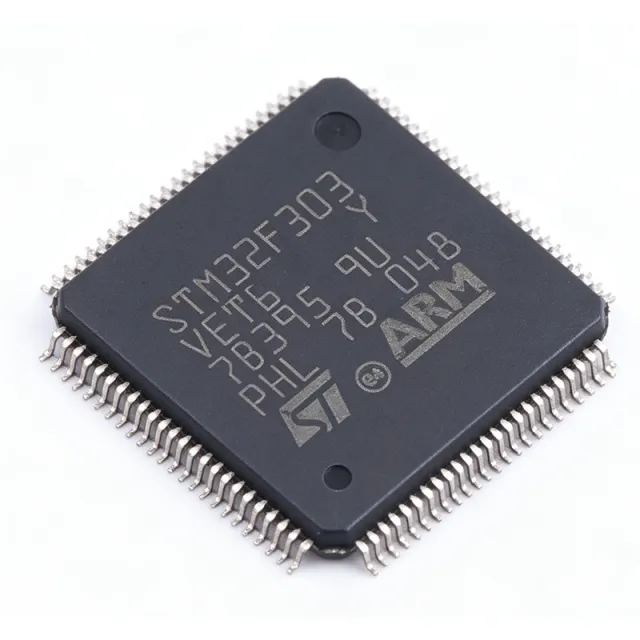
STM32F303ZET6
STM32F303ZET6 - 512KB Flash ARM Cortex-M4F MCU | STMicroelectronics
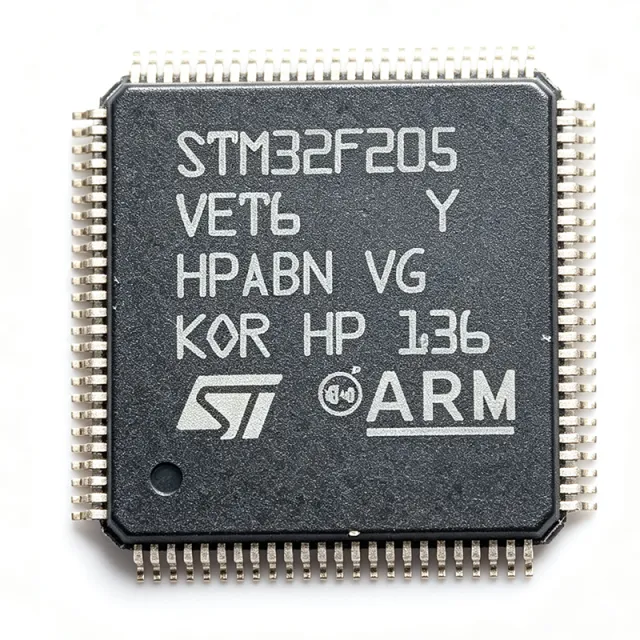
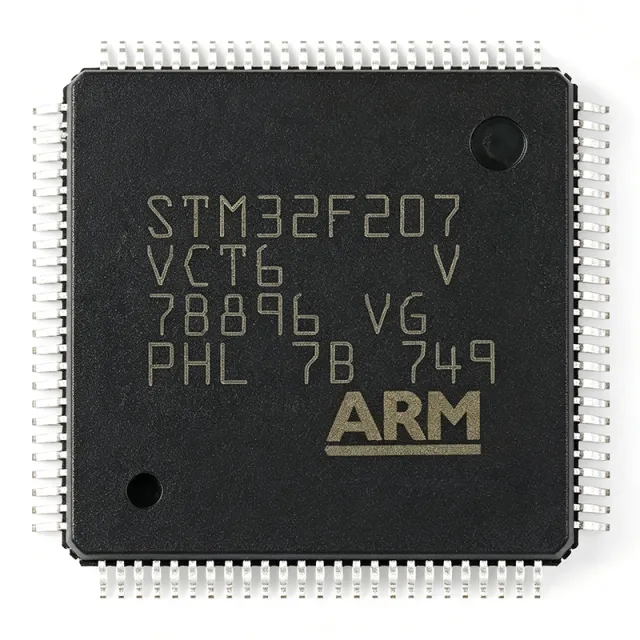
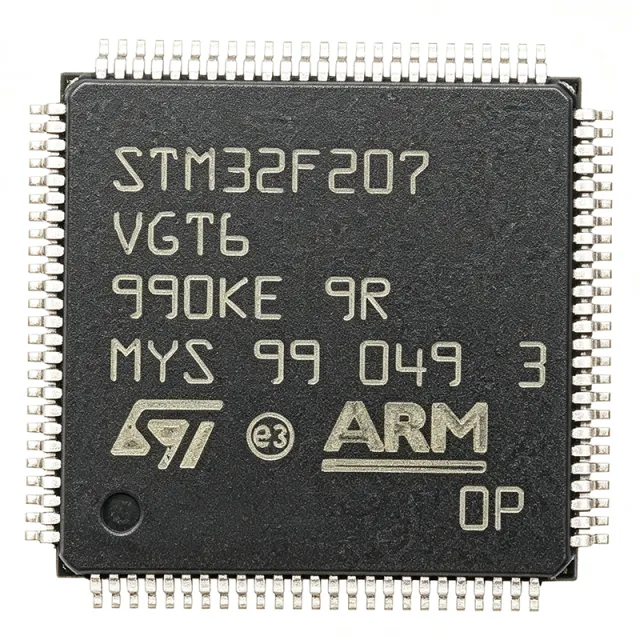
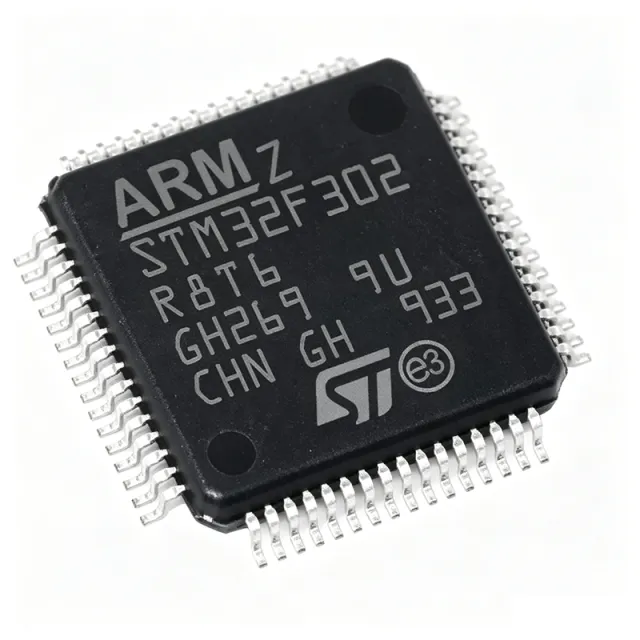
The STMicroelectronics STM32F303ZET6 is a high-performance 32-bit ARM Cortex-M4F microcontroller with floating-point unit (FPU), operating at up to 72 MHz. It integrates 512 KB of flash memory and 64 KB of SRAM, making it suitable for complex control and signal processing applications. The device is housed in a 144-pin LQFP package (LQFP144) with a 20x20 mm body and 0.5 mm pitch, providing extensive I/O and peripheral connectivity.
What is an ARM Cortex-M4F microcontroller? It is a 32-bit processor core designed for embedded control applications, featuring a floating-point unit (FPU) for efficient handling of mathematical operations, DSP instructions for digital signal processing, and a memory protection unit (MPU) for enhanced system reliability. The Cortex-M4F is part of the ARM Cortex-M family, which includes the M0, M0+, M3, M4, and M7 cores, each optimized for different performance and power trade-offs. In the system hierarchy, the microcontroller sits between the application software and the physical hardware, executing instructions and managing peripherals such as timers, ADCs, and communication interfaces.
Key features of the STM32F303ZET6 include a 72 MHz maximum clock speed, 512 KB flash, 64 KB SRAM, and a rich set of peripherals: 4x 12-bit ADCs with up to 5 MSPS, 2x 12-bit DACs, 7x comparators, 4x operational amplifiers, 3x 16-bit advanced-control timers, 2x 32-bit timers, and multiple communication interfaces (SPI, I2C, USART, CAN, USB). The device also features a true random number generator (RNG), a CRC calculation unit, and a 12-channel DMA controller. The FPU accelerates single-precision floating-point arithmetic, which is critical for control loops and sensor fusion algorithms.
Technically, the STM32F303ZET6 is built on a 90nm process technology, offering a balance of performance and power efficiency. It operates from a 2.0V to 3.6V supply and features multiple low-power modes (Sleep, Stop, Standby) to minimize energy consumption in battery-powered designs. The device includes a comprehensive clock system with an internal 8 MHz RC oscillator, an internal 32 kHz RC oscillator, and support for external crystals up to 32 MHz. The ADC can operate in dual or triple interleaved mode to achieve higher sampling rates, and the comparators and op-amps enable analog signal conditioning without external components.
Typical applications include motor control (field-oriented control of brushless DC motors), industrial automation (PLC, sensors, actuators), medical devices (patient monitoring, infusion pumps), and consumer electronics (audio processing, smart home controllers). The combination of analog peripherals and DSP capabilities makes it ideal for applications requiring both signal conditioning and real-time control.
When designing with this device, ensure adequate decoupling of the power supply pins (VDD, VDDA) with 100nF and 4.7uF capacitors placed close to the pins. The VDDA pin must be connected to a clean analog supply to achieve the specified ADC accuracy. Also, configure the boot pins correctly to select the desired boot source (flash, system memory, or SRAM) during development.
USD $7.90
在庫あり