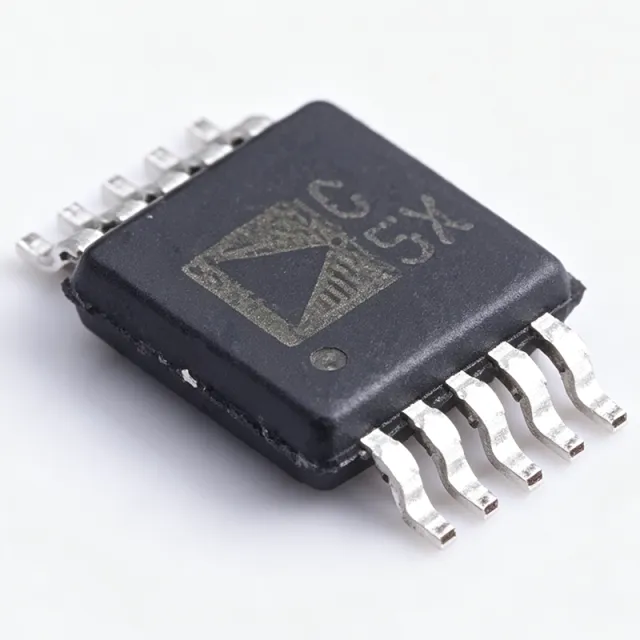
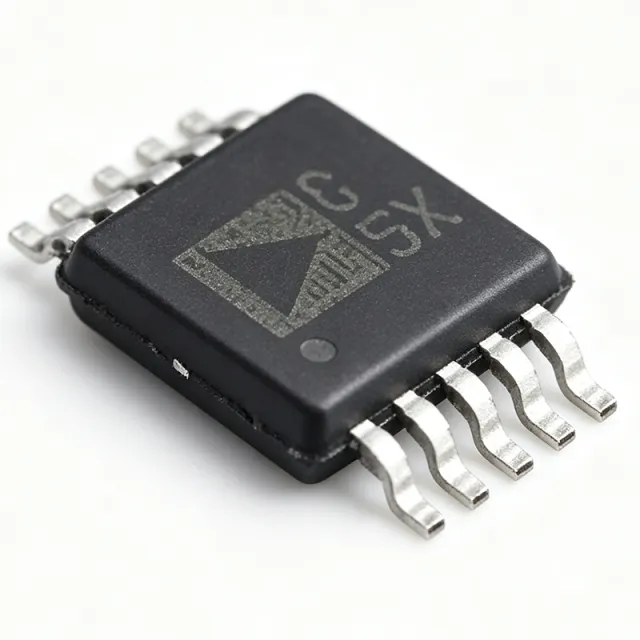
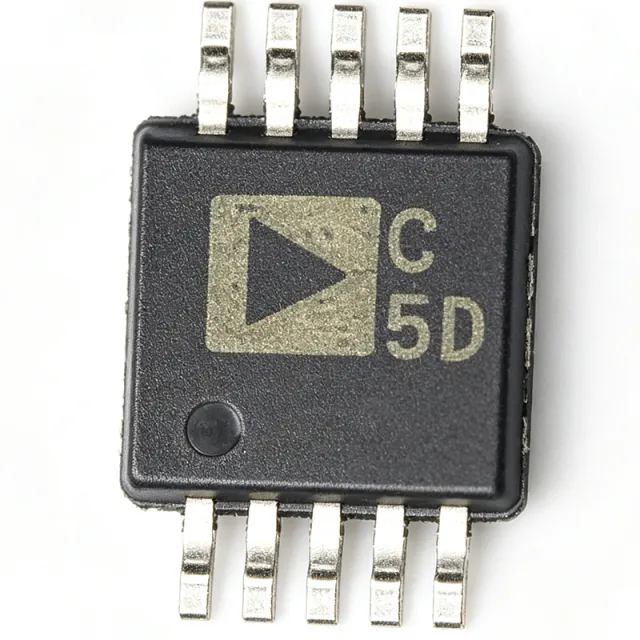
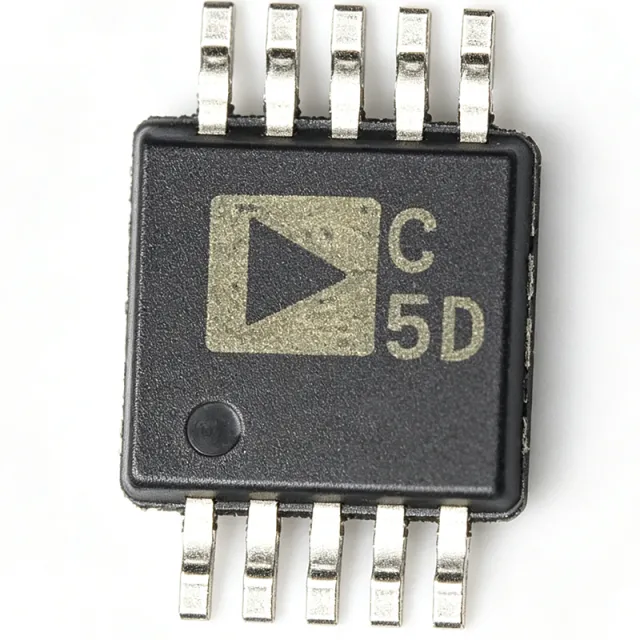
AD7927BRUZ-REEL7
AD7927BRUZ-REEL7 - 12-Bit 200kSPS 8-Ch SAR ADC | Analog Devices
The Analog Devices AD7927BRUZ-REEL7 is a 12-bit, high-speed, low-power, 8-channel successive-approximation register (SAR) analog-to-digital converter that operates from a single 2.7 V to 5.25 V supply and delivers throughput rates up to 200 kSPS. Housed in a 20-pin TSSOP package, the part contains a low-noise, wide-bandwidth track-and-hold amplifier capable of handling input frequencies in excess of 8 MHz, making it well suited to multiplexed multi-channel data acquisition systems. The AD7927BRUZ-REEL7 ships on a 1,000-piece reel (REEL7 suffix) per the Analog Devices packaging convention.
A SAR ADC is a successive-approximation analog-to-digital converter that resolves one bit per conversion cycle using a binary-search algorithm against an internal or external reference. SAR architecture is favored for applications that require deterministic latency, low power consumption, and excellent DC accuracy without the complexity of pipeline or delta-sigma designs. Within the broader power-management and data-acquisition hierarchy, the AD7927 belongs to the precision-converter family, sitting under analog-to-digital converters, which themselves are key building blocks inside signal-chain ICs and embedded data acquisition subsystems.
Key features of the AD7927BRUZ-REEL7 include 200 kSPS throughput, an analog input range of 0 V to VREF (with VREF supplied externally, typically 2.5 V), a sequencer that cycles through the eight analog inputs automatically, and a low-power dissipation profile of 3.6 mW typical at 200 kSPS with a 3 V supply and 7.5 mW typical at 200 kSPS with a 5 V supply. The serial interface is compatible with DSP, MICROWIRE, QSPI, and SPI protocols, allowing direct connection to most microcontrollers and DSPs without glue logic.
Architecturally, the AD7927 integrates an 8-channel analog input multiplexer, a fully differential track-and-hold, a 12-bit SAR core, a control logic block, and an external-reference input. The on-chip sequencer can be programmed to convert a user-defined subset of channels in any order, enabling efficient channel scanning without repeated register writes. The wide input bandwidth (>8 MHz) ensures accurate sampling of fast transients on any selected channel before digitization.
Typical applications include industrial process control, multi-zone temperature monitoring via thermocouples or RTDs, instrumentation data acquisition, portable battery-powered measurement, optical-module monitoring (SFF/SFP transceivers), and embedded motor-control feedback. The combination of 8 single-ended inputs, low power, and SPI compatibility makes the AD7927 ideal for space-constrained designs requiring multi-sensor monitoring.
A key design consideration is reference selection. Because the AD7927 does not include an internal reference, the absolute accuracy of every conversion is gated by the external reference. Using a low-drift, low-noise 2.5 V reference such as the ADR01 or ADR435 is recommended for precision applications; noise on VREF directly translates to gain error and noise floor.
This page synthesizes distributor pricing, drop-in alternatives, and practical design notes not found in the standalone manufacturer datasheet to accelerate component selection, BOM risk reduction, and second-source qualification.
견적 요청
문의하기