STM32L071CBT7
STM32L071CBT7 - 32MHz Cortex-M0+ 128KB MCU | STMicroelectronics
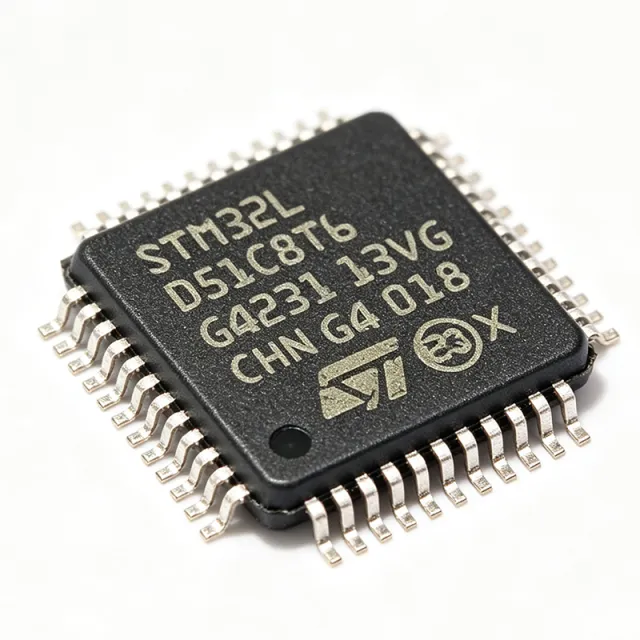
The STMicroelectronics STM32L071CBT7 is an ultra-low-power Arm Cortex-M0+ 32-bit microcontroller with a 32 MHz CPU, 128 KB of Flash memory, and a 48-LQFP 7 x 7 mm package. It belongs to STMicroelectronics' STM32L0 access-line family and is intended for compact, energy-conscious embedded products. The verified distributor data identifies the MCU as a 32-bit device with 128 KB organized as 128K x 8, while the manufacturer page describes the STM32L071xx family's 32 MHz Cortex-M0+ core.
An ultra-low-power microcontroller is a semiconductor component optimized to complete embedded control tasks while minimizing energy consumption during active operation, standby, and wake-up transitions. The STM32L0 family sits within the broader hierarchy of microcontroller, embedded processor, embedded control IC, and power-conscious semiconductor. This positioning makes the STM32L071CBT7 suitable for products where battery life, compact size, deterministic control, and low system overhead matter more than maximum compute throughput.
The verified data highlights three principal attributes: a 32 MHz Arm Cortex-M0+ processor, 128 KB of Flash memory, and a 48-LQFP 7 x 7 mm package. LCSC additionally identifies a 12-bit conversion feature and an operating temperature range of -40 C to +105 C. These details make the device a general-purpose embedded controller for low-power sensing, actuator control, portable equipment, and compact industrial modules. The exact RAM, peripheral, voltage, current, and package-pin details must be confirmed against the manufacturer datasheet before design release.
The STM32L071CBT7 is intended for firmware that benefits from a familiar Arm Cortex-M ecosystem, efficient 32-bit instruction execution, and embedded Flash-resident program storage. Its 128 KB Flash capacity is larger than many minimal microcontrollers and can accommodate boot code, application logic, configuration tables, and protocol handlers. The 32 MHz clock provides useful processing headroom for sensor polling, digital filtering, user-interface state machines, and communication-stack tasks, although real-time performance remains dependent on peripherals and firmware configuration.
Typical embedded uses include low-power environmental sensors, battery-operated portable instruments, compact motor or actuator controllers, connected sensing nodes, and industrial automation modules. In a sensor node, the MCU could acquire measurements, filter data, manage a low-power duty cycle, and store operating parameters. In an industrial module, it could coordinate inputs and outputs while supporting field-bus or serial communication. The package and exact peripheral complement should be selected against the mechanical drawing and pin definition.
The primary design consideration is to validate every electrical and pin requirement from the official manufacturer datasheet before layout. Confirm the complete LQFP-48 pin map, supply limits, decoupling requirements, oscillator connections, I/O limits, and programming interface. For a new ultra-low-power design, calculate average current from the selected operating mode, peripheral load, wake-up rate, and measurement duty cycle rather than relying only on the maximum clock frequency.
This page consolidates exact distributor and manufacturer facts, distinguishes verified data from missing parameters, and adds selection, sourcing, and design guidance. It also avoids presenting unverified pin mappings or cross-manufacturer drop-in claims as guaranteed replacements.
USD $8.12
재고 있음