APDS-9960-210 - RGB/ALS/Proximity/Gesture Optical Sensor | Broadcom
MPN: APDS-9960-210 ✓ Active| Qty | Unit Price | Extended |
|---|---|---|
| 1 | $2.85 | $2.85 |
| 10 | $2.55 | $25.50 |
| 100 | $2.18 | $218.00 |
| 500 | $1.92 | $960.00 |
| 1,000 | $1.68 | $1,680.00 |
| 3,000 | $1.45 | $4,350.00 |
APDS-9960-210 Overview
What is an optical gesture/color/proximity sensor? It is a multi-function optoelectronic IC that emits infrared light, captures reflections on integrated photodiodes, and runs on-chip DSP to recognize hand gestures, object proximity, ambient light intensity, and RGB color. In the broader taxonomy it sits under: optical sensor -> ambient light, IR, UV sensor -> sensor IC -> semiconductor. Such ICs replaced discrete LED+photodiode pairs and external ADCs by integrating the analog front-end, LED driver, I2C interface, and gesture engine in a single reflow-solderable LGA module.
Key features include four independent sensor channels (RGBC + proximity + gesture), I2C interface compatible with 100 kHz and 400 kHz, configurable interrupt output, 8-bit to 16-bit ADC resolution, and an integrated IR LED with a calibrated current driver. The factory calibration removes the need for manual LED current tuning across individual units, while the slim 1.35 mm package enables placement behind dark or IR-transmissive cover glass with minimal mechanical intrusion.
The internal architecture uses four photodiode channels with optical filters: a clear channel for ambient light intensity, dedicated red/green/blue filters for color sensing, and an unfiltered IR-sensitive channel for proximity and gesture detection. The integrated gesture engine decodes the IR reflections from four directional photodiodes into LEFT, RIGHT, UP, DOWN, NEAR, and FAR events, offloading processing from the host MCU. The I2C interface supports standard (100 kHz) and fast (400 kHz) modes with selectable addresses.
Typical applications include smartphone touchless gesture control, laptop/alphanumeric display auto-brightness, IoT and smart-home gesture UIs, robotics obstacle avoidance, gaming peripherals, and kiosk/proximity wake-up. Designers also use it for color-matching under RGB LED lighting and as a contactless dimmer for industrial panels.
When designing with this device, place the module behind IR-transmissive cover glass to maximize IR throughput, and reserve at least 1.5 mm clearance above the package for unobstructed IR emission. The I2C lines require 10 kohm pull-ups to the host's logic level (1.8 V to 3.3 V), and the INT pin should be wired to a host GPIO with interrupt capability for low-power event-driven operation.
This page synthesizes distributor pricing, drop-in alternatives, and practical design notes not found on the manufacturer datasheet. It also cross-references same-package alternatives from Broadcom's RGB+IR sensor family and competitor modules suitable for second-source qualification.
Drop-in alternatives for APDS-9960-210 — same package, pin-to-pin compatible. Different-package parts requiring PCB rework are excluded.
Quick Comparison Tool — Select alternative parts for side-by-side comparison:
APDS-9960
✅ Drop-In📋 Reference alternative (not in catalog)
APDS-9190
✅ Drop-In📋 Reference alternative (not in catalog)
APDS-9951
✅ Drop-In ⚠️ 参数待验证📋 Reference alternative (not in catalog)
TCS34725
✅ Drop-In📋 Reference alternative (not in catalog)
APDS-9960-210 Maximum Ratings & Electrical Characteristics
| Product Type | Optical Sensor (RGB + ALS + Proximity + Gesture) |
| Peak Sensitivity Wavelength | 560 nm (clear/ALS channel) |
| Functions | Gesture, Proximity, Ambient Light (ALS), RGB Color Sense (RGBC) |
| Interface | I2C (100 kHz / 400 kHz) |
| Operating Voltage (VDD) | 2.4 V to 3.6 V |
| IR LED Supply Voltage | 3.0 V to 4.5 V (VBAT) |
| ADC Resolution | 8-bit to 16-bit (programmable) |
| Gesture Recognition | UP, DOWN, LEFT, RIGHT, NEAR, FAR |
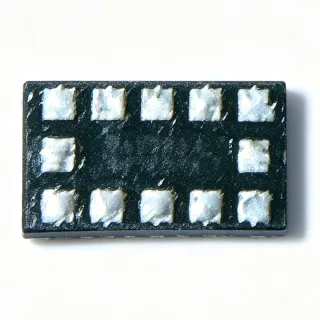
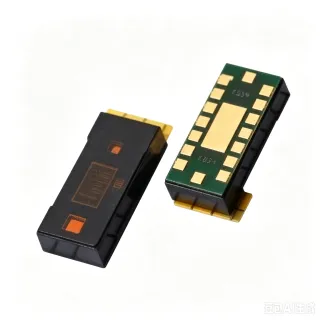
| Package | 8-SMD Module (L 3.94 x W 2.36 x H 1.35 mm) |
| Mounting Type | Surface Mount |
| Integrated IR LED | Yes (factory calibrated driver) |
| Operating Temperature | -30 C to +85 C |
| Storage Temperature | -40 C to +85 C |
| MSL Level | 3 |
| RoHS Status | Compliant |
| Packaging Variant | Tape & Reel (-210 suffix) |
APDS-9960-210 Pin Configuration
| Pin 1 | GND — Ground reference |
| Pin 2 | SDA — I2C data (requires pull-up to VDD) |
| Pin 3 | SCL — I2C clock (requires pull-up to VDD) |
| Pin 4 | INT — Interrupt output (active low, open-drain) |
| Pin 5 | VL — IR LED supply / anode (3.0-4.5 V) |
| Pin 6 | LEDK — IR LED cathode (driven by internal driver) |
| Pin 7 | VDD — Logic supply (2.4-3.6 V) |
| Pin 8 | NC — Not connected (per datasheet) |
Typical Applications
APDS-9960-210 is suitable for 7 applications: Smartphone Touchless Gesture Control, Laptop Display Auto-Brightness (ALS), IoT Smart-Home Gesture Switch, Robotics Obstacle Avoidance (Proximity), RGB Color-Matching Under Variable Lighting, Industrial Panel Contactless Dimmer, Gaming Peripheral Air-Mouse Control.
Smartphone Touchless Gesture Control
The APDS-9960-210 fits smartphone gesture control because its 6-direction gesture engine (UP/DOWN/LEFT/RIGHT/NEAR/FAR) runs on-chip, offloading the host MCU and enabling 0-20 cm hover detection behind cover glass. The factory-calibrated IR LED driver removes per-unit LED current tuning, and the I2C interface runs from 1.8 V to 3.3 V logic compatible with typical mobile PMICs. Compared to discrete LED+photodiode solutions, this single module reduces BOM count by 4-6 parts and shrinks the sensor footprint to 3.94 x 2.36 x 1.35 mm, fitting inside tight phone bezels.
Recommended
Laptop Display Auto-Brightness (ALS)
The APDS-9960-210's RGBC photodiode array delivers calibrated ambient light intensity and correlated color temperature, enabling laptop auto-brightness algorithms to adjust not only backlight level but also white balance based on room lighting. The clear channel covers 0-16k lux with 16-bit ADC resolution, while the separate R/G/B channels support CCT estimation. The 100/400 kHz I2C interface shares the bus with other sensors, and the INT pin allows event-driven brightness updates without polling overhead.
Recommended
IoT Smart-Home Gesture Switch
The APDS-9960-210 is well suited to battery-powered IoT switches and dimmers because its event-driven INT pin lets the host MCU sleep until a gesture is detected, reducing average quiescent draw to single-digit microamps. The integrated IR LED eliminates the external driver circuit required by discrete designs, and the 8-SMD module mounts behind standard 1-3 mm IR-transmissive plastic. With the part's 2.4-3.6 V VDD range it runs directly from a Li-ion or 2xAA battery stack without a separate regulator.
Recommended
Robotics Obstacle Avoidance (Proximity)
For robotics obstacle avoidance, the APDS-9960-210 provides IR proximity sensing up to a few centimeters with a fast 100/400 kHz I2C readout rate that supports real-time collision-warning loops. The proximity engine uses dual-photodiode geometry to estimate object distance and reject ambient IR from sunlight or indoor lighting. Designers typically place the module on a robot's front bumper at a 30-45 degree downward angle to detect floor-level obstacles, taking advantage of the 3.94 x 2.36 x 1.35 mm slim form factor.
Recommended
RGB Color-Matching Under Variable Lighting
The APDS-9960-210's calibrated RGBC channels with 16-bit ADC resolution enable accurate color sensing in paint-matching, retail product scanning, and RGB LED calibration fixtures. The four photodiode channels - red, green, blue, and clear - feed on-chip integration logic that averages out 50/60 Hz flicker from fluorescent and LED lighting, providing stable color readings even under modulated sources. Designers using this for color measurement typically add a white-balance calibration step in the host MCU to correct for the factory gain offsets documented in the datasheet.
Recommended
Industrial Panel Contactless Dimmer
Industrial control panels benefit from the APDS-9960-210's IP-rated contactless gesture dimming in environments where physical knobs are impractical - food processing, medical equipment, or outdoor kiosks. The -40 C to +85 C storage and -30 C to +85 C operating range covers industrial temperature requirements, and the rugged 8-SMD module withstands vibration better than mechanical pots. Gesture recognition runs at up to 60 Hz gesture rate, enabling smooth continuous dimming in response to user swipes.
Recommended
Gaming Peripheral Air-Mouse Control
The APDS-9960-210's NEAR/FAR gesture events enable air-mouse style input where hand distance and direction relative to the sensor are mapped to cursor movements or scroll actions. Its 6-direction gesture engine supports directional swipes at 0-20 cm range, and the integrated IR LED removes the need for an external emitter, simplifying the gaming controller BOM. The 100/400 kHz I2C interface is compatible with common gaming-MCU peripherals, and the small footprint allows mounting inside existing controller enclosures.
Recommended
Recommended Products Summary
Engineering reference data for APDS-9960-210 — comparison, design guidance, and compliance information.
Selection Guide
Comparison with Alternatives
| Parameter | This Product | APDS-9960 | APDS-9190 | APDS-9951 | TCS34725 |
|---|---|---|---|---|---|
| Brand | Broadcom | Broadcom | Broadcom | Broadcom | ams-OSRAM (TAOS) |
| Package | 8-SMD Module (3.94x2.36x1.35 mm) | 8-SMD Module - same | 8-SMD Module - similar | 8-SMD Module - similar | 8-SMD Module - similar |
| Functions | Gesture + Proximity + ALS + RGB | Gesture + Proximity + ALS + RGB (same) | Proximity + ALS only | Proximity + ALS + RGB (no gesture) | ALS + RGB only (no gesture, no proximity) |
| Interface | I2C 100/400 kHz | I2C 100/400 kHz | I2C 100/400 kHz | I2C 100/400 kHz | I2C 100/400 kHz |
| Operating Voltage (VDD) | 2.4 V to 3.6 V | 2.4 V to 3.6 V | 2.4 V to 3.6 V | 2.4 V to 3.6 V | 2.7 V to 3.6 V |
| Integrated IR LED | Yes (calibrated) | Yes (calibrated) | Yes (calibrated) | Yes (calibrated) | No (LED must be external, plus IR-block filter) |
| Gesture Recognition | 6 gestures (U/D/L/R/N/F) | 6 gestures | None | None | None |
| Operating Temperature | -30 C to +85 C | -30 C to +85 C | -30 C to +85 C | -30 C to +85 C | -30 C to +70 C |
Key Differentiators
- Only Broadcom 8-SMD module combining 6-direction gesture + RGBC + ALS + proximity in one IC (vs TCS34725)
- Factory-calibrated integrated IR LED (vs APDS-9190)
- Same die as bare APDS-9960 with production-ready reel packaging (vs APDS-9960)
- On-chip gesture DSP offloads host MCU (vs PAJ7620U2)
Design Notes
Mount the APDS-9960-210 on the PCB top side with a clear window in the enclosure, at least 1.5 mm of air gap above the package to allow unobstructed IR emission and reception. Avoid placing tall components within 5 mm of the module edges to prevent IR reflections that confuse the gesture engine. Use a bezel or light-pipe geometry that blocks stray IR from reaching the photodiodes at oblique angles.
The APDS-9960-210 has two supply rails: VDD (2.4-3.6 V, ~3-25 mA active) and VL (3.0-4.5 V, ~100-200 mA peak for IR LED pulses). Decouple VDD with a 100 nF ceramic cap close to the pin, and VL with a 1 uF plus 100 nF ceramic pair to absorb LED current spikes. The VL pin can be tied directly to a Li-ion battery (~3.7 V) while VDD runs from a 3.3 V LDO to optimize efficiency in battery designs.
Do not omit the I2C pull-up resistors on SDA and SCL; the APDS-9960-210's I2C pins are open-drain and require 2.2-10 kohm pull-ups to VDD. Place pull-ups near the host MCU rather than the sensor to keep the bus rise-time clean. Also, configure the INT pin as input on the host with a falling-edge interrupt trigger - the sensor's INT line is active-low and open-drain, and missing this configuration causes event-driven designs to fall back to polling.
Keep I2C traces short (<50 mm to host) and route SDA/SCL as a differential pair with ground on either side. Place a 100 ohm series resistor near the host on SCL for EMI suppression in long-trace layouts. Avoid routing I2C across switching regulator or motor driver sections; the APDS-9960-210's gesture engine is sensitive to injected noise on the I2C lines which can cause spurious gesture events.
Compliance Information
RoHS compliance verified per Broadcom product page. AEC-Q100 not applicable - this is a consumer/industrial optical sensor, not an automotive-qualified IC. Lifecycle is active but engineers should monitor Broadcom's optical-sensor portfolio announcements for end-of-life notices (a DigiKey forum thread from 2024 raised earlier EOL concerns that have since been resolved).