CC3135RNMARG - Dual-Band Wi-Fi Network Processor | Texas Instruments
MPN: CC3135RNMARG ✓ Active| Qty | Unit Price | Extended |
|---|---|---|
| 1 | $9.85 | $9.85 |
| 10 | $8.95 | $89.50 |
| 100 | $7.85 | $785.00 |
| 500 | $6.95 | $3,475.00 |
| 1,000 | $6.25 | $6,250.00 |
CC3135RNMARG Overview
A Wi-Fi network processor is a specialized IC that handles all Wi-Fi communication and networking protocols, allowing a host MCU to focus on application tasks. It sits between the host MCU and the RF front-end, managing the radio, baseband, and protocol stack. This offloads complex networking code, reduces host processing load, and accelerates time-to-market for IoT products.
Key features include dual-band operation (2.4 GHz and 5 GHz), integrated Arm Cortex-M3, hardware security with crypto accelerators, and support for WPA2/WPA3 personal and enterprise security. The device also offers a rich set of internet protocols such as TCP/IP, TLS, and HTTP, enabling secure cloud connectivity. Its low-power modes (LPDS, hibernate) are optimized for battery-powered IoT devices.
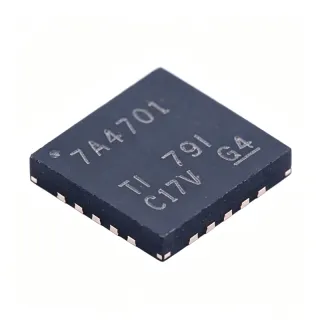
Technically, the CC3135 integrates a complete RF front-end, including PA, LNA, and RF switch, reducing external component count. It uses a 64-pin VQFN package (RGK) with exposed thermal pad for efficient heat dissipation. The device is part of TI's SimpleLink family, offering a unified software development kit (SDK) and compatibility with various host MCUs via SPI or UART interfaces.
Typical applications include smart home devices, industrial automation, wireless sensors, and portable electronics. Its dual-band capability ensures robust connectivity in congested environments, while the integrated security features protect data in transit. The device is ideal for applications requiring reliable, secure Wi-Fi connectivity with minimal host MCU overhead.
When designing with the CC3135, ensure proper RF layout and antenna matching for optimal performance. The integrated LDO simplifies power supply design, but external decoupling capacitors are required. Also, consider the host interface (SPI or UART) and use the TI SDK for rapid development.
Drop-in alternatives for CC3135RNMARG — same package, pin-to-pin compatible. Different-package parts requiring PCB rework are excluded.
Quick Comparison Tool — Select alternative parts for side-by-side comparison:
CC3135RNMRGKR
✅ Drop-In📋 Reference alternative (not in catalog)
CC3135RNMARG-Q1
✅ Drop-In ⚠️ Specs Unverified📋 Reference alternative (not in catalog)
CC3135RNMRGKR-Q1
✅ Drop-In ⚠️ Specs Unverified📋 Reference alternative (not in catalog)
CC3135RNMARG
✅ Drop-In✓ In Stock
$6.25 / Unit
View Datasheet →CC3135RNMARG Maximum Ratings & Electrical Characteristics
| Type | Wi-Fi Network Processor |
| Frequency Range | 2.412 GHz ~ 2.472 GHz, 5.18 GHz ~ 5.825 GHz |
| Protocol | 802.11a/b/g/n |
| Core | Arm Cortex-M3 |
| Supply Voltage | 2.3 V to 3.6 V |
| Package | 64-VFQFN Exposed Pad (RGK) |
| Operating Temperature | -40°C to +85°C |
| Security | WPA2/WPA3 Personal and Enterprise |
| Host Interface | SPI or UART |
| Integrated LDO | 1 A with enable |
| Low Power Modes | LPDS, hibernate |
| RoHS | Compliant |
| Mounting Type | Surface Mount |
| RF Front-End | Integrated PA, LNA, RF switch |
| Internet Protocols | TCP/IP, TLS, HTTP |
CC3135RNMARG Pin Configuration
| Pin 1 | VCC — Power supply input |
| Pin 2 | GND — Ground |
| Pin 3 | SPI_CLK — SPI clock input |
| Pin 4 | SPI_MOSI — SPI master out slave in |
| Pin 5 | SPI_MISO — SPI master in slave out |
| Pin 6 | SPI_CS — SPI chip select |
| Pin 7 | UART_TX — UART transmit |
| Pin 8 | UART_RX — UART receive |
| Pin 9 | EN — Enable pin for LDO |
| Pin 10 | RESET — Reset input |
| Pin 11 | RF — RF input/output |
| Pin 12 | GND — Ground |
Typical Applications
CC3135RNMARG is suitable for 6 applications: Smart Home Devices, Industrial Automation, Wireless Sensors, Portable Electronics, IoT Gateways, Audio Streaming.
Smart Home Devices
The CC3135RNMARG enables smart home devices like thermostats, lighting controls, and security cameras to connect to Wi-Fi for remote monitoring and control. Its dual-band support ensures reliable connectivity in congested home environments, while the integrated security features protect user data. The low-power modes extend battery life in battery-powered sensors, and the host MCU interface simplifies integration with existing designs.
Recommended
Industrial Automation
In industrial automation, the CC3135RNMARG provides reliable Wi-Fi connectivity for equipment monitoring, predictive maintenance, and remote control. Its dual-band operation avoids interference in crowded 2.4 GHz environments, and the hardware security ensures secure data transmission. The device's wide operating temperature range and robust RF front-end make it suitable for harsh industrial settings, while the SPI/UART host interface allows easy integration with industrial MCUs.
Recommended
Wireless Sensors
The CC3135RNMARG is ideal for wireless sensor networks, offering low-power modes (LPDS, hibernate) that extend battery life in remote sensors. Its dual-band capability ensures robust connectivity in dense deployments, and the integrated security protects sensor data. The device's small 64-pin VQFN package and integrated LDO simplify power design, making it suitable for compact, battery-powered sensor nodes.
Recommended
Portable Electronics
For portable electronics like fitness trackers and smartwatches, the CC3135RNMARG provides Wi-Fi connectivity for data sync and cloud services. Its low-power modes are crucial for battery life, and the dual-band support offers faster data rates and better connectivity in crowded environments. The integrated LDO and small package make it suitable for space-constrained designs, while the host interface allows seamless integration with application processors.
Recommended
IoT Gateways
The CC3135RNMARG serves as a Wi-Fi network processor in IoT gateways, connecting various sensors and devices to the cloud. Its dual-band support ensures reliable backhaul connectivity, and the integrated security features protect data in transit. The device's rich internet protocols (TCP/IP, TLS, HTTP) enable secure cloud communication, while the host MCU interface allows flexible gateway designs.
Recommended
Audio Streaming
The CC3135RNMARG enables Wi-Fi audio streaming in speakers and soundbars, providing high-bandwidth dual-band connectivity for lossless audio. Its low latency and reliable connection ensure smooth playback, while the integrated security protects streaming content. The device's host interface allows integration with audio codecs and DSPs, and its low-power modes support standby operation.
Recommended
Recommended Products Summary
Engineering reference data for CC3135RNMARG — comparison, design guidance, and compliance information.
Selection Guide
Comparison with Alternatives
| Parameter | This Product | CC3135RNMRGKR | CC3135RNMARG-Q1 | CYW43438 |
|---|---|---|---|---|
| Package | 64-VFQFN Exposed Pad (RGK) | 64-VFQFN Exposed Pad (RGK) | 64-VFQFN Exposed Pad (RGK) | WLCSP |
| Brand | Texas Instruments | Texas Instruments | Texas Instruments | Infineon |
| Frequency Range | 2.412-2.472 GHz, 5.18-5.825 GHz | 2.412-2.472 GHz, 5.18-5.825 GHz | 2.412-2.472 GHz, 5.18-5.825 GHz | 2.4 GHz, 5 GHz |
| Protocol | 802.11a/b/g/n | 802.11a/b/g/n | 802.11a/b/g/n | 802.11a/b/g/n |
| Core | Arm Cortex-M3 | Arm Cortex-M3 | Arm Cortex-M3 | ARM Cortex-M3 |
| Supply Voltage | 2.3V to 3.6V | 2.3V to 3.6V | 2.3V to 3.6V | 2.3V to 3.6V |
| Security | WPA2/WPA3 Personal and Enterprise | WPA2/WPA3 Personal and Enterprise | WPA2/WPA3 Personal and Enterprise | WPA2/WPA3 |
| Host Interface | SPI or UART | SPI or UART | SPI or UART | SDIO |
Key Differentiators
- Integrated Arm Cortex-M3 offloads networking (vs CYW43438)
- Dual-band support (vs CYW43438)
- Integrated 1A LDO (vs CYW43438)
Design Notes
For optimal RF performance, ensure a clean ground plane under the CC3135 and place decoupling capacitors close to the VCC pins. Follow TI's layout guidelines in the datasheet for the RF trace and antenna matching network. Use a 50-ohm impedance-controlled trace for the RF output.
The integrated 1A LDO simplifies power supply design, but ensure input voltage is within 2.3V to 3.6V. Use a low-ESR ceramic capacitor (e.g., 10uF) on the LDO output for stability. For battery-powered designs, utilize the LPDS and hibernate modes to minimize current consumption.
Avoid placing the CC3135 near high-speed digital lines or switching regulators that can cause interference. Ensure proper antenna clearance and keep the RF section away from metal objects. Also, verify the host interface (SPI or UART) is correctly configured and that the SDK is properly initialized.
Compliance Information
RoHS compliant per TI product page. AEC-Q100 not applicable for standard version; Q1 variant is automotive qualified.