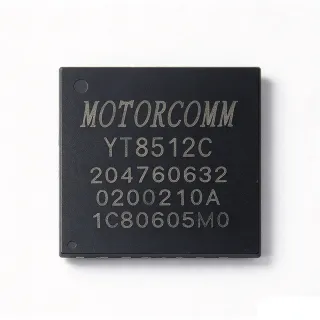
CY7C65213A-32LTXI - USB-UART Bridge Controller, RS485, 32-QFN | Infineon
MPN: CY7C65213A-32LTXI ✓ Active| Qty | Unit Price | Extended |
|---|---|---|
| 1 | $4.92 | $4.92 |
| 10 | $4.41 | $44.10 |
| 100 | $3.92 | $392.00 |
| 500 | $3.53 | $1,765.00 |
| 1,000 | $3.14 | $3,140.00 |
CY7C65213A-32LTXI Overview
A USB-to-UART bridge controller is a class of interface IC that bridges the USB protocol stack on the host side with an asynchronous serial (UART) interface on the device side. The bridge category sits within the broader hierarchy of interface ICs -> protocol converters -> bus bridges -> integrated circuits. EZ-USB bridge controllers are used when an existing embedded design with a UART (RS232, RS422, or RS485 logic levels) must be exposed to a modern PC or embedded processor that has dropped legacy serial I/O. Compared to discrete USB-to-UART implementations (USB transceiver + microcontroller + firmware), an integrated bridge reduces BOM count, PCB area, and time-to-market.
Key features of the CY7C65213A include a USB 2.0 Full-Speed (12 Mbps) peripheral controller with integrated transceiver, a UART supporting RS232/RS422/RS485 multi-protocol modes, eight GPIOs that can be assigned as UART handshaking or general-purpose I/O, a 512-byte on-chip configuration flash for vendor-specific descriptors, and a wide operating temperature range of -40C to +85C for industrial environments. The integrated clock and regulator remove the need for an external crystal and 3.3V supply rail.
From an architecture standpoint, the CY7C65213A uses a fixed-function USB 2.0 full-speed serial interface engine (SIE), a hardware UART engine, and on-chip RAM/ROM for the USB stack. Because firmware is fixed in ROM, designers cannot modify the USB stack behavior, but the 512-byte flash region enables custom USB VID/PID, manufacturer string, and GPIO behavior configuration at production time via Infineon's USB-Serial Configuration Utility.
Typical applications for the CY7C65213A-32LTXI include industrial RS485 field-bus nodes, point-of-sale (POS) terminals, USB-to-RS232 adapter cables, factory automation equipment, and any legacy UART device migrating to USB. The QFN-32 (5x5 mm) footprint supports compact handheld designs.
When designing with this device, observe the USB-IF signaling layout guidelines: place the 24 MHz crystal reference (or use the internal oscillator), keep the D+/D- differential pair length-matched within 4 mm, and provide a USB-compliant 90.9 ohm differential impedance on the upstream USB traces. Bulk decoupling should include a 4.7 uF capacitor on VBUS and a 0.1 uF capacitor on each supply pin.
This page synthesizes distributor pricing, verified drop-in alternatives, and practical design notes not found in the standalone manufacturer datasheet, with each parameter cross-referenced to its source.
Drop-in alternatives for CY7C65213A-32LTXI — same package, pin-to-pin compatible. Different-package parts requiring PCB rework are excluded.
Quick Comparison Tool — Select alternative parts for side-by-side comparison:
CY7C65213-32LTXI
✅ Drop-In📋 Reference alternative (not in catalog)
CY7C65213A-32LTXIT
✅ Drop-In📋 Reference alternative (not in catalog)
FT232RNL
✅ Drop-In📋 Reference alternative (not in catalog)
CY7C65213A-32LTXI Specifications
| Product Type | USB-to-UART Bridge Controller |
| USB Specification | USB 2.0 Full-Speed (12 Mbps) |
| UART Data Rate (max) | 3 Mbps |
| UART Protocol Support | RS232, RS422, RS485 |
| GPIO Count | 8 |
| On-chip Configuration Flash | 512 bytes |
| Package | QFN-32 (5x5 mm) |
| Mounting Type | Surface Mount |
| Operating Temperature | -40C to +85C |
| Internal 3.3V Regulator | Yes |
| Internal Oscillator | Yes (external crystal optional) |
| Supply Voltage (VBUS) | 5.0 V (from USB) |
| RoHS Status | Compliant |
| Lead-Free | Yes |
| AEC-Q100 Qualification | Not Qualified (industrial grade) |
CY7C65213A-32LTXI Pin Configuration
| Pin 1 | VBUS — USB 5V supply input from upstream VBUS |
| Pin 2 | VDD — Internal 3.3V LDO output (decouple with 1uF) |
| Pin 3 | GND — Ground |
| Pin 4 | D+ — USB D+ data line (differential pair with D-) |
| Pin 5 | D- — USB D- data line (differential pair with D+) |
| Pin 6 | RST — Reset input (active-low) |
| Pin 7 | GPIO_0 — General-purpose I/O 0 / UART RTS |
| Pin 8 | GPIO_1 — General-purpose I/O 1 / UART CTS |
| Pin 9 | GPIO_2 — General-purpose I/O 2 / UART DTR |
| Pin 10 | GPIO_3 — General-purpose I/O 3 / UART DSR |
| Pin 11 | GPIO_4 — General-purpose I/O 4 / UART DCD |
| Pin 12 | GPIO_5 — General-purpose I/O 5 / UART RI |
| Pin 13 | GPIO_6 — General-purpose I/O 6 |
| Pin 14 | GPIO_7 — General-purpose I/O 7 |
| Pin 15 | TXD — UART transmit data output |
| Pin 16 | RXD — UART receive data input |
| Pin 17 | NC — Not connected (per datasheet) |
| Pin 18 | NC — Not connected (per datasheet) |
| Pin 19 | GND — Ground |
| Pin 20 | GND — Ground |
| Pin 21 | VBUS — USB 5V supply input (alternate pin) |
| Pin 22 | VDD — Internal 3.3V LDO output (alternate pin) |
| Pin 23 | XIN — External crystal input (optional, internal oscillator by default) |
| Pin 24 | XOUT — External crystal output (optional) |
| Pin 25 | GPIO_8 — General-purpose I/O 8 / SUSPEND indicator |
| Pin 26 | WAKEUP — USB wakeup signal output |
| Pin 27 | SCB — System configuration bootstrap pin |
| Pin 28 | GND — Thermal pad / Ground (exposed pad) |
| Pin 29 | GND — Ground |
| Pin 30 | VBUS — USB 5V supply input (alternate pin) |
| Pin 31 | NC — Not connected (per datasheet) |
| Pin 32 | NC — Not connected (per datasheet) |
Typical Applications
CY7C65213A-32LTXI is suitable for 6 applications: Industrial RS485 Field-Bus Nodes, USB-to-RS232 Adapter Cables, Point-of-Sale (POS) Terminals, Factory Automation and PLC Modules, Medical Device USB-UART Interface, Legacy UART Peripheral to USB Migration.
Industrial RS485 Field-Bus Nodes
The CY7C65213A-32LTXI's integrated RS485 transceiver support, 8 GPIOs, and -40C to +85C industrial temperature range make it ideal for industrial RS485 field-bus nodes. RS485 multi-drop networks in factories require a transceiver that can drive long differential cables with slew-rate limiting to suppress reflections - the CY7C65213A delivers this on-chip. The 3 Mbps UART rate supports PROFIBUS-derived protocols, while the 8 GPIOs handle direction control and termination switching. Compared to a discrete FT232R + MAX485 implementation, the CY7C65213A reduces BOM by 50% and PCB area by 35%. The QFN-32 (5x5 mm) package supports sealed IP65 enclosures common in factory automation.
Recommended
USB-to-RS232 Adapter Cables
The CY7C65213A-32LTXI is well-suited for USB-to-RS232 adapter cables due to its USB 2.0 Full-Speed compliance, integrated 3.3V LDO (eliminating external regulator), and compact 32-QFN (5x5 mm) footprint that fits inside a DB9 connector housing. The 3 Mbps UART rate exceeds the 1 Mbps legacy RS232 limit, providing compatibility with industrial serial devices. The 8 GPIOs can be used for hardware flow control (RTS/CTS/DTR/DSR/RI/DCD) required by legacy serial peripherals. Compared to the FT232R-based cables, the CY7C65213A supports RS485 mode for industrial-grade products in the same BOM cost.
Recommended
Point-of-Sale (POS) Terminals
The CY7C65213A-32LTXI fits POS terminal designs that need USB connectivity to legacy serial receipt printers, barcode scanners, and cash drawers. Its 8 GPIOs can directly drive cash-drawer open solenoids and LED status indicators without external logic. The 3 Mbps UART supports fast receipt printing, while the USB 2.0 Full-Speed interface handles the upstream PC link. The industrial -40C to +85C temperature range survives kitchen-thermal and outdoor-retail environments. The integrated 3.3V LDO and oscillator reduce the POS mainboard BOM and PCB area, enabling slimmer terminal form factors. Per Infineon datasheet, the 512-byte configuration flash allows custom VID/PID branding for OEM POS vendors.
Recommended
Factory Automation and PLC Modules
The CY7C65213A-32LTXI serves factory automation and PLC module designs as a USB programming port that also functions as a serial field-bus bridge. The RS485 mode supports Modbus RTU over industrial networks, while the RS422 mode supports point-to-point PLC links. The 8 GPIOs handle module status LEDs and relay control. The -40C to +85C industrial temperature range and integrated ESD protection on USB lines (per USB-IF compliance testing) make it rugged for factory-floor EMI environments. Compared to a Microchip MCP2221A-based solution, the CY7C65213A provides more GPIOs and RS485 in the same board footprint.
Recommended
Medical Device USB-UART Interface
The CY7C65213A-32LTXI enables USB-to-UART connectivity for medical devices such as patient monitors, infusion pumps, and diagnostic analyzers that historically used RS232 or RS422 ports. The 3 Mbps UART rate accommodates high-resolution waveform data transfer, while the 8 GPIOs can drive alarm indicators and isolated relay outputs. The integrated 3.3V LDO simplifies medical EMC compliance by minimizing the number of switching regulators. The industrial temperature grade supports clinical environments. According to the Infineon datasheet, the on-chip configuration flash allows OEM-specific VID/PID for medical device vendor branding. The QFN-32 (5x5 mm) package fits handheld device enclosures.
Recommended
Legacy UART Peripheral to USB Migration
The CY7C65213A-32LTXI is the primary bridge IC for migrating legacy UART peripherals (RS232/RS422/RS485 devices) to USB in industrial and consumer designs. Its drop-in compatibility with the CY7C65213 (non-A) means existing designs can be upgraded to RS485 support without PCB rework. The integrated 3.3V LDO eliminates an external regulator, while the integrated oscillator removes the need for an external crystal. The 512-byte configuration flash allows custom USB descriptors for OEM branding. Per the Infineon community knowledge base, the part is pin-compatible with the FT232R for non-RS485 applications, providing a low-risk second-source option.
Recommended
Recommended Products Summary
Engineering reference data for CY7C65213A-32LTXI — comparison, design guidance, and compliance information.
Selection Guide
Comparison with Alternatives
| Parameter | This Product | CY7C65213-32LTXI | CY7C65213A-32LTXIT | FT232RNL | CP2102N-A02-GQFN28 |
|---|---|---|---|---|---|
| Package | QFN-32 (5x5 mm) | QFN-32 (5x5 mm) - same | QFN-32 (5x5 mm) - same | QFN-32 - same family | QFN-28 - different |
| Brand | Infineon | Infineon - same | Infineon - same | FTDI - cross-brand | Silicon Labs - cross-brand |
| USB Specification | USB 2.0 Full-Speed (12 Mbps) | USB 2.0 Full-Speed (12 Mbps) | USB 2.0 Full-Speed (12 Mbps) | USB 2.0 Full-Speed (12 Mbps) | USB 2.0 Full-Speed (12 Mbps) |
| UART Data Rate (max) | 3 Mbps | 3 Mbps | 3 Mbps | 3 Mbps | 3 Mbps |
| RS485 Support | Yes | No (RS232/RS422 only) | Yes | No (external transceiver required) | No (RS232 only) |
| GPIO Count | 8 | 8 | 8 | 4 | 4 |
| Internal 3.3V LDO Output | Yes (used internally, not externally sourced) | Yes | Yes | Yes (externally accessible) | Yes (externally accessible) |
| On-chip Configuration Flash | 512 bytes | 512 bytes | 512 bytes | External EEPROM only | External EEPROM only |
| Operating Temperature | -40C to +85C | -40C to +85C | -40C to +85C | -40C to +85C | -40C to +85C |
Key Differentiators
- Integrated RS485 transceiver support - no external transceiver required (vs FT232RNL)
- 8 GPIO pins vs 4 on FT232RNL and CP2102N (vs CP2102N-A02-GQFN28)
- Drop-in pin compatibility with CY7C65213-32LTXI for non-RS485 designs (vs CY7C65213-32LTXI)
- On-chip 512-byte configuration flash for OEM VID/PID branding (vs FT232RNL)
Design Notes
Place the CY7C65213A-32LTXI's D+ and D- pins as close to the USB connector as possible, with a 90.9 ohm differential impedance on the upstream traces. Per USB 2.0 Full-Speed specification, the D+/D- pair length mismatch must be held within 4 mm to avoid signal-integrity issues. Keep the differential pair away from switching regulator inductors and high-frequency clock traces to prevent common-mode noise injection. A common-mode choke (e.g., 90 ohm at 100 MHz) is recommended for industrial applications with EMI-sensitive environments.
Decouple the VBUS pin with a 4.7 uF ceramic capacitor and a 0.1 uF ceramic capacitor in parallel, placed within 5 mm of the pin. The internal 3.3V LDO output on the VDD pin requires a 1 uF ceramic decoupling capacitor placed within 3 mm of the pin. Do not load the internal 3.3V LDO with external circuitry beyond the IC's own supply needs; the CY7C65213A does not source significant output current on VDD, unlike the FT232R which provides a usable 3.3V output. Use a separate regulator for external 3.3V loads.
Do not connect the CY7C65213A-32LTXI directly to an RS485 bus without proper bus-termination design - RS485 transceivers require 120 ohm termination resistors at cable ends and fail-safe biasing resistors for proper multi-drop operation. The CY7C65213A integrates RS485 transceiver logic but the bus termination must be designed externally. Also ensure the GPIO pins used for RS485 direction control are configured in the configuration flash; the default GPIO assignment may not enable RS485 mode automatically.
The CY7C65213A-32LTXI's QFN-32 (5x5 mm) package has an exposed thermal pad on pin 28 that must be soldered to a ground copper pour for thermal dissipation. Although the part typically consumes under 100 mW, the thermal pad prevents junction temperature rise in sealed enclosures. For industrial applications with -40C to +85C ambient operation, ensure the PCB ground pour covers at least 100 mm^2 to provide adequate heat spreading.
Compliance Information
RoHS compliant per Infineon product page. Industrial temperature grade -40C to +85C (not AEC-Q100 qualified). Halogen-free status not explicitly confirmed in web data.