LXES1UTAA1-157 - 0.5pF 7V Bidirectional TVS ESD Diode | Murata
MPN: LXES1UTAA1-157 ✓ Active| Qty | Unit Price | Extended |
|---|---|---|
| 1 | $0.18 | $0.18 |
| 10 | $0.16 | $1.60 |
| 100 | $0.13 | $13.00 |
| 1,000 | $0.1 | $100.00 |
| 10,000 | $0.08 | $800.00 |
LXES1UTAA1-157 Overview
A TVS diode is a specialized semiconductor protection device that absorbs electrostatic discharge (ESD), electrical fast transients (EFT), and cable discharge events by clamping transient voltages to a safe level. Bidirectional TVS diodes protect both positive and negative polarity transients on a single line, which is essential for differential data pairs and AC-coupled signal paths. Within the broader circuit-protection taxonomy, the LXES1UTAA1-157 belongs to the silicon TVS family, which is positioned below varistors and gas discharge tubes in response time but offers far lower capacitance than either, hence its suitability for high-speed digital interfaces.
The LXES1UTAA1-157 combines a sub-picofarad capacitance rating with a low clamping voltage, allowing the protection diode to be placed directly across a high-speed data line without measurable insertion loss or eye-diagram degradation. The 0402-class DFN1006 footprint enables PCB placement immediately adjacent to the connector, the standard best-practice for ESD protection. Its silicon die construction also provides extremely fast sub-nanosecond response, far faster than polymer or ceramic protection alternatives.
Typical applications include USB Type-C and USB 2.0 data lines, HDMI and DisplayPort auxiliary lines, MIPI DSI/CSI interfaces in mobile platforms, SIM card protection, and audio line ESD clamping. Designers frequently select this part when they need board-area-constrained protection for portable or wearable devices where a 0402-class footprint is mandatory and capacitance budget is critical.
When designing with this device, place the TVS diode as close as physically possible to the external connector pin, with the ground return trace routed directly to the chassis or system ground. Avoid using the LXES1UTAA1-157 on signals exceeding 6 V DC operating voltage - for higher-voltage interfaces, choose a higher-VRWM Murata LXES series variant. The standard tape-and-reel packaging (10,000 pieces per reel) supports high-volume SMT production.
This page synthesizes Murata datasheet specifications, real-time distributor pricing from DigiKey, Mouser, Arrow, Octopart, and TTI, drop-in alternatives from the Murata LXES family, and application guidance that goes beyond the manufacturer datasheet to support component selection and PCB layout.
Drop-in alternatives for LXES1UTAA1-157 — same package, pin-to-pin compatible. Different-package parts requiring PCB rework are excluded.
Variants in this series
Same-series models that are drop-in compatible with LXES1UTAA1-157 (same form factor and footprint) — differing in Package, Series.
Quick Comparison Tool — Select alternative parts for side-by-side comparison:
LXES1UTBB1-157
✅ Drop-In📋 Reference alternative (not in catalog)
LXES1UTAA1-157
✅ Drop-In✓ In Stock
$0.08 / Unit
View Datasheet →LXES2UTAA1-157
✅ Drop-In📋 Reference alternative (not in catalog)
LXES3TAA1-157
✅ Drop-In ⚠️ Specs Unverified📋 Reference alternative (not in catalog)
PESD5V0L1BA,115
✅ Drop-In📋 Reference alternative (not in catalog)
LXES1UTAA1-157 Maximum Ratings & Electrical Characteristics
| Manufacturer | Murata Manufacturing |
| Product Type | Bidirectional TVS / ESD Protection Diode |
| Number of Channels | 1 channel |
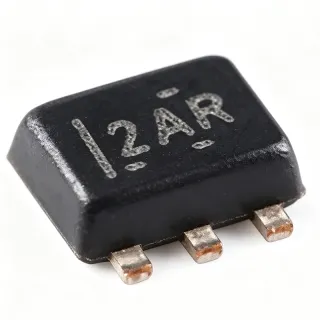
| Package | 2-DFN (DFN1006, 1.0 x 0.6 mm) |
| Mounting Type | Surface Mount |
| Working Voltage (VRWM) | 6 V |
| Breakdown Voltage (VBR min) | 7 V |
| Line Capacitance (typical) | 0.5 pF |
| Polarity | Bidirectional |
| Element Configuration | Single |
| Technology | Silicon TVS die |
| Application | High-speed transmission line ESD protection |
| RoHS Compliance | Halogen-free, RoHS compliant |
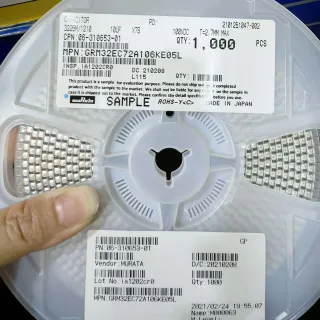
| Reel Quantity | 10,000 pcs/reel (LXES1UTAA1-157) |
| Series | LXES T Series |
LXES1UTAA1-157 Pin Configuration
| Pin 1 | LINE — Protected signal line (anode/cathode, bidirectional) |
| Pin 2 | LINE/GND — Signal line or ground reference (bidirectional, equivalent to pin 1) |
Typical Applications
LXES1UTAA1-157 is suitable for 6 applications: USB Type-C / USB 2.0 High-Speed Data Lines, HDMI and DisplayPort Auxiliary Channels, MIPI DSI/CSI Mobile Camera and Display Interfaces, SIM Card and SD Card Interface Protection, Audio Line and Headphone Jack ESD Clamping, Portable and Wearable Device Board-Area-Constrained Designs.
USB Type-C / USB 2.0 High-Speed Data Lines
The LXES1UTAA1-157 protects USB 2.0 D+/D- lines operating at 480 Mbps and USB Type-C high-speed lanes up to 10 Gbps from ESD strikes during cable insertion and user contact events. With only 0.5 pF typical capacitance, the diode adds negligible insertion loss, preserving eye-diagram margins at the USB Type-C connector. Per the Murata LXES T Series datasheet, the 7 V VBR safely clamps 8 kV contact / 15 kV air ESD transients per IEC 61000-4-2, while the 0402 DFN1006 footprint fits beneath the connector shield. Recommended companion parts include TUSB320LAI (USB Type-C controller) and TPD4E05U06 (quad-channel companion for high-density layouts).
Recommended
HDMI and DisplayPort Auxiliary Channels
The LXES1UTAA1-157 clamps ESD transients on HDMI DDC/Aux lines and DisplayPort AUX channel without disturbing signal integrity. HDMI and DisplayPort auxiliary channels run at lower speeds than the main video lanes but still require protection from cable discharge events. The 0.5 pF capacitance is well below the threshold at which the diode would slow down the I2C-based DDC or AUX handshake. According to Murata product information, the part is rated to absorb 8 kV contact discharge without damage, meeting HDMI connector specification requirements. Recommended companion parts include TDP158 (HDMI redriver/level shifter) and SN65DP141 (DisplayPort retimer).
Recommended
MIPI DSI/CSI Mobile Camera and Display Interfaces
Mobile phones and tablets use MIPI DSI for display panels and MIPI CSI for camera data, both operating at multi-gigabit per lane rates. The LXES1UTAA1-157's 0.5 pF capacitance is well below the 1 pF limit typically required for MIPI 2.5 Gbps lanes, ensuring the protection diode does not degrade the eye diagram. Place the diode adjacent to the board-to-board connector to the display or camera module per the LXES T Series PCB layout guidance. The DFN1006 footprint fits even in 0.5 mm pitch B2B connector keep-out zones. Recommended companion parts include SN65DSI84 (MIPI DSI to LVDS bridge) and OV13858 (MIPI CSI image sensor).
Recommended
SIM Card and SD Card Interface Protection
SIM and SD card sockets are exposed to user contact, making them prime candidates for ESD damage during card insertion or removal. The LXES1UTAA1-157 protects the data and clock lines with 0.5 pF capacitance that does not interfere with SD UHS-I (104 Mbps) or SIM card communication. The 7 V VBR safely clamps ESD events above the 3.3 V SIM/SD signal levels. Per Murata's product specification, the bidirectional configuration handles both positive and negative transient polarities that occur on the connector. Recommended companion parts include SN74LVC1G08 (single 2-input AND gate for SIM control) and STDC02 (SIM card interface IC).
Recommended
Audio Line and Headphone Jack ESD Clamping
The LXES1UTAA1-157 protects headphone, line-out, and microphone audio paths from connector-induced ESD. Audio lines are particularly sensitive to pops and clicks from ESD events, and a low-capacitance TVS prevents audible artifacts while still absorbing discharge energy. The bidirectional configuration handles the AC swing of audio signals up to the 6 V working voltage rating. According to Murata product information, the 0402-class footprint allows placement inside the headphone jack housing for optimal ESD protection. Recommended companion parts include CS43131 (headphone DAC) and TLV320AIC3104 (audio codec with headphone driver).
Recommended
Portable and Wearable Device Board-Area-Constrained Designs
The LXES1UTAA1-157's DFN1006 (1.0 x 0.6 mm) package is ideal for the board area constraints of smartwatches, fitness bands, hearables, and AR/VR glasses. Designers can place protection at every external connector - charging pins, BLE antenna lines, sensor interfaces, and buttons - without crowding the PCB. The 0.5 pF capacitance is critical for antenna lines and sensor I2C/SPI buses that operate at frequencies where higher-capacitance TVS devices would attenuate signal. Per the Murata LXES T Series datasheet, the diode consumes less than 0.6 mm² total including land pattern. Recommended companion parts include nRF52840 (BLE SoC) and BME688 (environmental sensor with I2C/SPI).
Recommended
Recommended Products Summary
Engineering reference data for LXES1UTAA1-157 — comparison, design guidance, and compliance information.
Selection Guide
Comparison with Alternatives
| Parameter | This Product | LXES1UTBB1-157 | LXES1UTAA1-157 (LCSC stock) | LXES2UTAA1-157 | LXES3TAA1-157 | PESD5V0L1BA,115 |
|---|---|---|---|---|---|---|
| Brand | Murata Manufacturing | Murata Manufacturing | Murata Manufacturing | Murata Manufacturing | Murata Manufacturing | Nexperia |
| Package | DFN1006 (1.0 x 0.6 mm) | DFN1006 (1.0 x 0.6 mm) - same | DFN1006 (1.0 x 0.6 mm) - same | DFN1006 (1.0 x 0.6 mm) - same | DFN1006 (1.0 x 0.6 mm) - same | DFN1006 (1.0 x 0.6 mm) - same |
| Line Capacitance | 0.5 pF | 0.5 pF (identical) | 0.5 pF (identical) | 0.5 pF | 0.5 pF | 16 pF (+3100%) |
| Working Voltage (VRWM) | 6 V | 6 V (identical) | 6 V (identical) | 6 V | 6 V | 5 V (-17%) |
| Breakdown Voltage (VBR min) | 7 V | 7 V (identical) | 7 V (identical) | 7 V | 7 V (typical LXES T Series spec) | 6 V (-14%) |
| Number of Channels | 1 | 1 | 1 | 2 (more channels in same package) | 1 | 1 |
| Polarity | Bidirectional | Bidirectional | Bidirectional | Bidirectional | Bidirectional | Bidirectional |
| Reel Quantity | 10,000 pcs/reel | 1,000 pcs/reel | 10,000 pcs/reel | 10,000 pcs/reel | 10,000 pcs/reel (typical) | 5,000 pcs/reel |
Key Differentiators
- Ultra-low 0.5 pF capacitance for high-speed signal integrity (vs PESD5V0L1BA,115 (Nexperia))
- Bidirectional protection from a single component (vs Unidirectional TVS variants)
- Reel quantity choice for procurement flexibility (vs LXES1UTBB1-157 (same die))
Design Notes
Place the LXES1UTAA1-157 as close as physically possible to the external connector pin (ideally within 3 mm of the connector body) to minimize parasitic inductance in the discharge path. Route the ground terminal directly to the chassis ground or system ground plane using a short, wide trace (>= 0.3 mm width). Long ground return traces create inductance that allows the ESD voltage to overshoot the TVS clamping voltage, defeating the protection. Per Murata's LXES T Series PCB layout guidance, a via-in-pad or micro-via ground connection is preferred for production designs.
Verify that 0.5 pF diode capacitance is acceptable for your signal line. For USB 2.0 high-speed (480 Mbps), the cut-off frequency f_c = 1/(2(pi)R*C) with 45 ohm differential impedance is approximately 7 GHz, well above the third harmonic of 240 MHz signaling, so the diode does not degrade the eye. For HDMI 1.4 (up to 3.4 Gbps per TMDS lane), the same calculation gives 1.4 GHz cut-off, still acceptable. For HDMI 2.1 (12 Gbps per lane), evaluate whether 0.5 pF is still tolerable; consider Murata's LXES xS Series with even lower capacitance if not.
Do not use the LXES1UTAA1-157 on signal lines that exceed 6 V DC operating voltage - the diode will enter breakdown and draw excessive leakage current, potentially damaging the part. Verify that your protected line voltage during normal operation (including transients from upstream regulators) stays below 6 V. Also avoid placing the diode under a heatsink or in a thermally-isolated region - while the part dissipates minimal power, operating temperature affects the VBR threshold (it decreases at higher temperature, so high-temperature operation may trigger clamping below the intended working voltage).
Compliance Information
Halogen-free and RoHS compliant per Murata product information page. Not AEC-Q100 qualified (consumer/industrial TVS, not automotive grade). For automotive ESD protection, consult Murata LXES automotive-grade variants.