MAX3232ECDB - RS-232 Transceiver 3-5.5V ±15kV ESD | TI
MPN: MAX3232ECDB ✓ Active| Qty | Unit Price | Extended |
|---|---|---|
| 1 | $2.27 | $2.27 |
| 10 | $2.05 | $20.50 |
| 100 | $1.84 | $184.00 |
| 500 | $1.66 | $830.00 |
| 1,000 | $1.49 | $1,490.00 |
MAX3232ECDB Overview
An RS-232 transceiver is a line driver/receiver IC that converts logic-level UART signals (TTL/CMOS, 0V to VCC) into the higher-voltage RS-232 signaling levels (nominally ±5V or more) required by serial ports, modems, and industrial equipment. Within the interface IC family hierarchy, it sits alongside CAN, RS-485, and USB transceivers as a physical-layer signal-conditioning device in the broader category of communication interface components.
Key features include guaranteed 250 kbps minimum data rate, a charge-pump architecture that generates the required RS-232 voltage levels using only four small 0.1 uF external capacitors, and ESD protection exceeding ±15 kV (IEC 61000-4-2 air-gap and contact discharge) plus ±15 kV human-body model on the bus terminals. The device meets or exceeds TIA/EIA-232-F requirements and operates from a single supply across the full 3.0V to 5.5V range, eliminating the need for dual ±12V rails.
Technically, the MAX3232E family uses proprietary on-chip charge pumps with automatic internal voltage doubling and inversion to produce V+ and V- from the single VCC rail. Two transmitters and two receivers enable a full-duplex UART link with hardware flow control (RTS/CTS). Low receiver-enable current and a shutdown-capable architecture suit battery-powered designs.
Typical applications include embedded MCU UART-to-RS-232 ports, industrial programmable logic controller (PLC) console interfaces, point-of-sale equipment, and networking equipment management ports. The E-version ESD rating makes it especially appropriate for ports exposed to human contact.
Design consideration: place the four charge-pump capacitors close to pins 1-6 and use 0.1 uF ceramic parts rated at 16V or more; larger values (up to 1 uF) are acceptable but slow the pump startup slightly.
This page synthesizes distributor pricing, pin-to-pin drop-in alternatives across TI and MaxLinear/Exar, and practical design notes not found in the manufacturer datasheet.
Drop-in alternatives for MAX3232ECDB — same package, pin-to-pin compatible. Different-package parts requiring PCB rework are excluded.
Quick Comparison Tool — Select alternative parts for side-by-side comparison:
MAX3232ECDBR
✅ Drop-In📋 Reference alternative (not in catalog)
MAX3232ECPWR
✅ Drop-In📋 Reference alternative (not in catalog)
MAX3232CDBR
✅ Drop-In📋 Reference alternative (not in catalog)
MAX3232IDBR
✅ Drop-In📋 Reference alternative (not in catalog)
SP3232ECA-L
✅ Drop-In📋 Reference alternative (not in catalog)
MAX3232ECDB Specifications
| Protocol | RS-232 |
| Type | Transceiver |
| Number of Drivers | 2 |
| Number of Receivers | 2 |
| Supply Voltage Range | 3 V to 5.5 V |
| Data Rate | 250 kbps (minimum) |
| ESD Protection (RS-232 Bus Pins) | ±15 kV (HBM) |
| ESD Protection (IEC 61000-4-2) | ±15 kV contact discharge / ±15 kV air-gap discharge |
| Standard Compliance | TIA/EIA-232-F |
| Operating Temperature | 0C to +70C |
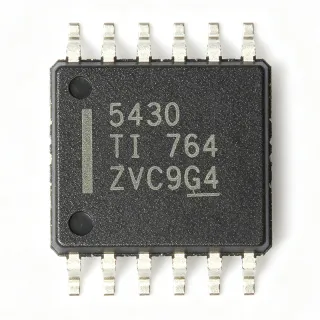
| Package | 16-SSOP (DB, 0.209 in / 5.30 mm width) |
| Mounting Type | Surface Mount |
| Packaging | Tube |
| External Capacitors Required | 4 x 0.1 uF (charge pump) |
MAX3232ECDB Pin Configuration
| Pin 1 | C1+ — Charge pump capacitor 1 positive terminal |
| Pin 2 | V+ — Charge pump positive output (bypass to GND with 0.1 uF) |
| Pin 3 | C1- — Charge pump capacitor 1 negative terminal |
| Pin 4 | C2+ — Charge pump capacitor 2 positive terminal |
| Pin 5 | C2- — Charge pump capacitor 2 negative terminal |
| Pin 6 | V- — Charge pump negative output (bypass to GND with 0.1 uF) |
| Pin 7 | T2OUT — RS-232 transmitter 2 output |
| Pin 8 | R2IN — RS-232 receiver 2 input |
| Pin 9 | R2OUT — TTL/CMOS receiver 2 output |
| Pin 10 | T2IN — TTL/CMOS transmitter 2 input |
| Pin 11 | T1IN — TTL/CMOS transmitter 1 input |
| Pin 12 | R1OUT — TTL/CMOS receiver 1 output |
| Pin 13 | R1IN — RS-232 receiver 1 input |
| Pin 14 | T1OUT — RS-232 transmitter 1 output |
| Pin 15 | GND — Ground |
| Pin 16 | VCC — Power supply, 3 V to 5.5 V |
Typical Applications
MAX3232ECDB is suitable for 6 applications: Embedded MCU UART to RS-232 Console Port, Industrial PLC and Process Control Interfaces, Point-of-Sale and Payment Terminals, Networking and Telecom Equipment Management Ports, Battery-Powered Portable Instrumentation, Medical Device Service and Diagnostic Ports.
Embedded MCU UART to RS-232 Console Port
The MAX3232ECDB is the classic bridge between a 3.3V or 5V microcontroller UART and an RS-232 console or debug port. Its single 3V-to-5.5V supply connects directly to the MCU rail, while the internal charge pump generates RS-232 levels with only four 0.1 uF capacitors. Two drivers and two receivers support TX, RX, and hardware flow control (RTS/CTS) in one package, and the guaranteed 250 kbps data rate covers all standard baud rates up to 230400 bps. The ±15 kV IEC 61000-4-2 bus-pin ESD rating protects the transceiver when technicians repeatedly connect cables to exposed DB9 connectors, a common failure point for non-E RS-232 parts.
Recommended
Industrial PLC and Process Control Interfaces
Programmable logic controllers and process-control equipment still expose RS-232 programming and HMI ports. The MAX3232ECDB fits these designs because its ±15 kV HBM and IEC 61000-4-2 contact-discharge ESD protection withstands the harsh, human-touch-heavy factory floor, while TIA/EIA-232-F compliance guarantees interoperability with legacy field equipment. The 16-SSOP (DB) package conserves board area in crowded control cabinets, and the 0C to +70C commercial range suits enclosed, climate-controlled cabinets; designs seeing wider ambient should move to the pin-compatible MAX3232IDBR industrial grade. The 250 kbps capability comfortably handles configuration downloads and Modbus-over-RS-232 polling cycles.
Recommended
Point-of-Sale and Payment Terminals
POS terminals, receipt printers, and barcode scanners frequently retain RS-232 serial links, and these ports endure constant cable handling by operators. The MAX3232ECDB addresses exactly this environment: the E-version ±15 kV IEC 61000-4-2 ESD protection on TIN/RIN and TOUT/ROUT pins is specified for air-gap and contact discharge events typical of human interaction. Its single 3.3V operation matches modern embedded terminal logic, and the 2/2 driver/receiver configuration supports both the printer serial link and a customer-display channel simultaneously. The compact 16-SSOP footprint and four-capacitor charge pump keep the bill of materials minimal for cost-sensitive terminal boards.
Recommended
Networking and Telecom Equipment Management Ports
Routers, switches, and telecom gear provide RS-232-style craft or management ports for out-of-band configuration. The MAX3232ECDB suits this role with its 250 kbps minimum data rate, supporting fast console sessions, and its ±15 kV ESD-protected bus pins that survive the frequent technician access these ports receive. Operating from the equipment's 3.3V standby rail, it remains available even when the main system is powered down, and the charge-pump architecture needs no supplementary ±12V telecom supplies. The 0C to +70C commercial rating fits central-office and climate-controlled data-communication environments where the pin-compatible MAX3232E variants are standard.
Recommended
Battery-Powered Portable Instrumentation
Portable measurement instruments that need a serial link to a PC benefit from the MAX3232ECDB's single-supply, low-external-parts design. Running directly from a 3.3V or two-cell lithium stack rail within the 3V-to-5.5V window, it removes the extra boost converter that older RS-232 drivers required. The charge pump uses only 0.1 uF capacitors, minimizing PCB area and cost, and the 16-SSOP package keeps the layout compact for handheld enclosures. The ±15 kV ESD rating protects against static discharge during field cable connection - a dominant failure mode for portable equipment. For deeper battery savings, evaluate TI's shutdown-capable family variants sharing the same footprint.
Recommended
Medical Device Service and Diagnostic Ports
Medical equipment such as patient monitors, infusion pumps, and diagnostic analyzers commonly provides RS-232 service ports for calibration and log extraction. The MAX3232ECDB's ±15 kV IEC ESD protection is valuable in clinical settings where frequent cable connection and strict reliability requirements apply, while TIA/EIA-232-F compliance ensures communication with legacy service tooling. The 3V-to-5.5V single-supply operation integrates cleanly with 3.3V medical electronics, and the 250 kbps rate shortens firmware-update and data-dump procedures. The 16-SSOP (DB) package suits the compact, densely populated boards typical of modern medical device electronics with limited airflow.
Recommended
Recommended Products Summary
Engineering reference data for MAX3232ECDB — comparison, design guidance, and compliance information.
Selection Guide
Comparison with Alternatives
| Parameter | This Product | MAX3232ECDBR | MAX3232ECPWR | MAX3232IDBR | SP3232ECA-L |
|---|---|---|---|---|---|
| Brand | Texas Instruments | Texas Instruments | Texas Instruments | Texas Instruments | MaxLinear |
| Package | 16-SSOP (DB, 5.30 mm) | 16-SSOP (DB, 5.30 mm) - same | 16-SSOP - same footprint | 16-SSOP (DB, 5.30 mm) - same | 16-SSOP - same footprint |
| Supply Voltage | 3 V to 5.5 V | 3 V to 5.5 V | 3 V to 5.5 V | 3 V to 5.5 V | 3 V to 5.5 V |
| Drivers / Receivers | 2 / 2 | 2 / 2 | 2 / 2 | 2 / 2 | 2 / 2 |
| Data Rate | 250 kbps (min) | 250 kbps (min) | 250 kbps (min) | 250 kbps (min) | 235 kbps to 250 kbps class |
| Bus-Pin ESD Protection | ±15 kV HBM / ±15 kV IEC 61000-4-2 | ±15 kV HBM / ±15 kV IEC 61000-4-2 | ±15 kV HBM / ±15 kV IEC 61000-4-2 | ±15 kV HBM / ±15 kV IEC 61000-4-2 | ±15 kV IEC 61000-4-2 class |
| Operating Temperature | 0C to +70C | 0C to +70C | 0C to +70C | -40C to +85C | 0C to +70C |
| Packaging Format | Tube | Tape & Reel | Tape & Reel | Tape & Reel | Tape & Reel |
Key Differentiators
- ±15 kV IEC 61000-4-2 bus-pin ESD protection (vs MAX3232CDBR)
- Industrial temperature option in same footprint (vs MAX3232IDBR)
- Second-source drop-in availability (vs SP3232ECA-L)
Design Notes
Place the four charge-pump capacitors (C1+ to C1-, C2+ to C2-, V+ to GND, V- to GND) as close as possible to pins 1-6, per the TI MAX3232 datasheet typical operating circuit. Use 0.1 uF X7R ceramic capacitors rated at least 16V; keep the pump loop traces short and wide to reduce ESR-related ripple on V+ and V-. Add a 0.1 uF decoupling capacitor directly at VCC (pin 16) plus bulk 1 uF if several transceivers share the rail. Do not route RS-232 TOUT/RIN lines parallel to sensitive analog traces, since ±10V-class swings couple easily.
A frequent failure mode is applying RS-232 levels to TIN/RIN (logic pins) or logic levels to RIN - the ESD-protected bus pins and the logic pins are not interchangeable despite some third-party pinout diagrams. Verify against the datasheet pinout: pins 7, 8, 13, 14 are RS-232 bus pins with ±15 kV protection; pins 9-12 are logic-side. Also remember the commercial 0C to +70C rating: for enclosed outdoor or industrial cabinets exceeding +70C, switch to the pin-compatible MAX3232IDBR (-40C to +85C) rather than overclocking derating assumptions.
The charge pump switches continuously and can radiate at its pump frequency. If the design must pass CISPR-class emissions testing, add a small series ferrite bead on VCC and ensure the V+ and V- bypass capacitors return to a clean ground. Keep the four pump capacitors over a solid ground plane and avoid placing the DB9 connector cable near the pump traces. These steps typically resolve conducted/radiated issues without shielding; consult TI RS-232 application guidance for layout examples in multi-transceiver designs.
Compliance Information
Compliance status not explicitly stated in the retrieved distributor data; the 'E' suffix denotes the ±15 kV IEC ESD protection version, not an environmental rating. Verify RoHS/REACH status on the TI product page before design release.