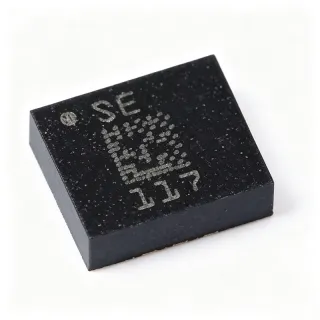
SPC560D30L1 - 32-bit MCU, 1MB Flash, 64MHz | STMicroelectronics
MPN: SPC560D30L1 ✓ Active| Qty | Unit Price | Extended |
|---|---|---|
| 1 | $12.5 | $12.50 |
| 10 | $11.25 | $112.50 |
| 100 | $10 | $1,000.00 |
| 500 | $9 | $4,500.00 |
| 1,000 | $8.1 | $8,100.00 |
SPC560D30L1 Overview
A microcontroller (MCU) is a compact integrated circuit designed to govern a specific operation in an embedded system. It contains a processor core, memory, and programmable input/output peripherals. The SPC560D30L1 belongs to the family of 32-bit automotive microcontrollers, which are part of the broader category of embedded processors used in vehicle control units. These MCUs are optimized for real-time performance, reliability, and low power consumption, often meeting AEC-Q100 automotive qualification standards.
Key features of the SPC560D30L1 include a 64 MHz e200z0h Power Architecture core, 1 MB flash memory, 96 KB RAM, and a rich set of communication interfaces such as CAN, LIN, and SPI. It also integrates a 10-bit ADC, multiple timers, and a flexible PWM module. The device supports a wide operating temperature range of -40°C to +125°C, making it suitable for harsh automotive environments.
The SPC560D30L1 is built on a highly reliable flash technology with ECC (Error Correction Code) support, ensuring data integrity in safety-critical applications. The MCU includes a Memory Protection Unit (MPU) and a Cyclic Redundancy Check (CRC) unit for enhanced security and data validation. Its low-power modes, including stop and standby, help reduce energy consumption in battery-powered systems.
Typical applications include automotive body control modules, gateway modules, and sensor fusion units. The device's robust CAN and LIN interfaces enable seamless communication in vehicle networks, while its high-speed ADC and PWM capabilities support motor control and lighting applications.
When designing with the SPC560D30L1, ensure proper decoupling of the power supply pins and a stable clock source. The device requires a 4-40 MHz crystal or external clock for operation. Careful PCB layout is essential to minimize electromagnetic interference, especially in automotive environments.
Drop-in alternatives for SPC560D30L1 — same package, pin-to-pin compatible. Different-package parts requiring PCB rework are excluded.
Variants in this series
Same-series models that are drop-in compatible with SPC560D30L1 (same form factor and footprint) — differing in Package, Timers, Core, Flash Memory, ADC.
Quick Comparison Tool — Select alternative parts for side-by-side comparison:
SPC560D30L3
✅ Drop-In ⚠️ Specs Unverified✓ In Stock
$8.1 / Unit
View Datasheet →SPC560D40L1
✅ Drop-In ⚠️ Specs Unverified✓ In Stock
$8.1 / Unit
View Datasheet →SPC560D50L1
✅ Drop-In ⚠️ Specs Unverified📋 Reference alternative (not in catalog)
MPC5604B
⚡ Same Package ⚠️ Specs Unverified📋 Reference alternative (not in catalog)
RH850/F1L
⚡ Same Package ⚠️ Specs Unverified📋 Reference alternative (not in catalog)
SPC560D30L1 Maximum Ratings & Electrical Characteristics
| Core | Power Architecture e200z0h |
| Maximum Frequency | 64 MHz |
| Flash Memory | 1 MB |
| RAM | 96 KB |
| Supply Voltage Range | 3.3 V to 5 V |
| Package | 100-pin LQFP |
| Operating Temperature Range | -40°C to +125°C |
| ADC Resolution | 10-bit |
| Communication Interfaces | CAN, LIN, SPI |
| Timers | Multiple |
| PWM Module | Flexible |
| ECC Support | Yes |
| Memory Protection Unit (MPU) | Yes |
| CRC Unit | Yes |
| Low-Power Modes | Stop, Standby |
| AEC-Q100 Qualification | Yes |
SPC560D30L1 Pin Configuration
| Pin 1 | VDD — Digital power supply |
| Pin 2 | VSS — Digital ground |
| Pin 3 | VDDA — Analog power supply |
| Pin 4 | VSSA — Analog ground |
| Pin 5 | XTAL — Crystal oscillator input |
| Pin 6 | EXTAL — Crystal oscillator output |
| Pin 7 | RESET — Reset input |
| Pin 8 | CAN0_TX — CAN0 transmit |
| Pin 9 | CAN0_RX — CAN0 receive |
| Pin 10 | LIN0_TX — LIN0 transmit |
| Pin 11 | LIN0_RX — LIN0 receive |
| Pin 12 | SPI0_SCK — SPI0 clock |
| Pin 13 | SPI0_MOSI — SPI0 master out slave in |
| Pin 14 | SPI0_MISO — SPI0 master in slave out |
| Pin 15 | ADC0_IN0 — ADC0 channel 0 input |
| Pin 16 | PWM0 — PWM output 0 |
Typical Applications
SPC560D30L1 is suitable for 6 applications: Automotive Body Control Module, Gateway Module, Sensor Fusion Unit, Motor Control, Lighting Control, Industrial Automation.
Automotive Body Control Module
The SPC560D30L1 is ideal for automotive body control modules (BCMs) that manage lighting, windows, locks, and other body functions. Its robust CAN and LIN interfaces enable seamless communication with other ECUs, while the 64 MHz e200z0h core provides sufficient processing power for real-time control. The wide operating temperature range (-40°C to +125°C) and AEC-Q100 qualification ensure reliable operation in harsh automotive environments. The 1 MB flash memory allows for complex application code, and the low-power modes help reduce battery drain when the vehicle is off. In a typical BCM, the MCU interfaces with switches, relays, and sensors, using its PWM module for dimming and motor control. The 10-bit ADC is used for analog sensor inputs, and the ECC-protected flash ensures data integrity. Designers should ensure proper decoupling and a stable clock source to maintain performance.
Recommended
Gateway Module
The SPC560D30L1 is well-suited for automotive gateway modules that route data between different vehicle networks, such as CAN, LIN, and FlexRay. Its multiple CAN and LIN interfaces allow it to bridge communication between domains, while the 64 MHz core handles protocol conversion and data routing efficiently. The 1 MB flash and 96 KB RAM provide ample storage for routing tables and buffering. The MPU and CRC unit enhance security and data integrity, which is critical for gateway functions. In a gateway application, the MCU receives messages from one network and forwards them to another, requiring low latency and high reliability. The device's low-power modes are beneficial for reducing current draw when the vehicle is idle. Designers should consider the thermal performance of the 100-pin LQFP package and ensure adequate PCB layout for signal integrity.
Recommended
Sensor Fusion Unit
The SPC560D30L1 can be used in sensor fusion units that combine data from multiple sensors, such as radar, lidar, and cameras, for advanced driver assistance systems (ADAS). Its high-speed ADC and multiple timers enable precise data acquisition, while the CAN and SPI interfaces allow connection to various sensors. The 64 MHz core provides enough processing power for sensor data preprocessing and fusion algorithms. The ECC-protected flash ensures code reliability, and the MPU helps isolate critical tasks. In a sensor fusion unit, the MCU collects data from sensors, performs initial processing, and sends fused data to a central processor. The wide temperature range and AEC-Q100 qualification make it suitable for under-hood or exterior mounting. Designers should pay attention to power supply noise and use proper filtering to maintain ADC accuracy.
Recommended
Motor Control
The SPC560D30L1 is suitable for motor control applications, such as electric power steering, window lifts, and cooling fans. Its flexible PWM module and multiple timers allow precise control of motor speed and torque. The 10-bit ADC is used for current and position sensing, and the CAN interface enables communication with other vehicle systems. The 64 MHz core can handle complex control algorithms, such as field-oriented control (FOC) for brushless DC motors. The device's robust design, including ECC and MPU, ensures reliable operation in noisy automotive environments. In a typical motor control application, the MCU generates PWM signals to drive an inverter, reads current sensors, and adjusts the duty cycle to maintain desired speed. Designers should ensure proper isolation and protection circuits to handle high currents and voltages.
Recommended
Lighting Control
The SPC560D30L1 can be used in automotive lighting control modules, managing headlights, taillights, and interior lighting. Its PWM module enables dimming and color control, while the CAN and LIN interfaces allow communication with the body control module. The 10-bit ADC can be used for ambient light sensing or current monitoring. The 64 MHz core provides enough processing power for lighting sequences and diagnostics. The device's low-power modes are beneficial for reducing current draw when lights are off. In a lighting application, the MCU receives commands via LIN and adjusts PWM outputs to control LED brightness. The wide temperature range and AEC-Q100 qualification ensure reliable operation in extreme conditions. Designers should consider thermal management for LED drivers and ensure proper PCB layout to minimize EMI.
Recommended
Industrial Automation
The SPC560D30L1 can be adapted for industrial automation applications, such as PLCs, motor drives, and process control. Its robust communication interfaces (CAN, SPI) and wide temperature range make it suitable for factory environments. The 64 MHz core and 1 MB flash provide ample resources for control algorithms and data logging. The MPU and CRC unit enhance reliability in safety-critical applications. In an industrial setting, the MCU can interface with sensors, actuators, and human-machine interfaces (HMIs) via CAN or SPI. The low-power modes help reduce energy consumption in battery-powered or energy-harvesting systems. Designers should ensure proper isolation and protection against electrical noise, which is common in industrial environments.
Recommended
Recommended Products Summary
Engineering reference data for SPC560D30L1 — comparison, design guidance, and compliance information.
Selection Guide
Comparison with Alternatives
| Parameter | This Product | SPC560D30L3 | SPC560D40L1 | SPC560D50L1 | MPC5604B | RH850/F1L |
|---|---|---|---|---|---|---|
| Package | 100-pin LQFP | 100-pin LQFP | 100-pin LQFP | 100-pin LQFP | 100-pin LQFP | 100-pin LQFP |
| Brand | STMicroelectronics | STMicroelectronics | STMicroelectronics | STMicroelectronics | NXP Semiconductors | Renesas Electronics |
| Core | Power Architecture e200z0h | Power Architecture e200z0h | Power Architecture e200z0h | Power Architecture e200z0h | Power Architecture e200z0h | RH850 G3M |
| Maximum Frequency | 64 MHz | 64 MHz | 64 MHz | 64 MHz | 64 MHz | 80 MHz |
| Flash Memory | 1 MB | 1 MB | 1.5 MB | 2 MB | 1 MB | 1 MB |
| RAM | 96 KB | 96 KB | 128 KB | 160 KB | 80 KB | 128 KB |
| Supply Voltage Range | 3.3V to 5V | 3.3V to 5V | 3.3V to 5V | 3.3V to 5V | 3.3V to 5V | 3.3V to 5V |
| Operating Temperature Range | -40°C to +125°C | -40°C to +125°C | -40°C to +125°C | -40°C to +125°C | -40°C to +125°C | -40°C to +125°C |
Key Differentiators
- AEC-Q100 qualified for automotive use (vs MPC5604B)
- Higher RAM capacity (96 KB) (vs MPC5604B)
- Same-family pin compatibility (vs RH850/F1L)
Design Notes
Ensure proper decoupling of all power supply pins (VDD, VDDA) with 100nF ceramic capacitors placed as close to the pins as possible. Additionally, use a 10uF bulk capacitor on the main supply rail to handle transient currents. The SPC560D30L1 operates from 3.3V to 5V, so verify that the power supply is stable and within this range under all load conditions. For automotive applications, consider using a voltage regulator with built-in protection against load dump and reverse polarity.
For the 100-pin LQFP package, ensure a solid ground plane and proper thermal vias under the exposed pad (if present) to improve heat dissipation. Keep high-speed signals (CAN, SPI) away from noisy power traces and use proper termination resistors. For CAN, a 120-ohm termination resistor is required at each end of the bus. For crystal oscillator connections, keep traces short and shield them with ground to minimize EMI. Follow STMicroelectronics' layout guidelines for the SPC560D family.
A common pitfall is neglecting the reset circuit. Ensure the RESET pin has a proper pull-up resistor and a capacitor to ground to provide a clean reset signal. Also, verify that the clock source is correctly configured; the device requires a 4-40 MHz crystal or external clock. Failure to set the correct clock configuration can lead to unexpected behavior. Additionally, when using low-power modes, ensure that all peripherals are properly configured to wake the device, and that the supply voltage is stable during mode transitions.
Compliance Information
AEC-Q100 qualified per STMicroelectronics. RoHS and REACH compliant. Halogen-free status not specified in provided data.