SPC560D30L3 - 32-bit MCU, 1MB Flash, 64MHz | STMicroelectronics
MPN: SPC560D30L3 ✓ Active| Qty | Unit Price | Extended |
|---|---|---|
| 1 | $12.5 | $12.50 |
| 10 | $11.25 | $112.50 |
| 100 | $10 | $1,000.00 |
| 500 | $9 | $4,500.00 |
| 1,000 | $8.1 | $8,100.00 |
SPC560D30L3 Overview
A microcontroller (MCU) is a compact integrated circuit designed to govern a specific operation in an embedded system. It contains a processor core, memory (flash and RAM), and programmable input/output peripherals. The SPC560D30L3 belongs to the class of 32-bit automotive microcontrollers, which are optimized for real-time control, robust communication interfaces, and high reliability under harsh environmental conditions. Within the hierarchy, it is a microcontroller -> automotive MCU -> Power Architecture MCU -> SPC560 family.
Key features of the SPC560D30L3 include a 64 MHz e200z0h core with single-precision floating-point unit (FPU), 1 MB flash with ECC, 96 KB SRAM, and a rich set of communication interfaces: 3× FlexCAN, 3× LINFlex, 3× DSPI, and 1× I2C. It also integrates a 10-bit ADC with up to 16 channels, multiple timers (eMIOS, PIT, STM), and a CRC unit. The device supports a supply voltage range of 3.3V to 5V, with an operating temperature range of -40°C to +125°C, meeting AEC-Q100 Grade 1 requirements.
Technically, the SPC560D30L3 is built on a 90nm process technology, offering a balance between performance and power consumption. The e200z0h core is a single-issue, 32-bit Power Architecture core with variable-length encoding (VLE) for code density, reducing flash usage by up to 30% compared to traditional PowerPC instructions. The device includes a memory protection unit (MPU) and a memory management unit (MMU) for enhanced safety, and it supports a Nexus class 1 debug interface for real-time trace.
Typical applications include automotive body control modules (BCM), gateway modules, smart junction boxes, and industrial control systems. The SPC560D30L3's robust CAN and LIN interfaces make it ideal for in-vehicle networking, while its high-temperature rating and AEC-Q100 qualification ensure reliable operation in under-hood environments.
When designing with this device, ensure proper decoupling of the power supply pins with 100nF capacitors placed close to each VDD pin, and a 4.7µF bulk capacitor on the main supply. The device requires a stable clock source; an external 8-40 MHz crystal can be used with the on-chip oscillator, or an external clock can be applied. For safety-critical applications, use the built-in self-test (BIST) and cyclic redundancy check (CRC) modules to enhance diagnostic coverage.
Drop-in alternatives for SPC560D30L3 — same package, pin-to-pin compatible. Different-package parts requiring PCB rework are excluded.
Variants in this series
Same-series models that are drop-in compatible with SPC560D30L3 (same form factor and footprint) — differing in Timers, Core, Flash Memory, Package, AEC-Q100.
Quick Comparison Tool — Select alternative parts for side-by-side comparison:
SPC560D30L1
✅ Drop-In ⚠️ Specs Unverified✓ In Stock
$8.1 / Unit
View Datasheet →SPC560D40L3
✅ Drop-In ⚠️ Specs Unverified✓ In Stock
$8.1 / Unit
View Datasheet →SPC560D30L3C
✅ Drop-In ⚠️ Specs Unverified📋 Reference alternative (not in catalog)
S32K144
⚡ Same Package ⚠️ Specs Unverified📋 Reference alternative (not in catalog)
SPC560D30L3 Maximum Ratings & Electrical Characteristics
| Core | e200z0h (Power Architecture) |
| Maximum Frequency | 64 MHz |
| Flash Memory | 1 MB |
| RAM | 96 KB |
| Supply Voltage | 3.3V to 5V |
| Operating Temperature | -40°C to +125°C |
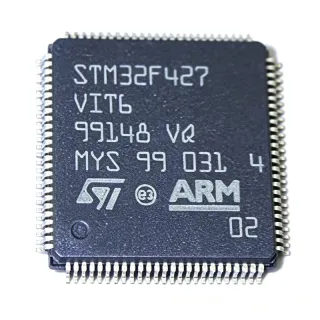
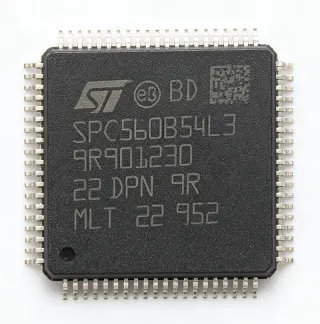
| Package | LQFP-100 |
| ADC | 10-bit, 16 channels |
| FlexCAN | 3 modules |
| LINFlex | 3 modules |
| DSPI | 3 modules |
| I2C | 1 module |
| Timers | eMIOS, PIT, STM |
| AEC-Q100 | Grade 1 |
| RoHS | Compliant |
SPC560D30L3 Pin Configuration
| Pin 1 | VDD — Digital power supply |
| Pin 2 | VSS — Digital ground |
| Pin 3 | PA0 — GPIO / ADC input |
| Pin 4 | PA1 — GPIO / ADC input |
| Pin 5 | PA2 — GPIO / ADC input |
| Pin 6 | PA3 — GPIO / ADC input |
| Pin 7 | PA4 — GPIO / ADC input |
| Pin 8 | PA5 — GPIO / ADC input |
| Pin 9 | PA6 — GPIO / ADC input |
| Pin 10 | PA7 — GPIO / ADC input |
| Pin 11 | VDD_HV — High-voltage power supply |
| Pin 12 | VSS_HV — High-voltage ground |
| Pin 13 | PB0 — GPIO / CAN0_TX |
| Pin 14 | PB1 — GPIO / CAN0_RX |
| Pin 15 | PB2 — GPIO / LIN0_TX |
| Pin 16 | PB3 — GPIO / LIN0_RX |
| Pin 17 | PB4 — GPIO / DSPI0_SCK |
| Pin 18 | PB5 — GPIO / DSPI0_SIN |
| Pin 19 | PB6 — GPIO / DSPI0_SOUT |
| Pin 20 | PB7 — GPIO / DSPI0_CS0 |
Typical Applications
SPC560D30L3 is suitable for 6 applications: Automotive Body Control Module, Gateway Module, Smart Junction Box, Industrial Control System, Electric Power Steering (EPS), Battery Management System (BMS).
Automotive Body Control Module
The SPC560D30L3 is ideal for body control modules (BCM) due to its robust CAN and LIN interfaces, high-temperature operation, and ample flash memory. It manages lighting, wipers, door locks, and window controls, communicating over the vehicle network. The 64 MHz core provides sufficient processing power for real-time control loops, while the 1 MB flash stores complex diagnostic and configuration data. Its AEC-Q100 Grade 1 qualification ensures reliable operation in harsh automotive environments.
Recommended
Gateway Module
In gateway modules, the SPC560D30L3 routes messages between different vehicle networks (CAN, LIN, and possibly Ethernet). Its three FlexCAN modules and three LINFlex modules allow simultaneous connection to multiple buses, while the 64 MHz core handles message filtering and routing with low latency. The 1 MB flash stores routing tables and firmware updates. The device's low power consumption in stop mode is beneficial for always-on gateway applications.
Recommended
Smart Junction Box
The SPC560D30L3 is used in smart junction boxes to control and monitor power distribution to various loads. Its high-current I/O pins can directly drive relays and LEDs, while the ADC monitors current and voltage for diagnostics. The device's robust communication interfaces allow it to report status to the central vehicle computer. The wide supply voltage range (3.3V to 5V) accommodates automotive battery voltage variations.
Recommended
Industrial Control System
Beyond automotive, the SPC560D30L3 is suitable for industrial control systems requiring high reliability and real-time performance. Its 64 MHz core and rich peripheral set (DSPI, I2C, timers) enable precise motor control, sensor interfacing, and communication with industrial networks. The -40°C to +125°C temperature range allows operation in harsh factory environments. The device's long-term availability and AEC-Q100 qualification make it a dependable choice for industrial applications.
Recommended
Electric Power Steering (EPS)
The SPC560D30L3 can be used in electric power steering systems, where it processes torque sensor signals and controls the assist motor. Its high-speed ADC and PWM timers enable precise motor control, while the FlexCAN interface communicates with other vehicle systems. The device's safety features, such as the MPU and CRC unit, support functional safety requirements. The 64 MHz core provides enough computational headroom for complex control algorithms.
Recommended
Battery Management System (BMS)
In battery management systems, the SPC560D30L3 monitors cell voltages and temperatures, balancing cells and protecting against overcharge/discharge. Its multiple ADC channels can sample many cells, while the CAN interface reports status to the vehicle controller. The device's low power consumption is critical for minimizing battery drain when the vehicle is off. The wide temperature range ensures operation in both hot and cold climates.
Recommended
Recommended Products Summary
Engineering reference data for SPC560D30L3 — comparison, design guidance, and compliance information.
Selection Guide
Comparison with Alternatives
| Parameter | This Product | SPC560D30L1 | SPC560D40L3 | S32K144 |
|---|---|---|---|---|
| Package | LQFP-100 | LQFP-100 | LQFP-100 | LQFP-100 |
| Brand | STMicroelectronics | STMicroelectronics | STMicroelectronics | NXP Semiconductors |
| Core | e200z0h (Power Architecture) | e200z0h | e200z0h | ARM Cortex-M4F |
| Maximum Frequency | 64 MHz | 64 MHz | 64 MHz | 80 MHz |
| Flash Memory | 1 MB | 512 KB | 1.5 MB | 1 MB |
| RAM | 96 KB | 64 KB | 128 KB | 128 KB |
| ADC | 10-bit, 16 channels | 10-bit, 16 channels | 10-bit, 16 channels | 12-bit, 16 channels |
| AEC-Q100 | Grade 1 | Grade 1 | Grade 1 | Grade 1 |
Key Differentiators
- Power Architecture core with VLE (vs S32K144)
- Three FlexCAN modules (vs S32K144)
- AEC-Q100 Grade 1 qualification (vs SPC560D30L1)
Design Notes
Ensure proper decoupling of the power supply pins. Place a 100nF ceramic capacitor close to each VDD pin and a 4.7µF bulk capacitor on the main supply. The device operates from 3.3V to 5V, so verify the supply voltage is within this range under all load conditions.
For the LQFP-100 package, use a 4-layer PCB with a solid ground plane. Keep high-speed signals (CAN, SPI) away from analog inputs to minimize noise. Follow the layout guidelines in the ST application note AN2860 for best EMC performance.
Do not exceed the absolute maximum ratings, especially on the VDD_HV pins. Ensure the external crystal is properly loaded with the specified capacitors. For safety-critical applications, use the built-in BIST and CRC modules to enhance diagnostic coverage.
Compliance Information
RoHS and REACH compliant per STMicroelectronics. AEC-Q100 Grade 1 qualified.