STMicroelectronics

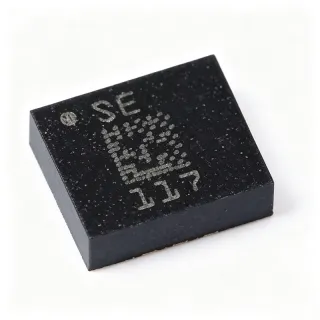
STM32MP157DAC3 - Dual Cortex-A7 650MHz MPU | STMicroelectronics

MPN: STM32MP157DAC3 ✓ Active
In Stock Ships in 1-3 business days
TFBGA Package 650 MHz Speed
From $0.92 USD / Unit
MOQ: 1 |
Price updated: 2026-09-05
Volume Pricing
Qty Unit Price Extended
1 $1.23 $1.23
10 $1.15 $11.50
100 $1.05 $105.00
500 $0.98 $490.00
1,000 $0.92 $920.00
ℹ️ All prices are in USD

STM32MP157DAC3 Overview

The STMicroelectronics STM32MP157DAC3 is a dual-core Arm Cortex-A7 microprocessor (MPU) running at 650 MHz with an integrated Arm Cortex-M4 coprocessor at 209 MHz, housed in a 361-ball TFBGA square package with industrial temperature grade. It belongs to the STM32MP1 series and targets Linux-based embedded systems that also require real-time control.

An MPU (microprocessor unit) sits above a microcontroller in the embedded hierarchy: unlike an MCU that runs bare-metal or RTOS firmware from internal flash, an MPU boots a full operating system such as Linux from external DDR memory and storage, while this device uniquely also embeds an STM32-class Cortex-M4 core for hard real-time tasks, bridging the gap between application processors and microcontrollers.

Key features include the dual Arm Cortex-A7 cores at 650 MHz for Linux application processing, the Cortex-M4 at 209 MHz for deterministic real-time control, and a rich peripheral set with CAN FD for industrial networking. The STM32MP157 family is documented with up to 37 communication interfaces and 29 timers on higher variants, providing extensive connectivity for industrial designs.

Architecturally, the device combines the Arm Cortex-A application domain with an STM32MCU-style peripheral domain, sharing a common ecosystem: developers use the STM32Cube ecosystem, OpenSTLinux distribution, and STM32CubeMX configuration tools. This heterogenous multi-core architecture allows Linux on the A7 cores and bare-metal or RTOS firmware on the M4 core, communicating via OpenAMP/RPMsg inter-processor communication.

Typical applications include industrial HMI and touch panels, building automation controllers, gateways with CAN FD and industrial Ethernet, and medical or test instruments needing both a graphical Linux interface and real-time motor or sensor control loops.

A key design consideration is memory: the MPU has no internal flash for code execution, so the BOM must include external DDR3/DDR3L SDRAM and a boot device (eMMC, NAND, SD, or QSPI), and power-tree design must respect the multiple supply rails required by the TFBGA package.

This page synthesizes distributor sourcing data, drop-in alternative analysis within the STM32MP157 family, and practical design notes not consolidated in the manufacturer datasheet.

Drop-in alternatives for STM32MP157DAC3 — same package, pin-to-pin compatible. Different-package parts requiring PCB rework are excluded.

Variants in this series

Same-series models that are drop-in compatible with STM32MP157DAC3 (same form factor and footprint) — differing in Core Processor.

STMicroelectronics
Core Processor: Dual Arm Cortex-A7 + Arm Cortex-M4 coprocessor
Compare with STM32MP157DAC3 →

Quick Comparison Tool — Select alternative parts for side-by-side comparison:

STM32MP157CAC3

✅ Drop-In
STMicroelectronics
📦 361-ball TFBGA
Dual Arm Cortex-A7 + Arm Cortex-M4 · 650 MHz · 209 MHz · 32-bit, 2+1 core heterogeneous · STM32MP1 · 2x GMAC, 1-Gbps RGMII (IEEE-802.3ab) · 2x USB 2.0 OTG · 8x

✓ In Stock

$24.2 / Unit

View Datasheet →

STM32MP157CAD3

✅ Drop-In
📦 361-ball TFBGA
C-line feature/security variant of the same D-speed-grade part; listed by FindMyChip as equivalent candidate

📋 Reference alternative (not in catalog)

STM32MP157AAC3

✅ Drop-In ⚠️ 参数待验证
STMicroelectronics
📦 361-ball TFBGA
Dual Arm Cortex-A7 + Arm Cortex-M4 coprocessor · 650 MHz · 209 MHz · 32-bit, ARM Cortex · STM32MP1 · 3D GPU · TFT/DSI · 256 KB unified

✓ In Stock

$5 / Unit

View Datasheet →

STM32MP151AAD3

✅ Drop-In
STMicroelectronics
📦 361-ball TFBGA
ARM Cortex-A7 (1 core) + ARM Cortex-M4 coprocessor · 32-Bit · 650 MHz · 209 MHz · STM32MP1 · 35 interfaces · 25 · TFT display controller

✓ In Stock

$7.42 / Unit

View Datasheet →

STM32MP133CAG3

✅ Drop-In
📦 TFBGA (verify ball count)
entry STM32MP13x family member listed as cross-reference; reduced peripheral set and lower-speed grade vs 157

📋 Reference alternative (not in catalog)

STM32MP157DAC3 Maximum Ratings & Electrical Characteristics

Core Processor Arm dual Cortex-A7 + Cortex-M4
Cortex-A7 Core Frequency 650 MHz
Cortex-M4 Core Frequency 209 MHz
Core Architecture 2 Core, 32-Bit
Series STM32MP1
Number of Terminals 361
Package Code TFBGA
Package Shape Square
Terminal Form BALL
Temperature Grade Industrial
Mounting Type Surface Mount
CAN FD Interface Yes
Display Interface TFT/MIPI-DSI (per family datasheet)
Product Type Microprocessor, RISC
Communication Interfaces (family max) Up to 37 (STM32MP157C/F variants)
Timers (family max) Up to 29 (STM32MP157C/F variants)

STM32MP157DAC3 square Pin Configuration Guide

Pin configuration for STM32MP157DAC3 (square package). This analog component features input, output, and power supply pins. Refer to the manufacturer datasheet for offset null, compensation, and enable pin configurations. Ideal for signal conditioning and amplifier circuits.

square package pinout diagram for STM32MP157DAC3

No detailed pinout data available for STM32MP157DAC3.

Refer to the datasheet for full pin configuration.

Typical Applications

STM32MP157DAC3 is suitable for 6 applications: Industrial HMI and Touch Panels, Industrial Gateways and Edge Controllers, Building Automation Controllers, Test and Measurement Instruments, Medical Monitoring Devices, Robotics and Motor Control Nodes.

🏭

Industrial HMI and Touch Panels

The STM32MP157DAC3 fits industrial HMI designs because the STM32MP157 family integrates a TFT display controller with MIPI-DSI interface and a 3D GPU, enabling rich Qt or HTML5-based interfaces under OpenSTLinux on the dual 650 MHz Cortex-A7 cores. The 209 MHz Cortex-M4 independently scans touch, drives buzzers and handles safety interlocks with deterministic latency that Linux cannot guarantee. With 37-class communication interfaces on the family and CAN FD support, the MPU connects directly to PLCs and drives. Design consideration: the HMI framebuffer runs from external DDR3, so memory bandwidth and display resolution should be budgeted together to avoid tearing under peak Ethernet load.

🌐

Industrial Gateways and Edge Controllers

For protocol-conversion gateways, the STM32MP157DAC3 offers CAN FD plus the STM32MP1 family's extensive serial/ Ethernet interfaces, letting one 361-ball TFBGA device terminate industrial fieldbus on the Cortex-M4 while Linux on the Cortex-A7 cores runs MQTT/OPC UA stacks toward the cloud. The dual-core split keeps fieldbus timing immune to Linux scheduling jitter, and the industrial temperature grade suits cabinet installation. Design consideration: galvanic isolation and ESD protection must be added externally on CAN and Ethernet PHY lines; the MPU itself does not integrate them. OpenSTLinux Yocto recipes accelerate integration of secure OTA update frameworks for long-life deployments.

🏢

Building Automation Controllers

Building automation controllers benefit from the STM32MP157DAC3 combination of Linux-class application processing and real-time I/O: the Cortex-A7 cores at 650 MHz run BACnet/KNX protocol stacks and local web dashboards, while the Cortex-M4 at 209 MHz handles deterministic sensor polling, DALI dimming, and HVAC control loops. CAN FD and multiple UART/SPI interfaces integrate meters, access control readers, and gateways. Because the design runs from external DDR and eMMC, long product lifetimes should pair the controller with industrial-grade storage. The single-package solution replaces an SoC-plus-MCU two-chip architecture, cutting BOM count and simplifying certification.

🔧

Test and Measurement Instruments

Benchtop and portable instruments use the STM32MP157DAC3 to combine a Linux UI with hard real-time acquisition: the 209 MHz Cortex-M4 services ADC triggers and precision timing while the dual 650 MHz Cortex-A7 cores run graphical analysis, data logging, and network export. The STM32MP157 family's advanced analog peripherals and 29-timer capability (family max) support PWM stimulus and capture functions. The industrial temperature grade suits field instruments. Design consideration: analog front-end noise must be managed with careful power-plane separation, since the MPU digital switching shares the PCB with sensitive measurement paths; the ST evaluation boards document reference grounding strategies.

💊

Medical Monitoring Devices

Connected medical monitors leverage the STM32MP157DAC3 to run patient-facing GUIs under Linux on the Cortex-A7 cores while the Cortex-M4 performs deterministic sample timing and alarm watchdog functions, a split that simplifies safety argumentation versus single-core Linux designs. The MIPI-DSI display path drives touch screens; industrial temperature grade covers demanding clinical environments. The 3D GPU accelerates waveform rendering. Design consideration: medical designs must validate the boot chain and enable readout protection/secure boot options available in the STM32MP157 security roadmap, and external memory selection should prioritize components with long-term availability commitments for regulated product lifecycles.

🤖

Robotics and Motor Control Nodes

Robot joints and mobile-robot controllers pair the STM32MP157DAC3's Cortex-M4 core at 209 MHz with hardware timers for multi-axis FOC motor control at deterministic loop rates, while the dual Cortex-A7 cores at 650 MHz run ROS 2 or trajectory planning under Linux. CAN FD provides the intra-robot bus to other joints and sensors. The heterogenous architecture avoids latency spikes from Linux in current loops, which is critical for torque control stability. Design consideration: gate-driver and current-sense circuitry remain external; the ST motor-control ecosystem provides reference firmware for the M4 core to shorten integration time.

Recommended Products Summary

STM32MP157F-DK2 Discovery kit reference design for HMI prototyping Used in: Industrial HMI and Touch Panels, Industrial Gateways and Edge Controllers, Building Automation Controllers, Medical Monitoring Devices STM32MP157C-EV1 Evaluation board with display and camera module Used in: Industrial HMI and Touch Panels, Industrial Gateways and Edge Controllers, Test and Measurement Instruments, Robotics and Motor Control Nodes
What is the STM32MP157DAC3 and what are its key specifications?
The STM32MP157DAC3 is an STMicroelectronics STM32MP1 series microprocessor with a dual-core Arm Cortex-A7 running at 650 MHz plus a Cortex-M4 coprocessor at 209 MHz, in a 361-ball TFBGA industrial-grade package. According to the ST product page, the STM32MP157 family also integrates a 3D GPU, MIPI-DSI display interface, and CAN FD. It targets Linux-based embedded systems requiring real-time control.
What is the price of STM32MP157DAC3?
Reference pricing for the STM32MP157DAC3 is approximately $1.23 per unit at quantity 1 (as of 2026-09-06), based on distributor listings. Volume pricing typically steps down at 10, 100, and 1000 pieces. Because MPU pricing varies significantly by distributor stock and channel, buyers should request quotes from authorized distributors such as the ST eStore or broker networks for firm pricing on this part.
Where can I buy STM32MP157DAC3 online?
The STM32MP157DAC3 can be purchased through the official STMicroelectronics eStore (estore.st.com), authorized distributors such as DigiKey and Mouser, and broker/part-search platforms including Partstack, Vyrian, and Corphita which list this exact MPN. Availability changes frequently for MPU-class devices, so checking real-time stock across multiple channels is recommended before committing to a production build.
What is the difference between STM32MP157DAC3 and STM32MP157CAC3?
The core difference lies in feature-set and security options within the same STM32MP157 family: the C-line variants carry additional features such as crypto acceleration per the ST datasheet (STM32MP157C/F family titled with crypto), while the D-line (DAC3) offers a reduced feature configuration. Both share the dual Cortex-A7 + Cortex-M4 architecture and 361-ball TFBGA footprint, making footprint-compatible migration possible, but software enablement (security, TrustZone options) should be verified against the ordering-info table in the datasheet.
Can STM32MP157CAD3 replace STM32MP157DAC3?
STM32MP157CAD3 is a close same-family sibling of the STM32MP157DAC3 and is listed by cross-reference services such as FindMyChip as an equivalent candidate. Both are STM32MP157 devices in 361-ball TFBGA packages, so the footprint is the same, but the letter codes encode security/feature differences. Engineers must verify the exact feature deltas (crypto, security lifecycle) and confirm the software BSP supports the target variant before treating it as a drop-in replacement.
When should I choose STM32MP157DAC3 over a pure Cortex-A application processor?
Choose the STM32MP157DAC3 when your design needs both a Linux-class application processor and hard real-time control in one chip. Its 209 MHz Cortex-M4 core executes deterministic control loops that a Cortex-A core running Linux cannot guarantee, avoiding an external MCU. Compared with higher-clocked application processors, the 650 MHz dual Cortex-A7 trades raw performance for lower power, industrial temperature grade, CAN FD, and the shared STM32Cube/OpenSTLinux ecosystem.
What is the best drop-in replacement for STM32MP157DAC3?
The best drop-in candidates are same-family STM32MP157 variants in the identical 361-ball TFBGA package: STM32MP157CAC3, STM32MP157CAD3, and STM32MP157AAC3. These are pin-to-pin compatible within the STM32MP1 family ballout. Cross-brand drop-in equivalents in the same 361-ball TFBGA package were not found in the cross-reference data, which is expected for application-class MPUs where packages are vendor-specific. Always re-verify feature codes against the ST ordering information table.
Where can I download the STM32MP157DAC3 datasheet PDF?
The STM32MP157 datasheet PDF is available directly from STMicroelectronics at st.com/resource/en/datasheet/stm32mp157c.pdf, which covers the STM32MP157 family including the DAC3 variant. The document is roughly 258-259 pages per Alldatasheet listings and includes ordering information, electrical characteristics, ballout, and peripheral descriptions. Always download from st.com to ensure you have the latest revision rather than third-party mirrors.
Is STM32MP157DAC3 suitable for industrial HMI applications?
Yes. The STM32MP157DAC3 suits industrial HMI designs because the STM32MP157 family integrates a TFT display controller with MIPI-DSI interface and a 3D GPU for graphical user interfaces running under Linux, while industrial temperature grade supports harsh environments. The 209 MHz Cortex-M4 can independently handle touch sensing and real-time machine interfacing, and CAN FD supports factory network connectivity - all in the single 361-ball TFBGA device.
Does the STM32MP157DAC3 have internal flash memory?
No. Like all STM32MP1 series MPUs, the STM32MP157DAC3 does not execute application code from internal flash; Linux and firmware are stored and booted from external memory such as eMMC, SD card, NAND, or QSPI NOR flash, with execution from external DDR3/DDR3L SDRAM. Designers must therefore budget the BOM and PCB area for DDR memory and a boot device, and configure the boot pins or fuses accordingly per the ST reference manual.
What operating systems and tools support the STM32MP157DAC3?
The STM32MP157DAC3 is supported by the OpenSTLinux distribution (mainline-based Linux with Yocto Project recipes) on the Cortex-A7 cores, and by STM32CubeIDE, STM32CubeMX, and FreeRTOS or bare-metal stacks on the Cortex-M4 core. ST also provides the STM32Cube MPU ecosystem with the STM32CubeProgrammer flashing tool. This dual-toolchain support lets one team maintain the Linux application and another maintain real-time firmware with full debug via OpenAMP.
How do the two Cortex-A7 cores and the Cortex-M4 core divide work on the STM32MP157DAC3?
The two 650 MHz Cortex-A7 cores run the Linux SMP kernel, handling graphics, networking, and user applications, while the 209 MHz Cortex-M4 core runs deterministic firmware for real-time I/O. The cores communicate through the OpenAMP framework using RPMsg shared-memory messaging and remoteproc for M4 firmware loading. This partitioning is the main architectural reason to select an STM32MP1 MPU over an application-only processor.
What package does the STM32MP157DAC3 use and what are its footprint implications?
The STM32MP157DAC3 uses a 361-ball TFBGA square package (12x12 mm class per the family DigiKey listing for TFBGA-361) with industrial temperature grade. The fine ball pitch requires controlled-impedance PCB design with HDI techniques: blind/buried vias or microvias, DDR3 length-matched routing, and careful power-plane segmentation for the multiple supply rails. Assembly requires standard BGA reflow with X-ray or acoustic inspection for quality control.
Is STM32MP157DAC3 RoHS compliant and lead-free?
STMicroelectronics standard production of STM32MP1 devices is RoHS-compliant and lead-free, but the compliance status for this specific MPN was not confirmed in the sourced data for this page, so it is marked as needing verification. Authoritative confirmation is available on the ST product page compliance documents or via distributor environmental data sheets before export-controlled or regulated production use.
Hey Google, what can replace STM32MP157DAC3?
The closest replacements for the STM32MP157DAC3 are its same-family siblings: STM32MP157CAC3, STM32MP157CAD3, and STM32MP157AAC3, all pin-compatible 361-ball TFBGA STM32MP1 devices with the dual Cortex-A7 650 MHz + Cortex-M4 209 MHz architecture. Cross-reference listings also point to STM32MP151AAD3 and STM32MP133CAG3 for feature-reduced alternatives, though package and peripheral differences must be verified. No cross-brand pin-compatible replacement exists in the sourced data.

Engineering reference data for STM32MP157DAC3 — comparison, design guidance, and compliance information.

Selection Guide

Choose STM32MP157DAC3 when you need the 650 MHz dual Cortex-A7 + 209 MHz Cortex-M4 combination with industrial temperature grade and the D-line (cost-optimized, security-reduced) feature set in the 361-ball TFBGA footprint - typical for industrial HMI, gateways, and robotics controllers. Choose STM32MP157CAC3 or CAD3 if your product requires the C-line crypto/secure-boot features; they are pin-compatible, so migration is a software enablement exercise. Choose STM32MP157AAC3 for the most cost-reduced A-line feature set at the same footprint. STM32MP151AAD3 and STM32MP133CAG3 suit designs that can drop 157-family peripherals such as the GPU/DSI path, but verify ballout and peripheral deltas - they are feature-reduced family members, not blind substitutes. Because no cross-brand pin-compatible MPU exists for this package, supply-chain risk should be managed across ST speed/feature grades rather than competitor parts.

Comparison with Alternatives

Parameter This Product STM32MP157CAC3 STM32MP157CAD3 STM32MP157AAC3 STM32MP151AAD3
Package 361-ball TFBGA (12x12 class) 361-ball TFBGA - same 361-ball TFBGA - same 361-ball TFBGA - same 361-ball TFBGA - same family
Brand STMicroelectronics STMicroelectronics STMicroelectronics STMicroelectronics STMicroelectronics
Cortex-A7 Cores / Frequency 2 x 650 MHz 2 x 650 MHz 2 x 650 MHz 2 x 650 MHz dual A7 (per family)

Key Differentiators

  • Heterogenous dual A7 + M4 architecture (vs STM32MP151AAD3)
  • Feature/security line selection flexibility (vs STM32MP157CAC3)
  • 650 MHz speed grade with industrial temperature (vs STM32MP157AAC3)

Design Notes

The STM32MP1 series requires a multi-rail power tree (core VCORE, VDD, VDDA, DDR rails and others) sequenced per the ST power supply guidelines. ST reference designs use the STPMIC1 power PMIC companion, which integrates the required buck/buck-boost/LDO rails plus DDR termination and I2C control - strongly recommended over discrete regulators for first-pass success. Verify power-up ordering in the ST reference manual before layout freeze; incorrect sequencing can prevent boot or stress internal ESD structures.

The 361-ball TFBGA fine-pitch ballout demands an HDI stackup. Use microvia-in-pad or blind vias to escape inner ball rows, and plan DDR3/DDR3L routing with length matching within the groups specified in the ST hardware development application note. Provide solid, unbroken reference planes under the DDR bus and place termination per the ST memory design guide. Estimate: a 4-layer board is generally insufficient; plan 6-10 layers for a production MPU design.

Two frequent mistakes: (1) forgetting that code executes from external DDR - boot media (eMMC/SD/NAND/QSPI) and its boot-pin strap configuration must be designed in from day one; (2) underestimating the Cortex-M4 core - it shares some peripherals and package pins with the A7 domain, so pin muxing must be co-planned across Linux device tree and M4 firmware to avoid resource conflicts. Use STM32CubeMX pinout conflict checking early.

Compliance Information

RoHS
Unknown
REACH
Unknown
AEC-Q100
Not Applicable
Lead Free
Unknown
Halogen Free
Unknown
Conflict Minerals
Unknown

Compliance data was not present in the sourced web data for this specific MPN. ST standard MPU production is generally RoHS/lead-free, but per data authenticity rules this must be confirmed on the ST product page compliance documents before reliance.

Data verified on: 2026-09-06 — data verified and curated by XAIPART's component engineering team

Related Searches

STM32MP157DAC3 STM32MP157DAC3 datasheet STMicroelectronics STM32MP157DAC3 price STM32MP157DAC3 buy distributor stock STM32MP157 dual Cortex-A7 650 MHz MPU TFBGA361 STM32MP157DAC3 drop-in replacement STM32MP157DAC3 vs STM32MP157CAC3 difference STM32MP157DAC3 industrial HMI Linux MPU STM32MP1 Cortex-M4 coprocessor OpenSTLinux what can replace STM32MP157DAC3 STM32MP157DAC3 pinout TFBGA361 STM32MP157DAC3 CAN FD microprocessor

Related Components & Terms

STMicroelectronics STM32MP157DAC3 STM32MP157CAC3 STM32MP157CAD3 STM32MP151AAD3 STM32MP133CAG3 STM32MP1 series microprocessor (MPU) microcontroller (MCU) Arm Cortex-A7 Arm Cortex-M4 TFBGA BGA package family surface mount CAN FD MIPI-DSI 3D GPU OpenSTLinux STM32Cube Yocto Project OpenAMP RoHS industrial HMI edge gateway
Quick Quote RFQ
Fill in complete details — our sales team will respond within 24 hours
Part Number Manufacturer Package QTY Target Price Extended
Total: $0.00 USD
Quote submitted!

We will respond to your email within 24 hours

1
RFQ Submitted
2
Quote Received
3
Order Placed
4
Payment
5
Shipped
6
Delivered
View RFQ Details