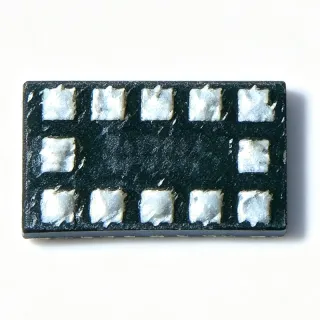
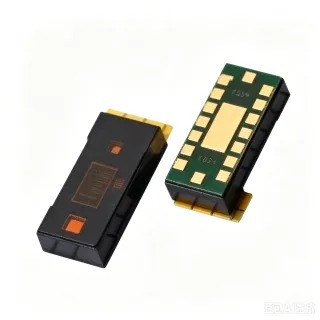
VCNL36821S-SB - VCNL36821S Proximity/ALS SensorXplorer™ Board | Vishay
MPN: VCNL36821S-SB ✓ Active| Qty | Unit Price | Extended |
|---|---|---|
| 1 | $18.5 | $18.50 |
| 5 | $17.1 | $85.50 |
| 10 | $15.8 | $158.00 |
| 25 | $14.25 | $356.25 |
| 50 | $12.9 | $645.00 |
VCNL36821S-SB Overview
What is a SensorXplorer™ demonstration board? A sensor evaluation board is a reference design platform provided by a sensor manufacturer to let engineers quickly characterize optical, motion, or environmental sensors without designing custom PCB hardware. The SensorXplorer™ family from Vishay is a USB-driven ecosystem where the daughter sensor board (such as VCNL36821S-SB) plugs onto a main controller board to provide I2C connectivity, power, and on-screen plotting of proximity counts and lux readings.
Key features of the VCNL36821S-SB include a small SOT-23 footprint through the daughter-card VCNL36821S sensor module, integrated photodiodes, transimpedance amplifiers, and analog-to-digital converters realized on a single CMOS die. The proximity channel supports up to 300 mm detection range with programmable IRED current and individual high/low interrupt thresholds, while the ambient light channel delivers linear output over a wide dynamic range. I2C interface (up to 1 MHz) and a dedicated interrupt pin simplify integration with low-power microcontrollers.
The board reflects the underlying VCNL36821S architecture, which combines a silicon photodiode, IRED, and digital signal processing in a single 8-pin SMD module. The CMOS process technology enables low standby current suitable for battery-powered always-on applications. Proximity programmable interrupt features of individual high and low thresholds offer the best utilization of resource and power saving on the microcontroller.
Typical applications for the VCNL36821S-SB include smartphone proximity sensing for touch-screen lock, laptop/lid-close detection, smart speaker wake-on-approach, wearable tap/wear detection, and IoT presence detection in smart home hubs. Automotive cabin gesture detection is also feasible when paired with a qualified host MCU.
When designing with this board, ensure the host controller can supply 1.7 V to 3.6 V to the sensor VDD and provides an I2C bus with proper pull-ups. The interrupt pin (pin 2 on the sensor) must be connected to a dedicated GPIO with the required pull-up resistor. This page synthesizes distributor stock levels, SensorXplorer™ ecosystem alternatives, and practical evaluation guidance not found in the standalone datasheet.
Drop-in alternatives for VCNL36821S-SB — same package, pin-to-pin compatible. Different-package parts requiring PCB rework are excluded.
Quick Comparison Tool — Select alternative parts for side-by-side comparison:
VCNL36826S-SB
✅ Drop-In📋 Reference alternative (not in catalog)
VCNL36821P-SB
✅ Drop-In📋 Reference alternative (not in catalog)
VCNL3030X01-SB
✅ Drop-In📋 Reference alternative (not in catalog)
VCNL36821S-SB Maximum Ratings & Electrical Characteristics
| Product Type | SensorXplorer™ Daughter Sensor Board |
| Target Sensor | VCNL36821S (proximity + ambient light) |
| Operating Voltage | 1.7 V to 3.6 V |
| Peak IRED Current | 156 mA |
| IR Wavelength | 940 nm |
| Communication Interface | I2C |
| Proximity Detection Range | up to 300 mm |
| Sensor Module Package | 8-SMD Module |
| Mounting Type | Surface Mount (daughter card) |
| Interrupt Pin | Yes (programmable high/low threshold) |
| Required Host Platform | Vishay SensorXplorer™ main controller board (USB) |
| RoHS Status | Compliant (Vishay policy) |
| Board Form Factor | SOT-23 outline via integrated VCNL36821S sensor |
VCNL36821S-SB Pin Configuration
| Pin 1 | VDD — Sensor supply voltage, 1.7 V to 3.6 V |
| Pin 2 | INT — Interrupt output (active low), connect to host GPIO with pull-up |
| Pin 3 | GND — Ground |
| Pin 4 | SDA — I2C data (to host MCU) |
| Pin 5 | SCL — I2C clock (to host MCU) |
| Pin 6 | NC — Not connected on this board edge connector |
| Pin 7 | NC — Reserved for SensorXplorer™ main board |
| Pin 8 | NC — Reserved for SensorXplorer™ main board |
Typical Applications
VCNL36821S-SB is suitable for 6 applications: Smartphone Touchscreen Lock / Proximity Sensing, Laptop Lid-Close / Hinge Detection, Smart Speaker Wake-on-Approach, Wearable Tap / Wear-Detection, IoT Smart Home Presence Detection, Automotive Cabin Gesture Detection (Prototype).
Smartphone Touchscreen Lock / Proximity Sensing
The VCNL36821S-SB is well suited for evaluating smartphone proximity sensing during voice calls where the touchscreen must blank when the user's face approaches. The onboard VCNL36821S delivers up to 300 mm detection range through a 940 nm IRED pulsed at 156 mA peak, and the dedicated interrupt pin lets the application processor sleep until proximity events occur. The 1.7 V to 3.6 V supply rail aligns directly with the Li-ion battery output through a buck regulator, simplifying power tree design. Designers can sweep IRED current and threshold registers from the SensorXplorer™ GUI to characterize touch-screen blanking distance under different cover-glass and ambient-light conditions before committing to a custom PCB layout.
Recommended
Laptop Lid-Close / Hinge Detection
Laptop lid-close and hinge-angle detection rely on a low-power proximity sensor that wakes the system controller only when the lid swings shut. The VCNL36821S-SB exposes the VCNL36821S proximity channel with programmable high/low interrupt thresholds, allowing the EC firmware to set a single threshold that reliably fires at a 5 mm lid gap without false triggers from typing gestures. The 940 nm IRED avoids interference from indoor lighting, and the I2C bus runs up to 1 MHz so the EC can poll or use the interrupt to keep the sensor in deep standby between events. The SensorXplorer™ host lets engineers plot lid-close counts vs angle directly during mechanical integration.
Recommended
Smart Speaker Wake-on-Approach
Smart speakers use proximity sensing to light up the LED ring or trigger a pre-wake command when a user walks within a meter. The VCNL36821S-SB's 300 mm maximum range covers desk-top presence detection, while the programmable IRED current lets the firmware trade detection range for power budget. The interrupt pin supports the always-on listening architecture by waking the main SoC only on proximity events, keeping quiescent power below 1 µA between detections. SensorXplorer™ USB connectivity enables quick sweeps of different IRED pulse counts to find the optimal balance between wake reliability and IRED aging in 24/7 always-listening products.
Recommended
Wearable Tap / Wear-Detection
Wearables such as smartwatches and fitness bands need to detect whether the device is being worn to gate optical heart-rate measurements and avoid spurious skin-contact readings. The VCNL36821S-SB's proximity channel provides reliable skin-vs-air discrimination up to a few centimeters, and the low standby current of the underlying VCNL36821S supports multi-day battery life targets. The SensorXplorer™ board lets the firmware engineer quickly log proximity counts on the wrist vs off the wrist under different skin tones and ambient conditions, building a robust threshold table before tape-out of the wearable mainboard.
Recommended
IoT Smart Home Presence Detection
Battery-powered IoT hubs and PIR-replacement nodes use proximity sensing to detect room occupancy without revealing a visible motion-sensing aperture. The VCNL36821S-SB accepts a 1.7 V to 3.6 V supply from a single Li-ion or 2x AA cell, and its interrupt-driven architecture lets the radio MCU stay in deep sleep until a person approaches. The 940 nm emitter remains invisible behind dark IR-translucent plastics, allowing completely concealed installation behind smart-home device enclosures. The SensorXplorer™ host makes it easy to characterize cross-talk with adjacent IR emitters (TV remote, night-vision camera LEDs) before final industrial design.
Recommended
Automotive Cabin Gesture Detection (Prototype)
Cabin gesture and occupant-presence detection prototypes for premium automotive cabins can be evaluated on the VCNL36821S-SB. The proximity channel's up-to-300 mm range covers typical arm-sweep distances from a console-mounted sensor, and the dedicated interrupt pin simplifies integration with the cabin domain controller. Note that the -SB evaluation board itself is not AEC-Q100 qualified, but it lets firmware engineers validate gesture algorithms before migrating to the production VCNL36821S sensor, which must be qualified through the customer's automotive component release process.
Recommended
Engineering reference data for VCNL36821S-SB — comparison, design guidance, and compliance information.
Selection Guide
Comparison with Alternatives
| Parameter | This Product | VCNL36826S-SB | VCNL36821P-SB | VCNL3030X01-SB |
|---|---|---|---|---|
| Brand | Vishay | Vishay | Vishay | Vishay |
| Package / Form Factor | SensorXplorer™ daughter board | SensorXplorer™ daughter board - same | SensorXplorer™ daughter board - same | SensorXplorer™ daughter board - same |
| Target Sensor | VCNL36821S | VCNL36826S (lower profile) | VCNL36821S (same die) | VCNL3030X01 (wider ALS range) |
| Operating Voltage | 1.7 V to 3.6 V | 1.7 V to 3.6 V - same | 1.7 V to 3.6 V - same | 1.65 V to 3.6 V (slightly wider low end) |
| IR Wavelength | 940 nm | 940 nm - same | 940 nm - same | 940 nm - same |
| Interface | I2C | I2C - same | I2C - same | I2C - same |
Key Differentiators
- Longest proximity range in the SensorXplorer™ 3682x family (vs VCNL36826S-SB)
- Best fit for high-IRED-pulse prototype characterization (vs VCNL3030X01-SB)
- Closest to reference design / minimal firmware divergence (vs VCNL36821P-SB)
Design Notes
Estimated: The VCNL36821S-SB evaluation board draws its sensor current directly from the SensorXplorer™ main board 3.3 V rail or your external 1.7–3.6 V supply. The VCNL36821S sensor's typical standby current is below 1 µA, but each IRED pulse at 156 mA peak must be duty-cycle limited (typically <1%) to keep average LED current and thermal rise within the sensor's rating. Plan bulk capacitance of at least 10 µF near the board's VDD pin so the IRED pulse does not collapse the supply rail.
When migrating from the VCNL36821S-SB to a custom PCB, mirror the SensorXplorer™ decoupling: a 100 nF X7R capacitor placed within 2 mm of the sensor VDD pin and a 4.7 µF bulk capacitor on the same net. The IRED anode/cathode traces must be kept short and routed away from the photodiode window to avoid optical cross-talk. Keep the photodiode aperture area free of solder mask and silkscreen for maximum sensitivity.
The INT pin (pin 2 on the sensor) is open-drain and requires a pull-up resistor to the controller's I/O supply, NOT to VDD if the controller runs at a different voltage. Forgetting this pull-up is the single most common reason the interrupt never fires. Also, the I2C address of the VCNL36821S sensor is fixed; if you have multiple boards on the same bus, you must use an I2C multiplexer.
Place the VCNL36821S-SB (or the bare VCNL36821S module in production) at least 3 mm from the edge of any enclosure opening. The 940 nm IRED beam diverges roughly ±20°, and reflections from enclosure lips can produce false proximity counts at close range. Adding a black light-absorbing gasket around the aperture is a low-cost way to improve false-trigger rejection in production designs.
Compliance Information
RoHS compliant per Vishay optoelectronics product policy. The -SB evaluation board is not AEC-Q100 qualified; the underlying VCNL36821S sensor module is qualified by Vishay for consumer/commercial use.