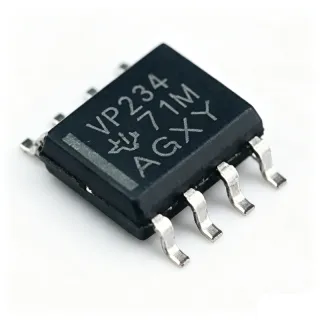
TCAN1042GVDRQ1 - Automotive CAN FD Transceiver | Texas Instruments
MPN: TCAN1042GVDRQ1 ✓ Nakahanda| Halaga | Presyo ng Bawat Bawang | Pinalawak |
|---|---|---|
| 1 | $0.509 | $0.51 |
| 10 | $0.479 | $4.79 |
| 100 | $0.429 | $42.90 |
| 500 | $0.389 | $194.50 |
| 1,000 | $0.349 | $349.00 |
TCAN1042GVDRQ1 Ulas
A CAN transceiver is a physical layer interface between a CAN controller and the CAN bus twisted-pair wiring. It converts the differential CAN bus signals (CANH/CANL) into single-ended logic levels for the controller, and vice versa. In automotive and industrial networks, the transceiver must handle harsh electrical environments, including voltage transients, ground offsets, and short-circuit conditions, all of which TCAN1042GVDRQ1 is designed to protect against.
Key features include fault protection against bus short-circuits and high-voltage transients, I/O level shifting for interfacing with 3.3V or 5V controllers, flexible data-rate operation up to 5 Mbps, and low-power standby mode. The device meets the requirements of ISO 11898-2 for automotive CAN, providing robust communication with a 1/1 driver/receiver configuration and half-duplex operation.
Technically, TCAN1042GVDRQ1 integrates a differential driver and receiver, providing differential transmit and receive capability. The I/O level shifting feature allows direct connection to microcontrollers with lower logic levels, eliminating the need for external level translators. Fault protection safeguards the device and bus against short circuits, thermal stress, and voltage surges, ensuring reliable communication in noisy environments.
Typical applications include automotive body control modules, gateways, battery management systems, industrial automation, and medical devices where reliable CAN communication is required. The wide operating temperature range and AEC-Q100 qualification (implied by automotive designation) make it suitable for under-hood and harsh environment deployments.
During design, ensure proper decoupling capacitors (100 nF and 10 uF) are placed close to the VCC pin to minimize noise, and use the appropriate bus termination resistors (120 ohms) at both ends of the bus. The SOIC-8 package allows compact PCB layouts, but thermal management should be considered for high-temperature environments.
Mga alternatibo na pwedeng ilagay na TCAN1042GVDRQ1 — parehas na package, pin-to-pin na katugmang. Hindi kasama ang mga bahagi ng iba't-ibang package na nangangailangan ng pagpapaayos ng PCB.
Variante sa Seri na ito
Katulad na modelo sa serye na katugma sa pagpasok TCAN1042GVDRQ1 (parehas na form factor at footprint) — pagkakaiba sa Package, Function, Fault Protection, Protocol, Automotive Qualification.
Quick Comparison Tool — Pumili ng alternatibong mga bahagi para sa paghahambing sa tabi-tabi:
TJA1042
Magkontak para sa presyo
Tingnan ang Datasheet →TJA1051T/3/1
✓ Sa Stock
$0.4102 / Yunit
Tingnan ang Datasheet →TCAN1042HGDRQ1
📋 Alternatibo na Reference (hindi sa katalogo)
TCAN1042HGVDRQ1
📋 Alternatibo na Reference (hindi sa katalogo)
TCAN1042DRQ1
📋 Alternatibo na Reference (hindi sa katalogo)
TCAN1042HDR
📋 Alternatibo na Reference (hindi sa katalogo)
TCAN1042GVDRQ1 Mga Spesipikasyon
| Packhaging | SOIC-8 (D) |
| Protocol | CAN 2.0, CAN FD |
| Number of Drivers/Receivers | 1/1 |
| Maximum Data Rate | 5 Mbps |
| Temperature na Operasyon | -55 to 125 °C |
| Uri ng Pagpapasok | Surface Mount |
| Bilang ng Pins | 8 |
| Duplex | Half |
| Fault Protection | Yes |
| I/O Level Shifting | Yes |
| Series | TCAN1042 |
Gabay sa Pin Configuration ng TCAN1042GVDRQ1 soic-8 (d)
Pin configuration para sa TCAN1042GVDRQ1 (soic-8 (d) package). Ang pagnunumero ng pin, mga function, at connection diagram ay tinukoy sa datasheet ng manufacturer. Sumangguni dito para sa eksaktong footprint at mga alituntunin sa soldering.

Wala ng detalyadong pinout data na magagamit para sa TCAN1042GVDRQ1.
Sumangguni sa datasheet para sa buong pin configuration.
Tipikal na mga Gamit
TCAN1042GVDRQ1 ay nararapat para sa 6 aplikasyons: Automotive Body Control Module, Gateway / Telematics, Industrial CAN Networks, Battery Management Systems, Medical Device CAN Interfaces, Aerospace / UAV CAN Bus.
Automotive Body Control Module
The TCAN1042GVDRQ1 provides reliable CAN communication between body control module microcontrollers and the vehicle network. Its fault protection meets ISO 11898-2, handling voltage transients up to 40V and bus short circuits. With I/O level shifting, it directly interfaces with 3.3V MCUs like TMS320F28035-Q1, eliminating external translators. The device ensures robust data transmission at 5 Mbps for fast door, seat, and lighting control commands, operating over -55°C to 125°C for under-hood environments.
Inirekomenda
Gateway / Telematics
In automotive gateways and telematics units, TCAN1042GVDRQ1 bridges multiple CAN buses to a central processing unit. With 5 Mbps CAN FD, it supports high-bandwidth firmware updates and sensor data aggregation. The I/O level shifting allows direct connection to 3.3V application processors such as AM62A1-Q1. Its fault protection ensures system integrity against bus wiring errors, making it ideal for the harsh environment of a vehicle's central gateway.
Inirekomenda
Industrial CAN Networks
TCAN1042GVDRQ1 serves as a physical layer interface for industrial automation CAN networks. It supports data rates up to 5 Mbps over twisted-pair wiring, enabling fast communication between PLCs, sensors, and actuators. The fault protection guards against voltage surges and short circuits typical in factory environments. With a wide -55°C to 125°C temperature range, it performs reliably near motors or in enclosed cabinets. Its SOIC-8 package simplifies PCB integration in compact industrial controllers.
Inirekomenda
Battery Management Systems
In battery management systems, TCAN1042GVDRQ1 enables safe CAN communication between battery monitoring ICs and the main controller. Its fault protection guards against high-voltage transient events in electric vehicle battery packs. With CAN FD at 5 Mbps, it supports rapid exchange of cell voltage and temperature data. The device pairs well with TI's BQ79616PAPRQ1, which monitors battery cells, and operates over -55°C to 125°C for broad environmental coverage. Decoupling caps near VCC minimize noise.
Inirekomenda
Medical Device CAN Interfaces
TCAN1042GVDRQ1 provides robust CAN communication in medical devices like infusion pumps and diagnostic equipment. Its fault protection ensures safe operation under electrical fault conditions, critical for patient safety. I/O level shifting allows connection to low-voltage MCUs, simplifying design with 3.3V controllers. The wide temperature range supports sterile environments and portable equipment. With 5 Mbps data rate, it handles high-resolution sensor data. The SOIC-8 package facilitates compact PCB designs in space-constrained medical devices.
Inirekomenda
Aerospace / UAV CAN Bus
For aerospace and UAV systems, TCAN1042GVDRQ1 offers reliable CAN communication in harsh environments. Its fault protection handles voltage spikes and bus shorts, essential in aircraft electrical systems. The device supports 5 Mbps data rates for real-time control and telemetry. I/O level shifting enables direct interfacing with flight control MCUs at 3.3V logic. With a -55°C to 125°C operating range, it performs in high-altitude and temperature extremes. The robust SOIC-8 package withstands vibration and mechanical stress common in UAVs.
Inirekomenda
Buod ng mga Inirekomendang Produkto
Impormasyon ng Talumpati sa Engineering for TCAN1042GVDRQ1 — ikabit, gabay sa disenyo, at impormasyon ng pagsunod sa kautusan.
Paunawang Hanapin
Ikabit sa Mga Alternatibo
| Parametro | Ito ang Producto | TCAN1042HGDRQ1 | TCAN1042HGVDRQ1 | TCAN1042DRQ1 | TCAN1042HDR | TJA1042 | TJA1051T/3/1 |
|---|---|---|---|---|---|---|---|
| Package | SOIC-8 (D) | SOIC-8 (D) | SOIC-8 (D) | SOIC-8 (D) | SOIC-8 (D) | SOIC-8 | SOIC-8 |
| Brand | Texas Instruments | Texas Instruments | Texas Instruments | Texas Instruments | Texas Instruments | NXP Semiconductors | NXP Semiconductors |
| Maximum Data Rate | 5 Mbps | 5 Mbps | 5 Mbps | 2 Mbps | 5 Mbps | 1 Mbps | 1 Mbps |
| Number of Drivers/Receivers | 1/1 | 1/1 | 1/1 | 1/1 | 1/1 | 1/1 | 1/1 |
| Operating Temperature | -55 to 125 °C | -55 to 125 °C | -55 to 125 °C | -55 to 125 °C | -40 to 125 °C | -40 to 125 °C | -40 to 125 °C |
| Fault Protection | Yes | Yes | Yes | Yes | Yes | No | No |
| I/O Level Shifting | Yes | Yes | Yes | No | No | No | Yes |
Pangunahing mga Pagkakaiba
- CAN FD up to 5 Mbps (kumpara saTCAN1042DRQ1)
- I/O Level Shifting (kumpara saTJA1042)
- Automotive Fault Protection (kumpara saTCAN1042HDR)
Talaan ng Disenyo
Although CAN transceivers typically operate at low power, thermal dissipation can become significant in high-temperature environments. Ensure the SOIC-8 package has adequate copper pour on the PCB to spread heat, especially when operating at the upper end of the -55°C to 125°C range. The junction-to-ambient thermal resistance (ThetaJA) is [DATA_NEEDED], but typically around 100-150°C/W for SOIC-8. Design accordingly to keep the junction temperature below the maximum rating.
Place a 100 nF ceramic capacitor and a 10 uF electrolytic capacitor as close as possible to the VCC pin to provide low-impedance decoupling. Use a solid ground plane under the transceiver. Route the CANH and CANL traces as a differential pair with controlled impedance (typically 120 ohms). Keep the bus traces away from noisy digital lines to avoid coupling. Termination resistors (120 ohms) should be placed at both ends of the CAN bus.
One common pitfall is running the CAN bus without proper termination, which causes signal reflections and communication errors. Also, ensure the supply voltage does not exceed the maximum rating; the TCAN1042GVDRQ1 is typically designed for 4.5V to 5.5V, but verify the exact range from the datasheet. Do not omit the I/O level shifting voltage reference (if applicable) when interfacing with 3.3V controllers, as this will cause logic-level incompatibility.
Impormasyon ng Pagsunod sa Kautusan
Compliance data not explicitly present in provided web data. The automotive designation implies AEC-Q100 qualification, but it has not been confirmed. RoHS and other compliance statuses should be verified from the manufacturer's official documentation.