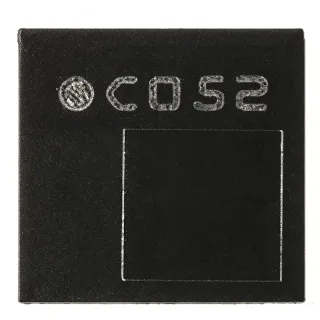
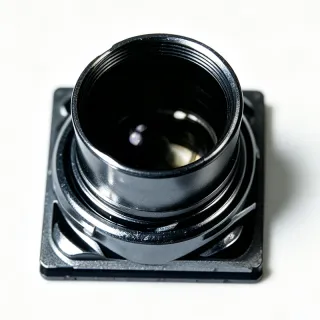
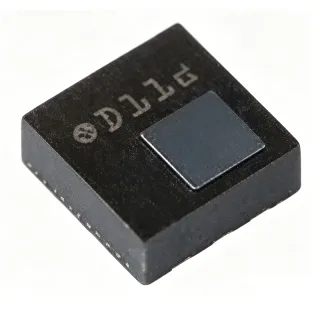
MPXV2010DP - 10kPa Differential Pressure Sensor, 8-BSOP | STMicroelectronics
MPN: MPXV2010DP ✓ Hoạt độngMPXV2010DP Tóm tắt
A piezoresistive pressure sensor is a MEMS device whose Wheatstone-bridge strain gauges are diffused into a monolithic silicon diaphragm; flexure of the diaphragm under pressure unbalances the bridge and produces an output voltage directly proportional to the applied differential pressure. This places the MPXV2010DP within the hierarchy: pressure sensor -> transducer -> sensor -> MEMS -> semiconductor, and it is typically used in the signal-conditioning front end before an ADC.
Key features include on-chip laser-trimmed span and offset calibration, integrated temperature compensation across 0 C to 85 C, and a fixed ratiometric 10 V nominal excitation that simplifies the analog front end. The dual-port same-side inlet accepts pneumatic manifolds via 3.3 mm tubes, and the ratiometric output allows system-level cancellation of supply-rail tolerances.
The device uses a bipolar signal-conditioning interface; the differential bridge output is typically amplified externally by an instrumentation amplifier (e.g., a three-op-amp INA) before being digitized. Output impedance is approximately 1.7 kohm per side, so the amplifier input bias current must be kept low. Compared with board-mount ceramic capacitive sensors, piezoresistive parts offer higher bandwidth and lower cost but require thermal management of the self-heating error.
Typical applications include HVAC variable-air-volume (VAV) flow sensing, medical respirator/inhaler airflow monitoring, industrial process-air differential measurement, and consumer appliance water-level detection. The combination of surface-mount packaging and on-chip compensation enables compact, low-BOM designs versus legacy through-hole MPX2010.
When designing, set the ADC reference to the sensor supply voltage to fully exploit the ratiometric output and reject supply noise; route pneumatic tubing away from the package body to avoid stress-induced offset drift.
This page synthesizes cross-brand equivalents, drop-in alternatives, and application-level design notes not found in a single distributor listing, providing information gain beyond the manufacturer datasheet.
Bộ thay thế dễ dàng lắp đặt cho MPXV2010DP — cùng gói, chân-to-chân tương thích. Các bộ phận yêu cầu hàn PCB bị loại trừ.
Các biến thể trong loạt này
Các mẫu cùng loạt có thể lắp đặt dễ dàng tương thích với MPXV2010DP (cùng hình factor và footprint) — khác nhau ở Output Type, Operating Temperature, Package, Mounting Type, Pressure Type.
MPXV2010GP
✅ Drop-InLiên hệ để biết giá
Xem tài liệu →MPXV2010DPT1
✅ Drop-In📋 Tham chiếu thay thế (không có trong danh mục)
MPX2010DP
✅ Drop-InLiên hệ để biết giá
Xem tài liệu →XGZP192D
✅ Drop-In📋 Tham chiếu thay thế (không có trong danh mục)
XGZP194D
✅ Drop-In📋 Tham chiếu thay thế (không có trong danh mục)
MPXV2010DP Tỷ lệ tối đa & tính chất điện
| Product Type | Pressure Sensor (Piezoresistive, Differential) |
| Operating Pressure Range | 0 kPa to 10 kPa (0 PSI to 1.45 PSI) |
| Pressure Type | Differential |
| Kiểu đầu ra | Analog, Ratiometric |
| Khoảng điện áp đầu ra | 0 mV to 25 mV |
| Điện áp cung cấp | 10 V nominal |
| Port Style | Dual Ports, Same Side (3.3 mm Tube Male) |
| Hộp | 8-BSOP (0.475", 12.06 mm Width), Surface Mount |
| Nhiệt độ hoạt động | 0 C to 85 C |
| Calibration | On-Chip, Laser-Trimmed |
| Temperature Compensation | On-Chip, 0 C to 85 C |
| Kiểu lắp đặt | Surface Mount |
| Trạng thái RoHS | Compliant |
Cấu hình chân MPXV2010DP
| Chân 1 | Vout+ — Differential bridge output, positive |
| Chân 2 | GND — Common reference and bridge return |
| Chân 3 | Vex- — Bridge excitation, negative rail (typically tied to GND) |
| Chân 4 | Vex+ — Bridge excitation, +10 V nominal supply |
| Chân 5 | NC — Not connected (per datasheet) |
| Chân 6 | NC — Not connected (per datasheet) |
| Chân 7 | NC — Not connected (per datasheet) |
| Chân 8 | Vout- — Differential bridge output, negative (often tied to GND in single-ended use) |
Ứng dụng tiêu biểu
MPXV2010DP phù hợp cho 6 Áp dụngs: HVAC Variable Air Volume (VAV) Flow Sensing, Medical Respirator / Inhaler Airflow Monitoring, Industrial Process-Air Differential Measurement, Consumer Appliance Water-Level Detection, Cleanroom and Lab Differential Pressure Monitoring, Drone Airspeed / Pitot-Static Probe.
HVAC Variable Air Volume (VAV) Flow Sensing
Why the MPXV2010DP fits HVAC VAV flow sensing: the sensor's 0-10 kPa differential range matches the typical 0-250 Pa velocity-pressure window commonly encountered across VAV boxes and duct spans when amplified and integrated, and the ratiometric 0-25 mV output scales with supply noise for first-order rejection. How it is used: the device is mounted in a pitot-static or laminar flow-element manifold; the pressure taps feed the two same-side ports, and a downstream INA amplifies the millivolt output before the building-automation ADC. A key benefit is that the surface-mount 8-BSOP package enables automated SMT assembly of high-volume VAV box electronics.
Được đề xuất
Medical Respirator / Inhaler Airflow Monitoring
Why the MPXV2010DP fits medical respirator and inhaler airflow monitoring: the 0-10 kPa differential range and 1.45 PSI full scale cover inspiratory and expiratory pressure drops measured at the patient wye or proximal flow sensor, and the on-chip temperature compensation across 0-85 C maintains span accuracy during warm humidified-gas operation. How it is used: the dual-port same-side inlet is plumbed into a flow restriction element (e.g., orifice plate), and a low-noise instrumentation amplifier (e.g., INA128) gains the 0-25 mV bridge output to the ADC's 0-5 V input range. The compact 8-BSOP package allows the sensor to be co-located with the flow path, reducing dead-space volume.
Được đề xuất
Industrial Process-Air Differential Measurement
Why the MPXV2010DP fits industrial process-air differential measurement: the 10 kPa differential range covers compressed-air line and clean-pneumatic-system pressure drops well below 1.5 PSI full scale, and the on-chip laser-trimmed calibration simplifies per-unit gain calibration during factory setup. How it is used: two 3.3 mm tubes tap high- and low-pressure points across an orifice or venturi in the pneumatic line, and the 0-25 mV output drives an isolation amplifier (e.g., ISO124) and 4-20 mA loop transmitter for plant-wide monitoring. The trade-off is that the part requires regulated 10 V excitation rather than a 3.3 V rail-rail interface.
Được đề xuất
Consumer Appliance Water-Level Detection
Why the MPXV2010DP fits consumer appliance water-level detection: the differential sensing principle can detect hydrostatic pressure head differences produced by changing water columns, and the 10 kPa full scale maps to roughly one meter of water - more than adequate for most washing-machine, dishwasher, and water-dispenser reservoirs. How it is used: a tube runs from the appliance sump into one port of the sensor while the other port vents to atmosphere, converting liquid height into a millivolt signal that an MCU ADC reads via a signal-conditioning op-amp. The SMT 8-BSOP package keeps assembly costs aligned with high-volume appliance manufacturing.
Được đề xuất
Cleanroom and Lab Differential Pressure Monitoring
Why the MPXV2010DP fits cleanroom and lab differential pressure monitoring: cleanroom pressurization is typically maintained within +/- 100 Pa across ventilation zones, well within the 10 kPa full-scale headroom that the differential sensor provides. How it is used: one port connects to the monitored room and the other to a reference space or ambient; an external low-noise amplifier feeds the 25 mV full-scale signal to a 16-bit ADC and the MCU computes particle-count-corrected airflow integrity. A benefit is on-chip temperature compensation avoids drift between 0 and 85 C lab ambient swings.
Được đề xuất
Drone Airspeed / Pitot-Static Probe
Why the MPXV2010DP fits drone airspeed sensing: the small differential pressure generated by a drone pitot-static probe (typically well below 1 kPa at cruise speeds under 10 m/s) falls within the sensor's highly sensitive 0-10 kPa band. How it is used: the same-side ports attach directly to forward-facing and side-facing pitot tubes, and the amplified 0-25 mV output drives the flight controller's ADC for airspeed-based pitch and throttle control. The compact surface-mount package keeps the air-data module lightweight, which matters for multirotor endurance.
Được đề xuất
Tóm tắt các sản phẩm được đề xuất
Dữ liệu tham khảo kỹ thuật cho MPXV2010DP — so sánh, hướng dẫn thiết kế và thông tin tuân thủ.
Hướng dẫn chọn lựa
So sánh với các sản phẩm thay thế
| Tham số | Sản phẩm này | MPXV2010GP | MPX2010DP | XGZP192D | XGZP194D |
|---|---|---|---|---|---|
| Brand | STMicroelectronics | STMicroelectronics | STMicroelectronics | CFSensor | CFSensor |
| Package | 8-BSOP (12.06 mm) | 8-BSOP - same | 8-BSOP - same | SOP-8 - same | SOP-8 - same |
| Operating Pressure Range | 0-10 kPa (Differential) | 0-10 kPa (Gauge) | 0-10 kPa (Differential) | 0-10 kPa (Differential) | 0-10 kPa (Differential, also 50/100/200 kPa variants) |
| Output Signal | 0 mV to 25 mV @ 10 V | 0 mV to 25 mV @ 10 V | 0 mV to 25 mV @ 10 V | Compensated mV (lower span) | Compensated mV (lower span) |
| Supply Voltage (Nominal) | 10 V | 10 V | 10 V | 5 V | 5 V |
| Port Style | Dual Ports, Same Side (3.3 mm) | Single Port (Gauge) | Dual Ports, Same Side | Dual Ports | Dual Ports |
| Calibration | On-Chip (Laser-Trimmed) | On-Chip (Laser-Trimmed) | On-Chip (Laser-Trimmed) | On-Chip (Compensated) | On-Chip (Compensated) |
Bảo phân biệt quan trọng
- Standardized SMT 8-BSOP footprint for high-volume automated assembly (vsMPX2010DP (4-SIP Module))
- On-chip temperature compensation and laser trim (vsGeneric bare-bridge differential sensors)
- Dual-port same-side 3.3 mm pneumatic inlet (vsSingle-port MPXV2010GP)
Ghi chú thiết kế
The MPXV2010DP requires a regulated 10 V excitation to achieve the datasheet 25 mV full-scale output, per the STMicroelectronics datasheet. Many designs derive this from a low-noise 10 V LDO (e.g., LT3042) or a precision reference (e.g., MAX603) from a 12 V or 15 V rail; tying the ADC's reference input to the same 10 V makes the entire signal chain ratiometric. Estimated: at 5 mA bridge current, the 10 V LDO dissipates roughly 50 mW at the sensor - well within a SOT-23 footprint.
The 0-25 mV output of the MPXV2010DP is millivolt scale and easily corrupted by ground bounce, switching noise, and thermocouple effects. Use a low-noise instrumentation amplifier (e.g., INA128 or AD8421) with its REF pin driven by the same reference used for the sensor supply; keep bridge traces matched, guarded, and routed away from switching converters. Estimated: with a 1.7 kohm typical bridge impedance, amplifier bias current should be under 5 nA to keep offset error below 50 microvolt.
The on-chip temperature compensation covers 0 C to 85 C, per the datasheet; for outdoor or industrial environments spanning -40 C to +125 C, package-level drift and self-heating become non-negligible. Mount the sensor away from heat sources like power inductors and power resistors, and provide airflow over the 8-BSOP body. The thermal mass of the adjacent tubing mass also acts as a low-pass filter against rapid ambient-temperature swings.
Per the ST datasheet, the pneumatic ports protrude 3.3 mm from the same side of the 8-BSOP body and require PCB cutouts or front-panel access; the package outline is detailed in section 'Package Information'. Provide mechanical clearance at the port side of the PCB and avoid tall components in the port-shadow region. Seal the back of the sensor body to prevent leak paths that degrade common-mode pressure rejection.
Three frequent MPXV2010DP design pitfalls: (1) failing to make the ADC reference ratiometric to the 10 V supply - this loses the supply-noise rejection that the sensor is designed to provide; (2) measuring the differential output in single-ended mode and grounding Vout-, which halves the available signal and injects common-mode drift; (3) introducing long pneumatic tubes that act as restricted-flow RC filters and slow down the response time. Always use matched pneumatic tube lengths and condition the differential signal fully on-chip with a true INA.
Thông tin tuân thủ
RoHS compliant per STMicroelectronics product page. Pressure sensors typically not AEC-Q100 qualified; check manufacturer documentation for automotive-grade variants if required.