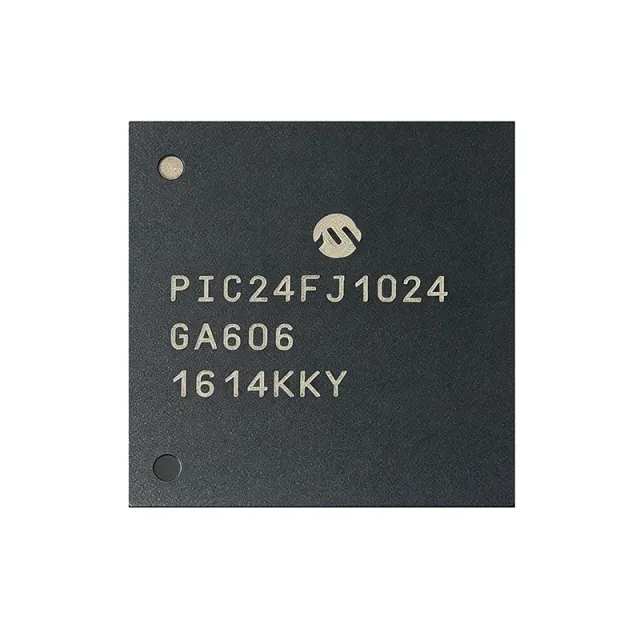
PIC24F32KA302-I/SP
PIC24F32KA302-I/SP - 16-bit XLP MCU 32KB Flash 28-SPDIP | Microchip
The Microchip PIC24F32KA302-I/SP is a 16-bit eXtreme Low Power (XLP) microcontroller from the PIC24F family, delivering up to 16 MIPS at 32 MHz while consuming a fraction of the power typical of comparable MCUs, packaged in a 28-pin SPDIP (Skinny Plastic DIP) through-hole package. It integrates 32 KB of Flash program memory, 2 KB of SRAM, 512 bytes of EEPROM, and a rich peripheral set including a 12-bit ADC, CTMU (Charge Time Measurement Unit), RTCC, comparators, and configurable logic cells.
An MCU (Microcontroller Unit) is a single-chip computer containing a CPU core, non-volatile program memory, volatile data memory, and programmable peripherals. The 16-bit PIC24F architecture uses a modified Harvard RISC core with a 16-bit instruction width and 24-bit instruction word, providing C-friendly code density and deterministic interrupt latency. XLP technology adds Deep Sleep, Sleep, and Idle modes with peripheral retention, enabling coin-cell and battery-powered designs that wake on RTC alarms, comparator events, or external interrupts.
Key features include an operating voltage range of 1.8V to 3.6V, ultra-low Deep Sleep currents in the nanoamp range, configurable peripherals via Peripheral Pin Select (PPS), a 12-bit ADC with up to 16 channels, 5-bit DAC, and a Charge Time Measurement Unit for capacitive touch sensing. The device also integrates a Real-Time Clock Calendar (RTCC) with 48-bit timer running in Deep Sleep, plus DSBOR/DSWDT deep-sleep brown-out reset and watchdog timers. Communication peripherals cover UART, SPI, and I2C.
The architecture combines high-performance 16-bit compute with power-optimized analog blocks, allowing sensor aggregation, signal processing, and low-duty-cycle wireless host tasks from a single chip. The CTMU enables accurate capacitance measurement for touch buttons, level sensing, and time-of-flight use cases without external timing components.
Typical applications include battery-powered IoT sensor nodes, wearable health monitors, energy harvesting devices, remote controls, low-duty-cycle wireless sensor hubs, and industrial metering. The CTMU also enables capacitive touch user interfaces on home appliances and consumer electronics.
When designing with this MCU, ensure decoupling capacitors are placed close to VDD/AVDD/VBAT pins, follow PPS configuration order in code to avoid glitches, and verify Deep Sleep current against your battery life budget. The CTMU requires careful PCB layout with guard traces around touch electrodes to prevent false triggers.
This page consolidates distributor pricing, drop-in alternatives within the same 28-SPDIP family, and practical design notes that complement the manufacturer datasheet.
询价
联系我们