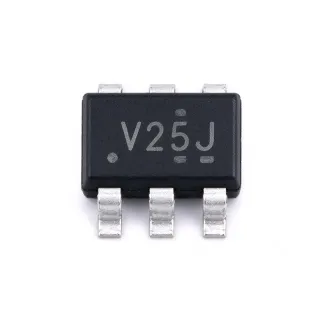
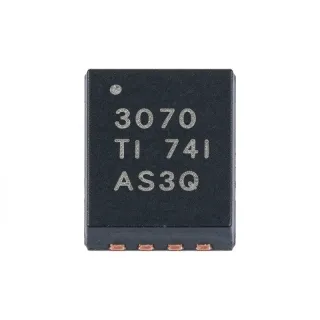
TCAN330GDR - 3.3V 5Mbps CAN FD Transceiver | Texas Instruments
料号: TCAN330GDR ✓ 量产中TCAN330GDR 概述
A CAN transceiver, also called a CAN physical-layer interface, converts logic-level signals from a CAN controller into differential bus signals and converts received differential signals back into digital logic. In the broader hierarchy, TCAN330GDR belongs to the CAN interface IC class, which sits within interface ICs and semiconductor communication components. Its CAN FD capability allows the physical layer to support higher signaling rates than classic CAN while maintaining compatibility with established CAN network infrastructure.
Key features include single-supply operation from 3.0 V to 3.6 V, operation up to 5 Mbps, ISO 11898-2 compatibility, a wide common-mode operating range of ±12 V, and bus-pin fault protection to ±14 V. The TCAN330G family includes normal mode, silent mode, and shutdown mode functions, with the exact mode behavior depending on the selected family member. The TCAN330GDR uses the 8-pin SOIC package, which supports conventional surface-mount assembly and is available in standard distributor inventory.
The TCAN330GDR is designed for systems in which a CAN controller or MCU includes a CAN host interface but requires an external physical-layer transceiver. Its 5-Mbps capability is useful for CAN FD nodes in industrial automation, automotive electronics, embedded control, and communication equipment. The ±14-V bus-pin fault protection provides additional robustness when the transceiver is connected to an externally powered or noisy vehicle, machine, or industrial bus.
When designing a TCAN330GDR circuit, verify the controller supply level, CAN bus termination, common-mode range, and transceiver mode requirements against the complete datasheet. Place the transceiver close to the CAN connector, provide a proper ground reference, and use the recommended protection and decoupling layout. The exact pin assignments and application-specific timing values are not present in the supplied source snippets and should be confirmed from the official manufacturer datasheet before PCB release.
This product page consolidates verified manufacturer and distributor information, same-package family alternatives, pricing references, and engineering design guidance. It is intended to support component selection and sourcing for TCAN330GDR rather than replace the complete Texas Instruments datasheet, which remains the authoritative source for electrical limits, timing, pinout, and application guidance.
直接替换替代料: TCAN330GDR ——相同封装,引脚兼容。需要 PCB 改动的不同封装料号已排除。
本系列中的变体
可与以下型号直接替换的同系列型号: TCAN330GDR (相同外形与封装尺寸) ——差异在于 Operating Modes, Package, Product Type, Maximum Signaling Rate, Number of Channels.
TCAN330GDR 规格参数
| Product Type | 3.3-V CAN FD transceiver |
| Number of Channels | 1 channel |
| Supply Voltage Range | 3.0 V to 3.6 V |
| Maximum Signaling Rate | 5 Mbps |
| Protocol Compatibility | CAN FD and CAN |
| High-Speed CAN Standard | ISO 11898-2 compatible |
| Common-Mode Operating Range | ±12 V |
| Bus Pin Fault Protection | ±14 V |
| Operating Modes | Normal mode, silent mode, shutdown mode |
| 封装 | 8-pin SOIC (D) |
| 安装类型 | Surface Mount |
| Package Type | SOIC |
| Manufacturer | Texas Instruments |
| Product Family | TCAN33x |
TCAN330GDR soic 引脚配置指南
TCAN330GDR(soic 封装)的引脚配置。 引脚编号、功能和连接图在制造商数据手册中定义。请参阅该手册以了解确切的封装尺寸和焊接指南。
暂无详细引脚数据: TCAN330GDR.
请参阅 数据手册 以查看完整引脚配置。
典型应用
TCAN330GDR 适用于 6 应用s: Industrial CAN FD Automation, Automotive CAN FD Networks, Embedded CAN FD Gateways, Robotics Motor Coordination, CAN FD Communication Modules, Battery-Powered Monitoring Nodes.
Industrial CAN FD Automation
The TCAN330GDR fits industrial automation nodes that need a 5-Mbps CAN FD physical layer over a 3.3-V embedded platform. Its single 3.0-V to 3.6-V supply range simplifies interface design when the host controller, sensors, and communications logic operate at 3.3 V. The transceiver is placed between the controller TXD and RXD signals and the differential CANH/CANL bus, with external 120-ohm termination placed at appropriate bus endpoints. The ±14-V bus-pin fault protection adds robustness for factory equipment where the transceiver may be exposed to external bus wiring. Engineers should still validate loop delay, transceiver mode, connector protection, and grounding against the complete manufacturer datasheet.
推荐
Automotive CAN FD Networks
TCAN330GDR is applicable to 3.3-V automotive electronics nodes requiring CAN FD signaling up to 5 Mbps. Its ISO 11898-2 compatibility and ±14-V bus-pin fault protection are useful when the transceiver connects to vehicle wiring through an external network interface. The 8-pin SOIC package is straightforward for conventional surface-mount PCB assembly. Because the supplied sources do not identify the exact ordering code as AEC-Q100 qualified, automotive engineers must confirm qualification, temperature range, production lifecycle, and any OEM-specific requirements. The device should be paired with correctly isolated or non-isolated bus protection appropriate to the vehicle electrical environment.
推荐
Embedded CAN FD Gateways
The TCAN330GDR can provide the physical layer for embedded CAN FD gateways that bridge a 3.3-V microcontroller to a higher-speed field bus. Its 5-Mbps maximum signaling rate supports CAN FD data phases while the 3.3-V supply aligns with many industrial and communications processors. Place the transceiver near the CAN connector, provide a low-impedance ground return, and keep the differential pair routing controlled. The verified materials do not provide the exact loop-delay and timing values, so firmware timing must be validated using the full Texas Instruments datasheet and the selected CAN controller. Bus fault protection should be supplemented by connector-level surge and ESD protection where required.
推荐
Robotics Motor Coordination
TCAN330GDR suits robot controller and motor-drive subsystems that need deterministic multi-node communication over a CAN FD bus. A 5-Mbps physical layer can support more responsive coordination than a 1-Mbps classic CAN interface, while the 3.3-V supply is compatible with typical embedded control electronics. The transceiver converts the controller’s TXD and RXD logic to the differential CAN bus and can be integrated close to the robot’s bus connector. Its ±14-V bus-pin fault protection provides an additional margin against wiring transients. Protection networks, termination, common-mode grounding, and controller bit timing must be designed together, especially for long robot wiring runs and motor systems with switching noise.
推荐
CAN FD Communication Modules
The TCAN330GDR is appropriate for compact CAN FD communication modules that expose a 3.3-V digital interface to a host processor while operating on a conventional CAN bus. Its 5-Mbps capability enables faster payload transfer and diagnostics compared with 1-Mbps CAN physical layers, while ISO 11898-2 compatibility supports established network behavior. The small SOIC-8 package helps maintain a compact layout, but the bus connector and protection components may dominate board area. Ensure that CANH and CANL geometry follows a controlled differential path, termination is located only at bus ends, and the transceiver supply is decoupled according to the full datasheet layout guidance.
推荐
Battery-Powered Monitoring Nodes
TCAN330GDR can serve in low-power monitoring and instrumentation nodes where a 3.3-V embedded controller communicates through a CAN FD network. Its single-supply operation simplifies power architecture, and the 3.0-V to 3.6-V range aligns with common battery-regulated 3.3-V rails. When the device is used for battery-powered sensing, the system designer should evaluate the TCAN330 shutdown-mode behavior, bus leakage, external protection leakage, and the sleep strategy of the host controller. The verified snippets do not provide quiescent-current values, so power-loss estimates require the official datasheet. CAN bus activity and wake requirements should be included in the system energy budget rather than assuming the transceiver can remain fully asleep without network consequences.
推荐
推荐产品汇总
工程参考数据: TCAN330GDR ——对比、设计指导和合规信息。
选型指南
与替代料对比
| 参数 | 本产品 | TCAN332DR | TCAN334DR |
|---|---|---|---|
| Brand | Texas Instruments | Texas Instruments | Texas Instruments |
| Package | SOIC-8 (D) | SOIC-8 (D) | SOIC-8 (D) |
| Supply Voltage | 3.0 V to 3.6 V | 3.3-V CAN transceiver family | 3.3-V CAN transceiver family |
| Protocols | CAN, CAN FD | CAN, CAN FD | CAN, CAN FD |
| High-Speed CAN Compatibility | ISO 11898-2 compatible | ISO 11898-2 compatible | ISO 11898-2 compatible |
| Operating Modes | Normal, silent, shutdown | Family-specific modes; confirm exact datasheet | Normal, low-power standby with wake |
关键差异点
- 5-Mbps CAN FD physical-layer performance (对比 TCAN332DR)
- TCAN330-specific silent and shutdown operating behavior (对比 TCAN334DR)
- Documented bus fault tolerance (对比 TCAN332DR)
设计说明
Place the TCAN330GDR close to the CAN connector or protection network and route CANH and CANL as a tightly coupled differential pair. Keep the bus traces away from switching power inductors, high-current motor traces, crystals, and sensitive analog inputs. Use a solid ground-plane connection and provide the manufacturer-recommended supply decoupling near the transceiver. PCB stack-up and controlled-impedance routing should be evaluated when the design contains long or high-speed CAN FD interconnects.
Do not install termination resistors at every node; place two 120-ohm termination networks only at the physical ends of the CAN bus. Verify that the controller uses 3.3-V-compatible TXD and RXD levels and that the selected transceiver mode matches the firmware behavior. The TCAN330G family supports silent and shutdown operation, but changing the STB input in the wrong state can make a node appear disconnected. Confirm mode timing and loop delay using the complete Texas Instruments datasheet.
Use the transceiver’s ±14-V bus-pin fault protection as part of, not a replacement for, the external protection strategy. Select surge, ESD, and common-mode-choke components based on the connector exposure and vehicle or industrial cable length. Keep protection-current paths away from sensitive ground references and follow the manufacturer’s recommended protection topology. Validate radiated and conducted emissions because CAN FD’s 5-Mbps capability creates faster edge rates than classic 1-Mbps CAN.
合规信息
The supplied source snippets do not provide specific RoHS, REACH, AEC-Q100, lead-free, halogen-free, or conflict-minerals statements for TCAN330GDR. Compliance must be verified from the manufacturer product documentation before qualification.