Interface ICs
ژێرپۆلەکان
بەرهەمەکان (5,100+)

SI3019-KS - Global DAA Telecom Interface IC | Skyworks Solutions
Skyworks Solutions Inc. SI3019-KS is a single-channel enhanced global Direct Access Arrangement interface IC for telecommunications equipment, factory extension services, and voice-network line interfaces. The device uses V.92 data formatting, provides 80 dB dynamic range across its transmit and receive paths, and is packaged in a 16-SOIC housing measuring 0.154 inch, or 3.90 mm, wide. The SI3019-KS is supplied in tube packaging for production assembly. A Direct Access Arrangement, or DAA, is the line-side interface between a communications system and the public telephone network. It belongs to the telephone-interface IC hierarchy, which combines network-interface signaling, voice-path processing, codec functions, and line termination. By integrating an AC termination function, DC termination function, ring-detect threshold, ringer impedance, and codec interface with a four-wire hybrid, the SI3019-KS consolidates several functions normally distributed across a line-card design. The SI3019-KS supports GCI, PCM, and SPI interfaces, providing flexible connectivity between the DAA and the surrounding line-processing equipment. Its documented supply-voltage range is 3 V to 3.6 V, while current consumption is listed as 8.5 mA. These characteristics suit low-voltage telecom systems in which a direct-access arrangement must combine signaling control and a voice path in a compact, surface-mount package. Within the device, the integrated codec and four-wire hybrid separate transmit and receive voice signals from the line-facing network path. The 80 dB dynamic-range specification provides a quantitative indication of the available voice-path signal range. AC and DC termination functions support the physical line interface, while the ring-detect threshold and ringer-impedance functions help the surrounding system interpret line-state conditions. Typical uses include telephone line cards, customer premises equipment, private-branch exchange interfaces, voice gateways, central-office line cards, and industrial telecommunications equipment. In these systems, the SI3019-KS can manage the line-side termination and signaling interface while GCI, PCM, or SPI connects the device to digital line-processing circuitry. Designers should confirm the complete pin mapping, absolute electrical limits, line-impedance requirements, and timing details against the manufacturer datasheet before layout release. Decoupling, analog-signal routing, hybrid-network isolation, and grounding are especially important because the device combines digital control interfaces with sensitive line-side voice functions. This page consolidates verified distributor specifications, lifecycle-related sourcing information, same-family replacement candidates, and application guidance. Because the supplied web results do not expose the full manufacturer datasheet, pin list, detailed electrical table, or numeric distributor price breaks, those items are explicitly marked for verification rather than inferred.

SI3019-KT - V.92 Global DAA Interface IC | Silicon Labs
Silicon Labs SI3019-KT is a Global Serial Interface Direct Access Arrangement, or DAA, integrated circuit implementing V.92 data-format signaling in a 16-pin TSSOP package. The device provides an 80 dB dynamic range across its transmit and receive paths and integrates a codec, AC and DC line termination, ring detection, and support for connection to a four-wire hybrid. These functions position the SI3019-KT as a line-side analog interface for legacy telephone equipment operating with V.92 modem signals. The 16-TSSOP package is supplied in a tube according to the verified distributor specification. A direct access arrangement is the line-side interface between a telephone network and a data modem or terminal. A DAA integrates several functions that would otherwise require separate codec, termination, and detection circuitry. In the broader semiconductor hierarchy, the SI3019-KT belongs to the interface IC category, and more specifically to the telecom DAA and integrated codec product class. Its V.92 designation identifies the data format supported by the device, while the integrated four-wire hybrid interface supports connection to external line-interface circuitry. The principal verified feature set includes V.92 data-format support, AC and DC termination, a ring-detect threshold function, ringer-impedance handling, an integrated codec, and an interface for up to a four-wire hybrid. The specified 80 dB dynamic range applies to the transmit and receive paths. These functions make the part relevant to legacy data-modem, terminal-adapter, and telephone-line interface designs where a compact integrated line-side solution is valuable. No operating-voltage, absolute-maximum-rating, clock, or temperature-range values were supplied in the verified source material. Technically, the SI3019-KT combines digital codec functions with analog telephone-line termination functions. AC termination supports the voice-frequency band, while DC termination manages the line's DC operating condition. Ring detection allows downstream circuitry to identify an incoming line event, and the ringer-impedance feature provides control over the impedance presented to the line during ringing. The integrated codec handles the digital side of the signal path, and the four-wire hybrid connection allows the DAA to work with external transmit and receive line paths. Typical applications include V.92 dial-up modem equipment, legacy data terminal adapters, telephone interface cards, fax equipment, and industrial communication products that retain compatibility with analog telephone networks. The compact 16-TSSOP package can simplify board layout compared with a discrete codec-and-termination implementation. However, this device is intended for legacy V.92 systems and should not be assumed to support newer broadband protocols, echo-cancellation performance, or packetized VoIP functionality without consulting the complete manufacturer documentation. The primary design consideration is the external analog network around the DAA. The four-wire hybrid, line termination components, protection network, ring-detection interface, and codec connections must be designed to the voltage, impedance, and signal-integrity limits of the target telephone line. Designers should also account for the non-RoHS and lead-containing status reported by the verified distributor specification before using the part in new compliance-sensitive programs. This product record combines the verified package, V.92 format, 80 dB dynamic range, termination, codec, ring-detection, and hybrid-interface details with practical selection guidance. It also distinguishes verified technical facts from unprovided electrical ratings, preserves the distributor-reported compliance status, and avoids presenting packaging-order variants as engineering alternatives.

SI3050-D-FT - 20-TSSOP Voice DAA | Skyworks Solutions
Skyworks Solutions SI3050-D-FT is a system-side Digital Access Arrangement, or DAA, providing a programmable analog foreign-exchange office interface for voice telecom equipment. The device uses a 20-pin TSSOP package and supports PCM highway data with mu-law and A-law companding, an SPI control interface, and a GCI interface. Its voice signal path provides 80 dB dynamic range, parallel handset support, TX/RX level modes, and transmit/receive monitoring functions. A DAA is a telecommunications interface IC that connects a codec or digital voice processor to an analog telephone line. It belongs to the telecom interface hierarchy: voice DAA, analog line interface, telephone interface IC, and semiconductor. Unlike a purely digital interface, the SI3050 includes line-side functions needed to supervise, monitor, and control an FXO connection while passing voice traffic through a standard telephony PCM path. The SI3050 integrates Silicon Laboratories' isolation-capacitor approach, allowing the system-side DAA solution to avoid conventional isolation transformers, relays, and opto-isolators. According to the manufacturer datasheet, the chipset also improves surge immunity for field equipment. This integration reduces board area and component count compared with a discrete telephone-interface implementation. Programmable operating characteristics make the SI3050-D-FT appropriate for globally connected voice products. Its SPI control interface permits register-level configuration, while PCM highway support accommodates common narrowband voice transports. The device can operate in nominal +6 dBm or +3.2 dBm TX/RX level modes, and line-voltage and loop-current monitoring help the host detect line state and fault conditions. Typical uses include Voice over IP terminals, embedded voice gateways, telephony adapters, PBX line cards, caller-ID equipment, and small-business analog telephone interfaces. It is particularly relevant where a compact system-side interface must combine digital PCM connectivity with analog line supervision. A companion Si3011, Si3018, or Si3019 host-side DAA completes the chipset where a complete two-chip telephone interface is required. PCB implementation should preserve the separation between the analog telephone-line pins and digital PCM or SPI circuitry. Place the required bypass and line-network components according to the manufacturer reference circuit, and route high-current line-driver returns directly to their intended power and ground structures. Use the datasheet pin-description table when assigning every package connection. This product page combines the SI3050-D-FT interface capabilities, package details, chipset relationships, and practical implementation guidance in a searchable engineering format. It also helps distinguish the D-FT ordering code from other SI3050 family members and identifies the information needed for PCB reuse, sourcing, and system selection.
SI3050-E-FT - 3.3V Voice DAA | Skyworks Solutions Inc.
Skyworks Solutions Inc. SI3050-E-FT is a 3.3 V system-side Direct Access Arrangement voice DAA integrated circuit packaged in a 20-pin TSSOP. It provides the foreign exchange office analog interface for programmable voice systems and is intended for use with the Si3011, Si3018, or Si3019 companion transceivers. Its isolation-capacitor approach eliminates external isolation transformers, relays, and optoisolators from the line-interface design. A Direct Access Arrangement, or DAA, is the integrated analog interface used at the system side of a voice connection. Within the broader hierarchy, a DAA is a telecom interface IC, a line-interface circuit, and a semiconductor. A system-side DAA converts the line-side voice signal into a digital representation for the voice-processing system while also supporting hook-state, ring, and line-control functions required by globally deployed analog telephone equipment. The Si3050 family emphasizes programmable operation and global compliance. According to the manufacturer data sheet for Si3050 and Si3011/18/19, the chipset is designed to provide a programmable, globally compliant foreign exchange office interface. Silicon Laboratories' isolation-capacitor technology integrates the isolation function into the interface solution, reducing the number of discrete telephone-network protection components required around the voice line. The SI3050-E-FT identifies revision E of the Si3050 in a 20-pin TSSOP tape-and-reel package. The related Si3011, Si3018, and Si3019 devices provide line-side interface functions for different international line arrangements. The Si3050 is programmed through a serial control interface, allowing the host controller to configure operating parameters and monitor line events. Firmware and register configuration should therefore be treated as part of the complete voice-system design rather than as a hardware-only implementation. Typical applications include analog foreign exchange office platforms, Voice over Packet gateways, digital subscriber line equipment, PBX interfaces, voice adapters, and embedded telephony controllers. In these systems, the Si3050 handles the system-side analog interface while a companion Si3011, Si3018, or Si3019 supports the corresponding line-side interface. This division of responsibility enables one host processor to manage ringing, hook state, line feeding, and voice data transfer across multiple international markets. Circuit design must preserve the Si3050 and companion line-side device as a validated chipset. Use the manufacturer's recommended external components, isolation network, clock configuration, and PCB layout because line-interface performance depends on the complete analog path rather than the IC alone. The TSSOP footprint also requires adequate copper and solder-joint inspection to avoid opens in fine-pitch leads during assembly or rework. This page combines the verified 3.3 V, 20-pin TSSOP identity with engineering guidance covering companion-device selection, isolation-capacitor implementation, line-interface layout, and revision-aware sourcing. It also organizes drop-in family candidates and verified document locations so engineers can assess compatibility before committing a new voice-interface PCB design.
SI3050-E-GT - 3.3V Global Voice DAA | Silicon Labs
Silicon Labs SI3050-E-GT is a 3.3 V programmable global Voice Direct Access Arrangement (DAA) IC with a 20-pin TSSOP package. It provides the system-side analog FXO interface for voice-over-packet, voice-over-IP, and digital telephony equipment, while connecting to standard telephony PCM interfaces. The device is designed to replace discrete telephone-line interface circuitry with a programmable, integrated solution. A Voice DAA is the analog interface between a telephone line and a digital voice processor. In the signal path, it supervises the line, detects seizure and off-hook conditions, handles hook-state transitions, and exposes the voice path to a digital PCM interface. The SI3050 belongs to the broader telecom-interface IC and Direct Access Arrangement hierarchy, placing it between a physical telephone network and a voice codec, DSP, or system controller. The SI3050 is fully software programmable and supports country-specific PTT behavior. The manufacturer identifies compliance with FCC, TBR21, JATE, and other regional PTT requirements. Its global-programmability architecture is intended to accommodate differences in line-current detection, impedance, ring voltage, off-hook timing, and hook-state reporting without redesigning the analog telephone interface. Silicon Labs patented isolation-capacitor technology is a major technical feature of the Si3050/Si3011/Si3018/Si3019 family. This approach removes the need for conventional isolation transformers, relays, or opto-isolators in the supported line interface, reducing board area and simplifying assembly while retaining the required separation between the telephone line and host circuitry. The companion Si3011, Si3018, or Si3019 device provides the line-side functions, while the SI3050 connects that interface to the digital side. Typical uses include voice gateways, embedded voice servers, fax and multifunction-printer interfaces, VoIP terminal equipment, digital PBX peripheral modules, and caller-ID or message-waiting systems. The 3.3 V host supply and PCM-oriented digital interface are particularly suitable for modern processor-based communication equipment. Designers should still review the family data sheet for clocking, line-side companion selection, register programming, country configuration, and PCB layout requirements. The SI3050-E-GT is specified in a 20-pin TSSOP package and is identified as revision E. Its lead-free construction is explicitly listed for the exact ordering code. Because legacy Voice DAA availability is limited, engineers should verify lifecycle status, supported software configuration, and the required companion line-side IC before committing a new design. This page combines exact ordering information, programmable Voice DAA characteristics, application guidance, and practical design considerations for engineers evaluating the SI3050-E-GT.
SI3050-KT - Global Voice DAA | Silicon Labs | Telecom
Silicon Labs SI3050-KT is a programmable global voice direct access arrangement, or DAA, packaged in a 20-pin TSSOP measuring 4.40 mm wide. It provides an 80 dB dynamic range, PCM highway and SPI control interfaces, GCI support, u-law and A-law companding, transmit and receive line-voltage monitoring, loop-current monitoring, selectable +6 dBm and +3.2 dBm transmit/receive levels, and a parallel handset interface. The SI3050-KT is supplied in tube packaging according to the verified distributor data. A direct access arrangement is the analog interface between a telephone line and a digital voice system. This category of interface IC integrates the functions needed to detect line state, supervise current, exchange voice samples, and support a local handset. A global voice DAA therefore sits between a foreign-exchange-office line and digital telephony circuitry, where it replaces a larger collection of discrete analog, isolation, and supervision components. The Si3050 uses Silicon Laboratories' patented capacitive isolation technology, allowing high-voltage capacitors to provide isolation without the same bulk and cost as isolation transformers, relays, or optoisolators. The companion Si3011, Si3018, and Si3019 devices support system-side implementations, while the SI3050 handles the line-side interface. Its programmable control and monitoring functions provide designers with a configurable interface for globally compliant voice-telephony equipment. A key technical benefit is the integration of the PCM highway or SPI control path with a conventional telephone-line interface. The 80 dB dynamic range supports voice-band signal handling, while line-voltage and loop-current monitors report the external line state to system logic. The selectable +6 dBm and +3.2 dBm operating levels provide installation flexibility, and u-law and A-law companding supports widely deployed PCM telephony formats. The parallel handset interface adds direct local-handset connectivity. Typical applications include voice cards, foreign-exchange-office customer premises equipment, digital telephone adapters, caller-ID systems, voice gateways, analog telephone line interfaces, and embedded telephony platforms. In these systems, the SI3050-KT connects the analog line to a companion Si3011, Si3018, or Si3019 system-side device and translates line activity and voice signals into a digital interface. Designers should pay particular attention to the external isolation, protection, and line-interface network because the SI3050-KT does not replace application-specific overvoltage protection. PCB placement should preserve the isolation region between the telephone line and logic domains, and the 4.40 mm TSSOP footprint requires careful lead spacing during assembly. Verify the exact companion-device configuration, country-specific line compliance, and isolation-component values against the manufacturer datasheet. This product page consolidates verified package, interface, monitoring, companding, and lifecycle information with application guidance and drop-in cross-reference analysis. It also separates confirmed specifications from parameters that require manufacturer-document verification, helping engineers evaluate the SI3050-KT without mistaking distributor metadata for a complete electrical characterization.
SI3056-D-FS - 3V Integrated Telephone DAA | Skyworks
The Skyworks Solutions SI3056-D-FS is an integrated Direct Access Arrangement (DAA) designed for programmable telephone-line interfaces. It operates from a 3 V minimum supply, consumes 15 mA typical supply current, and is packaged in a 16-SOIC. The device is associated with the Si3056 family of Global Serial Interface Direct Access Arrangements for global telephone-line interface requirements. A Direct Access Arrangement is a telecom interface IC that connects a communications system to the physical telephone line. It belongs to the interface IC hierarchy and replaces discrete analog front-end, isolation-transformer, and related line-interface functions. The SI3056-D-FS provides a programmable line interface with integrated isolation technology, reducing the external circuitry needed for a compliant line-side connection. Key features identified for the SI3056 family include AC termination, DC termination, ring-detect threshold, ringer impedance, and an 80 dB dynamic range across the transmit and receive paths. Its low 3 V supply requirement suits compact, low-voltage telephony designs, while 15 mA typical consumption helps constrain system power demand. The integrated approach can also reduce board area compared with a discrete implementation. The SI3056 combines programmable line-interface functions, isolation technology, and transmit/receive signal handling in one 16-SOIC device. Its architecture is intended to provide a configurable line interface for global telephone equipment, including voice-over-IP terminals, analog telephone adapters, voice gateways, and other line-connected communications products. Exact electrical limits and timing values should be selected from the manufacturer datasheet. Typical applications include legacy telephone-network interfaces, Voice over IP endpoint equipment, customer premises equipment, voice gateways, and embedded telephone-line adapters. The 80 dB dynamic range is relevant when preserving voice-band signal amplitude across the transmit and receive paths, while programmable termination and ring-detection functions allow the same device family to address different line conditions. Designers should use the manufacturer pin-description table when assigning the 16-SOIC land pattern and should review the application circuit for recommended external components. Power routing should minimize noise on the telephone-line interface, and isolation-related creepage and clearance requirements should be evaluated against the final PCB construction and system voltage. This product page combines the SI3056-D-FS device identity, electrical highlights, package information, application guidance, drop-in options, and design notes. It supports faster component evaluation while directing detailed implementation decisions to the manufacturer datasheet and its prescribed reference circuit.
SI3056-FS - Integrated Isolated DAA | Skyworks
Skyworks Solutions Inc. SI3056-FS is an integrated direct access arrangement (DAA) with a programmable telephone-line interface and patented isolation technology, supplied in a 16-pin SOIC package. It consolidates an analog front end, isolation transformer, relays, opto-isolators, and two- to four-wire hybrid functions, providing a compact interface for global telephone-line equipment. A direct access arrangement is a subscriber-line interface circuit that connects a telephone network to a communications system while providing the required line-state detection, ringing, signaling, isolation, and voice-path functions. Within the product hierarchy, a DAA is a telecom interface IC used in telephony, broadband access, voice-over-IP, and related line-termination equipment. The SI3056 data sheet identifies the SI3056 as a programmable line interface designed to meet global telephone-line interface requirements. Its isolation technology is a central feature because it permits the line-facing circuitry to be integrated into a single package. Compared with a discrete implementation, this integration can reduce board area and the number of external isolation and switching components that a design otherwise needs to coordinate. The SI3056 is associated with 56Kbps modem-class line-interface operation according to the supplied cross-reference information. The device also appears in distributor records as a telecom interface IC using an SSI interface, while the closely related SI3056-D-FS listing identifies a DAA system-side SSI configuration. Exact voltage, current, timing, temperature, isolation-voltage, and absolute-maximum ratings were not included in the supplied records and therefore require confirmation from the manufacturer data sheet. Typical uses include analog telephone adapters, voice-over-IP terminals, fax and modem equipment, central-office line-card assemblies, and other systems requiring a programmable interface to the public telephone network. The 16-pin SOIC package is also compatible with conventional surface-mount assembly processes, although designers should confirm the exact footprint, exposed-pad details, and recommended land pattern before layout release. The primary design consideration is not to infer electrical compatibility from the package alone. Designers should verify pin assignments, supply rails, isolation requirements, interface timing, ringing behavior, and line-side approvals against the applicable version of the Skyworks Si3056 Si3018/19/10 data sheet before production use. This page consolidates the verified distributor identity, manufacturer data-sheet link, package information, replacement-search evidence, pricing caveats, and engineering comparison points into one traceable reference for the SI3056-FS integrated DAA.
SI3056-KS - Global Serial Interface DAA | Silicon Labs
The Silicon Labs SI3056-KS is an integrated global serial interface direct access arrangement (DAA) with a programmable telephone line interface, integrated codec, and support for global telephone-line requirements in a 16-pin small-outline package. The device is designed to replace a conventional analog front end, isolation transformer, relays, optoisolators, and a two-wire to four-wire hybrid, reducing board area and external component count. Published descriptions identify 80 dB dynamic range in the transmit and receive paths, programmable AC and DC termination, a programmable ringer impedance, and a ring-detect threshold. According to the manufacturer datasheet, the SI3056 also supports Type I and Type II caller ID signaling. A direct access arrangement is a telephone-interface IC that places the analog line-coupling, codec, isolation, and control functions into one programmable device. In the broader hierarchy, a DAA belongs to the interface-IC family and is used with a host processor or serial communications controller. Instead of using discrete telephone-interface components, a system can configure line termination, transmit and receive gains, ring detection, and codec behavior through registers. This integration is particularly useful in voice-over-data equipment, VoIP terminals, embedded telephony systems, and caller-ID products. The SI3056’s principal engineering benefit is reduced implementation complexity. The integrated codec and four-wire-hybrid support, patented isolation technology, and programmable line interface can remove several external circuit blocks. The 80 dB TX/RX dynamic range supports voice-band operation while giving the designer a defined signal-chain range. Programmable AC termination and DC termination accommodate different line conditions, while programmable ring detection and ringer impedance make the same device adaptable across multiple telephone-network requirements. The SI3056 family uses a serial host interface for configuration and control. Firmware must correctly initialize line impedance, gain, termination, ring-detection thresholds, and codec settings before enabling the line path. Host-side software should also handle Type I and Type II caller ID if that feature is required. Because the device is intended to bridge a digital system to an analog telephone line, PCB isolation, grounding, creepage, surge exposure, and regulatory testing remain important system-level considerations even though the component integrates isolation circuitry. Typical uses include Voice over IP endpoint hardware, analog telephone adapters, fax and multifunction-printer line interfaces, caller-ID equipment, and embedded voice gateways. The SI3056 is also suitable when an existing product needs a programmable replacement for several discrete line-interface blocks. Integration can shorten assembly time and reduce component count, but engineers must still validate line-side protection, ringing behavior, codec quality, and regional network requirements in the complete product. The principal design consideration is to treat the SI3056-KS as a controlled line-side subsystem rather than a generic codec. Follow the manufacturer datasheet for pin connections, isolation boundaries, termination settings, ring-detection configuration, and external protection components. Avoid adding unverified network-interface protection between the device and the telephone line because it can alter impedance and signaling behavior. Validate the assembled design across line lengths, off-hook states, ring voltage conditions, and caller-ID modes.

SI3066-B-FT Programmable Global Line-Side DAA | Silicon Labs
Silicon Laboratories SI3066-B-FT is a programmable global line-side direct access arrangement (DAA) interface IC designed for processor-based telephone line-interface systems. It integrates a programmable line interface and digital access arrangement functions in a 16-pin small-outline package, replacing a conventional analog front end, isolation transformer, relays, opto-isolators, and 2-wire or 4-wire hybrid. The SI3066 can be configured for international PTT requirements, with documented support for FCC, JATE, and other country-specific specifications. A direct access arrangement is the subscriber-line interface that converts between an analog telephone line and a digital processor or communications system. In the broader hierarchy, the SI3066 belongs to interface ICs and telecommunications line-interface ICs. Its integrated architecture reduces the number of external line-interface components while centralizing configuration in programmable control logic. This makes it especially relevant to Voice over Packet adapters, embedded voice gateways, central-office equipment, and other designs that need a compact global-market line interface. The SI3066-B-FT provides programmable operation for international telephone-system requirements. The manufacturer datasheet describes compliance with FCC, JATE, and numerous country-specific PTT specifications. It also addresses demanding requirements for out-of-band energy, emissions, immunity, lightning surges, and safety. These capabilities distinguish it from a simple codec or line driver because the device manages a complete line-side interface rather than only digitizing or generating an audio signal. The integrated DAA architecture removes several traditional analog front-end blocks, reducing board area and component count. Programmable operation allows one PCB design to target different country requirements, potentially simplifying product variants. The datasheet describes the family as eliminating the need for an analog front end, isolation transformer, relays, opto-isolators, and a 2-wire or 4-wire hybrid, which can simplify certification-oriented hardware development. Typical uses include global Voice over Packet terminals, embedded telephone-line gateways, central-office line cards, and communications equipment connected directly to public-switched telephone-network lines. In these applications, the SI3066-B-FT can sit between a host processor and the physical subscriber line, while programmable configuration supports different national PTT requirements. The host processor must still handle higher-layer signaling, call control, and system management. Design work should account for the line-side isolation, protection, surge immunity, and grounding requirements established by the applicable PTT specification. Use the manufacturer datasheet for the complete pin description, recommended external network, initialization sequence, and country-specific configuration tables. PCB routing should preserve the intended isolation boundary and place line-side protection close to the connector. This product summary consolidates the device function, programming features, package information, drop-in alternatives, and practical line-interface design guidance. It also distinguishes documented capabilities from parameters that require confirmation in the latest manufacturer datasheet, helping engineers evaluate SI3066-B-FT for telecom, industrial communications, and embedded voice systems.

SI3068-B-FT - Integrated V.92 DAA Interface IC | Skyworks
Skyworks Solutions SI3068-B-FT is an integrated direct access arrangement (DAA) for a system-side module, combining a V.92-quality codec, DC termination, AC termination, and an integrated hybrid in a 10-MSOP package. The device operates from a 9 mA supply and is packaged as a surface-mount component in a tube containing 50 units. A direct access arrangement is the line-side interface between a telephone network and a data-processing system. In this product category, the DAA integrates functions that might otherwise require a discrete analog front end, isolation transformer, relays, optoisolator, and a two-wire-to-four-wire hybrid. The SI3068-B-FT is therefore positioned as a compact interface IC for modem and system-side communication equipment rather than as a general-purpose signal-processing device. The principal feature is integration of the V.92-quality codec with DC termination, AC termination, and the hybrid circuitry. This integration reduces the number of external line-interface components required by a system-side DAA implementation. The 10-pin MSOP format supports compact surface-mount layouts, while the 9 mA supply current provides a defined operating point for power-budget analysis in line-powered and powered communication equipment. The SI3068-B-FT belongs to a specialized telecom-interface family whose architecture targets compact system-side modules. Its design consolidates the codec and hybrid-related functions into one IC, supporting manufacturers that want to reduce board area and component count. Because the integration changes the external design requirements, layouts should be based on the pin-description table, recommended application circuit, and decoupling guidance in the manufacturer datasheet rather than on generic analog-layout assumptions. Typical uses include V.92 modem hardware, system-side DAA modules, telephone-line data equipment, central-office line-card interfaces, and compact embedded communications platforms. In these systems, the IC can serve as the central line-side interface when the host processor or modem subsystem requires a compact integrated DAA rather than discrete termination and hybrid components. Designers should verify the exact pin assignments, external component requirements, operating voltage, clocking method, line-side impedance settings, and temperature limits in the manufacturer datasheet before layout release. The 10-MSOP package has a narrow pin pitch, so land-pattern accuracy, solder-paste control, and careful routing around high-impedance line-interface nodes are important. Tube packaging should also be handled according to the manufacturer’s moisture-sensitivity and reflow requirements. This product record combines the SI3068-B-FT ordering information, manufacturer datasheet, package data, lifecycle indication, replacement analysis, and application guidance into an engineering-focused resource. It helps designers distinguish the tube-packaged FT ordering code from related FS and FTR variants while focusing attention on the verified V.92 DAA function, 9 mA supply current, and 10-MSOP implementation.

SI3069-A-FT - 25A Thermal Circuit Breaker | Skyworks
The Skyworks Solutions Inc. SI3069-A-FT is a 1-pole thermal circuit-breaker interface IC rated for 25 A and operating at up to 250 VAC or 50 VDC in a 2-pin package. Its principal function is to interrupt a protected circuit when sustained current exceeds the thermal trip threshold, providing a compact protection element for power-distribution and industrial-control equipment. A thermal circuit breaker is a resettable circuit-protection device. Unlike a single-use fuse, it mechanically opens its contacts when heat generated by overcurrent reaches the trip point. Within the broader hierarchy of circuit protection, the SI3069-A-FT combines a thermal sensing element and interrupting contact in a small package suitable for PCB-level integration. The listed electrical ratings establish a 25 A current class with a 1-pole contact arrangement. Its dual 250 VAC and 50 VDC rating allows the same device family to address both alternating-current and direct-current systems, provided each application stays within the manufacturer’s specified mounting, calibration, and environmental limits. The two-terminal package also supports straightforward routing between the protected load and its supply node. Because this device is thermal, its trip behavior depends on current magnitude, duration, ambient temperature, and the thermal path through the PCB. Sustained overload can therefore create a longer trip delay than a short-duration current surge. Designers should preserve the manufacturer’s recommended copper and solder geometry rather than treating the package as an unrestricted high-current connector. Typical uses include overload protection for industrial control modules, auxiliary power branches in test and measurement equipment, and DC or AC input branches where a compact, manually resettable protective element is appropriate. Each branch must be selected against the exact voltage, current, and thermal environment required by the equipment rather than on the 25 A headline rating alone. The primary layout consideration is current capacity: high-resistance solder joints or narrow copper traces can add unwanted temperature rise and contribute to nuisance tripping. Place the device in the uninterrupted protected-current path, use the prescribed land pattern, and keep high-current copper planes compact while maintaining adequate conductor width. Confirm the final arrangement with the manufacturer datasheet. This page combines the identified ratings and lifecycle information with package-aware comparison fields, sourcing guidance, and practical protection-layout notes. Because a current schematic footprint and official pin table were not available, engineers should verify the land pattern and terminal numbering against the manufacturer documentation before fabrication.
SI3200-BS - Dual-Channel 100V Programmable SLIC | Skyworks
The Skyworks Solutions SI3200-BS is a dual-channel programmable CMOS Subscriber Line Interface Circuit with line monitoring, 100 V linefeed capability, and a 16-pin SOIC package. It combines low-voltage CMOS control with high-voltage telephone-line functions, operates from 3.3 V or 5 V supplies, and can also use single or dual battery supplies up to 100 V. Each channel supports software-programmable parameters, balanced ringing to 65 Vrms, and standby power below 65 mW per channel. A Subscriber Line Interface Circuit, or SLIC, is an integrated circuit that interfaces a central-office or digital-signaling system with an analog telephone line. In the hierarchy of electronic components, a SLIC is a telecom interface IC within the broader interface-IC and semiconductor categories. It combines linefeed control, ringing generation, speech-path signaling, line monitoring, and programmable voice-channel functions so customer-premise equipment can connect to the public switched telephone network. The SI3200-BS provides two independently programmed line channels in one package. According to the manufacturer datasheet information supplied for this part, its principal features include balanced ringing to 65 Vrms, low standby power consumption below 65 mW per channel, 100 V linefeed operation, and software-programmable ringing frequency and related line parameters. These characteristics make it relevant to analog telephone adapters, voice over broadband terminals, customer-premise equipment, and other dual-line voice products. The device uses a mixed-signal architecture in which low-voltage CMOS logic controls high-voltage analog telephone functions. Its 3.3 V or 5 V supply operation allows the digital control section to operate from conventional logic rails, while the high-voltage linefeed section supports battery feed up to 100 V. Two channels per package can reduce board area, but each channel still requires protection, hook-state detection, line termination, and external circuitry appropriate to the telephone application. Typical uses include dual-channel analog telephone interfaces, voice-over-IP terminal linecards, small-business phone systems, CPE line-monitoring circuits, and telecom equipment requiring a programmable SLIC. The SI3200-BS is also suited to designs that need 65 Vrms balanced ringing while limiting standby consumption. Its dual-channel organization is particularly useful when two independent telephone lines must share one linefeed IC. Designers should use the manufacturer datasheet and application information to verify external component values, line-state thresholds, ringing waveforms, protection requirements, and thermal margins. The 100 V linefeed capability does not eliminate the need for surge protection, correct isolation boundaries, adequate copper creepage, and controlled layout around high-voltage nodes. Availability, detailed pricing, and exact operating-temperature limits were not supplied in the verified data and must be confirmed before release to production. This page consolidates the verified linefeed, power, packaging, and programmability information with engineering guidance, comparison parameters, and application analysis. It distinguishes documented capabilities from unavailable specifications, helping engineers evaluate the SI3200-BS without treating distributor search results as a substitute for the manufacturer datasheet.
SI3200-FS Dual-Channel SLIC Linefeed IC | Skyworks
Skyworks Solutions SI3200-FS is a dual-channel Subscriber Line Interface Concept (SLIC) linefeed interface IC for customer premise equipment and telecom telephony systems. It integrates the analog line-interface functions required by a dual-channel voice channel, supports 3.3 V and 5 V supply operation, and is packaged in a 16-pin SOIC. The device is identified as a Telecom Interface IC and is intended for applications involving two-channel line feeding, PCM or GCI control, and telephone-network access designs. A SLIC, or Subscriber Line Interface Circuit, is an analog interface integrated circuit that connects a telephone line to a digital voice codec or channel processor. It forms part of the wider telecom interface hierarchy: SLIC -> linefeed interface -> customer premise equipment interface -> telecom equipment. The SI3200-FS is designed for low-voltage digital control systems that require a dedicated line-interface function rather than a general-purpose signal amplifier or power-management device. The SI3200-FS provides two linefeed circuits and supports interface arrangements identified in the product documentation as GCI, PCM, and SPI. It operates from 3.3 V or 5 V, has a quoted supply current of 110 uA, and is specified for an operating temperature range of -40 °C to +85 °C. The listed power dissipation is 941 mW. Its 16-pin SOIC package supports conventional surface-mount assembly and is marked as lead-free in distributor product information. Typical telecom uses include analog telephone adapters, voice-over-IP terminals, digital loopback equipment, customer access units, and other CPE products that connect a digital voice processor to one or two analog telephone lines. Because the IC handles the linefeed portion of the signal path, the surrounding design must account for line protection, ring-voltage requirements, isolation or surge handling, impedance matching, and proper separation between the telephone line and low-voltage logic. The SI3200-FS is used where a dual-channel interface, low-voltage digital control, and established 16-pin SOIC implementation are priorities. Designers should confirm the exact linefeed ratings, external component requirements, control timing, and board-level protection against the manufacturer datasheet for the selected source and revision. For sourcing and design review, this page combines the manufacturer-identified electrical characteristics, package information, telecom-interface application context, comparison points, and practical implementation guidance. Request a Quote on this page for current commercial availability, packaging options, and lead-time confirmation.
SI3200-G-FS - 100V Dual-Channel SLIC Interface IC | Skyworks Solutions
The Skyworks Solutions SI3200-G-FS is a dual-channel Subscriber Line Interface Concept (SLIC) integrated circuit intended for telecom line-card and voice-access equipment. The verified product information identifies a 100 V linefeed interface, 3.3 V operation, approximately 45 mA device current, 63 dB channel performance, and a surface-mount package. The distributor listings identify the device as a telecom interface IC and emphasize that two units are used for a dual-channel chipset. A Subscriber Line Interface Concept, or SLIC, is an interface IC that sits between a telephone line and the digital voice-processing portion of a communications system. It handles linefeed-related functions and supports analog voice-channel connectivity in access equipment. In the power hierarchy, the SI3200-G-FS belongs to the semiconductor class, then to integrated circuits, then to interface ICs, with the narrower application category of telecom linefeed interfaces. The SI3200-G-FS is identified as a 2-channel SLIC and is rated for 100 V linefeed operation. The documented 3.3 V supply and 45 mA operating-current figure make it suitable for low-voltage telecom equipment designs in which the line interface must operate from a protected or isolated supply architecture. Its 63 dB specification is a key channel-performance figure for evaluating signal-chain behavior, although the complete system noise and distortion budget also depends on the external linefeed network, protection devices, and the voice codec. The available package information is not fully consistent across listings. DigiKey describes the related SI3200-G-FSR as a 16-SOIC, while the SI3200-G-FS search result describes a 6-pin SMD arrangement. Because the exact pin assignments for the target package are not published in the manufacturer material included here, the pinout is left unset and the package diagram should be confirmed against the final device drawing before PCB layout. Typical applications include two-channel voice access, telephone line interface cards, subscriber line access concentrators, and telecom equipment using a dual-chipset SLIC architecture. The 100 V linefeed rating is particularly relevant to designs where the interface must withstand the voltage environment associated with analog telephone lines. For a new layout, begin with the manufacturer datasheet pin description and the linefeed reference circuit. Confirm the package drawing, exposed or lead configuration, protection network, supply sequencing, and decoupling requirements before committing copper. This page consolidates the verified electrical highlights, sourcing information, package cautions, and practical design guidance for engineers evaluating the SI3200-G-FS.
SI3200-G-GS - Dual-Channel 3.3V SLIC | Skyworks Solutions Inc.
Skyworks Solutions Inc. SI3200-G-GS is a dual-channel Subscriber Line Interface Concept IC and telecom linefeed interface designed for voice-over-IP, voice terminal, and digital subscriber line equipment. It operates from a 3.3 V supply, supports two circuits, provides an interface specification of GCI, PCM, and SPI, and is packaged in a 16-pin SOIC with exposed-pad construction. A Subscriber Line Interface Concept, or SLIC, is an integrated circuit category that terminates an analog telephone line, performs linefeed control, and connects the line to a digital voice processor. In the hierarchy, the SI3200-G-GS belongs to the SLIC family, telecom interface ICs, interface ICs, and ultimately integrated circuits. This dual-channel architecture lets one device handle two line channels while sharing control and power infrastructure, reducing board area in multi-line voice equipment. Key specifications include two integrated circuits, a 3.3 V nominal supply with 5 V compatibility indicated by the device listing, a 45 mA channel-current figure, a 63 dB gain-related figure, and an operating-temperature range from -40 °C to 85 °C. GCI, PCM, and SPI interfaces allow connection to a host processor or codec, while the listed power rating of 941 mW reflects the device's maximum thermal design context rather than typical operating dissipation. The SI3200-G-GS supports the BORSCHT functions required in line-interface equipment, which cover battery feed, overvoltage, ringing, supervision, coding, hybrid, and test functions. It also supports internal balanced and unbalanced ringing for Si3220, external bulk-ringer support for Si3225, and software-controlled operating modes associated with the Silicon Labs telecom interface family. Typical uses include dual-channel voice gateways, Voice-over-IP terminals, digital PBX line cards, broadband voice adapters, and embedded telephone interfaces. Two channels per package are useful where a compact line card must terminate multiple subscriber loops. Designers should confirm the host-side clocking, linefeed components, hook-state implementation, and device-specific application circuit before releasing production hardware. For layout, treat the exposed thermal pad as a heat-spreading and electrical connection that must follow the package drawing. Keep the SLIC supply and ground planes compact, place required bypass capacitors close to their pins, and isolate sensitive codec and clock routes from line-driver return currents. The 100 V linefeed rating refers to the external line interface, not to the 3.3 V device supply. This page combines the device's core electrical limits, package constraints, application guidance, and same-package replacement analysis. It also highlights the key design distinction between low-voltage logic supply and high-voltage telephone-line exposure, helping engineers plan protection, thermal management, and PCB layout correctly.
SI3200-GS - 100V Linefeed Interface IC | Skyworks Solutions Inc.
The Skyworks Solutions Inc. SI3200-GS is a dual-channel, 100 V linefeed interface integrated circuit for Subscriber Line Interface Concept, or SLIC, designs, with GCI, PCM, and SPI interfaces and operation from 3.3 V or 5 V supplies. The device is supplied in a 16-pin SOIC package and consumes 110 µA of supply current. Its listed power dissipation is 941 mW, while its specified operating-temperature range is -40 °C to +85 °C. These verified characteristics position the SI3200-GS in the telecom interface IC category for voice-line equipment. A linefeed interface IC is a specialized analog and mixed-signal interface block used in telephone access equipment. It belongs to the broader telecom interface hierarchy: linefeed driver and receiver circuitry connects a voice channel to the external line, while the surrounding SLIC, codec, and system controller handle call processing and digital voice transport. The SI3200-GS combines two independent circuits with a 100 V linefeed capability, reducing the number of line-channel devices required in a dual-channel design. The SI3200-GS supports 3.3 V and 5 V supply operation, allowing it to be paired with either legacy 5 V telecom designs or lower-voltage mixed-signal systems when the rest of the interface is compatible. Its GCI, PCM, and SPI interfaces provide control and voice-data connectivity options. The verified 110 µA supply current is particularly relevant in line-powered or standby-sensitive access equipment, where reducing unused-circuit consumption can affect available thermal and power budgets. Two internal circuits are explicitly identified in the supplied technical data, enabling one package to serve two line channels. The 100 V linefeed rating is important in telecom applications because the external line transient and DC-bias environment can exceed ordinary low-voltage logic levels. The SI3200-GS therefore acts as the high-voltage interface between low-voltage control electronics and the physical subscriber line rather than as a general-purpose logic or mixed-signal amplifier. Typical applications include two-channel subscriber line access circuits, voice-over-IP line-card interfaces, digital loop termination equipment, and telecom linefeed modules. In these systems, the SI3200-GS can handle line-side drive and receive functions while a codec, processor, or channel-signaling controller manages PCM or SPI traffic. The 16-pin SOIC package also remains convenient for leaded assembly and inspection in telecommunications equipment produced in moderate volumes. Designers should verify the external line network, protection network, power-supply limits, bypass-capacitor arrangement, and thermal rise before production use. The specified 941 mW power figure and -40 °C to +85 °C operating range must be checked against the actual channel loading and ambient temperature. The verified data does not expose the complete pin map or detailed absolute-maximum ratings, so those items must be confirmed in the manufacturer datasheet before schematic release. This page consolidates verified distributor specifications, procurement context, package information, interface functions, application guidance, and an honest assessment of replacement availability. It also distinguishes confirmed technical facts from unavailable pinout, pricing, and lifecycle details, helping engineers evaluate the SI3200-GS without relying on unsupported substitution assumptions.
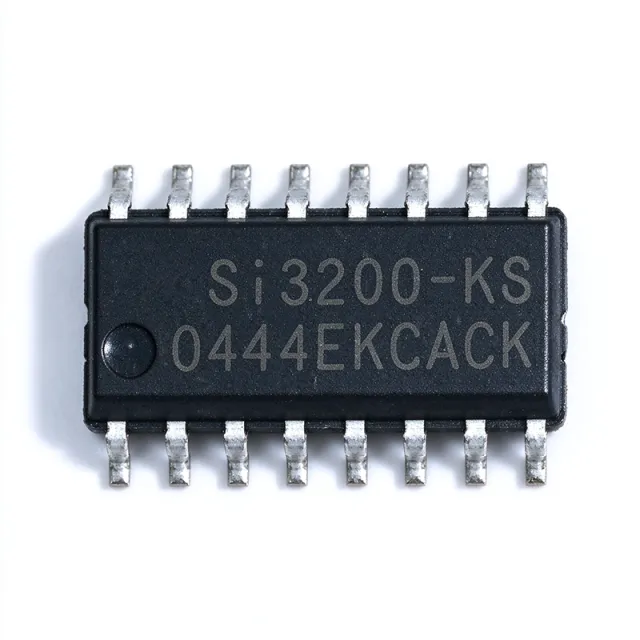
SI3200-KS - Dual Programmable CMOS SLIC | Skyworks
Skyworks Solutions Inc. SI3200-KS is a dual-channel Subscriber Line Interface Concept (SLIC) integrated circuit for customer-premise telephone equipment, combining a programmable CMOS line interface with line monitoring in a 16-pin SOIC package. Its key characteristics are dual-channel integration, standby power below 65 mW per channel, internal balanced ringing up to 65 Vrms, and software-programmable operating parameters. The SI3200-KS is intended for compact analog telephone and voice-over-data equipment that requires integrated line driving and supervision functions. A Subscriber Line Interface Concept, or SLIC, is an integrated line-interface circuit used in customer-premise equipment. It forms the analog signaling path between a telephone line and the equipment codec or voice-processing electronics. In the product hierarchy, a SLIC is a specialized telecom interface IC: it sits above general-purpose transceivers and codecs while providing the line-specific voltage, current, ringing, and supervision functions required by analog telephone networks. The SI3200-KS provides two SLIC channels in one package, reducing board area compared with separate single-channel implementations. Its software-programmable parameters allow an equipment designer to configure ringing frequency, line impedance behavior, and other interface characteristics through the control system. Internal balanced ringing to 65 Vrms supports telephone-line signaling without requiring a separate balanced-ringing circuit for every channel. The device emphasizes low standby power, with the manufacturer data describing consumption below 65 mW per channel. This characteristic is relevant in customer-premise equipment that may remain connected to a telephone line while the user is not actively making a call. Consolidation into one dual-channel IC can also reduce package count, although actual board savings still depend on the surrounding protection, isolation, codec, and magnetics arrangement. Typical uses include analog telephone adapters, voice gateways, customer-premise line cards, and other dual-channel voice terminals. A complete voice terminal still requires supporting components such as a speech codec, line protection, isolation components, and the appropriate external line circuitry. The SI3200-KS therefore occupies the line-interface portion of the design rather than replacing the codec or the entire telephone front end. When designing around the SI3200-KS, verify the complete external line interface against the manufacturer’s recommended schematic and component values. Pay particular attention to line-voltage and ringing limits, external protection, grounding, and the relationship between programmed line parameters and the codec interface. The verified source material does not provide a complete pin list, so board-level pin assignment must be checked against the manufacturer documentation rather than inferred from the distributor description. This product page consolidates verified distributor information, a source-backed technical description, practical application guidance, and a structured comparison of the available same-family references. It distinguishes confirmed facts from parameters that still require direct verification from the full manufacturer datasheet, helping engineers evaluate the obsolete SI3200-KS without relying on ambiguous cross-reference listings alone.
SI3201-BS - Programmable CMOS SLIC with Ringing | Skyworks
Skyworks Solutions Inc. SI3201-BS is a programmable CMOS subscriber line interface circuit (SLIC) with integrated codec, ringing-voltage generation, and battery-voltage generation in a 16-pin SOIC package. It supports supply voltages of 3.13 V to 5.25 V, software-programmable internal balanced ringing up to 90 VPK, and PCM, serial, or SPI interface options. The device is designed for short-loop customer premises equipment and telephone-interface applications. A subscriber line interface circuit is a mixed-signal telecommunications integrated circuit that connects a central-office or VoIP analog line to a digital voice system. In the component hierarchy, a SLIC is an interface IC, a telecommunications semiconductor, and a system-on-chip integration of line-driving, codec, ringing, and battery functions. This integration reduces the number of external components required in customer premises equipment while placing analog line control under software management. The SI3201-BS combines a low-voltage CMOS implementation with a software-programmable SLIC and codec interface. Its internal balanced ringing generator supports 90 VPK output. The stated ringing capability includes five REN at 4 kft and three REN at 8 kft, allowing the ringing load to be evaluated for different loop lengths. The integrated battery supply provides dynamic voltage output for the line interface. The device accepts a 3.13 V to 5.25 V supply range and can operate with PCM, serial, or SPI control interfaces. Reported operating supply current is 1 mA for the series, while another distributor result lists 88 mA for the SI3201-BS; these figures should be checked against the exact test conditions in the manufacturer datasheet before they are used in a power budget. Maximum power dissipation is reported as 800 mW, making thermal design and copper area relevant in space-constrained designs. Typical uses include analog terminal adapters, cable telephony equipment, wireless local-loop systems, and other CPE products requiring one-channel analog telephone interfaces. The SI3201-BS is particularly relevant when a short-loop design needs integrated linefeed control, codec communication, ringing generation, and programmable battery voltage in one IC. Before finalizing a PCB design, verify the complete 16-pin pinout, exposed-pad status, absolute maximum ratings, ringing waveform limits, and external network requirements against the manufacturer datasheet. The available search evidence confirms the 16-SOIC configuration and principal SLIC functions, but it does not provide a reliable pin-by-pin assignment table or complete electrical characteristic set. This page consolidates verified distributor information, package details, interface capabilities, application guidance, and source links into an engineering-focused reference. It also clearly distinguishes documented characteristics from parameters that still require confirmation from the manufacturer datasheet, avoiding unsupported component substitutions.
SI3201-FS 100V Linefeed Interface IC | Skyworks | 16-SOIC
The Skyworks Solutions, Inc. SI3201-FS is a Subscriber Line Interface Concept (SLIC) integrated circuit designed for customer premise equipment and analog telephone interface applications. It is identified as a 100 V linefeed interface IC for the Si321x family, with a codec interface, programmable CMOS SLIC architecture, integrated battery supply, and software-programmable ringing voltage generation. The device is supplied in a 16-pin SOIC package and is marketed as a lead-free component. The SI3201-FS addresses the subscriber-line side of a voice terminal or CPE design by combining linefeed control, ringing-voltage generation, battery feed, and codec interfacing in one IC. Its programmable architecture allows the system to configure line parameters and ringing behavior through software rather than relying on a large collection of discrete telephone-network components. The listed electrical headline is a 100 V linefeed interface, while the device description identifies programmable internal balanced ringing up to 90 VPK under specified REN and loop-length conditions. A key feature is the integrated battery supply with dynamic voltage output. In a telephone design, this function supports the line DC feed required by the subscriber line while allowing the system to manage line conditions dynamically. The software-programmable codec interface simplifies connection between the line interface and a digital voice processor or system controller. Because the SI3201-FS is intended for a 16-SOIC footprint, it can be integrated into CPE hardware with a surface-mount assembly process rather than through-hole insertion. Typical applications include analog telephone adapters, voice over IP terminals, residential gateways, digital subscriber line equipment, and other CPE products requiring a programmable analog line interface. The device should be selected only when the host design supports the associated ProSLIC software, codec interface, ringing and battery requirements, and the specified line parameters. The SI3201-FS is not a general-purpose low-voltage regulator or a replacement for a conventional codec. For implementation, engineers must follow the manufacturer datasheet for hook-state behavior, linefeed current, ringing limits, battery voltage, external component selection, and software configuration. Particular attention should be paid to the 100 V linefeed classification and the 90 VPK balanced ringing capability, since these values determine insulation, creepage, transient protection, and PCB spacing requirements. This page consolidates the verified distributor descriptions, package information, sourcing links, and application guidance for engineers evaluating the SI3201-FS.
SI3201-FSR 100V Linefeed Interface IC | Skyworks | 16-SOIC (Tape & Reel)
The Skyworks Solutions, Inc. SI3201-FSR is a Subscriber Line Interface Concept (SLIC) integrated circuit designed for customer premise equipment and analog telephone interface applications. It is identified as a 100 V linefeed interface IC for the Si321x family, with a codec interface, programmable CMOS SLIC architecture, integrated battery supply, and software-programmable ringing voltage generation. The device is supplied in a 16-pin SOIC package and is marketed as a lead-free component. The SI3201-FSR addresses the subscriber-line side of a voice terminal or CPE design by combining linefeed control, ringing-voltage generation, battery feed, and codec interfacing in one IC. Its programmable architecture allows the system to configure line parameters and ringing behavior through software rather than relying on a large collection of discrete telephone-network components. The listed electrical headline is a 100 V linefeed interface, while the device description identifies programmable internal balanced ringing up to 90 VPK under specified REN and loop-length conditions. A key feature is the integrated battery supply with dynamic voltage output. In a telephone design, this function supports the line DC feed required by the subscriber line while allowing the system to manage line conditions dynamically. The software-programmable codec interface simplifies connection between the line interface and a digital voice processor or system controller. Because the SI3201-FSR is intended for a 16-SOIC footprint, it can be integrated into CPE hardware with a surface-mount assembly process rather than through-hole insertion. Typical applications include analog telephone adapters, voice over IP terminals, residential gateways, digital subscriber line equipment, and other CPE products requiring a programmable analog line interface. The device should be selected only when the host design supports the associated ProSLIC software, codec interface, ringing and battery requirements, and the specified line parameters. The SI3201-FSR is not a general-purpose low-voltage regulator or a replacement for a conventional codec. For implementation, engineers must follow the manufacturer datasheet for hook-state behavior, linefeed current, ringing limits, battery voltage, external component selection, and software configuration. Particular attention should be paid to the 100 V linefeed classification and the 90 VPK balanced ringing capability, since these values determine insulation, creepage, transient protection, and PCB spacing requirements. This page consolidates the verified distributor descriptions, package information, sourcing links, and application guidance for engineers evaluating the SI3201-FSR.
SI3201-GS - Programmable CMOS SLIC with 90 V Ringing | Silicon Laboratories
The Silicon Laboratories SI3201-GS is a programmable CMOS subscriber line interface circuit that integrates SLIC, codec, ringing-voltage generation, and battery-supply functions in a 16-pin SOIC exposed-pad package. It operates from a 3.3 V or 5 V system supply, accepts a 3.3 V to 35 V DC input for battery generation, and provides balanced ringing up to 90 VPK. The device supports 5 REN at 4 kft and 3 REN at 8 kft line loading conditions. Its integrated approach reduces the number of external telephone-interface components required in voice-over-packet, analog terminal, and central-office line-card designs. Programmable interface characteristics make it suitable for telephone equipment requiring configurable line supervision, codec interfacing, and on-hook power generation. A subscriber line interface circuit, commonly called a SLIC, is the analog front end used between a telephone line and a digital voice processor. In the broader hierarchy, a SLIC is a telephone interface IC, while the SI3201-GS additionally combines codec interfacing and battery or ringing generation in one programmable CMOS device. This integration can simplify board partitioning, but the system must still provide appropriate protection, isolation, line filtering, and hook-state interfaces around the chip. Key features include software-programmable SLIC and codec behavior, internal balanced ringing rated to 90 VPK, an integrated battery supply with dynamic voltage output, and an on-chip DC-DC converter. The verified distributor data identifies a one-channel implementation with 60 dB channel isolation, approximately 41 mA operating current, a 3.13 V to 5.25 V supply range, and operation from -40°C to 85°C. The SI3201-GS also appears as a lead-free, 100 V linefeed interface option for use with Si321x-family companion devices. Technically, the device combines a low-voltage CMOS signal path with high-voltage line functions. Its DC-DC converter provides tracking battery from a 3.3 V to 35 V input, allowing the caller-side supply to track line voltage while the core interface operates from a 3.3 V or 5 V rail. This separation between logic supply and line-feed input improves design flexibility, but it also requires careful validation of converter layout, protection paths, and thermal performance. Typical applications include analog telephone adapters, voice-over-IP terminals, small PBX line cards, digital loopback or line-interface test equipment, and embedded voice systems that need programmable ringing and hook detection. In these systems, the SI3201-GS handles the physical line side while a DSP or system controller configures operating parameters through its digital interface. Design consideration: the exposed pad must be connected to the recommended ground plane, and high-voltage ringing paths require validated creepage, clearance, protection components, and isolation boundaries. Telephone interfaces are safety-critical, so final circuit compliance depends on the complete product design rather than the IC alone. This page consolidates verified distributor specifications, same-family drop-in candidates, comparison fields, and practical implementation guidance that are not presented together on a typical distributor listing.
SI3201-GSR - Programmable CMOS SLIC with 90 V Ringing | Silicon Laboratories (Tape & Reel)
The Silicon Laboratories SI3201-GSR is a programmable CMOS subscriber line interface circuit that integrates SLIC, codec, ringing-voltage generation, and battery-supply functions in a 16-pin SOIC exposed-pad package. It operates from a 3.3 V or 5 V system supply, accepts a 3.3 V to 35 V DC input for battery generation, and provides balanced ringing up to 90 VPK. The device supports 5 REN at 4 kft and 3 REN at 8 kft line loading conditions. Its integrated approach reduces the number of external telephone-interface components required in voice-over-packet, analog terminal, and central-office line-card designs. Programmable interface characteristics make it suitable for telephone equipment requiring configurable line supervision, codec interfacing, and on-hook power generation. A subscriber line interface circuit, commonly called a SLIC, is the analog front end used between a telephone line and a digital voice processor. In the broader hierarchy, a SLIC is a telephone interface IC, while the SI3201-GSR additionally combines codec interfacing and battery or ringing generation in one programmable CMOS device. This integration can simplify board partitioning, but the system must still provide appropriate protection, isolation, line filtering, and hook-state interfaces around the chip. Key features include software-programmable SLIC and codec behavior, internal balanced ringing rated to 90 VPK, an integrated battery supply with dynamic voltage output, and an on-chip DC-DC converter. The verified distributor data identifies a one-channel implementation with 60 dB channel isolation, approximately 41 mA operating current, a 3.13 V to 5.25 V supply range, and operation from -40°C to 85°C. The SI3201-GSR also appears as a lead-free, 100 V linefeed interface option for use with Si321x-family companion devices. Technically, the device combines a low-voltage CMOS signal path with high-voltage line functions. Its DC-DC converter provides tracking battery from a 3.3 V to 35 V input, allowing the caller-side supply to track line voltage while the core interface operates from a 3.3 V or 5 V rail. This separation between logic supply and line-feed input improves design flexibility, but it also requires careful validation of converter layout, protection paths, and thermal performance. Typical applications include analog telephone adapters, voice-over-IP terminals, small PBX line cards, digital loopback or line-interface test equipment, and embedded voice systems that need programmable ringing and hook detection. In these systems, the SI3201-GSR handles the physical line side while a DSP or system controller configures operating parameters through its digital interface. Design consideration: the exposed pad must be connected to the recommended ground plane, and high-voltage ringing paths require validated creepage, clearance, protection components, and isolation boundaries. Telephone interfaces are safety-critical, so final circuit compliance depends on the complete product design rather than the IC alone. This page consolidates verified distributor specifications, same-family drop-in candidates, comparison fields, and practical implementation guidance that are not presented together on a typical distributor listing.
SI3201-KS - Programmable CMOS SLIC with Ringing | Silicon Labs
The Silicon Labs SI3201-KS is a low-voltage programmable CMOS subscriber line interface circuit and codec for customer premises equipment, with software-programmable ringing and battery-voltage generation. It supports internally balanced ringing up to 90 VPK, including 5 REN at 4 kft and 3 REN at 8 kft, and is supplied in a 16-SOIC package with an exposed pad. The SI3201-KS combines the linefeed interface, codec interface, ringing generator, and battery supply in one CMOS IC. A SLIC, or subscriber line interface circuit, is an analog telephone-interface component that connects a central-office telephone line to customer equipment. It belongs to the telephone-interface IC hierarchy, where it bridges a high-voltage analog line and low-voltage digital or analog circuitry. The SI3201-KS is specifically associated with ProSLIC-type customer premises equipment and provides a programmable alternative to discrete linefeed networks. Principal features include software programmability, a codec interface, internal balanced ringing generation up to 90 VPK, and an integrated battery supply with dynamic voltage output. Distributor listings describe the device as a 100 V linefeed interface for Si321x applications. The 16-SOIC package measures 0.154 inch, or 3.90 mm, in width and uses an exposed-pad thermal and construction option. The device combines high-voltage analog line-interface functions with low-voltage CMOS control logic. Its programmable architecture allows ringing and line parameters to be configured through the associated control system rather than relying only on fixed passive networks. The exact supply voltages, DC feed characteristics, codec interfaces, temperature range, and absolute maximum ratings are not fully exposed in the supplied search records and should therefore be confirmed in the manufacturer datasheet. Typical applications include analog telephones, voice-over-IP terminals, DSL or broadband customer premises equipment, analog fax machines, voice gateways, and other carrier-facing or analog telephone adapters. The SI3201-KS is most appropriate where an integrated, programmable SLIC can simplify the line-interface section and reduce discrete external circuitry. The principal design consideration is the high-voltage line and ringing interface. PCB creepage, isolation, component spacing, surge protection, and thermal performance require careful attention even though the IC itself is a low-voltage CMOS device. Designers should also confirm the exposed-pad land pattern, required external components, and codec compatibility against the exact manufacturer datasheet before layout release.