IPB100N12S305ATMA1 vs IPB60R280P7ATMA1 Vergleich
Detaillierter Direktvergleich von IPB100N12S305ATMA1 von Infineon und IPB60R280P7ATMA1 von Infineon. Vergleichen Sie die wichtigsten Spezifikationen, elektrischen Parameter, Gehäuse, Lebenszyklusstatus, Preise und Verfügbarkeit, um das beste Bauteil für Ihre Designanforderungen zu ermitteln.

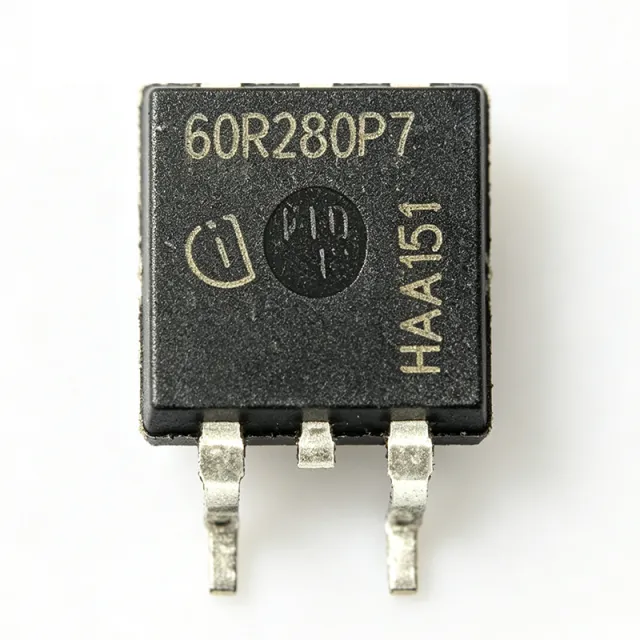
Spezifikationsvergleich
| Parameter | IPB100N12S305ATMA1 | IPB60R280P7ATMA1 |
|---|---|---|
| Marke | Infineon | Infineon |
| Kategorie | MOSFETs | MOSFETs |
| Lebenszyklusstatus | Aktiv | Aktiv |
| Lagerstatus | In Stock | In Stock |
| Stückpreis (USD) | $1,25 | $0,88 |
| Manufacturer | Infineon Technologies | Infineon Technologies |
| Product Family | OptiMOS Power MOSFET | CoolMOS P7 (600 V) |
| Channel Type | N-Channel Enhancement Mode | — |
| Drain-Source Voltage (VDS) | 120 V | — |
| Continuous Drain Current (ID) | 100 A (Tc) | — |
| Power Dissipation (PD) | 300 W (Tc) | — |
| On-Resistance (RDS(on)) | 4.8 mOhm (typical) | — |
| Total Gate Charge (Qg) | 185 nC | — |
| Betriebstemperaturbereich | -55 C to +175 C (TJ) | -55 °C to +150 °C (T_j max) |
| Gehäuse / Bauform | PG-TO263-3-1 (D2PAK, surface mount) | — |
| Montageart | Surface Mount | Surface Mount |
| Anzahl der Pins | 3 (Gate, Drain, Source) | — |
| Automotive Qualification | AEC-Q101 Qualified | — |
| Feuchtigkeitsempfindlichkeitsgrad (MSL) | MSL1 (up to 260 C peak reflow) | — |
| Avalanche Tested | 100% Avalanche Tested | — |
| RoHS Compliance | RoHS Compliant (Green Product) | — |
| Transistortyp | — | N-Channel MOSFET |
| Technology | — | Superjunction (SJ) |
| Drain-Source Voltage (V_DSS) | — | 600 V |
| Continuous Drain Current (I_D, T_C=25°C) | — | 12 A |
| On-Resistance R_DS(on) max (V_GS=10V) | — | 280 mOhm |
| Gate-Source Threshold V_GS(th) typ | — | 3.5 V |
| Power Dissipation P_D (T_C=25°C) | — | 53 W |
| Gehäuse | — | PG-TO263-3 (D2PAK) |
| Pin-Anzahl | — | 3 (2 + Tab) |
| Configuration | — | Single N-Channel |
| RoHS-Status | — | Compliant |
| Lead-Free | — | Yes |
| Generation | — | 7th Gen CoolMOS (successor to P6) |