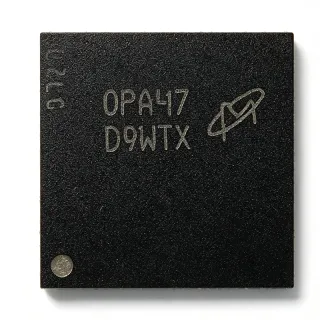
EDB5432BEBH-1DAUT-F-D - 512Mb LPDDR2 DRAM 533MHz | Micron
N.º de pieza: EDB5432BEBH-1DAUT-F-D ✓ Activo| Cant. | Precio unitario | Total |
|---|---|---|
| 1 | $3.85 | $3,85 |
| 10 | $3.5 | $35,00 |
| 100 | $3.1 | $310,00 |
| 500 | $2.78 | $1.390,00 |
| 1.000 | $2.45 | $2.450,00 |
EDB5432BEBH-1DAUT-F-D Descripción general
LPDDR2 (Low Power Double Data Rate 2) is a JEDEC-defined mobile DRAM interface designed to deliver high bandwidth at significantly lower power than conventional DDR memories. Within the memory hierarchy, it sits under the SDRAM family alongside LPDDR3, LPDDR4, and DDR3, and is widely used as application-processor working memory in systems where every milliwatt matters.
Key features of the EDB5432BEBH-1DAUT-F-D include 512Mbit density in a space-saving 134-VFBGA footprint, a 533 MHz clock rate supporting high-throughput data transfer, an operating voltage window of 1.14V to 1.95V that covers the LPDDR2 1.2V core rail with 1.8V I/O provisions, and an automotive temperature grade suited to harsh environments. The D suffix denotes lead-free, RoHS-compliant ball metallurgy.
Architecturally, LPDDR2 devices use a command-address bus shared across banks with CA burst operation, bank-group style parallelism, and low-standby current modes including self-refresh and deep power-down. These mechanisms let the memory retain context while drawing microamp-level currents, which is essential for battery-operated designs.
Typical applications include automotive infotainment and telematics units, embedded application processors, industrial HMI panels, and portable instrumentation where a 32-bit-wide LPDDR2 bus provides adequate bandwidth with minimal power overhead.
Design consideration: LPDDR2 signal integrity depends on length-matched CA/DQ routing, VTT decoupling, and disciplined ZQ calibration; consult the Micron datasheet layout guidelines before finalizing the PCB stackup.
This page synthesizes distributor pricing, drop-in family alternatives, and practical design notes not found in the manufacturer datasheet.
Alternativas directas para EDB5432BEBH-1DAUT-F-D — mismo encapsulado, compatible pin a pin. Se excluyen las piezas de otro encapsulado que requieren retrabajo de la PCB.
Variantes de esta serie
Modelos de la misma serie compatibles directamente con EDB5432BEBH-1DAUT-F-D (mismo factor de forma y huella) — difiere en Memory Size, Memory Type, Organization.
Herramienta de comparación rápida — seleccione piezas alternativas para compararlas lado a lado:
EDB5432BEBH-1DAUT-F
✅ Sustitución directa📋 Alternativa de referencia (no en el catálogo)
EDB5432BEBH-1DIT-F-D
✅ Sustitución directa ⚠️ Especificaciones sin verificar📋 Alternativa de referencia (no en el catálogo)
EDB1332BDBH-1DAUT-F-D
✅ Sustitución directa ⚠️ Especificaciones sin verificar✓ En stock
$2.16 / unidad
Ver hoja de datos →EDB5432BEBH-1DAUT-F-D Valores máximos y características eléctricas
| Tipo de memoria | Mobile LPDDR2 SDRAM |
| Tamaño de memoria | 512 Mbit |
| Organización de memoria | 16M x 32 |
| Clock Frequency | 533 MHz |
| Supply Voltage Range | 1.14 V to 1.95 V |
| Core Voltage | 1.2 V (typical, LPDDR2) |
| Interfaz | Parallel |
| Encapsulado | 134-VFBGA (10 x 11.5 mm) |
| Tipo de montaje | Surface Mount |
| Temperature Grade | Automotive |
| Terminals | 134 balls |
| Terminal Form | Ball (VFBGA) |
| Package Shape | Rectangular |
| RoHS Code | Yes (D suffix, lead-free) |
| Part Life Cycle Code | Active |
Guía de configuración de pines de EDB5432BEBH-1DAUT-F-D rectangular
Configuración de pines para EDB5432BEBH-1DAUT-F-D (encapsulado rectangular). Este CI digital incluye GPIO, interfaces de comunicación (UART, SPI, I2C) y pines de alimentación. Consulte la hoja de datos del fabricante para conocer las funciones alternativas de los pines y las opciones de configuración. Esencial para el diseño de sistemas embebidos y el diseño de PCB.

No hay datos detallados de patillaje disponibles para EDB5432BEBH-1DAUT-F-D.
Consulte la hoja de datos para ver la configuración completa de patillas.
Aplicaciones típicas
EDB5432BEBH-1DAUT-F-D es adecuado para 6 aplicacións: Automotive Infotainment and Telematics, Embedded Application Processor Memory, Industrial HMI and Touch Panel Control, Portable and Battery-Powered Instruments, Networking and IoT Gateways, Medical Portable Diagnostics.
Automotive Infotainment and Telematics
The automotive temperature grade of the EDB5432BEBH-1DAUT-F-D aligns directly with cockpit electronics that must survive wide thermal excursions. Its 512Mbit (16M x 32) density buffers navigation map tiles and media streams, while the 533 MHz single-channel data rate supplies roughly gigabytes-per-second-class bandwidth adequate for mid-tier infotainment SoCs. In the memory subsystem, the device sits on a 32-bit LPDDR2 bus between the application processor and power rail at 1.2V core with tightly decoupled VDD domains. Unlike LPDDR3/4, LPDDR2 power-up is simpler, reducing PMU sequencing risk in 12V automotive systems. Reserve self-refresh mode so map and cluster data persist through standby, and validate ball-map and firmware memory-init settings against the SoC vendor's LPDDR2 tuning table.
Recomendado
Embedded Application Processor Memory
The EDB5432BEBH-1DAUT-F-D serves as the primary working memory for embedded MPUs in industrial gateways, HMIs, and edge-control units. The 16M x 32 organization matches 32-bit LPDDR2 controllers common on ARM Cortex-A class processors, and the 1.14V to 1.95V supply window simplifies power-tree design around a 1.2V core regulator. Typical implementation places the VFBGA on 4-6 layer FR-4 with length-matched CA/DQ groups and VTT termination per Micron layout guidelines; the 10 x 11.5 mm footprint fits beneath or adjacent to the processor for short traces. Quantitatively, self-refresh standby current in the microamp-to-milliamp class keeps unattended gateway power budgets low, while 533 MHz operation sustains Linux-class workloads without the cost of larger densities.
Recomendado
Industrial HMI and Touch Panel Control
Human-machine interface panels benefit from the EDB5432BEBH-1DAUT-F-D's balance of density and power: 512Mbit is enough to hold double-buffered framebuffer regions for WVGA-class displays when paired with graphics-capable SoCs. The 134-VFBGA package's low profile suits the tight z-height constraints behind display glass, and the automotive-grade screening adds margin in factory environments with elevated ambient temperatures. On the bus, the 32-bit LPDDR2 interface at 533 MHz keeps UI animation frame rates stable while a 1.2V core rail minimizes thermal contribution to the sealed enclosure. During panel sleep, deep power-down and self-refresh states cut memory current dramatically, extending standby capability in battery-backed operator terminals.
Recomendado
Portable and Battery-Powered Instruments
For handheld and battery-powered measurement devices, the EDB5432BEBH-1DAUT-F-D's LPDDR2 power architecture is the main draw: self-refresh and partial-array self-refresh behaviors let the instrument keep acquisition state alive while the application processor sleeps, cutting average current into the low-milliamp class. The 512Mbit capacity logs calibration data, waveform buffers, and UI assets, and the 533 MHz rate supports fast post-processing bursts when the CPU wakes. The 10 x 11.5 mm VFBGA fits compact probe-style enclosures, and the 1.14V to 1.95V supply tolerance tolerates rail droop from aging cells. Designers should implement proper ZQ calibration and honor JEDEC ramp rates so battery-insertion power-up remains glitch-free across charge states.
Recomendado
Networking and IoT Gateways
Smart-home and industrial IoT gateways running embedded Linux need reliable working memory with modest power draw - a profile the EDB5432BEBH-1DAUT-F-D matches with 512Mbit on a single 32-bit LPDDR2 channel at 533 MHz. Packet buffers, TLS session state, and container runtimes fit comfortably in 64 MB-class footprints provided by this density tier. The 134-VFBGA's short-package geometry supports the four-to-six-layer routing typical of gateway boards, and 1.2V core operation keeps overall system standby within Energy-star-style targets. Because gateways run continuously, the memory's low self-refresh current compounds into meaningful annual energy savings versus older mobile DDR solutions, and the D-suffix lead-free construction simplifies global regulatory shipping compliance.
Recomendado
Medical Portable Diagnostics
Portable diagnostic devices - handheld ultrasound consoles, vital-sign monitors, point-of-care analyzers - use the EDB5432BEBH-1DAUT-F-D where 512Mbit of low-power working memory sustains signal acquisition pipelines and graphical interfaces between charges. The automotive temperature-grade screening translates into conservative thermal margin valuable in clinical environments with strict drift requirements, and the wide 1.14V to 1.95V supply window rides through battery sag during peak acquisition modes. Integration follows standard LPDDR2 practice: 32-bit bus at 533 MHz, 1.2V core rail with dedicated decoupling, and self-refresh retention so patient-session data survives standby transitions. The 10 x 11.5 mm VFBGA also eases placement beneath shields in compact, disinfection-compatible enclosures.
Recomendado
Resumen de productos recomendados
Datos de referencia de ingeniería para EDB5432BEBH-1DAUT-F-D — comparación, orientación de diseño e información de cumplimiento.
Guía de selección
Comparación con alternativas
| Parámetro | Este producto | EDB5432BEBH-1DAUT-F | EDB5432BEBH-1DIT-F-D | EDB1332BDBH-1DAUT-F-D |
|---|---|---|---|---|
| Package | 134-VFBGA (10 x 11.5 mm) | 134-VFBGA (10 x 11.5 mm) - same | 134-VFBGA - same footprint | 134-VFBGA - verify ball map |
| Brand | Micron Technology | Micron Technology | Micron Technology | Micron Technology |
| Memory Density | 512 Mbit (16M x 32) | 512 Mbit (16M x 32) | 512 Mbit (16M x 32) | 128 Mbit (4M x 32) |
| Memory Type | Mobile LPDDR2 SDRAM | Mobile LPDDR2 SDRAM | Mobile LPDDR2 SDRAM | Mobile LPDDR2 SDRAM |
| Clock Frequency | 533 MHz | 533 MHz | 533 MHz | 533 MHz |
| Supply Voltage | 1.14 V to 1.95 V | 1.14 V to 1.95 V | 1.14 V to 1.95 V | 1.14 V to 1.95 V |
| Temperature Grade | Automotive (AU) | Automotive (AU) | Industrial (IT) | Automotive (AU) |
| Lead-Free / RoHS (D suffix) | Yes | No (legacy metallurgy) | Yes | Yes |
Diferenciadores clave
- Automotive temperature screening (frente a EDB5432BEBH-1DIT-F-D)
- Lead-free D-suffix construction (frente a EDB5432BEBH-1DAUT-F)
- 4x density advantage in same footprint class (frente a EDB1332BDBH-1DAUT-F-D)
Notas de diseño
LPDDR2 routing on a 134-VFBGA requires length-matched byte lanes: keep DQ/DM/DQS trace skew within roughly +/-25 mils per group and CA within its own tighter group per Micron's layout guideline section of the datasheet. Route on inner layers with solid reference planes, maintain at least 3W spacing between CA and DQ domains, and place the ten 0.1uF VDD decoupling capacitors within 2 mm of the ball field. Avoid routing under the package center where the die sits.
Power the core rail at 1.2V within the 1.14V to 1.95V device window and follow JEDEC LPDDR2 ramp-rate requirements (100 ms to 90 s for VDD1) during power-up. Sequence VDDCA and VDDQ together or per the SoC vendor's power-sequencing table, and implement active ZQ calibration after init. Estimated: at full 533 MHz read bursts, plan the 1.2V rail budget from the datasheet IDD read-current figure rather than IDD idle to avoid underrating the PMIC.
Common failures: (1) omitting the ZQ 240-ohm 1% resistor to VSSQ, which breaks output impedance calibration and causes signal-integrity faults at 533 MHz; (2) swapping the AU and IT grade suffixes in the BOM, creating an out-of-temperature-range build; (3) ordering the non-D EDB5432BEBH-1DAUT-F into a lead-free assembly line. Always verify the exact suffix against the approved-vendor-list entry and request Micron's package outline drawing for the stencil aperture design.
Información de cumplimiento
D suffix denotes lead-free/RoHS packaging; distributor data (Worldway) reports Rohs Code Yes and active life cycle. Partstack/Vyrian list temperature grade AUTOMOTIVE; formal AEC-Q100 certificate status not stated in retrieved data - request from Micron.