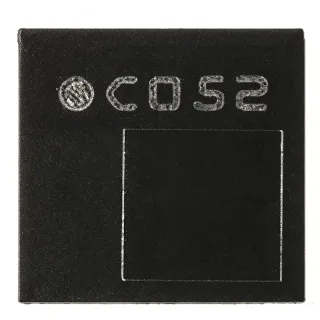
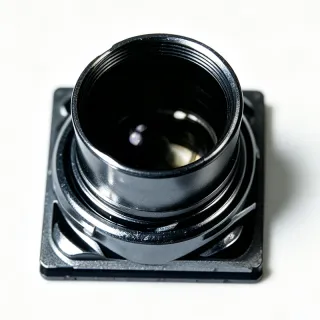
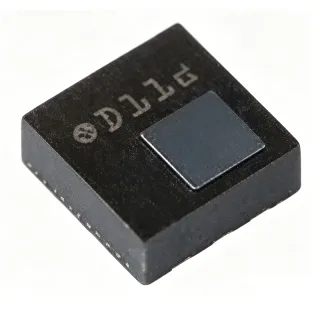
MPX53DP - 50 kPa Uncompensated Differential Pressure Sensor | NXP
Référence : MPX53DP ⚠ Dernier achat| Qté | Prix unitaire | Total |
|---|---|---|
| 1 | $14.5 | $14,50 |
| 10 | $12.95 | $129,50 |
| 100 | $10.4 | $1 040,00 |
| 500 | $9.05 | $4 525,00 |
| 1 000 | $7.48 | $7 480,00 |
MPX53DP Présentation
A piezoresistive pressure sensor is a MEMS device in which diffused silicon strain gauges form a Wheatstone bridge on a diaphragm; differential pressure on the two ports flexes the diaphragm and unbalances the bridge to produce a millivolt-level output. Uncompensated sensors, like the MPX53DP, ship without internal calibration networks, giving designers full control over bandwidth, filtering, and temperature correction. Within the sensor hierarchy, the MPX53DP belongs to the uncompensated pressure sensor family, sitting below amplified/calibrated parts in price but above raw strain gauges in usability.
Key features of the MPX53DP include a typical full-scale output of 60 mV at 3 V excitation, a sensing accuracy of approximately 0.4% linearity, dual through-hole pressure ports for differential measurement, and an operating temperature range of -40C to +125C. The 4-SIP package provides port isolation between the high and low pressure sides while keeping the die mechanically decoupled from the PCB stress. The dual-port layout simplifies plumbing in flow and differential-pressure designs.
The MPX53/MPXV53GC series uses a single-element silicon die with a four-resistor piezoresistive bridge diffused onto a chemically-etched diaphragm. Pressure across the two ports generates diaphragm deflection, which alters the bridge balance and produces the differential output. Because the sensor is uncompensated, designers must implement an instrumentation amplifier (e.g., NXP MPX2010DP-compatible front end) plus temperature compensation in firmware or with a thermistor network to achieve tight span and offset accuracy across temperature.
Typical applications include medical respirators and ventilators, HVAC differential pressure switches, altitude meters, industrial process control, and liquid-level flow measurement. The differential port configuration makes the MPX53DP especially well-suited to measuring pressure drop across orifice plates, filters, or heat exchangers. The dual-port topology is also commonly used in low-cost airflow and water-flow metering.
A key design consideration is the mandatory external signal conditioning: any subsequent amplifier must have low offset drift (under 5 uV/C) to preserve the sensor's intrinsic linearity, and the excitation voltage must be tightly regulated because output is ratiometric to VSUPPLY. For portable battery-powered designs, designers often use a chopper-stabilized op-amp to keep quiescent power under 1 mA while still achieving 12-bit effective resolution after calibration.
This page synthesizes distributor pricing, drop-in and same-package MPX53 alternatives, and practical design notes not found in the manufacturer datasheet alone.
Alternatives de remplacement direct pour MPX53DP — même boîtier, compatible broche à broche. Les références à boîtier différent nécessitant une retouche du PCB sont exclues.
Variantes de cette série
Modèles de la même série directement compatibles avec MPX53DP (même facteur de forme et même empreinte) — différant par Output Type, Operating Pressure Range, Supply Voltage, Package, Operating Temperature.
Outil de comparaison rapide — sélectionnez des références alternatives pour une comparaison côte à côte :
MPX53D
✅ Remplacement direct✓ En stock
$9.1 / unité
Voir la fiche technique →MPX53GP
✅ Remplacement direct✓ En stock
$6.1 / unité
Voir la fiche technique →MPXV53GC
✅ Remplacement direct📋 Alternative de référence (hors catalogue)
MPX53DP Valeurs maximales et caractéristiques électriques
| Type de capteur | Piezoresistive Pressure Sensor, Uncompensated |
| Pressure Range | 0 kPa to 50 kPa (0 PSI to 7.25 PSI) |
| Pressure Type | Differential |
| Port Configuration | Dual Vertical Port (Differential) |
| Tension d'alimentation | 3 V DC (typical) |
| Type de sortie | Analog millivolt (ratiometric) |
| Tension de sortie | 0 mV to 60 mV at 3 V |
| Linearity | 0.4% typical |
| Température de fonctionnement | -40C to +125C |
| Boîtier | 4-SIP Module (Through-Hole, Dual Port) |
| Port Size | 0.19 inch (4.93 mm) Tube |
| Type de montage | Through-Hole |
| Media Compatibility | Non-corrosive dry gases (per datasheet) |
Configuration des broches de MPX53DP
| Broche 1 | Vs — Supply voltage (3 V typical, with bridge excitation) |
| Broche 2 | Vout+ — Positive bridge output (ratiometric millivolt) |
| Broche 3 | GND — Ground / common reference |
| Broche 4 | Vout- — Negative bridge output (differential millivolt) |
Applications typiques
MPX53DP convient pour 6 applications: Medical Ventilator Airway Pressure Monitoring, HVAC Filter Pressure Drop Detection, Industrial Process Control and Flow Monitoring, Altitude and Barometric Measurement Instruments, Liquid Level Measurement in Tanks, Pneumatic System Leak Testing Equipment.
Medical Ventilator Airway Pressure Monitoring
The MPX53DP's 0 to 50 kPa differential range covers the full clinical airway pressure range used in ventilator circuits, where typical pressures are 0 to 40 cm H2O (about 0 to 4 kPa). At 3 V excitation the sensor delivers a 0 to 60 mV ratiometric output that maps cleanly to a 12-bit ADC after low-offset instrumentation-amp gain of about 80x. Designers must add external temperature compensation (typically a thermistor in the bridge excitation path) because the sensor is uncompensated. Both its -40C to +125C operating range and dual-port topology make it ideal for inline flow-monitor placement between the patient circuit and the expiratory valve.
Recommandé
HVAC Filter Pressure Drop Detection
Air filters in commercial HVAC systems typically show a 0 to 30 kPa differential pressure drop when clogged, well within the MPX53DP's 0 to 50 kPa full-scale span. Plumbed across the filter, the dual-port differential configuration lets the sensor directly measure pressure drop without separate reference tubes. The 0.4% linearity specified for the MPX53 series is more than adequate for filter-status indication (clean, change soon, change now). Cost-sensitive building automation designs use the MPX53DP because it pairs with a low-cost op-amp front end, and a single 3 V rail is sufficient to power both sensor and amplifier.
Recommandé
Industrial Process Control and Flow Monitoring
Flow meters based on orifice plates or Venturi tubes rely on differential pressure measurement across the primary element. The MPX53DP's 50 kPa full-scale range covers many low-flow industrial applications including gas flow calibration, water-meter test benches, and laboratory airflow benches. Its dual-port package accepts standard 0.19 inch (4.93 mm) tubing, simplifying mechanical integration. To achieve the 1% flow accuracy typical of industrial meters, designers calibrate span and offset in firmware using a 2-point or 3-point calibration. The -40C to +125C temperature range covers most indoor and outdoor industrial environments.
Recommandé
Altitude and Barometric Measurement Instruments
Although the MPX53DP is differential, paired with a sealed reference chamber it can serve as a high-resolution barometric sensor for handheld altimeters and weather stations. Atmospheric pressure varies roughly from 87 kPa (1,500 m altitude) to 108 kPa (sea level), so the 0 to 50 kPa span requires offset subtraction via the second port. Many designers combine the MPX53DP with an absolute reference MPXV53GC for differential reference schemes. The sensor's low millivolt output is amplified and digitized with 16-bit ADCs to resolve sub-meter altitude changes when barometric corrections are applied.
Recommandé
Liquid Level Measurement in Tanks
Differential pressure sensing is a common technique for hydrostatic tank level measurement, where the high port connects to the bottom of the tank and the low port to the top (or atmosphere). The MPX53DP's dual-port topology accepts both connections directly. For water or fuel tanks under 4 meters of head, the 0 to 50 kPa range gives full coverage. Because the device is rated for dry non-corrosive gases, the liquid must be isolated from the silicone die via a flexible stainless diaphragm and oil fill - NXP's higher-pressure MPX2010 family is more commonly used for direct liquid contact in marine applications.
Recommandé
Pneumatic System Leak Testing Equipment
Pneumatic leak testers pressurize a sealed component and monitor the rate of pressure decay - a sub-feature of differential pressure measurement. The MPX53DP's differential configuration is well-suited for this application, comparing the test article pressure against a known-good reference. With 3 V excitation and 0.4% linearity, the sensor easily resolves the millisecond pressure changes associated with small leaks. Test-stand designs pair the MPX53DP with a microcontroller's ADC and pneumatic valves to automate pass/fail decisions in production environments.
Recommandé
Récapitulatif des produits recommandés
Données de référence d'ingénierie pour MPX53DP — comparaison, recommandations de conception et informations de conformité.
Guide de sélection
Comparaison avec les alternatives
| Paramètre | Ce produit | MPX53D | MPX53GP | MPXV53GC |
|---|---|---|---|---|
| Brand | NXP Semiconductors | NXP Semiconductors | NXP Semiconductors | NXP Semiconductors |
| Package | 4-SIP Module (Dual Port) | 4-SIP Module (Single Port) - same | 4-SIP Module (Single Port) - same | 4-SIP Module (Single Port) - same |
| Pressure Type | Differential | Differential | Gauge | Gauge |
| Pressure Range | 0 to 50 kPa | 0 to 50 kPa | 0 to 50 kPa | 0 to 50 kPa |
| Supply Voltage | 3 V typical | 3 V typical | 3 V typical | 3 V typical |
| Output Voltage | 0 to 60 mV | 0 to 60 mV | 0 to 60 mV | 0 to 60 mV |
| Port Configuration | Dual vertical ports | Single port | Single port | Single port |
| Compensation | Uncompensated | Uncompensated | Uncompensated | Uncompensated |
| Operating Temperature | -40C to +125C | -40C to +125C | -40C to +125C | -40C to +125C |
Principaux différenciateurs
- Dual-port differential configuration in 4-SIP package (vs MPX53D)
- Differential measurement vs gauge (vs MPX53GP)
- Cost advantage over calibrated pressure sensors (vs NXP MPL115A (calibrated I2C sensor))
Notes de conception
The MPX53DP outputs only 0 to 60 mV at 3 V excitation, so PCB layout must minimize noise pickup. Use a 4-layer board with a continuous ground plane beneath the sensor, route the bridge outputs as a guarded differential pair, and place the instrumentation amplifier within 25 mm of the sensor pins. Twisted-pair cabling between the sensor and the front end is also recommended for off-board sensing. A 10 Hz to 1 kHz low-pass filter at the amplifier output limits out-of-band noise.
Do not power the MPX53DP above its maximum supply rating (verify in the datasheet), as over-voltage will permanently damage the diffused piezoresistors. Do not exceed the 50 kPa pressure range - mechanical over-pressure can rupture the silicon diaphragm. Do not apply liquids directly to the ports; the die is rated for dry non-corrosive gases only. Always use a low-offset (under 5 uV/C) instrumentation amplifier and add thermistor-based temperature compensation before relying on the output for precision measurements.
When using the MPX53DP on a through-hole PCB, provide strain relief on the sensor leads so that mechanical flexing of the board does not transmit stress to the silicon die. Mount the sensor vertically with the ports facing up, and route the four SIP pins through holes sized per JEDEC through-hole tolerances. Locate any nearby heat sources away from the sensor body to minimize thermal gradients; NXP recommends a heatshielded layout if the rest of the PCB dissipates significant power.
Informations de conformité
RoHS, REACH, lead-free, halogen-free, and conflict-minerals data were not present in the verified web data; values are marked unknown per Data Authenticity Rules. AEC-Q100 is not applicable as this is a pressure sensor element, not an automotive-qualified IC.