Produk (46.000+)

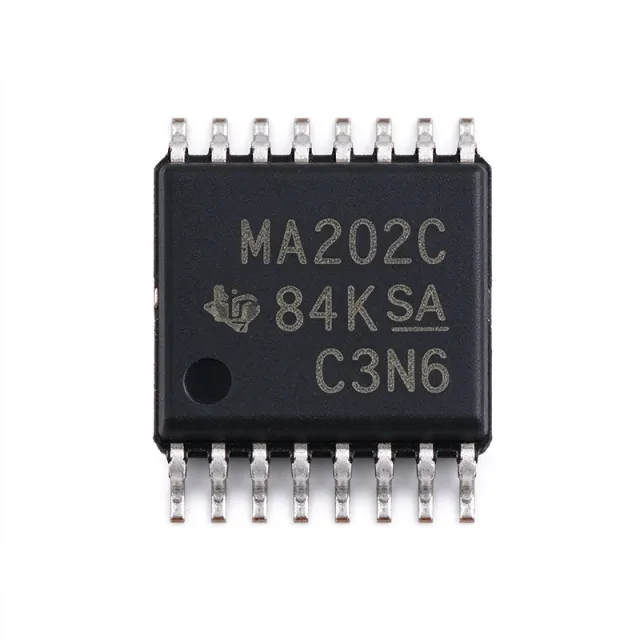
MAX202CPWR - Dual RS-232 Transceiver | Texas Instruments (Tape & Reel)
MAX202CPWR

MAX202CPWR - Dual RS-232 Transceiver | Texas Instruments (Tape & Reel)

The Texas Instruments MAX202CPWR is a 5 V dual RS-232 line driver and receiver with two transmit channels, two receive channels, a dual charge-pump circuit, and ±15 kV ESD protection in a 16-pin TSSOP package. It supports data rates up to 120 kbit/s and uses four external 0.1 µF capacitors. The MAX202CPWR meets or exceeds TIA/EIA-232-F and ITU V.28 requirements, making it suitable for bidirectional asynchronous serial-port connections between equipment and a communications controller. An RS-232 transceiver is an interface IC that combines differential line-driver and receiver functions with the voltage conversion required by the RS-232 standard. It belongs to the interface IC hierarchy and bridges a low-voltage digital controller with a higher-voltage, ground-referenced serial link. Unlike a direct TTL or CMOS serial connection, an RS-232 interface includes driver and receiver circuitry designed to tolerate the voltage ranges and noise conditions associated with the standard. Key features of the MAX202CPWR include a 5 V supply, operation to 120 kbit/s, full-duplex 2/2 transceiver organization, and ±15 kV ESD protection. The four external 0.1 µF capacitors support the device's charge-pump function. Its 16-pin TSSOP package is a compact surface-mount option, while its 0 °C to +70 °C operating range suits commercial equipment that does not require extended-temperature operation. Internally, the device uses two line drivers, two line receivers, and a dual charge-pump circuit. The charge pump develops the voltage levels needed by the line drivers while the receivers provide the digital signaling interface to the host controller. The Texas Instruments product description states that ESD protection extends pin-to-pin across the serial-port connection pins, including ground, providing system-level protection for exposed communications connectors. Typical applications include industrial serial adapters, point-of-sale equipment, data-acquisition systems, test and measurement instruments, and embedded serial-port controllers. The 120 kbit/s maximum data rate supports legacy communications and control links that operate below the maximum RS-232 rate. Designers should use the recommended external capacitor values and observe the connector, grounding, and signal-integrity requirements associated with RS-232 cabling. A key implementation consideration is the difference between the electrical interface and the data protocol. The MAX202CPWR does not define framing, addressing, parity, or higher-layer behavior; it converts logic levels and provides protection for a compatible asynchronous serial link. Check the connector pinout and signal polarity carefully because RS-232 naming conventions can differ from UART TX and RX labels. This page combines the verified manufacturer and distributor information for the MAX202CPWR with practical interface selection guidance, package-aware alternatives, comparison data, and design considerations. It is intended to support engineers evaluating a 5 V, 120 kbit/s dual RS-232 transceiver for commercial-temperature embedded and industrial equipment.

USD $0,90 Diketersediaan
MAX202CSE+ - +5V RS-232 Transceiver | Maxim Integrated
MAX202CSE+

MAX202CSE+ - +5V RS-232 Transceiver | Maxim Integrated

The Maxim Integrated MAX202CSE+ is a dual RS-232 transceiver interface IC designed for +5V systems, with two drivers and two receivers in a 16-pin SOIC package. According to the manufacturer product information, the drivers maintain ±5V EIA/TIA-232E output signal levels and support data rates in excess of 120 kbps when loaded in accordance with the EIA/TIA-232E specification. The MAX202 family is intended for RS-232 and V.28 communication interfaces where ±12V supplies are unavailable. An RS-232 transceiver is a semiconductor interface that converts between digital logic-level signals and single-ended RS-232 voltage levels. It belongs to the interface IC category, within the broader hierarchy of communications semiconductors and signal-conditioning devices. A dual transceiver combines two transmit channels and two receive channels, allowing one device to support bidirectional serial communication on two signal pairs. The MAX202CSE+ operates from a single +5V supply and requires external 0.1µF charge-pump capacitors. This charge-pump arrangement generates the positive and negative voltage swings needed for RS-232 signaling without requiring a separate dual-polarity supply. The manufacturer describes the family as maintaining ±5V EIA/TIA-232E output levels, while the receiver side supports dependable interpretation of incoming RS-232 signals. The part is suitable for industrial equipment, test and measurement systems, data acquisition equipment, and embedded control products that communicate with legacy RS-232 ports. Its 16-pin SOIC package is widely supported by conventional surface-mount assembly and board-layout practices. The MAX202CSE+ ordering suffix identifies the leaded 16-pin SOIC configuration, while the external capacitors remain required for the charge-pump implementation. Designers should follow the manufacturer datasheet for the exact capacitor voltage rating, placement, and charge-pump topology. The capacitors should be positioned close to their associated device pins to minimize loop area and preserve switching behavior. Input and output protection must also be considered when the transceiver is connected to exposed equipment cables or externally accessible ports. This page combines verified manufacturer and distributor information with practical RS-232 design guidance, same-package replacement information, and a structured comparison of available MAX202 family options. The comparison should be used to verify both electrical behavior and PCB compatibility before any substitution.

Permintaan RFG Kontak
MAX202CSE-T - 5V 120kbps RS-232 Transceiver | Maxim Integrated
MAX202CSE-T

MAX202CSE-T - 5V 120kbps RS-232 Transceiver | Maxim Integrated

Maxim Integrated MAX202CSE-T is a 2-channel, 2/2 RS-232 transceiver designed for single 5 V supply operation, with a maximum data rate of 120 kbps in a 16-pin SOIC package. It integrates two drivers and two receivers so one device can support bidirectional RS-232 communication between a host or controller and a peripheral. An RS-232 transceiver is an interface IC that converts logic-level digital signals into RS-232-compatible line levels and converts received line signals back into digital logic. The MAX202 belongs to the broader interface IC hierarchy, where transceivers connect processors, industrial equipment, and communications peripherals to physical serial ports. Its integrated charge-pump circuitry supports bipolar RS-232 signaling from a 5 V supply without a separate negative power rail. Key features include two transmit channels, two receive channels, operation from a single 5 V supply, and data rates up to 120 kbps. The manufacturer specifies 0.1 uF external capacitors, which support the internal charge-pump network and proper signal generation. The 16-pin SOIC package is compact, surface mountable, and compatible with conventional PCB assembly and automated inspection processes. The MAX202 architecture combines TTL-compatible digital interfaces with EIA/TIA-232 line-driver and receiver stages. Driver channels add the voltage swing and polarity needed at the RS-232 port, while receiver channels reconstruct valid logic states from the bipolar serial waveform. This makes the device suitable for point-to-point serial links in control, test, instrumentation, and embedded systems where a legacy RS-232 interface is required. Typical applications include industrial control consoles, serial adapters, automated test equipment, POS terminals, and embedded instrumentation. In each case, the two-channel arrangement can support two independent RS-232 ports or provide transmit and receive paths on each side of a bidirectional connection. The MAX202 is also appropriate when modern equipment must preserve compatibility with existing RS-232 peripherals rather than adopting a newer serial interface. PCB design should preserve the datasheet-recommended capacitor network and route each RS-232 line away from sensitive digital signals. Keep external charge-pump capacitors close to their associated pins, provide a low-impedance ground return, and avoid long unprotected stubs near electrically noisy equipment. Verify the exact pin assignments and transceiver enable behavior against the manufacturer datasheet before finalizing a new layout. This page consolidates the manufacturer product information, exact package and speed details, source-backed alternatives, and practical implementation guidance for engineers evaluating the MAX202CSE-T as a 5 V RS-232 interface solution.

Permintaan RFG Kontak
MAX202CUE+ - Dual RS-232 Transceiver, +5V | Analog Devices
MAX202CUE+

MAX202CUE+ - Dual RS-232 Transceiver, +5V | Analog Devices

The Analog Devices MAX202CUE+ is a dual, full-duplex RS-232 transceiver operating from a single +5 V supply and supporting data rates in excess of 120 kbps. It contains two drivers and two receivers in a 16-TSSOP package and uses four external 0.1 µF charge-pump capacitors. The design targets EIA/TIA-232E and V.28 interfaces where ±12 V supplies are unavailable. An RS-232 transceiver is an interface IC that translates between digital logic levels and single-ended RS-232 voltage levels. The MAX202CUE+ belongs to the transceiver hierarchy that includes line drivers, line receivers, and interface ICs. Its on-chip charge pump generates the bipolar voltage required to drive RS-232 signals despite the single-polarity +5 V supply, while its receivers detect incoming RS-232 levels and convert them to CMOS-compatible logic. Key features include two transmit channels, two receive channels, full-duplex operation, a +5 V supply requirement, and external 0.1 µF charge-pump capacitors. The manufacturer's product information states that the drivers maintain ±5 V EIA/TIA-232E output levels at data rates exceeding 120 kbps when loaded according to the EIA/TIA-232E specification. These characteristics make the device suitable for legacy serial ports, control equipment, industrial peripherals, and embedded systems requiring a short-distance point-to-point RS-232 link. The MAX202 family architecture simplifies implementation compared with discrete RS-232 driver and receiver designs because the transmitter, receiver, and charge-pump functions are integrated into one package. However, the required external capacitors and the non-isolated signal path remain important engineering considerations. Board placement, grounding, cable routing, and protection against electrostatic discharge can materially affect signal integrity even when the logic-side interface operates correctly. Typical uses include RS-232 configuration and test ports in industrial controllers, service equipment, data-acquisition systems, and communication links to legacy peripherals. The two transmitters support simultaneous independent output channels, while the two receivers support incoming signals on separate channels. Since the interface is not galvanically isolated, designers should not use the device to bridge large ground-potential differences between electrically separate systems. Place the four 0.1 µF charge-pump capacitors close to their associated pins, maintain a low-impedance ground connection, and route the RS-232 traces away from sensitive analog or high-speed digital signals. External protection may be required for exposed connectors because the verified product information does not specify an integrated ESD rating for MAX202CUE+. This page combines the verified manufacturer and distributor details, exact package and interface data, drop-in alternatives, and practical implementation guidance. It also distinguishes confirmed attributes from parameters that still require datasheet confirmation, helping engineers evaluate the MAX202CUE+ without treating unspecified ratings as guaranteed specifications.

Permintaan RFG Kontak
MAX202CUE+T - Dual RS-232 Transceiver | Analog Devices
MAX202CUE+T

MAX202CUE+T - Dual RS-232 Transceiver | Analog Devices

The Analog Devices MAX202CUE+T is a dual RS-232 line-driver and receiver transceiver supporting two transmit and two receive channels at data rates in excess of 120 kbps. It operates from a single 4.5 V to 5.5 V supply and is packaged in a compact 16-pin TSSOP. The MAX202CUE+T uses external 0.1 uF charge-pump capacitors and provides full-duplex RS-232 communication for compact industrial, instrumentation, and embedded systems. An RS-232 transceiver is an interface IC that converts logic-level signals into differential voltage levels and converts incoming RS-232 signals back into logic-compatible levels. Within the interface hierarchy, the MAX202 belongs to the RS-232 transceiver family, a type of line-driver and receiver interface used between data-processing equipment and serial equipment. Its purpose is to bridge incompatible voltage domains while providing the electrical characteristics required by the EIA/TIA-232E interface standard. Key features include two drivers, two receivers, full-duplex operation, a 120 kbps data rate, and a 4.5 V to 5.5 V supply range. The receiver hysteresis of 500 mV helps distinguish valid logic states in the presence of noise. Because the MAX202 uses externally mounted charge-pump capacitors, PCB layout can provide flexibility in capacitor selection and placement, although trace length and ground return paths still require careful attention. The device implements separate transmit and receive paths for two serial channels. Each driver translates TTL or CMOS-level inputs into RS-232 levels, while each receiver converts RS-232 inputs into CMOS-compatible outputs. This arrangement supports bidirectional data exchange without requiring separate RS-232 converter boards. The single 5 V supply also simplifies integration with microcontrollers and other digital logic that operate from the same rail. Typical uses include industrial serial controllers, test and measurement equipment, point-of-sale terminals, security systems, and embedded diagnostic interfaces. The MAX202CUE+T is especially appropriate when a compact TSSOP footprint is preferred over a larger SOIC package. It can connect a short RS-232 cable between a host and peripheral while preserving the voltage separation required by legacy serial equipment. A critical implementation detail is charge-pump capacitor placement. Keep the 0.1 uF capacitors close to their associated IC pins, use the package pin-description table when assigning tracks, and maintain a low-impedance ground connection. Capacitor selection should follow the manufacturer’s recommended dielectric and voltage requirements because incorrect capacitor behavior can impair startup or charge-pump operation. This product page combines manufacturer specifications, packaging details, functional comparisons, and practical PCB guidance for engineers evaluating the MAX202CUE+T. It also identifies the small number of verified pin-compatible options so that replacement decisions can be based on package, function, and electrical proximity rather than part-number similarity alone.

Permintaan RFG Kontak
MAX202CWE+ - 120kbps Dual RS-232 Transceiver | Maxim
MAX202CWE+

MAX202CWE+ - 120kbps Dual RS-232 Transceiver | Maxim

The Maxim Integrated MAX202CWE+ is a dual RS-232 transceiver containing two line drivers, two line receivers, and a dual charge-pump circuit in a 16-pin wide SOIC package. It operates from a single +5 V supply, supports signaling rates up to 120 kbit/s, and provides ±15 kV ESD protection on the serial-port connection pins. Its external charge-pump capacitors are rated at 0.1 µF. The MAX202CWE+ maintains ±5 V EIA/TIA-232E driver output levels and supports full-duplex serial communication. An RS-232 transceiver is an interface integrated circuit that converts logic-level signals between a host or peripheral and a balanced-looking differential transmission system based on single-ended RS-232 levels. Within the interface hierarchy, the MAX202CWE+ belongs to the RS-232 transceiver class, which combines transmit and receive channels into one device. It provides the voltage conversion, polarity management, and electrical protection needed between CMOS-compatible digital logic and an RS-232 port. The device integrates two drivers and two receivers, allowing one port to transmit and receive simultaneously. Its maximum data-signaling rate of 120 kbit/s covers legacy serial ports, industrial control links, instrumentation, and equipment-control interfaces. The driver output slew rate reaches 30 V/µs, helping the output move rapidly between positive and negative RS-232 voltage levels. Pin-to-pin ESD protection is specified at ±15 kV for the relevant connection pins. Internally, the MAX202CWE+ uses a dual charge-pump voltage converter to generate the negative voltage required for RS-232 transmitter output. Two external 0.1 µF capacitors support the charge-pump circuit. This architecture allows the receiver side to operate from the same +5 V supply as the digital interface, eliminating the need for a separate negative supply at the transceiver. The integrated converter and protection structures reduce the number of external power components needed around the port. Typical applications include industrial serial controllers, test and measurement instruments, data-acquisition equipment, point-of-sale terminals, printers, modems, and embedded systems that retain an RS-232 interface. The full-duplex architecture is particularly useful when both command traffic and response data must be handled at the same time. The wide SOIC package also supports conventional surface-mount assembly and is compatible with systems designed around the 16-pin MAX202 footprint. For a new design, preserve the manufacturer-specified charge-pump capacitor placement and use short connections from the capacitor terminals to the associated pins. Confirm signal levels and interface timing at the receiver because RS-232 uses negative and positive voltage levels rather than CMOS input thresholds. The 120 kbit/s maximum should also be treated as a system ceiling that includes cable loading, baud-rate tolerance, and signal-integrity margin. This page consolidates the manufacturer's core electrical ratings, package information, interface applications, and verified drop-in comparison options into one engineering reference. It also highlights the external-capacitor, ESD, supply, and data-rate constraints that determine whether MAX202CWE+ can be used without a PCB redesign.

Permintaan RFG Kontak
MAX202ECPE+ - 120kbps RS-232 Transceiver | Analog Devices
MAX202ECPE+

MAX202ECPE+ - 120kbps RS-232 Transceiver | Analog Devices

The Analog Devices MAX202ECPE+ is a 2/2 full-duplex RS-232 transceiver operating from a single 5 V supply, supporting data rates in excess of 120 kbps in a 16-pin PDIP package. The device combines two driver and two receiver channels, integrated charge-pump circuitry, and ±15 kV ESD protection. Its transmitters maintain ±5 V EIA/TIA-232E output levels, while the receivers support robust communication over RS-232 and V.28 links. An RS-232 transceiver is an interface IC that converts logic-level digital signals into RS-232 voltage levels and converts received RS-232 levels back into logic-compatible signals. It belongs to the serial-interface hierarchy, where a transceiver sits between a host controller and a physical communications port. Unlike a simple line receiver, the MAX202ECPE+ includes both transmit and receive paths in one device, allowing a compact node to manage bidirectional serial communication. The principal benefits are integrated dual-channel operation, single-supply operation, 120 kbps performance, and ±15 kV ESD protection. The MAX202ECPE+ also avoids the need for a separate negative supply at the interface, because its on-chip charge pump produces the required bipolar driver levels. These characteristics suit equipment that needs standard RS-232 connectivity without a modern differential interface. Internally, the transmit channels use charge-pump-assisted level translation, while the receiver channels provide noise-tolerant RS-232 signal conditioning. The driver output levels are specified as approximately ±5 V, matching the voltage range commonly associated with EIA/TIA-232E signaling. The Analog Devices product page states that the MAX202 family maintains these levels at data rates exceeding 120 kbps when loaded in accordance with EIA/TIA-232E. Typical uses include industrial control terminals, serial test equipment, legacy peripheral connections, embedded service interfaces, and point-to-point RS-232 links. A dual-channel arrangement can connect two serial ports or support two independent cable directions when the system assigns separate driver and receiver pairs. PCB design should account for the relatively high voltage swing on driver outputs and the ESD-sensitive nature of externally accessible connectors. Keep RS-232 traces away from clocks, switching-regulator nodes, and sensitive analog inputs. Follow the manufacturer datasheet for capacitor placement, charge-pump capacitor values, and connector-side protection layout. This page organizes the MAX202ECPE+ specifications, verified source links, package information, alternatives, application guidance, and design considerations to support faster engineering evaluation and sourcing decisions.

Permintaan RFG Kontak
MAX202ECSE+G068 - 2/2 RS-232 Transceiver | Analog Devices
MAX202ECSE+G068

MAX202ECSE+G068 - 2/2 RS-232 Transceiver | Analog Devices

The Analog Devices MAX202ECSE+G068 is a 2/2 RS-232 transceiver with two transmitters and two receivers, a 4.5 V to 5.5 V supply range, and a 16-pin SOIC package. Designed for RS-232 and V.28 communications, it provides bidirectional line-interface conversion between TTL-compatible logic and differential-style RS-232 signals. The E designation identifies the ESD-protected family, and the G068 ordering code distinguishes this manufacturer-specified configuration. An RS-232 transceiver is an interface IC that converts low-voltage digital logic signals into RS-232 line levels and converts received RS-232 signals back into logic-compatible levels. This dual-transceiver, dual-receiver arrangement belongs to the broader line-driver and receiver hierarchy, where interface ICs connect modern digital equipment to established serial-bus systems. Charge-pump circuitry allows the MAX202 family to generate the positive and negative voltage levels required by RS-232 without an external negative supply. The MAX202ECSE+G068 provides 2 transmitter outputs and 2 receiver inputs for compact bidirectional serial links. Its operating supply range of 4.5 V to 5.5 V supports conventional 5 V equipment. The listed 15 kV ESD protection rating is a key feature for ports connected to external cables, where electrostatic discharge can reach the transceiver through unprotected connector paths. The 16-pin SOIC package is offered in tube packaging according to the manufacturer ordering information. The interface architecture is intended for point-to-point RS-232 and V.28 communications in equipment that requires multiple serial channels. Because RS-232 uses unbalanced signaling with defined logic thresholds, the transmitter converts host-side logic into valid line voltages, while the receiver converts the line voltage into a host-readable logic state. The integrated charge-pump support reduces external circuitry compared with solutions requiring a separate negative rail or discrete level-shifting networks. Typical applications include industrial serial-control panels, point-of-sale equipment, instrumentation links, data-acquisition systems, and communications equipment that needs more than one RS-232 port. In those systems, the device separates low-voltage controller signals from cable-side RS-232 levels while limiting the number of external level-conversion components. Its compact 16-pin SOIC footprint also supports PCB layouts where connector-side routing space is limited. For a robust design, route the external serial connector through the shortest practical path to the transceiver, maintain the device's specified supply and decoupling requirements, and use the pin-description table in the Analog Devices datasheet when assigning PCB tracks. Cable-side protection and chassis-ground strategy should be selected according to the installation environment, especially when exposed to industrial transients. This page organizes the MAX202ECSE+G068 interface details, sourcing information, same-footprint alternatives, comparison parameters, and application-oriented engineering guidance into a practical selection reference for engineers designing 5 V RS-232 equipment.

Permintaan RFG Kontak
MAX202ECSE+T - 5V RS-232 Transceiver, 120kbps | Maxim
MAX202ECSE+T

MAX202ECSE+T - 5V RS-232 Transceiver, 120kbps | Maxim

The Analog Devices MAX202ECSE+T is a +5 V RS-232 transceiver with two line drivers, two line receivers, integrated charge-pump circuitry, and ±15 kV ESD protection in a 16-pin narrow SOIC package. It supports data rates up to 120 kbit/s and is intended for EIA/TIA-232E and V.28 serial-port links where a single 5 V supply must generate the bipolar levels required by RS-232 equipment. An RS-232 transceiver is an interface IC that converts between logic-level signals used by digital systems and the positive and negative voltage levels carried by RS-232 links. In the broader power-management and communications hierarchy, the MAX202ECSE+T combines a charge-pump voltage converter, line-driver circuitry, line-receiver circuitry, and electrostatic-discharge protection in one interface device. This integration allows a compact design to operate from one +5 V rail while interfacing to legacy serial equipment. Key features include two drivers, two receivers, operation from a single +5 V supply, data signaling up to 120 kbit/s, a maximum driver output slew rate of 30 V/µs, and ±15 kV ESD protection. The integrated charge pump eliminates the need for an external negative supply. Its narrow 16-pin SOIC package also makes the device suitable for established through-hole-style surface-mount PCB layouts where larger RS-232 packages would be inconvenient. The MAX202 family uses bipolar line-interface levels while the device-side pins use conventional logic-compatible levels. The charge pump produces the negative voltage required by the drivers, while the receivers include the input conditioning needed for noisy RS-232 environments. According to the Analog Devices MAX202E family description, the MAX202E devices meet EIA/TIA-232E and CCITT V.28 specifications at data rates up to 120 kbit/s when loaded in accordance with the applicable interface requirements. Typical uses include industrial serial-console links, instrumentation interfaces, POS equipment, legacy computer ports, factory-control connections, and embedded systems that communicate with RS-232 peripherals. The integrated ±15 kV ESD protection is particularly useful where a cable-exposed port may be touched during installation or service. A design should nevertheless maintain suitable grounding and route the protected connector interface away from sensitive digital nodes. The main design consideration is signal and power integrity. Keep charge-pump and supply traces away from sensitive analog inputs, place bypass capacitance close to the supply pins, and provide controlled return paths between the equipment and connected RS-232 equipment. Confirm the logic levels, data direction, shutdown behavior, and connector pin assignment of the exact MAX202E variant before finalizing a PCB. This page combines manufacturer interface specifications, package and application guidance, practical layout considerations, and a structured comparison of potential MAX202-family and cross-brand RS-232 alternatives. It is intended to help engineers select the correct electrical function, package, and protection level rather than relying only on a basic interface-transceiver description.

Permintaan RFG Kontak
MAX202ECSE+TG068 2/2 RS-232 Transceiver | Analog Devices
MAX202ECSE+TG068

MAX202ECSE+TG068 2/2 RS-232 Transceiver | Analog Devices

Analog Devices MAX202ECSE+TG068 is a 2/2 RS-232 transceiver with two drivers and two receivers, a 4.5 V to 5.5 V supply range, 15 kV ESD protection, and a 16-SOIC package supplied in tape-and-reel packaging. The MAX202E family is designed for RS-232 and V.28 links in equipment exposed to electrically harsh environments. An RS-232 transceiver is an interface IC that combines differential signal translation between single-ended logic and RS-232 levels with the electrical isolation required at a communications port. Within the product hierarchy, MAX202ECSE+TG068 is a line driver and receiver, an interface transceiver, and ultimately a semiconductor designed for reliable point-to-point data transmission. The primary electrical features include two transmit channels, two receive channels, operation from a single 4.5 V to 5.5 V supply, and 15 kV ESD protection. The MAX202E family also emphasizes low power consumption and high-speed transmission, making it suitable for embedded control systems, industrial equipment, and legacy data ports that must exchange serial data over longer cables than logic-level interfaces permit. The MAX202E implementation includes the charge-pump circuitry required to generate RS-232 transmit voltage levels. This integrated approach avoids external voltage-conversion components and simplifies board layout. Nevertheless, system designers must still account for the non-isolated nature of the interface, provide suitable bypass capacitance, and connect unused driver inputs and receiver outputs to defined logic levels where required. Typical applications include RS-232 links in industrial controllers, test equipment, point-of-sale terminals, service interfaces, and embedded systems. The two-driver and two-receiver arrangement supports full-duplex communication when two transmitters and two receivers are connected across a communications link. Its 16-SOIC package also allows reuse of the same board footprint across several MAX202 family ordering variants. For PCB design, place the device close to the connector and route protected and unprotected circuitry according to the manufacturer’s pin-description table and application circuit. Keep switching-node and high-energy transient paths away from receiver inputs, provide the required local bypass capacitors, and verify that the selected cable, connector, and grounding strategy meet the intended RS-232 application. This page organizes the available ordering information, package details, functional characteristics, practical applications, and same-family drop-in alternatives into an engineering-focused guide for selecting and implementing the MAX202ECSE+TG068.

Permintaan RFG Kontak
MAX202ECSE.TG096 - 5V RS-232 Transceiver | Maxim Integrated
MAX202ECSE.TG096

MAX202ECSE.TG096 - 5V RS-232 Transceiver | Maxim Integrated

The Maxim Integrated MAX202ECSE.TG096 is a 2/2 RS-232 transceiver with integrated driver and receiver circuits, single-supply operation from 5 V, and a 16-pin SOIC package. It is designed for RS-232 and V.28 communications in harsh environments. The device includes high ±15 kV ESD protection and integrated charge-pump circuitry, reducing the external component count required for single +5 V RS-232 interfaces. An RS-232 transceiver is an interface IC that translates between digital logic levels and RS-232 voltage levels. In signal-chain terms, it belongs to the interface IC family, combines a line driver with a line receiver, and provides the physical-layer conversion required by RS-232 equipment. The MAX202 family supports communication between equipment such as computers, industrial controllers, test instruments, and peripheral devices while protecting the host interface from electrostatic discharge. The MAX202ECSE.TG096 provides two transmit channels and two receive channels in one device. Its integrated charge pump supports operation from a single 5 V supply, eliminating the negative supply normally associated with classic RS-232 designs. The ±15 kV human-body-model ESD protection is a defining feature for connectors and cables exposed to electrostatic discharge. Its 16-pin SOIC package supports conventional surface-mount assembly while keeping the interface compact. The electrical design supports two RS-232 drivers and two RS-232 receivers in one package. Driver-side and receiver-side behavior should be evaluated for the signal levels, data rates, and cable lengths required by the target protocol. Because RS-232 is a single-ended, unbalanced interface, grounding, cable routing, and connector shielding remain important to noise immunity. The MAX202ECSE.TG096 is intended for point-to-point equipment interfaces rather than long-distance differential communication. Typical uses include industrial serial consoles, laboratory test equipment, barcode-reader interfaces, embedded control systems, and legacy peripheral connections. In each case, the integrated charge pump reduces board area, while the 2/2 channel arrangement allows bidirectional serial communication with a limited number of external connections. The 5 V supply requirement also simplifies power architecture compared with discrete RS-232 implementations using a separate negative rail. Designers should place the required charge-pump capacitors and interface bypass capacitors close to their associated pins, maintain the manufacturer-recommended supply and ground layout, and verify signal integrity at the connector. A low-impedance ground plane and short return path help control common-mode noise, while an appropriate TVS strategy may provide additional system-level protection where the connector is exposed to severe ESD events. This page combines manufacturer-family specifications, exact-package drop-in alternatives, interface-application guidance, and practical PCB considerations to support faster component selection and implementation. Use the MAX202ECSE.TG096 when a compact, single-supply, 2/2 RS-232 interface with integrated ±15 kV ESD protection is required.

Permintaan RFG Kontak
MAX202ECUE+T - 120kbps 5V RS-232 Transceiver | ADI
MAX202ECUE+T

MAX202ECUE+T - 120kbps 5V RS-232 Transceiver | ADI

The Analog Devices MAX202ECUE+T is a dual-driver, dual-receiver RS-232 transceiver operating from a single 5 V supply at data rates up to 120 kbps in a 16-pin TSSOP package. It provides integrated charge-pump circuitry and ±15 kV human-body-model ESD protection on the serial inputs and outputs, making it suitable for industrial and instrumentation links exposed to electrostatic discharge. An RS-232 transceiver is an interface IC that converts logic-level UART signals into RS-232 bipolar voltage levels and converts received RS-232 signals back into CMOS-compatible logic. The MAX202E family satisfies EIA/TIA-232E and CCITT V.28 requirements, placing it within the hierarchy of interface transceivers, serial communication controllers, and broader industrial interface semiconductors. Key features include two transmit channels, two receive channels, operation across a supply range tolerant of ±10% power-supply variation, and a maximum loaded data rate of 120 kbps. The on-chip charge pump generates the positive and negative voltage levels required by RS-232 drivers, eliminating external charge-pump capacitors. Its 16-pin TSSOP body is suitable for compact surface-mount assemblies, while the integrated ESD protection improves resilience in industrial cabinets and systems with long external cables. The MAX202E uses complementary driver and receiver stages to interface with a UART, microcontroller, or other CMOS logic device. Driver outputs swing to positive and negative RS-232 levels, while receiver inputs translate the bipolar signal into a valid logic-high or logic-low output. Because RS-232 is a point-to-point, unbalanced interface, each channel is normally routed through dedicated signal and return conductors rather than a multi-drop bus. Typical applications include industrial serial consoles, barcode and label scanners, test and measurement equipment, programmable-logic-controller service ports, medical-instrument diagnostic interfaces, and embedded control systems that retain a legacy RS-232 connector. The device is especially useful where 120 kbps performance and ESD resilience are more important than the smaller footprint of a modern differential transceiver. When laying out the PCB, keep the transceiver close to the connector and route driver outputs and receiver inputs away from clocks, switching regulators, and high-current traces. Confirm the board’s RS-232 connector pinout, grounding strategy, and protection-network requirements before applying the device to a new system. This page combines package, electrical, interface, and application information with drop-in alternatives and practical PCB guidance. It is designed to help engineers identify whether the MAX202ECUE+T fits a 5 V RS-232 design and how it compares with pin-compatible MAX202E variants.

Permintaan RFG Kontak
MAX202ECWE+T - 5V RS-232 Transceiver | Analog Devices
MAX202ECWE+T

MAX202ECWE+T - 5V RS-232 Transceiver | Analog Devices

Analog Devices MAX202ECWE+T is a dual-channel RS-232 transceiver with two drivers and two receivers, a maximum data rate of 120 kbps, integrated charge-pump circuitry for single +5 V operation, and ±15 kV human-body-model ESD protection in a 16-pin wide SOIC package. The device is intended for bidirectional point-to-point RS-232 and V.28 communications. An RS-232 transceiver is an interface IC that converts logic-level digital signals into differential, voltage-level signals suitable for RS-232 links, while converting received RS-232 signals back into logic levels. Within the interface hierarchy, the MAX202E belongs to the RS-232 transceiver class of interface ICs, combining line drivers, line receivers, and an integrated charge pump in one package. Key features include two driver channels, two receiver channels, full-duplex operation, and ±15 kV ESD protection. The integrated charge pump supports operation from a single +5 V supply without external dual-supply generation. Its 120 kbps maximum signaling rate covers conventional RS-232 equipment, industrial serial links, instrumentation, and embedded control systems while providing useful margin above many legacy 960-bit-per-second and 115.2-kbit/s ports. The MAX202E family is designed to meet EIA/TIA-232E and CCITT V.28 requirements. Maxim describes the MAX202E-MAX213E, MAX232E, and MAX241E family as rugged line-driver and receiver products for RS-232 and V.28 communication in harsh environments. Device variants in the family are distinguished by package, temperature grade, and operating feature combinations, so the exact suffix must be checked before replacing an installed part. Typical applications include industrial serial controllers, barcode and point-of-sale equipment, test and measurement instruments, laboratory data-acquisition systems, and service-port interfaces. It is particularly useful where a system needs two protected RS-232 ports but lacks negative supply rails. The 16-pin wide SOIC package also supports conventional surface-mount assembly and compact two-channel interface designs. When laying out the circuit, place the charge-pump capacitors and the interface-side bypass capacitor close to their associated pins. Keep the RS-232 driver outputs away from sensitive receiver inputs, and route the connector-side traces away from clocks, switching supplies, and high-speed digital nets. Confirm the receiver threshold behavior and ensure downstream firmware treats the port as an RS-232, not an RS-485, interface. This product page combines the manufacturer's interface description with practical replacement criteria, application guidance, package details, and a pin-compatible comparison focused on the MAX202ECWE+T. It helps engineers determine whether the device fits a +5 V RS-232 design before beginning board layout or production sourcing.

Permintaan RFG Kontak
MAX202EESE+ 5V RS-232 Transceiver, 16-SOIC | Analog Devices
MAX202EESE+

MAX202EESE+ 5V RS-232 Transceiver, 16-SOIC | Analog Devices

Analog Devices MAX202EESE+ is a +5 V RS-232 line transceiver with two drivers and two receivers, ±15 kV ESD protection, and operation up to 120 kbps in a 16-pin SOIC package. The MAX202E family converts TTL/CMOS logic levels to EIA/TIA-232 and V.28 signals while integrated charge-pump circuitry supports operation from a single +5 V supply. An RS-232 transceiver is an interface circuit that connects a digital controller or UART to a serial communications link. It belongs to the interface IC hierarchy, where a line transceiver combines a transmitter for outbound data with a receiver for inbound data. The MAX202EESE+ provides the electrical conversion, voltage levels, and ESD protection required between low-voltage digital logic and a ±RS-232 communications port. The device includes two driver channels and two receiver channels, allowing one RS-232 port to support bidirectional serial communication through four signal pins. Its integrated charge pump generates the bipolar voltage levels required by RS-232 without a separate negative supply. The manufacturer specifies EIA/TIA-232E and CCITT V.28 operation at data rates up to 120 kbps when loaded. Electrical robustness is addressed by ±15 kV human-body-model ESD protection on the serial-interface pins. This protection improves tolerance for cable insertion, removal, and electrostatic discharge encountered in industrial equipment. Operating from a single +5 V rail also simplifies power architecture in systems where a negative supply would otherwise be required. Typical uses include industrial serial consoles, instrumentation, data acquisition, point-of-sale equipment, security systems, and embedded control boards. The dual-driver, dual-receiver arrangement is particularly useful for systems that exchange commands and status data over one RS-232 connection while also supporting hardware handshaking signals. PCB design should provide adequate bypass capacitance at the supply pins and route serial traces away from sensitive analog or high-speed digital nodes. Decoupling capacitors must be placed close to the device to minimize supply-current transients during edge transitions. The external connector and cable remain exposed to electrostatic discharge, so board-level grounding and enclosure design should supplement the IC's internal ESD protection. This page combines the manufacturer's electrical capabilities with package-specific comparison data, replacement guidance, and practical PCB implementation notes. It is intended to help engineers identify whether the MAX202EESE+ fits a +5 V RS-232 design and how to evaluate compatible alternatives before committing a board layout.

Permintaan RFG Kontak
MAX202EESE+T - 120kbps RS-232 Transceiver | Analog Devices
MAX202EESE+T

MAX202EESE+T - 120kbps RS-232 Transceiver | Analog Devices

Analog Devices MAX202EESE+T is a 2/2 full-duplex RS-232 transceiver with two drivers and two receivers, data-rate capability up to 120kbps, and ±15kV ESD HBM protection. It operates from a single +5V supply and is packaged in a 16-pin narrow SOIC. The MAX202 family implements the electrical requirements associated with EIA/TIA-232E and CCITT V.28 communications while incorporating the charge-pump circuitry required to generate bipolar RS-232 levels from one supply rail. An RS-232 transceiver is an interface IC that translates between digital logic levels and the voltage levels used by RS-232 equipment. Within the interface hierarchy, MAX202EESE+T belongs to the RS-232 transceiver family and functions as a physical-layer communications component. The integrated charge pump allows a modern system to communicate with legacy RS-232 peripherals without a separate negative supply, reducing component count and simplifying power-system design. The device provides two transmit channels and two receive channels, allowing two signal directions to be implemented in one package. Its maximum stated data rate of 120kbps supports short-distance point-to-point serial links when used with an EIA/TIA-232E-compliant load. The ±15kV ESD HBM rating is the principal protection specification highlighted for applications where exposed connectors or cables can introduce electrostatic discharge transients. The MAX202 architecture integrates the RS-232 line drivers, receivers, and charge-pump circuitry. Its receivers invert the incoming RS-232 signal so the associated digital interface operates with standard active-low logic conventions. This arrangement is suitable for connecting a controller UART or similar logic block to an RS-232 port while keeping the high-voltage interface function in one compact 16-pin package. Typical applications include industrial serial controllers, point-of-sale equipment, test and measurement instruments, data-acquisition systems, and legacy computer peripherals. The part can also be used in service equipment that must communicate through an existing RS-232 port. For modern USB-to-RS-232 systems, it provides the physical RS-232 layer while a separate interface controller handles USB-to-serial protocol conversion. Designers should follow the manufacturer's recommended charge-pump capacitor values and place them close to the corresponding pins. The narrow SOIC footprint requires careful orientation because the exposed connector ground, supply rails, and charge-pump components determine signal integrity. Confirm the exact lead assignments, recommended operating conditions, and PCB layout directly against the Analog Devices MAX202E datasheet before releasing a layout. This product page organizes the core transceiver specifications, verified sourcing information, application guidance, package details, and same-package replacement candidates into one engineering-focused reference. It also identifies the electrical and lifecycle characteristics that should be checked before adopting MAX202EESE+T in a new RS-232 design.

Permintaan RFG Kontak
MAX202EEUE+ - 5V 120kbps RS-232 Transceiver | Analog Devices
MAX202EEUE+

MAX202EEUE+ - 5V 120kbps RS-232 Transceiver | Analog Devices

The Analog Devices MAX202EEUE+ is a dual-channel, full-duplex RS-232 transceiver with two drivers and two receivers, a 5 V single-supply operating requirement, data rates up to 120 kbps, and high ±15 kV ESD HBM protection. The device is packaged in a 16-pin TSSOP package designated EUE. An RS-232 transceiver is an interface IC that converts logic-level signals into RS-232-compatible levels and converts received RS-232 signals back into logic-level voltages. The MAX202EEUE+ belongs to the RS-232 interface IC hierarchy, where the MAX202E family combines integrated charge-pump circuitry, drivers, and receivers for single-supply operation. Its implementation supports RS-232 and V.28 communications while meeting EIA/TIA-232E and CCITT V.28 specifications at rates up to 120 kbps under load. The principal features include two transmit channels, two receive channels, full-duplex operation, a 5 V supply, and ±15 kV human-body-model ESD protection. The integrated charge pump generates the bipolar voltage required by the RS-232 drivers, eliminating the need for an external negative supply. Dual-channel architecture allows two independent communication paths in one package, reducing board area compared with separate single-channel interface devices. The MAX202EEUE+ family is intended for harsh communication environments where electrostatic discharge is a practical concern. Because the drivers and receivers satisfy EIA/TIA-232E and CCITT V.28 requirements at 120 kbps, the device is suitable for legacy serial links, industrial control ports, instrument interfaces, and service equipment. The 16-pin TSSOP package is surface mountable and can be placed on compact, high-density circuit boards. Typical uses include PC-to-instrument RS-232 links, industrial controller data ports, configuration interfaces, and embedded systems that communicate with legacy peripherals. When connecting the device, keep the transceiver-side and logic-side ground strategy consistent with the connected equipment, place charge-pump capacitors close to their pins, and provide adequate input bypassing. Route the RS-232 traces away from sensitive analog and high-speed digital paths where practical. The primary design trade-off is that this is a 5 V RS-232 interface rather than a modern differential interface. It supports established RS-232 infrastructure, but designers should not substitute it for RS-485 or RS-422 requirements involving longer cables, multidrop buses, or differential noise immunity. Verify connector pin assignments and signal direction before replacing an existing circuit. This page combines the manufacturer family specifications with package details, application guidance, comparison parameters, and practical integration notes. It focuses on the distinctions engineers need when confirming supply voltage, channel count, data rate, ESD protection, package compatibility, and drop-in replacement options for the MAX202EEUE+.

Permintaan RFG Kontak
MAX202EEWE+ - Dual RS-232 Transceiver | Analog Devices
MAX202EEWE+

MAX202EEWE+ - Dual RS-232 Transceiver | Analog Devices

Analog Devices MAX202EEWE+ is a dual RS-232 transceiver with two drivers and two receivers, designed for +5 V serial-interface systems. It supports data rates up to 120 kbps and includes 15 kV ESD protection according to the product listing. The device is packaged in a 16-pin SOIC and is intended for equipment requiring bidirectional RS-232 communication, including industrial control, instrumentation, point-of-sale terminals, and computer peripherals. An RS-232 transceiver is an interface IC that converts between the differential logic levels used by modern digital electronics and the voltage levels required by RS-232 links. The MAX202EEWE+ combines transmitter and receiver functions in one package, allowing two communications channels to be implemented without using separate driver and receiver ICs. Its +5 V supply operation and external charge-pump capacitor requirement make it appropriate for conventional RS-232 designs rather than modern low-voltage RS-485 or RS-422 interfaces. The MAX202EEWE+ provides two transmit channels and two receive channels, each with the voltage-level conversion needed for an RS-232 link. The manufacturer describes the MAX202E family as meeting EIA/TIA-232E and CCITT V.28 specifications at data rates up to 120 kbps when loaded. The 15 kV ESD protection helps improve system resilience when cables are connected to exposed ports, although correct board-level layout and connector grounding remain essential. MAX202EEWE+ uses an external-capacitor charge-pump arrangement to generate the RS-232 level-shifting voltage required by the transmitters. The capacitors should be placed close to the device and routed according to the manufacturer application guidance. The interface operates from a 4.5 V to 5.5 V supply, and the available package information identifies a 16-pin SOIC configuration. It is a surface-mount part suited to compact embedded and industrial equipment. Typical uses include RS-232 links in test equipment, barcode scanners, printers, programmable logic controllers, security systems, and legacy computer interfaces. The dual-channel architecture can simplify wiring when two ports are required. It is especially useful where the host system uses RS-232 electrical signaling but the product must conserve board area compared with separate driver and receiver packages. When laying out a MAX202EEWE+ circuit, keep charge-pump capacitor loops compact and connect the device ground to the signal ground using a deliberate, low-impedance strategy. Check the transceiver's supply-decoupling requirements and ensure the selected connector, cable shield, and chassis-ground arrangement meet the applicable ESD and EMI requirements. The device is an interface component, not a power-conversion or signal-conditioning amplifier. This product summary combines the manufacturer family information with package, interface, protection, and sourcing details for engineers evaluating MAX202EEWE+. It also distinguishes the device from similar RS-232 families by highlighting the dual transceiver arrangement, +5 V operation, 120 kbps maximum data rate, and 15 kV ESD-protection feature. PCB footprint, pin-level connectivity, capacitor selection, and environmental qualification should be confirmed against the current MAX202E documentation before release to production.

Permintaan RFG Kontak
MAX202EEWE-T - 2/2 120kbps RS-232 Transceiver | Maxim
MAX202EEWE-T

MAX202EEWE-T - 2/2 120kbps RS-232 Transceiver | Maxim

The Maxim Integrated MAX202EEWE-T is a 2-driver, 2-receiver RS-232 transceiver designed for data rates up to 120 kbps and operation from a single 5 V supply. It is packaged in a 16-pin wide SOIC package and incorporates an on-chip charge pump. The device provides ±15 kV human-body-model ESD protection and meets EIA/TIA-232E and CCITT V.28 interface requirements. An RS-232 transceiver is an interface IC that bridges a logic-level UART or other serial controller and a physical RS-232 port. It combines line drivers, which convert low-voltage logic signals into RS-232 levels, with receivers, which convert bipolar RS-232 signals back into logic levels. Within the hierarchy of interface ICs, it is a dedicated serial-interface transceiver for point-to-point industrial, instrumentation, and embedded communications. The MAX202EEWE-T provides two transmit channels and two receive channels, allowing full-duplex RS-232 communication from one package. Its maximum specified data rate of 120 kbps covers legacy serial links, industrial equipment, barcode systems, and control interfaces. Operation from a single 5 V supply simplifies system power design because the integrated charge pump generates the negative voltage required by the RS-232 drivers. The device's integrated charge pump and single-supply architecture eliminate the external negative rail and associated charge-pump capacitors normally required by discrete RS-232 interface designs. Its 16-pin SOIC package is a surface-mount package in the SOIC family, and the EWE ordering code identifies the wide SOIC, tape-and-reel configuration. A complete 16-pin pin description is required before assigning PCB tracks or confirming connector-side signal names. Typical uses include RS-232 links between microcontrollers and industrial peripherals, test and measurement instruments, service consoles, security equipment, and legacy data-acquisition systems. The two-driver, two-receiver arrangement is particularly useful for full-duplex links that carry data in both directions through one RS-232 port. For PCB implementation, keep the supply bypass capacitor close to the V+ and ground connections, route driver and receiver outputs away from sensitive low-level signals, and treat the exposed connector-side pins as harsh industrial environments. The ±15 kV HBM rating provides useful device protection, but it does not eliminate the need for system-level surge and ESD mitigation. This page combines the manufacturer interface specifications, ordering-code details, practical PCB guidance, and verified drop-in alternatives. It also identifies where pinout, package quantity, and compliance details require confirmation from the official MAX202E datasheet before production release.

Permintaan RFG Kontak
MAX202EPE+ - 120kbps RS-232 Transceiver | Maxim Integrated
MAX202EPE+

MAX202EPE+ - 120kbps RS-232 Transceiver | Maxim Integrated

The Maxim Integrated MAX202EPE+ is a dual-driver, dual-receiver RS-232 interface transceiver designed for single-supply operation from 4.5V to 5.5V. It supports data rates in excess of 120kbps, provides EIA/TIA-232E-compatible signal levels, and uses four external 0.1µF charge-pump capacitors. The device is packaged in a 16-pin PDIP. An RS-232 transceiver is an interface IC that converts logic-level signals from a host, controller, or peripheral into RS-232 line levels and converts received RS-232 signals back into logic levels. Within the interface hierarchy, the MAX202EPE+ belongs to the RS-232 transceiver class, which is part of interface ICs and broader semiconductor communication components. Its integrated charge-pump circuitry eliminates the need for a separate ±12V supply, making it suitable for systems that operate from a single +5V rail. The principal features include two RS-232 drivers, two RS-232 receivers, operation from a 4.5V to 5.5V supply, and data rates above 120kbps. Four external 0.1µF capacitors support the on-chip charge-pump function. The MAX202EPE+ temperature range is -40°C to +85°C, and its listed human-body-model ESD withstand is 15kV, making it appropriate for industrial and instrumentation interfaces that require protection beyond basic logic ICs. Internally, the MAX202EPE+ combines a practical RS-232 interface with a switched-capacitor charge pump. The charge pump generates the positive and negative signal levels required by the drivers while the receivers detect and translate incoming line states. Because the receiver and driver counts are both two, the device can support two serial channels in one package. The 16-pin PDIP construction favors straightforward through-hole assembly, prototype boards, legacy equipment, and repair applications where a surface-mount package would require different tooling. Typical applications include two-channel serial links between industrial controllers and test equipment, PC and peripheral connectivity through an RS-232 port, point-to-point data acquisition links, and legacy instrumentation interfaces. It is particularly useful where the design has only a +5V supply but the connected equipment expects RS-232 signal levels. The 120kbps capability is suitable for configuration, monitoring, and control traffic rather than high-bandwidth continuous data transfer. Circuit implementation requires close attention to charge-pump capacitor placement and signal routing. Place all four 0.1µF capacitors near their associated pins, keep high-current charge-pump paths compact, and provide adequate ground return paths for receiver and driver currents. Confirm that the connected equipment uses compatible RS-232 levels and that the intended baud rate remains below the device's 120kbps capability. This page consolidates the manufacturer's product information, interface characteristics, replacement analysis, application guidance, and package-level design considerations into one engineering-focused reference. It also distinguishes the MAX202EPE+ from other MAX202 temperature and package options while keeping the comparison focused on genuine pin-compatible choices.

Permintaan RFG Kontak
MAX202ESE+ - Dual +5V RS-232 Transceiver | Analog Devices
MAX202ESE+

MAX202ESE+ - Dual +5V RS-232 Transceiver | Analog Devices

Analog Devices MAX202ESE+ is a dual RS-232 transceiver with two transmitters and two receivers, integrated charge-pump circuitry, and single +5 V operation in a 16-pin narrow SOIC package. The drivers maintain ±5 V EIA/TIA-232E output levels at data rates in excess of 120 kbps, while the receivers provide a compact interface between RS-232 equipment and CMOS logic. An RS-232 transceiver is an interface IC that converts between single-ended CMOS logic signals and differential, bipolar RS-232 signals. RS-232 belongs to the broader interface IC category and is commonly used for serial data links in industrial control, instrumentation, communications equipment, and computer peripherals. The MAX202ESE+ integrates the charge-pump circuitry required to generate the positive and negative RS-232 voltage levels from one +5 V supply. The MAX202ESE+ supports data rates in excess of 120 kbps and uses 0.1 µF external capacitors for charge-pump operation. Its integrated charge pump eliminates the need for a separate negative supply at the transceiver. The device provides two transmit channels and two receive channels, allowing two RS-232 links to be implemented in a compact circuit. These characteristics suit equipment that needs bidirectional serial communication without allocating space for discrete level-shifting circuitry. Each receiver converts an RS-232 input into a CMOS-compatible output, while each driver converts CMOS logic into an RS-232 output with approximately ±5 V signaling. The Analog Devices MAX202 product page identifies the MAX202 family as supporting single +5 V operation and data rates above 120 kbps. Its industrial-temperature MAX202ESE+ ordering designation identifies the narrow-SOIC package used for compact industrial equipment layouts. Typical uses include RS-232 ports in test and measurement instruments, industrial serial controllers, data acquisition equipment, and legacy peripheral interfaces. Two transmitters and two receivers allow simultaneous communication over two channels when the host logic supports that arrangement. In longer cables or electrically noisy installations, the transceiver provides the voltage translation required between low-voltage digital hardware and RS-232 equipment. Place the 0.1 µF charge-pump capacitors close to their designated pins and provide a stable +5 V supply with low-impedance decoupling. Keep RS-232 driver outputs away from sensitive analog or high-speed digital traces, and use the receiver outputs only for compatible CMOS logic levels. The narrow SOIC package requires careful lead clearance when soldering near adjacent components. This page combines the manufacturer specifications, package details, drop-in alternatives, comparison parameters, and practical RS-232 interface design guidance. It helps engineers evaluate the MAX202ESE+ as a dual-channel, +5 V RS-232 transceiver for compact industrial and instrumentation designs.

Permintaan RFG Kontak
MAX202ESE-C78046 - 5V RS-232 Transceiver | Analog Devices
MAX202ESE-C78046

MAX202ESE-C78046 - 5V RS-232 Transceiver | Analog Devices

Analog Devices MAX202ESE-C78046 is a 5V RS-232 transceiver with two driver and two receiver channels, ±5V EIA/TIA-232E signal levels, data rates in excess of 120 kbps, and external 0.1 µF charge-pump capacitors in a 16-pin SOIC package. The device supports enable and shutdown control for managed RS-232 ports. A dual RS-232 transceiver is an interface IC that converts logic-level signals into balanced, voltage-compliant RS-232 levels and converts incoming RS-232 signals back into CMOS-compatible logic. The MAX202 family belongs to the hierarchy RS-232 transceiver → interface controller → digital interface IC → semiconductor. It is intended to bridge a modern digital controller or UART with an RS-232 connector or cable. The MAX202 architecture combines transmitter and receiver functions with an on-chip charge-pump circuit. The charge pump generates the elevated voltage required to produce ±5V EIA/TIA-232E output levels from a single 5V supply. External 0.1 µF capacitors support the charge-pump function, while the enable and shutdown inputs let the system control whether the interface operates normally or enters a low-power state. According to the Analog Devices MAX202 product information, the drivers maintain ±5V EIA/TIA-232E output levels at data rates in excess of 120 kbps when loaded according to the EIA/TIA-232E specification. This makes the interface suitable for conventional serial-control links, point-of-sale equipment, industrial controllers, test systems, and legacy computer equipment. Multiple channels can also support hardware handshaking through the receiver and driver combinations available in the family. A MAX202 is appropriate when the target port requires true RS-232 levels rather than short-distance TTL or LVCMOS signaling. The external charge-pump capacitors and 16-pin SOIC footprint require careful placement, but the result is a compact, standardized interface for equipment where cable length and ground-offset tolerance are more important than maximum data throughput. During layout, place the 0.1 µF charge-pump capacitors close to their designated pins and route the high-voltage charge-pump node as short as possible. Confirm the host-side UART logic levels, RS-232 connector pin assignment, and cable-length requirements before release. Add suitable protection for exposed external ports because the IC itself is not an ESD-protection device. This product page consolidates the MAX202 function, package, interface parameters, sourcing options, and design guidance into a focused engineering reference. It also distinguishes true same-package drop-in alternatives from parts that merely perform a similar RS-232 function but require a different footprint or interface architecture.

Permintaan RFG Kontak
MAX202ESE-TG068 - 5V RS-232 Transceiver | Analog Devices
MAX202ESE-TG068

MAX202ESE-TG068 - 5V RS-232 Transceiver | Analog Devices

The Analog Devices MAX202ESE-TG068 is a 5 V RS-232 transceiver with two driver and two receiver channels in a 16-pin SOIC package. It supports data rates in excess of 120 kbps and maintains plus or minus 5 V EIA/TIA-232E output signal levels when loaded in accordance with the EIA/TIA-232E specification. The device uses 0.1 uF external capacitors for its charge-pump voltage converter. An RS-232 transceiver is an interface IC that converts between single-ended logic-level signals and differential, bipolar RS-232 signals. It belongs to the line-driver and line-receiver hierarchy, within interface ICs and communication semiconductors. Unlike TTL or CMOS serial links, RS-232 defines voltage levels, driver impedance, and receiver behavior for reliable point-to-point data transfer over longer cables. The MAX202 family combines integrated drivers, receivers, and an on-chip charge pump in one package. The TG068 ordering code identifies a specific package, temperature, and marking configuration of the MAX202ESE device. Key characteristics include two RS-232 drivers, two RS-232 receivers, 5 V single-supply operation, 16-pin SOIC packaging, and external 0.1 uF charge-pump capacitors. The manufacturer product page describes operation above 120 kbps while maintaining the specified plus or minus 5 V output levels. The charge-pump architecture allows the MAX202 to generate the positive and negative RS-232 voltages required by the interface from a single 5 V supply. Its integrated drivers include slew-rate control for reducing transmission glitches, while the receivers use the differential voltage thresholds defined for EIA/TIA-232E. Because the external capacitors establish the charge-pump operating point, their type, voltage rating, tolerance, and placement directly affect interface performance. Typical uses include industrial serial consoles, instrumentation links, point-of-sale equipment, data acquisition systems, and service interfaces where a host must exchange RS-232 data with a peripheral over a shielded cable. The device is also useful in legacy equipment upgrades, test fixtures, and embedded control panels that retain an RS-232 physical interface while adding modern logic internally. For PCB design, place the 0.1 uF charge-pump capacitors close to their corresponding pins, route the RS-232 driver outputs away from sensitive receiver inputs, and provide a controlled reference ground near the connector. Verify the interface level and connector gender before assembly because RS-232 links commonly require crossover wiring. Use the manufacturer pin-description table and the MAX202 datasheet for the authoritative signal assignment.

Permintaan RFG Kontak
MAX202EWE+T - 120kbps RS-232 Transceiver | Analog Devices
MAX202EWE+T

MAX202EWE+T - 120kbps RS-232 Transceiver | Analog Devices

The Analog Devices MAX202EWE+T is a single-supply RS-232 line-interface transceiver with two drivers and two receivers, data rates up to 120 kbps, and a 16-pin wide SOIC package. Its nominal +5 V supply, 4.5 V to 5.5 V operating range, and external 0.1 µF charge-pump capacitors make it suitable for compact serial interfaces, industrial equipment, and legacy computer communication ports. An RS-232 transceiver is an interface IC that converts logic-level signals between a host controller and a cable-based RS-232 port. Within the interface-IC hierarchy, it sits between general digital logic and differential or bipolar communication circuitry. The MAX202EWE+T integrates both signal conversion and charge-pump support, reducing the number of external components required for a working bidirectional RS-232 port. The device provides two transmit channels and two receive channels. Its integrated charge-pump circuitry supports the positive and negative voltage levels required by RS-232 from one 5 V supply. According to the Analog Devices MAX202E datasheet, the drivers maintain ±5 V EIA/TIA-232E output levels at data rates in excess of 120 kbps when loaded according to the applicable interface requirements. The E-series interface is intended for designs where reliable operation in the presence of noisy environments or partially powered systems is important. The MAX202E family also provides receiver behavior that helps control bus contention when the interface may be exposed to an active external driver. Exact input thresholds, receiver hysteresis, and protection details should be confirmed in the manufacturer datasheet before finalizing an industrial safety design. Typical uses include RS-232 service ports on test and measurement equipment, industrial controllers, point-of-sale terminals, instrumentation, and computer peripherals. Two channels allow one connector to carry two data paths, while receive channels can monitor status, handshake, or equipment-control signals when the host uses hardware handshaking. PCB design should preserve the datasheet’s external-capacitor and charge-pump layout, provide a continuous return path between the interface and connector ground, and keep the RS-232 driver outputs away from sensitive analog circuitry. Decoupling capacitance and placement requirements should be implemented exactly as shown in the manufacturer’s recommended layout to maintain stable operation. This product data combines the manufacturer’s interface specifications, verified distributor listings, package information, replacement analysis, and practical PCB guidance. It is intended to accelerate component selection and board-level implementation without obscuring the electrical limits of the MAX202EWE+T.

Permintaan RFG Kontak
MAX202ICSE+ - 120kbps RS-232 Transceiver | Analog Devices
MAX202ICSE+

MAX202ICSE+ - 120kbps RS-232 Transceiver | Analog Devices

The Analog Devices MAX202ICSE+ is a 2/2 RS-232 transceiver with two drivers and two receivers, support for data rates up to 120kbps, and operation from a 4.5V to 5.5V single supply. The device is housed in a 16-pin narrow SOIC surface-mount package and uses 0.1µF external charge-pump capacitors. An RS-232 transceiver is an interface IC that converts logic-level signals between a host or controller and a RS-232 port. It combines differential voltage drivers and receiver inputs with charge-pump circuitry that develops the positive and negative voltages required by the RS-232 standard. Within the interface hierarchy, the MAX202ICSE+ belongs to the RS-232 transceiver class of interface ICs. The principal operating specifications include two transmit channels, two receive channels, a maximum data rate of 120kbps, and a 4.5V to 5.5V supply range. Its receivers provide 500mV hysteresis, which improves noise immunity around the RS-232 threshold. The 16-SOIC package supports compact surface-mount construction while exposing the driver outputs, receiver inputs, supply connections, ground reference, and external capacitor connections. The MAX202 family generates the bipolar voltage levels required by RS-232 from a single 5V supply. External 0.1µF capacitors support the internal charge-pump network, allowing the transceiver to produce approximately ±5V output levels when operated according to the EIA/TIA-232E requirements. The 120kbps capability makes the device suitable for data links beyond low-speed serial-console applications while retaining the familiar RS-232 physical interface. Typical uses include industrial control systems, data-acquisition equipment, instrumentation, service consoles, and embedded systems that communicate with legacy RS-232 peripherals. The two-driver and two-receiver arrangement supports full-duplex point-to-point communication. It is especially useful where a modern controller has a logic-level UART but the connected equipment still requires an RS-232 electrical interface. PCB design should keep the charge-pump capacitors close to their designated pins and route the RS-232 driver outputs away from sensitive receiver and logic traces. Decoupling should provide a low-impedance connection between the device supply and ground, while the interface enclosure and cable should handle external electrostatic discharge and surge exposure that is outside the IC itself. This product page combines the MAX202 electrical specifications, package details, sourcing guidance, comparison parameters, and implementation notes needed to evaluate the MAX202ICSE+ for a new RS-232 interface or a controlled replacement on an existing 16-SOIC design.

Permintaan RFG Kontak