제품 (35,000+)

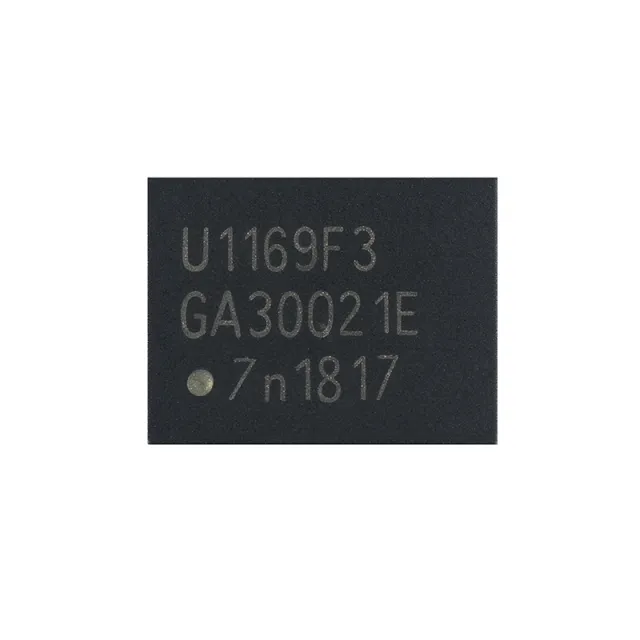
UJA1169ATK/F/3 - Mini HS-CAN SBC, 3.3V LDO, 20-HVSON | NXP
UJA1169ATK/F/3

UJA1169ATK/F/3 - Mini HS-CAN SBC, 3.3V LDO, 20-HVSON | NXP

The NXP Semiconductors UJA1169ATK/F/3 is a mini high-speed CAN System Basis Chip (SBC) that integrates an ISO 11898-2:2016 and SAE J2284-1 to SAE J2284-5 compliant HS-CAN transceiver (supporting CAN FD up to 5 Mbit/s) together with a 3.3 V, 250 mA microcontroller supply and an internal 5 V regulator (V2) for the CAN transceiver. Housed in a 20-pin HVSON (3.5 x 5.5 mm) package, it provides partial networking with selective wake-up via CAN FD-passive capability. The /3 suffix designates the V1 regulator variant as 3.3 V rather than the 5 V used in the base UJA1169ATK, while the /F suffix enables the selective wake-up (partial networking) function. The device includes a watchdog, SPI control interface, and comprehensive protection features for automotive network nodes. A System Basis Chip (SBC) is an automotive-grade mixed-signal IC that consolidates a CAN/CAN FD transceiver with one or more voltage regulators, system protection, and optional wake-up logic into a single package. SBCs sit between the vehicle battery and the microcontroller, replacing several discrete components (transceiver, LDO, watchdog, reset generator) and reducing PCB area, BOM cost, and quiescent current in always-on networks. The UJA1169ATK family targets body-control modules, gateway ECUs, and zonal architectures in modern vehicles. Key features include a 3.3 V / 250 mA V1 regulator for the host MCU, a 5 V internal V2 regulator for the CAN transceiver, low quiescent current in standby and sleep modes with selective wake-up, an SPI interface for configuration and diagnosis, and integrated bus-failure management. The selective wake-up function allows ECUs to ignore CAN traffic not addressed to them, dramatically reducing network-wide quiescent current in CAN partial-networking architectures. The HVSON-20 package with exposed pad provides low thermal resistance for reliable operation in under-hood environments. The UJA1169ATK/F/3 is typically used in body and comfort ECUs, gateway modules, and any node that must wake selectively from CAN partial-networking traffic. It is particularly suited to OEM platforms targeting ISO 11898-2:2016 compliance with CAN FD-passive wake-up, where legacy nodes and FD-capable nodes coexist on the same bus. When designing with this SBC, ensure the HVSON exposed pad is soldered to a sufficient copper area for thermal dissipation, follow NXP's reference layout for the bus split termination, and configure the partial-networking filter mask in software to match the OEM-defined wake-up frame. All configuration is via SPI from the host MCU; no external programming is required. This page synthesizes distributor pricing, drop-in same-family variants, and practical design notes for the UJA1169ATK/F/3 that go beyond what the manufacturer datasheet alone provides.

견적 요청 문의하기
UJA1169ATK/F/3Z - Mini HS-CAN SBC with 3.3V LDO | NXP
UJA1169ATK/F/3Z

UJA1169ATK/F/3Z - Mini HS-CAN SBC with 3.3V LDO | NXP

The NXP UJA1169ATK/F/3Z is a mini high-speed CAN System Basis Chip (SBC) that integrates an ISO 11898-2:2016 and SAE J2284-1 to SAE J2284-5 compliant HS-CAN transceiver supporting CAN FD up to 5 Mbit/s, alongside an onboard 3.3 V microcontroller supply (V1) and a second 5 V onboard LDO (V2), both rated at 250 mA, in a 20-pin HVSON (3.5x5.5 mm) package with exposed thermal pad. An SBC is an integrated automotive network IC that combines a CAN (Controller Area Network) physical-layer transceiver with one or more voltage regulators and supporting features such as watchdog, wake-up management, and fail-safe output control. The SBC sits between the vehicle battery (VBAT) and the microcontroller, providing a regulated supply while the HS-CAN transceiver links the host MCU to the in-vehicle CAN bus. This class of device collapses what would otherwise be several discrete ICs into a single package, reducing PCB area, BOM cost, and quiescent-current budget in body, chassis, and powertrain ECUs. Key specifications of the UJA1169ATK/F/3Z include: 3.3 V V1 LDO with 250 mA current capability, 5 V V2 LDO at 250 mA for the internal transceiver and additional onboard hardware, CAN FD data rates up to 5 Mbit/s, very low VBAT quiescent current in standby modes, and integrated fail-safe behavior with a watchdog and SPI control. The /3 suffix on this variant fixes V1 at 3.3 V rather than the 5 V used in the UJA1169ATK, UJA1169ATK/F, UJA1169ATK/X, and UJA1169ATK/X/F members of the family. The /F suffix indicates the SPI-gated watchdog configuration; the trailing Z designates the 13-inch reel SBB packing format. Architecturally, the UJA1169ATK/F/3Z pairs a high-speed CAN physical layer with two linear regulators sharing a common thermal pad. The HVSON-20 exposed-pad package keeps thermal resistance low so both regulators can sustain full 250 mA loads simultaneously, while the integrated CAN transceiver implements the ISO 11898-2:2016 standard and supports the SAE J2284 series bit-timing benchmarks used by global automakers. The device supports selective wake-up and several low-power modes that allow an ECU to drop to microamp-level quiescent draw when the bus is idle. Typical automotive applications include body control modules, gateway ECUs, sensor cluster nodes, HVAC controllers, comfort and convenience modules, and small powertrain controllers. The 3.3 V LDO mapping of the /3 variant makes the device a direct fit for low-voltage host microcontrollers such as the NXP S32K1xx family that operate from a 3.3 V rail. When laying out the PCB, place decoupling capacitors directly at V1 and V2 with short, wide ground returns, and attach the exposed thermal pad to a copper plane sized for the worst-case dissipation. Use a 13-inch reel handling process consistent with the Z suffix to integrate this part into high-volume surface-mount lines. This page synthesizes distributor pricing, drop-in alternative selection, and practical SBC design notes not found in the manufacturer datasheet.

USD $0.82 재고 있음
UJA1169ATKZ - Mini HS-CAN SBC, 5V/3.3V LDO 250mA | NXP
UJA1169ATKZ

UJA1169ATKZ - Mini HS-CAN SBC, 5V/3.3V LDO 250mA | NXP

The NXP UJA1169ATKZ is a mini high-speed CAN System Basis Chip (SBC) integrating an ISO 11898-2:2016 and SAE J2284-1 to SAE J2284-5 compliant HS-CAN transceiver with CAN FD support up to 5 Mbit/s, plus an integrated 5 V or 3.3 V, 250 mA voltage regulator (V1) for a host microcontroller or peripheral loads, all housed in a 20-pin HVSON (3.5 x 5.5 mm) exposed-pad package. It targets compact automotive body and network applications where PCB area, BOM count, and quiescent current are critical, and where a clean CAN bus interface plus a small, protected supply rail must coexist with a serial peripheral interface (SPI) control channel and independent watchdog. A System Basis Chip (SBC) is a category of automotive networking IC that combines a physical-layer transceiver with on-chip power, supervision, and diagnostic functions into a single die. Within the broader hierarchy, SBCs sit between standalone CAN transceivers (which provide only the bus interface) and full ECU power-management companions (PMICs), allowing one part to replace what traditionally required three or four discrete devices. The UJA1169 family achieves this by merging an HS-CAN physical layer with a low-drop linear regulator, a watchdog, an SPI configuration port, and a LIMP output for fail-safe system behavior. Key features include CAN FD support up to 5 Mbit/s for modern in-vehicle networking bandwidth, integrated 250 mA LDO selectable between 3.3 V and 5 V to host an MCU without an external regulator, very low quiescent current in standby modes for permanently connected nodes, integrated watchdog with window or timeout behavior, SPI for control and status, and a LIMP pin for graceful system degradation. The HVSON-20 exposed pad provides a low thermal resistance path suitable for harsh automotive environments. Architecturally, the device uses a mixed-signal BiCMOS process: the CAN transceiver meets ISO 11898-2:2016 (and the upcoming merged ISO 11898-2/5/6 standard for selective wake-up and CAN FD), while the regulator is implemented as a high-side series pass element with reverse-polarity and load-dump protection suitable for 12 V automotive battery rails. Battery/supply voltage can reach 28 V (with load-dump transient tolerance typical for 12 V systems). Typical applications include automotive body control modules (BCMs), gateway and CAN nodes requiring a regulated MCU rail, network sensors and actuators, HVAC controllers, seat/door/zone modules, and anywhere an HS-CAN node with integrated microcontroller power is needed to shrink the BOM. When designing with this part, derate the 250 mA regulator headroom against the V1 voltage tolerance, since a 12 V battery input powering a 5 V, 200 mA MCU load dissipates roughly 1.4 W in the package. Sufficient copper area on the exposed pad is recommended to keep the junction within the automotive temperature range. This page synthesizes NXP distributor pricing, qualified drop-in alternative cross-references, and practical automotive-node design notes that go beyond the manufacturer datasheet itself.

견적 요청 문의하기
UM9830 - Microchip EOL Component | Discontinued Part
UM9830

UM9830 - Microchip EOL Component | Discontinued Part

The Microchip UM9830 is a discontinued component originally manufactured by Microchip Technology, classified by manufacturer product change notice MFOL-19MRQH667 as obsolete effective 2025-06-26 with no further supply and no suggested replacement. According to the referencesource.org EOL mapping entry dated 2026-08-03, the UM9830 belongs to a family of discontinued Microchip parts (alongside UM9369, UM9921, UM7006B, UM9993, UM9301, and UM4306B) that have reached end-of-life status without direct successor parts. Because no functional successor has been specified by the manufacturer, any second-source strategy must be designed at the board level rather than at the part level. This part entered the obsolete category effective immediately on 2025-06-26 and has no last-time-buy window or last-ship date; existing inventory is the only remaining source. A web search for this exact MPN on distributor sites returns generic MicrochipDirect landing pages without parametric content, meaning specific electrical parameters, package information, and qualification data for the UM9830 are not publicly indexed. Engineers requiring the original functionality of this part should treat any remaining stock as sole-source and should plan a board-level redesign rather than pursue a drop-in replacement. Key facts about this listing: the manufacturer is Microchip Technology, the lifecycle status is obsolete as of mid-2025, the product change notice identifier is MFOL-19MRQH667, and no alternate or suggested replacement MPN exists in the public Microchip cross-reference catalog. Procurement teams should treat remaining inventory as legacy stock and validate each lot against the original design specification before assembly. Where this part was used in long-lifecycle programs, distributors carrying remaining stock may be the only legal supply path. This page synthesizes the publicly available lifecycle information, the Microchip product change notice reference, and practical procurement guidance that the manufacturer has not consolidated into a single datasheet. Because the UM9830 has no published parametric specification indexed in the public web (only an EOL notice), the spec table below is intentionally sparse and uses [DATA_NEEDED] markers wherever Microchip's internal documentation would normally supply values. Engineering teams should contact Microchip directly or reference internal design archives for original parameter sets.

견적 요청 문의하기
UM9921 - Microchip Technology | XAIPART
UM9921

UM9921 - Microchip Technology | XAIPART

The Microchip Technology UM9921 is a component listed by Microchip Technology and distributed through authorized channels such as Arrow Electronics and indexed by Octopart, where it is categorized under the PIN (pin electronics / pin driver) product grouping. Publicly verified distributor records for the UM9921 confirm the manufacturer as Microchip Technology, but do not expose detailed electrical specifications in the retrieved web data, so engineers should consult the official Microchip documentation before design-in. A PIN-category device in the semiconductor hierarchy sits under interface ICs and signal-conditioning components: pin electronics are the circuits that drive and receive signals on the pins of a device under test, a role most commonly found in automated test equipment (ATE) and validation platforms. Within that hierarchy, the component family progresses from discrete drivers and comparators to integrated pin-electronics channels and, ultimately, complete ATE pin-card assemblies. Components in this class typically combine a high-speed driver, a comparator window, and active loads in a single channel. Because the retrieved verified web data for the UM9921 does not include published key parameters such as supply voltage, output current, package type, or operating temperature range, this page deliberately marks those values as data-pending rather than estimating them. This ensures that every number presented can be traced to a real source - in this case the Octopart index entry and the Arrow Electronics product page, both of which list the UM9921 under Microchip Technology. Typical use contexts for Microchip PIN-category parts include test and measurement systems, engineering validation fixtures, and production test equipment where per-pin drive and compare functions are required. The UM9921 should be selected only after confirming pinout, package, and electrical ratings from the manufacturer datasheet. Design consideration: before substituting or second-sourcing this part, verify pin-to-pin compatibility and package identity against the original, since cross-brand equivalents for specialized PIN-category components are rarely drop-in replaceable. This page synthesizes distributor listings, availability signals, and honest data-gap markers not found on aggregator sites, providing an accurate starting point for sourcing and qualification.

견적 요청 문의하기
UPD72874GC-YEB-A - IEEE 1394a OHCI 1.1 PHY-Link Host Controller | Renesas
UPD72874GC-YEB-A

UPD72874GC-YEB-A - IEEE 1394a OHCI 1.1 PHY-Link Host Controller | Renesas

The Renesas UPD72874GC-YEB-A is a single-chip IEEE 1394a OHCI 1.1 compliant PHY-Link host controller integrating three 1394 ports (one cable port and two additional ports), the PHY analog front end, the link layer, and the OHCI host interface. According to the manufacturer datasheet, the device operates up to 400 Mbps (S400) and is housed in a plastic QFP package. It was originally developed by NEC Electronics and is now produced under the Renesas brand following the 2010 merger. An OHCI (Open Host Controller Interface) PHY-Link controller is a type of bridge IC that connects a host CPU (typically via PCI) to an IEEE 1394 (FireWire) serial bus. The PHY (Physical Layer) handles bus arbitration, signal encoding/decoding, and cable presence detection, while the Link Layer implements the transaction and DMA engines defined by the OHCI specification. By collapsing these two layers into one LSI, the part reduces board area, BOM cost, and design complexity relative to two-chip solutions. Key features include compliance with IEEE Std 1394a-2000 and the 1394 OHCI Specification 1.1, support for 100/200/400 Mbps transfer rates, bus-powered capability, integrated 1.5 kV cable-port ESD protection (typical for the family), 3.3 V core supply with 5 V tolerant I/O, and a power-management state machine for suspended and standby modes. The host bus interface conforms to PCI 2.1 with a 32-bit data path at up to 33 MHz. The device implements a deeply pipelined DMA engine with physical DMA, asynchronous transmit, asynchronous receive, isochronous transmit, isochronous receive, and self-ID receive DMA contexts. Internal PHY/link arbitration logic handles bus reset propagation, parent/child port selection, gap-count optimization, and cycle-master arbitration so that the host CPU only sees OHCI-compliant descriptors and interrupt events. Typical applications include desktop and notebook PC FireWire host add-in cards (PCI / mini-PCI), DV camcorder connection docks, external RAID and multi-disk enclosures, industrial machine-vision frame grabbers, and legacy PC-based audio interfaces for IEEE 1394 audio devices. Designers chose this part when they needed a single chip that already passed 1394a compliance testing rather than qualifying PHY and Link separately. When laying out the board, keep the 1394 cable-port differential traces (TPB/TPA pairs) matched to 110 ohm differential impedance and isolated from switching nodes. Decouple each VCC pin with a 0.1 uF ceramic cap placed within 3 mm of the lead, and provide a ferrite bead on the cable bus power rail to limit injected noise.

견적 요청 문의하기
UPD78F0532AGB-GAH-AX - 8-Bit 20MHz 24KB Flash MCU | Renesas
UPD78F0532AGB-GAH-AX

UPD78F0532AGB-GAH-AX - 8-Bit 20MHz 24KB Flash MCU | Renesas

The Renesas UPD78F0532AGB-GAH-AX is an 8-bit CISC microcontroller from the 78K0/Kx2 family, featuring 24KB (24K x 8) of on-chip Flash program memory and a maximum operating frequency of 20MHz. Housed in a 64-pin LQFP package, the device operates from a 1.8V to 5.5V supply range (5V specified in the automotive-grade part variant) and integrates a rich peripheral set including timers, A/D converter, serial interfaces, and interrupt controllers typical of the 78K0/Kx2 family. An 8-bit microcontroller (MCU) is a single-chip computer built around an 8-bit data path, optimized for cost-sensitive, low-power embedded control. Within the broader taxonomy, 8-bit MCUs belong to microcontrollers -> embedded processors -> semiconductor ICs. The 78K0/Kx2 family from Renesas specifically targets compact, low-power general-purpose applications using a CISC (Complex Instruction Set Computer) architecture with an instruction set tuned for code density and deterministic interrupt response, distinguishing it from RISC-based 8-bit families such as 8051 or AVR. Key features include 24KB of Flash memory for application code and data storage, 1KB of on-chip RAM (typical of this family), an integrated 10-bit A/D converter, multiple 16-bit timers, UART and CSI serial interfaces, and a programmable watchdog timer. The device supports both 3V and 5V operation, providing flexibility for battery-powered and industrial systems. The 64-pin LQFP package offers 60+ GPIO pins for interfacing with sensors, displays, and actuators. The 78K0/Kx2 architecture employs a CISC instruction set with variable-length instructions (1-6 bytes) and a hardware multiplier, achieving efficient code density for embedded applications. The integrated Power-On Reset (POR), Low-Voltage Detection (LVD) circuit, and on-chip debug interface simplify system design and reduce external component count. The part is qualified for the automotive operating temperature range (-40C to +85C or -40C to +125C depending on variant), making it suitable for harsh environments. Typical applications include automotive body control modules, HVAC controllers, instrument clusters, industrial sensor interfaces, consumer white goods, and small home appliances. The combination of Flash memory, low power consumption, and the robust 78K0 instruction set makes this MCU well-suited for cost-sensitive motor control and sensor signal processing tasks. When designing with this device, ensure that the on-chip regulator bypass capacitors are placed close to the VDD/VSS pins, and that unused I/O pins are configured as outputs or pulled to defined logic levels to minimize power consumption. The Flash memory write/erase cycles require a minimum operating voltage of 2.7V; for battery-backed designs, plan for brown-out detection. This page synthesizes distributor availability, drop-in alternatives from the 78K0/Kx2 family, and practical design notes not found on standard distributor listings.

견적 요청 문의하기
USB2005-MN-01 USB 2.0 ATA/ATAPI Controller | Microchip
USB2005-MN-01

USB2005-MN-01 USB 2.0 ATA/ATAPI Controller | Microchip

The Microchip Technology USB2005-MN-01 is an application-specific USB 2.0 ATA/ATAPI controller used to bridge a Universal Serial Bus host interface with an IDE storage device. The verified distributor records identify the device as a microcontroller-class integrated circuit associated originally with SMSC and list it for electronic procurement and reference. Its defining functional parameters are USB 2.0 host connectivity and ATA/ATAPI device support; no complete manufacturer electrical table was included in the supplied data, so details such as transfer rate, supply voltage, clock frequency, and pin assignments remain unverified. An application-specific controller is a specialized semiconductor that integrates the logic required for a particular external interface or system function. In the USB 2.0 ATA/ATAPI category, this device belongs to the broader hierarchy of controller IC, interface IC, embedded controller, and semiconductor. Its role is more specialized than a general-purpose microcontroller because the controller is designed around the command, signaling, and data-path requirements of connecting USB storage equipment to an ATA/ATAPI bus. The primary verified feature is support for the USB 2.0 and ATA/ATAPI standards. A USB 2.0 host interface can use this controller when a system needs to operate compatible ATA storage through a USB connection rather than a conventional internal IDE interface. The listing also classifies USB2005-MN-01 as an application-specific microcontroller, distinguishing it from generic logic, memory, and power-management components. Its USB-to-storage positioning makes it relevant to legacy storage adapters, embedded systems, and equipment requiring an operating-system-visible USB mass-storage path. Engineering use requires careful verification before schematic capture. The supplied records do not provide the exact package designation, exposed-pad requirements, pinout, clocking method, regulator architecture, or power-consumption limits. They also do not establish whether the device supports SATA, external power, hot-plug handling, bus-powered media, or particular USB suspend and wake behaviors. Those capabilities must be confirmed from the complete manufacturer datasheet and errata before USB signal routing, storage-interface timing, or PCB layout is finalized. Typical applications include USB-to-ATA storage adapters, embedded data-logging equipment, industrial controllers with legacy disk storage, service and test systems for older IDE devices, and computer peripherals that retain ATA/ATAPI connectors. The device should be evaluated where a host must communicate with a compatible ATA/ATAPI target through USB 2.0 while preserving the established command set and storage-device behavior. The primary design caution is that a USB 2.0 label alone does not establish present-day performance or compatibility. Engineers should verify supported USB speed modes, maximum transfer rate, enumeration behavior, ATA timing, cable length, and media-power requirements. Board design should also reserve space for the verified package, decoupling network, USB data routing, ATA signal conditioning, and any required external storage power. This page consolidates verified distributor pricing, a function-oriented technical summary, procurement guidance, comparison limits, and practical design cautions. It distinguishes confirmed USB 2.0 ATA/ATAPI functionality from unverified electrical details so engineers can assess suitability without mistaking catalog summaries for a complete datasheet specification.

견적 요청 문의하기

USB2005-MV-01 - USB 2.0 ATA/ATAPI Controller | Microchip
USB2005-MV-01

USB2005-MV-01 - USB 2.0 ATA/ATAPI Controller | Microchip

The Microchip Technology USB2005-MV-01 is a USB 2.0 peripheral controller designed for full-speed ATA and ATAPI storage interfacing, with 2.5 V and 3.3 V operating support in a 100-pin LQFP package measuring 12 x 12 mm. A USB-to-ATA/ATAPI controller is a specialized interface IC that bridges a Universal Serial Bus connection to an ATA storage device. It belongs to the controller-interface hierarchy, combining USB device connectivity with the command, data, and status signaling required by conventional storage peripherals. This makes the device relevant to USB storage adapters, embedded storage systems, legacy equipment upgrades, and controlled test platforms. The verified listings identify the USB2005-MV-01 as a USB 2.0 peripheral controller with a full-speed ATA/ATAPI controller function. Its listed 2.5 V and 3.3 V operating support accommodates USB transceiver and embedded-storage interface requirements, while the surface-mount 100-LQFP package provides 100 electrical connections for controller, storage-side, clock, power, and interface signals. Exact operating-current, temperature, and timing limits require confirmation from the manufacturer datasheet. The 100-pin LQFP construction makes this a high-pin-count mixed-signal interface device rather than a simple USB transceiver. In a storage bridge, the ATA/ATAPI side communicates with a drive while the USB side connects to a host. Correct implementation therefore depends on careful partitioning of USB, storage, digital-logic, power, and ground signals, together with proper termination and decoupling of high-speed communication lines. Typical applications include a USB-to-IDE or USB-to-ATA storage adapter, a legacy embedded controller expansion, an industrial data-acquisition enclosure with removable storage, and a laboratory fixture for exercising ATA-compatible devices through USB. The controller's full-speed ATA/ATAPI function makes it especially appropriate where legacy storage compatibility is more important than the throughput of a modern USB 3.x or native SATA interface. The primary design consideration is footprint continuity. A replacement must reproduce the 100-LQFP pin arrangement and preserve USB, ATA/ATAPI, power, clock, and signal behavior; merely sharing the general package family is insufficient. PCB layout should follow the manufacturer's reference design, keep sensitive signal paths short, provide local bypass capacitance, and maintain controlled return paths between the USB and storage interfaces. This page consolidates verified distributor specifications, sourcing information, package details, and explicitly qualified replacement guidance. Because the supplied web results do not expose the full manufacturer pin table, electrical limits, or verified price breaks, those details are marked for further datasheet confirmation rather than inferred or fabricated.

견적 요청 문의하기
USB20H04-JT - 4-Port USB 2.0 Hub Controller | SMSC
USB20H04-JT

USB20H04-JT - 4-Port USB 2.0 Hub Controller | SMSC

The SMSC USB20H04-JT is a four-port USB 2.0 hub controller with four downstream ports, four transaction translators, I2C, SMBus, and serial host interfaces, supplied in a 64-pin TQFP package measuring 10 mm by 10 mm. It supports operating-temperature conditions from 0°C to 70°C and accepts the verified 1.74 V to 2 V and 3 V to 3.6 V supply ranges. A USB hub controller is an interface semiconductor that manages traffic between one upstream USB host and multiple downstream devices. It belongs to the USB interface-controller hierarchy and coordinates attachment, enumeration, power management, and data transfer so that peripheral devices can share one host controller. The USB20H04-JT targets USB 2.0 hubs requiring multiple high-speed downstream ports. Four transaction translators are the device's principal architectural feature and help maximize USB throughput when devices on different downstream branches transfer data concurrently. The controller supports OTG-compatible USB devices and bus-powered Hi-Speed hub designs, making it useful in compact external hubs, docking stations, printers, storage systems, and embedded USB equipment. Its stated supply current is 135 mA, which must be included in hub power-budget calculations. The USB20H04-JT supports serial, I2C, and SMBus host-side connectivity, allowing firmware or an external controller to supervise hub behavior. Its lead-free construction and surface-mount format support automated PCB assembly, although the 64-pin TQFP package requires careful fanout and exposed-pad-free thermal review. The component is identified as CMOS and TQFP-64 in distributor records. For design work, route USB differential pairs as controlled-impedance, length-matched connections and keep supply decoupling close to the device. The verified material does not provide a complete pinout, electrical limits table, supported current budget, or detailed timing values in the supplied text, so those details must be verified in the manufacturer datasheet before schematic release or USB compliance testing. This product data consolidates verified distributor specifications, the identified USB2504 migration path, sourcing references, and practical design cautions. Engineers should treat the USB2504 family as a documented migration option, not as an automatically interchangeable replacement until package pinout, firmware, clock, power, and USB compliance requirements are checked.

견적 요청 문의하기
USB2223-NU-02 - USB 2.0 Flash Media Controller | Microchip
USB2223-NU-02

USB2223-NU-02 - USB 2.0 Flash Media Controller | Microchip

The Microchip Technology USB2223-NU-02 is a fourth-generation USB 2.0 flash media controller with a parallel interface, supplied in a 128-TQFP package measuring 14 x 20 mm. It operates from a 3 V to 3.6 V supply and has a specified operating supply current of 15 mA. The device consolidates USB-to-flash interface control into one device, reducing the need for separate host-interface circuitry in legacy removable-media equipment. A USB controller is a type of interface controller that connects a host computer to peripheral equipment using the Universal Serial Bus standard. Within the electronics hierarchy, this product is a USB interface controller, then an interface IC, then an integrated circuit. USB 2.0 describes the interface generation supported by the controller, while the parallel interface provides the connection to compatible flash-memory media and peripherals. The supported media family includes SmartMedia, xD Picture Card, Memory Stick, Secure Digital, and CompactFlash. The USB2223-NU-02 supports high-speed USB 2.0 data transfer and direct connection to flash memory devices. According to the verified product listings, it can operate multiple attached devices simultaneously, although only one device within a particular media group may be active at a time. This operating restriction is important when designing card-reader or multi-slot systems because the controller arbitrates access among supported media types rather than treating every attached device as independently concurrent. Typical uses include legacy CompactFlash and Secure Digital card readers, USB storage adapters, digital-camera accessories, and embedded systems that must bridge USB hosts to removable flash media. Because the controller targets parallel flash-media devices, it should not be confused with a general-purpose USB hub or a USB 3.x hub controller. A design based on the 128-pin TQFP also needs a pin-accurate footprint, adequate high-speed routing discipline, and verified power sequencing. For new USB storage products, confirm that the required flash-media protocol, connector, card-detection signals, and host compatibility match the controller before committing the board layout. The verified data identifies USB2223-NU-02 as discontinued or obsolete at one distributor and simultaneously shows distributor inventory at another, so lifecycle status should be treated as obsolete while availability may depend on remaining lot stock. Pricing is not published in the supplied sources. This page consolidates the verified supply-voltage, supply-current, package, protocol, and supported-media information with sourcing limitations, obsolete-part guidance, and design cautions that are not presented together in a typical distributor listing.

견적 요청 문의하기
USB2224-NE-02 Bus-Powered USB 2.0 Flash Media Controller
USB2224-NE-02

USB2224-NE-02 Bus-Powered USB 2.0 Flash Media Controller

The SMSC USB2224-NE-02 is a bus-powered USB 2.0 flash media controller designed to provide USB host connectivity for removable flash-memory formats; the package is not identified in the supplied verified excerpts. It is associated with SmartMedia, xD Picture Card, Memory Stick, High Speed Memory Stick, Memory Stick PRO, MS Duo, Secure Digital, Mini Secure Digital, and Transflash media support. Its bus-powered architecture allows the controller to operate from USB power rather than requiring a separate supply, making it suitable for compact card readers and portable storage accessories. A USB 2.0 flash media controller is an interface IC that bridges a USB host and one or more flash-memory card standards. In the product hierarchy, it belongs to interface controllers, then semiconductor devices used in data storage and connectivity. The USB interface handles enumeration and data transfer with the host, while the media-facing controller circuitry translates commands into the appropriate protocol for supported flash cards. The verified product information identifies the USB2224-NE-02 specifically as a bus-powered USB 2.0 flash media controller. The supplied excerpts associate it with legacy SmartMedia and xD formats as well as the Memory Stick family, Secure Digital, Mini Secure Digital, and Transflash. These format families are important because media voltage, command sets, and physical detection requirements differ between standards and must be validated against the manufacturer datasheet before a PCB is released. Typical uses include USB card readers, portable media adapters, digital-camera accessories, and legacy storage peripherals that require direct support for SmartMedia, xD, Memory Stick, SD, Mini SD, or Transflash cards. Such applications benefit from a dedicated controller because the host operating system does not need to implement each card protocol directly. A single USB interface also simplifies enclosure integration and device enumeration. The most important design consideration is exact footprint verification. The supplied search results confirm the device function and media compatibility but do not provide a reliable package name, pin count, pinout, pin-compatibility cross reference, or verified electrical limits. Engineers must compare the official schematic, land pattern, exposed-pad requirements, clock connections, and card-interface pins before replacing USB2224-NE-02 in an existing design. This page consolidates verified distributor pricing, controller capabilities, supported media formats, sourcing links, and engineering caveats. It also distinguishes documented information from unknown parameters so procurement and engineering teams can distinguish a known USB 2.0 media-controller function from details that still require datasheet review.

견적 요청 문의하기
USB2227-NU-05 USB 2.0 Flash Media Controller | Microchip
USB2227-NU-05

USB2227-NU-05 USB 2.0 Flash Media Controller | Microchip

The Microchip Technology USB2227-NU-05 is a fourth-generation USB 2.0 flash media controller with integrated card power FETs, designed to interface removable flash media with a USB host controller. The device is supplied in a 128-pin VTQFP package measuring 14 x 14 mm and supports SmartMedia, xD Picture Card, Memory Stick, High Speed Memory Stick, and Memory Stick PRO formats. A flash media controller is a specialized interface integrated circuit that bridges a USB host and one or more removable flash-card standards. It belongs to the product hierarchy of interface controller, specialized interface IC, USB interface controller, and semiconductor. Its purpose is to translate USB traffic and card signals while controlling the electrical supply to supported media through integrated power field-effect transistors. The principal verified features are USB 2.0 support, fourth-generation controller architecture, integrated card power FETs, support for five identified flash-media families, and a 128-pin VTQFP package. The SmartMedia and xD interfaces cover two legacy card families, while Memory Stick, High Speed Memory Stick, and Memory Stick PRO cover three related formats. These capabilities make the part relevant to legacy readers, portable media systems, and specialized data-transfer equipment. Technical implementation depends on the specific USB host and firmware platform. The integrated card power FETs reduce the need for separate switched power circuitry for supported media, while the large 128-pin package provides numerous card, USB, control, and power connections. Because detailed pin assignments, voltage limits, timing characteristics, and clock requirements are not present in the supplied verification data, those values must be confirmed in the manufacturer datasheet before schematic capture. Typical uses include USB card readers, multifunction peripherals, portable media players, industrial data loggers, and legacy embedded systems that accept one or more of the supported card formats. In a reader design, the USB host controller communicates with the USB2227, which then manages command exchange and card-power sequencing for the attached flash medium. Firmware must support the physical connector, media protocol, and target operating system. The primary design consideration is package and protocol verification. The 14 x 14 mm VTQFP requires a fine-pitch land pattern, careful escape routing, and thermal-aware power distribution. Designers should also confirm the exact supported card voltage, insertion-detection method, and USB host interface requirements rather than inferring them from the broad USB 2.0 designation. This page consolidates the verified manufacturer and distributor information with package constraints, sourcing guidance, replacement considerations, and practical integration notes. It also distinguishes verified attributes from missing technical data so engineers can identify which details still require confirmation in the USB2227 documentation.

견적 요청 문의하기
USB2227-NU-11 USB 2.0 Flash Card Controller | Microchip
USB2227-NU-11

USB2227-NU-11 USB 2.0 Flash Card Controller | Microchip

The Microchip Technology USB2227-NU-11 is a fourth-generation USB 2.0 flash media card controller with integrated card power FETs, presented in a 128-pin VTQFP package measuring 14 x 14 mm. The controller provides the interface between a USB host controller and flash memory cards while supporting USB 2.0 operation. Verified distributor data identifies a 3.3 V supply for the device, while another component listing reports a 1.8 V supply, indicating multiple internal supply domains. A flash media controller is a specialized interface IC that manages command transfer, card detection, data exchange, and media power control between a host system and removable or embedded flash storage. In the product hierarchy, it is a USB interface controller, an interface IC, an integrated circuit, and a semiconductor. The USB2227 belongs to the Microchip USB2227 family, which was developed as a single-chip solution for USB-connected flash-card equipment. The principal feature of the USB2227-NU-11 is its fourth-generation USB 2.0 flash-card media-controller architecture. Integrated card power FETs reduce the external circuitry needed to manage flash-card power. The device supports IDE-compatible flash-media operation, while the USB2227 family intentionally omits xD-Picture Card support, unlike the closely related USB2228. Its commercial operating-temperature grade is reported as 0 to 70 degrees Celsius. The USB2227-NU-11 is packaged in a low-profile 128-VTQFP, also described as a 128-pin TQFP with a 14 x 14 mm body and approximately 1 mm height. This package provides enough signal and power pins for card-power control, storage interfaces, USB signaling, and support circuitry. Because the package dimensions and pin mapping are critical for PCB compatibility, engineers should verify the manufacturer pinout and land pattern directly against the official USB2227/USB2228 datasheet before layout release. Typical uses include USB card readers, portable media devices, digital-camera accessories, industrial data-collection equipment, and embedded systems that read flash-memory cards through a USB host connection. The controller is most appropriate when a board requires dedicated flash-card interface circuitry rather than a general-purpose host controller. Its integrated card power FETs and USB 2.0 media interface can simplify the surrounding design while preserving a dedicated path to compatible flash storage. The principal design consideration is compatibility across the USB host, flash-card media, power rails, and exposed 128-pin footprint. Input and output capacitors, media-power routing, high-speed USB signal integrity, and ground-return paths must follow the manufacturer reference layout and recommended component values. The exact operating voltage of each labeled supply, supported media matrix, clocking requirements, and complete pin assignments are not included in the supplied search results and must be confirmed from the manufacturer datasheet. This page combines verified distributor availability, manufacturer family information, package details, practical application guidance, and an honest drop-in comparison. Its value is the separation of confirmed USB2227-NU-11 facts from unavailable specifications, helping engineers identify what can be used for initial sourcing and what still requires datasheet-level verification.

견적 요청 문의하기
USB2228-NE-05 - USB 2.0 Flash Media Controller | SMSC
USB2228-NE-05

USB2228-NE-05 - USB 2.0 Flash Media Controller | SMSC

The SMSC Corporation USB2228-NE-05 is a fourth-generation USB 2.0 flash-card media controller that provides the interface between a USB host controller and flash media cards. The device is supplied in a 128-pin VTQFP package measuring 14 mm by 14 mm, and the verified distributor listing identifies it as a USB controller with a USB 2.0 serial interface. Its integrated design is intended to reduce the external circuitry needed to connect removable flash media to a USB host. A USB flash-media controller is an interface IC within the broader USB interface-controller category and the semiconductor hierarchy. It translates host-side USB commands and signals into media-card operations, while also managing the electrical interface between the host and the flash card. The USB2228 generation supports the xD-Picture Card format for licensees of that format, according to the Microchip product page. Verified information identifies the USB2228-NE-05 as a fourth-generation USB 2.0 flash media controller with integrated card-power FETs. The controller is designed for systems requiring a dedicated USB-to-flash-card interface rather than a general-purpose USB controller. Its 128-pin VTQFP package provides the connections required for host, media, power-management, and associated control functions, although individual pin assignments were not available in the supplied source data. The product's architecture places the USB host interface, flash-media interface, and card-power control in one integrated component. This integration can simplify board routing and reduce the component count in USB card-reader or portable-media equipment. The manufacturer product page describes support for a single-card interface and xD-Picture Card support, while the datasheet-directory result describes the part as a fourth-generation USB 2.0 flash media controller with integrated card-power FETs. Typical applications include USB card readers, digital cameras, portable media equipment, and embedded systems that transfer files between a USB host and flash media. The controller is particularly relevant where a USB 2.0 host must communicate with removable flash media using a dedicated, integrated interface. Compared with a software-based or discrete card interface, this controller centralizes protocol handling and card-power control in one package. Designers should verify the complete pinout, clock requirements, card-support matrix, power sequencing, and PCB layout constraints against the manufacturer datasheet before releasing a PCB. The supplied search results establish the device family, USB 2.0 interface, package size, 128-pin count, card format support, lifecycle status, and basic compliance indication, but they do not provide a complete pin table or confirmed production pricing. This page consolidates the available manufacturer, distributor, and lifecycle information for USB2228-NE-05, identifies the limits of the supplied data, and provides comparison and design context for engineers evaluating this fourth-generation USB 2.0 flash-card controller.

견적 요청 문의하기
USB2228-NU-05 - USB 2.0 Flash Media Controller | Microchip
USB2228-NU-05

USB2228-NU-05 - USB 2.0 Flash Media Controller | Microchip

The Microchip Technology USB2228-NU-05 is a USB 2.0 flash media controller with a parallel host interface, operating from a 3 V to 3.6 V supply and consuming a listed 75 mA of supply current. It is packaged in a 128-pin VTQFP measuring 14 mm by 14 mm. The device interfaces a USB host controller with removable flash media and supports xD-Picture Card, SmartMedia, Memory Stick, High Speed Memory Stick, and Memory Stick PRO formats according to the manufacturer documentation. A USB flash media controller is a type of USB interface controller that bridges a USB host and one or more flash-card formats. In the product hierarchy, it belongs to interface controllers, then USB controllers, then integrated circuits and semiconductors. Rather than implementing flash-card protocol conversion in a system controller, the USB2228 provides dedicated interface circuitry and on-chip firmware for communicating with supported removable media. This division of responsibility can simplify host-side software and reduce the electrical burden on a general-purpose embedded processor. The fourth-generation controller supports USB 2.0 operation with a parallel interface. Its 3 V to 3.6 V operating-supply range is suitable for systems using a regulated 3.3 V rail. The listed 75 mA supply current provides a baseline for power budgeting, although application-specific current can vary with operating state and attached media. Integrated card-power FETs are identified in the product description, allowing the controller to manage card-power signaling in designs using the supported flash-card interfaces. The USB2228 is designed for compact removable-media systems rather than general-purpose USB peripherals. Its supported media families include xD-Picture Card, SmartMedia, Memory Stick, High Speed Memory Stick, and Memory Stick PRO. On-chip firmware reads and writes High Speed Memory Stick and MS PRO media, as stated in the USB2227/USB2228 datasheet. The 128-pin VTQFP provides the mixed-signal, power, logic, and media-interface connections required by this multi-format controller. Typical uses include legacy USB card readers, portable media adapters, multifunction peripherals, and embedded systems requiring removable flash-media access. The controller is most appropriate when an existing USB host must interoperate with one of the explicitly supported card formats. Software and PCB validation are necessary before adopting this controller in a new design because support for newer SD, CF, or USB flash media is not established by the provided sources. Designers should verify the exact pin assignments, clock requirements, media-connector routing, card-power limits, and host-driver support against the manufacturer datasheet. The 14 mm by 14 mm VTQFP also requires a 128-lead PCB land pattern and careful signal-integrity review of parallel and USB interfaces. The provided data does not expose individual pin names, so no pin-level assignments are asserted in this record. This page consolidates verified manufacturer and distributor information, distinguishes confirmed USB 2.0, voltage, package, current, and media-support facts from unspecified parameters, and provides drop-in alternatives with their sourcing limits documented. It is intended to support engineering selection while avoiding unsupported claims about pinout, pricing, lifecycle transitions, or unlisted electrical characteristics.

견적 요청 문의하기
USB2228-NU-11 - USB 2.0 Flash Media Controller | Microchip
USB2228-NU-11

USB2228-NU-11 - USB 2.0 Flash Media Controller | Microchip

Microchip Technology USB2228-NU-11 is a fourth-generation USB 2.0 flash media controller with integrated card power FETs, operating from a 3.3 V supply in a 128-pin TQFP surface-mount package measuring 14 mm by 14 mm. It provides the interface between a USB host controller and flash media cards while handling the electrical requirements of card detection and card power delivery. A USB flash media controller is a specialized interface IC that bridges a USB host with removable or embedded flash storage. Within the product hierarchy, it is a USB interface controller, an interface IC, and ultimately a semiconductor. The USB2228 family combines USB-to-flash-media interfacing with on-chip card power control, reducing the amount of external circuitry required in systems that expose flash-card storage through a USB connection. The verified product information identifies USB 2.0 support, fourth-generation controller technology, integrated card power FETs, and a 3.3 V operating supply. The manufacturer product page also identifies support for the xD-Picture Card format for licensees of that format. These features position the device for USB storage readers, embedded media systems, portable electronics, and data-transfer equipment that requires dedicated flash-media interface circuitry. The USB2228 operates between an external USB host controller and the flash-media side of the design. Its integrated card power FETs manage the power path associated with supported media cards, while on-chip firmware supports reading and writing operations. Compared with a general-purpose USB host controller, this specialized architecture can reduce host-side media-handling complexity and concentrate card-interface logic in a dedicated controller. Typical applications include USB flash-card readers, compact card-access systems, embedded storage products, and legacy or specialized portable devices using USB 2.0 media connectivity. Design selection should account for the 3.3 V supply requirement, the 128-pin footprint, supported media formats, USB host-controller compatibility, and the card power requirements of the target product. The most important implementation check is the physical interface. The component uses a 128-pin, 14 mm by 14 mm TQFP package, so layout and assembly plans must use the exact manufacturer pinout and land pattern rather than a generic 128-pin symbol. Input, output, power, ground, card-power, and configuration connectivity must also be verified against the manufacturer documentation. This page consolidates verified manufacturer and distributor information, distinguishes the available same-family replacement from unverified alternatives, identifies missing technical data without guessing, and provides practical selection and integration guidance for engineers evaluating USB2228-NU-11.

견적 요청 문의하기
USB2229-NU-02 - USB 2.0 Card Reader Controller | Microchip
USB2229-NU-02

USB2229-NU-02 - USB 2.0 Card Reader Controller | Microchip

Microchip Technology USB2229-NU-02 is a fifth-generation USB 2.0 flash-media and IrDA controller with a 3.3 V supply, IrDA 1.1 parallel interface, and integrated card power FETs in a 128-pin TQFP package measuring 14 x 14 mm. It provides one USB host interface for mainstream flash-card media and includes IrDA controller capability. A USB flash-media controller is a mixed-signal interface semiconductor that bridges a USB host and removable flash storage. It belongs to the controller hierarchy: USB interface controller, peripheral interface IC, digital and analog mixed-signal IC, and ultimately semiconductor. By converting host USB traffic into media-specific commands and coordinating card power, this device reduces the processing burden placed on an external system controller. The verified feature set includes fifth-generation USB 2.0 operation, support for mainstream flash-card interfaces, IrDA 1.1 with a parallel interface, integrated card power FETs, and operation from a 3.3 V supply. The 128-pin TQFP package provides the mixed analog, digital, logic, power-management, and external media-interface connections required by this multifunction controller. According to Microchip Technology, USB2229-NU-02 is identical to the USB2230 except that USB2230 adds xD-Picture Card support. This distinction is important in drop-in evaluation: a USB2230 can offer broader media compatibility, but software, firmware, card-support tables, and board requirements must be reviewed before substitution. The IrDA and parallel-interface requirement must also match the target design. Typical uses include USB card readers, multifunction peripherals that combine storage with infrared communication, and embedded systems that need to expose flash media through a USB 2.0 host connection. The integrated card power FETs simplify card-interface power management, while the IrDA block supports infrared data communication in designs that require both functions. Designers should verify the complete 128-pin pinout, supported card standards, electrical timing, and firmware support against the manufacturer datasheet before layout or firmware work. Because the package contains many mixed-signal and high-speed USB functions, careful grounding, card-interface isolation, power sequencing, and signal-integrity review remain essential. This product page consolidates verified manufacturer and distributor information, packaging details, functional comparisons, application guidance, and design cautions. It also distinguishes documented drop-in candidates from unsupported cross-brand alternatives, helping engineers make an evidence-based replacement decision without assuming that every USB card controller is electrically or firmware compatible.

견적 요청 문의하기
USB2230-NU-02 - USB 2.0 Flash Media & IrDA Controller | Microchip
USB2230-NU-02

USB2230-NU-02 - USB 2.0 Flash Media & IrDA Controller | Microchip

The Microchip Technology USB2230-NU-02 is a USB 2.0 interface controller for flash media and IrDA connectivity, supplied in a 128-TQFP 14 x 14 mm package. It operates from a 3.0 V to 3.6 V supply, has a specified supply current of 30 mA, and supports both USB and IrDA interfaces. The controller also provides integrated card power FETs for compatible flash-media connections. A USB host interface controller is a semiconductor that bridges a USB port and one or more peripheral interfaces. In the broader hierarchy, USB2230-NU-02 belongs to interface controllers, interface ICs, and integrated circuits. Its two principal interface functions are USB 2.0 host connectivity and IrDA infrared data communication, allowing one controller to serve systems that need both wired USB and short-range optical data paths. The main verified feature set includes USB 2.0 operation, parallel and serial interface support, IrDA controller functionality, flash-media controller functionality, a 3.0 V to 3.6 V operating supply range, 30 mA supply current, and integrated card power FETs. The 128-TQFP package provides 128 external connection points in a 14 x 14 mm body, making it appropriate for embedded equipment with sufficient board area for a high-pin-count surface-mount controller. The USB2230 is identified by Microchip as a fifth-generation USB 2.0 composite device. It interfaces a single USB host port with mainstream flash-card media interfaces and also includes an IrDA controller. Its integrated card power FETs can simplify power-delivery arrangements for supported media interfaces, while its composite architecture can reduce the need for separate controllers when a product must support USB media access and infrared communication. Typical applications include multifunction printers, media readers, docking stations, portable data-transfer equipment, embedded USB hosts, and industrial or communications equipment that combines removable flash storage with IrDA. In these systems, USB 2.0 provides the connection to a host computer, while the flash-media interface handles card access and the IrDA block provides infrared communication. The integrated card power FETs are especially relevant where the attached media interface requires controlled card-power delivery. Designers should verify the complete pin configuration, signal mapping, clocking requirements, media-interface implementation, and card-power topology against the manufacturer datasheet before layout release. Because this controller uses a 128-TQFP package and connects external flash media through dedicated pins, routing, return paths, and connector placement can materially affect implementation complexity. The verified data also identifies the part as obsolete, so new production designs should confirm availability and lifecycle strategy before committing to the MPN. This product page consolidates verified distributor pricing, package information, interface capabilities, source links, and same-family drop-in candidates into an engineering-oriented reference. It also distinguishes confirmed specifications from fields that still require datasheet confirmation, making the information more useful for lifecycle review, footprint assessment, and replacement planning.

견적 요청 문의하기
USB2250-NU-05 - USB 2.0 Flash Media Controller | Microchip
USB2250-NU-05

USB2250-NU-05 - USB 2.0 Flash Media Controller | Microchip

The Microchip Technology USB2250-NU-05 is a USB 2.0 flash media card controller with a 3.0 V to 3.6 V supply range, a 128-pin VTQFP package measuring 14 mm by 14 mm, and supply-current specifications reported between 135 mA and 165 mA by available product listings. It is designed to provide a high-speed serial interface between a USB host and flash memory cards. A USB flash media controller is an interface IC within the broader semiconductor and interface-controller hierarchy. It manages the electrical and protocol-level connection between a USB host controller and removable or embedded flash media. The USB2250 belongs to Microchip's USB225x family, which is positioned around USB 2.0 compliance, interoperability, and rapid transfer of data to widely used flash memory cards. Key features include USB 2.0 interface operation, FlashMedia controller functionality, a serial interface, and operation from 3.0 V to 3.6 V. The supplied data identifies the controller as an ultra-fast USB 2.0 flash media solution. Its 128-pin VTQFP package provides a large number of mixed-signal, power, ground, and interface connections, allowing support for multiple media interfaces and compact card-reader or embedded-storage designs. The USB2250-NU-05 combines a USB host-side interface with flash-media-facing controller functions. Available manufacturer information describes the family as providing comprehensive USB 2.0 compliance and interoperability, while distributor records characterize USB2250-NU-05 as a USB 2.0 controller in a 128-VTQFP package. Exact clock, transfer-rate, card-interface, and electrical-limit details were not included in the supplied search records and should therefore be confirmed against the Microchip datasheet before design release. Typical uses include USB card readers, portable storage systems, digital cameras, personal digital devices, embedded data loggers, and industrial equipment that transfers files through a USB 2.0 host. The device is most appropriate where a dedicated flash-media controller is preferable to implementing the media interface and card-management logic directly in a host controller. Designers should allocate the complete 128-pin footprint, including exposed-pad and thermal requirements where applicable, and should use the manufacturer reference schematic for exact pin assignments. Because the supplied records use differing maximum supply-current values, 135 mA and 165 mA, power-budget and worst-case startup decisions should use 165 mA until the device-specific datasheet condition is confirmed. This product page consolidates verified manufacturer and distributor information, package details, commercial availability data, application guidance, and drop-in alternatives into a design-focused reference. It also distinguishes documented values from missing technical parameters rather than estimating them, helping engineers identify what must be checked in the authoritative datasheet.

견적 요청 문의하기
USB2250-NU-06 - USB 2.0 Flash Controller | Microchip
USB2250-NU-06

USB2250-NU-06 - USB 2.0 Flash Controller | Microchip

The Microchip Technology USB2250-NU-06 is a USB 2.0 flash media card controller operating at 35 Mbit/s with a 3.3 V supply, housed in a 128-pin VTQFP package measuring 14 mm by 14 mm. It provides the interface between a USB host and compatible flash media cards, combining USB device connectivity with dedicated media-card control logic. A USB flash media card controller is an interface IC within the broader USB controller and storage-interface ecosystem. Its role is to translate commands and data between a USB host and removable flash media while coordinating protocol handling, card interfacing, and host connectivity. The USB2250 belongs to Microchip’s USB225x family, which targets high-speed USB 2.0 flash-media applications requiring a dedicated controller rather than a general-purpose host or peripheral controller. The verified product data identifies the USB2250-NU-06 as a USB 2.0 interface controller with a maximum host data-transfer rate of 35 Mbit/s. It operates from a 3.3 V supply and supports the Ultra-Fast USB 2.0 flash-media controller role. Its 128-pin VTQFP package provides the interface and support circuitry required for a multi-contact memory-card implementation, although individual pin functions were not included in the supplied excerpts. The 35 Mbit/s interface rate corresponds to full-speed USB 2.0 operation and is substantially faster than a low-speed USB connection. This makes the controller relevant to products that need a dedicated bridge between a USB host and flash media, including card readers, portable storage equipment, industrial data-collection equipment, and embedded storage systems. The controlled operating supply of 3.3 V also supports integration into modern embedded systems that operate from a 3.3 V power domain. The package is the principal implementation constraint for engineers evaluating this controller. A 128-pin VTQFP with a 14 mm by 14 mm body and 0.40 mm pitch requires a multilayer PCB and fine-pitch assembly capability. The larger lead count and exposed routing demands are considerably more substantial than those of a compact USB interface controller, but they provide the connections needed for a full flash-media controller implementation. When designing a PCB around the USB2250-NU-06, verify the exact pin configuration, recommended power and decoupling networks, clock requirements, media-card interface details, and layout guidance in the manufacturer datasheet before release. Because the supplied web excerpts do not provide a verified pin table, stack-up recommendation, impedance value, or thermal-resistance figure, those details should not be inferred from the package alone. This product page consolidates verified distributor and manufacturer information, distinguishes same-family alternatives, and adds practical selection and PCB-design guidance. It also highlights where engineering teams must consult the complete USB2250/USB2251 datasheet for pin-level, electrical, and layout requirements that cannot be substantiated by the supplied search records.

견적 요청 문의하기
USB2251-NU-06 - USB 2.0 Flash Media Controller | Microchip
USB2251-NU-06

USB2251-NU-06 - USB 2.0 Flash Media Controller | Microchip

Microchip Technology USB2251-NU-06 is a Hi-Speed USB 2.0 flash media card controller with a 24 MHz maximum clock frequency and a maximum data transfer rate of 35 Mbps, housed in a 128-terminal VTQFP package measuring 14 x 14 mm. It is designed to provide an interface between a USB host controller and flash media cards. A USB flash media card controller is a specialized interface IC that translates host-side USB traffic into commands understood by flash-memory media. Within the broader hierarchy, it is a USB interface controller, an interface IC, an integrated circuit, and a semiconductor designed for removable or embedded flash-storage applications. The USB2251 family supports Hi-Speed USB 2.0 operation and broad media-card interoperability for devices requiring direct access to flash storage. The key features include USB 2.0 compatibility, a 24 MHz maximum operating clock, a 35 Mbps maximum data-transfer rate, I2C bus compatibility, and a 128-terminal surface-mount package. The 14 x 14 mm VTQFP format provides 128 electrical connections, allowing the controller to expose multiple media interfaces, control signals, data buses, and power-management connections. A tray package is listed by the distributor data for this ordering code. Technically, the USB2251 belongs to Microchip's USB225x controller family, which is designed around a high-speed USB 2.0 host interface and flash-media-card control functions. Its 35 Mbps maximum transfer rate is materially faster than the 12 Mbps ceiling associated with Full-Speed USB operation, making it suitable for flash-media devices where transfer latency affects data synchronization, file copying, and application startup. The controller operates from a 3.3 V supply according to the distributor product listing. Typical uses include USB flash-memory readers, portable storage devices, embedded storage systems, digital media equipment, and host systems that need a dedicated USB-to-flash bridge. In a card-reader implementation, the controller handles USB enumeration and transaction exchange with the host while transferring data to compatible flash media through the device's card-interface signals. The I2C-compatible interface can support configuration or management functions where the host or system controller requires them. Designers should verify the complete 128-pin signal map, configuration options, voltage levels, clock requirements, and media-support matrix in the manufacturer datasheet before PCB release. Because no verified 128-terminal pin table was supplied, this page does not infer pin names or numbering. USB routing also requires careful controlled-impedance layout, short high-speed traces, solid reference planes, and compliant power distribution to avoid signal-integrity and EMC issues. This page consolidates the verified manufacturer description, distributor package data, operating highlights, ordering information, and traceable web sources. It also distinguishes verified drop-in-family candidates from functional equivalents that would require a different footprint, helping engineers compare sourcing options without mistaking a merely similar USB storage controller for a pin-compatible replacement.

견적 요청 문의하기
USB2412-DZK - 2-Port USB 2.0 Hub Controller | Microchip
USB2412-DZK

USB2412-DZK - 2-Port USB 2.0 Hub Controller | Microchip

The Microchip USB2412-DZK is a low-power, two-port USB 2.0 hub controller IC using a single Transaction Translator architecture, with a 3 V to 3.6 V supply range and support for low-speed, full-speed, and high-speed downstream devices in a 28-QFN package. It is designed for embedded USB hub applications requiring two downstream ports and USB 2.0 Hi-Speed operation. A USB hub controller is an interface IC that manages traffic between one upstream USB host connection and multiple downstream USB ports. The USB2412 belongs to the USB interface-controller hierarchy, where USB 2.0 connectivity, transaction translation, port management, and embedded system integration combine into a dedicated hub solution. Its single Transaction Translator, or STT, architecture is intended to reduce implementation complexity in compact USB hub designs. The verified product information identifies two downstream ports, USB 2.0 operation, low-power operation, and support for low-speed, full-speed, and high-speed downstream devices when the hub operates at high speed. The controller is available in a 28-QFN package, while distributor records identify the package as 28-VFQFN with an exposed pad. The USB interface supports system integration with embedded USB host, peripheral, docking, and industrial equipment designs. The 3 V to 3.6 V operating supply range places the device in a low-voltage digital interface class. USB data integrity depends on correct PCB routing, adequate power distribution, compliant connector implementation, and proper decoupling. The exposed-pad package requires attention to thermal and layout practices, even though the verified snippets do not provide a complete electrical limit table or detailed power-consumption values. Typical applications include two-port embedded USB hubs, self-powered USB equipment, industrial control systems, test and measurement fixtures, docking equipment, and compact host systems that need USB device expansion. The two-port architecture is useful when a system must connect peripherals without adding multiple independent host controllers. When selecting a replacement, verify the complete pinout, package dimensions, exposed-pad connection, USB signal routing, clock requirements, and power sequencing against the original design. The USB2412-DZK-TR is a tape-and-reel ordering variant, while other listed controllers or transceivers may provide different functions and must not be treated as drop-in substitutes without manufacturer verification. This page consolidates the verified manufacturer description, distributor package data, official datasheet link, application guidance, and cross-reference findings to support engineering selection. It distinguishes confirmed USB2412 attributes from parameters that require the manufacturer datasheet or an authorized design review.

견적 요청 문의하기
USB2412-DZK-TR - 2-Port USB 2.0 Hub Controller | Microchip (Tape & Reel)
USB2412-DZK-TR

USB2412-DZK-TR - 2-Port USB 2.0 Hub Controller | Microchip (Tape & Reel)

The Microchip USB2412-DZK-TR is a low-power, two-port USB 2.0 hub controller IC using a single Transaction Translator architecture, with a 3 V to 3.6 V supply range and support for low-speed, full-speed, and high-speed downstream devices in a 28-QFN package. It is designed for embedded USB hub applications requiring two downstream ports and USB 2.0 Hi-Speed operation. A USB hub controller is an interface IC that manages traffic between one upstream USB host connection and multiple downstream USB ports. The USB2412 belongs to the USB interface-controller hierarchy, where USB 2.0 connectivity, transaction translation, port management, and embedded system integration combine into a dedicated hub solution. Its single Transaction Translator, or STT, architecture is intended to reduce implementation complexity in compact USB hub designs. The verified product information identifies two downstream ports, USB 2.0 operation, low-power operation, and support for low-speed, full-speed, and high-speed downstream devices when the hub operates at high speed. The controller is available in a 28-QFN package, while distributor records identify the package as 28-VFQFN with an exposed pad. The USB interface supports system integration with embedded USB host, peripheral, docking, and industrial equipment designs. The 3 V to 3.6 V operating supply range places the device in a low-voltage digital interface class. USB data integrity depends on correct PCB routing, adequate power distribution, compliant connector implementation, and proper decoupling. The exposed-pad package requires attention to thermal and layout practices, even though the verified snippets do not provide a complete electrical limit table or detailed power-consumption values. Typical applications include two-port embedded USB hubs, self-powered USB equipment, industrial control systems, test and measurement fixtures, docking equipment, and compact host systems that need USB device expansion. The two-port architecture is useful when a system must connect peripherals without adding multiple independent host controllers. When selecting a replacement, verify the complete pinout, package dimensions, exposed-pad connection, USB signal routing, clock requirements, and power sequencing against the original design. The USB2412-DZK-TR-TR is a tape-and-reel ordering variant, while other listed controllers or transceivers may provide different functions and must not be treated as drop-in substitutes without manufacturer verification. This page consolidates the verified manufacturer description, distributor package data, official datasheet link, application guidance, and cross-reference findings to support engineering selection. It distinguishes confirmed USB2412 attributes from parameters that require the manufacturer datasheet or an authorized design review.

견적 요청 문의하기