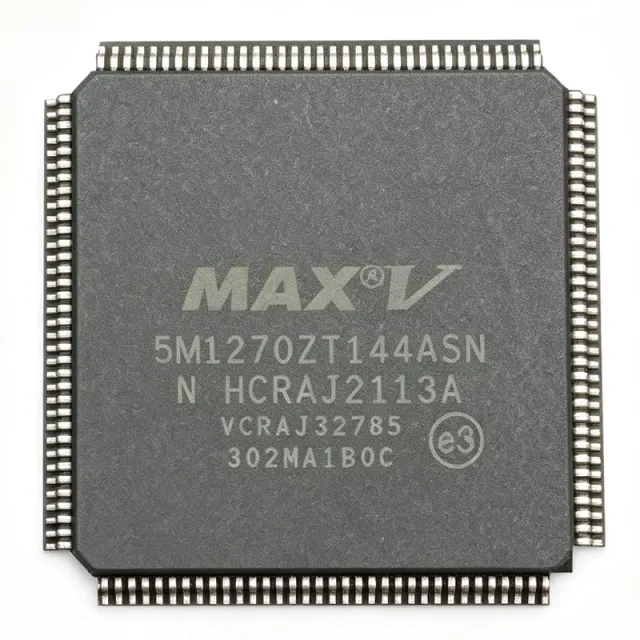
5M160ZE64I4N
5M160ZE64I4N - MAX V CPLD, 64-Pin EQFP | Intel
Intel 5M160ZE64I4N is a low-cost, low-power MAX V complex programmable logic device in a 64-pin EQFP package. The verified source identifies the MAX V device family and describes the part as a CPLD offering greater density and I/O capacity per footprint than other CPLDs. Exact logic-element count, operating-voltage value, propagation delay, user-I/O count, and temperature-range value are not included in the supplied verified data, so those parameters remain explicitly unverified rather than inferred from the ordering code.
A CPLD, or complex programmable logic device, is a semiconductor in the programmable-logic hierarchy between fixed-function integrated circuits and larger FPGAs. Its configurable architecture implements Boolean logic, state machines, interface bridging, control sequencing, and glue logic. A MAX V CPLD is normally designed for applications requiring deterministic programmable behavior, low power consumption, and fast development through HDL-based design. The “Z,” “E64,” “I4,” and “N” markings may encode device, package, temperature, and shipping options, but their precise meanings must be confirmed from the manufacturer’s ordering-code documentation.
The principal verified feature is its position in the MAX V CPLD family. The available distributor information characterizes the family as low cost and low power while providing more density and I/Os per footprint than other CPLDs. That combination targets compact control and interface designs where board area, power budget, and logic integration matter. The part is supplied in a 64-pin EQFP package, making the land pattern, pin assignment, and package drawing essential pre-layout review items.
Architecturally, a CPLD implements programmed digital behavior through configurable logic resources and a programmable interconnect network. Engineers can use it to consolidate multiple small logic devices, generate precise timing and control sequences, or adapt board-level interfaces late in development. Because supplied sources do not expose the exact MAX V architecture details, designers should consult the manufacturer handbook before estimating speed, power, logic capacity, or I/O utilization.
Typical potential applications include industrial control logic, communications-interface adaptation, test equipment, embedded control, and compact systems requiring board-level glue logic. These are category-level use cases rather than guaranteed operating-condition claims. The device’s suitability for a specific design depends on the unverified electrical, timing, thermal, and I/O specifications in the manufacturer datasheet.
A key design consideration is footprint compatibility. Although several 5M160ZE64 ordering variants exist, only parts with an identical 64-pin package, matching pinout, acceptable temperature grade, compatible electrical specifications, and verified timing behavior should be considered drop-in candidates. This page does not treat reel-code or ordering-code variants as substitutes without that engineering evidence.
The information synthesized here combines the supplied distributor and manufacturer-source references, clearly separates verified attributes from missing specifications, and applies a strict evidence standard to pricing, lifecycle, and pin-to-pin alternative claims.
견적 요청
재고 있음