모션 센서
제품 (139)
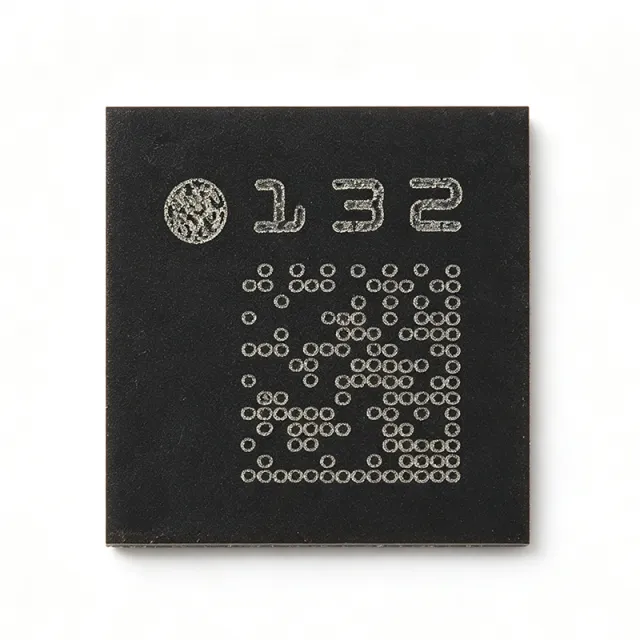
LIS2DH12TR - 3-Axis Accelerometer, ±2/±4/±8/±16g | STMicroelectronics
The STMicroelectronics LIS2DH12TR is a 3-axis linear accelerometer with a digital I2C/SPI serial interface, offering user-selectable full-scale ranges of ±2g, ±4g, ±8g, and ±16g. It is housed in a compact 12-lead LGA package (2x2x1 mm) and operates from a 1.71V to 3.6V supply, making it ideal for battery-powered and space-constrained applications. Data verified as of 2026-08-05. An accelerometer is a sensor that measures proper acceleration (g-force) along one or more axes. The LIS2DH12 is a MEMS (Micro-Electro-Mechanical Systems) capacitive accelerometer, which detects changes in capacitance caused by the displacement of a proof mass under acceleration. In the system hierarchy, it is a motion sensor -> inertial sensor -> MEMS sensor -> sensor, and it is commonly used in motion-activated functions, orientation detection, and vibration monitoring. Key features include a wide full-scale range selection, a 16-bit data output, an embedded 32-level FIFO buffer, and a built-in high-pass filter. The device supports multiple operating modes (normal, low-power, and high-resolution) with output data rates from 1 Hz to 5.3 kHz. It also includes a self-test capability and an interrupt generator for motion detection, enabling low-power always-on applications. The LIS2DH12 uses a capacitive sensing element and a dedicated IC interface, achieving low noise (220 µg/√Hz in high-resolution mode) and low power consumption (as low as 2 µA in low-power mode at 1 Hz ODR). The digital output simplifies system integration, eliminating the need for external ADCs. The device is AEC-Q100 qualified for automotive applications, ensuring reliability in harsh environments. Typical applications include mobile devices for screen rotation and step counting, industrial vibration monitoring, and automotive anti-theft systems. Its low power and small footprint make it suitable for wearable devices and IoT sensors. In a smartphone, the LIS2DH12 detects orientation to switch between portrait and landscape modes, and it can count steps by analyzing acceleration patterns. When designing with this device, ensure proper decoupling of the power supply with a 100 nF capacitor close to the VDD pin. The I2C address is selectable via the SA0 pin, allowing multiple devices on the same bus. For battery-powered designs, use the low-power mode to extend battery life, and configure the FIFO to reduce host processor wake-ups. This page synthesizes distributor pricing, drop-in alternatives, and practical design notes not found in the ST datasheet, providing a comprehensive resource for engineers evaluating the LIS2DH12TR.

LIS2DU12TR - Ultra-Low-Power 3-Axis Accelerometer, ±16g, I2C/SPI | STMicroelectronics
The STMicroelectronics LIS2DU12TR is an ultra-low-power, high-performance 3-axis linear accelerometer housed in a 12-pin LGA package (2.0 x 2.0 x 0.7 mm). The LIS2DU12TR supports user-selectable full scales of ±2g, ±4g, ±8g, and ±16g, with output data rates programmable from 1.6 Hz up to 800 Hz, and it embeds an analog antialiasing filter ahead of the ADC to relax external filter requirements. An accelerometer is a MEMS sensor that measures linear acceleration along one or more axes and converts it into an electrical signal; the LIS2DU12 is a three-axis digital accelerometer whose MEMS structure and ASIC were co-designed to deliver low noise and ultra-low current consumption. It belongs to the broader hierarchy of inertial sensors -> MEMS accelerometers -> motion sensors -> semiconductor components, and integrates high-level digital features such as a 128-level FIFO buffer, motion and free-fall detection, and a programmable interrupt generator that reduces host wake-ups. Key features of the LIS2DU12TR include selectable resolution (8/10/12-bit, low-power modes), an embedded temperature sensor, and primary digital interfaces consisting of I2C/SPI (with MIPI I3C-compatible modes) and an auxiliary SPI for OIS or second-sensor pairing. Power consumption reaches sub-µA levels in the dedicated low-power modes, while one-shot and wake-up paths allow always-on operation in battery-powered designs. The supply range spans 1.62 V to 3.6 V and an independent VDDIO rail supports 1.8 V / 3.3 V mixed-voltage hosts. The MEMS die uses a high-aspect-ratio capacitive sensing element whose deflection is read by a low-noise charge-sharing front end; on-chip digital processing performs offset, gain, and self-test calibration, and the integrated antialiasing filter suppresses out-of-band energy before data-rate decimation. An extended self-test routine checks the full signal path at every startup or on demand from the system controller. Typical applications include wearable fitness bands, asset trackers, hearables and TWS earbuds, IoT vibration and tap detectors, smart-home security, handheld medical motion monitors, and always-on industrial tilt and free-fall sensors for logistics or hard-disk protection. Stacked with a magnetometer, it also serves as a 9-DoF IMU building block for portable navigation. When designing with the LIS2DU12TR, place the device near a mechanically stiff region of the PCB, keep high-current traces away from the LGA, and follow the datasheet decoupling guidance (typically 0.1 µF + bulk on VDD and VDDIO). The wide range of FIFO and interrupt modes allows most use cases to be handled in event-driven firmware without continuous polling, dramatically reducing system power consumption. This page synthesizes distributor pricing, drop-in pin-compatible alternatives, and practical design notes not found in the manufacturer datasheet alone.
LIS2DUX12TR - Ultra-Low Power AI Accelerometer | 12-LGA (2x2)
The STMicroelectronics LIS2DUX12TR is an ultra-low-power, smart, digital 3-axis linear accelerometer (MEMS + ASIC) housed in a 12-pin LGA (2x2 mm) package, with user-selectable full scales of ±2g, ±4g, ±8g, and ±16g and an output data rate range of 0.8 Hz to 400 Hz. A MEMS accelerometer is a micro-electro-mechanical sensor that measures linear acceleration along one or more axes; the LIS2DUX12 belongs to the smart-accelerometer category (MEMS sensor -> accelerometer -> inertial sensor -> motion sensor) and adds always-on intelligence through an on-chip finite state machine (FSM) and machine learning core (MLC) with adaptive self-configuration (ASC), offloading always-on gesture and vibration classification entirely to the sensor. Key features include ultra-low current consumption designed for always-on battery-powered applications, an integrated anti-aliasing filter to simplify signal conditioning, ±2g/±4g/±8g/±16g selectable full scale, a 0.8 Hz to 400 Hz output data rate range, and a MIPI I3C slave interface for fast, low-pin-count digital communication. The device also integrates a 128-level FIFO buffer that lets the host processor stay in deep sleep between event bursts, an embedded temperature sensor, and an embedded self-test routine. The 12-LGA 2x2 mm package has an exposed pad for thermal dissipation and mechanical stress relief. The LIS2DUX12 combines a low-noise MEMS sensing element with a digital ASIC implementing the I3C/I2C/SPI interface, an anti-aliasing stage, the FSM/MLC classifiers, and the FIFO. The anti-aliasing filter is implemented in the digital domain to reduce the external analog component bill of materials while maintaining clean spectral output for motion and vibration analysis. Typical applications include wearable fitness bands, hearables, TWS earbuds, asset tracking, smartphone motion UI, industrial vibration monitoring, and IoT gesture interfaces. The always-on FSM/MLC allows event detection at nanowatt or single-digit microwatt average power, extending coin-cell battery life into months or years. Design considerations include a clean 1.8V supply to the VDD pin and a separate VDDIO rail for the digital I/O domain, decoupling capacitors placed as close as possible to the supply pins, and a PCB footprint with a central thermal/ground pad soldered to a board ground plane to minimize mechanical stress on the package. This page synthesizes distributor pricing, drop-in alternatives, and practical design notes not found in the manufacturer datasheet, including side-by-side comparisons with the Bosch Sensortec BMA456 and BMA253.

LIS2HH12TR - 3-Axis Accelerometer, ±2/±4/±8g | STMicroelectronics
The STMicroelectronics LIS2HH12TR is a high-performance 3-axis linear accelerometer with digital I2C/SPI output, designed for a wide range of motion-sensing applications. It features user-selectable full-scale ranges of ±2g, ±4g, and ±8g, with a resolution of 16-bit data output. The device operates from a 1.71V to 3.6V supply voltage and is available in a compact 12-lead LGA package (2x2x1 mm), making it ideal for space-constrained designs. An accelerometer is a sensor that measures proper acceleration, which is the rate of change of velocity per unit time. In the context of motion sensing, accelerometers detect linear acceleration along one or more axes, enabling applications such as orientation detection, vibration monitoring, and free-fall detection. The LIS2HH12TR is a MEMS (Micro-Electro-Mechanical Systems) capacitive accelerometer, which uses microscopic mechanical structures to sense acceleration-induced capacitance changes. As a member of the accelerometer family, it falls under the broader category of inertial sensors, which also includes gyroscopes and magnetometers. In a typical system hierarchy, the LIS2HH12TR serves as a motion sensor within the sensor subsystem, feeding data to a microcontroller or application processor via I2C or SPI. Key features of the LIS2HH12TR include a low power consumption of 180 µA in normal mode, a wide supply voltage range of 1.71V to 3.6V, and a high-resolution 16-bit output. The device also integrates a 32-level FIFO buffer, which reduces host processor load by storing acceleration data for batch retrieval. Additionally, it includes an embedded temperature sensor and supports a wide operating temperature range of -40°C to +85°C. The LIS2HH12TR is RoHS compliant and halogen-free, meeting modern environmental standards. Technically, the LIS2HH12TR utilizes a capacitive sensing element with a dedicated ASIC for signal conditioning and digital conversion. The device offers a noise density of 220 µg/√Hz, ensuring accurate measurements in low-vibration environments. It supports both I2C (up to 400 kHz) and SPI (up to 10 MHz) interfaces, providing flexibility in system integration. The built-in self-test feature allows for functional verification during production, enhancing reliability. The device also includes programmable interrupt generators for motion detection, enabling event-driven wake-up and sleep modes. Typical applications include portable and wearable devices, IoT nodes, industrial condition monitoring, and automotive anti-theft systems. In portable devices, the LIS2HH12TR enables screen rotation and step counting, while in industrial settings, it monitors machinery vibration for predictive maintenance. Its low power consumption makes it suitable for battery-powered IoT sensors that require long operational life. When designing with the LIS2HH12TR, ensure proper decoupling of the power supply with a 100 nF capacitor placed close to the VDD pin. The I2C address is selectable via the SA0 pin, allowing multiple devices on the same bus. For optimal performance, avoid mechanical stress on the LGA package during PCB assembly, and follow the recommended land pattern provided in the datasheet.
LIS2MDLTR - 3-Axis Digital Magnetometer | STMicroelectronics | IoT & Navigation
The STMicroelectronics LIS2MDLTR is a 3-axis digital magnetometer that measures magnetic field strength with high resolution and low power consumption. It operates from a 1.71V to 3.6V supply voltage and communicates via I2C or SPI interfaces, making it suitable for a wide range of consumer, industrial, and IoT applications. The device is housed in a compact 12-pin LGA package (2.0 x 2.0 x 0.7 mm), enabling space-constrained designs. A magnetometer is a sensor that measures the strength and direction of magnetic fields. In the context of electronic systems, a 3-axis magnetometer detects the Earth's magnetic field to determine orientation relative to magnetic north, functioning as an electronic compass. It is often combined with accelerometers and gyroscopes in inertial measurement units (IMUs) to provide full orientation tracking. The LIS2MDLTR belongs to the category of magnetic field sensors, which are part of the broader sensor family used in navigation, robotics, and consumer electronics. Key features of the LIS2MDLTR include a wide magnetic field range of ±50 gauss, a selectable output data rate from 10 Hz to 100 Hz, and a 16-bit resolution that provides fine granularity for precise heading calculations. The device also features an embedded temperature sensor, a programmable interrupt generator, and a self-test capability. Its low power consumption, with a typical current draw of 0.6 mA in normal mode and 1 µA in power-down mode, extends battery life in portable devices. The LIS2MDLTR uses a magneto-resistive sensing element that changes resistance in response to magnetic fields, processed by an integrated analog-to-digital converter (ADC) and digital signal processing chain. The device includes a FIFO buffer to store measurement data, reducing host processor wake-up frequency. The I2C interface supports up to 400 kHz, while the SPI interface operates up to 10 MHz, providing flexibility for various system architectures. Typical applications include smartphone compasses, navigation systems, augmented reality devices, and industrial position sensing. In a smartphone, the LIS2MDLTR provides heading information for map orientation and location-based services. In industrial settings, it can detect the presence and orientation of magnetic components in automated assembly lines. The device's small footprint and low power make it ideal for wearable devices and IoT nodes. When designing with the LIS2MDLTR, ensure proper PCB layout to minimize magnetic interference from nearby traces and components. Place the sensor away from ferrous materials and current-carrying conductors. The device supports both I2C and SPI, so select the interface that best fits the system's communication architecture. Calibration is recommended to compensate for hard-iron and soft-iron effects in the final product.

LIS344ALHTR - 3-Axis ±2/±6g Analog MEMS Accelerometer | STMicroelectronics
The STMicroelectronics LIS344ALHTR is a 3-axis analog-output MEMS linear accelerometer with user-selectable ±2g or ±6g full-scale range, supplied in a 16-lead LGA (4 mm × 4 mm) package. The device operates from a single 2.4 V to 3.6 V supply, draws 0.65 mA typical current, and provides three ratiometric analog voltage outputs (X, Y, Z) through a 1.8 kHz mechanical sensor bandwidth. An accelerometer is an inertial sensor that measures proper acceleration along one or more axes. Capacitive MEMS accelerometers use a suspended proof-mass whose displacement unbalances a differential capacitor; demodulation electronics then produce an analog output voltage proportional to acceleration. The LIS344ALH belongs to the family of low-power, signal-conditioned linear accelerometers used in consumer and industrial motion-sensing applications. Key features include ratiometric analog outputs whose offset and sensitivity scale with the supply voltage, embedded self-test capability, and 10,000 g shock survivability. Typical noise floor is 190 µg/√Hz, enabling detection of small tilt or vibration signals. The wide supply range (2.4 V – 3.6 V) and low current consumption (~0.65 mA at 3 V) suit portable, battery-powered designs. Architecturally, the LIS344ALHTR combines a three-axis capacitive sensing element with a CMOS signal-conditioning ASIC. Outputs are buffered and ratiometric, simplifying ADC interfacing by eliminating the need for a precise reference. The user-selectable ±2 g / ±6 g full-scale range is set via a logic-level FS pin, allowing one part to serve both high-g and low-g applications. Embedded self-test verifies mechanical and electronic integrity without external fixtures. Typical applications include tilt and inclination sensing in handheld devices, motion-activated user interfaces, vibration monitoring in industrial equipment, free-fall detection for hard-disk protection, robotics posture estimation, and gaming peripherals. The 1.8 kHz mechanical bandwidth also supports platform-stabilization loops and structural-vibration logging. When designing with this part, place 100 nF decoupling capacitors close to the supply pin, route output traces over a continuous ground plane to minimize noise pickup, and use a clean low-impedance 3V3 regulator. Use the self-test feature at power-up to detect mechanical damage on the proof mass. This page synthesizes distributor pricing, drop-in alternatives, and practical design notes not found in the manufacturer datasheet, delivering actionable sourcing and selection data alongside the verified specifications.

LIS3DHTR - 3-Axis Ultra-Low-Power Accelerometer | STMicroelectronics
The LIS3DHTR is an ultra-low-power, high-performance three-axis linear accelerometer from STMicroelectronics, part of the 'nano' family. It features a digital I2C/SPI serial interface and is available in a compact 16-lead LGA package (3x3 mm). The device supports selectable full-scale ranges of ±2g, ±4g, ±8g, and ±16g, with output data rates from 0.5 Hz to 625 Hz. It operates over a supply voltage range of 1.71V to 3.6V and a temperature range of -40°C to +85°C. An accelerometer is a sensor that measures proper acceleration, which is the rate of change of velocity per unit time. In the context of MEMS (Micro-Electro-Mechanical Systems), accelerometers are used to detect motion, tilt, vibration, and shock. The LIS3DHTR belongs to the category of digital-output accelerometers, which integrate sensing elements with signal conditioning and an analog-to-digital converter, providing digital data directly to a host microcontroller. This makes it a key component in motion-sensing systems, from consumer electronics to industrial monitoring. Key features of the LIS3DHTR include an ultra-low-power consumption of 2 µA in low-power mode, a 32-level FIFO buffer to reduce host processor intervention, and an embedded temperature sensor. It also offers motion detection, free-fall detection, and 6D/4D orientation detection. The device supports both I2C and SPI interfaces, with a wide range of programmable interrupt outputs for event-driven applications. Technically, the LIS3DHTR uses a capacitive sensing element with a dedicated ASIC for signal processing. It provides 16-bit data output, with a resolution of 1 mg per LSB at ±2g range. The device includes a self-test capability and is factory-calibrated. Its low power consumption and small footprint make it ideal for battery-powered portable devices. Typical applications include mobile phones, wearable devices, gaming controllers, and IoT sensors. In these applications, the LIS3DHTR enables features such as screen rotation, step counting, gesture recognition, and fall detection. Its high resolution and low noise ensure accurate motion tracking. When designing with the LIS3DHTR, ensure proper decoupling of the power supply with a 100 nF capacitor close to the VDD pin. The I2C address is selectable via the SA0 pin, allowing multiple devices on the same bus. For optimal performance, place the sensor away from high-frequency noise sources and follow the layout guidelines in the datasheet.
LIS3MDLTR - 3-Axis Digital Magnetometer | STMicroelectronics
The LIS3MDLTR is a 3-axis digital magnetometer from STMicroelectronics, designed for high-resolution magnetic field sensing in a compact 12-pin LGA package. It measures magnetic fields with a full-scale range selectable from ±4 gauss to ±16 gauss, and offers a resolution of up to 0.14 mG/LSB in the ±4 gauss range. The device communicates via both I2C and SPI interfaces, making it versatile for integration into a wide range of systems. A magnetometer is a sensor that measures the strength and direction of magnetic fields. In the context of consumer electronics and IoT, magnetometers are often used as electronic compasses to determine orientation relative to Earth's magnetic field. They are part of the broader category of motion and orientation sensors, which also includes accelerometers and gyroscopes. The LIS3MDLTR specifically provides a digital output, simplifying interface with microcontrollers and eliminating the need for external analog-to-digital converters. Key features of the LIS3MDLTR include a wide supply voltage range of 1.9V to 3.6V, low power consumption with a typical current of 0.45 mA in high-resolution mode, and a selectable output data rate from 0.625 Hz to 1000 Hz. The device also includes an embedded temperature sensor, a programmable interrupt generator, and a self-test capability. These features enable precise magnetic field measurement while maintaining low power for battery-operated devices. The LIS3MDLTR uses a MEMS (Micro-Electro-Mechanical Systems) technology with a magneto-resistive sensing element, providing high sensitivity and stability. The device includes a signal conditioning chain with an ADC, a digital filter, and a FIFO buffer to reduce host processor load. The I2C address is 0x1E (default) and can be configured via the SA0 pin. The SPI interface supports both 3-wire and 4-wire modes, offering flexibility in system design. Typical applications include electronic compasses in smartphones and wearables, navigation systems, magnetic field mapping, and industrial position sensing. The LIS3MDLTR is also used in augmented reality (AR) and virtual reality (VR) headsets for head tracking, and in robotics for orientation detection. Its low power and small footprint make it ideal for portable and space-constrained designs. When designing with the LIS3MDLTR, ensure proper PCB layout to minimize magnetic interference from nearby traces and components. Place the sensor away from ferrous materials and high-current paths. Use decoupling capacitors on the power supply pins and follow the recommended layout in the datasheet for optimal performance.
LSM303AGRTR - 3D Accelerometer & Magnetometer | STMicroelectronics
The STMicroelectronics LSM303AGRTR is an ultra-low-power, high-performance 3-axis accelerometer and 3-axis magnetometer combined into a single system-in-package. It is designed for consumer and industrial motion sensing applications, offering a digital output via I2C and SPI interfaces. The device operates from a 1.71V to 3.6V supply voltage and features a wide measurement range for both acceleration (±2g, ±4g, ±8g, ±16g) and magnetic field (±50 gauss). The LSM303AGRTR is housed in a compact 2mm x 2mm x 1mm LGA-12 package, making it ideal for space-constrained designs. An accelerometer is a sensor that measures proper acceleration, which is the rate of change of velocity of a body in its own instantaneous rest frame. In the context of motion sensing, accelerometers are used to detect tilt, vibration, and shock. A magnetometer measures the strength and direction of magnetic fields, commonly used for compass applications and detecting magnetic anomalies. The LSM303AGRTR combines both sensors in one package, enabling applications such as orientation detection, navigation, and gesture recognition. This integration reduces board space and simplifies design compared to using separate accelerometer and magnetometer components. Key features of the LSM303AGRTR include a 16-bit resolution for both accelerometer and magnetometer, a programmable interrupt system, and a built-in temperature sensor. The accelerometer offers selectable full-scale ranges of ±2g, ±4g, ±8g, and ±16g, while the magnetometer provides a range of ±50 gauss. The device supports both I2C and SPI communication, with I2C addresses 0x19 and 0x1E for the accelerometer and magnetometer respectively. The LSM303AGRTR also features a FIFO buffer for data storage, reducing host processor load, and an embedded self-test capability for functional verification. The LSM303AGRTR is fabricated using a proprietary micromachining process that integrates the sensing elements and signal conditioning circuitry on a single chip. The accelerometer uses a capacitive sensing principle, while the magnetometer uses a magneto-resistive principle. The device includes a 16-bit ADC for each channel, ensuring high-resolution measurements. The low power consumption, with typical current draw of 180 µA in normal mode and 2 µA in power-down mode, makes it suitable for battery-powered applications. The device also includes a smart power management system that automatically switches between power modes based on data rate and activity. Typical applications for the LSM303AGRTR include mobile phones and tablets for screen rotation and gaming, wearable devices for step counting and activity tracking, and IoT devices for motion-based control. It is also used in robotics for orientation and navigation, and in industrial equipment for vibration monitoring. The combination of accelerometer and magnetometer enables accurate heading and tilt compensation in compass applications, which is critical for navigation systems. When designing with the LSM303AGRTR, it is important to consider the placement of the sensor to avoid magnetic interference from nearby components such as speakers or motors. The device should be placed away from ferromagnetic materials and high-current traces. Additionally, proper decoupling capacitors (100 nF) should be placed close to the VDD and VDD_IO pins to ensure stable operation. The I2C pull-up resistors should be sized appropriately for the bus capacitance and speed.

LSM303DTR - 3D Accelerometer + Magnetometer | STMicroelectronics
The LSM303DTR is a system-in-package featuring a 3D digital linear acceleration sensor and a 3D digital magnetic sensor, manufactured by STMicroelectronics. It combines a 3-axis accelerometer and a 3-axis magnetometer in a single LGA-16 (3x3x1mm) package, providing a complete 6-axis motion sensing solution. The device communicates via I2C or SPI interfaces, with a wide supply voltage range of 2.16V to 3.6V, making it suitable for battery-powered portable applications. A 3D accelerometer is a sensor that measures linear acceleration along three perpendicular axes (X, Y, Z), typically used to detect motion, tilt, and vibration. A 3D magnetometer measures the strength and direction of the magnetic field, functioning as an electronic compass. When combined, they form an inertial measurement unit (IMU) capable of providing orientation and heading information. The LSM303DTR integrates both sensors in a single package, reducing board space and simplifying design compared to discrete solutions. Key features include a full-scale acceleration range selectable from ±2g to ±16g, and a magnetic field full-scale range from ±2 gauss to ±12 gauss. The accelerometer offers a 16-bit data output with a noise density of 220 µg/√Hz, while the magnetometer provides 16-bit resolution with a sensitivity of 0.080 µT/LSB at ±4 gauss range. The device supports output data rates from 3.125 Hz to 1600 Hz for the accelerometer and 0.625 Hz to 100 Hz for the magnetometer, with an embedded FIFO buffer to reduce host processor load. The LSM303DTR utilizes a MEMS (Micro-Electro-Mechanical Systems) capacitive sensing element for the accelerometer and a Hall-effect or magneto-resistive sensing element for the magnetometer. The integrated signal conditioning, ADC, and digital interface eliminate the need for external components, simplifying PCB design. The device operates over a temperature range of -40°C to +85°C, making it suitable for industrial and consumer applications. Typical applications include orientation and motion sensing in smartphones, tablets, gaming controllers, and wearable devices. It is also used in robotics for tilt compensation, in navigation systems for dead reckoning, and in industrial equipment for vibration monitoring. The low power consumption, with a typical current of 2 mA in normal mode, extends battery life in portable devices. When designing with the LSM303DTR, ensure proper decoupling with a 100 nF capacitor on the power supply pins and place the sensor away from magnetic interference sources such as speakers and motors. The I2C address is 0x1E (7-bit) and can be configured via the SA0 pin. For optimal performance, follow the layout guidelines in the datasheet to minimize mechanical stress on the package.

LSM6DS3HTR - 3D Accelerometer & 3D Gyroscope iNEMO IMU | STMicroelectronics
The LSM6DS3HTR is a high-performance 3D digital accelerometer and 3D digital gyroscope system-in-package (SiP) from STMicroelectronics, designed for consumer and industrial motion sensing applications. It integrates a 3-axis accelerometer and a 3-axis gyroscope in a single 2.5 mm x 3 mm x 0.83 mm LGA-14 package, offering a compact solution for space-constrained designs. The device features a full-scale acceleration range of ±2/±4/±8/±16 g and an angular rate range of ±125/±245/±500/±1000/±2000 dps, with a 16-bit data output for both sensors. It operates from a 1.71 V to 3.6 V supply voltage and includes an advanced digital motion engine (DMP) for low-power motion processing. An inertial measurement unit (IMU) is a device that combines accelerometers and gyroscopes to measure linear acceleration and angular velocity, enabling orientation and motion tracking. IMUs are fundamental components in motion sensing systems, providing data for applications such as gesture recognition, dead reckoning, and stabilization. The LSM6DS3HTR belongs to the category of motion sensors, which are part of the broader sensor family used in IoT, wearable, and automotive systems. Its integration of both sensors in one package reduces board space and simplifies design compared to discrete solutions. Key features of the LSM6DS3HTR include a low power consumption of 0.9 mA in normal mode and 0.45 mA in low-power mode, making it suitable for battery-powered devices. It offers a 4 KB FIFO buffer to store sensor data, reducing host processor wake-up time. The device supports I2C and SPI interfaces, with a maximum I2C clock of 400 kHz and SPI clock of 10 MHz. It also includes an embedded temperature sensor, programmable interrupts, and a 6D orientation detection feature. The LGA-14 package is lead-free and RoHS compliant, with an operating temperature range of -40°C to +85°C. Technically, the LSM6DS3HTR uses a MEMS (Micro-Electro-Mechanical Systems) capacitive sensing element for both accelerometer and gyroscope, with a dedicated ASIC for signal conditioning and digital output. The device features a 16-bit ADC for each channel, providing high resolution and low noise. The embedded DMP offloads motion processing from the host, enabling features like step counting and tilt detection without host intervention. The device also includes a programmable finite state machine (FSM) for advanced motion recognition, such as activity classification. Typical applications include wearable devices (fitness trackers, smartwatches), smartphones for screen rotation and gaming, IoT nodes for motion-based wake-up, and industrial equipment for vibration monitoring. Its low power and small size make it ideal for battery-operated devices, while the high resolution and wide range support precise motion tracking in robotics and drones. When designing with the LSM6DS3HTR, ensure proper decoupling of the power supply with a 100 nF capacitor close to the VDD pin, and route the I2C/SPI lines with minimal parasitic capacitance. The device's interrupt pins can be configured to wake the host only when motion is detected, saving power. For optimal performance, place the sensor away from high-frequency noise sources and follow the layout guidelines in the datasheet.
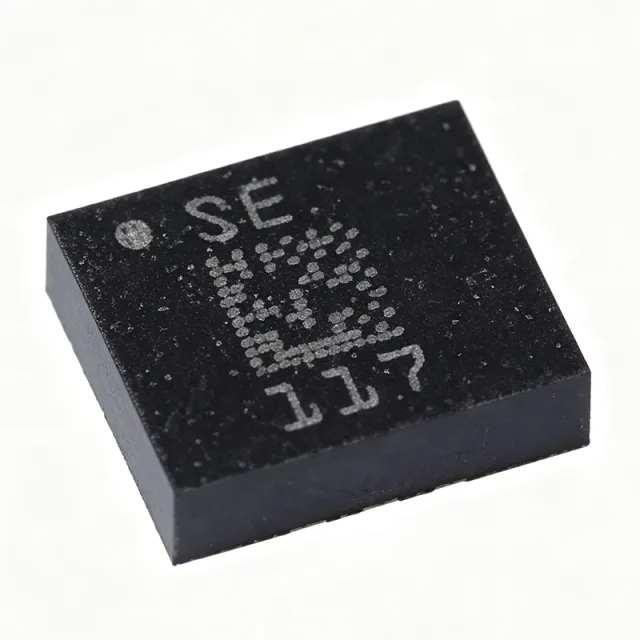
LSM6DS3TR - 3D Accelerometer & Gyroscope | STMicroelectronics
The LSM6DS3TR is a system-in-package featuring a 3D digital accelerometer and a 3D digital gyroscope from STMicroelectronics, designed for high-performance motion sensing in consumer and industrial applications. It operates from a 1.71V to 3.6V supply voltage and communicates via I2C or SPI interfaces, with a selectable full-scale range of ±2/±4/±8/±16 g for acceleration and ±125/±245/±500/±1000/±2000 dps for angular rate. The device is housed in a compact 14-lead LGA package (2.5 x 3.0 x 0.83 mm), enabling space-constrained designs. Data verified as of 2026-08-05. An inertial measurement unit (IMU) is a sensor that combines an accelerometer and a gyroscope to measure linear acceleration and angular velocity, respectively. The LSM6DS3TR integrates both sensors in a single package, providing a complete motion-sensing solution. In the system hierarchy, an IMU is a type of motion sensor, which falls under the broader category of sensors, and ultimately within the domain of microelectromechanical systems (MEMS). This integration reduces board space, simplifies design, and improves reliability compared to discrete solutions. Key features include a 16-bit data output for both accelerometer and gyroscope, an embedded 9kB FIFO for data buffering, and advanced motion detection functions such as free-fall, wake-up, single/double-tap, and 6D/4D orientation detection. The device also features a programmable interrupt generator, an embedded temperature sensor, and a low-power mode with a typical current consumption of 0.9 mA in normal mode and 1.25 mA in high-performance mode. The LSM6DS3TR supports a wide operating temperature range of -40°C to +85°C, making it suitable for harsh environments. Technically, the LSM6DS3TR utilizes a MEMS capacitive sensing element for both acceleration and angular rate, with a dedicated ASIC for signal conditioning and digital conversion. The device includes a smart FIFO that can be configured to store up to 9kB of data, reducing host processor load. The I2C address is 0x6A (default) or 0x6B (alternate), selectable via the SA0 pin. The SPI interface supports up to 10 MHz clock frequency. The device is compliant with RoHS and REACH directives, and it is halogen-free. Typical applications include motion-activated user interfaces, gaming and virtual reality systems, industrial automation, robotics, and IoT devices. The LSM6DS3TR is particularly suited for battery-powered devices due to its low power consumption and flexible power modes. In a smartphone, it enables screen rotation and step counting; in industrial equipment, it provides vibration monitoring and tilt sensing. When designing with the LSM6DS3TR, ensure proper decoupling of the power supply with a 100nF capacitor close to the VDD pin, and route the I2C/SPI lines with appropriate pull-up resistors. The device's interrupt pins can be configured to wake the host processor only when motion is detected, optimizing system power. This page synthesizes distributor pricing, drop-in alternatives, and practical design notes not found in the ST datasheet.
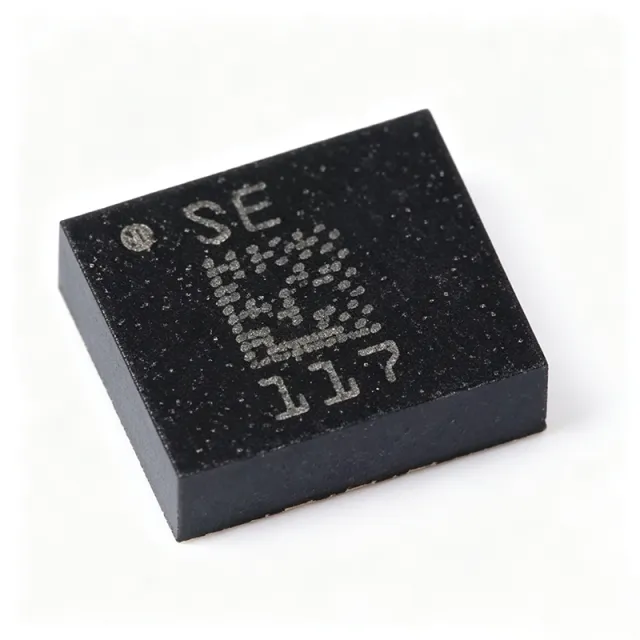
LSM6DS3TR-C - 3D Accelerometer & 3D Gyroscope | STMicroelectronics
The LSM6DS3TR-C is a high-performance 3D digital accelerometer and 3D digital gyroscope system-in-package (SiP) from STMicroelectronics, designed for consumer and industrial motion sensing applications. It features a full-scale acceleration range of ±2/±4/±8/±16 g and an angular rate range of ±125/±245/±500/±1000/±2000 dps, with a 16-bit data output for both sensors. The device operates from a 1.71V to 3.6V supply voltage and communicates via I2C or SPI interfaces, making it highly versatile for embedded systems. Data verified as of 2026-08-05. What is an inertial measurement unit (IMU)? An IMU is a sensor module that combines an accelerometer and a gyroscope to measure linear acceleration and angular velocity, respectively. The LSM6DS3TR-C is a 6-axis IMU, which is a subset of motion sensors used in a wide range of applications from smartphones to robotics. In the sensor hierarchy, an IMU falls under the category of motion sensors, which are part of the broader sensor family. This device integrates both sensors in a single package, reducing board space and simplifying design compared to discrete solutions. Key features of the LSM6DS3TR-C include an ultra-low power consumption of 0.9 mA in normal mode, a 16-bit resolution, and an embedded FIFO buffer of 8 KB that allows data batching to reduce host processor load. The device also features a programmable interrupt generator for motion detection, step detection, and tilt functions, enabling always-on applications with minimal power. The LGA-14L package (2.5 x 3.0 x 0.83 mm) is compact and suitable for space-constrained designs. Technically, the LSM6DS3TR-C uses a micro-machined silicon structure with capacitive sensing for both acceleration and angular rate. It includes a dedicated internal processing engine for advanced features like pedometer and step counter, which are hardware-accelerated to offload the host MCU. The device supports a wide operating temperature range of -40°C to +85°C, making it suitable for industrial environments. The SPI and I2C interfaces allow flexible integration with various microcontrollers. Typical applications include motion-activated user interfaces, gaming and virtual reality input devices, optical image stabilization (OIS) in cameras, and industrial vibration monitoring. The low power consumption and high resolution make it ideal for battery-powered IoT devices, where long battery life is critical. In smartphones, it enables screen rotation and step counting, while in industrial settings, it can detect machine vibration anomalies. When designing with the LSM6DS3TR-C, ensure proper decoupling of the power supply with a 100 nF capacitor close to the VDD pin, and route the I2C/SPI lines with minimal trace length to avoid signal integrity issues. The device's interrupt pins can be configured to wake the system from sleep, enabling power-efficient always-on sensing. This page synthesizes distributor pricing, drop-in alternatives, and practical design notes not found in the ST datasheet, providing a comprehensive resource for engineers evaluating the LSM6DS3TR-C for their motion sensing needs.
LSM6DSLTR - 3D Accelerometer & 3D Gyroscope iNEMO | STMicroelectronics
The LSM6DSLTR is a high-performance 3D digital accelerometer and 3D digital gyroscope system-in-package (SiP) from STMicroelectronics, designed for low-power and high-accuracy motion sensing applications. It integrates a 3-axis accelerometer and a 3-axis gyroscope in a single LGA-14L package, providing a compact solution for consumer, industrial, and IoT devices. The device features a full-scale acceleration range of ±2/±4/±8/±16 g and an angular rate range of ±125/±245/±500/±1000/±2000 dps, with a selectable output data rate (ODR) from 1.6 Hz to 6.66 kHz. The LSM6DSLTR operates from a 1.71V to 3.6V supply voltage and includes an advanced digital motion engine (DME) for always-on features such as step counting, tilt detection, and motion/tilt interrupts. An inertial measurement unit (IMU) is a device that combines accelerometers and gyroscopes to measure linear acceleration and angular velocity. The LSM6DSLTR is a 6-axis IMU, which is a subset of motion sensors used in a wide range of applications from smartphones to industrial robotics. IMUs are essential for orientation tracking, gesture recognition, and navigation systems. The LSM6DSLTR belongs to the iNEMO family of STMicroelectronics, which integrates multiple sensors and processing capabilities into a single package, enabling advanced motion sensing with minimal power consumption. Key features of the LSM6DSLTR include a low power consumption of 0.4 mA in normal mode and 0.9 mA in high-performance mode, making it ideal for battery-powered devices. It also features a 16-bit data output for both accelerometer and gyroscope, an embedded temperature sensor, and a programmable interrupt generator. The device supports I2C and SPI interfaces, allowing flexible integration with microcontrollers. The LSM6DSLTR is AEC-Q100 qualified, making it suitable for automotive applications, and is RoHS compliant. The LSM6DSLTR utilizes a micro-machined silicon structure with capacitive sensing elements, providing high stability and low noise. The device includes a 2 KB FIFO buffer that can store data to reduce host processor load, and it supports advanced features such as sensor fusion, pedometer, and significant motion detection. The device is designed to operate over a temperature range of -40°C to +85°C, ensuring reliable performance in harsh environments. Typical applications include wearable devices, smartphones, gaming controllers, industrial vibration monitoring, and automotive navigation systems. The LSM6DSLTR is particularly suited for applications requiring low power consumption and high accuracy, such as fitness trackers and smartwatches, where continuous motion tracking is essential. When designing with the LSM6DSLTR, ensure proper decoupling of the power supply with a 100 nF capacitor close to the VDD pin, and route the I2C/SPI lines with appropriate pull-up resistors. The device's interrupt pins can be configured to wake the system on motion, reducing overall power consumption in always-on applications.

LSM6DSMTR - 6-Axis IMU, ±2/±4/±8/±16 g, ±125/±245/±500/±1000/±2000 dps | STMicroelectronics
The STMicroelectronics LSM6DSMTR is a system-in-package (SiP) 6-axis inertial measurement unit (IMU) that integrates a 3D digital accelerometer and a 3D digital gyroscope, plus a temperature sensor, in a 14-pin LGA (3x2.5x0.83 mm) package. The accelerometer supports user-selectable full-scale ranges of ±2/±4/±8/±16 g and the gyroscope supports ±125/±245/±500/±1000/±2000 dps, with output data rates up to 6.6 kHz. A dedicated auxiliary SPI interface provides an independent OIS (optical image stabilization) data path for the gyroscope. An IMU (Inertial Measurement Unit) is a sensor subsystem that fuses multi-axis accelerometer and gyroscope data to deliver orientation, motion, and angular-velocity information. IMUs belong to the broader class of MEMS (micro-electromechanical systems) motion sensors and sit within inertial sensing, a foundational tier of modern sensor signal chains. The LSM6DSMTR is part of ST's iNEMO family - always-on, low-power-on, low-noise sensor modules used in smartphones, wearables, and AR/VR platforms. Key features include 0.65 mA typical current consumption in high-performance mode, integrated smart FIFO up to 4 kbyte, Android M compliance, a hardware step counter and step detector, and standard I²C/SPI primary digital interfaces. Built-in self-test, a wake-up/free-fall interrupt engine, and a tilt/6D/4D orientation function eliminate the need for host-side algorithm overhead in many use cases. The auxiliary SPI allows an image-stabilization controller to read gyro data without disturbing the main application processor. The device leverages a CMOS-process MEMS die co-packaged with an ASIC die in a single LGA, providing tight accelerometer/gyroscope cross-axis alignment and factory-calibrated offset/gain. Internal signal conditioning, ADC conversion, and digital filtering yield noise density figures suitable for high-end consumer and prosumer applications where previously only discrete FOG (fiber-optic gyroscope) class performance was acceptable. Typical applications include smartphone camera OIS/EIS, augmented-reality head tracking, wearable fitness bands, optical image stabilization modules, drone flight controllers, and gesture recognition. The auxiliary SPI + main I²C/SPI dual-bus topology lets a dedicated OIS controller access gyro data while the host application reads accelerometer data over I²C. When designing with this device, allocate one byte of INT1/INT2 routing for the step counter and another for free-fall/wake-up. Use 100 nF + 1 µF decoupling on VDD and VDDIO, place the part over a keep-out region around the LGA cavity, and respect ST's PCB pad and stencil guidelines (NSMD pads, 0.1 mm via-in-pad optional). This page synthesizes distributor pricing, drop-in alternatives, and practical design notes not found in the manufacturer datasheet.
LSM6DSO32XTR - 32g 6-Axis IMU with ML Core | ST
The STMicroelectronics LSM6DSO32XTR is an always-on 6-axis inertial measurement unit (IMU) system-in-package combining a 3-axis digital accelerometer with a full-scale range up to 32 g and a 3-axis digital gyroscope with a range up to 4000 dps, housed in a 14-pin LGA package measuring 2.5 x 3.0 x 0.83 mm. It communicates over I2C or SPI and consumes approximately 0.55 mA in high-performance mode, according to ST product data. An inertial measurement unit is a motion sensor that fuses accelerometer and gyroscope outputs to track orientation, acceleration, and rotation. Within the sensor hierarchy, the IMU sits above discrete accelerometers and gyroscopes, and forms the core motion-sensing element of smartphones, wearables, drones, industrial condition-monitoring nodes, and robotics platforms. ST's iNEMO family is a leading MEMS IMU line, and the LSM6DSO32X extends it with the widest accelerometer range in the family. Key differentiating features include the 32 g accelerometer full scale - four times the 16 g range of the standard LSM6DSO - which captures shock and vibration events without clipping. The device integrates an embedded finite state machine (FSM) and a Machine Learning Core (MLC) that run decision-tree logic on-chip, enabling always-on context detection such as fall detection, activity classification, and vibration fingerprinting with negligible host CPU load. Technically, the sensor supports output data rates up to 6.66 kHz for the accelerometer and gyroscope, a smart FIFO for offloading data, hardware low-pass and high-pass filters, and an on-chip temperature sensor. Its always-on architecture with low-power and ultra-low-power modes makes battery-powered designs practical. The X variant additionally supports Sensor Fusion Low Power (SFLP), computing a game rotation vector in hardware. Typical applications include drone and UAV flight controllers needing 32 g shock tolerance, industrial predictive-maintenance nodes detecting machine vibration signatures via the MLC, and high-impact sports wearables. ODR range and noise floor make it equally suited to premium motion tracking in AR/VR controllers. Designers should pay attention to PCB placement: mount the part away from board flex zones and vibrating masses, and follow ST's layout guidelines for the LGA pads and ground plane continuity to preserve gyro bias stability. This page synthesizes distributor pricing context, pin-compatible family alternatives, and practical design guidance beyond the raw ST datasheet, delivering information gain over generic catalog listings.
LSM6DSOTR - 6-Axis IMU, ±16g Accel, ±2000dPS Gyro LGA-14 | STMicroelectronics
The STMicroelectronics LSM6DSOTR is a system-in-package featuring a 3-axis digital accelerometer and a 3-axis digital gyroscope that delivers always-on low-power motion sensing at 0.55 mA in high-performance mode for an optimal user motion experience in consumer and wearable devices. An IMU (Inertial Measurement Unit) is a MEMS-based sensor package that combines multiple motion-sensing axes — typically 3-axis linear acceleration and 3-axis angular rate — into a single silicon die with a digital interface. The LSM6DSOTR belongs to the iNEMO inertial module family from STMicroelectronics, sitting inside the broader taxonomy of MEMS sensors → motion sensors → inertial sensors → IMU → 6-axis IMU. It integrates a capacitive MEMS accelerometer and a capacitive MEMS gyroscope on a single die, plus a digital SPI/I²C/MIPI I3C interface and an embedded finite-state machine plus machine-learning core for event recognition. Key features include user-selectable full-scale ranges of ±2/±4/±8/±16 g on the accelerometer and ±125/±250/±500/±1000/±2000 dps on the gyroscope, 16-bit data output, embedded temperature sensor, and ST's machine-learning-core and FSM that offload classification from the host MCU. The integrated I3C bus support and a programmable interrupt generator simplify data-ready and threshold-triggered wakeups for always-on applications. The LSM6DSO silicon uses a 130 nm CMOS ASIC paired with a high-aspect-ratio MEMS structure, achieving an accelerometer noise density of 60 µg/√Hz typical and a gyroscope rate noise density of 3.8 mdps/√Hz typical. The sensor operates from a 1.71 V to 3.6 V analog supply and a separate 1.71 V to 3.6 V digital I/O supply, allowing mixed-voltage host interfacing without level shifters. Typical applications include wrist wearables for step counting and gesture recognition, tilt and orientation tracking in AR/VR controllers and remote controls, motion-activated user interfaces in smartphones and tablets, asset tracking and vibration monitoring in industrial IoT nodes, and head tracking in TWS earbuds. The 0.55 mA high-performance current and sub-µA power-down current make it well suited to coin-cell and Li-ion battery designs. When designing with this device, ensure the LGA-14 land pattern matches the official ST reference layout and that the host processor issues the proper soft-reset and configuration sequence via I²C, SPI, or MIPI I3C. The device defaults to I²C address 0x6A and can be hardware-strapped to 0x6B; verify the strap with SDO/SA0 before issuing read commands. This page synthesizes distributor pricing, drop-in LGA-10/LGA-14 alternatives, and practical design notes not found in the manufacturer datasheet alone.
LSM6DSOXTR - 6-Axis IMU with AI ML Core | STMicroelectronics
The STMicroelectronics LSM6DSOXTR is a system-in-package 6-axis inertial measurement unit combining an always-on 3-axis accelerometer and a 3-axis gyroscope with an embedded machine learning core, housed in a 14-pin LGA package (2.5 mm x 3.0 mm x 0.83 mm) and operating from 1.71 V to 3.6 V at just 0.55 mA in high-performance mode. An IMU (inertial measurement unit) is a motion sensor module that measures acceleration and angular velocity simultaneously. It sits at the top of the motion-sensing hierarchy - accelerometer + gyroscope + fusion logic - within the broader sensor IC family used for orientation, gesture, and activity tracking in embedded and power management systems. Key features include accelerometer ranges up to 16 g and gyroscope ranges up to 2000 dps, an I2C and SPI digital interface, an auxiliary SPI (OIS) interface for camera optical image stabilization, and the ST FINITE state machine plus decision-tree machine learning core that offloads pattern detection from the host MCU. Always-on operation is enabled by low power modes with wakeup and activity/inactivity detection. The MEMS sensor die is packaged with a dedicated ASIC that performs 16-bit data conversion and on-chip FIFO buffering, allowing the host to sleep while the IMU autonomously classifies motion events. The embedded AI core executes user-trained decision trees directly in-sensor, cutting system power and latency for always-on context awareness. Typical applications include wearables and fitness trackers, smartphone screen rotation and tap detection, industrial condition monitoring, and drone/robotics attitude estimation. Design consideration: keep the IMU away from vibration sources and board flex zones, and use I2C pull-ups appropriate for the bus speed; configure the ML core with ST's Unico/Unicleo GUI tools before deployment in firmware. This page adds value beyond the datasheet with distributor pricing tiers, drop-in alternatives, and practical design notes synthesized from verified web data.
LSM6DSRTR - 6-Axis IMU w/ 4000dps Gyro | STMicroelectronics
The STMicroelectronics LSM6DSRTR is a 6-axis iNEMO inertial measurement unit (IMU) integrating a 3-axis digital accelerometer and a 3-axis digital gyroscope with an extended ±4000 dps full-scale range, plus an embedded temperature sensor, housed in a 14-pin LGA (2.5x3 mm) package. It delivers user-selectable accelerometer ranges of ±2/±4/±8/±16 g, gyro ranges from ±125/±250/±500/±1000/±2000/±4000 dps, low noise density of 3.8 mg/√Hz (accel) and 5 mdps/√Hz (gyro), and supports both I2C and SPI digital interfaces. The part is shipped on tape-and-reel (suffix TR) and targets high-end consumer, industrial, and drone applications. A 6-axis IMU (inertial measurement unit) is a system-in-package that combines a 3-axis accelerometer and a 3-axis gyroscope to measure linear acceleration and angular rate in three dimensions. In the broader taxonomy, an IMU is a type of motion sensor, which sits under MEMS sensors, which are a category of semiconductor devices. IMUs serve as the primary feedback element in motion-tracking systems, providing raw inertial data that application processors, sensor hubs, or motor controllers fuse with other sources (GPS, magnetometers) for orientation, navigation, and stabilization. Key features include an extended ±4000 dps gyroscope range (vs the more common ±2000 dps), an embedded Machine Learning Core (MLC) and finite state machine for on-chip gesture classification, a configurable FIFO up to 4 kB, and an integrated I3C interface for high-bandwidth host communication. The wide gyro range makes the LSM6DSR particularly attractive for high-rotation-rate platforms such as drones, robots, and gaming controllers, eliminating the saturation that would occur with mainstream ±2000 dps parts. Architecturally, the LSM6DSR uses a single-mass MEMS accelerometer and a single-mass MEMS gyroscope with dedicated ASIC signal conditioning, a temperature-compensated analog front end, and an interrupt-driven digital output block. Power consumption is approximately 0.55 mA (high-performance mode) down to 4 µA (low-power mode), and the part supports an operating supply range of 1.71 V to 3.6 V. The sensor hub and MLC capability allow gesture and activity recognition to run directly on the device, offloading the host processor. Typical applications include drone flight controllers and gimbal stabilization, wearable fitness and gesture tracking, robotics and industrial orientation sensing, AR/VR motion tracking, gaming controllers and pointing devices, and OIS (optical image stabilization) assist in smartphone camera modules. The extended 4000 dps range especially suits FPV quadcopters where rapid yaw rotation is common. When designing with this part, allocate a 1 uF decoupling capacitor close to VDD and follow ST's recommended LGA-14 PCB land pattern for thermal and mechanical reliability. The interrupt pins INT1/INT2 should be tied to the host's wake-capable GPIO for event-driven operation that minimizes host sleep current. This page synthesizes distributor pricing, drop-in alternatives, and practical design notes not found on the manufacturer datasheet alone, giving engineers a single source for parametric depth, sourcing, and BOM risk analysis.
LSM6DSV16XTR - 6-Axis IMU with AI & Qvar | ST | Wearables
The STMicroelectronics LSM6DSV16XTR is an always-on 6-axis inertial measurement unit (IMU) combining a 3-axis accelerometer with a 3-axis gyroscope, up to +/-16 g and +/-4000 dps full scale, 7.68 kHz max ODR, and an embedded machine learning core with Qvar electrostatic sensing, housed in a 14-pin LGA (2.5 x 3 mm) package. An IMU (inertial measurement unit) is a motion sensor subsystem that measures linear acceleration and angular rate to track orientation and movement. Within the sensor hierarchy, the IMU sits above discrete accelerometers and gyroscopes, and below complete navigation systems; modern IMUs like the LSM6DSV16XTR add edge-compute features such as a machine learning core (MLC), finite state machines (FSM), and sensor fusion, positioning them as smart sensor hubs for battery-powered devices. Key features include an accelerometer full scale selectable from +/-2 g to +/-16 g, gyroscope full scale from +/-125 dps to +/-4000 dps, and high ODR up to 7.68 kHz for demanding motion and OIS workloads. The Qvar channel detects quasi-static electric field variations, enabling tap, swipe, and water-touch detection without additional electrodes. ST's embedded MLC and FSM offload the host MCU, classifying gestures and activity while the main processor sleeps. The architecture integrates an always-on low-power design with autonomous sensor fusion (SFLP) delivering game rotation vector output, plus adaptive self-configuration (ASC) and an auxiliary SPI interface for OIS/EIS camera stabilization in parallel with the main I2C/SPI link. Typical applications include smartwatches and fitness bands, smartphone camera OIS/EIS stabilization, and hearing aids or earbuds where ultra-low power always-on motion detection extends battery life. Design-wise, keep the sensor away from vibration sources and respect the exposed pad grounding on the LGA-14 land pattern for mechanical stability; the auxiliary SPI pin mapping should be confirmed against the datasheet during layout. This page synthesizes distributor pricing, drop-in alternatives, and practical design notes not found in the manufacturer datasheet.
LSM6DSV320XTR - 6-Axis IMU ±320g ±4000dps AI Core | STMicroelectronics
The STMicroelectronics LSM6DSV320XTR is a 6-axis inertial measurement unit (IMU) with a dual-accelerometer architecture supporting full-scale ranges up to ±320 g alongside a ±4000 dps gyroscope, housed in a 14-pin LGA package (2.5x3x0.86 mm). It combines a low-g sensing chain for everyday motion tracking and a high-g sensing chain capable of capturing automotive crash-level impacts up to 320 g, with both X, Y, and Z axes measured on each accelerometer. An IMU (Inertial Measurement Unit) is a micro-electromechanical system (MEMS) device that combines multiple sensing axes of accelerometer and gyroscope data into a single output. IMUs sit within the sensor hierarchy as motion sensors, which are a branch of MEMS semiconductors used in everything from smartphones to vehicles. The LSM6DSV320XTR belongs to the system-level category of "smart sensors" because it embeds a finite state machine (FSM) and a machine learning core (MLC) for on-device AI inference, eliminating the need for an external microcontroller to run motion classification algorithms. Key features include ±320 g maximum accelerometer full-scale range, ±4000 dps gyroscope range, embedded machine learning core, adaptive self-configuration (ASC), and a 4.5 KB FIFO buffer for batched data streaming. The device operates from a 1.71V to 3.6V supply, draws only 2.9 µA in low-power mode, and exposes both I2C and SPI digital interfaces for flexible host integration. Operating temperature spans -40 °C to +85 °C, suiting industrial and consumer environments. Technically, the LSM6DSV320XTR uses a dual-mass MEMS architecture to deliver high dynamic range without sacrificing low-g noise performance. The MLC and FSM allow engineers to run decision-tree and gesture-recognition models directly on-chip, dramatically reducing host MCU wake events and extending battery life in wearable applications. The 0.67 mA active supply current is competitive for always-on applications. Typical use cases include car crash detection telemetry, wearables with embedded activity recognition, IoT vibration monitoring, and personal electronics with context-aware gesture input. The automotive-grade crash detection capability is unique in a sub-$10 IMU and addresses insurance telematics and event data recorder designs. Design consideration: the dual-accelerometer topology requires attention to which chain is enabled in firmware; designers must select the appropriate full-scale range per sensing phase to avoid saturating the low-g channel during impact events. Decoupling capacitors should be placed within 2 mm of the supply pins. This page synthesizes distributor pricing, drop-in alternatives, and practical design notes not found in the manufacturer datasheet.
LSM6DSV80XTR - 6-Axis IMU, 80g Accel, AI Core | STMicroelectronics
The STMicroelectronics LSM6DSV80XTR is a low-power 6-axis inertial measurement unit (IMU) that integrates a 3-axis accelerometer and a 3-axis gyroscope in a 14-pin 2.5x3 mm LGA package. It combines two accelerometer structures delivering 16 g and 80 g full-scale sensing with a gyroscope supporting up to ±4000 dps, plus an embedded machine learning core and sensor-fusion low-power engine for wearables and sport trackers. The device operates from a 1.71 V to 3.6 V supply and consumes 2.9 µA in low-power mode, enabling always-on motion tracking in battery-powered products. An IMU (Inertial Measurement Unit) is a micro-electromechanical system (MEMS) device combining multiple motion sensors - typically a 3-axis accelerometer and a 3-axis gyroscope - to measure linear acceleration and angular rate along three orthogonal axes. IMUs sit at the sensor layer of a product hierarchy: IMU -> motion sensor -> MEMS sensor -> semiconductor. They form the perception backbone for inertial navigation, gesture recognition, and context-aware applications, feeding higher-level sensor-hub processors, microcontrollers, or wireless SoCs with raw or fused motion data. Key features include dual full-scale accelerometer ranges (±16 g and ±80 g) for capturing both subtle wrist motion and high-impact events such as falls or sport collisions, a wide ±125/±250/±500/±1000/±2000/±4000 dps gyroscope range, an embedded machine-learning core for on-device classification, and a sensor-fusion low-power (SFLP) engine that outputs quaternions and Euler angles at low µA cost. Communication is provided over I²C, I³C, and auxiliary SPI interfaces, and an integrated temperature sensor aids drift compensation. The LSM6DSV80XTR is built on ST's proprietary THELMA MEMS process and a 130 nm mixed-signal CMOS ASIC, co-packaged in a single LGA. The dual-structure accelerometer (a high-g and a low-g transducer sharing the same sense axis) is what differentiates this part from earlier LSM6DS family members: it preserves fine resolution at low g while still capturing peak accelerations above the standard 16 g ceiling. Typical applications include sport wearables (impact detection in boxing, running gait analysis), wristbands, AR/VR controllers, fall-detection pendants for elderly care, and personal trackers. For each use case, the relevant specification is the high-g full scale combined with the embedded ML core. When designing with the LSM6DSV80XTR, follow ST's reference schematic exactly: a 100 nF decoupling cap on VDD plus a 10 µF bulk on VDDIO, clean ground return under the LGA thermal/exposed pad, and short traces to the host MCU. Verify I3C compatibility before substituting an I²C-only MCU. This page synthesizes distributor pricing, drop-in replacements, and practical design notes not consolidated in the manufacturer datasheet, including a same-package alternative comparison that DigiKey and Mouser product pages do not show.

LSM9DS1TR - 9-Axis iNEMO IMU, ±16g Accel/±2000dps Gyro | STMicroelectronics
The STMicroelectronics LSM9DS1TR is a system-in-package 9-axis iNEMO inertial measurement unit that integrates a 3D digital linear accelerometer, a 3D digital gyroscope, and a 3D digital magnetometer in a 24-pin LGA package (3.5 x 3.5 mm). It operates from a 1.9 V to 3.6 V supply and communicates via I2C/SPI digital interfaces, supporting up to 16-bit data output for all three sensor channels. An Inertial Measurement Unit (IMU) is an electronic sensor module that measures and reports a body's specific force (acceleration), angular rate (rotation), and magnetic field heading. IMUs are core components in modern motion-aware electronics, sitting in the hierarchy of MEMS sensors -> motion sensors -> inertial sensors -> semiconductor devices. By integrating accelerometer, gyroscope, and magnetometer into a single SiP, the LSM9DS1TR eliminates the board space, alignment overhead, and fusion firmware complexity of three discrete sensors. Key specifications include user-selectable full-scale ranges of ±2/±4/±8/±16 g for acceleration, ±245/±500/±2000 dps for angular rate, and ±4/±8/±12/±16 gauss for magnetic field, with output data rates up to 952 Hz (accel/gyro) and 80 Hz (magnetometer). The device includes an embedded FIFO buffer (up to 32 slots), two programmable interrupt generators for motion/ orientation/ magnetic-threshold wake-up events, an integrated temperature sensor, and a wide operating temperature range of -40 C to +85 C. The LSM9DS1TR uses capacitive MEMS sensing elements for the accelerometer and gyroscope and a Hall-effect/magneto-resistive element for the magnetometer, with per-channel 16-bit ADCs providing high-resolution output. The integrated linear voltage regulator ensures stable analog supply even as VDD varies, while the FIFO and interrupt engine offload event detection from the host MCU, enabling aggressive power-down duty-cycling in battery-powered designs. Typical applications include motion tracking in smartphones, wearables, and AR/VR headsets, gesture and activity recognition, gaming controllers, drone flight stabilization, robotics orientation, and industrial tilt/vibration monitoring. The wide range of programmable full-scale and ODR settings allows the same part to serve a phone pedometer and an industrial tilt sensor. When designing with this part, place 100 nF decoupling close to VDD and follow ST's recommended power-up sequence in the datasheet. For best magnetometer accuracy, keep ferromagnetic material (e.g., connector shells, inductors, FPC shields) at least 5 mm away from the device. This page synthesizes distributor pricing, drop-in alternatives, and practical design notes not found in the manufacturer datasheet, giving engineers a single decision-ready reference for the LSM9DS1TR.

MAXM86146CFU+ - Optical Biosensing Module with AFE & MCU | Analog Devices
The Analog Devices (formerly Maxim Integrated) MAXM86146CFU+ is a highly integrated, ultra-low-power optical biosensing module that combines an analog-front-end (AFE), an Arm Cortex-M4 microcontroller unit (MCU), and two high-sensitivity photodiodes in a compact 38-pin OLGA package measuring 4.5 mm x 4.1 mm x 0.88 mm. It operates from a single 1.8 V supply and supports I2C and SPI communication protocols for sensor data and configuration. A biometric sensor hub is a fully integrated subsystem that captures, conditions, and processes optical signals from photodiodes to extract physiological parameters such as heart rate, blood oxygen saturation (SpO2), and respiration. Within the broader hierarchy, biometric sensor hubs sit at the intersection of sensors and embedded processing, building on photodiode optical front-ends, transimpedance amplifiers, and low-power MCUs. By merging the analog front-end, digital processing, and algorithm execution into a single optical module, the device eliminates discrete-component design complexity for wearable health monitoring. Key features include best-in-class optical AFE performance with integrated photodiodes, ultra-low-power architecture suitable for continuous battery-powered operation, built-in firmware-ready algorithms for heart-rate and SpO2 measurement, and support for I2C and SPI host interfaces. The integrated power-management unit accepts a single 1.8 V rail and generates all internal supplies, simplifying host-board design. The Arm MCU is specifically optimized for wearable biosensing workloads and wireless sensor nodes. The MAXM86146 integrates a precision LED driver with programmable current, a low-noise photodiode receiver, 20-bit ADC channels, and an Arm Cortex-M4 core with on-chip memory. Two integrated photodiodes (typically green and red/IR) eliminate the need for external photodetectors and reduce BOM count. The module is pre-programmed with Maxim/ADI validated biosensing algorithms, so designers can output calibrated heart-rate and SpO2 data over the digital bus without developing their own signal-processing stack. Typical applications include wrist-worn fitness bands and smartwatches, continuous heart-rate and SpO2 monitoring patches, hearables and earbud biometrics, sleep-tracking rings, and disposable clinical biosensors. The single-rail 1.8 V supply requirement makes it compatible with coin-cell and rechargeable lithium battery rails typical of wearable form factors. When designing with this device, ensure the host MCU provides 1.8 V at sufficient peak current for LED-pulse events, and route I2C/SPI traces away from the photodiode openings to avoid optical crosstalk. An external pull-up resistor is required on the AFE_GPI pin since this GPIO is open-drain. This page synthesizes distributor pricing, validated drop-in alternatives within the MAXM86146 family, and practical design notes not found in the manufacturer datasheet alone.