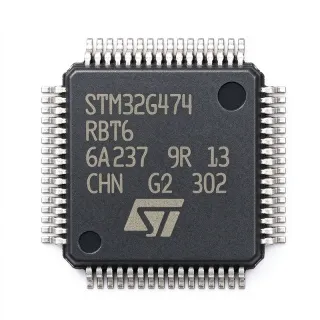
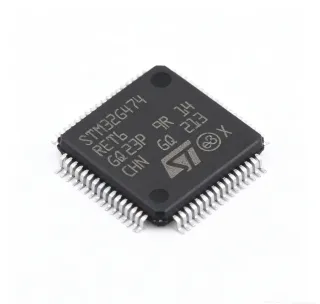
STM32L496RGT3 - Ultra-Low-Power ARM Cortex-M4 MCU 80MHz 1MB Flash | STMicroelectronics
부품 번호: STM32L496RGT3 ✓ 활성| 수량 | 단가 | 합계 |
|---|---|---|
| 1 | $12.8 | $12.80 |
| 10 | $11.95 | $119.50 |
| 100 | $10.85 | $1,085.00 |
| 500 | $9.65 | $4,825.00 |
| 1,000 | $8.95 | $8,950.00 |
STM32L496RGT3 개요
An ultra-low-power microcontroller (MCU) is a class of microcontrollers engineered to minimize active and standby power consumption, typically using sub-threshold transistor design, multiple low-power modes (Sleep, Stop, Standby, Shutdown), and integrated DC-DC converters. The STM32L4 family sits in the broader hierarchy of ARM Cortex-M microcontrollers (Cortex-M0/M0+/M3/M4/M7/M33) under the STMicroelectronics STM32 product line, which serves industrial, IoT, medical, and consumer embedded applications where battery life is critical.
Key features of the STM32L496RGT3 include the Cortex-M4 core with single-precision FPU and DSP instructions, 1 MB Flash and 320 KB SRAM, integrated USB OTG FS, an LCD-TFT controller (8x40 or 4x44 with step-up), AES-256 hardware encryption, a true random number generator (TRNG), DFSDM (digital filter for sigma-delta modulators), and an external SMPS support interface for direct connection to an integrated switching mode power supply.
The architecture combines an ART Accelerator (Adaptive Real-Time memory accelerator) for 0-wait-state execution from Flash, a Chrom-ART Accelerator for 2D graphics offload, and 12-bit ADC and DAC peripherals. The 80 MHz Cortex-M4 core delivers 100 DMIPS / 273 CoreMark performance while the L4 series achieves an industry-leading ULPBench score of 245, reflecting its ultra-low-power efficiency.
Typical applications include wearable health devices, smart sensors, industrial HMI panels with LCD displays, USB-powered portable instruments, secure IoT endpoints with AES-256, low-power RF transceivers, and battery-backed metering systems. The 64-pin LQFP package provides ample GPIO and is suitable for hand-solderable prototypes.
When designing with the STM32L496RGT3, select the appropriate low-power mode per the application duty cycle (Shutdown for idle months, Stop for sub-second wake, Standby for RTC-only operation), and follow ST's AN4621 reference for SMPS external inductor selection. The QFP64 footprint enables easy migration to other STM32L4-series devices in the same package.
This page synthesizes distributor pricing, drop-in alternatives, and practical design notes not found in the manufacturer datasheet. Engineers should cross-check the QFP64 pinout against the STM32L496RG reference manual (RM0354) before board bring-up.
드롭인 대체품: STM32L496RGT3 — 동일 패키지, 핀 호환. PCB 재작업이 필요한 다른 패키지 부품은 제외됩니다.
이 시리즈의 변형
다음과 드롭인 호환되는 동일 시리즈 모델: STM32L496RGT3 (동일 폼 팩터 및 풋프린트) — 차이점: Package, Performance, ADC, Core Architecture, LCD Controller.
빠른 비교 도구 — 나란히 비교할 대체 부품을 선택하십시오:
STM32L496RGT6
✅ 드롭인✓ 재고 있음
$6.5 / 개
데이터시트 보기 →STM32L4A6RGT6
✅ 드롭인✓ 재고 있음
$9.56 / 개
데이터시트 보기 →STM32L476RGT6
✅ 드롭인✓ 재고 있음
$3.86 / 개
데이터시트 보기 →STM32L4R7VIT6
✅ 드롭인📋 참조 대체품 (카탈로그에 없음)
STM32L496RGT3 최대 정격 & 전기적 특성
| Core Architecture | ARM Cortex-M4 with FPU and DSP |
| 최대 클록 주파수 | 80 MHz |
| Performance | 100 DMIPS / 273 CoreMark |
| Program Memory (Flash) | 1 MB (1M x 8) |
| SRAM | 320 KB |
| Supply Voltage Range | 1.71 V to 3.6 V |
| 동작 온도 범위 | -40 C to +85/105/125 C |
| Shutdown Mode Current | 25 nA (5 wakeup pins) |
| VBAT Mode Current | 320 nA (RTC + 32x32-bit backup registers) |
| 패키지 | 64-pin LQFP (10x10 mm) |
| 실장 유형 | Surface Mount |
| USB | USB OTG Full-Speed |
| LCD Controller | 8x40 or 4x44 segments with step-up |
| Hardware Encryption | AES-256, TRNG |
| DFSDM | Yes (digital filter for sigma-delta modulators) |
| External SMPS Support | Yes |
| RoHS 상태 | Compliant |
STM32L496RGT3 핀 구성
| 핀 1 | PB10 — GPIO/TIM2_CH3/I2C2_SCL/USART3_TX |
| 핀 2 | PB11 — GPIO/TIM2_CH4/I2C2_SDA/USART3_RX |
| 핀 3 | VSS — Ground |
| 핀 4 | VDD — Digital supply voltage |
| 핀 5 | PB12 — GPIO/SPI2_NSS/USART3_CK/LCD_COM0 |
| 핀 6 | PB13 — GPIO/SPI2_SCK/USART3_CTS/LCD_COM1 |
| 핀 7 | PB14 — GPIO/SPI2_MISO/TIM15_CH1/LCD_COM2 |
| 핀 8 | PB15 — GPIO/SPI2_MOSI/TIM15_CH2/LCD_COM3 |
| 핀 9 | PA8 — GPIO/TIM1_CH1/USART1_CK/RCC_MCO |
| 핀 10 | PA9 — GPIO/TIM1_CH2/USART1_TX/LCD_COM4 |
| 핀 11 | PA10 — GPIO/TIM1_CH3/USART1_RX/LCD_COM5 |
| 핀 12 | PA11 — GPIO/USART1_CTS/USB_DM/CAN1_RX |
| 핀 13 | PA12 — GPIO/USART1_RTS/USB_DP/CAN1_TX |
| 핀 14 | PA13 — GPIO/SYS_JTMS-SWDIO |
| 핀 15 | VSS — Ground |
| 핀 16 | VDD — Digital supply voltage |
| 핀 17 | PA14 — GPIO/SYS_JTCK-SWCLK |
| 핀 18 | PA15 — GPIO/SYS_JTDI/TIM2_CH1 |
| 핀 19 | PB3 — GPIO/SYS_JTDO/TIM2_CH2 |
| 핀 20 | PB4 — GPIO/SYS_JTRST/TIM3_CH1 |
| 핀 21 | PB5 — GPIO/TIM3_CH2/I2C1_SMBA |
| 핀 22 | PB6 — GPIO/USART1_TX/I2C1_SCL/TIM4_CH1 |
| 핀 23 | PB7 — GPIO/USART1_RX/I2C1_SDA/TIM4_CH2 |
| 핀 24 | BOOT0 — Boot mode selection |
| 핀 25 | PB8 — GPIO/TIM4_CH3/I2C1_SCL/CAN1_RX |
| 핀 26 | PB9 — GPIO/TIM4_CH4/I2C1_SDA/CAN1_TX |
| 핀 27 | VSS — Ground |
| 핀 28 | VDD — Digital supply voltage |
| 핀 29 | PC13 — GPIO/RTC_TAMP1/RTC_OUT |
| 핀 30 | PC14 — GPIO/RTC_OSC32_IN/OSC32_IN |
| 핀 31 | PC15 — GPIO/RTC_OSC32_OUT/OSC32_OUT |
| 핀 32 | VSS — Ground |
| 핀 33 | VDD — Digital supply voltage |
| 핀 34 | OSC_IN — External oscillator input (HSE) |
| 핀 35 | OSC_OUT — External oscillator output (HSE) |
| 핀 36 | NRST — Reset input (active low) |
| 핀 37 | VSSA — Analog ground |
| 핀 38 | VDDA — Analog supply voltage |
| 핀 39 | PA0 — GPIO/TIM2_CH1/TIM5_CH1/ADC_IN5 |
| 핀 40 | PA1 — GPIO/TIM2_CH2/TIM5_CH2/ADC_IN6 |
| 핀 41 | PA2 — GPIO/TIM2_CH3/USART2_TX/ADC_IN7 |
| 핀 42 | PA3 — GPIO/TIM2_CH4/USART2_RX/ADC_IN8 |
| 핀 43 | VSS — Ground |
| 핀 44 | VDD — Digital supply voltage |
| 핀 45 | PA4 — GPIO/SPI1_NSS/USART2_CK/ADC_IN9 |
| 핀 46 | PA5 — GPIO/SPI1_SCK/TIM2_CH1/ADC_IN10 |
| 핀 47 | PA6 — GPIO/SPI1_MISO/TIM3_CH1/ADC_IN11 |
| 핀 48 | PA7 — GPIO/SPI1_MOSI/TIM3_CH2/ADC_IN12 |
| 핀 49 | PB0 — GPIO/TIM3_CH3/ADC_IN15 |
| 핀 50 | PB1 — GPIO/TIM3_CH4/ADC_IN16 |
| 핀 51 | PB2 — GPIO/RTC_TAMP |
| 핀 52 | VSS — Ground |
| 핀 53 | VDD — Digital supply voltage |
| 핀 54 | PC0 — GPIO/ADC_IN1/LCD_SEG18 |
| 핀 55 | PC1 — GPIO/ADC_IN2/LCD_SEG19 |
| 핀 56 | PC2 — GPIO/ADC_IN3/LCD_SEG20 |
| 핀 57 | PC3 — GPIO/ADC_IN4/LCD_SEG21 |
| 핀 58 | VREF+ — ADC reference voltage |
| 핀 59 | VDDA — Analog supply voltage |
| 핀 60 | PA0_C — GPIO/ADC_IN5 (alternate) |
| 핀 61 | PA1_C — GPIO/ADC_IN6 (alternate) |
| 핀 62 | VSS — Ground |
| 핀 63 | VDD — Digital supply voltage |
| 핀 64 | VBAT — Battery backup supply for RTC |
일반적인 애플리케이션
STM32L496RGT3 적합 용도: 6 애플리케이션s: Wearable Health & Fitness Devices, Smart Sensor IoT Endpoints, Industrial HMI Panels with Segment LCD, USB-Powered Portable Instruments, Battery-Backed Metering & Data Loggers, Secure Payment & Access Terminals.
Wearable Health & Fitness Devices
The STM32L496RGT3's 25 nA Shutdown mode and Cortex-M4 DSP make it ideal for wearable health monitors measuring heart rate, SpO2, and motion. Its DFSDM peripheral accepts direct sigma-delta modulator input from PPG/ECG analog front-ends, eliminating an external ADC and reducing BOM by ~$1. The integrated 12-bit ADC supports up to 5.33 MSps for high-fidelity biosignal sampling, while 320 KB SRAM buffers full waveform analysis before compression. Ultra-low-power Run mode at 2 MHz delivers 100 uA/MHz, enabling days of continuous monitoring on a single CR2032 cell. The same 64-LQFP package enables compact PCB designs under 25 mm x 25 mm.
추천
Smart Sensor IoT Endpoints
IoT endpoints with secure cloud connectivity benefit from the STM32L496RGT3's AES-256 hardware encryption and true random number generator (TRNG), which offload TLS handshake and message authentication without CPU overhead. The 80 MHz Cortex-M4 core runs MQTT-SN or CoAP stacks comfortably while the Stop mode (with RTC retention) draws only 1.1 uA — enabling years of battery life on a 2400 mAh LiSOCl2 cell. External SMPS support reduces core current by 30% versus internal LDO regulation. USB OTG FS enables direct provisioning in the field without an external programmer.
추천
Industrial HMI Panels with Segment LCD
The integrated segment-LCD controller (8x40 or 4x44 segments with built-in step-up converter) lets the STM32L496RGT3 drive a 4-digit numeric or 40-segment alpha display directly, eliminating an external LCD driver IC and saving both BOM cost and PCB area. The Chrom-ART Accelerator handles 2D graphics on TFT panels when used as the system HMI controller. Combined with 1 MB Flash for multilingual UI assets and 320 KB SRAM for touch-screen buffer management, the L496RGT3 supports rich industrial panel UIs while sipping power — Shutdown mode draws 25 nA for backup clock display when the main UI is off.
추천
USB-Powered Portable Instruments
USB-powered portable test equipment leverages the STM32L496RGT3's integrated USB OTG Full-Speed peripheral for direct PC connectivity without an external PHY, plus its 80 MHz / 100 DMIPS performance for real-time DSP. The 12-bit 5.33 MSps ADC pairs with the on-chip op-amps for sensor conditioning, while the DAC channels drive stimulus signals. Operating from USB VBUS (5 V) through the internal LDO down to 3.3 V, the MCU draws 100 uA/MHz in Run mode — fine for tethered instruments but Switchable via Stop mode when running on battery. AES-256 secures measurement logs at rest.
추천
Battery-Backed Metering & Data Loggers
Smart meters and remote data loggers benefit from the STM32L496RGT3's 320 nA VBAT mode that retains the RTC and 32x32-bit backup registers while the main domain is powered down. This enables the device to keep accurate time-stamping through years of storage without draining the backup cell. The 1 MB Flash stores months of measurement logs with wear-leveling FTL, while 320 KB SRAM caches active data. Anti-tamper detection via the integrated TRNG and AES-256 protects metering integrity against external manipulation, meeting IEC 62053 security guidelines for utility metering.
추천
Secure Payment & Access Terminals
Payment terminals and access-control devices rely on the STM32L496RGT3's AES-256 hardware crypto accelerator, true random number generator, and secure boot via ST's SBSFU (Secure Boot and Firmware Update) library for PCI PTS compliance. The Cortex-M4 FPU accelerates RSA/ECC operations while keeping cryptographic key material in protected Flash regions. USB OTG FS supports PIN pad peripherals, while segment-LCD displays transaction amounts. Low-power Shutdown mode (25 nA) preserves battery backup during shipping/storage between deployments, ensuring devices arrive with full charge.
추천
추천 제품 요약
엔지니어링 참조 데이터: STM32L496RGT3 — 비교, 설계 지침 및 규정 준수 정보.
선택 가이드
대체품과의 비교
| 파라미터 | 이 제품 | STM32L496RGT6 | STM32L4A6RGT | STM32L476RGT6 |
|---|---|---|---|---|
| Package | 64-LQFP (10x10) | 64-LQFP (10x10) - same | 64-LQFP (10x10) - same | 64-LQFP (10x10) - same |
| Brand | STMicroelectronics | STMicroelectronics | STMicroelectronics | STMicroelectronics |
| Core / Max Frequency | Cortex-M4 / 80 MHz | Cortex-M4 / 80 MHz | Cortex-M4 / 80 MHz | Cortex-M4 / 80 MHz |
| Flash / SRAM | 1 MB / 320 KB | 1 MB / 320 KB | 1 MB / 320 KB | 1 MB / 320 KB |
| AES-256 Hardware Crypto | Yes | Yes | Yes | No |
| True Random Number Generator (TRNG) | Yes | Yes | Yes | No |
| Segment-LCD Controller | Yes (8x40 / 4x44) | Yes (8x40 / 4x44) | Yes (8x40 / 4x44) | No |
| USB OTG FS | Yes | Yes | Yes | Yes |
| External SMPS Support | Yes | Yes | Yes | No |
| Shutdown Current | 25 nA | 25 nA | 25 nA | 30 nA |
| Temperature Grade | -40 to +125 C | -40 to +85 C | -40 to +125 C | -40 to +85 C |
주요 차별점
- AES-256 hardware encryption with TRNG for security applications (vs STM32L476RGT6)
- Integrated segment-LCD controller with step-up converter (vs STM32L476RGT6)
- Extended temperature grade for industrial and outdoor applications (vs STM32L496RGT6)
- External SMPS support for high-efficiency core power (vs STM32L476RGT6)
설계 노트
Estimated: at 80 MHz Run mode with all peripherals off, the STM32L496RGT3 draws approximately 10 mA from VDD (100 uA/MHz typical). To minimize active power, use the Range 2 internal regulator (up to 26 MHz) when full performance is not required, and enable peripheral clock gates in RCC when peripherals are idle. For shutdown mode (25 nA typical), ensure all GPIOs are configured as analog inputs to prevent floating-pin leakage currents of ~1 uA each that can dominate standby budget.
Decouple each VDD pin with a 100 nF X7R ceramic placed within 3 mm of the pin. VDDA requires both a 100 nF and a 1 uF ceramic, with VREF+ tied to VDDA through a ferrite bead if a separate analog reference is used. VBAT pin should have a 100 nF decoupling cap and (if used) a series Schottky diode to prevent reverse current into the main VDD domain. Place the 32.768 kHz crystal within 5 mm of OSC32_IN/OSC32_OUT with grounded guard ring to minimize RTC drift from digital switching noise.
Do not enable USB OTG FS without 1.5 kohm pull-up on DP — the host will not enumerate. The segment-LCD controller's step-up converter requires an external capacitor on the VLCD pin (typically 1 uF) — omitting it reduces display contrast. The Cortex-M4 FPU requires initialization via CPACR register before first use, otherwise floating-point instructions trigger a HardFault. When using Stop mode with RTC wakeup, configure the EXTI line for RTC alarm BEFORE entering Stop mode or the wakeup event will be missed.
At maximum 80 MHz operation across full temperature (-40 to +125 C), the 64-LQFP package dissipates approximately 300 mW steady-state. The junction-to-ambient thermal resistance (theta_JA) for the 64-LQFP10 package is approximately 45 C/W on a standard 4-layer JEDEC test board. For continuous 125 C operation with 300 mW dissipation, the junction-to-ambient delta is approximately 13.5 C, well within the 150 C absolute maximum. No external heatsink is required for typical use cases; however, ensure the PCB copper pour under the exposed pad (if present) is maximized for best thermal transfer.
규정 준수 정보
RoHS and REACH compliant per ST product page. The STM32L496RGT3 is not AEC-Q100 qualified (industrial grade); automotive designs should select the STM32L496RGT3A variant or similar AEC-Q100 part.