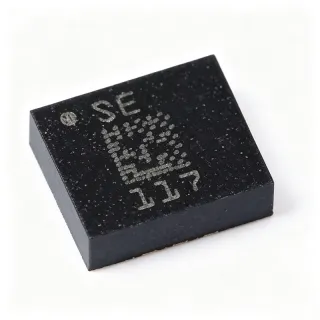
HTS221TR - Capacitive Digital Humidity & Temperature Sensor | STMicroelectronics
MPN: HTS221TR ✓ Active| Qty | Unit Price | Extended |
|---|---|---|
| 1 | $2.5 | $2.50 |
| 10 | $2.25 | $22.50 |
| 100 | $2 | $200.00 |
| 500 | $1.8 | $900.00 |
| 1,000 | $1.6 | $1,600.00 |
HTS221TR Overview
A humidity sensor is a device that measures the amount of water vapor in the air, typically expressed as relative humidity (RH). The HTS221TR is a capacitive-type sensor, where the dielectric constant of a polymer layer changes with humidity, altering the capacitance of the sensing element. This change is converted to a digital signal via an internal ADC. In the broader system hierarchy, the HTS221TR is a MEMS environmental sensor, falling under the category of sensors, specifically temperature and humidity sensors, which are essential components in IoT, smart home, and industrial monitoring systems.
Key features of the HTS221TR include its factory-calibrated output, eliminating the need for user calibration, and its programmable interrupt outputs for threshold detection. The sensor supports both I2C (up to 400 kHz) and SPI (up to 10 MHz) interfaces, providing flexibility in system integration. It also features a 16-bit resolution for both humidity and temperature, with a humidity resolution of 0.004% RH and temperature resolution of 0.01°C. The device includes an embedded heater for condensation prevention, which is useful in high-humidity environments.
Technically, the HTS221TR uses a MEMS capacitive sensing element with a dedicated ASIC for signal conditioning. The sensor's low power consumption (2 µA at 1 Hz) and wide supply voltage range (1.7V to 3.6V) make it suitable for portable and wearable devices. The HLGA package is designed for surface mounting, with a small footprint of 3x3 mm, enabling compact PCB designs. The sensor's response time is typically 8 seconds for humidity and 5 seconds for temperature, ensuring real-time monitoring capabilities.
Typical applications include smart home climate control, where the sensor monitors indoor humidity and temperature to optimize HVAC systems; industrial environmental monitoring, where it tracks conditions in warehouses or server rooms; and wearable devices, where it measures skin humidity and ambient temperature for health tracking. The sensor's accuracy and low power make it ideal for battery-operated IoT nodes.
When designing with the HTS221TR, ensure proper PCB layout to minimize the influence of heat sources on temperature readings. Place the sensor away from components that generate heat, and provide adequate ventilation for humidity sensing. The sensor's I2C address is 0x5F, and it supports multiple devices on the same bus with different addresses.
Drop-in alternatives for HTS221TR — same package, pin-to-pin compatible. Different-package parts requiring PCB rework are excluded.
Variants in this series
Same-series models that are drop-in compatible with HTS221TR (same form factor and footprint) — differing in Current Consumption, Humidity Range, Interface, Package, Temperature Accuracy.
Quick Comparison Tool — Select alternative parts for side-by-side comparison:
HTS221
✅ Drop-In✓ In Stock
$3.8182 / Unit
View Datasheet →HTS221TR-Q1
✅ Drop-In ⚠️ Specs Unverified📋 Reference alternative (not in catalog)
HTS221TR Maximum Ratings & Electrical Characteristics
| Humidity Range | 0% to 100% RH |
| Humidity Accuracy | ±3.5% RH (20-80% RH) |
| Temperature Range | -40°C to +120°C |
| Temperature Accuracy | ±0.5°C (15-40°C) |
| Supply Voltage | 1.7V to 3.6V |
| Current Consumption | 2 µA at 1 Hz sampling |
| Interface | I2C (up to 400 kHz) and SPI (up to 10 MHz) |
| Resolution | 16-bit (humidity: 0.004% RH, temperature: 0.01°C) |
| Response Time | 8 s (humidity), 5 s (temperature) |
| Package | HLGA-6L (3x3x0.9 mm) |
| Operating Temperature | -40°C to +120°C |
| I2C Address | 0x5F |
| Embedded Heater | Yes |
| RoHS Status | Compliant |
| Mounting Type | Surface Mount |
HTS221TR Pin Configuration
| Pin 1 | VDD — Power supply (1.7V to 3.6V) |
| Pin 2 | GND — Ground |
| Pin 3 | SDA — I2C data line (or SPI MOSI) |
| Pin 4 | SCL — I2C clock line (or SPI SCK) |
| Pin 5 | INT_DRDY — Interrupt/data ready output |
| Pin 6 | CS — Chip select (SPI) or I2C address select |
Typical Applications
HTS221TR is suitable for 6 applications: Smart Home Climate Control, Industrial Environmental Monitoring, Wearable Health Monitoring, IoT Environmental Sensing, Automotive Climate Control, Cold Chain Logistics.
Smart Home Climate Control
The HTS221TR monitors indoor humidity and temperature to optimize HVAC systems. Its low power consumption (2 µA) and high accuracy (±3.5% RH) ensure efficient climate control. The sensor's I2C interface allows easy integration with smart thermostats. In a typical setup, the HTS221TR is placed in a central location, and its data is used to adjust heating, ventilation, and air conditioning. The embedded heater prevents condensation, ensuring reliable operation in humid environments. Compared to other sensors, the HTS221TR offers a wider temperature range (-40°C to +120°C), making it suitable for extreme climates. Its compact HLGA-6L package enables discreet placement in wall-mounted devices. The sensor's 16-bit resolution provides precise readings, enabling fine-grained control. Overall, the HTS221TR enhances energy efficiency and comfort in smart homes.
Recommended
Industrial Environmental Monitoring
In industrial settings, the HTS221TR monitors humidity and temperature in warehouses, server rooms, and manufacturing facilities. Its wide operating range (-40°C to +120°C) and high accuracy ensure reliable performance in harsh conditions. The sensor's SPI interface enables high-speed data transfer (up to 10 MHz) for real-time monitoring. The embedded heater prevents condensation on the sensor, which is critical in high-humidity environments. The HTS221TR's low power consumption allows it to be powered by battery or energy harvesting systems. In a typical deployment, multiple sensors are placed throughout the facility, and data is collected via a central controller. The sensor's factory calibration eliminates the need for manual calibration, reducing maintenance costs. Its compact size allows easy integration into existing equipment. The HTS221TR helps prevent equipment damage and ensures product quality by maintaining optimal environmental conditions.
Recommended
Wearable Health Monitoring
The HTS221TR is used in wearable devices to measure skin humidity and ambient temperature for health tracking. Its ultra-low power consumption (2 µA) extends battery life, making it ideal for continuous monitoring. The sensor's small footprint (3x3 mm) fits into compact wearable designs. The I2C interface allows easy connection to microcontrollers in smartwatches and fitness bands. The sensor's accuracy (±0.5°C) ensures reliable body temperature measurements. In a typical application, the HTS221TR is placed near the skin, and its data is used to monitor hydration levels and detect fever. The embedded heater prevents condensation from sweat, ensuring accurate readings. The sensor's wide temperature range (-40°C to +120°C) covers all human body temperature variations. The HTS221TR's 16-bit resolution provides fine-grained data for health analytics. Overall, it enhances the functionality of wearable health devices.
Recommended
IoT Environmental Sensing
The HTS221TR is a key component in IoT nodes for environmental monitoring. Its low power consumption (2 µA) enables battery-powered operation for years. The sensor's I2C and SPI interfaces provide flexibility in connecting to various microcontrollers and wireless modules. The HTS221TR's accuracy (±3.5% RH) ensures reliable data for applications like agriculture and weather stations. In a typical IoT node, the sensor is connected to a microcontroller that transmits data via LoRa, Wi-Fi, or BLE. The sensor's wide supply voltage range (1.7V to 3.6V) allows it to be powered by coin cells or solar panels. The embedded heater prevents condensation, ensuring accurate readings in outdoor environments. The sensor's compact package enables small form factor designs. The HTS221TR's factory calibration reduces development time. Overall, it is an ideal choice for IoT environmental monitoring.
Recommended
Automotive Climate Control
The HTS221TR is used in automotive climate control systems to monitor cabin humidity and temperature. Its wide temperature range (-40°C to +120°C) meets automotive requirements. The sensor's accuracy (±3.5% RH) ensures passenger comfort. The HTS221TR's low power consumption is suitable for always-on monitoring. The I2C interface allows integration with automotive microcontrollers. In a typical application, the sensor is placed in the cabin, and its data is used to control the HVAC system. The embedded heater prevents condensation on the sensor, which is important in humid conditions. The sensor's compact package allows easy integration into dashboard modules. The HTS221TR's factory calibration ensures consistent performance. The automotive-grade variant (HTS221TR-Q1) is AEC-Q100 qualified for harsh environments. Overall, it enhances comfort and safety in vehicles.
Recommended
Cold Chain Logistics
The HTS221TR monitors temperature and humidity in cold chain logistics to ensure product integrity. Its wide temperature range (-40°C to +120°C) covers cold storage conditions. The sensor's accuracy (±0.5°C) ensures precise temperature monitoring. The HTS221TR's low power consumption allows long-term logging with battery power. The I2C interface enables connection to data loggers. In a typical application, the sensor is placed in shipping containers, and its data is recorded to verify that products remain within specified conditions. The embedded heater prevents condensation, which is critical in refrigerated environments. The sensor's compact size allows easy placement in packaging. The HTS221TR's factory calibration ensures reliable data. The sensor's 16-bit resolution provides detailed temperature and humidity profiles. Overall, it helps maintain quality and compliance in cold chain logistics.
Recommended
Recommended Products Summary
Engineering reference data for HTS221TR — comparison, design guidance, and compliance information.
Selection Guide
Comparison with Alternatives
| Parameter | This Product | HTS221 | HTS221TR-Q1 | SHT30-DIS-B | SHTC3 | HDC1080 |
|---|---|---|---|---|---|---|
| Package | HLGA-6L (3x3x0.9 mm) | HLGA-6L (3x3x0.9 mm) - same | HLGA-6L (3x3x0.9 mm) - same | DFN-8 (2.5x2.5 mm) - different | DFN-4 (2x2 mm) - different | WSON-6 (2x2 mm) - different |
| Brand | STMicroelectronics | STMicroelectronics | STMicroelectronics | Sensirion | Sensirion | Texas Instruments |
| Humidity Accuracy | ±3.5% RH (20-80% RH) | ±3.5% RH (20-80% RH) | ±3.5% RH (20-80% RH) | ±2% RH (0-100% RH) | ±2% RH (0-100% RH) | ±2% RH (0-100% RH) |
| Temperature Accuracy | ±0.5°C (15-40°C) | ±0.5°C (15-40°C) | ±0.5°C (15-40°C) | ±0.2°C (0-65°C) | ±0.2°C (0-65°C) | ±0.2°C (0-70°C) |
| Supply Voltage | 1.7V to 3.6V | 1.7V to 3.6V | 1.7V to 3.6V | 2.4V to 5.5V | 1.62V to 3.6V | 2.7V to 5.5V |
| Current Consumption | 2 µA at 1 Hz | 2 µA at 1 Hz | 2 µA at 1 Hz | 4.8 µA at 1 Hz | 1.3 µA at 1 Hz | 1.3 µA at 1 Hz |
| Interface | I2C, SPI | I2C, SPI | I2C, SPI | I2C | I2C | I2C |
| Temperature Range | -40°C to +120°C | -40°C to +120°C | -40°C to +120°C | -40°C to +125°C | -40°C to +125°C | -40°C to +125°C |
Key Differentiators
- Ultra-low power consumption of 2 µA at 1 Hz (vs SHT30-DIS-B)
- Wide temperature range of -40°C to +120°C (vs HDC1080)
- Embedded heater for condensation prevention (vs SHTC3)
Design Notes
Place the HTS221TR away from heat sources such as power regulators and microcontrollers to avoid temperature measurement errors. Provide a small vent or opening in the enclosure for humidity sensing. Use a ground plane under the sensor to reduce noise. Keep traces short and direct for I2C/SPI lines.
The HTS221TR has a thermal resistance of [DATA_NEEDED: theta_JA] C/W. In typical applications, self-heating is minimal due to low power consumption (2 µA). However, if the sensor is placed near high-power components, ensure adequate airflow or thermal isolation to maintain accuracy.
Do not exceed the supply voltage of 3.6V. Ensure proper decoupling with a 100 nF capacitor close to the VDD pin. For I2C, pull-up resistors (typically 4.7 kΩ) are required. The I2C address is fixed at 0x5F, so if multiple sensors are used, an I2C multiplexer is needed.
Compliance Information
RoHS compliant per STMicroelectronics product page. AEC-Q100 qualification available on HTS221TR-Q1 variant.