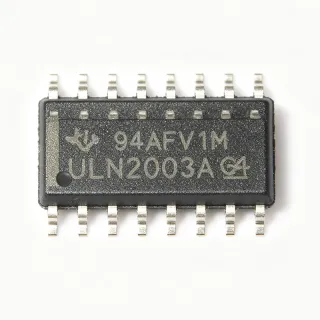
ISO1042 - Isolated CAN Transceiver with 70V Fault Protection | TI
MPN: ISO1042 ✓ Active| Qty | Unit Price | Extended |
|---|---|---|
| 1 | $3.5 | $3.50 |
| 10 | $3.15 | $31.50 |
| 100 | $2.8 | $280.00 |
| 500 | $2.5 | $1,250.00 |
| 1,000 | $2.25 | $2,250.00 |
ISO1042 Overview
A CAN transceiver is a physical-layer device that interfaces between the CAN protocol controller and the differential bus lines. It converts the digital signals from the controller into differential signals for transmission and vice versa. The ISO1042 adds galvanic isolation, which separates the bus side from the logic side, preventing ground loops and protecting low-voltage electronics from high-voltage transients. This isolation is critical in industrial environments where long bus lines and potential ground potential differences exist.
Key features include reinforced isolation with a working voltage of 1000 Vrms, a common-mode voltage range of ±30V, and bus fault protection up to ±70V. The device also features a silent mode for bus monitoring and a dominant timeout function to prevent bus lock-up. Its low loop delay of 150 ns ensures high-speed communication, and it is compliant with ISO11898-2 (2016) and ISO11898-5 standards.
The ISO1042 uses TI's capacitive isolation technology, which provides high immunity to magnetic interference and supports high data rates. The isolation barrier is rated for 5000 Vrms surge, ensuring reliable operation in harsh environments. The device is designed for use in automotive and industrial applications, including electric vehicles, battery management systems, and factory automation.
Typical applications include automotive body control modules, industrial fieldbus networks, and building automation. The ISO1042 is also suitable for solar inverters and motor drives where galvanic isolation is required for safety. Its robust fault protection and high common-mode range make it ideal for long bus lines in noisy environments.
When designing with the ISO1042, ensure proper PCB layout with adequate creepage and clearance distances for the isolation barrier. Use a 100 nF bypass capacitor on the VCC pin and a 10 µF capacitor on the VIO pin for stable operation. The device requires a single 3.3V or 5V supply on the logic side and a 5V supply on the bus side.
Drop-in alternatives for ISO1042 — same package, pin-to-pin compatible. Different-package parts requiring PCB rework are excluded.
Variants in this series
Same-series models that are drop-in compatible with ISO1042 (same form factor and footprint) — differing in Data Rate, Loop Delay, Operating Temperature, Package.
Quick Comparison Tool — Select alternative parts for side-by-side comparison:
ISO1042DW
✅ Drop-In📋 Reference alternative (not in catalog)
ISO1042DWR
✅ Drop-In📋 Reference alternative (not in catalog)
ISO1042-Q1
✅ Drop-In📋 Reference alternative (not in catalog)
ISO1044
✅ Drop-In ⚠️ Specs Unverified📋 Reference alternative (not in catalog)
ISO1042 Specifications
| Protocol | CAN / CAN FD |
| Number of Drivers | 1 |
| Number of Receivers | 1 |
| Data Rate | 5 Mbps (CAN FD) |
| Bus Fault Protection | ±70 V DC |
| Common-Mode Voltage Range | ±30 V |
| Isolation Working Voltage | 1000 Vrms |
| Isolation Surge Voltage | 5000 Vrms |
| Supply Voltage (VCC) | 3.3 V to 5 V |
| Supply Voltage (VIO) | 3.3 V to 5 V |
| Loop Delay | 150 ns |
| Operating Temperature | -40°C to +125°C |
| Package | SOIC-8 (DW) |
| Mounting Type | Surface Mount |
| RoHS Status | Compliant |
ISO1042 Pin Configuration
| Pin 1 | TXD — Transmit data input |
| Pin 2 | GND — Ground |
| Pin 3 | VCC — Logic supply voltage |
| Pin 4 | RXD — Receive data output |
| Pin 5 | VIO — I/O supply voltage |
| Pin 6 | CANL — Low-level CAN bus line |
| Pin 7 | CANH — High-level CAN bus line |
| Pin 8 | S — Silent mode control |
Typical Applications
ISO1042 is suitable for 6 applications: Automotive Body Control Modules, Industrial Fieldbus Networks, Battery Management Systems (BMS), Solar Inverters, Motor Drives, Building Automation.
Automotive Body Control Modules
The ISO1042 provides galvanic isolation for CAN communication in automotive body control modules, protecting the microcontroller from high-voltage transients on the bus. Its ±70V bus fault protection and ±30V common-mode range ensure reliable operation in harsh automotive environments. The device supports CAN FD up to 5 Mbps, enabling faster data transfer for advanced features like over-the-air updates. Its AEC-Q100 qualified variant (ISO1042-Q1) is ideal for automotive applications. The isolation barrier prevents ground loops between the body control module and other ECUs, improving system reliability.
Recommended
Industrial Fieldbus Networks
In industrial automation, the ISO1042 isolates the CAN bus from the controller, protecting against ground potential differences and electrical noise. Its high common-mode voltage range (±30V) and bus fault protection (±70V) make it suitable for long bus lines in factories. The device's low loop delay (150 ns) ensures deterministic communication in real-time control systems. It operates over a wide temperature range (-40°C to +125°C), suitable for harsh industrial environments. The isolation also simplifies system design by eliminating the need for separate optocouplers.
Recommended
Battery Management Systems (BMS)
The ISO1042 is used in BMS to isolate the CAN communication between battery cells and the main controller, preventing high-voltage transients from damaging low-voltage electronics. Its reinforced isolation (1000 Vrms working voltage) meets safety requirements for automotive and industrial BMS. The device supports CAN FD for high-speed data transfer of cell voltages and temperatures. Its ±70V bus fault protection ensures robustness against bus short circuits. The isolation barrier also eliminates ground loops, improving measurement accuracy.
Recommended
Solar Inverters
In solar inverters, the ISO1042 isolates the CAN bus between the inverter and the monitoring system, protecting against high-voltage transients from the solar panels. Its high isolation voltage (5000 Vrms surge) ensures safety in high-voltage environments. The device's wide common-mode range (±30V) handles ground potential differences between the inverter and the monitoring system. It supports CAN FD for efficient data transfer of power and status information. The robust fault protection (±70V) ensures reliable operation in outdoor conditions.
Recommended
Motor Drives
The ISO1042 provides galvanic isolation for CAN communication in motor drives, protecting the control electronics from high-voltage transients generated by the motor. Its ±70V bus fault protection and ±30V common-mode range ensure reliable communication in noisy environments. The device supports CAN FD up to 5 Mbps, enabling real-time control and diagnostics. Its low loop delay (150 ns) is critical for high-speed motor control loops. The isolation barrier also prevents ground loops, improving system stability.
Recommended
Building Automation
In building automation, the ISO1042 isolates the CAN bus between HVAC controllers, lighting systems, and security panels, protecting against ground potential differences. Its high common-mode voltage range (±30V) and bus fault protection (±70V) ensure reliable communication over long cable runs. The device's low power consumption and wide temperature range make it suitable for always-on systems. It supports CAN FD for efficient data transfer of sensor readings and control commands. The isolation also simplifies system design by eliminating ground loops.
Recommended
Recommended Products Summary
Engineering reference data for ISO1042 — comparison, design guidance, and compliance information.
Selection Guide
Comparison with Alternatives
| Parameter | This Product | ISO1042DW | ISO1042DWR | ISO1042-Q1 | ISO1044 | ADM3053 | TJA1052 |
|---|---|---|---|---|---|---|---|
| Package | SOIC-8 (DW) | SOIC-8 (DW) | SOIC-8 (DW) | SOIC-8 (DW) | SOIC-8 (DW) | SOIC-20 | SOIC-14 |
| Brand | Texas Instruments | Texas Instruments | Texas Instruments | Texas Instruments | Texas Instruments | Analog Devices | NXP Semiconductors |
| Data Rate | 5 Mbps (CAN FD) | 5 Mbps | 5 Mbps | 5 Mbps | 5 Mbps | 1 Mbps | 5 Mbps |
| Bus Fault Protection | ±70 V | ±70 V | ±70 V | ±70 V | ±70 V | ±40 V | ±70 V |
| Common-Mode Voltage Range | ±30 V | ±30 V | ±30 V | ±30 V | ±30 V | ±12 V | ±30 V |
| Isolation Working Voltage | 1000 Vrms | 1000 Vrms | 1000 Vrms | 1000 Vrms | 500 Vrms | 1000 Vrms | 1000 Vrms |
| Loop Delay | 150 ns | 150 ns | 150 ns | 150 ns | 150 ns | 250 ns | 150 ns |
| Automotive Grade | No | No | No | Yes (AEC-Q100) | No | No | Yes (AEC-Q100) |
Key Differentiators
- Higher bus fault protection (vs ISO1050)
- CAN FD support (vs ISO1050)
- Wider common-mode voltage range (vs ADM3053)
Design Notes
For the ISO1042, ensure proper PCB layout with adequate creepage and clearance distances for the isolation barrier. The SOIC-8 package requires a minimum creepage of 8 mm for reinforced isolation per IEC 60664. Place the device with the isolation barrier aligned to the PCB split to maintain isolation integrity. Use a 100 nF bypass capacitor on VCC and a 10 µF capacitor on VIO, placed close to the pins.
The ISO1042 requires a 3.3V or 5V supply on VCC and VIO. Ensure the VIO supply is within the specified range to avoid logic level mismatch. The device consumes approximately 5 mA typical supply current. Use a low-dropout regulator if the supply is noisy, as the device's PSRR is limited. Proper decoupling is essential to maintain signal integrity.
Do not connect the ISO1042 without proper termination resistors on the CAN bus. The bus must be terminated with 120 Ω at both ends to prevent reflections. Also, ensure the silent mode pin (S) is properly controlled; leaving it floating may cause unintended operation. The device is not pin-compatible with ISO1050, so verify the pinout before substitution.
Compliance Information
RoHS compliant per TI product page. AEC-Q100 qualified variant available as ISO1042-Q1.