LPS33HW - MEMS Pressure Sensor, 260-1260 hPa | STMicroelectronics
MPN: LPS33HW ✓ Active| Qty | Unit Price | Extended |
|---|---|---|
| 1 | $2.85 | $2.85 |
| 10 | $2.56 | $25.60 |
| 100 | $2.28 | $228.00 |
| 500 | $2.05 | $1,025.00 |
| 1,000 | $1.82 | $1,820.00 |
LPS33HW Overview
A MEMS pressure sensor is a micro-electromechanical system that measures absolute or gauge pressure by detecting the deflection of a thin silicon diaphragm. The LPS33HW belongs to the family of barometric pressure sensors, which are essential in altimetry, weather monitoring, and indoor navigation. In the broader system hierarchy, it is a sensor component within the category of environmental sensors, feeding data to microcontrollers for processing and decision-making.
Key features include a pressure sensing range of 260 to 1260 hPa, a resolution of 0.008 hPa, and an embedded temperature sensor with an accuracy of ±0.5°C. The device supports both I2C (up to 400 kHz) and SPI (up to 10 MHz) interfaces, and includes a 128-level FIFO buffer to reduce host processor load. It also features an interrupt pin for data-ready and pressure threshold events, and a low-power mode with a current consumption of 3 µA at 1 Hz output data rate.
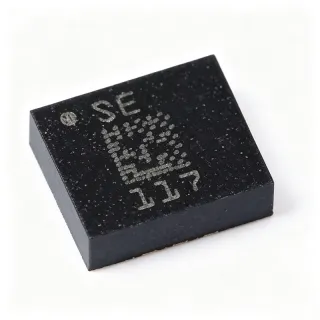
The LPS33HW is built on ST's proven MEMS technology, which ensures high stability and low drift over temperature and time. The ceramic LGA package provides excellent thermal and mechanical robustness, making it suitable for harsh environments. The device includes an internal temperature compensation algorithm, which maintains accuracy across the full operating temperature range of -40°C to +85°C.
Typical applications include barometric altimeters in drones and wearables, weather station modules, indoor navigation and floor detection in smartphones, and industrial pressure monitoring. Its low power consumption and small footprint make it ideal for battery-powered IoT devices.
When designing with the LPS33HW, ensure proper PCB layout with a small vent hole to expose the pressure port to ambient air, and avoid covering the port with solder mask or conformal coating. Decouple the supply pins with a 100 nF capacitor placed close to the device.
Drop-in alternatives for LPS33HW — same package, pin-to-pin compatible. Different-package parts requiring PCB rework are excluded.
Variants in this series
Same-series models that are drop-in compatible with LPS33HW (same form factor and footprint) — differing in Current Consumption, Interface, Output Data Rate, Package, Supply Voltage.
Quick Comparison Tool — Select alternative parts for side-by-side comparison:
LPS33W
✅ Drop-In ⚠️ Specs Unverified📋 Reference alternative (not in catalog)
LPS22HH
✅ Drop-In ⚠️ Specs Unverified✓ In Stock
$0.9705 / Unit
View Datasheet →LPS25HB
✅ Drop-In ⚠️ Specs Unverified📋 Reference alternative (not in catalog)
BMP388
✅ Drop-In ⚠️ Specs Unverified📋 Reference alternative (not in catalog)
BMP280
✅ Drop-In ⚠️ Specs Unverified📋 Reference alternative (not in catalog)
LPS33HW Maximum Ratings & Electrical Characteristics
| Pressure Range | 260 to 1260 hPa |
| Pressure Resolution | 0.008 hPa (RMS, at 1 Hz ODR) |
| Pressure Accuracy | ±0.1 hPa (typical, 25°C) |
| Temperature Range | -40°C to +85°C |
| Temperature Accuracy | ±0.5°C (typical) |
| Supply Voltage | 1.7 V to 3.6 V |
| Interface | I2C (up to 400 kHz) / SPI (up to 10 MHz) |
| Output Data Rate | 1 Hz to 75 Hz (programmable) |
| Current Consumption | 3 µA (low-power mode, 1 Hz ODR) |
| FIFO Buffer | 128 levels |
| Package | CCLGA-10L (2.0 x 2.0 x 0.76 mm) |
| Mounting Type | Surface Mount |
| Operating Temperature | -40°C to +85°C |
| RoHS Status | Compliant |
| MSL Level | 1 |
LPS33HW Pin Configuration
| Pin 1 | VDD — Power supply (1.7V to 3.6V) |
| Pin 2 | GND — Ground |
| Pin 3 | SCL/SPC — I2C clock / SPI clock |
| Pin 4 | SDA/SDI — I2C data / SPI data in |
| Pin 5 | SDO/SA0 — SPI data out / I2C address select |
| Pin 6 | CS — Chip select (active low) |
| Pin 7 | INT — Interrupt output |
| Pin 8 | NC — Not connected |
| Pin 9 | NC — Not connected |
| Pin 10 | GND — Ground (exposed pad) |
Typical Applications
LPS33HW is suitable for 6 applications: Drone Altimetry, Wearable Fitness Tracker, Weather Station, Indoor Navigation, Industrial Pressure Monitoring, Smart Home Automation.
Drone Altimetry
The LPS33HW provides high-resolution pressure sensing (0.008 hPa) for precise altitude hold and vertical speed estimation in drones. Its low power consumption (3 µA) extends flight time, and the compact CCLGA-10L package fits space-constrained flight controllers. The I2C/SPI interface allows easy integration with MCUs. In a typical drone application, the sensor is mounted on the flight controller PCB with a vent hole to ambient air, and the pressure data is fused with accelerometer and GPS data for robust altitude control. The 128-level FIFO reduces MCU wake-ups, saving power. Compared to ultrasonic sensors, the LPS33HW offers better altitude resolution and is unaffected by ground reflections.
Recommended
Wearable Fitness Tracker
The LPS33HW enables floor detection and activity tracking in wearables. Its small size (2.0x2.0mm) and low power (3 µA) are ideal for battery-powered devices. The embedded temperature sensor provides additional environmental data. In a fitness tracker, the sensor is placed inside the device with a small pressure port, and the pressure changes are used to detect floor changes (approximately 0.4 hPa per floor). The FIFO buffer allows the MCU to stay in sleep mode longer, extending battery life. The I2C interface connects directly to the MCU, and the interrupt pin can wake the system on significant pressure changes. The wide operating temperature range (-40°C to +85°C) ensures reliable operation in various climates.
Recommended
Weather Station
The LPS33HW provides accurate barometric pressure measurements (260-1260 hPa) for weather monitoring. Its high resolution (0.008 hPa) allows detection of small pressure changes, and the temperature sensor aids in compensation. In a weather station, the sensor is exposed to ambient air via a vent, and the pressure data is logged over time. The SPI interface enables high-speed data transfer to a data logger. The low power consumption allows solar-powered operation. The sensor's stability over temperature and time ensures reliable long-term measurements. Compared to traditional barometers, the LPS33HW offers digital output and easy integration with microcontrollers.
Recommended
Indoor Navigation
The LPS33HW enables floor detection and indoor positioning in smartphones and robots. Its high resolution (0.008 hPa) can detect floor changes of about 8 cm, which is sufficient for floor-level accuracy. The sensor is used in fusion with Wi-Fi and Bluetooth beacons to improve positioning accuracy. In a smartphone, the sensor is mounted on the main PCB with a pressure port, and the data is processed by the application processor. The low power consumption is critical for always-on operation. The FIFO buffer reduces host processor load, and the interrupt pin can trigger location updates on significant pressure changes. The compact package allows integration into thin devices.
Recommended
Industrial Pressure Monitoring
The LPS33HW is used in industrial equipment for monitoring air pressure in pneumatic systems and leak detection. Its wide pressure range (260-1260 hPa) covers typical industrial pressures, and the high resolution allows detection of small leaks. The industrial temperature range (-40°C to +85°C) ensures reliable operation in harsh environments. In a pneumatic system, the sensor is connected to a pressure line via a tube, and the pressure data is used to control valves and actuators. The I2C/SPI interface allows integration with PLCs and industrial controllers. The sensor's stability over time reduces maintenance costs. The ceramic LGA package provides robustness against vibration and shock.
Recommended
Smart Home Automation
The LPS33HW is used in smart home devices for weather-based automation, such as adjusting HVAC systems based on atmospheric pressure. Its low power consumption and small size make it suitable for battery-powered sensors. In a smart home system, the sensor is placed in a central location, and the pressure data is transmitted to a hub via Zigbee or Wi-Fi. The embedded temperature sensor provides additional data for climate control. The FIFO buffer allows the sensor to store data and transmit in bursts, saving power. The interrupt pin can trigger alerts on rapid pressure changes, indicating weather fronts. The sensor's accuracy ensures reliable automation decisions.
Recommended
Recommended Products Summary
Engineering reference data for LPS33HW — comparison, design guidance, and compliance information.
Selection Guide
Comparison with Alternatives
| Parameter | This Product | LPS33W | LPS22HH | BMP388 |
|---|---|---|---|---|
| Package | CCLGA-10L | CCLGA-10L | CCLGA-10L | CCLGA-10L |
| Brand | STMicroelectronics | STMicroelectronics | STMicroelectronics | Bosch Sensortec |
| Pressure Range | 260-1260 hPa | 260-1260 hPa | 260-1260 hPa | 300-1250 hPa |
| Resolution | 0.008 hPa | 0.01 hPa | 0.01 hPa | 0.03 hPa |
| Supply Voltage | 1.7V-3.6V | 1.7V-3.6V | 1.7V-3.6V | 1.2V-3.6V |
| Current Consumption | 3 µA (1 Hz ODR) | 3 µA | 4 µA | 1.7 µA |
| Interface | I2C/SPI | I2C/SPI | I2C/SPI | I2C/SPI |
| FIFO | 128 levels | 128 levels | 128 levels | 32 levels |
Key Differentiators
- Higher resolution than BMP388 (vs BMP388)
- Larger FIFO buffer than BMP388 (vs BMP388)
- Same package as LPS33W but higher resolution (vs LPS33W)
Design Notes
Ensure a vent hole (typically 0.5mm diameter) is placed under the pressure port of the LPS33HW to expose it to ambient air. Do not cover the vent with solder mask, conformal coating, or adhesive, as this will block pressure sensing. Place the vent hole away from heat sources to avoid thermal gradients that could affect accuracy.
Decouple the VDD pin with a 100 nF ceramic capacitor placed as close as possible to the pin. Additionally, a 1 µF capacitor can be used for bulk decoupling. The LPS33HW operates from 1.7V to 3.6V, so ensure the supply is stable and within this range to avoid incorrect readings.
Avoid placing the LPS33HW near sources of vibration or acoustic noise, as these can affect pressure readings. Also, avoid exposing the sensor to condensation or water ingress, which can damage the MEMS structure. Use a protective membrane if the device will be exposed to humid environments.
Compliance Information
RoHS compliant per STMicroelectronics product page. Not AEC-Q100 qualified.