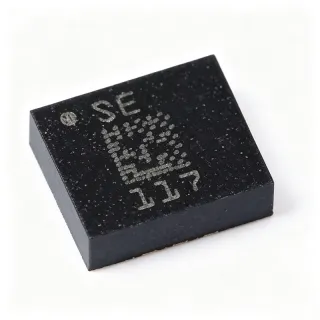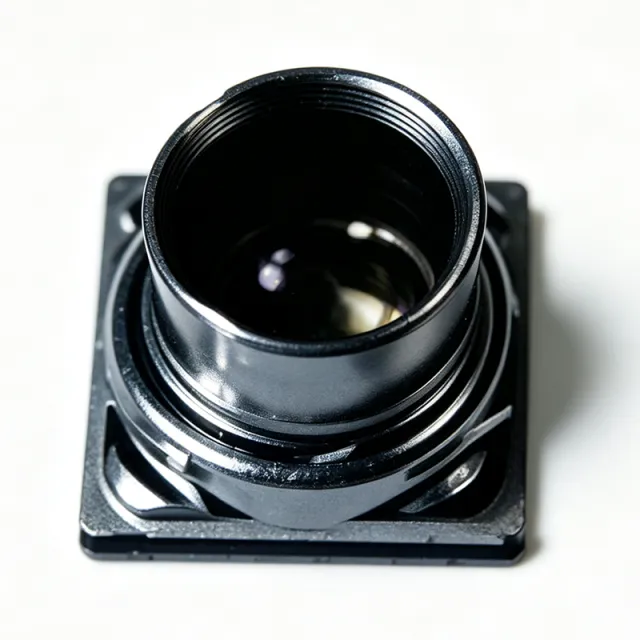
LPS33HWTR - MEMS Pressure Sensor, 260-1260 hPa | STMicroelectronics
MPN: LPS33HWTR ✓ Active| Qty | Unit Price | Extended |
|---|---|---|
| 1 | $3.45 | $3.45 |
| 10 | $3.1 | $31.00 |
| 100 | $2.76 | $276.00 |
| 500 | $2.48 | $1,240.00 |
| 1,000 | $2.21 | $2,210.00 |
LPS33HWTR Overview
A MEMS pressure sensor is a micro-electromechanical system that converts applied pressure into an electrical signal, typically through a deformable diaphragm whose deflection is measured capacitively or piezoresistively. In the system hierarchy, a MEMS pressure sensor is a type of pressure sensor, which falls under the broader category of sensors, and ultimately within the domain of microelectronics and IoT devices. The LPS33HWTR specifically uses a capacitive sensing element with a signal-conditioning ASIC, providing digital output via I2C or SPI.
Key features include a 24-bit resolution, an output data rate (ODR) from 1 Hz to 75 Hz, and an embedded temperature sensor. The device operates from a 1.7V to 3.6V supply, with a low power consumption of 4 µA at 1 Hz ODR. It also features a FIFO buffer, interrupt pins for data-ready and pressure threshold detection, and a built-in pressure and temperature compensation. The LGA package is designed for surface-mount assembly, with a footprint compatible with standard reflow soldering.
Technically, the LPS33HWTR employs a MEMS capacitive pressure cell that changes capacitance with applied pressure. The ASIC converts this capacitance change into a digital pressure value using a 24-bit ADC, with internal compensation for temperature and supply variations. The device supports both I2C (up to 400 kHz) and SPI (up to 10 MHz) interfaces, allowing flexible integration with microcontrollers. The FIFO buffer can store up to 32 samples, reducing host processor load.
Typical applications include barometers for weather stations, altimeters for drones and wearables, and pressure monitoring in industrial and medical devices. Its high accuracy and low power make it suitable for battery-powered IoT devices, where it can be used for altitude tracking or environmental monitoring. The device also finds use in smartphone and smartwatch applications for indoor navigation and activity tracking.
When designing with the LPS33HWTR, ensure proper PCB layout with a small vent hole for pressure access, and avoid covering the sensing port with solder mask. The device requires a decoupling capacitor (100 nF) close to the VDD pin, and the I2C/SPI lines should be kept short to minimize noise. For best accuracy, calibrate the sensor at a known pressure and temperature, and consider the effect of altitude on pressure readings.
Drop-in alternatives for LPS33HWTR — same package, pin-to-pin compatible. Different-package parts requiring PCB rework are excluded.
Quick Comparison Tool — Select alternative parts for side-by-side comparison:
LPS33HW
✓ In Stock
$1.82 / Unit
View Datasheet →LPS22HH
✓ In Stock
$0.9705 / Unit
View Datasheet →BMP388
📋 Reference alternative (not in catalog)
SDP810
📋 Reference alternative (not in catalog)
LPS33HWTR Maximum Ratings & Electrical Characteristics
| Pressure Range | 260 to 1260 hPa |
| Pressure Accuracy | ±0.1 hPa (typical) |
| Resolution | 24-bit |
| Output Data Rate | 1 Hz to 75 Hz |
| Supply Voltage | 1.7 V to 3.6 V |
| Current Consumption | 4 µA at 1 Hz ODR |
| Interface | I2C (up to 400 kHz) and SPI (up to 10 MHz) |
| FIFO Size | 32 samples |
| Temperature Sensor | Embedded, ±0.5°C accuracy |
| Package | LGA-10 (3 mm x 3 mm x 1.7 mm) |
| Operating Temperature | -40°C to +85°C |
| Mounting Type | Surface Mount |
| RoHS Status | Compliant |
| Interrupt Pins | 2 (data-ready, pressure threshold) |
| Pressure Noise | 0.008 hPa RMS (typical) |
LPS33HWTR Pin Configuration
| Pin 1 | VDD — Power supply (1.7V to 3.6V) |
| Pin 2 | GND — Ground |
| Pin 3 | SCL/SPC — I2C clock or SPI clock |
| Pin 4 | SDA/SDI — I2C data or SPI data input |
| Pin 5 | CS — Chip select (active low) |
| Pin 6 | INT1 — Interrupt 1 (data-ready or threshold) |
| Pin 7 | INT2 — Interrupt 2 (threshold) |
| Pin 8 | NC — Not connected |
| Pin 9 | NC — Not connected |
| Pin 10 | GND — Ground (exposed pad) |
Typical Applications
LPS33HWTR is suitable for 6 applications: Barometer for Weather Stations, Altimeter for Drones, Wearable Activity Tracking, Industrial Pressure Monitoring, Medical Device Pressure Sensing, Smart Home Environment Monitoring.
Barometer for Weather Stations
The LPS33HWTR provides accurate atmospheric pressure measurements (260-1260 hPa) with ±0.1 hPa accuracy, making it ideal for weather stations. Its low power consumption (4 µA at 1 Hz) allows continuous monitoring in battery-powered outdoor stations. The I2C/SPI interface simplifies connection to microcontrollers, and the embedded temperature sensor aids in compensation. The compact LGA package fits into small enclosures, and the FIFO buffer reduces host processing load. For best results, place the sensor in a weatherproof housing with a pressure vent, and calibrate at a known altitude.
Recommended
Altimeter for Drones
The LPS33HWTR measures absolute pressure to determine altitude with high resolution (0.008 hPa RMS noise), enabling precise altitude hold for drones. Its wide pressure range covers ground to high-altitude flight, and the 24-bit ADC provides fine resolution. The device's small size and low weight are critical for drone payloads. The interrupt pins can trigger altitude thresholds for automated flight control. To use, connect the sensor to the flight controller via I2C or SPI, and calibrate the baseline pressure at takeoff. The FIFO buffer allows burst reads, reducing MCU load during flight.
Recommended
Wearable Activity Tracking
In wearables like smartwatches, the LPS33HWTR enables floor counting and altitude change detection. Its low power consumption (4 µA) extends battery life, and the compact 3x3mm package fits into tight spaces. The device's high accuracy (±0.1 hPa) allows detection of small altitude changes, such as climbing stairs. The FIFO buffer and interrupt pins support low-power operation by waking the host only when thresholds are crossed. For integration, place the sensor with a pressure vent on the device's exterior, and use the embedded temperature sensor for environmental compensation.
Recommended
Industrial Pressure Monitoring
The LPS33HWTR can monitor air pressure in industrial equipment, such as filter blockage detection or leak detection in pneumatic systems. Its wide operating temperature range (-40°C to +85°C) suits harsh environments, and the I2C/SPI interface allows easy integration with industrial controllers. The device's high accuracy and low noise enable reliable detection of small pressure changes. For industrial use, protect the sensor from contaminants with a suitable filter, and consider using the interrupt pins for alarm generation. The FIFO buffer can store data for batch processing.
Recommended
Medical Device Pressure Sensing
In medical devices like respiratory monitors, the LPS33HWTR provides accurate pressure readings for airflow measurement. Its high resolution and low noise are essential for detecting subtle pressure variations. The device's small size and low power make it suitable for portable medical devices. The I2C/SPI interface connects to medical-grade microcontrollers, and the embedded temperature sensor aids in compensation. For medical applications, ensure the sensor is calibrated and validated for the specific pressure range and accuracy requirements. The FIFO buffer can store data for analysis.
Recommended
Smart Home Environment Monitoring
The LPS33HWTR can be used in smart home devices to monitor indoor air pressure, which can indicate open windows or HVAC operation. Its low power consumption and small size make it ideal for battery-powered sensors. The device's accuracy allows detection of pressure changes from opening a door. The I2C/SPI interface connects to home automation hubs, and the interrupt pins can trigger alerts. For smart home integration, place the sensor in a central location, and use the FIFO buffer to reduce network traffic. The embedded temperature sensor provides additional environmental data.
Recommended
Recommended Products Summary
Engineering reference data for LPS33HWTR — comparison, design guidance, and compliance information.
Selection Guide
Comparison with Alternatives
| Parameter | This Product | LPS33HW | LPS22HH | BMP388 | SDP810 |
|---|---|---|---|---|---|
| Package | LGA-10 (3x3x1.7mm) | LGA-10 (3x3x1.7mm) - same | LGA-10 (2x2x0.7mm) - different | LGA-10 (2.0x2.0x0.75mm) - different | DFN-8 (5x3x1.2mm) - different |
| Brand | STMicroelectronics | STMicroelectronics | STMicroelectronics | Bosch Sensortec | Sensirion |
| Pressure Range | 260-1260 hPa | 260-1260 hPa | 260-1260 hPa | 300-1250 hPa | 150-1150 hPa |
| Accuracy | ±0.1 hPa | ±0.1 hPa | ±0.1 hPa | ±0.5 hPa | ±0.1 hPa |
| Interface | I2C/SPI | I2C/SPI | I2C/SPI | I2C/SPI | I2C |
| Supply Voltage | 1.7V to 3.6V | 1.7V to 3.6V | 1.7V to 3.6V | 1.7V to 3.6V | 3.0V to 5.5V |
| Current Consumption | 4 µA at 1 Hz | 4 µA at 1 Hz | 4 µA at 1 Hz | 3.4 µA at 1 Hz | 1.5 mA (active) |
| FIFO Size | 32 samples | 32 samples | 32 samples | No FIFO | No FIFO |
Key Differentiators
- Higher accuracy than BMP388 (vs BMP388)
- Lower power than SDP810 (vs SDP810)
- Same package as LPS33HW (vs LPS22HH)
Design Notes
Ensure a pressure vent hole is placed in the PCB under the sensor's sensing port. The vent should be at least 0.5mm in diameter and should not be covered by solder mask. Place the sensor away from heat sources and air currents to avoid pressure fluctuations. Use a 100nF decoupling capacitor close to the VDD pin.
Keep I2C/SPI traces short and avoid routing them near high-speed digital lines to minimize noise. For I2C, use pull-up resistors (typically 4.7kΩ) to VDD. For SPI, ensure CS is properly controlled to avoid bus conflicts. The exposed pad should be soldered to a ground plane for thermal and mechanical stability.
Do not cover the pressure sensing port with conformal coating or glue, as this will block pressure access. Avoid exposing the sensor to water or condensation, which can damage the MEMS element. Calibrate the sensor at a known pressure and temperature to achieve the specified accuracy. The FIFO buffer should be read before it overflows to avoid data loss.
Compliance Information
RoHS compliant per STMicroelectronics product page. Not AEC-Q100 qualified. REACH compliance assumed based on ST's general compliance.